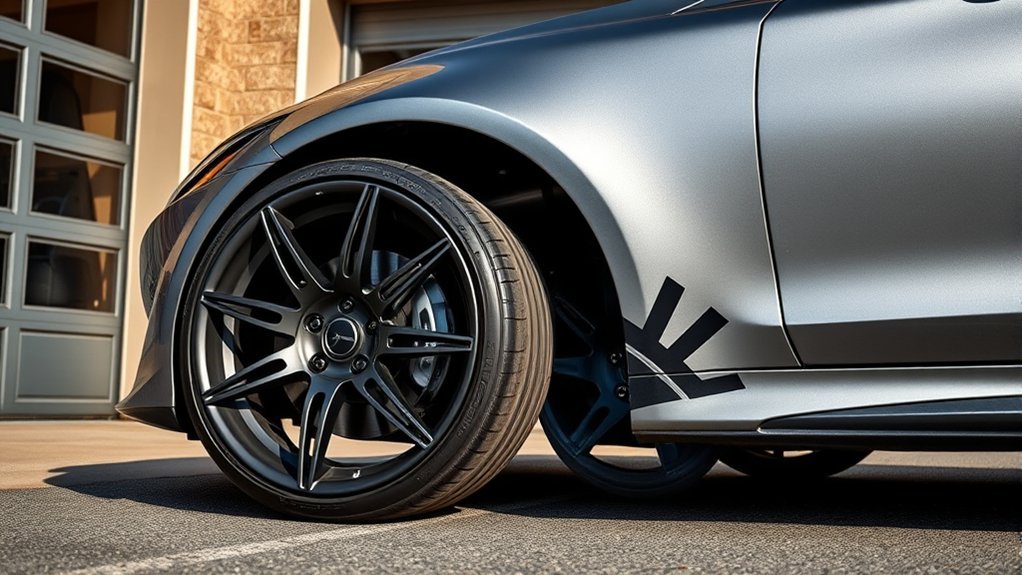
A bigger rim can make your car look sharper and may improve steering response, but the real effects depend on the entire wheel-and-tire package. A larger rim usually means a shorter tire sidewall and sometimes a wider or heavier setup. That can change ride comfort, efficiency, handling, braking, road noise, and pothole resistance. The most important detail is often overlooked: a properly plus-sized setup keeps the tire’s overall diameter close to the factory size.
Quick Answer
Bigger rims can sharpen steering and make room for larger brakes, but the usual low-profile tire package may ride harsher, cost more, and hurt efficiency if it is heavier or wider. Done correctly, plus-sizing keeps overall tire diameter close to factory, so speedometer, gearing, and electronic systems stay near their intended calibration.
Key Takeaways
- Bigger rims usually require lower-profile tires if you want to keep the overall tire diameter close to the factory specification.
- Shorter sidewalls can sharpen steering response, but they usually reduce bump absorption and increase pothole damage risk.
- A heavier or wider wheel-and-tire package can reduce acceleration, fuel economy, and EV range, but rim diameter alone does not determine the penalty.
- Speedometer and odometer accuracy depend mainly on the tire’s overall rolling diameter, not simply whether the rim is 17, 18, 19, or 20 inches.
- Larger wheels can create space for bigger brakes, but installing larger rims does not automatically mean you need larger rotors or calipers.
- Before changing sizes, verify tire load capacity, rim width, wheel offset, clearance, inflation pressure, and the vehicle manufacturer’s approved fitments.
Bigger Rims vs. Bigger Overall Tires: The Difference That Matters
A bigger rim and a bigger overall tire are not the same thing. This distinction explains many of the effects people wrongly attribute to wheel diameter.
With proper plus-sizing, you increase rim diameter while using a lower-profile tire so the tire’s total outside diameter stays close to the original size. For example, an automaker may pair a 19-inch wheel with a taller-sidewall tire and a 20-inch wheel with a shorter-sidewall tire while keeping both complete assemblies almost the same height.
The rim is only one variable. Overall tire diameter, tire width, construction, inflation pressure, wheel weight, and aerodynamics determine most of the real-world difference.
If you increase the overall tire diameter instead of simply increasing rim diameter, the consequences become larger. Ground clearance, effective gearing, speedometer accuracy, fender clearance, ABS behavior, and driveline operation may all change.
Warning: Do not choose an alternate tire size by rim diameter alone. NHTSA recommends using the original tire size or another size recommended by the vehicle manufacturer. An incorrect combination can affect load capacity, clearance, vehicle electronics, and handling.
How Wheel Size Changes Your Car’s Range
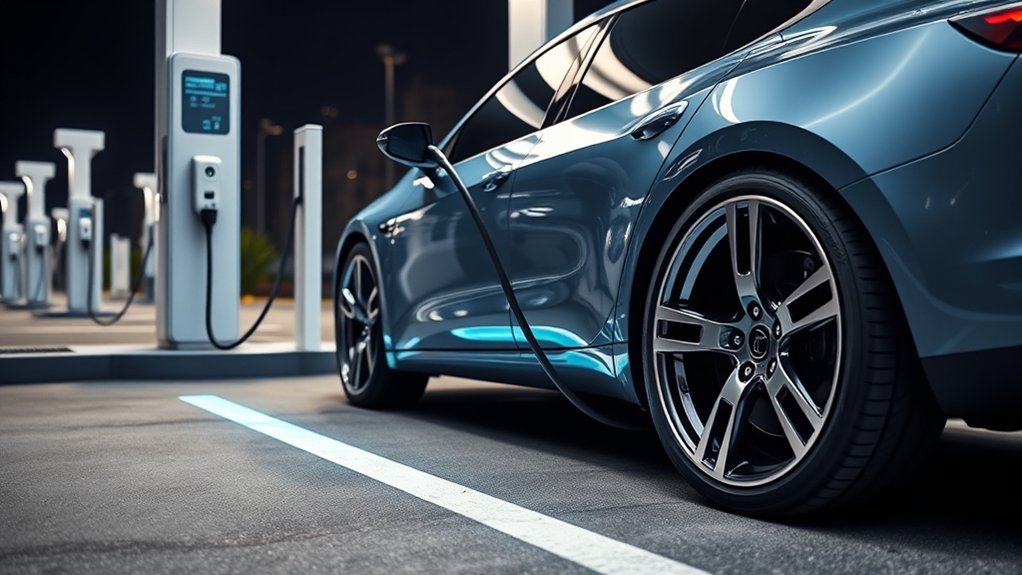
Wheel size can affect an electric car’s range, but there is no universal percentage loss for moving from one rim diameter to another. The outcome depends on the complete wheel-and-tire package.
Larger factory or aftermarket wheels are often paired with wider tires, lower-profile construction, different tread compounds, and additional rotating mass. Any combination that increases rolling resistance, aerodynamic drag, or weight can increase the energy needed to travel the same distance.
A shorter sidewall can sharpen steering response, while a lighter or more aerodynamically efficient package can reduce some of the efficiency penalty. That is why two tires designed for the same vehicle and rim diameter can still produce different range results.
A useful current example comes from Tesla’s Model Y replacement-tire information. Tesla lists a newer 19-inch Continental tire variant with up to a 10-mile EPA-estimated range improvement compared with the previous 19-inch variant. The rim diameter did not cause that difference; the tire design changed.
Smaller manufacturer-approved winter wheels can also be useful because a taller sidewall gives more pothole protection and some setups may be lighter or narrower. However, changing wheel size does not eliminate the range loss caused by cold battery temperatures, cabin heating, winter tires, snow, or dense cold air.
Compare wheel and tire packages as a system rather than assuming that every 18-inch wheel is efficient or every 20-inch wheel is inefficient.
Why Bigger Wheels Can Affect Rolling Resistance
A bigger rim does not automatically increase rolling resistance. Rolling resistance mainly comes from energy lost as the tire deforms while it rolls, and it varies with tire construction, compound, tread, inflation pressure, temperature, load, and dimensions.
In practice, larger-wheel packages often use wider tires. Continental notes that wider tires and larger tire dimensions can increase rolling resistance, although tire design still matters greatly.
A wider performance tire may also use a grippier compound or tread design that prioritizes handling over efficiency. That can increase energy consumption even if the complete tire diameter stays close to factory specification.
Wheel weight affects efficiency in a different way. A heavier wheel-and-tire assembly requires more energy during acceleration because more mass must be accelerated both forward and rotationally. At steady speed, tire rolling resistance and aerodynamic drag become more important.
Wheel aerodynamics can matter too. Open spokes, wheel covers, tire width, and airflow around the wheel well can change drag, so diameter alone does not tell you which setup is most efficient.
Note: Inflation pressure matters. Use the vehicle manufacturer’s recommended pressure for the approved tire fitment rather than the maximum pressure printed on the tire sidewall. Proper inflation helps avoid unnecessary rolling-resistance losses.
How Wheel Weight Affects Acceleration and Braking
Wheel-and-tire weight matters because the vehicle must accelerate that mass forward while also spinning it. If a larger package is significantly heavier than the factory setup, acceleration can feel slightly slower and the brakes must manage more kinetic energy when slowing the vehicle.
That does not mean every larger wheel performs worse. A lightweight forged or flow-formed larger wheel can sometimes weigh less than a smaller heavy cast wheel. Always compare the actual weight of the complete wheel and tire, not just rim diameter.
Rotational Inertia
Rotational inertia describes how strongly a rotating object resists changes in rotational speed. Adding mass to a wheel increases inertia, and mass positioned farther from the center has a larger effect than the same amount of mass close to the hub.
That is why an extremely heavy large-diameter wheel-and-tire package can make a vehicle feel less eager during acceleration. There is no reliable universal rule saying that each kilogram of added wheel weight creates a particular percentage increase in power demand; the effect changes with the vehicle, gearing, tire diameter, wheel construction, and acceleration rate.
Lighter wheels can also reduce unsprung mass, which may help the suspension control wheel movement over uneven pavement. The benefit is usually most noticeable when the weight difference is substantial.
Braking Load
A heavier wheel-and-tire package adds mass that the brakes must slow. This can increase braking workload, especially during repeated hard stops.
However, wheel diameter alone does not determine stopping distance. Tire compound, tire temperature, road surface, ABS calibration, brake condition, vehicle mass, and available traction can matter more than a small difference in wheel weight.
Larger rims can provide more physical space for a larger brake rotor and caliper. That is useful on performance vehicles that need additional brake thermal capacity, but a larger rim does not automatically require a brake upgrade.
If your only goal is better acceleration response and suspension control, choosing a lighter approved wheel can often be more useful than focusing on diameter alone.
How Bigger Wheels Affect Ride Comfort
Bigger wheels commonly reduce ride comfort because proper plus-sizing usually pairs them with lower-profile tires.
The tire sidewall acts as part of the vehicle’s cushioning system. A taller sidewall can flex around small bumps, pavement joints, and potholes before the suspension has to absorb the full impact. A shorter sidewall has less room to deform, so more of that sharp impact reaches the wheel, suspension, and cabin.
You may therefore notice a firmer or busier ride after moving to a substantially larger rim, even when the overall tire diameter remains correct.
Road noise can also change. Tire tread, compound, width, construction, road surface, and vehicle insulation all matter, but low-profile performance tires are often less focused on isolation than comfort-oriented touring tires.
Extra unsprung weight can make matters worse because the suspension has more mass to control as the wheel moves over rough pavement.
Pothole Damage, Tire Cost, and Durability
One of the most practical drawbacks of very large rims is reduced protection from potholes and curbs. With less sidewall between the road and wheel, the tire has less space to absorb a sharp impact.
The result can be a bent or cracked rim, a sidewall bubble, a pinched tire, or internal tire damage. The U.S. Tire Manufacturers Association specifically notes that lower-aspect-ratio tires and their wheels are more susceptible to pothole, curb, and road-hazard damage.
Replacement cost can rise as well. Large-diameter, low-profile tires may be more expensive, and certain sizes offer fewer choices than common factory dimensions. Large alloy wheels can also cost considerably more to repair or replace.
If your daily route includes broken pavement, deep potholes, gravel, or winter road damage, a smaller manufacturer-approved wheel with a taller tire sidewall may be a more practical choice.
[Products Worth Considering]

Clean wheels and rims with soft feathered bristles that safely remove dirt and road grime while helping restore original luster. The short non-slip handle makes it easy to scrub in tight wheel wells, and the brush is suitable for vehicles and hard-to-reach areas. It can also be soaked and rubbed to help restore bristles to their shape after use.

This professional wheel and rim cleaning brush set lifts brake dust, grime, and dirt with soft, scratch-free microfiber and synthetic wool fibers. The rim brush bends up to 360 degrees for easy access to hard-to-reach areas around spokes, lips, and faces. Ideal for thorough cleaning of car, truck, motorcycle, bicycle, RV, and more wheel and tire surfaces.

The 22800 wheel stud installer makes replacing wheel studs quick and secure, saving time and effort during tire service. It uses a ratchet or impact wrench to pull new studs firmly into place, helping when existing studs are too long. Compatible with most automotive wheels and light-duty truck wheel studs, it’s designed for easy, tool-assisted installation.
How Wheel Size Changes Grip
Wheel diameter by itself does not determine grip. Tire compound, width, tread design, temperature, inflation pressure, construction, and road conditions are more direct factors.
Plus-sizing commonly uses a wider tire with a shorter sidewall. The wider tire can create a wider footprint and may improve dry-road cornering capability, while the shorter sidewall can reduce steering delay.
Those advantages are not guaranteed. A premium narrower performance tire can outperform a wider low-quality tire, and the widest setup is not automatically the fastest around a corner.
Tire Contact Patch
The contact patch is the portion of the tire touching the road. Increasing rim diameter does not simply make the contact patch larger.
During conventional plus-sizing, the tire often becomes wider. USTMA describes this as changing the footprint so it becomes generally shorter and wider. Actual footprint size and shape also depend on tire load, inflation pressure, construction, and operating conditions.
A wider footprint can help lateral grip on dry pavement when the tire compound and suspension can use it effectively. It does not guarantee more grip in every condition.
Sidewall Flex and Grip
Increasing wheel diameter while maintaining overall tire diameter normally means reducing sidewall height. Less sidewall flex can make steering feel faster and more precise on smooth pavement, while a taller sidewall can better conform to rough surfaces.
| Setup or Surface | Typical Sidewall Behavior | Likely Effect |
|---|---|---|
| Smaller approved rim with taller tire | More flex | Better impact absorption and compliance |
| Larger rim with lower-profile tire | Less flex | Quicker steering response but firmer impacts |
| Rough road | More sidewall compliance can help | Tire may follow broken pavement more smoothly |
| Smooth dry pavement | Less flex may feel more direct | Sharper response; ultimate grip still depends on the tire |
For off-road or badly broken surfaces, taller sidewalls can provide useful compliance and additional protection for the wheel. On smooth pavement, a properly chosen lower-profile tire can provide a more immediate steering feel.
Width Versus Diameter
Wheel diameter and tire width do different jobs. Diameter mainly changes how much rim and sidewall make up the complete assembly. Tire width has a more direct influence on footprint shape, clearance, steering feel, and water displacement.
A wider performance tire may improve dry lateral traction, but extra width can also increase weight, aerodynamic drag, steering effort, and rolling resistance depending on the tire.
Going wider is therefore not automatically better. The best size is the one that gives the required traction while remaining compatible with the vehicle’s wheel width, suspension geometry, load requirements, and intended road conditions.
Wet, Snow, and Hydroplaning Tradeoffs
Bigger rims are often paired with wider tires, and wider tires can behave differently in rain and snow.
On a wet road, tread design and tread depth are critical because the tire must move water away from the contact patch. A wider footprint does not automatically improve wet grip. In deep standing water, width and tread design can affect hydroplaning behavior.
Snow creates another tradeoff. A narrower winter tire can sometimes cut through loose snow more effectively than a very wide performance tire, while the winter compound and tread pattern provide the cold-weather grip.
That is one reason some vehicles use smaller-diameter winter wheels paired with taller, appropriately sized winter tires. The setup still needs to meet the manufacturer’s load, diameter, brake-clearance, and inflation requirements.
Do not judge winter or wet-road capability from rim diameter alone. Compare the actual tire model, width, tread design, seasonal rating, and approved fitment.
Why Tire Sidewall Height Matters
Tire sidewall height, which is related to the tire’s aspect ratio, has a major effect on how a car responds to bumps and steering inputs.
A taller sidewall can flex more over broken pavement, which usually improves ride quality and wheel protection. A shorter sidewall can feel more immediate during turn-in because there is less sidewall movement between the rim and tread.
Taller sidewalls usually improve impact absorption, while lower-profile tires trade some of that cushioning for quicker steering response.
The shorter sidewall also leaves less protection between the rim and potholes. That can increase the chance of wheel or tire damage when road conditions are poor.
Sidewall height by itself does not determine rolling resistance or fuel economy. Tire compound, casing design, tread, width, pressure, and wheel-and-tire weight all contribute.
When choosing a wheel and tire package, balance comfort, response, durability, efficiency, cost, and the roads you actually drive on.
How Larger Wheels Affect Brake Clearance
Larger-diameter wheels can provide more room around the brake hardware, which is one reason performance vehicles with large brake rotors often need larger wheels.
However, wheel diameter is only one part of brake clearance. Spoke shape, rim-barrel shape, wheel width, and offset can determine whether the wheel clears the caliper.
A 20-inch wheel with the wrong spoke profile can interfere with a caliper that clears a properly designed 19-inch wheel. Never assume that a wheel fits simply because its diameter is larger.
You also need clearance around suspension components, the inner fender, and the body through full steering movement and suspension travel. USTMA recommends checking replacement wheel and tire clearance around brakes, shock towers, suspension components, and fender wells.
If you are also installing a larger brake kit, follow the brake and vehicle manufacturers’ requirements for rotor diameter, caliper clearance, wheel specifications, brake-fluid requirements, and any other required modifications.
A qualified installer should verify fitment before the vehicle is driven.
How Bigger Wheels Affect Fuel Economy
Fuel economy can fall after a larger-wheel upgrade when the new package is heavier, wider, less aerodynamic, or fitted with tires that have higher rolling resistance.
The penalty is often easier to notice in stop-and-go driving because the vehicle repeatedly accelerates the extra mass. At highway speeds, aerodynamic drag and tire rolling resistance become increasingly important.
| Wheel/Tire Change | Likely Efficiency Effect |
|---|---|
| Heavier, wider wheel-and-tire package | May reduce fuel economy or EV range |
| Larger but lightweight approved package | May limit some of the weight penalty |
| Lower-rolling-resistance tire | Can improve efficiency compared with a higher-resistance alternative |
| Correct approved tire pressure | Helps avoid unnecessary rolling-resistance losses |
There is no reliable rule that changing from one rim diameter to another always changes fuel economy by 5%, 10%, or any other fixed amount.
FuelEconomy.gov, administered by the U.S. Department of Energy and EPA, notes the relationship between tire inflation, rolling resistance, and fuel economy. Keep the tires at the pressure specified for the approved vehicle fitment.
Fuel additives or engine modifications will not cancel the physical effects of an unnecessarily heavy or high-resistance wheel-and-tire package.
How Wheel Size Affects Speedometer Accuracy
Your speedometer responds to the rolling circumference of the tire, not simply the diameter of the metal rim.
If you install a larger rim and choose a lower-profile tire that keeps overall tire diameter close to factory size, the number of tire rotations per mile also stays close to factory calibration. In that situation, speedometer and odometer error may be negligible.
If the new tire’s overall diameter is meaningfully larger or smaller, then speed, mileage, gearing, ABS, stability-control, and other wheel-speed-dependent systems may be affected.
Diameter and Speed Readout
A larger overall tire diameter travels farther with each revolution. If the vehicle still assumes the original circumference, the speedometer can indicate a lower speed than the vehicle is actually traveling.
A smaller overall diameter does the opposite: the tire makes more revolutions over the same road distance, so the indicated speed can run higher.
This is why proper plus-sizing pairs the larger wheel with a shorter-sidewall tire. Michelin and USTMA both advise keeping the overall tire diameter within the vehicle manufacturer’s accepted limits.
Circumference Changes Mileage
Circumference is mathematically related to overall tire diameter. If the diameter changes by a given percentage, the rolling circumference changes by roughly the same percentage.
For example, increasing rim diameter by one inch does not automatically add one inch to the finished tire diameter. The lower-profile replacement tire is selected specifically to compensate for the larger rim.
- A larger rim plus a properly shorter sidewall can preserve nearly the same rolling circumference.
- A genuinely taller overall tire travels farther per revolution.
- A genuinely shorter overall tire travels less distance per revolution.
Use the manufacturer’s approved alternate sizes or a reliable tire-size calculation before installation, then verify physical clearance and load capacity as well.
When Recalibration Is Needed
Speedometer recalibration is not automatically required every time you install larger rims.
If the replacement package maintains the manufacturer-approved rolling diameter, recalibration may not be necessary. If the overall tire diameter changes enough to move outside the manufacturer’s permitted range, the speedometer, odometer, ABS, traction control, stability control, AWD system, or transmission strategy may require adjustment or may not be compatible with the setup at all.
Follow the vehicle manufacturer’s recommendations rather than relying on a generic percentage rule.
How to Plus-Size Wheels Safely
A safe larger-wheel upgrade starts with fitment, not appearance. The USTMA replacement guidelines recommend checking multiple specifications whenever replacement wheels or tires differ from original equipment.
- Manufacturer approval: Start with sizes listed by the automaker whenever possible.
- Overall tire diameter: Keep it within the manufacturer’s permitted range.
- Load capacity: The replacement tire must meet the vehicle’s required load-carrying capacity.
- Speed rating: Use a rating appropriate for the vehicle and manufacturer requirements.
- Rim width: Make sure the tire is approved for the wheel’s width.
- Wheel offset: Incorrect offset can move the tire or wheel into the suspension, brakes, or body.
- Wheel load rating: The wheel itself must be rated to support the vehicle.
- Bolt and hub fitment: The wheel must use the correct mounting pattern, hardware, and hub fit.
- Brake clearance: Check the barrel and spokes around the caliper and rotor.
- Fender and suspension clearance: Verify clearance at full steering lock and through suspension travel.
- Inflation pressure: Use the pressure specified for the approved replacement fitment; do not simply use the tire’s sidewall maximum.
- TPMS: Make sure the pressure-monitoring system remains compatible and properly configured.
Pro Tip: If your vehicle was sold from the factory with two or three wheel sizes, those factory combinations are useful starting points. Compare their tire sizes, load ratings, wheel widths, offsets, and pressures instead of guessing at an aftermarket combination.
[Products Worth Considering]

This metal-free wheel and tire cleaning brush uses dense, fluffy synthetic wool to safely clean rims, spokes, fenders, and engine areas without worrying about damaging surfaces. Its flexible, comfortable design helps you reach detailed areas while maintaining durability, and the extra absorbent fibers work well with wheel spray cleaners for faster cleanup. Reusable and washable performance helps prevent grime and build-up for cleaner vehicles and easier maintenance at home.

This 3-piece wheel and tire brush set makes it easy to clean light, medium, and heavy dirt from wheels, rims, tires, and exterior surfaces. It includes both soft and stiff bristle options for gentle scrubbing and tough grime removal, helping lift brake dust and road buildup. The long-handle design supports comfortable cleaning across cars, trucks, SUVs, RVs, motorcycles, and more, with simple care instructions to restore brush shape.
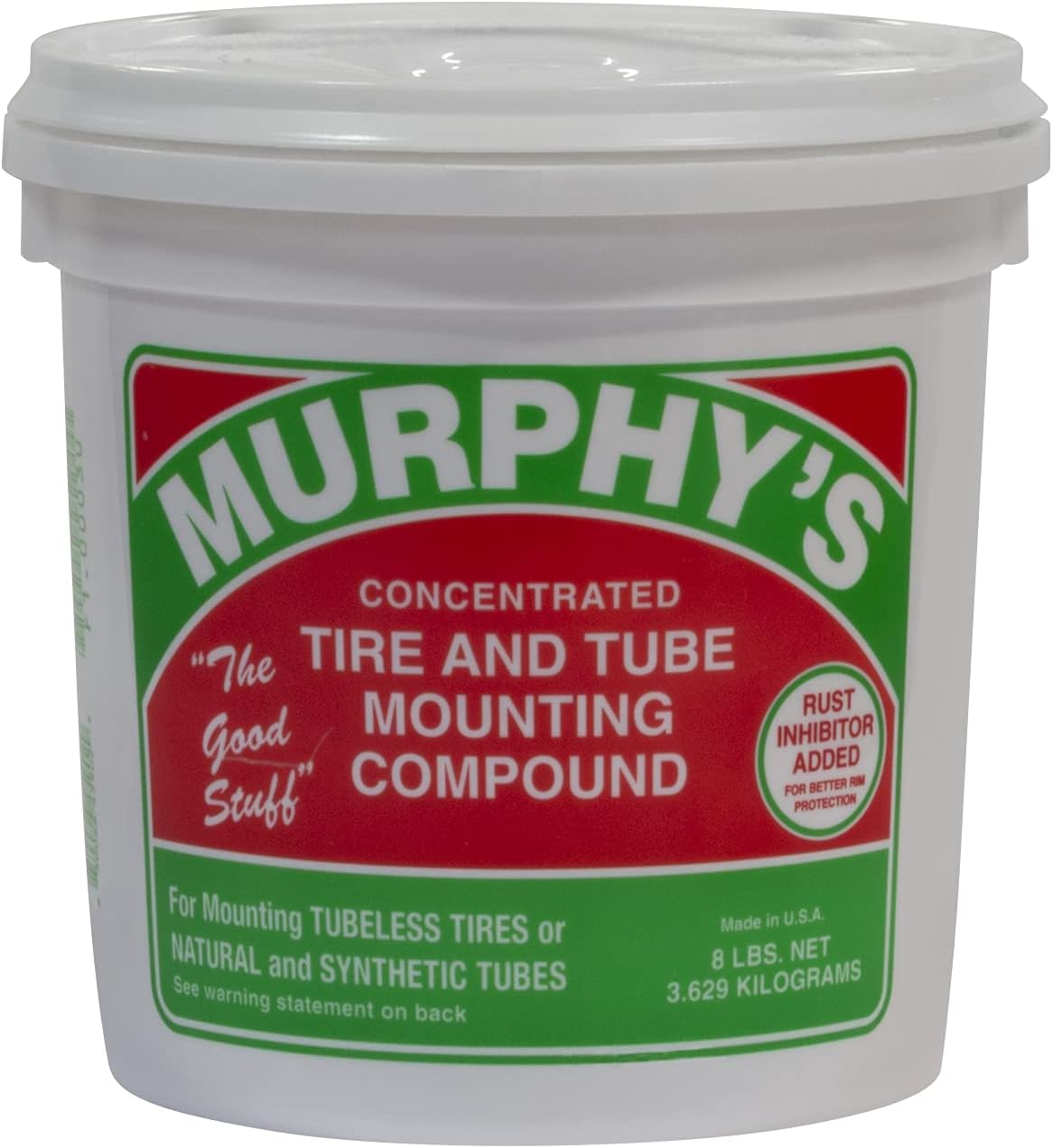
A concentrated tire and tube mounting compound designed to help simplify mounting rubber tires and tubes on passenger, semi truck, construction, and OTR applications. Its ultra-thick formula packs beads effectively and includes rust inhibitors to help protect against corrosion during use.
When Bigger Wheels Are Worth It
Bigger wheels make the most sense when the upgrade gives you a benefit you will actually use.
A carefully chosen larger wheel and lower-profile tire can provide quicker steering response and a sportier appearance. It can also create enough space for a larger performance brake package.
- Performance driving: A properly matched performance tire can provide sharper steering and stronger dry-road capability.
- Brake upgrades: More wheel-barrel space may be necessary for larger rotors and calipers.
- Appearance: A larger wheel can fill the wheel opening and create the stance you want.
- Factory upgrade: An automaker-approved larger-wheel option reduces much of the fitment guesswork.
Bigger wheels are less appealing when your priorities are maximum ride comfort, pothole resistance, winter practicality, lowest replacement cost, or maximum fuel economy and EV range.
If you want the appearance of a larger wheel without sacrificing as much performance, look for a lightweight wheel, keep the overall tire diameter correct, avoid unnecessary tire width, and choose a tire whose compound and tread match how you drive.
[Products Worth Considering]

This 15-inch tire spoons kit makes tire removal and installation easier with added leverage, reducing time and effort for everyday repairs. It includes tire spoons, rim protectors, a valve tool, and valve cores/caps, helping protect rims and streamline deflation and re-sealing. Built with durable hardened steel and a non-slip ergonomic grip for confident use on motorcycles, dirt bikes, ATVs, and lawn equipment.

Upgrade your vehicle’s look with glossy hubcap wheel covers designed for 16-inch steel wheels. These snap-on replacements help protect against scratches, rust, and brake dust while offering durable, impact-resistant ABS construction. Installation is quick with no special tools, and the covers are easy to clean with water. Note: they are not compatible with alloy rims or damaged/deformed steel wheels.

This 3-piece wheel brush set makes it easy to clean wheels and tires with soft, scratch-free brushes designed for lifting brake dust and grime. The flexible rim brush bends up to 360 degrees to reach hard-to-access areas for a thorough clean, while the comfortable grip helps control during detailing. A dedicated detailing brush supports gentle cleaning for sensitive surfaces, including interior use.
Frequently Asked Questions
What happens if you put bigger rims on your car?
You normally need lower-profile tires to keep the overall tire diameter close to the factory specification. Steering may feel sharper, while ride comfort and pothole protection may decrease. Efficiency can also fall if the replacement package is heavier, wider, or has higher rolling resistance.
Is there a benefit to larger rims?
Yes. Properly selected larger wheels can provide quicker steering response, a sportier appearance, and additional clearance for large performance brakes. The tradeoffs can include a firmer ride, more pothole vulnerability, higher tire cost, and possible efficiency losses.
Can you fit a 15-inch tire on a 16-inch rim?
No. The tire’s rim-diameter designation must match the wheel diameter. A tire designed for a 15-inch rim must be mounted on an approved 15-inch rim, not a 16-inch wheel.
Will 20-inch rims mess up the transmission?
Not simply because they are 20-inch rims. A properly approved 20-inch wheel-and-tire package can keep overall tire diameter and gearing close to factory specifications. Problems become more likely when the new overall diameter, weight, load capacity, or fitment falls outside what the vehicle was designed to use.
Do bigger rims make the speedometer inaccurate?
Not necessarily. Speedometer accuracy depends mainly on overall tire diameter and rolling circumference. A larger rim paired with the correct lower-profile tire can keep the finished tire diameter close to stock and preserve speedometer accuracy.
Do bigger wheels reduce fuel economy or EV range?
They can, especially when the new package is heavier, wider, less aerodynamic, or fitted with higher-rolling-resistance tires. There is no fixed percentage penalty that applies to every vehicle or every increase in rim size.
Do bigger rims require lower-profile tires?
Usually, yes, when you are plus-sizing. As rim diameter increases, sidewall height is reduced so the complete tire diameter remains close to the vehicle’s original specification.
How much bigger can I safely go with my rims?
There is no universal safe number of inches. Use a size approved by the vehicle manufacturer or have a qualified tire professional verify overall diameter, load capacity, wheel width, offset, brake and suspension clearance, wheel rating, and required inflation pressure.
Conclusion
Bigger rims can give your car a sharper appearance and more immediate steering feel, but the tradeoffs depend on far more than the number stamped on the wheel. Lower-profile tires can make the ride firmer and increase pothole risk, while extra width, weight, rolling resistance, or aerodynamic drag can reduce fuel economy or EV range.
The key is to preserve the vehicle’s intended overall tire diameter, load capacity, clearance, and operating requirements. A properly engineered 20-inch setup can work far better than an incorrectly chosen 18-inch one. Choose the complete wheel-and-tire package around your driving needs rather than assuming that bigger is automatically better or worse.
Sources
- U.S. Tire Manufacturers Association — Care and Service of Passenger and Light Truck Tires — plus-sizing, load capacity, rim width, offset, clearance, inflation, and replacement-tire guidance.
- NHTSA TireWise — official replacement-tire size, inflation, and tire-safety guidance.
- Michelin — Performance Upgrade and Plus-Sizing Guidance — explains increasing wheel diameter while maintaining overall tire diameter.
- Continental — Tire Size Guide — tire-size effects on comfort, noise, handling, and rolling resistance.
- FuelEconomy.gov — Keeping Your Car in Shape — U.S. Department of Energy and EPA information on inflation, rolling resistance, and fuel economy.
- Tesla Model Y Service Manual — Replacement Tire Information — current manufacturer example showing that tire specification can affect range even within the same wheel diameter.