
What Does Tire Offset Mean? Simple Guide to Wheel Fitment
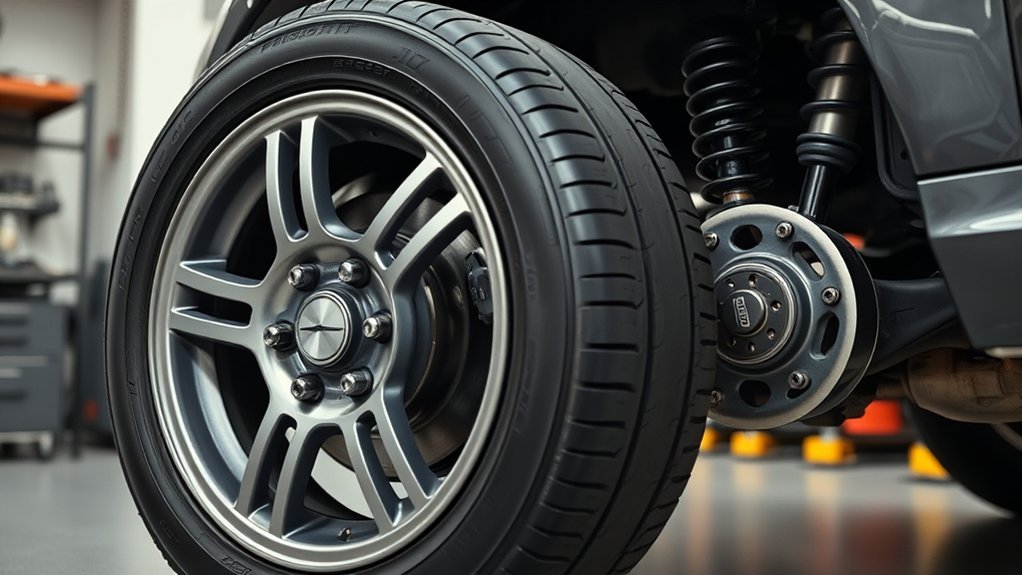
Wheel offset, often called tire offset by shoppers, is one of the most important numbers to check before buying new wheels. It tells you where the wheel sits in relation to the hub, suspension, brakes, and fender. Get it right, and the wheel looks clean and clears properly. Get it wrong, and you may deal with rubbing, poor steering feel, uneven tire wear, or unsafe fitment.
Quick Answer
Tire offset usually means wheel offset: the distance, in millimeters, between the wheel’s centerline and the hub mounting surface. Positive offset tucks the wheel farther inward, negative offset pushes it outward, and zero offset places the mounting surface on the centerline.
Key Takeaways
- Offset is a wheel measurement, not a tire measurement, but many people search for it as tire offset.
- Positive offset places the mounting surface closer to the outside face of the wheel, which usually tucks the wheel inward.
- Negative offset places the mounting surface closer to the inside/back of the wheel, which usually pushes the wheel outward.
- Offset affects fender clearance, brake clearance, suspension clearance, steering feel, and bearing load.
- Backspacing and offset are related, but they are not the same measurement.
- The safest choice is to compare new wheel specs with your vehicle’s original wheel size, offset, load rating, bolt pattern, center bore, and tire size.
At a Glance
| Time Required | 5–10 minutes to read the stamped wheel spec; 20–30 minutes to measure a loose wheel manually. |
| Difficulty | Beginner if the wheel has an ET stamp; moderate if you need to measure and calculate offset. |
| Tools Needed | Flashlight, straight edge, ruler or tape measure, calculator, and caliper if available. Use proper jack stands if a wheel must be removed. |
| Cost | Usually free if the wheel spec is stamped; about $10–$30 for basic measuring tools if needed. |
What Is Tire Offset?
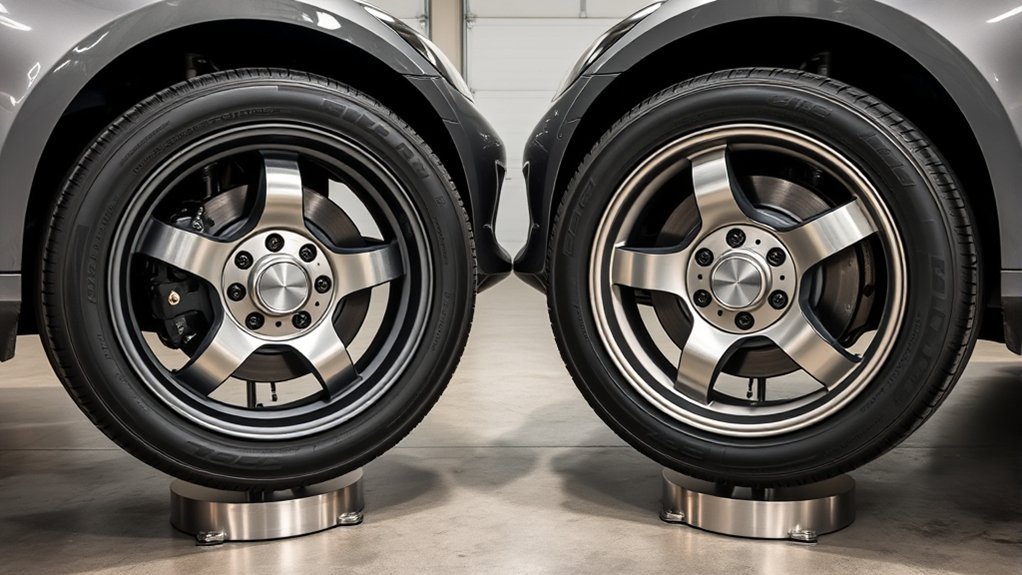
Tire offset is the phrase many drivers use when they mean wheel offset. The technical measurement belongs to the wheel or rim. According to Tire Rack, wheel offset is the distance from the hub mounting surface to the wheel’s centerline.
That distance is measured in millimeters and is often written as ET, such as ET35 or ET40. Konig Wheels explains that ET comes from the German word “Einpresstiefe,” which refers to insertion depth. In plain English, the ET number tells you how far the wheel’s mounting face is moved from the center of the wheel.
Offset matters because it changes where the wheel and tire sit inside the wheel well. It affects clearance near the fender, suspension, brake caliper, inner liner, and bodywork. It can also change steering feel and how much stress is placed on wheel bearings and suspension parts.
Note: Tires have size, width, aspect ratio, load index, and speed rating. Wheels have offset, width, diameter, bolt pattern, center bore, and load rating. Both must work together for safe fitment.
[Products Worth Considering]

Universal magnetic jack pad with aluminum grooved design to protect vehicle pinch welds during lifting. Durable nylon pad inserts are upgraded and secured with screws to resist damage and keep in place. Designed to fit most single vehicle pinpoint welds for safer, stable jacking when changing tires, repairs, or performing oil changes.

This VEVOR tire bead breaker uses a slide-hammer impact and wedge tip to separate tire beads from rims quickly and efficiently without damaging hub surfaces. The long handle and sturdy steel construction help reduce user strain while providing reliable, portable tire changing for cars, trucks, and more. Ideal for home mechanics and repair shops handling multiple vehicle tire sizes.

Camco Trailer Aid Plus tandem tire ramp lifts your trailer for quick, safe tire changes with ample clearance from its 5 1/2-inch lift. It helps you change a flat tire without unloading cargo, making roadside and routine maintenance more efficient. The heavy-duty, waterproof and rustproof polymer design supports up to 15,000 lb and is built for easy portability and storage.
Positive, Negative, and Zero Offset
Wheel offset can be positive, negative, or zero. The number describes where the mounting surface sits compared with the wheel’s centerline.
| Offset Type | What It Means | Common Fitment Effect |
| Positive offset | The mounting surface is closer to the outside face of the wheel. | Usually tucks the wheel farther inward toward the suspension and brakes. |
| Zero offset | The mounting surface is even with the wheel centerline. | Keeps the mounting surface centered in the wheel. |
| Negative offset | The mounting surface is closer to the inside/back of the wheel. | Usually pushes the wheel outward for a wider stance. |
Most modern front-wheel-drive cars and many newer rear-wheel-drive cars use positive offset wheels. Many lifted trucks, off-road builds, and deep-dish wheel setups use lower positive offset, zero offset, or negative offset, depending on the vehicle and tire size.
Why Tire Offset Changes Fitment
Offset changes fitment because it changes the wheel’s position on the hub. A few millimeters can make the difference between a wheel that clears everything and a wheel that rubs the fender liner, suspension, brake caliper, or bodywork.
Offset Affects Clearance
A higher positive offset usually moves the wheel inward. That can help keep the tire tucked under the fender, but it may reduce inner clearance near the strut, control arm, or brake components.
A lower offset, zero offset, or negative offset usually moves the wheel outward. That can improve inner clearance and create a wider stance, but it can also increase the chance of the tire contacting the outer fender, bumper tab, mud flap, or wheel-arch liner during turns and suspension compression.
Warning: Do not choose offset by appearance alone. The wrong wheel can affect braking, handling, bearing life, clearance, and control. Always compare the new wheel with your factory specs and ask a qualified tire or wheel professional if you are unsure.
Width Changes Offset Needs
Wheel width changes how offset behaves. If you keep the same offset but move from an 8-inch wheel to a 9-inch wheel, the extra width does not go only outward. It adds width to both the inner and outer sides of the wheel.
That means a wider wheel with the same offset can sit closer to the suspension on the inside and closer to the fender on the outside. This is why wheel width and offset must be checked together.
How Tire Offset Affects Wheel Width
Offset does not change the actual width of the wheel. Instead, it changes where that width sits in the wheel well.
Wheel Width Changes
When wheel width increases, inner and outer clearance both change. A wider wheel may need a different offset to keep enough room near the suspension while also staying inside the fender. There is no universal “safe” offset change that works for every vehicle.
For example, a wheel that is 1 inch wider adds about 25.4 mm of total width. If the offset stays the same, about half of that added width moves inward and about half moves outward. This is why test fitting, fitment calculators, and professional fitment charts are useful before you buy.
Offset and Clearance
Offset affects several clearance points at the same time:
- Inner clearance: space near struts, control arms, springs, brake lines, and inner liners.
- Outer clearance: space near fenders, bumper edges, mud flaps, and wheel arches.
- Brake clearance: room between the wheel barrel/spokes and brake calipers.
- Suspension travel: room when the vehicle turns, compresses, carries weight, or hits bumps.
- Steering geometry: changes in offset can affect scrub radius, steering weight, kickback, and tramlining.
Fitment Adjustment Tips
Use this checklist before changing offset:
- Find your current wheel size, width, offset, bolt pattern, center bore, and load rating.
- Confirm the tire size you plan to run.
- Check brake-caliper clearance, not just fender clearance.
- Compare inner and outer position changes with a fitment calculator.
- Check whether the vehicle is stock height, lowered, lifted, or using aftermarket suspension.
- Make sure the wheel load rating is suitable for the vehicle.
- Test fit before mounting tires if possible.
Pro Tip: If you only want a simple replacement wheel, stay as close as possible to the factory wheel width and offset. If you want a wider stance, treat offset, wheel width, tire size, and suspension height as one complete package.
How to Measure Tire Offset
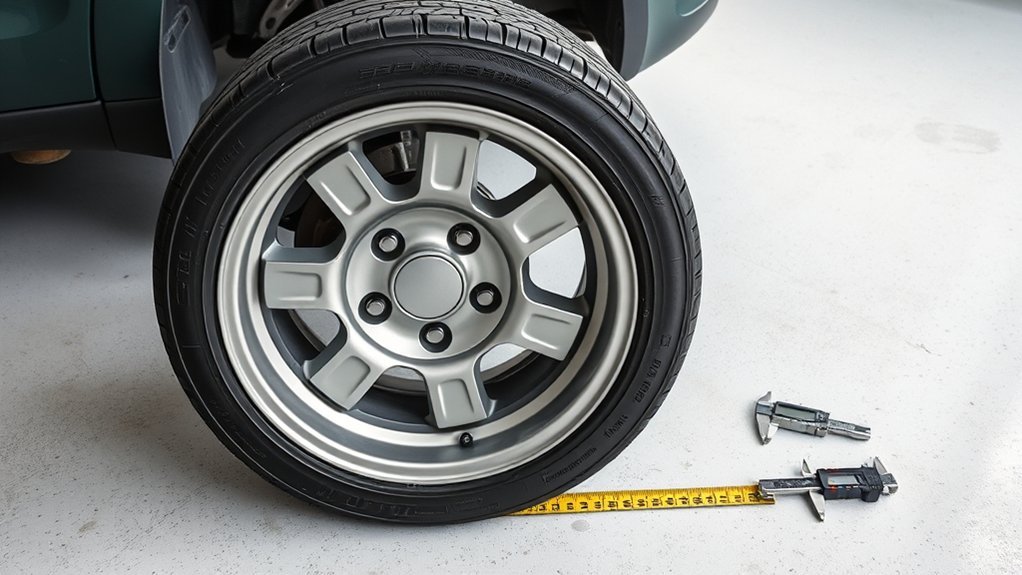
The easiest way to find offset is to look for the stamped wheel spec. Many wheels have a marking such as ET35, ET40, or ET0 on the back of the wheel. ET35 means the wheel has a positive 35 mm offset.
If the offset is not stamped clearly, you can measure it manually on a loose wheel. Be careful: the straight-edge method by itself gives you backspacing, not offset. You must calculate offset from the wheel centerline.
Warning: Never work under a vehicle supported only by a jack. If you remove a wheel, park on level ground, use the correct lift points, support the vehicle with jack stands, and follow the owner’s manual.
Manual Offset Measurement Steps
- Remove the wheel only if you can do so safely.
- Lay the wheel face down on a protected, flat surface.
- Place a straight edge across the rear lip of the wheel.
- Measure from the straight edge down to the hub mounting surface. This is the backspacing.
- Measure the wheel’s total outside width from outer lip to outer lip.
- Divide that total width by 2 to find the wheel centerline.
- Subtract the centerline from the backspacing.
- Convert the result to millimeters by multiplying by 25.4.
Formula: Offset in mm = (Backspacing − Wheel Centerline) × 25.4
If the result is positive, the mounting surface is toward the wheel face. If the result is negative, the mounting surface is toward the inside/back of the wheel.
Note: Stamped wheel width is usually measured bead-seat to bead-seat, while manual outside-width measurement includes the lips. For careful calculations, use the same measurement method consistently or ask a wheel shop to confirm the spec.
Common Signs Your Offset Won’t Fit
Offset problems usually show up as clearance, steering, or wear issues. These signs do not prove offset is the only problem, but they do mean the fitment should be checked.
- Rubbing during turns: The tire may be contacting the fender liner, bumper tab, mud flap, or suspension part.
- Rubbing over bumps: The tire may be hitting the fender or inner liner when the suspension compresses.
- Uneven tire wear: Bad fitment, poor alignment, worn suspension, or incorrect pressure may be involved.
- Steering kickback or tramlining: Offset changes can affect scrub radius and steering feel.
- Tire sticking outside the fender: The offset may be too aggressive for the vehicle, tire width, or local road rules.
- Brake-caliper contact: The wheel barrel or spokes may not clear the brakes even if the offset looks close.
If you notice any of these signs after changing wheels, stop and inspect the fitment before driving hard or carrying heavy loads.
[Products Worth Considering]

AZUNO’s digital tire inflator delivers stable, accurate pressure readings with a bright LCD and a 0.1 resolution display for confident inflation. It supports one-handed...
Tire Offset and Fender Clearance
Fender clearance is one of the most visible parts of wheel fitment, but it is not the only one. A wheel can look good near the fender and still be too close to the strut, brake caliper, or inner liner.
More positive offset usually pulls the tire inward. This can help keep the wheel under the fender, but it may reduce inner clearance. Less positive offset or negative offset usually pushes the tire outward. This can improve inner clearance, but it may cause fender rub during turns or suspension compression.
Fender rolling or trimming may create more outer clearance in some builds, but it should not be the first solution for a daily driver. It is better to choose a wheel and tire package that fits the vehicle correctly.
Choose the Right Offset for Your Vehicle
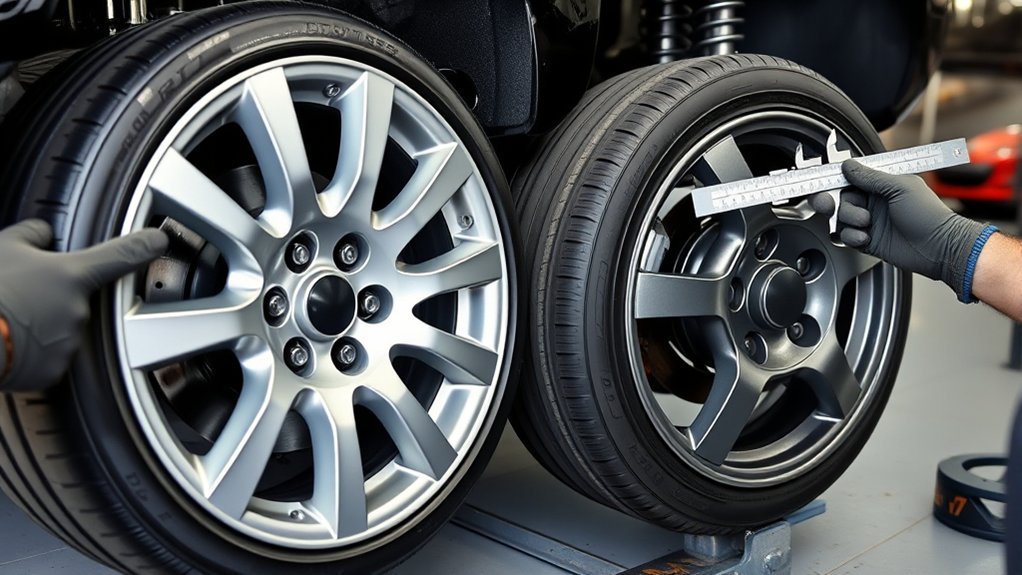
The right offset depends on your vehicle, suspension, brakes, tires, and how you use the vehicle. A daily commuter, lowered car, track car, lifted truck, and off-road SUV may all need different fitment choices.
Start with the factory wheel specs. Then compare any new wheel against the original:
- Diameter: the wheel size in inches, such as 17, 18, or 20.
- Width: the wheel width, such as 8 inches or 9.5 inches.
- Offset: the ET number in millimeters.
- Bolt pattern: the lug pattern must match the vehicle.
- Center bore: the center hole must fit the hub correctly.
- Load rating: the wheel must support the vehicle’s weight.
- Brake clearance: the wheel must clear calipers and hardware.
- Tire size: the tire must clear at full steering lock and suspension compression.
The NHTSA TireWise program recommends using the tire information placard, owner’s manual, or manufacturer guidance when choosing replacement tire sizes. The same mindset applies to wheel changes: use verified vehicle-specific data instead of guessing from appearance alone.
Tire Offset vs Backspacing
Offset and backspacing both describe wheel position, but they start from different reference points.
| Measurement | Where It Starts | Usually Measured In | Why It Matters |
| Offset | Wheel centerline to hub mounting surface | Millimeters | Shows whether the wheel is positioned inward, outward, or centered. |
| Backspacing | Rear wheel lip to hub mounting surface | Inches | Helps check inner clearance near suspension, brakes, and steering parts. |
For the same-width wheel, more positive offset generally means more backspacing. Less positive offset or negative offset generally means less backspacing and a wheel that sits farther outward. Discount Tire explains that backspacing is measured from the mounting surface to the wheel’s back lip, while offset is measured from the mounting surface to the wheel centerline.
Frequently Asked Questions
What does +35 offset mean on rims?
A +35 offset means the wheel’s mounting surface is 35 mm toward the outside face of the wheel from the centerline. On the same wheel width, +35 usually sits farther inward than +15, but farther outward than +45. Always compare it with your factory offset and wheel width.
What does +15 offset mean on wheels?
A +15 offset is still positive offset, so the mounting surface is 15 mm toward the outside face of the wheel. Compared with a +35 or +40 wheel of the same width, a +15 wheel usually sits farther outward and gives a wider stance. It may also increase fender-rub risk.
Is tire offset good?
Offset itself is not good or bad. The right offset is good because it keeps the wheel and tire in a safe position. The wrong offset can cause rubbing, poor steering feel, brake-clearance issues, extra bearing stress, and uneven tire wear.
What does +40 offset mean?
A +40 offset means the hub mounting surface sits 40 mm toward the outside face of the wheel from the centerline. Many modern cars use positive offsets around this range, but the correct number depends on the exact vehicle, wheel width, brakes, suspension, and tire size.
Does lower offset make wheels stick out more?
Yes, usually. On the same wheel width, lowering the offset pushes the wheel outward. For example, a +20 wheel will usually sit farther out than a +40 wheel. But width also matters, so always compare the full wheel size.
Can I use a different offset than stock?
Yes, but only after checking clearance, wheel width, tire size, load rating, brake clearance, bolt pattern, and center bore. Small changes may fit well, while aggressive changes may require different tires, suspension changes, fender work, or professional test fitting.
Conclusion
Tire offset is really wheel offset, and it is a small number with a big effect on fitment. Positive offset usually tucks the wheel inward, negative offset usually pushes it outward, and zero offset keeps the mounting surface centered. The best offset is not the most aggressive-looking one; it is the one that gives your tires, wheels, brakes, suspension, and fenders enough room to work safely.
Before buying wheels, check the factory specs, read the ET marking, compare wheel width, and confirm inner and outer clearance. If the setup is far from stock, get help from a fitment professional. A few minutes of checking can save you from rubbing, poor handling, and an expensive wheel mistake.
Sources
- Tire Rack — What Is Wheel Offset? — backs up the definition of wheel offset and how positive, negative, and zero offset affect fitment.
- Discount Tire — Wheel Offset & Backspacing — backs up the difference between offset and backspacing.
- Konig Wheels — Wheel Offsets Explained — backs up ET markings and offset terminology.
- ECS Tuning — Understanding Wheel Offset and Backspacing — backs up offset/backspacing measurement basics and jack-stand safety.
- NHTSA TireWise — backs up the need to use manufacturer tire-size and safety information when replacing tires.

Related Articles

H vs S Speed Rating: What’s the Difference?
What’s the real difference between H and S speed ratings, and which one could quietly change your driving experience?
Read More
Is a 285 Tire the Same as a 33-Inch Tire?
Difference between a 285 tire and a 33-inch tire may surprise you—discover what really matters before you assume they’re interchangeable.
Read More
Q vs S Speed Rating: What’s the Difference?
Compare Q vs S tire speed ratings to learn which one fits your driving needs best and why the difference matters.
Read More