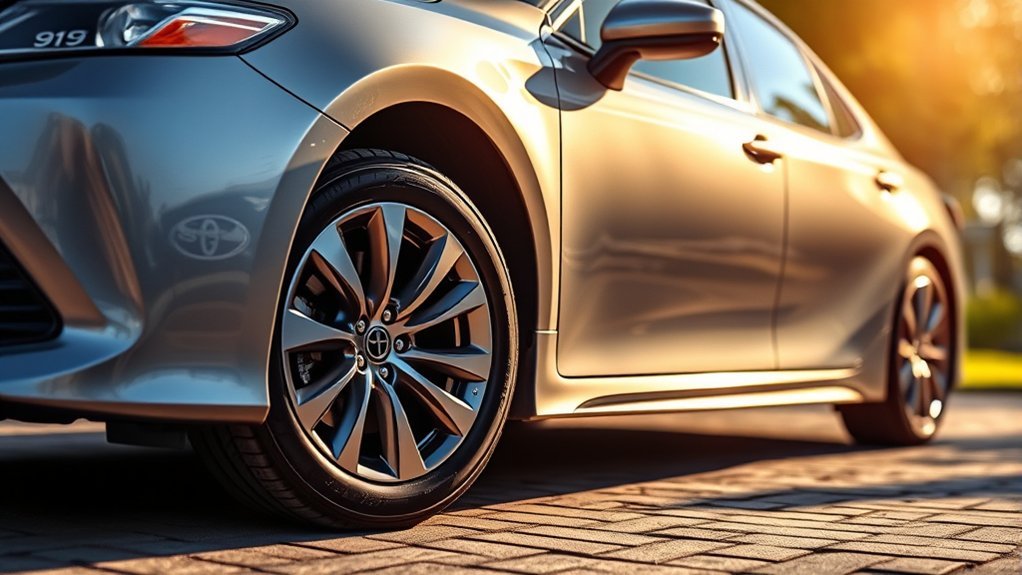
Wheel offset is one of the most important numbers to check before buying wheels for a Toyota Camry. It controls where the wheel sits in the wheel well, how much room you have near the strut and brake parts, and whether the tire may rub the fender. The right offset is not the same for every Camry, so always match it to your model year, trim, wheel width, and tire size.
Quick Answer
Toyota Camry wheel offset is usually a positive number because most Camry wheels tuck inward toward the suspension. Many late-model Camry setups fall around the +40 mm to +50 mm area, but the correct offset depends on the exact year, trim, wheel width, tire size, and brake clearance.
Key Takeaways
- Offset is the distance from the wheel centerline to the hub mounting surface.
- A lower offset moves the wheel outward; a higher positive offset moves it inward, assuming the same wheel width.
- Camry offset is not universal. Verify the exact spec for your year, trim, wheel width, and tire size before ordering.
- Offset must be checked with bolt pattern, center bore, wheel width, tire diameter, load rating, brake clearance, lug-seat type, and TPMS compatibility.
- If the tire rubs, vibrates, pulls, or wears unevenly after a wheel change, stop driving hard and have the fitment and alignment inspected.
At a Glance
| Time Required | 10–20 minutes to read the wheel stamping; 20–30 minutes to measure a loose wheel |
| Difficulty | Easy if the wheel is stamped; moderate if you need to measure backspacing |
| Tools Needed | Tape measure or ruler, straightedge, calculator, flashlight, and the wheel specs or stamping |
| Cost | Free if checking specs yourself; shop fitment checks may cost extra |
What Is Wheel Offset and How Is It Measured?
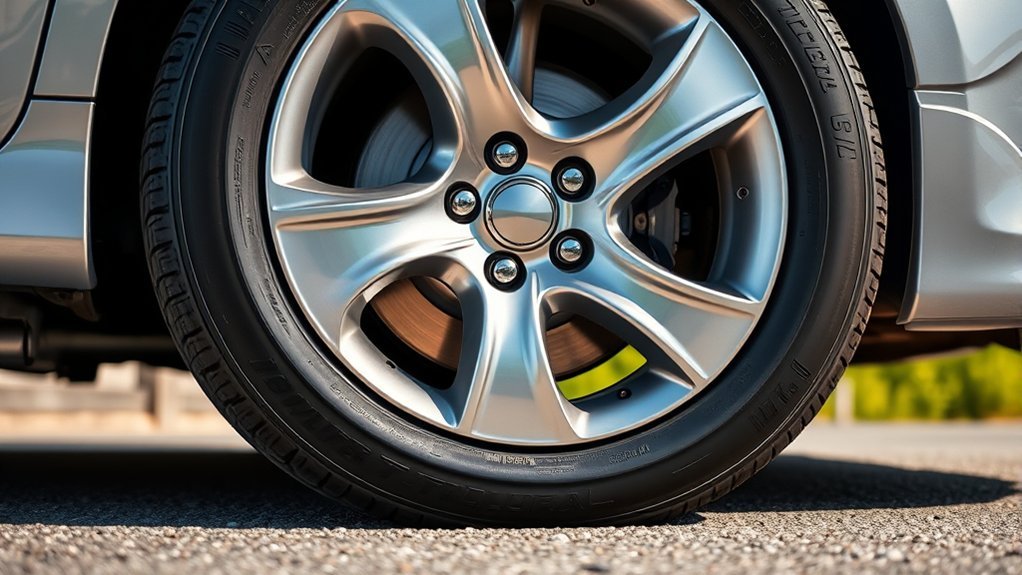
Wheel offset is the distance between the wheel’s centerline and the hub mounting surface. It is measured in millimeters and is usually marked as ET followed by a number, such as ET40 or ET50.
There are three basic offset types:
| Positive Offset | The mounting surface is toward the street side of the wheel centerline. This usually tucks the wheel farther inward. |
| Zero Offset | The mounting surface lines up with the wheel centerline. |
| Negative Offset | The mounting surface is toward the inner side of the wheel centerline. This pushes the wheel outward. |
For a Toyota Camry, you will usually be dealing with positive offset wheels. A lower positive offset moves the wheel outward compared with a higher positive offset, assuming the wheel width stays the same.
What Offset Does a Toyota Camry Need?
There is no single offset number that fits every Toyota Camry. The correct offset depends on the Camry’s generation, trim, wheel diameter, wheel width, tire size, suspension height, and brake package.
As a real-world example, the 2025 Toyota Camry brochure shows factory 16-inch, 18-inch, and 19-inch alloy wheel options depending on trim. Stock replacement wheel listings for the 2025 Camry show examples such as 16×6.5 wheels with a +40 mm offset and some 18×8 and 19×8 wheels with a +50 mm offset. That does not mean every Camry uses those exact numbers, but it shows why year and trim matter.
Note: The safest starting point is the offset stamped on your current OEM wheel or the exact OEM wheel part data for your Camry. If your car has aftermarket wheels already, do not assume those wheels match the original factory spec.
[Products Worth Considering]

This professional wheel and rim cleaning brush set lifts brake dust, grime, and dirt with soft, scratch-free microfiber and synthetic wool fibers. The rim brush bends up to 360 degrees for easy access to hard-to-reach areas around spokes, lips, and faces. Ideal for thorough cleaning of car, truck, motorcycle, bicycle, RV, and more wheel and tire surfaces.

Upgrade your wheels with MIKKUPPA M12x1.5 mag seat lug nuts built for secure, corrosion-resistant performance. These closed-end chrome lug nuts are a direct replacement for select Toyota models, including Camry, Corolla, RAV4, Sienna, Avalon, Highlander, Matrix, Venza, and Prius. Triple-chromium plating and cold-forged, heat-treated steel help deliver strength for daily driving and replacement needs.

These M14x1.5 closed-end chrome lug nuts are a one-piece replacement designed for secure fitment on compatible GM, Ford, and select Chrysler/Dodge models. Featuring a 60-degree conical seat and anti-rust chrome plating, they help resist corrosion and maintain a bright look for everyday driving. Built for long-term durability, they include OEM-style part references and are backed by 12 months of support.
Why Wheel Offset Matters for Your Toyota Camry
Offset changes where the wheel and tire sit in relation to the fender, strut, brake caliper, and suspension parts. A small change can make the car look better, but a poor match can create rubbing, vibration, uneven tire wear, or heavier steering.
Offset also works with wheel width. For example, an 8-inch-wide wheel with a +45 offset will not sit the same way as a 7-inch-wide wheel with a +45 offset. The wider wheel adds material to both the inside and outside, so you must check inner clearance and outer fender clearance together.
Warning: Do not buy wheels by offset alone. Always confirm bolt pattern, center bore, wheel width, tire size, load rating, brake clearance, lug-seat type, TPMS compatibility, and final lug torque. If the wheel rubs the brake caliper, strut, liner, or fender, it is not a safe fit.
Understanding Positive, Negative, and Zero Wheel Offset
Understanding the three offset types helps you predict how the wheel will sit on your Camry.
| Offset Type | What It Means | Camry Fitment Effect |
|---|---|---|
| Higher positive offset | Mounting pad is farther toward the wheel face | Wheel sits farther inward; may reduce fender poke but can reduce strut or brake clearance |
| Lower positive offset | Mounting pad is closer to the centerline than a higher ET wheel | Wheel sits farther outward; may improve stance but can rub the fender or liner |
| Zero or negative offset | Mounting pad is at or behind the centerline | Usually not typical for a Camry street setup and can create major clearance and handling issues |
A helpful way to think about it: if you compare a +35 wheel and a +50 wheel with the same width, the +35 wheel sits 15 mm farther outward. That outward movement may look sportier, but it also brings the tire closer to the fender.
Impact of Wheel Offset on Performance
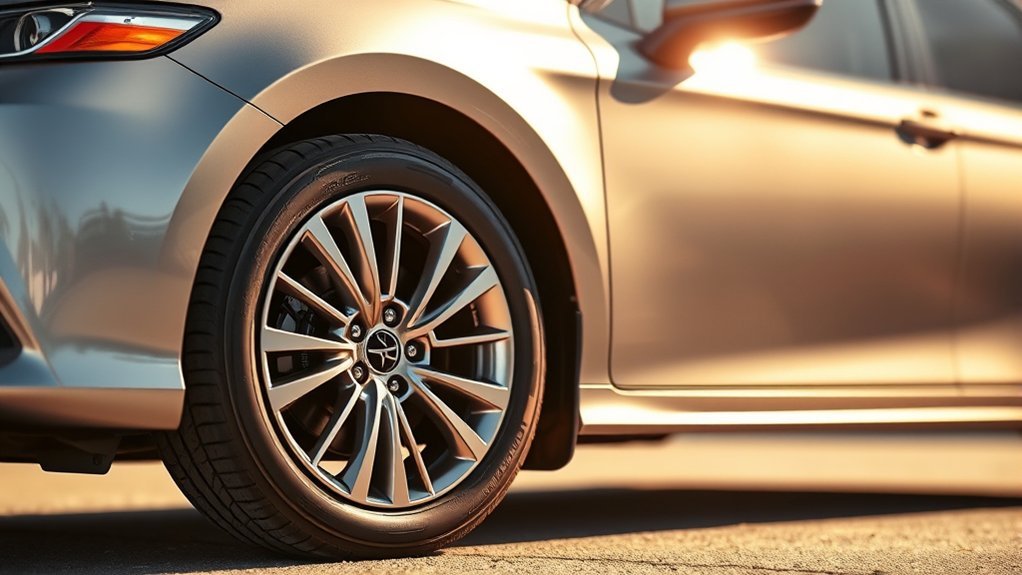
Wheel offset affects more than appearance. It can change steering feel, suspension clearance, fender clearance, and tire wear patterns. However, offset by itself does not guarantee better grip or cornering. The full wheel-and-tire package matters.
Handling and Steering Feel
A lower offset can widen the track, but it can also change scrub radius and steering effort. If the wheel moves too far outward, the steering may feel heavier, the wheel may kick back more over bumps, and the tire may contact the fender liner at full lock.
A higher positive offset can move the wheel too far inward. That may create clearance problems near the strut, brake caliper, or inner wheel well. The goal is not the highest or lowest number; the goal is a balanced fit that clears everything through the full steering and suspension range.
Tire Wear Patterns
Uneven tire wear can come from poor alignment, worn suspension parts, incorrect tire pressure, damaged wheels, or bad fitment. Incorrect offset can contribute if it changes geometry or causes the tire to rub.
After installing new wheels, check the tires after the first few drives. Look for scuff marks on the sidewall, fender liner, strut area, and inner shoulder. Also schedule an alignment if the car pulls, the steering wheel is off-center, or the tires begin wearing unevenly.
Aesthetic Considerations
Offset changes stance. A slightly lower positive offset can make the wheels sit closer to flush with the fenders. A higher positive offset tucks the wheels inward. The cleanest look is the one that still clears the fenders, suspension, and brakes without spacers or rubbing.
Pro Tip: Before mounting tires, test-fit one bare wheel on the front and rear. Turn the steering from lock to lock and check brake-caliper, strut, and fender clearance. It is easier to fix a wheel choice before tires are mounted.
Debunking Common Myths About Wheel Offset
Wheel offset advice online is often oversimplified. These are the most common myths Camry owners should avoid:
| Myth | Reality |
|---|---|
| Any Camry wheel offset will work on any Camry. | Offset varies by year, trim, wheel width, and tire size. Always verify your exact setup. |
| Negative offset always improves traction. | Negative offset mostly changes position and stance. It can also cause rubbing and steering problems. |
| A wider wheel fixes a bad offset. | A wider wheel can make clearance worse if the offset is not adjusted correctly. |
| If it bolts on, it fits. | A wheel can bolt on and still rub the brake caliper, fender liner, strut, or suspension under load. |
Steps to Measure and Determine the Right Wheel Offset for Your Camry
The best method is to read the wheel stamping. Look on the back of the wheel for markings such as 18x8J ET50. In that example, the wheel is 18 inches in diameter, 8 inches wide, and has a +50 mm offset.
If the offset is not stamped clearly, you can estimate it from backspacing:
- Remove the wheel safely and place it face down on a protected flat surface.
- Lay a straightedge across the back lip of the wheel.
- Measure from the hub mounting surface to the straightedge. This is backspacing.
- Measure the wheel width from bead seat to bead seat, not just outer lip to outer lip.
- Convert wheel width to millimeters by multiplying inches by 25.4.
- Divide the wheel width by 2 to find the centerline.
- Subtract the centerline from the backspacing. The result is the offset.
Formula: Offset = backspacing − half of wheel width. Keep the units the same before subtracting.
Note: DIY measurements can be off by a few millimeters because wheel lips and bead seats are not the same measuring points. For buying wheels, trust stamped specs, OEM part data, or a professional fitment check over a rough tape-measure estimate.
[Products Worth Considering]

Upgrade your wheels with MIKKUPPA closed-end lug nuts designed for reliable fit and corrosion resistance. The one-piece, cold-forged and heat-treated steel construction helps resist rust and stripping, while the integrated finish delivers a durable black appearance. Built to OEM standards with a conical 60-degree seat, these nuts provide a secure solution for compatible Ford, Honda, Jeep, and Chevrolet models.

Monitor tire tread wear with a smart, color-coded depth gauge that shows clear condition ranges at a glance. The bar is range marked for fast, easy readings, helping you maintain safer traction and performance. Each gauge is portable with a pocket clip, and the set includes 20 units for daily use and sharing.

The UYYE TPMS relearn tool helps activate and relearn tire pressure monitor sensors quickly, typically in minutes. It supports TPMS learn mode resetting using a simple three-step process: enter learn mode, position the tool near the valve stem, and press the learn button. Designed for specific GM models, it streamlines sensor programming and reduces trips to dealers or tire shops.
Understanding Wheel Offset and Its Relation to Backspacing
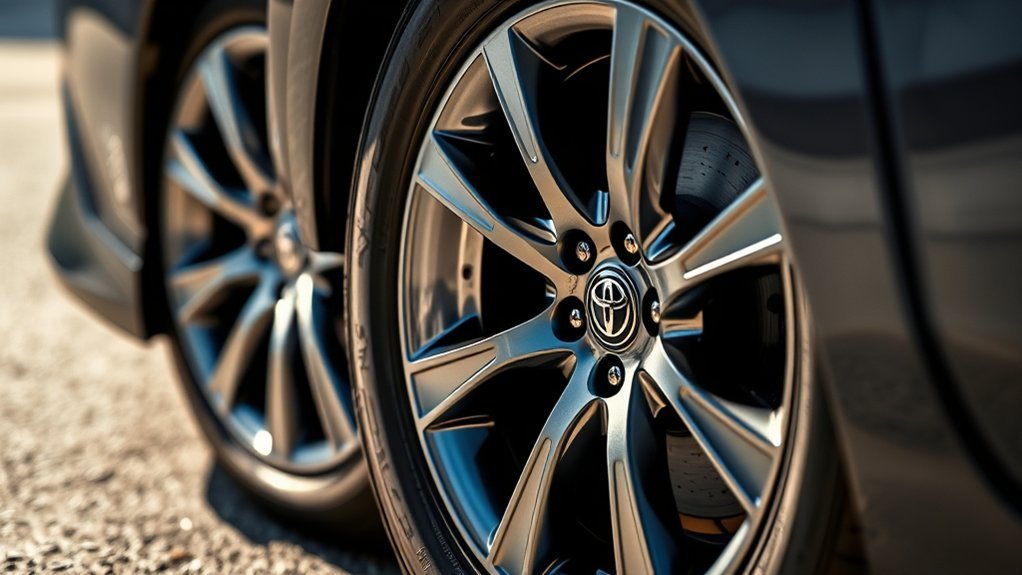
Backspacing and offset describe the same wheel position in different ways. Offset is measured from the centerline to the mounting surface. Backspacing is measured from the mounting surface to the back edge of the wheel.
More backspacing usually means the wheel sits farther inward. Less backspacing usually means the wheel sits farther outward. That is why a wheel can have the correct bolt pattern but still fail to fit if the offset or backspacing is wrong.
Identifying Symptoms of Incorrect Wheel Offset
If the offset is wrong for your Camry, you may notice problems right away or after a few days of driving. Watch for these symptoms:
- Tire rubbing when turning, braking, or driving over bumps
- Scrape marks on the inner fender liner or tire sidewall
- Wheel contact with the brake caliper, strut, or suspension arm
- Steering wheel vibration after installation
- Car pulling to one side
- Uneven tire wear on the inner or outer shoulder
- Heavier steering or stronger kickback over bumps
If any of these appear after changing wheels, have the wheel fitment, tire size, lug torque, hub seating, and alignment checked before continuing normal driving.
Tips for Choosing Aftermarket Wheels for Your Camry
When choosing aftermarket wheels, start with the full fitment package rather than offset alone. A good wheel choice should match your Camry’s size, safety, and clearance needs.
[Products Worth Considering]

This professional wheel and rim brush kit makes it easy to lift brake dust, grime, and dirt from wheels and tires without scratching finishes. The brushes feature soft, metal-free wool heads and a flexible 360-degree rim brush design for reaching hard-to-clean areas. Includes multiple brush types plus accessories for thorough car, motorcycle, and general vehicle detailing.

Steelman white tire marking crayons provide high-contrast, semi-permanent marks for repairing and inspecting tires and equipment. They write on wet or dry, smooth or coarse surfaces including rubber, metal, glass, and wood, making them ideal for puncture location and damage outlining. The lead- and zinc-free crayons resist weather and fading yet wipe away when you no longer need the marks.

These aluminum alloy tire valve stem caps with an O-ring seal help protect valve stems from corrosion while adding a clean, stylish look to your vehicle. The universal fit works across cars, trucks, motorcycles, bicycles, and more, making them an easy upgrade for everyday driving and off-road use. Installation is quick, and the included four-pack keeps all your tires dressed and protected.
Wheel Size Compatibility
Many late-model Camrys use factory wheel diameters from 16 to 19 inches depending on trim, but diameter is only one part of the fit. You also need the right wheel width and tire size so the overall tire diameter stays close to factory size. A tire that is too tall can rub; a tire that is too short can affect speedometer reading and ride quality.
Understanding Offset Specifications
Use your OEM wheel offset as the baseline. If you move to a wider wheel, do not assume the same offset will keep the same clearance. Compare the new wheel’s inner clearance and outer poke before buying.
For example, moving from a narrower OEM wheel to a wider aftermarket wheel can reduce inner suspension clearance even if the offset number looks familiar. A fitment calculator can help, but a real test-fit is still the safest check.
Consult Fitment Experts
Ask a tire shop, Toyota parts department, or wheel fitment specialist for help if you are lowering the car, using spacers, changing to much wider tires, or installing larger brakes. These changes reduce the margin for error.
Also remember that Toyota’s warranty materials warn that some third-party accessories are not designed, manufactured, or evaluated by Toyota. If an aftermarket wheel or accessory causes damage or altered performance, that related issue may not be covered by Toyota.
Aftermarket Wheel Fitment Checklist
- Offset: Match the safe range for your exact year, trim, wheel width, and tire size.
- Bolt pattern: Confirm the lug pattern before ordering. Many late-model Camry wheels use a 5-lug, 4.5-inch pattern, also written as 5×114.3 mm.
- Center bore: The wheel must center correctly on the hub or use proper hub-centric rings.
- Wheel width: Check both inner strut clearance and outer fender clearance.
- Tire size: Keep overall diameter close to the factory tire size unless a professional confirms otherwise.
- Load rating: Wheels and tires must be rated for the vehicle’s weight.
- Brake clearance: Check front brake calipers carefully; front clearance is often tighter than rear clearance.
- Lug hardware: Match the correct lug-seat type and torque specification.
- TPMS: Confirm tire pressure sensor compatibility.
- Alignment: Get an alignment if the car pulls, the steering wheel is off-center, or tire wear changes.
Frequently Asked Questions
What does +35 offset mean on a rim?
A +35 offset means the hub mounting surface is 35 mm toward the street side of the wheel centerline. On the same wheel width, a +35 wheel will sit 15 mm farther outward than a +50 wheel.
What does +25 offset mean for wheels?
A +25 offset means the mounting surface is 25 mm toward the street side of the wheel centerline. It is still positive offset, but it sits farther outward than a higher positive offset such as +40 or +50, assuming the wheel width is the same.
Is +35 offset good for a Toyota Camry?
It may work on some Camry wheel setups, but it is not automatically correct. A +35 offset can move the wheel outward compared with many newer OEM Camry wheels. Check your model year, wheel width, tire size, and fender clearance before using it.
Where can I find my Camry wheel offset?
Look on the back of the wheel for a marking such as ET40 or ET50. You can also check OEM wheel part data, ask a Toyota parts department, or use a trusted wheel fitment database for your exact year and trim.
Can wheel offset cause tire rubbing?
Yes. Too little positive offset can push the tire outward into the fender. Too much positive offset can move the wheel inward toward the strut, brake parts, or inner liner. Tire size and wheel width also affect rubbing.
Conclusion
The right Toyota Camry wheel offset keeps the wheel centered in a safe working space between the suspension and fender. Most Camry setups use positive offset, but the exact number depends on your year, trim, wheel width, and tire size. Use your OEM wheel specs as the baseline, verify every fitment number, and test for brake, strut, and fender clearance before driving on a new wheel setup.
Sources
- Tire Rack: What Is Wheel Offset? — backs up the definition of offset, positive offset, zero offset, negative offset, and handling concerns.
- Discount Tire: Wheel Offset & Backspacing — backs up the relationship between offset, backspacing, brake clearance, and suspension clearance.
- Toyota 2025 Camry Brochure — backs up current Camry wheel diameter examples by trim.
- Toyota Owners: 2025 Camry Tires — backs up tire inspection, rotation, and uneven wear checks.
- NHTSA TireWise — backs up tire, rim, and TPMS safety importance.
- OriginalWheels: 2025 Toyota Camry OEM Wheel Listings — backs up stock replacement wheel offset examples for 2025 Camry wheels.