
Tire sizing works by decoding the letters and numbers molded into the sidewall, such as P225/70R16 91S. Each part tells you something useful: tire type, section width, sidewall height, construction, rim diameter, load capacity, and speed rating. For the safest replacement choice, use the tire size on your vehicle’s Tire and Loading Information Label or owner’s manual first, then compare it with the size printed on the tire.
Quick Answer
A tire size like P225/70R16 91S means passenger tire, 225 mm section width, 70% aspect ratio, radial construction, 16-inch rim diameter, load index 91, and S speed rating. Always match the vehicle placard or owner’s manual before buying replacements.
Key Takeaways
- Tire size codes show type, width, aspect ratio, construction, rim diameter, load index, and speed rating.
- P means passenger, LT means light truck, and ST means special trailer.
- The first three-digit number is width in millimeters, and the next number is sidewall height as a percentage of that width.
- R means radial construction, and the following number must match your wheel rim diameter exactly.
- The safest tire-size reference is the driver’s door placard or owner’s manual, not only the tire currently installed.
At a Glance
| Time Required | 2 to 5 minutes to read and compare the sidewall and door placard |
| Difficulty | Easy once you know the order of the code |
| Tools Needed | Flashlight, owner’s manual, and a phone photo of the tire placard if needed |
| Cost | Free to check; replacement tire cost depends on size, type, and brand |
How to Read Tire Size
A tire code like P225/70R16 91S tells you several things at a glance. Read it from left to right:
- P means the tire is a passenger-vehicle tire.
- 225 is the section width in millimeters.
- 70 is the aspect ratio, meaning the sidewall height is 70% of the tire width.
- R means radial construction.
- 16 means the tire fits a 16-inch wheel rim.
- 91 is the load index.
- S is the speed rating.
The sidewall gives you the size of the tire currently on the vehicle, while the driver’s door placard gives the size recommended by the vehicle maker. If those two do not match, check the owner’s manual or ask a qualified tire shop before buying replacement tires.
Additionally, understanding tire performance characteristics can help you make a safer choice for your climate, road conditions, and driving style.
[Products Worth Considering]

Protect tire valves from water, dust, and sand to help prevent leaks and support safe driving. These universal stem caps install quickly by hand and feature durable aluminum alloy construction with an inner sealing ring for better air retention. Compatible with cars, SUVs, trucks, motorcycles, and bicycles for everyday convenience.

The 22800 wheel stud installer makes replacing wheel studs quick and secure, saving time and effort during tire service. It uses a ratchet or impact wrench to pull new studs firmly into place, helping when existing studs are too long. Compatible with most automotive wheels and light-duty truck wheel studs, it’s designed for easy, tool-assisted installation.
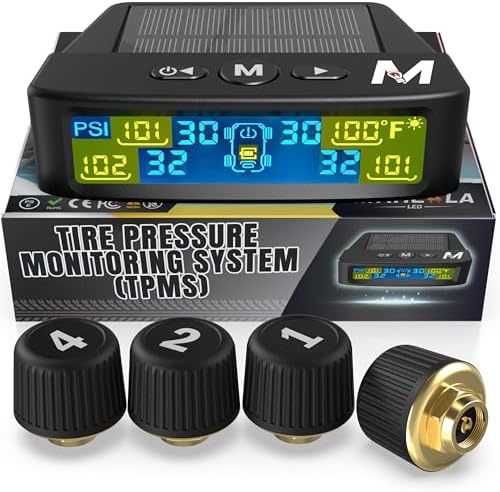
Marcala’s TPMS set of four sensors helps you monitor tire pressure and temperature in real time while driving, with updates every second. The bright color LCD uses auto-dimming for easy viewing, powered by dual solar and USB charging, and offers six alarm modes. Built for trailers, RVs, campers, trucks, and towing setups, the sensors support monitoring 1-4 wheels up to 98 PSI with IP67 waterproof protection.
What P, LT, and ST Mean
The letters in a tire size identify the tire’s intended use. P means passenger tire, commonly used on cars, minivans, crossovers, and many SUVs. LT means light truck tire, built for heavier loads, towing, and work use. ST means special trailer tire, made for trailers such as boat trailers, utility trailers, campers, and fifth wheels.
Do not treat these letters as decoration. They affect load capacity, ride feel, sidewall strength, inflation requirements, and the way the tire handles weight. For example, an LT tire may be useful for towing or carrying heavier loads, but it can ride firmer than a passenger tire. An ST tire is designed for trailer use and should not be used as a normal passenger-vehicle tire.
Warning: Never choose a tire with a lower load index or speed rating than your vehicle manufacturer requires unless the vehicle maker specifically approves that change. A tire that cannot carry the required load can overheat, wear faster, or fail under stress.
Additionally, understanding UTQG ratings can further help you compare treadwear, traction, and temperature grades, but UTQG ratings are separate from the tire size code.
Decode Width, Aspect Ratio, and Construction
After the tire type, the first three-digit number is the tire width, also called section width. In P225/70R16, the tire is about 225 mm wide from sidewall to sidewall when measured on an approved rim width.
The next number is the aspect ratio. In this example, 70 means the sidewall height is 70% of the 225 mm width. That gives an approximate sidewall height of 157.5 mm. A higher aspect ratio usually means a taller sidewall and a softer ride. A lower aspect ratio usually means a shorter sidewall, sharper steering response, and less cushion over potholes.
The letter after the aspect ratio shows the construction type. R means radial construction, which is the standard design for most modern passenger vehicles. You may see older or specialty markings such as D for diagonal or B for bias-belted, but most everyday cars, SUVs, and light trucks use radial tires.
Pro Tip: If you compare two tire sizes, check overall diameter as well as width. A wider tire with a different aspect ratio may be taller, shorter, or almost the same height as the original.
Understanding all-season tire performance can also help you choose a tire that fits your driving conditions, not just your wheel size.
Read Load Index, Speed Rating, and Rim Diameter
The number after the construction letter is the rim diameter. In P225/70R16, the tire must be mounted on a 16-inch wheel. This number must match the wheel exactly. A 16-inch tire will not fit a 17-inch wheel, and a 17-inch tire will not fit a 16-inch wheel.
The load index is usually the two- or three-digit number after the tire size. It shows the maximum load each tire can carry when properly inflated. For example, a load index of 91 equals 1,356 pounds per tire. Do not guess here. The replacement tire should meet or exceed the load index required by your vehicle’s placard, owner’s manual, or tire professional.
The speed rating is the final letter, such as S, T, H, V, W, or Y. It shows the tested speed capability of the tire under controlled conditions. For example, Q is commonly listed at 100 mph, while S is commonly listed at 112 mph. A speed rating is not permission to drive that fast; it is a tire capability rating that must still match your vehicle’s requirements and local laws.
[Products Worth Considering]
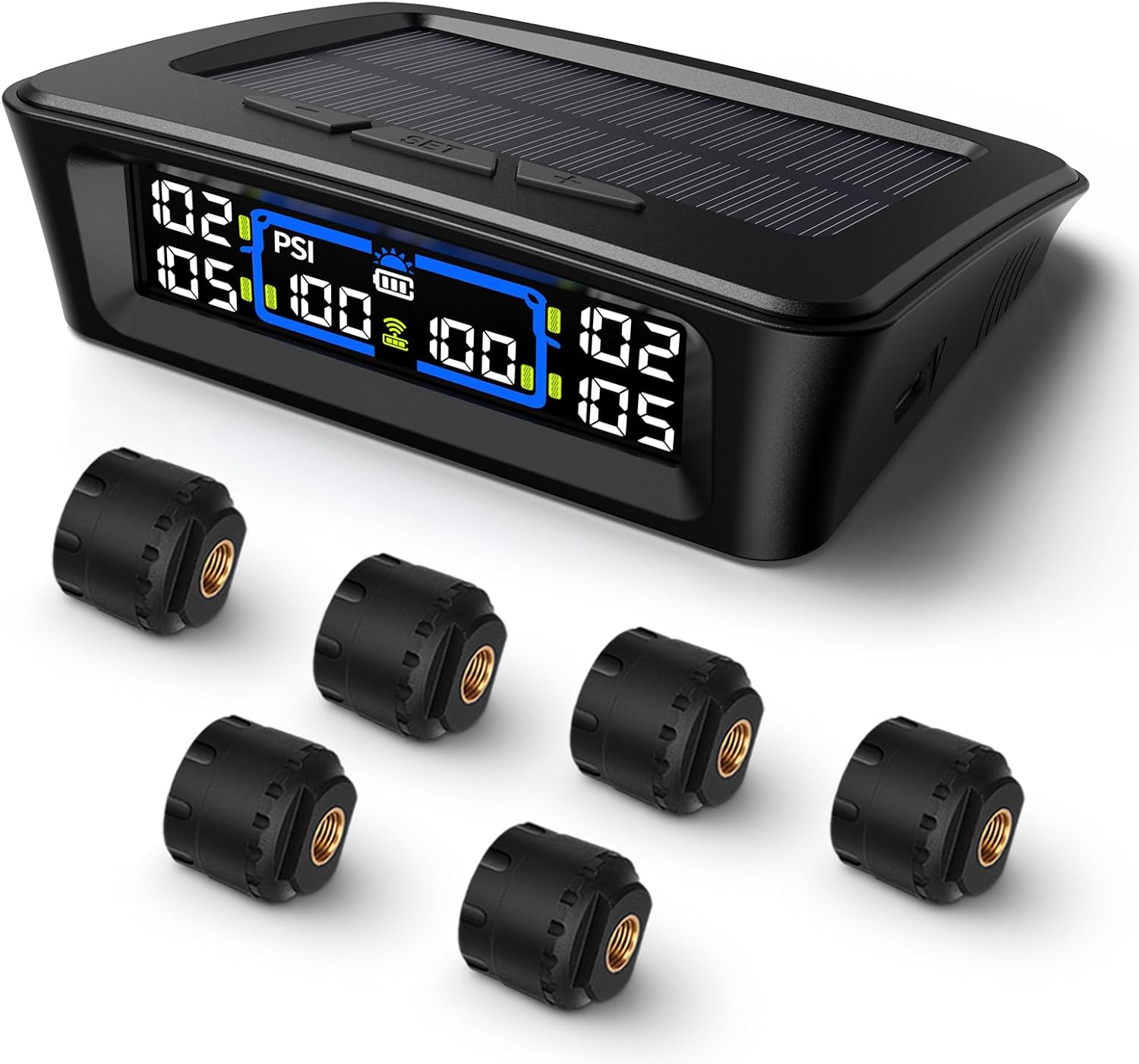
The Tymate TM12 RV TPMS delivers real-time tire pressure and temperature monitoring with a stable 433Hz display for safer long-distance driving. It supports simultaneous monitoring across vehicle and trailer zones, includes six alarm modes for pressure, temperature, leakage, battery, and signal loss, and features easy DIY installation with auto calibration. Power is supplied via USB-C charging or solar recharging, with a wide 0–144 PSI range and up to 50 ft signal coverage for RVs and towable trailers.

Keep your tires properly inflated with this analog VONDIOR tire pressure gauge, designed for fast, easy readings without batteries. The swiveling, two-axis hose and large glow dial help you measure at any tire angle with instant visibility. Built with a protective rubber shield, it supports durable, low-maintenance use for cars and trucks.

Replace worn or missing TPMS sensors with a pre-programmed 4-pack designed for compatible GM vehicles. These 315MHz sensors provide real-time tire pressure monitoring and alert you if pressure is too high, too low, or if a rapid air leak occurs. Most installations are ready with minimal relearn effort after mounting, helping improve safety and driving confidence.
Find Tire Size on the Sidewall and Doorjamb
You can find tire size in two main places: the tire sidewall and the vehicle’s Tire and Loading Information Label. The sidewall tells you what is installed now. The label, usually on the driver’s side door edge, doorjamb, or B-pillar, tells you the size and pressure the vehicle maker recommends.
Use the door placard or owner’s manual as the main fitment source. Use the sidewall to confirm what is currently mounted.
- Sidewall markings identify the current tire size, load index, speed rating, DOT code, and other markings.
- Doorjamb labels list the original or manufacturer-recommended tire size and cold inflation pressure.
- The owner’s manual may list alternate approved sizes for certain trims or wheel packages.
- A tire shop can verify wheel width, clearance, load rating, and speed rating before you change sizes.
Federal rules for vehicles under 10,000 pounds GVWR require tire and loading placards to show information such as cold tire inflation pressure and tire size designation. You can review the regulatory language in 49 CFR 571.110.
Additionally, understanding treadwear warranties can help you compare tire life, but warranties should not override correct size, load, and speed requirements.
What the DOT Code and UTQG Markings Mean
Tire sizing is not the only information on the sidewall. You may also see a DOT Tire Identification Number, often called the DOT code or TIN. The last four digits usually show the week and year the tire was made. For example, a tire ending in 2325 was made in the 23rd week of 2025. This code also helps identify tires in recalls and recordkeeping under 49 CFR Part 574.
You may also see UTQG markings for treadwear, traction, and temperature on many passenger tires sold in the United States. These are helpful for comparing tire performance categories, but they do not replace the tire size, load index, speed rating, or pressure shown on the vehicle placard. NHTSA explains the UTQG system through its TireWise tire safety resources.
Safe Checklist Before Changing Tire Size
Changing tire size can work, but it should be checked carefully. A small change in width or diameter can affect steering, braking, ride comfort, fuel economy, speedometer accuracy, fender clearance, gearing, and driver-assistance systems.
- Confirm the original tire size on the door placard or owner’s manual.
- Match or exceed the required load index.
- Match or exceed the required speed rating unless the vehicle maker approves otherwise.
- Check wheel width compatibility for the new tire size.
- Check fender, suspension, brake, and mud-flap clearance at full steering lock and full suspension travel.
- Keep overall tire diameter close to the approved size to reduce speedometer and transmission issues.
- Verify TPMS compatibility after installation.
- Ask a qualified tire shop if you are changing width, diameter, load range, or wheel size.
Note: The maximum pressure molded on the tire sidewall is not the normal recommended tire pressure for your vehicle. Use the cold tire pressure listed on the vehicle placard or owner’s manual.
[Products Worth Considering]

Secure your trailer or RV tires with a scissor-style wheel chock stabilizer that applies opposing force to help prevent wheel shift. It fits tight wheel gaps from 3.5 inches up to 12 inches and works for travel trailers, campers, fifth wheels, toy haulers, and heavy-duty trucks. The surface uses new electrophoretic technology to help prevent rust for reliable travel use.

Secure your vehicle during transport with this 4-pack of heavy-duty tire tie down straps designed for trailers and hauling. The ratchet system with flat hooks and D-rings helps you tension the straps quickly, while the wheel-friendly design protects tires. With high break strength and corrosion-resistant hardware, these straps provide reliable, confidence-inspiring tie-down security for cars, trucks, and UTVs.

TIRESHIELD PRO RV tire covers in a set of four deliver year-round protection against UV rays, cracking, fading, water, and snow. The StormLock-System helps keep the covers securely fastened through high wind, while heavy-duty, double-stitched construction supports long-lasting performance. Designed for universal fit, they’re intended for RV, camper, truck, car, and trailer tires within the 26–28.75 inch diameter range, with easy wipe-clean care and storage in the included bag.
Frequently Asked Questions
Can I fit 275 tires instead of 265?
Maybe, but only after checking fitment. A 275 tire is usually about 10 mm wider than a 265 tire in the same series, but the final diameter also depends on aspect ratio and wheel size. Check wheel width, fender clearance, suspension clearance, load index, speed rating, and speedometer impact before installing it.
What does 225/65R17 mean?
225/65R17 means the tire is about 225 mm wide, the sidewall height is 65% of that width, the tire uses radial construction, and it fits a 17-inch wheel. You still need the load index and speed rating, such as 102H, to confirm the full replacement spec.
Is it better to get 17-inch or 18-inch tires?
Choose the wheel and tire size approved for your vehicle first. In general, 17-inch setups often ride softer and cost less because they usually have taller sidewalls. 18-inch setups can feel sharper and may look sportier, but they often ride firmer. The right choice depends on approved fitment, road quality, tire cost, and your handling priorities.
Should I get 33-inch or 35-inch tires?
Choose 33-inch tires if you want an easier fit, less weight, better fuel economy, and fewer drivetrain changes. Choose 35-inch tires only if you need more ground clearance and have enough clearance, gearing, brake capacity, and suspension setup to support them. Larger tires can affect acceleration, braking, speedometer accuracy, and stability systems.
Can I use a tire with a lower load index?
Do not use a lower load index than your vehicle requires unless the vehicle manufacturer specifically approves it. Load index tells you how much weight each tire can carry. Using a tire with too little load capacity can increase heat, wear, and failure risk.
Is the tire size on the sidewall always correct for my car?
Not always. The sidewall shows what is currently installed, but a previous owner or shop may have installed a different size. For the recommended size, check the Tire and Loading Information Label on the driver’s side door area or the owner’s manual.
Conclusion
Now you can decode your tire size with confidence. Start with the vehicle placard or owner’s manual, then read the tire sidewall from left to right. Check tire type, width, aspect ratio, construction, rim diameter, load index, and speed rating before you buy. If you want to change size, verify clearance, wheel width, load rating, speed rating, and overall diameter first. Correct tire sizing protects fitment, handling, tire life, and safety.
Sources
- NHTSA TireWise — tire safety, tire buying guidance, tire size label location, tire pressure, and UTQG overview
- 49 CFR 571.110 — tire selection, rim, placard, tire size designation, load, and inflation-pressure requirements
- 49 CFR Part 574 — tire identification and recordkeeping rules for DOT/TIN information
- 49 CFR 575.104 — Uniform Tire Quality Grading Standards

