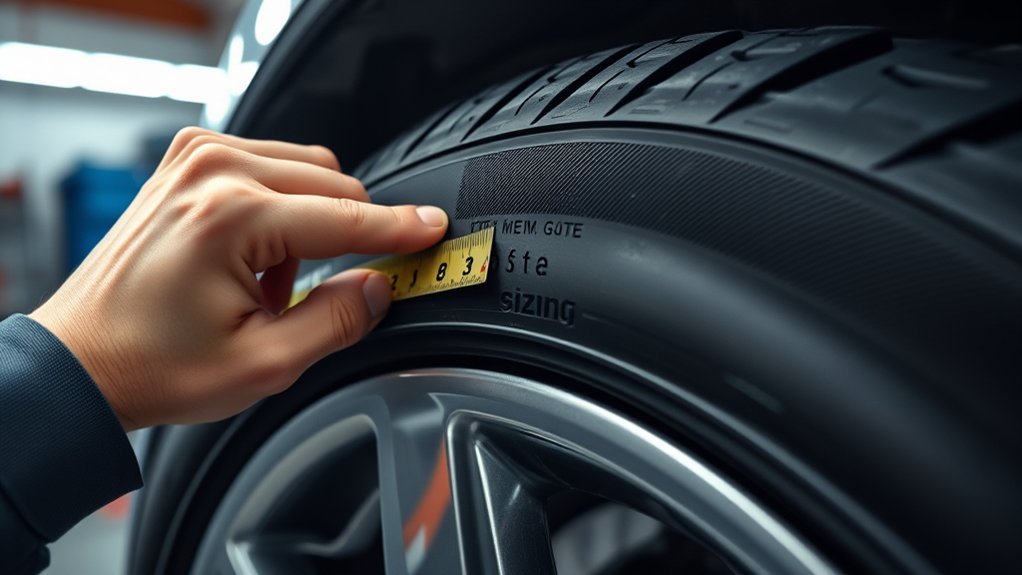
You can tell a tire’s width and diameter by reading the size code molded into the sidewall. A code like P225/70R16 91S tells you the tire type, section width, aspect ratio, construction, rim diameter, load index, and speed rating. The key is knowing which number describes the wheel opening and which numbers you need to calculate the tire’s full outside diameter.
Quick Answer
Look at the tire sidewall code. In P225/70R16, 225 is the tire’s section width in millimeters, 70 is the sidewall height as a percentage of that width, and 16 is the wheel/rim diameter in inches. To find overall tire diameter, calculate both sidewalls plus the rim diameter.
Key Takeaways
- The first three-digit number in a metric tire size is the section width in millimeters.
- The number after the slash is the aspect ratio, or sidewall height as a percentage of width.
- The number after R is the wheel or rim diameter, not the tire’s full outside diameter.
- Load index and speed rating appear after the size and must meet or exceed your vehicle’s requirements.
- Always confirm replacement size, load rating, speed rating, and inflation pressure on the driver’s door placard or in the owner’s manual.
At a Glance
| Time Required | 2 to 5 minutes per tire |
| Difficulty | Easy once you know the code |
| Tools Needed | Flashlight, tire sidewall, owner’s manual or driver’s door placard, calculator for overall diameter |
| Cost | Free |
How to Find Tire Size on the Sidewall
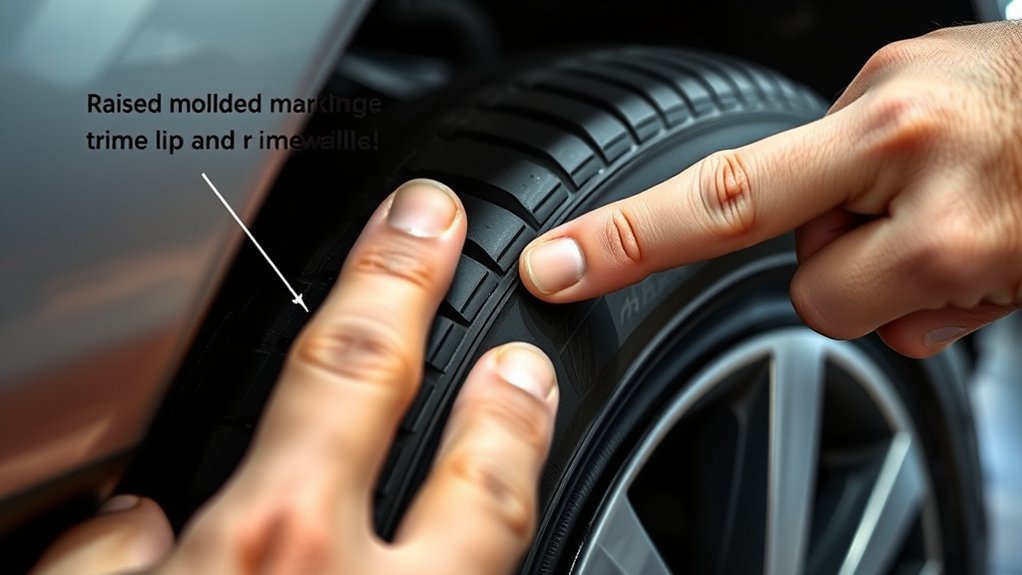
Start by looking for the largest letter-and-number code on the outer sidewall. It will usually look similar to P225/70R16 91S, 225/55R17 97V, or LT265/70R17/E. This code is different from the brand name, model name, DOT code, maximum pressure, and UTQG rating.
Read the tire size from left to right:
- Service type: A prefix such as P, LT, T, or ST tells you the tire’s intended use.
- Section width: The first three-digit number shows width in millimeters.
- Aspect ratio: The number after the slash shows sidewall height as a percentage of width.
- Construction: R means radial construction. D or a dash can indicate bias-ply construction.
- Rim diameter: The number after R shows the wheel diameter in inches.
- Service description: The number and letter after the size show load index and speed rating.
Warning: Do not buy tires by width and rim diameter alone. The load index, speed rating, tire type, and vehicle placard specifications matter for safe fitment.
Read Tire Width, Aspect Ratio, and Rim Diameter
The three numbers most people notice first are width, aspect ratio, and rim diameter. In P225/70R16, the 225 means the tire is about 225 millimeters wide from sidewall to sidewall when mounted on an approved rim. The 70 means the sidewall height is 70% of that width. The 16 means the tire fits a 16-inch wheel.
[Products Worth Considering]

The Big Rig Defense Tire Thumper is a truck tire pressure checker that lets you quickly check multiple tires by giving them a firm whack. Listen for a reassuring thump and feel the stick bounce when a tire is fully inflated, helping you get back on the road safely. It features a comfortable, glove-friendly handle and a secure wrist strap for confident use on busy routes.

The 22800 wheel stud installer makes replacing wheel studs quick and secure, saving time and effort during tire service. It uses a ratchet or impact wrench to pull new studs firmly into place, helping when existing studs are too long. Compatible with most automotive wheels and light-duty truck wheel studs, it’s designed for easy, tool-assisted installation.

TP-M13W combination repair unit kit includes wrapped stems with matching patches for fast, reliable tire repairs. It’s suitable for both radial and bias ply tires and is designed for chemical or heat vulcanization. Gray vulcanizing gum with blue backing helps create a strong bond, with the stem portion wrapped for added effectiveness.
Tire Width Basics
Tire width in a metric size is technically the section width, not always the tread width touching the road. For example, a 225 tire is approximately 225 mm wide at its widest sidewall section when mounted and inflated under standard measuring conditions.
That matters because two tires with the same listed width can have slightly different actual measurements depending on brand, tread design, rim width, and tire category. A wider tire may also need more clearance around the fender liner, suspension, brake components, and inner wheel well.
Aspect Ratio Meaning
The aspect ratio is the second number in the size. In 225/70R16, the sidewall height is 70% of 225 mm. That gives a sidewall height of about 157.5 mm, or 6.2 inches.
A lower aspect ratio usually means a shorter sidewall. That can sharpen steering response, but it may also make the ride firmer and leave less cushion against potholes. A higher aspect ratio gives a taller sidewall, which can improve ride comfort and off-road sidewall protection, but may feel less crisp in handling.
Rim Diameter Check
The number after the construction letter is the rim diameter. In P225/70R16, the 16 means the tire is made for a 16-inch wheel. This number must match your wheel exactly. A 16-inch tire cannot be safely mounted on a 17-inch wheel, and a 17-inch tire cannot be safely mounted on a 16-inch wheel.
Note: Rim diameter is not the same as overall tire diameter. Rim diameter is the wheel opening. Overall tire diameter includes the wheel plus both sidewalls.
How to Calculate Overall Tire Diameter
If you want the tire’s full outside diameter, use the width, aspect ratio, and rim diameter together. This is helpful when comparing tire upgrades, checking speedometer changes, or answering questions like whether a metric size is close to a 33-inch tire.
Overall tire diameter = rim diameter + 2 × (section width × aspect ratio ÷ 100 ÷ 25.4)
Example for 225/70R16:
- Sidewall height: 225 × 0.70 = 157.5 mm
- Convert to inches: 157.5 ÷ 25.4 = 6.2 inches
- Add both sidewalls to the rim: 16 + 6.2 + 6.2 = about 28.4 inches
So a 225/70R16 tire fits a 16-inch rim, but its overall outside diameter is about 28.4 inches.
Decode Load Index and Speed Rating
After the tire size, you will usually see a number and a letter, such as 91S, 97V, or 102H. This is the service description. The number is the load index, and the letter is the speed rating.
The load index is a standardized code for the maximum load one tire can carry when properly inflated. For example, a load index of 91 corresponds to 615 kg, or about 1,356 pounds, per tire in standard load-index charts. The speed rating letter identifies the maximum speed capability under specified conditions. Common examples include S, T, H, V, W, and Y.
Always match or exceed the vehicle manufacturer’s required load index and speed rating unless the tire manufacturer, vehicle manufacturer, or a trained tire professional gives a safe exception. A tire with a higher load index does not increase your vehicle’s legal or mechanical payload capacity. The vehicle’s axle ratings, suspension, wheels, and placard limits still apply.
Pro Tip: If your vehicle came with XL, Extra Load, HL, or LT tires, do not replace them with a standard-load tire of the same size unless the vehicle manufacturer allows it.
Identify P, LT, T, ST, C, and HL Tire Types
Tire prefixes and suffixes tell you what the tire was built to do. Read them before comparing sizes because two tires with similar dimensions may not carry the same load or serve the same vehicle type.
| Marking | Meaning | Common use |
|---|---|---|
| P | P-metric passenger tire | Cars, minivans, crossovers, many SUVs |
| No prefix | Metric or Euro-metric passenger tire | Passenger vehicles, often with different load rules than P-metric equivalents |
| LT | Light truck tire | Trucks, SUVs, towing, hauling, heavier-duty service |
| T | Temporary spare | Short-term emergency use only |
| ST | Special trailer tire | Trailers, not passenger vehicles |
| C | Commercial-rated metric tire | Vans and delivery vehicles |
| HL | High Load tire | Some heavier modern vehicles, including certain EVs |
You may also see XL or Extra Load. These tires are built to carry more load than standard-load versions of the same size when inflated to the required pressure. On LT tires, you may see a load range letter such as C, D, or E. That is not the same as the speed rating letter.
Know the Difference Between Radial and Bias Tires
The construction letter sits between the aspect ratio and rim diameter. In most modern passenger and light-truck sizes, the letter is R, which means radial construction. Radial tires use body plies arranged across the tire, helping the tread and sidewall work more independently for everyday grip, heat control, fuel economy, and tread life.
Radial Tire Construction
In a size such as 225/60R17, the R means radial. Radial construction is the standard for most modern passenger cars, SUVs, and light trucks. For normal road use, you should generally replace radial tires with radial tires unless the vehicle, trailer, or specialty application calls for something else.
Bias Ply Construction
Bias-ply tires may use a D, B, or a dash in place of R, depending on tire type and standard. They use diagonal ply layers, which can create a stiffer sidewall and different load behavior. Bias-ply designs still appear in some trailer, vintage, agricultural, and specialty applications, but they are not the normal choice for modern passenger cars.
Understand Flotation Tire Sizes
Some light-truck and off-road tires use flotation sizing instead of standard metric sizing. A flotation size may look like 33×12.50R15LT. In that format, the first number is the approximate overall tire diameter in inches, the second number is the section width in inches, the R indicates radial construction, and the final number is the wheel diameter in inches.
For example, 33×12.50R15LT means the tire is about 33 inches tall, about 12.5 inches wide, radial, and made for a 15-inch wheel. The LT marking means it is built for light-truck service.
Do not assume a flotation size and a metric size are automatically equivalent. Compare overall diameter, section width, wheel diameter, load capacity, speed rating, rim width range, and vehicle clearance before switching formats.
Read DOT Date Code and UTQG Markings
The sidewall also carries safety and identification markings beyond the size. In the United States, the DOT code or Tire Identification Number begins with DOT. For tires made in 2000 or later, the last four digits of the full DOT/TIN show the manufacture week and year. For example, 2324 means the tire was made in the 23rd week of 2024.
The full DOT/TIN may appear on only one side of the tire, so you may need to check the inner sidewall. Tire age does not replace visual inspection, but it helps you know when to check manufacturer service-life guidance or have a tire professional inspect the tire.
You may also see UTQG markings on many passenger tires. UTQG stands for Uniform Tire Quality Grading and includes treadwear, traction, and temperature grades. These ratings help compare tires, but they do not replace size, load, speed, seasonal rating, or vehicle fitment requirements.
Note: The maximum pressure molded on the tire sidewall is not the same as your vehicle’s recommended tire pressure. Use the cold inflation pressure on the driver’s door placard or in the owner’s manual unless the vehicle or tire manufacturer gives different guidance.
Check Seasonal and Traction Markings
Sidewalls may include M+S, M&S, or M/S, which stands for mud and snow. This marking does not automatically mean the tire is a true winter tire. For winter traction, look for the three-peak mountain snowflake symbol, often called 3PMSF, which identifies tires that meet a snow-traction performance requirement.
Other marks may include rotation arrows for directional tires, “outside” for asymmetrical tires, run-flat markings, OE codes, reinforced or XL markings, and treadwear indicators. These do not change the basic width and diameter reading, but they can affect installation and replacement choices.
Compare Tire Size Options Safely
Once you know the tire’s width and diameter, compare any replacement tire against your vehicle manufacturer’s specifications. The safest first stop is the Tire and Loading Information Label on the driver’s door edge or door post, followed by the owner’s manual.
| Check | What to verify | Why it matters |
|---|---|---|
| Tire size | Matches the placard or approved alternate | Fit, speedometer accuracy, clearance |
| Load index | Meets or exceeds OEM requirement | Carrying capacity and heat control |
| Speed rating | Meets or exceeds OEM requirement | Safe performance under load and speed |
| Overall diameter | Close to original unless approved | Speedometer, gearing, ABS, AWD systems |
| Rim width range | Tire is approved for your wheel width | Mounting safety and tread shape |
| Clearance | No rubbing at full lock, compression, or load | Prevents damage to tires, bodywork, and suspension |
If you are changing size, check clearance with the steering turned fully left and right, and remember that suspension compression can reduce space when the vehicle is loaded or moving. AWD vehicles can be especially sensitive to tire diameter differences, so matching size and tread depth matters.
[Products Worth Considering]

The SAFELIFE dial tire tread depth gauge measures tread depth in 1/32 inch increments with clear, easy-to-read 2-inch dial face. Color zones using a traffic light system help you quickly judge whether tread is low, marginal, or ample for safer driving. Built with a durable zinc cast body and a metal detect probe for precise, comfortable use across cars, motorcycles, trucks, and buses.

Accurately measure tire tread depth with a calibrated gauge marked from 0 to 1 inch in 1/32 inch increments. The color-coded bar helps you quickly identify tread condition ranges, supporting safe driving for trucks, motorcycles, automobiles, and passenger vehicles.

Protect tire valves from water, dust, and sand to help prevent leaks and support safe driving. These universal stem caps install quickly by hand and feature durable aluminum alloy construction with an inner sealing ring for better air retention. Compatible with cars, SUVs, trucks, motorcycles, and bicycles for everyday convenience.
Check Tire Size Changes Before You Upgrade
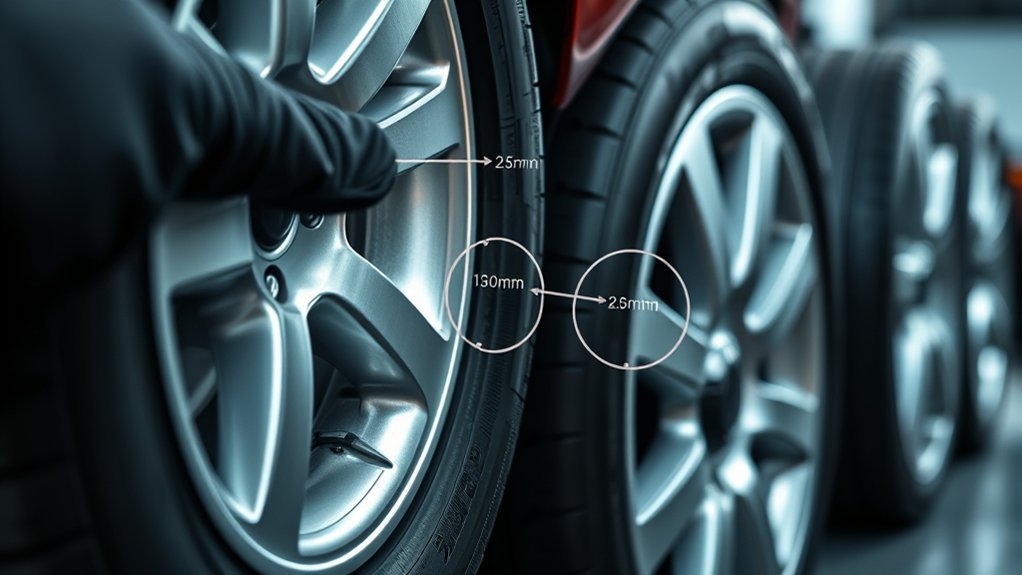
Before you upgrade tire size, compare the new tire with the original size. A taller tire may increase ground clearance, but it can also change speedometer readings, braking feel, acceleration, gearing, and fender clearance. A wider tire may improve appearance or grip in some conditions, but it can rub or reduce fuel economy if the fitment is wrong.
Use these checks before committing:
- Confirm the original size, load index, speed rating, and pressure on the vehicle placard.
- Calculate overall diameter difference between the old and new tire.
- Confirm wheel diameter and rim width compatibility.
- Check load index, speed rating, load range, XL, or HL requirements.
- Inspect clearance around suspension, brakes, fenders, and mud flaps.
- Ask a trained tire professional if the new size is outside the vehicle manufacturer’s listed options.
Warning: Never install a tire with a lower load index than your vehicle requires. Overloading a tire can increase heat buildup and raise the risk of tire failure.
[Products Worth Considering]
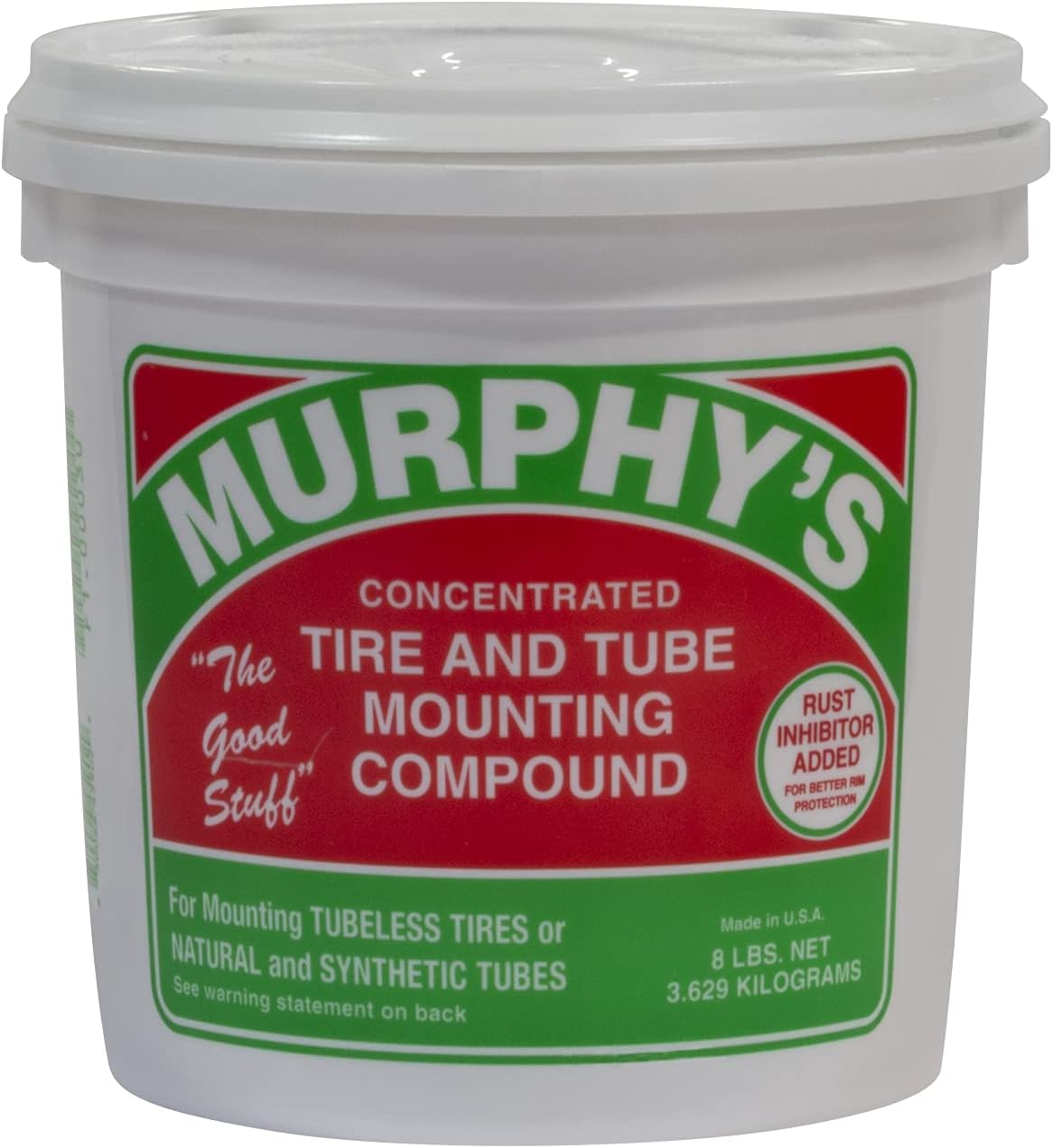
A concentrated tire and tube mounting compound designed to help simplify mounting rubber tires and tubes on passenger, semi truck, construction, and OTR applications. Its ultra-thick formula packs beads effectively and includes rust inhibitors to help protect against corrosion during use.

Keep your tires properly inflated with this analog VONDIOR tire pressure gauge, designed for fast, easy readings without batteries. The swiveling, two-axis hose and large glow dial help you measure at any tire angle with instant visibility. Built with a protective rubber shield, it supports durable, low-maintenance use for cars and trucks.

Upgrade your 2024-2026 Tesla Model 3 Highland with REEVAA all-weather mud flaps designed for seamless fit along the original body lines. The set of four delivers strong splash protection against mud, gravel, and road debris while using OEM-grade durable materials. Installation is non-destructive with original hole positions and snap-in clips, and the aerodynamic design helps minimize impact on efficiency.
Why the Right Tire Size Matters
The right tire size keeps your vehicle’s handling, braking, ride quality, load capacity, and safety systems working as intended. Tire width affects clearance and steering feel. Aspect ratio affects sidewall height and ride comfort. Rim diameter must match the wheel. Overall tire diameter affects speedometer accuracy, gearing, and clearance.
Incorrect sizing can cause rubbing, poor handling, inaccurate speed readings, extra stress on suspension parts, reduced fuel efficiency, uneven wear, and unsafe load capacity. The best replacement tire is not simply the one that “fits” the wheel. It is the tire that matches the vehicle’s size, load, speed, pressure, and service requirements.
Frequently Asked Questions
How do you read tire size from the sidewall?
Read the code from left to right. In P225/70R16 91S, P means passenger tire, 225 is section width in millimeters, 70 is aspect ratio, R means radial, 16 is rim diameter in inches, 91 is load index, and S is speed rating.
Is a 285 tire a 33-inch tire?
Not always. The width number alone does not tell you overall diameter. A 285/70R17 is about 32.7 inches tall, while a 285/75R17 is about 33.8 inches tall. You need the width, aspect ratio, and rim diameter to calculate the full height.
What is the diameter of a 235/35R20 tire?
A 235/35R20 tire is about 26.5 inches in overall diameter. The sidewall is 235 × 0.35 = 82.25 mm, or about 3.24 inches. Add two sidewalls to the 20-inch rim: 20 + 3.24 + 3.24 = about 26.5 inches.
How do you tell the width and diameter of a tire?
Use the sidewall size code. The first three-digit number is the section width in millimeters. The number after R is the rim diameter in inches. To find overall tire diameter, calculate the sidewall height from the width and aspect ratio, double it, and add the rim diameter.
Where do I find the correct tire size for my vehicle?
Check the Tire and Loading Information Label on the driver’s door edge or door post. You can also check the owner’s manual. The placard gives the manufacturer’s recommended tire size and cold inflation pressure for the vehicle.
What does the DOT date code mean on a tire?
The DOT/TIN code identifies the tire and includes its manufacture date. For tires made in 2000 or later, the last four digits show the week and year. For example, 2324 means the tire was manufactured in the 23rd week of 2024.
Conclusion
To tell a tire’s width and diameter, start with the sidewall size code. The first three-digit number gives section width in millimeters, the number after R gives rim diameter in inches, and the aspect ratio lets you calculate the tire’s full outside diameter. Before buying replacements or upgrades, also check load index, speed rating, tire type, DOT age, rim width, and the vehicle placard. Small numbers on the sidewall make a big difference in fit, handling, and safety.
Sources
- NHTSA TireWise — tire buying, safety ratings, vehicle placard guidance, and UTQG overview.
- Tire Industry Association: Reading a Tire Sidewall — width, aspect ratio, construction, rim diameter, service description, DOT, and UTQG markings.
- Michelin: Tire Load Rating and Speed Rating — load index, speed rating, XL, and replacement-rating guidance.
- U.S. Tire Manufacturers Association: Tire Facts — tire age, DOT/TIN date code, inspections, and tire maintenance factors.
- Tire Rack: How to Read Tire Size on the Sidewall — service type prefixes, metric sizes, LT, ST, HL, and flotation sizing.