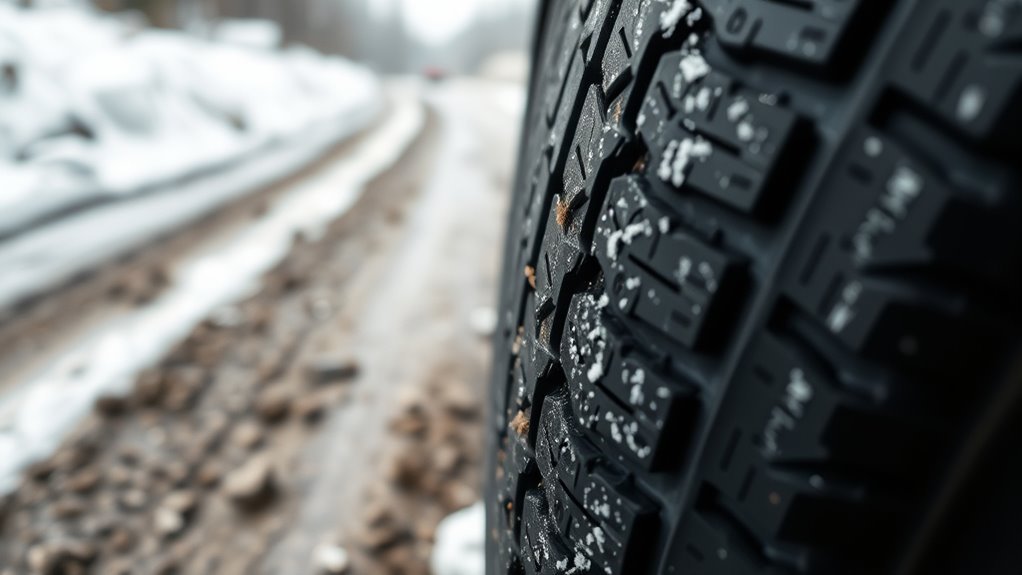
M+S on your tire sidewall stands for “Mud and Snow.” It means the tread is designed for improved traction in light mud and snow compared to a standard tire. The rating is based on basic geometric criteria (roughly a 25% void ratio) and works for mild winter conditions. It is not a substitute for a certified winter tire. Expect moderate grip, limited ice braking, and weaker performance in very cold temperatures or deep snow.
Quick Answer
- M+S = Mud and Snow. Better than a standard tire in light slush and mud, not a true winter tire.
- It uses basic tread geometry criteria, not a tested snow-performance standard.
- For mild winters: M+S or all-season tires may be fine.
- For harsh winters, ice, or deep snow: choose a tire certified with the Three Peak Mountain Snowflake (3PMSF).
- Check local laws. Some regions require 3PMSF tires or chains under certain conditions.
What M+S Means on Your Tire Sidewall
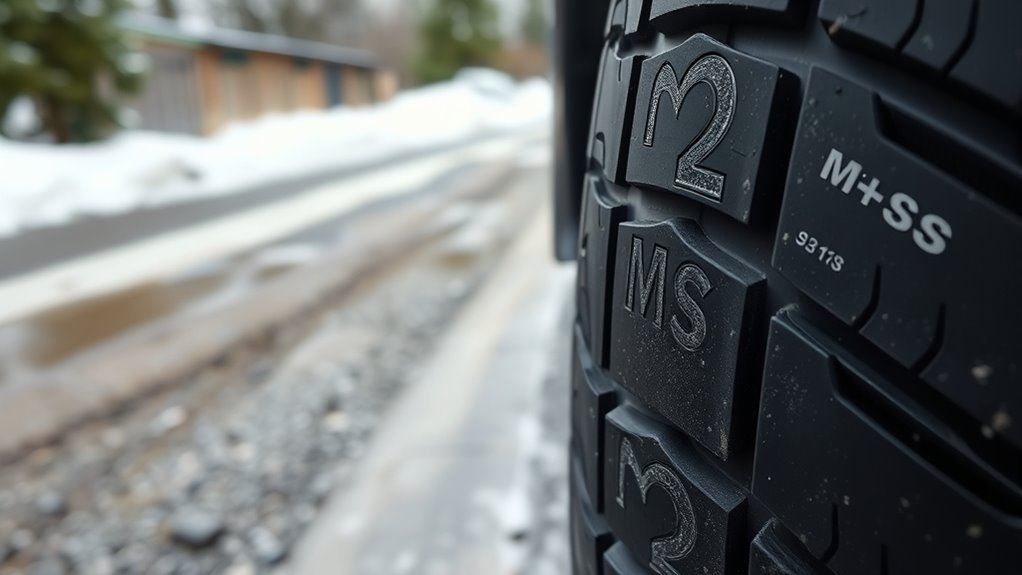
The M+S stamp stands for “Mud and Snow.” Manufacturers adopted the designation in the 1970s using simple geometric criteria: a tread void ratio of roughly 25% and shoulder notches designed to channel mud and light snow. That threshold is minimal compared to dedicated winter certifications.
The marking may appear as M+S, MS, M&S, or M/S. It covers all-season variants and some light-truck designs. M+S tires are suited for mild winter conditions. They are not purpose-built winter compounds, and the designation does not guarantee performance in severe cold or heavy snow.
Is M+S Enough? A Quick Decision Guide
The M+S mark signals improved traction in light mud and mild snow. It does not guarantee performance in heavy snow or ice. The designation relies on basic tread criteria, not the tested standard behind the Three Peak Mountain Snowflake.
If your winters are occasional and mild, M+S all-season tires can be acceptable. In regions with harsh winters, go with tires that carry the 3PMSF certification.
Simple rule: Mild winter = M+S may suffice. Severe winter = get certified winter tires.
[Products Worth Considering]

Accurately measure tire tread depth with a calibrated gauge marked from 0 to 1 inch in 1/32 inch increments. The color-coded bar helps you quickly identify tread condition ranges, supporting safe driving for trucks, motorcycles, automobiles, and passenger vehicles.

Vigorder rubber cement glue delivers superior adhesion and cures quickly within about 30 seconds for seamless rubber bonding. Once cured, it helps provide a strong, durable, waterproof seal that holds up to vehicle weight, pressure, and heat. Suitable for cars, motorcycles, trucks, bicycles, and off-road tires, it’s designed for emergency patch and maintenance repairs.

TIRESHIELD PRO RV tire covers in a set of four deliver year-round protection against UV rays, cracking, fading, water, and snow. The StormLock-System helps keep the covers securely fastened through high wind, while heavy-duty, double-stitched construction supports long-lasting performance. Designed for universal fit, they’re intended for RV, camper, truck, car, and trailer tires within the 26–28.75 inch diameter range, with easy wipe-clean care and storage in the included bag.
M+S vs. 3PMSF (Three-Peak Mountain Snowflake): Real Differences
These two marks serve different testing standards and use cases. Treat them as distinct performance categories, not interchangeable labels.
M+S covers basic mud and light-snow capability with lower certification thresholds and no guarantee of severe-snow performance. The Three Peak Mountain Snowflake certification requires validated snow-traction testing under controlled conditions, delivering measurably superior grip and handling in medium-to-deep snow.
- Certification scope: M+S indicates basic tread design. 3PMSF requires validated snow traction under controlled testing.
- Use cases: M+S suits mixed use and off-road scenarios. 3PMSF targets sustained winter driving in cold, snowy regions.
- Selection rule: Choose 3PMSF where winter severity demands reliable certified performance. M+S is acceptable for mild conditions.
[Products Worth Considering]

The SAFELIFE dial tire tread depth gauge measures tread depth in 1/32 inch increments with clear, easy-to-read 2-inch dial face. Color zones using a traffic light system help you quickly judge whether tread is low, marginal, or ample for safer driving. Built with a durable zinc cast body and a metal detect probe for precise, comfortable use across cars, motorcycles, trucks, and buses.

Monitor tire tread wear with a smart, color-coded depth gauge that shows clear condition ranges at a glance. The bar is range marked for fast, easy readings, helping you maintain safer traction and performance. Each gauge is portable with a pocket clip, and the set includes 20 units for daily use and sharing.

Measure tire tread depth quickly and accurately with this LUMITECO dial gauge that reads in 1/32" increments up to 14/32". The color-coded green/yellow/red zones make it easy to judge tire wear and know when replacement is needed. A rugged, compact design with a protective pouch helps keep the gauge ready for use on cars, trucks, motorcycles, and more.
M+S Performance: Traction, Braking, and Cold-Temperature Limits
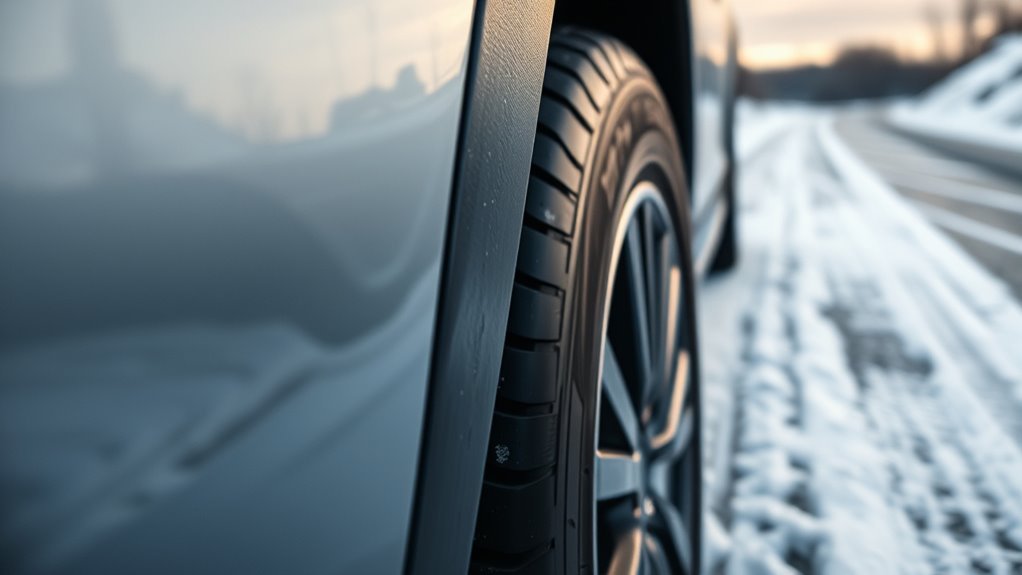
M+S tires grip better than standard all-seasons in slush and packed snow, thanks to deeper voids and added tread notches. But they are optimized for light snow and mud. They are not tested for severe-snow or ice braking.
Braking performance drops on hard-packed snow and ice because the rubber compounds and siping are not winter-grade. Tread depth and compound aging both affect performance over time.
| Parameter | Effect |
|---|---|
| Traction | Moderate in light snow |
| Braking | Limited on ice |
The Temperature Factor
One limit that often goes unmentioned: rubber compounds matter as much as tread pattern. Most M+S all-season tires are formulated for a broad range of conditions, but their rubber begins to harden noticeably below about 7°C (45°F). When the compound stiffens, the tire loses its ability to conform to the road surface, which reduces grip even on dry pavement.
Dedicated winter tires use softer compounds that stay pliable well below freezing. M+S tires don’t. So even if the road looks clear, a cold morning can mean less grip than expected from an M+S-rated tire.
If temperatures regularly drop near or below freezing where you drive, the compound limitation alone is a reason to consider winter tires, regardless of how much snow falls.
Legal Rules and Buying Advice: When to Use M+S, Chains, or Winter Tires
Before relying on M+S tires in winter, check local laws. The M+S mark signals improved mud and light-snow capability, not tested winter performance. Some jurisdictions require chains or mandate 3PMSF-rated tires under specified conditions.
Consider three things when choosing: legal requirements, expected road conditions, and tread depth. A minimum of 3/16 inch of tread depth is generally recommended for winter use.
- Use M+S for light snow or where local law permits, with chains if mandated and compatible with your vehicle.
- Choose 3PMSF winter tires for deep snow, ice, or strict local regulations.
- Check tread depth regularly and replace tires before they fall below spec.
[Products Worth Considering]

Measure tyre tread depth precisely with a digital gauge that reads in both MM and inches, helping you monitor safe driving conditions. The large LCD screen is easy to operate, and the compact tool fits for cars, trucks, and motorcycles. It provides high accuracy with a 0-25.4mm range and includes a 1-year warranty for added peace of mind.

The Naked Bee Foot Balm for Restoration Heel is an intensive foot treatment designed to penetrate and soften calloused, dry, and cracked feet. Honey, beeswax, and neem oil help deeply moisturize and soothe, while meadowfoam oil supports a protective barrier against moisture loss. Simply roll on to target tired feet and support visibly healthier-looking heels.

These universal tire valve stem caps help protect valve cores from dust, debris, and moisture while helping maintain stable tire pressure. The corrosion-resistant metal construction and sealed design provide reliable protection in road grime, mud, and winter conditions. Twist-on installation makes them quick to fit on cars, SUVs, trucks, and motorcycles.
Frequently Asked Questions
Are M&S Tires OK for Winter?
For mild winter conditions, yes. M+S tires handle light snow and mud better than standard all-seasons. They won’t match dedicated winter tires on ice, in severe cold, or in heavy snowfall.
Is M+S an All-Season Tire?
Not exactly. Many all-season tires carry the M+S mark, but M+S is a tread design classification, not a full all-season certification. In light conditions they perform adequately; in severe snow or ice, dedicated winter tires are the better choice.
Is M/S the Same as 3 Peak?
No. M+S uses basic tread geometry criteria. The 3PMSF mark requires tires to pass controlled severe-snow traction testing, which is a meaningfully higher standard. The two are not interchangeable.
What Does M/S on a Tire Mean?
It means the tire’s tread design improves mud and snow traction compared to a standard tire. The gains are real but modest. M+S is not a substitute for a certified winter tire.
Conclusion
M+S on the sidewall means the tread and compound are tuned for mud and light snow. They’ll help in slush and mild cold but lose grip, braking performance, and steering precision in deep snow or subfreezing ice. Add in the compound-hardening issue below 7°C, and the limits become even clearer.
For heavy winter conditions, choose 3PMSF-rated winter tires or use chains. Keep M+S tires where they belong: occasional mild winter driving, not mountain storms.