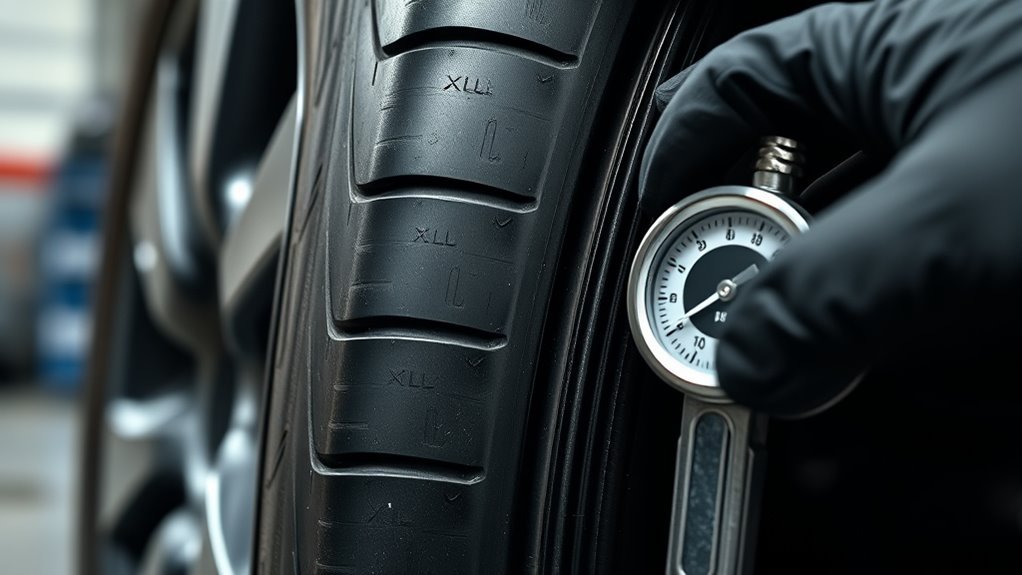
When you see XL on a tire, it means Extra Load construction. These tires feature reinforced sidewalls and a higher load index. This design allows the tire to carry more weight at a higher inflation pressure. You need to inflate XL tires to their specified pressure to reach their maximum capacity. This is often up to 41 psi. Proper inflation ensures ideal stability when you haul heavy cargo or tow. You will commonly see them on SUVs, light trucks, and trailers.
Quick Answer
- XL stands for Extra Load. These tires have reinforced sidewalls and a higher load index than standard tires.
- They require higher inflation pressure to reach their maximum capacity. This is usually up to 41 psi compared to 35 psi for standard tires.
- An XL tire carries about 10 to 15 percent more weight than a standard load tire of the exact same size.
- Use XL tires if your vehicle regularly hauls heavy cargo, tows a trailer, or runs near its maximum weight limits.
What “XL” Means on a Tire
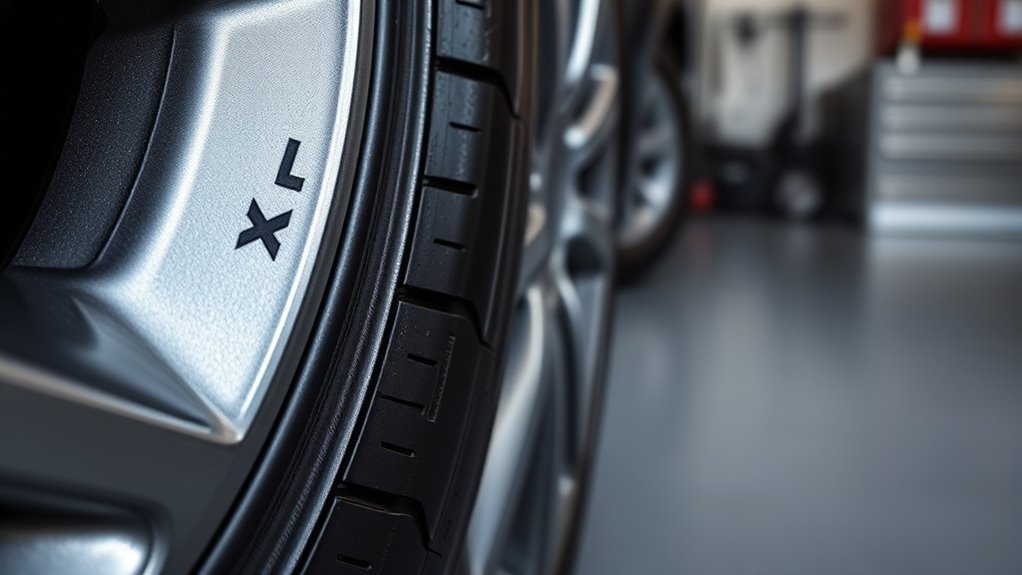
“XL” stands for Extra Load. It marks tires with reinforced sidewalls and higher load ratings than standard tires.
The XL marking shows the tire is built for heavier loads and higher inflation pressures. This maximum pressure is usually 41 psi. Putting XL tires on SUVs, trucks, or trailers gives you better resistance to sidewall damage. You also get improved durability under repeated stress.
Properly inflated XL tires keep their designed shape on the road. That structural integrity matters most when you are towing or carrying heavy cargo. You should specify XL tires when your vehicle load requirements exceed standard tire capacity. Otherwise, you risk compromised stability, premature tire wear, and reduced safety.
XL vs. Standard Load (SL) Tires
XL tires use reinforced internal structures to give you higher load capacities and improved stability. SL tires lack that extra reinforcement. Manufacturers design SL tires for regular passenger loads.
The maximum inflation for XL tires can reach 41 psi compared to roughly 35 psi for SL tires. That extra pressure means less tire flex. It also provides better resistance to damage under heavy loads and a longer service life under tough conditions.
SL tires weigh less and can offer slightly better fuel efficiency. They make perfect sense for regular daily driving. You can safely install XL tires instead of SL tires. However, never downgrade from XL to SL if your vehicle requires the higher load rating.
[Products Worth Considering]

Monitor tire tread wear with a smart, color-coded depth gauge that shows clear condition ranges at a glance. The bar is range marked for fast, easy readings, helping you maintain safer traction and performance. Each gauge is portable with a pocket clip, and the set includes 20 units for daily use and sharing.

Measure tire tread depth quickly and accurately with this LUMITECO dial gauge that reads in 1/32" increments up to 14/32". The color-coded green/yellow/red zones make it easy to judge tire wear and know when replacement is needed. A rugged, compact design with a protective pouch helps keep the gauge ready for use on cars, trucks, motorcycles, and more.

Keep your tires properly inflated with this analog VONDIOR tire pressure gauge, designed for fast, easy readings without batteries. The swiveling, two-axis hose and large glow dial help you measure at any tire angle with instant visibility. Built with a protective rubber shield, it supports durable, low-maintenance use for cars and trucks.
Reading Sidewall Markings: Find XL, Load Index & Speed
Check the sidewall format (e.g., 205/55 R17 91 V) to locate the XL marking, load index, and speed letter. The XL signals extra-load construction. The numeric load index maps to a specific maximum weight. For example, a 91 index equals 1,356 pounds. The speed letter defines the maximum safe speed, where V equals 149 mph. Always match these values to your vehicle’s tire placard or owner’s manual.
Sidewall Marking Breakdown
A tire’s sidewall displays all the key specs in a compact code like “205/55 R17 91 V.” Here is what each part means. The number 205 is the width in millimeters. The number 55 is the aspect ratio. The R indicates radial construction. The 17 is the wheel diameter in inches. The 91 is the load index. Finally, the V is the speed rating.
The width and aspect ratio shape the tire’s footprint on the road. This affects load distribution and performance. The construction code (R) shows how the tire handles air pressure. The load index tells you the maximum weight the tire can support. Higher numbers mean greater capacity.
Look for “XL” next to these codes. That marking identifies reinforced, extra-load sidewalls built for higher inflation and greater capacity.
Load Index & Speed
The load index and speed rating tell you how much weight the tire carries and how fast it can safely travel under load. You will see a numeric load index followed by a speed letter.
On XL tires, reinforced sidewalls and higher inflation pressures raise load performance. These pressures usually range from 36 to 41 psi. The load index reflects that added capacity. The speed rating defines the maximum safe speed while carrying that rated load. Never exceed this speed limit.
Always match sidewall markings to your vehicle placard or owner’s manual to confirm tire safety and proper fitment.
How XL Changes Load Capacity
XL tires carry more weight because their higher load index directly raises the maximum safe weight per tire. Higher inflation pressures boost this carrying capacity even further. The reinforced sidewalls provide the structural strength needed to prevent excessive flex under heavy loads.
Increased Load Index
XL tires look identical to standard tires from the outside. However, they use reinforced sidewalls and stronger internal construction. The result is a higher load index. This often pushes individual tire capacities above 1,000 pounds.
XL construction adds strength to the tire bead, ply, and sidewall. This raises the load index without changing the physical size of the tire. The main benefit is a higher load rating. This improves stability and safety when you carry heavy cargo or tow. You should choose XL tires when your vehicle weight ratings exceed what standard tires can reliably handle.
Higher Inflation Pressure
XL tires are built for higher inflation. They typically run up to 41 psi versus 35 psi for standard tires. That extra pressure directly raises load-carrying capacity. It does this by stiffening the sidewalls and increasing support across the contact patch.
Always maintain the recommended tire pressure. This gives you the full benefit of the tire and prevents under-inflation. Low pressure causes fast wear and increases the risk of blowouts under heavy loads. Properly inflated XL tires reduce flex and give you crisp steering response. Check your pressures while the tires are cold and adjust them for payload changes.
| Tire Type | Max PSI | Effect |
|---|---|---|
| Standard | 35 | Lower load |
| XL | 41 | Increased load |
| XL (loaded) | 41 | Stable handling |
Reinforced Sidewall Strength
XL tires have a reinforced sidewall that increases structural stiffness. This allows safe pressurization up to 41 psi. It raises load-carrying capacity above standard 35 psi tires and improves load distribution under heavy weight.
The stiffer sidewall also reduces flex. Less flex cuts your impact damage risk and extends the life of the tire. Here is what that means on the road:
- Higher static load capacity per tire at the recommended 41 psi.
- Reduced side-to-side and up-and-down movement, improving handling and stability.
- Better resistance to sidewall damage from curbs and potholes.
- Enhanced durability when towing, resulting in more consistent tread wear.
Why XL Tires Often Need Higher Inflation Pressure
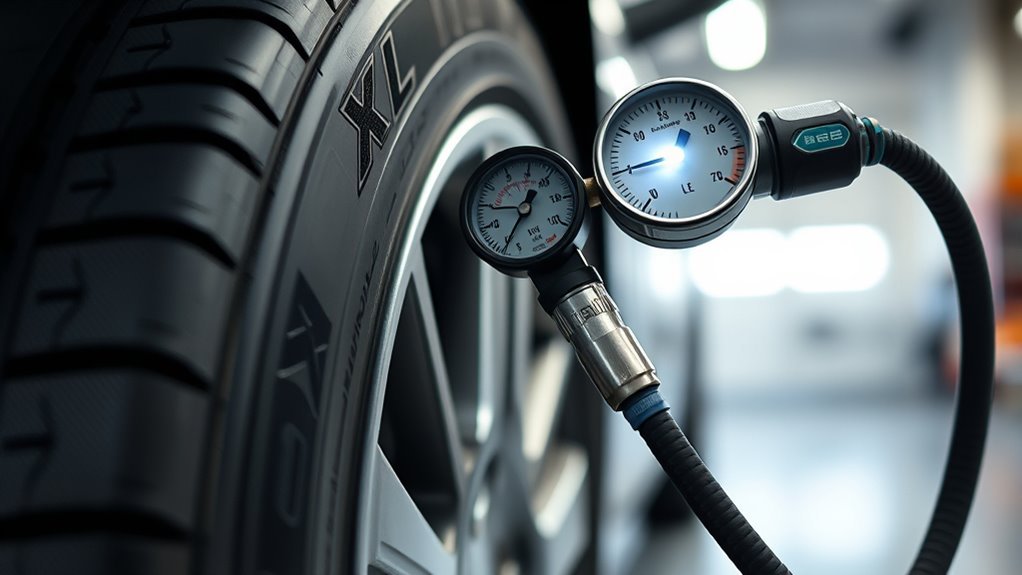
XL tires need higher inflation pressures to keep the sidewalls and carcass within their designed stress limits. The XL construction supports a greater load per contact patch. Higher air pressure makes that possible.
Running up to 41 psi reduces tire flex. Less flex limits heat buildup inside the tire. This directly improves load stability and preserves the shape of the footprint. You get better handling and braking under cargo or trailer loads.
Under-inflation increases tire wear, heat buildup, and blowout risk. Check your pressures cold. Adjust them for the load and speed you expect, and recheck them after heavy use. Proper inflation allows the reinforced structure to work properly.
Who Should Use XL Tires? Vehicles & Use Cases
If you drive an SUV or light truck that often carries heavy cargo, XL tires offer a higher load rating and stiffer sidewalls. Commercial vehicles and trailers hauling substantial cargo benefit from XL tires as well. They provide stability and resistance to heat buildup under sustained weight. For load-bearing axles in commercial fleets, XL-rated tires improve safety margins and tire longevity.
[Products Worth Considering]

This tire inflator with pressure gauge delivers long-lasting performance with a durable rubber-protected gauge and sturdy build. The longer hose and 360 swivel air chuck help you seal the valve securely and keep your hands free while measuring, inflating, or deflating. It’s battery-free for reliable use and provides ±2 PSI accuracy in the mid-range for most typical tires, with universal compatibility for 1/4 NPT compressor outputs.

Secure your vehicle during transport with this 4-pack of heavy-duty tire tie down straps designed for trailers and hauling. The ratchet system with flat hooks and D-rings helps you tension the straps quickly, while the wheel-friendly design protects tires. With high break strength and corrosion-resistant hardware, these straps provide reliable, confidence-inspiring tie-down security for cars, trucks, and UTVs.

The SAFELIFE dial tire tread depth gauge measures tread depth in 1/32 inch increments with clear, easy-to-read 2-inch dial face. Color zones using a traffic light system help you quickly judge whether tread is low, marginal, or ample for safer driving. Built with a durable zinc cast body and a metal detect probe for precise, comfortable use across cars, motorcycles, trucks, and buses.
SUVs And Light Trucks
SUVs and light trucks often carry heavier cargo and tow trailers. Choose XL tires when your vehicle regularly operates near its maximum weight limits. XL tires deliver improved durability, reduced blowout risk, and predictable handling when fully loaded.
- SUVs that frequently transport passengers or heavy gear benefit from XL tires for consistent handling.
- Light trucks used for hauling gain braking and cornering stability with XL tires.
- Off-road use with heavy payloads requires XL tires to resist sidewall damage.
- Manufacturers often specify XL tires on models designed to carry heavy loads. Always follow the door placard.
Trailers And Commercial Vehicles
Install XL tires on trailers and commercial vehicles that regularly carry heavy cargo or equipment. The reinforced construction and higher load ratings maintain stability. They reduce sidewall bending and lower your blowout risk under tow.
For trailers, XL tires help maintain stability at highway speeds and during sudden lane changes. The enhanced load index prevents heat failure caused by overloading. For delivery vans and work trucks, XL tires deliver commercial durability. The reinforced sidewalls handle concentrated payload weights safely.
If you tow frequently, XL tires prolong service life, improve braking, and reduce your maintenance trips.
Can You Fit XL Tires If Your Car Didn’t Come With Them?
Yes, you can fit XL tires on a car that didn’t come with them. You simply need to verify tire compatibility and accept slight changes in ride feel. Check the specifications, inflation rules, and physical dimensions before making the switch.
- Consult the owner’s manual for recommended load ratings, speed ratings, and acceptable tire sizes.
- Confirm the XL tire’s load index meets or exceeds your vehicle’s requirements.
- Verify the overall tire diameter and width match the originals to avoid altering speedometer accuracy or ABS calibration.
- Set inflation to the manufacturer’s recommended pressure. Incorrect pressure ruins the load benefits and causes uneven wear.
Can You Mix XL and Standard Tires?
Do not mix XL and SL tires across the same axle. For the best handling and safety, you should always use four matching tires. If you must mix them temporarily, put the pair of XL tires on the rear axle to maintain stability. Always ask a tire professional before mixing different load ratings.
Pros and Cons of XL Tires for Daily Driving
If you regularly carry heavy loads or tow, XL tires give you reinforced sidewalls and higher inflation capacity. This maintains stability and helps reduce blowout risk. For everyday light driving, there are trade-offs. The stiffer construction can slightly reduce ride comfort and fuel economy.
The main benefits are higher load-carrying capacity and improved side-to-side stability. The downsides are increased rolling resistance and tire weight. This can reduce your fuel efficiency slightly. The firmer sidewalls also feel rougher on bad roads.
For routine light driving, standard tires typically deliver a lower cost, better ride comfort, and slightly better gas mileage. Choose XL tires only when your normal use requires the load and stability advantages.
Maintenance: Care, Inflation & Inspection for XL Tires
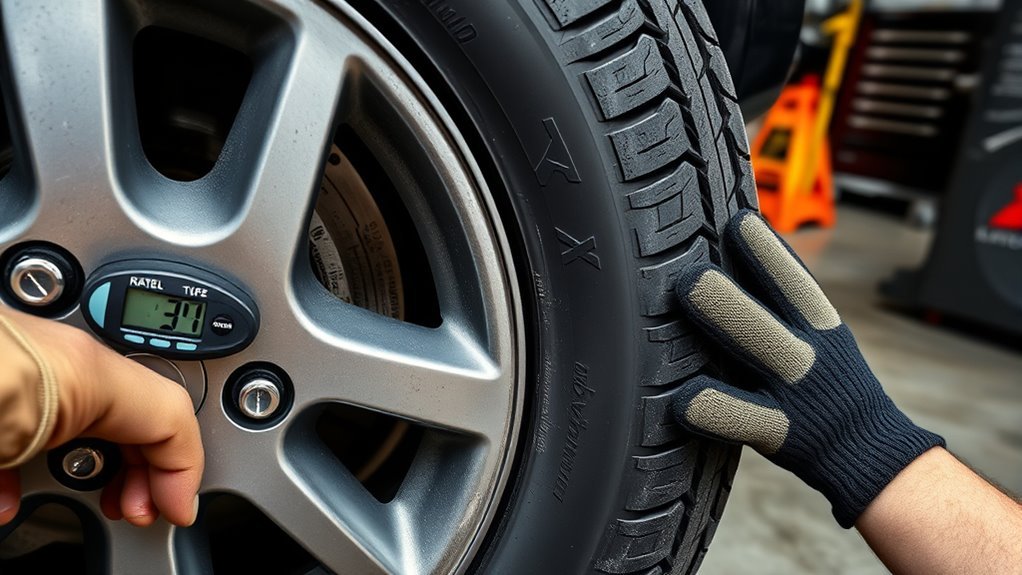
Having the right tire type is only part of the equation. Routine care keeps XL tires performing at their rated capacity. Maintain correct inflation, inspect the tires regularly, and rotate them on schedule to preserve safety.
- Check pressure monthly with a reliable gauge. XL tires often require around 41 psi to support extra loads safely.
- Rotate tires every 5,000 to 7,500 miles to promote even tread wear.
- Inspect the tread and sidewalls for cuts, bulges, or uneven wear. Fix any issues immediately to prevent tire failures.
- Keep a maintenance log. Consistent records help you spot trends and stay within safe limits.
Choosing the Right XL Tire: Size, Ratings & Professional Tips
Start by matching the size, load index, and inflation requirements to your vehicle’s specifications. Check the owner’s manual or tire placard. Then, confirm the tire’s sidewall markings for the proper load index and speed rating. Select a tire where the load index meets or exceeds vehicle requirements. Make sure the speed rating matches how you plan to drive. If you are exploring specific high-performance options, reading a detailed Lexani LX-Twenty tire review can help you understand how these ratings translate to the road. Factor in the terrain and your towing habits. Stiffer sidewalls improve stability but will alter your ride quality. Have a trained technician mount and balance the tires. Inspect inflation, tread depth, and load limits regularly to stay safe on the road.
[Products Worth Considering]

The 22800 wheel stud installer makes replacing wheel studs quick and secure, saving time and effort during tire service. It uses a ratchet or impact wrench to pull new studs firmly into place, helping when existing studs are too long. Compatible with most automotive wheels and light-duty truck wheel studs, it’s designed for easy, tool-assisted installation.

Steelman white tire marking crayons provide high-contrast, semi-permanent marks for repairing and inspecting tires and equipment. They write on wet or dry, smooth or coarse surfaces including rubber, metal, glass, and wood, making them ideal for puncture location and damage outlining. The lead- and zinc-free crayons resist weather and fading yet wipe away when you no longer need the marks.

Protect tire valves from water, dust, and sand to help prevent leaks and support safe driving. These universal stem caps install quickly by hand and feature durable aluminum alloy construction with an inner sealing ring for better air retention. Compatible with cars, SUVs, trucks, motorcycles, and bicycles for everyday convenience.
Frequently Asked Questions
Is It Worth Getting XL Tyres?
Yes, if you carry heavy loads frequently. XL tires offer higher load capacity, sturdier sidewalls, improved handling, and better durability. For towing and hauling, they easily justify the cost.
Do XL Tires Need More Psi?
Yes. XL tires need more air pressure than standard tires to reach their maximum rating. Raising the pressure increases load capacity by stiffening the sidewalls. Follow the manufacturer specs precisely and avoid overinflation.
The Bottom Line
An “XL” rating means a tire is built to carry more weight. These tires offer roughly 10 to 15 percent higher load capacity than a standard load tire of the exact same size. A single XL tire can often support 200 to 300 pounds more than its standard counterpart.
Match the load index to your vehicle, respect the higher inflation requirements, and verify compatibility using your door placard. With correct fitment and proper maintenance, XL tires increase your payload capacity safely and reliably.