Toyota 4Runner Tire Rotation Schedule and Intervals
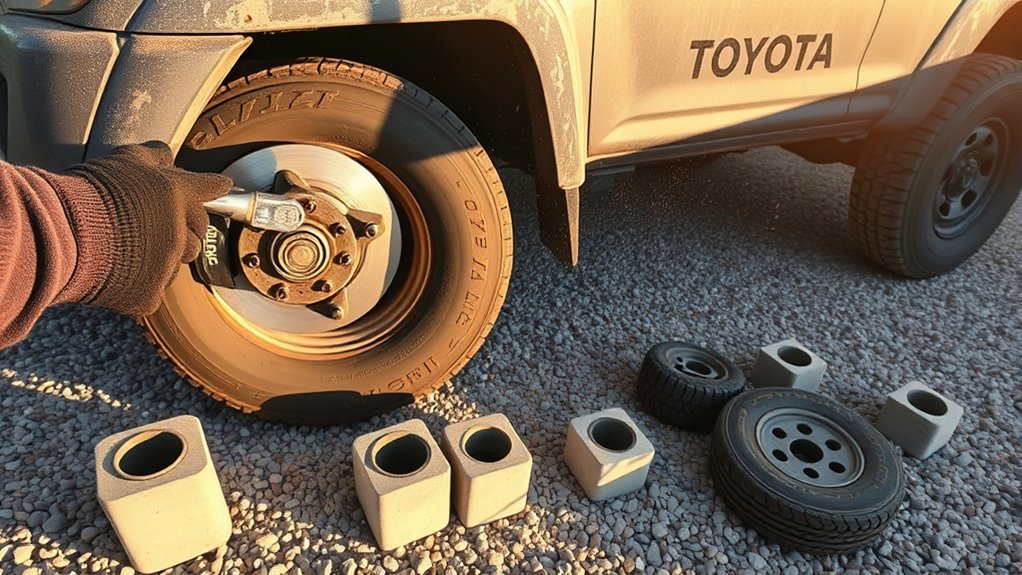
Rotating your Toyota 4Runner’s tires on schedule helps even out tread wear, protect handling, and catch tire or suspension problems before they become expensive. For most 2025 4Runner owners, the key rule is simple: rotate the tires at the factory maintenance interval, use the pattern shown for your spare-wheel setup, then initialize the tire pressure warning system afterward.
Quick Answer
Rotate Toyota 4Runner tires every 5,000 miles or six months, whichever comes first. Use the rotation diagram in your owner’s manual because the correct pattern depends on whether your spare wheel matches the installed wheels and whether your tires are directional. After rotating, check cold pressure and initialize TPMS.
Key Takeaways
- Toyota’s 2025 4Runner maintenance schedule calls for service every 5,000 miles or six months, and tire rotation is part of that regular service interval.
- Do not guess the pattern. Match the owner’s manual diagram to your wheel setup, spare type, and tire direction.
- For 2025 4Runner torque data, aluminum wheels are listed at 97 ft-lbf and steel wheels at 154 ft-lbf; always verify the spec for your exact model year and wheel type.
- TPMS is not a substitute for a manual cold-pressure check. Set pressures first, then initialize the tire pressure warning system.
At a Glance
| Time Required | 45–90 minutes for DIY rotation |
| Difficulty | Moderate; safe lifting and torque accuracy are essential |
| Tools Needed | Floor jack, jack stands, wheel chocks, breaker bar, socket, torque wrench, tire pressure gauge, and wheel-lock key if equipped |
| Cost | DIY is usually free if you already own the tools; dealer or tire-shop pricing varies, and eligible ToyotaCare service may cover scheduled maintenance |
Which 4Runner Rotation Pattern Should You Use?
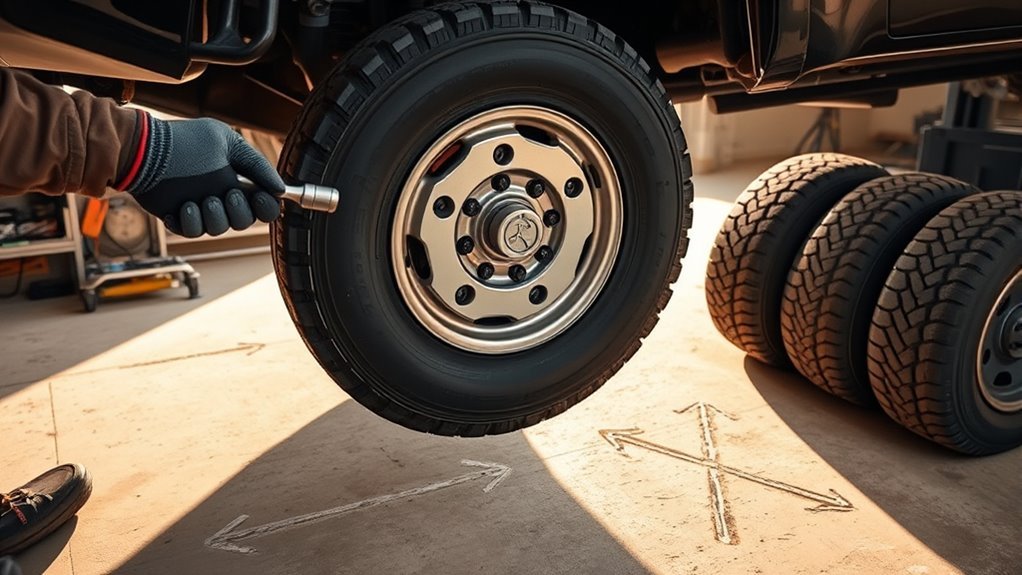
The right 4Runner tire rotation pattern depends on three things: whether your tires are directional, whether all four installed tires are the same size, and whether the spare wheel matches the installed wheels. Toyota’s owner’s manual shows rotation diagrams based on spare-wheel type, so use the manual for your exact model year before moving the tires.
Note: A tire “rotation pattern” is not universal. A 4Runner with non-directional tires and a matching full-size spare may use a different pattern than one with a different spare wheel, aftermarket directional tires, or a winter wheel set.
| Tire / Wheel Setup | What to Do |
| Non-directional tires with a spare of the same wheel type | Use Toyota’s five-tire rotation diagram for your model year so the matching spare shares wear with the other tires. |
| Non-directional tires with a spare of a different wheel type | Use the four-tire rotation diagram in the owner’s manual and leave the spare out of the normal rotation. |
| Directional tires | Move front to rear on the same side unless the tires are dismounted and remounted correctly. Follow the sidewall arrow. |
| Different front/rear sizes or special aftermarket setup | Do not rotate until you confirm the setup with the tire maker, installer, or owner’s manual guidance. |
[Products Worth Considering]

Universal magnetic jack pad with aluminum grooved design to protect vehicle pinch welds during lifting. Durable nylon pad inserts are upgraded and secured with screws to resist damage and keep in place. Designed to fit most single vehicle pinpoint welds for safer, stable jacking when changing tires, repairs, or performing oil changes.

This VEVOR tire bead breaker uses a slide-hammer impact and wedge tip to separate tire beads from rims quickly and efficiently without damaging hub surfaces. The long handle and sturdy steel construction help reduce user strain while providing reliable, portable tire changing for cars, trucks, and more. Ideal for home mechanics and repair shops handling multiple vehicle tire sizes.

Camco Trailer Aid Plus tandem tire ramp lifts your trailer for quick, safe tire changes with ample clearance from its 5 1/2-inch lift. It helps you change a flat tire without unloading cargo, making roadside and routine maintenance more efficient. The heavy-duty, waterproof and rustproof polymer design supports up to 15,000 lb and is built for easy portability and storage.
How Often Should You Rotate Your 4Runner Tires?
For the 2025 Toyota 4Runner, follow the factory maintenance interval: every 5,000 miles or six months, whichever comes first. Toyota’s maintenance chart marks tire rotation at each 5,000-mile service interval, and the owner’s manual says rotation should be carried out at the same interval as tire inspection.
That means low-mileage drivers should not wait years for the odometer to reach 5,000 miles. If six months pass first, rotate and inspect the tires. If you drive off-road, tow, carry heavy loads, or spend a lot of time on rough or dusty roads, inspect the tires more often because damage and irregular wear can show up sooner.
You can pair tire rotation with other 5,000-mile checks, but do not assume it always lines up with oil changes. Some driving conditions use different oil-service timing, while tire rotation remains a regular inspection item.
Should You Include Your 4Runner’s Spare Tire in the Rotation?
Include the spare only when it is a full-size tire and the same wheel type as the installed tires. If the spare is a different wheel type, different tire size, temporary-use tire, or noticeably mismatched tread, leave it out of the normal rotation and use the owner’s manual’s four-tire pattern instead.
When the spare does match, rotating five tires can spread wear across the full set. It also keeps the spare from aging unused while the four road tires wear down. Before you add the spare to the cycle, confirm that it has the correct pressure, no sidewall damage, and similar tread depth.
Pro Tip: Mark each tire’s starting position with chalk or painter’s tape before removing it. Labels like LF, RF, LR, RR, and SP make it much harder to lose track of the pattern.
What Tools Do You Need for DIY 4Runner Tire Rotation?

Use proper lifting and tightening tools. A 4Runner is heavy, and tire rotation is not the time to rely on a weak jack, a loose socket, or guesswork on lug-nut torque.
- Floor jack: Use a jack rated for the vehicle’s weight and lift only at approved lift points.
- Jack stands: Support the vehicle with stands before removing wheels. Never work on a vehicle supported only by a jack.
- Wheel chocks: Chock the wheels that stay on the ground before lifting.
- Breaker bar and correct socket: Loosen lug nuts before lifting the tire off the ground.
- Torque wrench: Final-tighten lug nuts to the correct specification after the vehicle is lowered enough for the tire to stay still.
- Tire pressure gauge: Set all tires to the cold pressure shown on the driver-side doorjamb label.
- Wheel-lock key: Required if your 4Runner has locking lug nuts.
Warning: Work on a flat, solid surface, set the parking brake, chock the wheels, and use jack stands. If you are not comfortable lifting the vehicle safely, have a Toyota dealer or tire shop rotate the tires.
How to Rotate 4Runner Tires Step by Step
- Park safely. Choose level pavement, shift to Park, set the parking brake, and chock the wheels.
- Confirm the pattern. Check the owner’s manual diagram for your spare-wheel type and tire setup.
- Loosen the lug nuts slightly. Break them loose while the tires are still on the ground. Do not remove them yet.
- Lift and support the vehicle. Raise the 4Runner at approved lift points and place jack stands securely.
- Move the tires. Follow the correct pattern. Keep directional tires on the same side unless they are professionally remounted.
- Inspect each tire. Look for nails, sidewall bubbles, cuts, uneven shoulders, cupping, exposed cords, or tread near the wear bars.
- Reinstall the wheels. Start lug nuts by hand so they do not cross-thread.
- Snug in a star pattern. Tighten gradually across the wheel, not in a circle.
- Torque correctly. For 2025 4Runner data, aluminum wheels are listed at 97 ft-lbf and steel wheels at 154 ft-lbf. Verify your exact model year and wheel type before tightening.
- Set cold tire pressure. Use the driver-side doorjamb label, not the maximum pressure printed on the tire sidewall.
- Initialize TPMS. Use the vehicle settings / TPWS settings menu after rotation.
- Test drive and recheck. Listen for noise, vibration, or pulling, then recheck torque if your wheel or tire installer recommends it.
How Do You Reset 4Runner TPMS After Rotating Tires?
On 2025 4Runner models, use the multi-information display rather than an old-style under-dash reset button. Set every tire to the correct cold pressure first, then use the steering-wheel meter controls to open Vehicle Settings, choose TPWS Setting, and follow the tire pressure or wheel-position registration prompts shown on the display.
The exact wording can vary by display and software version, so keep the owner’s manual open during the process. If you use a second wheel set, winter tires, aftermarket wheels, or new TPMS sensors, you may need to register ID codes or have the system programmed by a Toyota dealer or qualified tire shop.
Note: TPMS warns about low pressure, but it does not replace monthly cold-pressure checks with a tire gauge. Check the spare too.
[Products Worth Considering]

Camco’s RV wheel chocks with an attached rope help keep your travel trailer securely in place for safer unhitching or parking. This 2-pack is compatible with wheels up to 26-inch diameter and features durable UV-resistant construction for reliable outdoor performance. The rope enables quick, safe removal so you can prepare for your next trip with less hassle.

This portable cordless tire inflator delivers fast, efficient inflation for cars, motorcycles, bikes, and sports balls with a digital pressure gauge. Use the one-click PSI preset with auto shut-off for accurate, hands-free topping to your target pressure up to 150 PSI. It’s compact and rechargeable with a built-in emergency LED light plus valve adapters and accessories for quick, ready-to-go use.
Directional vs. Non-Directional: Which Rules Apply to 4Runner Tires?
Look at the tire sidewall before choosing a pattern. If the tire has an arrow or “rotation” direction molded into the sidewall, it is directional. Directional tires must keep rolling in the designed direction, so they usually move front-to-rear on the same side.
Most non-directional tires can use cross-rotation patterns, but the correct version still depends on the vehicle and spare setup. If your 4Runner has all-terrain tires, winter tires, or aftermarket wheels, do not assume the factory pattern still applies. Confirm tire direction, size, load rating, and wheel fitment first.
When Should You Check Alignment Instead of Rotating Again?
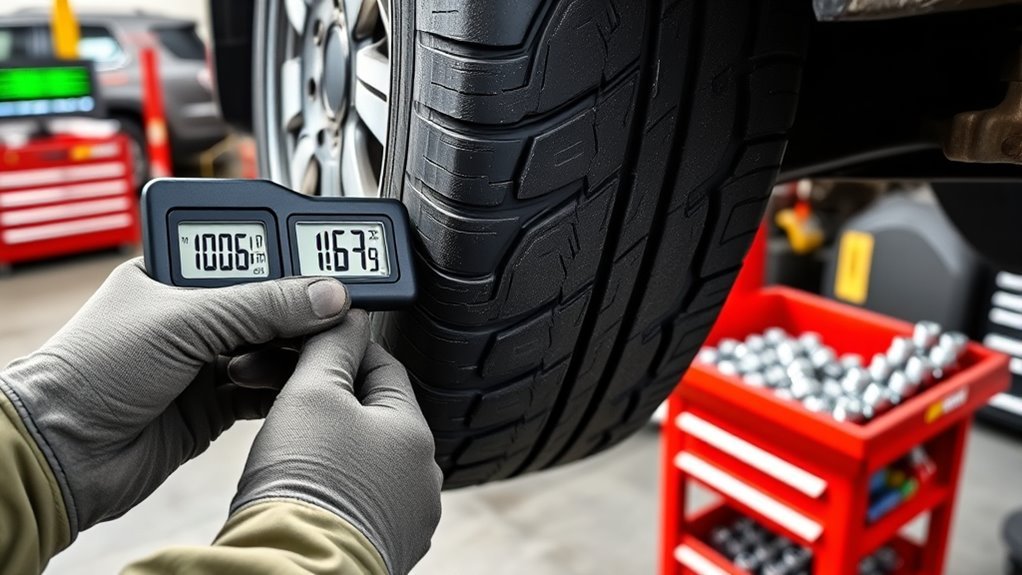
Tire rotation spreads normal wear, but it will not fix an alignment, balance, or suspension problem. If the same wear pattern keeps coming back after rotation, stop repeating the rotation and diagnose the cause.
Uneven Wear Signs
Check tread depth across the inner edge, center, and outer edge of each tire. One-sided shoulder wear often points to alignment. Center wear can mean overinflation. Both outer shoulders can point to underinflation or aggressive cornering. Cupped or scalloped tread can indicate worn suspension parts, imbalance, or alignment problems.
Handling Issues Detected
Schedule an alignment or inspection if your 4Runner pulls left or right on a straight road, the steering wheel is off-center, the vehicle wanders, or you feel vibration that does not go away after balancing. Rough trails, potholes, curb hits, and heavy off-road use can knock alignment out of spec.
Rotation is routine maintenance. Pulling, vibration, cupping, and one-sided tread wear are diagnostic clues.
Common 4Runner Tire Rotation Mistakes
- Using the wrong pattern: Directional tires, matching spares, and different spares all change the answer.
- Ignoring the spare: A matching full-size spare can be rotated, but a different spare should not be treated like the other four tires.
- Skipping TPMS initialization: The owner’s manual says to initialize the tire pressure warning system after rotation.
- Guessing torque: Use a torque wrench and the correct model-year wheel spec.
- Checking hot tire pressure: Pressure rises after driving. Set pressure when tires are cold.
- Rotating damaged tires: Replace or repair unsafe tires before putting them in a new position.
Frequently Asked Questions
Will Toyota rotate 4Runner tires for free?
It may be covered if your 4Runner is still within ToyotaCare eligibility. ToyotaCare covers normal factory scheduled maintenance for eligible new Toyota vehicles for 2 years or 25,000 miles, whichever comes first. Confirm coverage, exclusions, and regional details with your Toyota dealer.
Is 5,000 miles too soon to rotate 4Runner tires?
No. For the 2025 4Runner, 5,000 miles or six months is the regular scheduled maintenance interval, and tire rotation is included in the maintenance chart. Rotating on time helps reduce irregular wear and gives you a chance to inspect tread, pressure, and damage.
Can I rotate my 4Runner tires myself?
Yes, if you have the correct tools and know how to lift the vehicle safely. Use a rated floor jack, jack stands, wheel chocks, the correct socket, and a torque wrench. If you are unsure about lift points or torque specs, have a professional do it.
Do I need an alignment every time I rotate tires?
No. Tire rotation and alignment are different services. Rotate tires on schedule, but request an alignment check if you see one-sided wear, the steering wheel is off-center, the vehicle pulls, or you hit a major pothole or curb.
Should I reset TPMS before or after setting tire pressure?
Set tire pressure first while the tires are cold, then initialize or register the tire pressure warning system through the vehicle settings menu. Resetting TPMS before correcting pressure can store the wrong baseline.
Conclusion
For a Toyota 4Runner, tire rotation is simple only when you match the interval, pattern, spare type, and TPMS process to your exact vehicle. Use the 5,000-mile or six-month maintenance interval, follow the owner’s manual diagram, torque the wheels correctly, and check cold pressure every time. If you see pulling, vibration, or uneven wear, schedule an alignment or suspension inspection instead of simply rotating again.
Sources
- Toyota Owners — 2025 4Runner Manuals and Warranties — owner’s manual and warranty/maintenance guide access.
- ToyotaCare & Maintenance Plans — ToyotaCare coverage overview for eligible new Toyota vehicles.
- NHTSA TireWise Tire Safety — tire pressure, tread, rotation, balance, alignment, and safety guidance.
- U.S. Tire Manufacturers Association Tire Care Essentials — cold-pressure checks, TPMS limitations, and tire-care basics.
- Bridgestone Tire Rotation 101 — tire rotation patterns, directional tire rules, alignment, and torque reminders.

Related Articles

Best Toyota 4Runner Tires Under $150 2026 – Top Budget All-Terrain Tires
You use your Toyota 4Runner for a mix of highway miles and off-road adventures, so choosing capable all‑terrain tires that cost less than $150…
Read More
Best Budget Tires for Toyota 4Runner 2026 – Top Affordable Performance Tires
You rely on your Toyota 4Runner for a mix of daily driving and weekend adventures, and the tires you choose shape safety, comfort, and…
Read More
Best On Road All Terrain Tires for Toyota 4Runner 2026 – Top Highway-Friendly A/T Tires
You want all-terrain tires that let your 2026 Toyota 4Runner feel planted and quiet on the highway while still offering capable off-road traction when…
Read More