
Toyota 4Runner tire life depends more on the installed tire, driving conditions, maintenance, and age than on the vehicle name alone. Many properly maintained highway or all-terrain replacement tires can serve for roughly 40,000 to 60,000 miles, but off-road use, towing, heat, incorrect pressure, poor alignment, and sidewall damage may shorten that considerably.
Last updated: July 17, 2026
Quick Answer
Toyota does not set one universal mileage lifespan for every 4Runner tire. A practical planning range is about 40,000 to 60,000 miles for many road-focused and all-terrain replacements. However, you should replace tires based on tread, age, damage, performance, and tire-manufacturer guidance rather than mileage alone.
Key Takeaways
- A tire’s mileage warranty is a planning reference, not a promise that it will remain safe for that distance.
- Check cold tire pressure monthly using the driver-door placard, not the maximum pressure printed on the tire sidewall.
- Replace a tire at 2/32 inch of tread or sooner when wet or winter traction becomes inadequate.
- Cuts, bulges, exposed cords, repeated pressure loss, vibration, or severe uneven wear can require replacement before the tread wears out.
- Inspect the DOT date code and arrange a professional inspection once a tire reaches about six years of age.
At a Glance
| Time Required | 10 to 15 minutes for a monthly inspection |
| Difficulty | Easy for inspection; professional service required for repairs, balancing, and alignment |
| Tools Needed | Accurate pressure gauge, tread-depth gauge or penny, flashlight, and air source |
| Cost | No service charge for a home inspection if you already have the tools; professional service costs vary |
What to Expect From Your Tires’ Lifespan
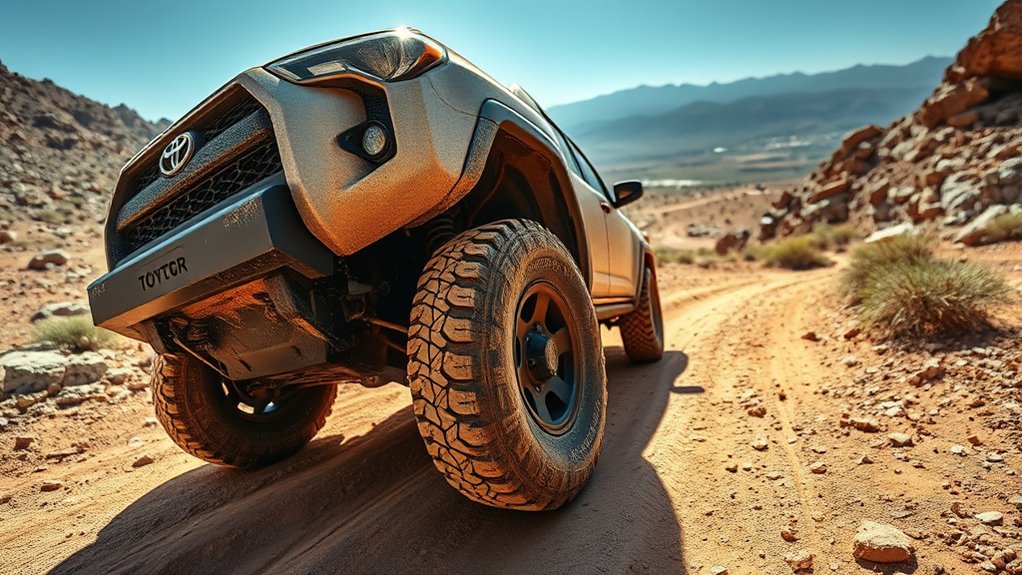
No single mileage number applies to every Toyota 4Runner. Original-equipment tires, highway-terrain tires, all-terrain tires, mud-terrain tires, and winter tires use different compounds and tread designs. Their limited mileage warranties may also differ or may not apply to every size.
Current examples show how wide that range can be. The Goodyear Wrangler DuraTrac RT and BFGoodrich All-Terrain T/A KO3 list 50,000-mile limited warranties. The Nitto Terra Grappler G3 lists 70,000 miles for hard-metric sizes and 55,000 miles for LT and flotation sizes. Those warranties are not guaranteed service-life predictions and remain subject to their terms.
Mileage tells you how far a tire has traveled. Tread, age, damage, pressure history, and performance tell you whether it is still safe.
Original-Equipment Versus Replacement Tires
The tires installed when your 4Runner was new may not carry the same mileage warranty as a replacement tire purchased later. Toyota states that tires are warranted independently by the tire manufacturer, so you should identify the tire brand and model before checking warranty terms.
A replacement tire with a 50,000-mile warranty can still wear out sooner after repeated off-road use, poor alignment, heavy towing, chronic underinflation, or missed rotations. It may also need replacement because of age or damage while substantial tread remains.
Key Factors Affecting Tire Lifespan
Your 4Runner’s weight, drivetrain, tire type, and common uses all affect wear. The following factors usually make the greatest difference:
- Tire design: Highway-terrain tires usually prioritize road comfort and tread life. All-terrain and mud-terrain tires trade some road refinement for off-road traction and stronger tread features.
- Off-road driving: Rocks, gravel, sharp edges, ruts, and wheelspin can chip tread blocks, cut sidewalls, and accelerate irregular wear.
- Towing and cargo: Additional load increases heat and stress. Stay within the vehicle and tire load limits shown on the certification and tire-information labels.
- Inflation pressure: Underinflation creates excess heat and shoulder wear. Overinflation may increase center wear and reduce impact cushioning.
- Alignment: Incorrect toe, camber, or damaged suspension parts can rapidly wear one shoulder or create feathered tread.
- Rotation: Regular rotation helps distribute wear between front and rear positions.
- Climate and age: Heat, sunlight, long storage periods, and time can degrade rubber even when mileage is low.
- Driving style: Hard acceleration, abrupt braking, fast cornering, and spinning the tires on loose surfaces shorten tread life.
Note: Suspension lifts, aftermarket wheels, nonstandard tire sizes, and added accessories can change alignment, clearance, steering feel, and tire loading. Have the final setup inspected by a qualified shop.
Assessing Tread Depth and Condition
Measure tread in several grooves across each tire, not at one convenient spot. Compare the inner shoulder, center, and outer shoulder because a tire can have acceptable tread in one area and unsafe wear in another.
| Tread Condition | What It Means | Recommended Action |
|---|---|---|
| Well above the wear bars | Tread remains usable if wear is even and no damage is present. | Continue monthly inspections. |
| Around 4/32 inch | Wet-weather performance may be noticeably reduced. | Plan replacement sooner if you regularly drive in heavy rain. |
| 2/32 inch or level with wear bars | The tire has reached the general minimum tread threshold identified by NHTSA. | Replace the tire. |
| Uneven, cupped, feathered, or bald areas | Possible pressure, alignment, balance, shock, bearing, or suspension problem. | Arrange a tire and suspension inspection. |
The National Highway Traffic Safety Administration says tires should be replaced when tread reaches 2/32 inch. Built-in wear bars become level with the tread at approximately that point.
You can use a penny for a quick check by placing it head-down in a main tread groove. If the top of Lincoln’s head remains completely visible, the tread is near or below 2/32 inch. A tread-depth gauge is more accurate and makes it easier to compare several positions.
[Products Worth Considering]

Vigorder rubber cement glue delivers superior adhesion and cures quickly within about 30 seconds for seamless rubber bonding. Once cured, it helps provide a strong, durable, waterproof seal that holds up to vehicle weight, pressure, and heat. Suitable for cars, motorcycles, trucks, bicycles, and off-road tires, it’s designed for emergency patch and maintenance repairs.

Measure tire tread depth quickly and accurately with this LUMITECO dial gauge that reads in 1/32" increments up to 14/32". The color-coded green/yellow/red zones make it easy to judge tire wear and know when replacement is needed. A rugged, compact design with a protective pouch helps keep the gauge ready for use on cars, trucks, motorcycles, and more.

Monitor tire tread wear with a smart, color-coded depth gauge that shows clear condition ranges at a glance. The bar is range marked for fast, easy readings, helping you maintain safer traction and performance. Each gauge is portable with a pocket clip, and the set includes 20 units for daily use and sharing.
Check the Sidewalls and Tread
Replace or professionally inspect a tire when you find any of the following:
- Bulges, bubbles, or raised areas
- Exposed cords or fabric
- Deep cuts, splits, or cracking
- Tread separation or distorted tread blocks
- Repeated pressure loss
- Severe flat spotting
- Unexplained vibration, thumping, or pulling
- Damage caused by driving while the tire was flat or seriously underinflated
Warning: Do not continue driving on a tire with a bulge, exposed cords, tread separation, rapid pressure loss, or severe vibration. Stop safely and have the tire inspected before returning to normal driving.
How to Check Tire Age
Find the DOT Tire Identification Number on the sidewall. The final four digits show the manufacturing week and year. For example, “2323” means the tire was manufactured during the 23rd week of 2023. The complete code may appear on only one side, so you may need to look behind the tire.
NHTSA notes that some vehicle and tire manufacturers recommend replacement between six and ten years, regardless of remaining tread. At about six years, have the tires inspected by a qualified professional and follow the age limit published by the tire and vehicle manufacturer. Do not forget the full-size spare, which can age with almost no visible tread wear.
Maintenance Tips for Toyota 4Runner Tires
A consistent maintenance routine helps your tires wear evenly and makes damage easier to catch. Check pressure and condition at least once a month, before long trips, and after demanding off-road travel.
[Products Worth Considering]

Accurately measure tire tread depth with a calibrated gauge marked from 0 to 1 inch in 1/32 inch increments. The color-coded bar helps you quickly identify tread condition ranges, supporting safe driving for trucks, motorcycles, automobiles, and passenger vehicles.

These universal tire valve stem caps help protect valve cores from dust, debris, and moisture while helping maintain stable tire pressure. The corrosion-resistant metal construction and sealed design provide reliable protection in road grime, mud, and winter conditions. Twist-on installation makes them quick to fit on cars, SUVs, trucks, and motorcycles.

The SAFELIFE dial tire tread depth gauge measures tread depth in 1/32 inch increments with clear, easy-to-read 2-inch dial face. Color zones using a traffic light system help you quickly judge whether tread is low, marginal, or ample for safer driving. Built with a durable zinc cast body and a metal detect probe for precise, comfortable use across cars, motorcycles, trucks, and buses.
Tire Rotation Frequency
Follow the rotation interval and pattern in the maintenance guide for your exact model year. Toyota explains that rotation requirements are vehicle-specific, while NHTSA gives a general range of 5,000 to 8,000 miles when recommended by the manufacturer. A 5,000-mile interval is a practical checkpoint for many 4Runner owners, especially when the vehicle sees towing, rough roads, or frequent off-road use.
Have the technician record tread depth at all four corners during each rotation. A growing difference between positions may reveal an alignment, inflation, suspension, or driving-pattern problem before a tire becomes unusable.
Pro Tip: Write each tire’s tread depth and cold pressure in your phone after every rotation. Comparing those readings over time is more useful than guessing from appearance.
Proper Inflation Practices
Check pressure when the tires are cold, meaning the vehicle has been parked for at least three hours or driven only a short distance at low speed. Use the pressure listed on the driver-side Tire and Loading Information label or in the correct owner’s manual.
Do not use the pressure molded into the tire sidewall as your normal target. That number represents the tire’s maximum pressure under specified conditions, not the 4Runner’s recommended operating pressure.
Recommended pressures vary by model year, configuration, load, and tire size. For example, Toyota’s official 2026 4Runner maintenance data lists 33 psi cold for several factory tire configurations. Do not automatically apply that figure to an older 4Runner or a modified setup. Use your own placard.
| Condition | Likely Effect | What to Do |
|---|---|---|
| At placard pressure when cold | Supports intended handling, load capacity, wear, and fuel use. | Recheck monthly and before long trips. |
| Underinflated | May cause heat buildup, shoulder wear, slower response, and higher fuel use. | Inflate to the placard value and inspect for leaks if pressure drops again. |
| Overinflated | May cause a harsher ride, center wear, and reduced cushioning over impacts. | Adjust while cold to the placard value. |
| TPMS warning illuminated | At least one tire may already be significantly underinflated. | Stop safely, inspect all tires, and measure pressure with a gauge. |
TPMS is a warning system, not a replacement for manual checks. NHTSA explains that the warning may not appear until a tire is already significantly underinflated.
Alignment, Balance, and Wear Patterns
- Wear on both shoulders: Often associated with underinflation.
- Wear through the center: May point to excessive inflation for the load and setup.
- Wear on one edge: Often indicates an alignment or suspension issue.
- Feathered tread: May indicate incorrect toe alignment.
- Cupped or scalloped wear: Can be linked to imbalance, weak dampers, loose components, or alignment problems.
- Steering-wheel vibration: May require balancing or inspection for tire, wheel, or suspension damage.
Alignment does not need to be performed automatically with every rotation. Arrange an alignment check when you see uneven wear, the vehicle pulls, the steering wheel is off-center, or the suspension has been modified or struck by a pothole or obstacle.
Off-Road Tire Care
Inspect the tires before and after every demanding trail. Look between tread blocks for cuts, trapped stones, missing chunks, exposed cords, and punctures. Check the inner sidewalls as carefully as the outer sidewalls.
Some drivers reduce pressure for specific low-speed off-road conditions. The correct off-road pressure depends on the tire, wheel, load, terrain, and risk of losing the bead. Never copy a random pressure setting, and do not return to highway speed while the tires remain aired down. Reinflate to the correct road pressure before normal driving.
Signs It Is Time to Replace Your Tires
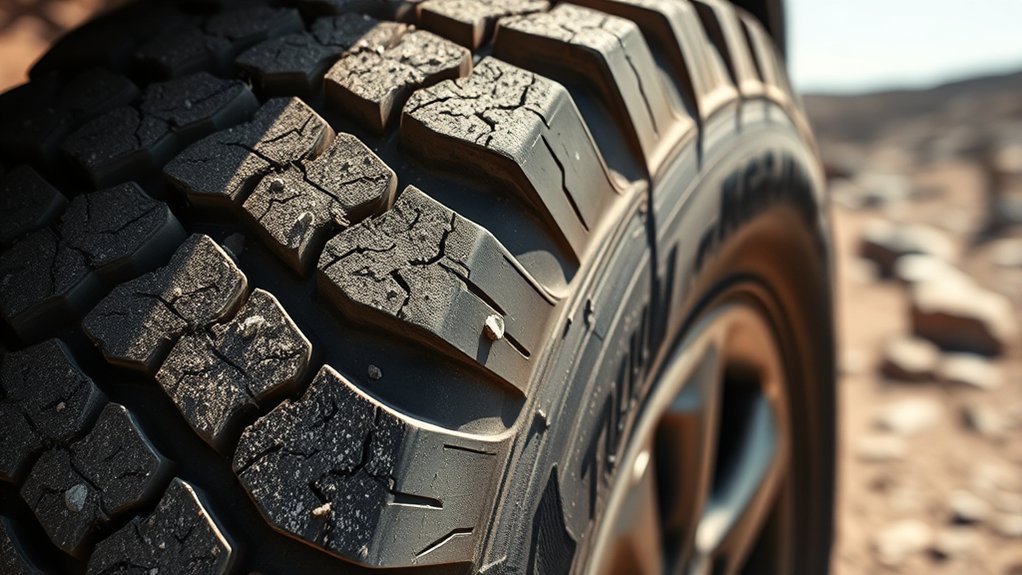
Replace a tire when it reaches the wear bars or 2/32 inch, but do not wait for that measurement when the tire is damaged or no longer performs safely in your normal conditions.
Arrange immediate inspection or replacement when you notice:
- Tread at or below 2/32 inch
- Inadequate wet or snow traction before reaching 2/32 inch
- A sidewall bulge, bubble, deep cut, or exposed cord
- Tread separation or a distorted casing
- A puncture in the shoulder or sidewall
- A puncture larger than the repair limit
- Repeated loss of pressure
- Severe uneven wear
- Persistent vibration or thumping
- Age beyond the tire or vehicle manufacturer’s stated service limit
Can a Puncture Be Repaired?
According to the U.S. Tire Manufacturers Association, repair should generally be considered only when the puncture is within the repairable tread area and no larger than 1/4 inch, or 6 mm, in diameter.
The tire must be removed from the wheel for an internal inspection. A proper repair fills the injury with a rubber stem and seals the inner liner with a patch. A plug inserted from the outside by itself is not an accepted permanent repair. Shoulder damage, sidewall damage, overlapping repairs, internal damage, or a tire driven while flat normally requires replacement.
Check the Spare Tire Too
A full-size spare can look unused while being old, underinflated, cracked, or unsuitable for extended use. Check its cold pressure, DOT date code, tread, mounting hardware, and accessibility. Do not assume the TPMS monitors the spare on every model year.
Top Tire Types and Current Examples for the 4Runner
The best tire depends on your model year, wheel size, climate, load, road use, and off-road needs. Confirm the exact tire size, load index, speed rating, and compatibility using your door placard, owner’s manual, and the tire manufacturer’s fitment tool.
[Products Worth Considering]

Measure tyre tread depth precisely with a digital gauge that reads in both MM and inches, helping you monitor safe driving conditions. The large LCD screen is easy to operate, and the compact tool fits for cars, trucks, and motorcycles. It provides high accuracy with a 0-25.4mm range and includes a 1-year warranty for added peace of mind.

These aluminum alloy tire valve stem caps with an O-ring seal help protect valve stems from corrosion while adding a clean, stylish look to your vehicle. The universal fit works across cars, trucks, motorcycles, bicycles, and more, making them an easy upgrade for everyday driving and off-road use. Installation is quick, and the included four-pack keeps all your tires dressed and protected.

Upgrade your ride with a 2-pack set of 26x1.95 folding mountain bike tires built for dependable traction on mud, rocks, and trail surfaces. A reinforced puncture-resistant layer helps protect against sharp debris, while included butyl inner tubes provide strong sealing and shock absorption. Ready for fast swaps with included tire levers and universal sizing for most bikes.
Highway and Daily Driving
A highway-terrain or road-focused all-season tire usually suits drivers who spend most of their time commuting, traveling, and driving on paved roads. Prioritize wet braking, quiet operation, ride quality, treadwear coverage, and the correct load rating.
Mixed Road and Trail Use
An all-terrain tire offers stronger off-pavement traction while remaining practical for road use. Current examples include:
- Goodyear Wrangler DuraTrac RT: An all-terrain, all-season tire with a listed 50,000-mile limited warranty and Three-Peak Mountain Snowflake designation on the official product page.
- BFGoodrich All-Terrain T/A KO3: An all-terrain tire with a listed 50,000-mile limited warranty and severe-snow rating.
- Nitto Terra Grappler G3: An all-terrain tire with listed warranties of 70,000 miles for hard-metric sizes and 55,000 miles for LT and flotation sizes.
These are verified examples, not universal fitment recommendations. A product line may include some sizes that fit a particular 4Runner and others that do not.
Winter Driving
For regular snow and ice, use four matching winter tires or suitable severe-snow-rated tires in the correct size and load rating. Toyota warns against mixing different tire sizes, constructions, tread patterns, or substantially different tread wear on four-wheel-drive configurations. Review the winter guidance in the manual for your exact model year.
Warning: Do not mix a winter tire with three all-season tires or install mismatched tire sizes on a 4WD 4Runner. Differences in traction and rolling circumference can affect handling and drivetrain operation.
Frequently Asked Questions
Is 40,000 miles a lot for Toyota 4Runner tires?
Forty thousand miles can be a normal result for a 4Runner tire, especially an original-equipment or aggressively used all-terrain tire. It is not automatically good or bad. Compare the remaining tread, wear pattern, tire age, damage, performance, and applicable mileage warranty.
How long should factory Toyota 4Runner tires last?
Toyota does not publish one lifespan for every factory-installed tire. Original tires differ by model year, trim, wheel package, market, and supplier. Identify the brand and model on the sidewall, then review that tire manufacturer’s warranty and replacement guidance.
When should Toyota 4Runner tires be replaced?
Replace them at 2/32 inch of tread or earlier when wet or winter traction is inadequate. Replacement is also necessary for serious cuts, sidewall bulges, exposed cords, tread separation, unrepairable punctures, repeated pressure loss, severe uneven wear, or excessive age.
How often should 4Runner tires be rotated?
Follow the maintenance guide for your exact model year and tire setup. A rotation near every 5,000 miles is a useful checkpoint for many owners, while general guidance may range from 5,000 to 8,000 miles. Rotate sooner if uneven wear develops.
Does off-roading shorten 4Runner tire life?
It can. Sharp rocks, gravel, wheelspin, low-pressure operation, sidewall flex, impacts, and embedded debris can increase tread wear and damage. Inspect all tread and sidewall surfaces after demanding trails and reinflate before returning to normal road speeds.
Can I replace only two tires on a 4WD 4Runner?
A qualified tire professional should first compare size, construction, tread pattern, and remaining tread depth. Four closely matched tires are the safest approach for consistent traction and rolling circumference. Follow the applicable Toyota manual and tire-manufacturer limits before replacing fewer than four.
How do I know how old a tire is?
Read the last four digits of the DOT Tire Identification Number. The first two digits identify the manufacturing week, and the final two identify the year. A code ending in 2323 means the tire was made during the 23rd week of 2023.
Conclusion
A Toyota 4Runner tire set may last around 40,000 to 60,000 miles, but that range is only a planning estimate. Tire design, model year, pressure, alignment, rotation, load, climate, road surface, off-road use, damage, and age can move the replacement point much earlier or later.
Check cold pressure and condition monthly, measure tread across the full width, inspect the spare, and address unusual wear or vibration quickly. Replace tires at the wear bars or sooner when damage, age, or reduced traction makes continued use unsafe.
Sources
- NHTSA TireWise — tire pressure, tread depth, tire age, TPMS, and monthly inspection guidance
- NHTSA Summer Driving Tips — cold-pressure checks, door-placard pressure, damage inspection, and sidewall-pressure warning
- Toyota 2026 4Runner Maintenance Data — factory tire sizes, cold pressures, wheel specifications, and torque data
- Toyota Tire Rotation Guide — vehicle-specific rotation intervals and patterns
- U.S. Tire Manufacturers Association Repair Procedures — repairable area, puncture-size limit, inspection, and plug-and-patch requirements
- Toyota 4Runner Winter Driving Guidance — winter-tire matching, pressure, size, and four-wheel installation precautions