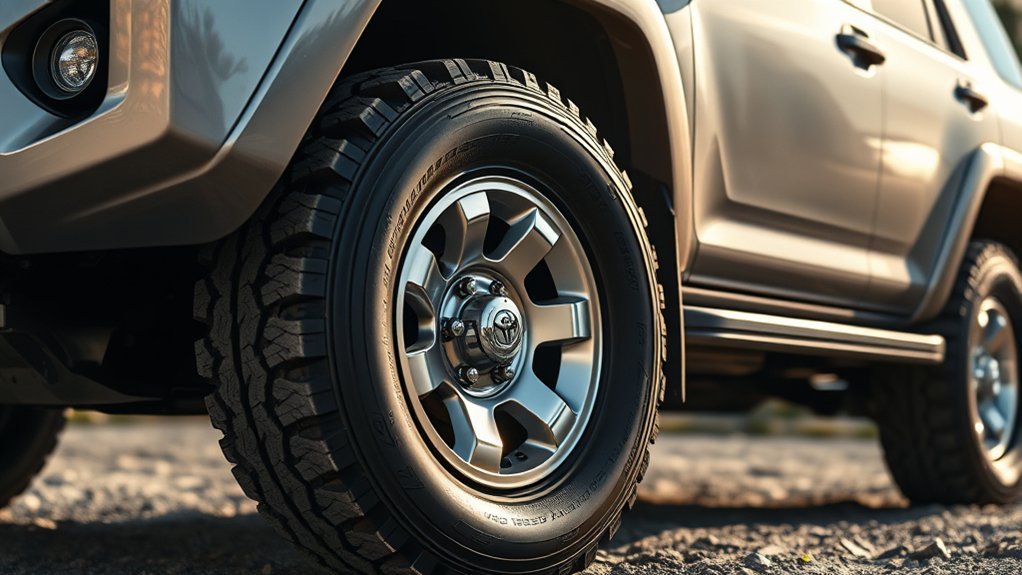
Choosing wheels and tires for a 3rd Gen Toyota 4Runner is not just about picking the biggest size that looks good. You need the right bolt pattern, hub bore, offset, tire diameter, load rating, and clearance so the truck drives safely on pavement and does not rub off-road.
Quick Answer
A 3rd Gen 4Runner uses a 6×139.7mm bolt pattern and a 106.1mm hub bore. Most factory setups use 15- or 16-inch wheels, not 17-inch wheels. Common upgrades include 265/70R16, 265/75R16, 275/70R17, or 285/70R17, but larger sizes depend on lift, offset, trimming, and alignment.
Key Takeaways
- The 3rd Gen 4Runner bolt pattern is 6×139.7mm, also written as 6×5.5 inches.
- Factory tire size varies by year and trim, so check the tire placard on your driver door jamb before buying tires.
- A 265/70R16 or 265/75R16 is usually the safest mild upgrade range for many stock-height trucks.
- A 285/70R17 or similar 33-inch tire usually needs a lift, careful offset choice, trimming, and alignment work.
- Always match or exceed the original tire load rating and check clearance at full steering lock and suspension compression.
At a Glance
| Time Required | 30 to 60 minutes to plan fitment; longer if trimming, alignment, or suspension work is needed. |
| Difficulty | Easy for stock-size replacement; moderate for larger off-road tires. |
| Tools Needed | Tape measure, tire size calculator, torque wrench, floor jack, jack stands, and alignment check after major changes. |
| Cost | Varies widely: used factory wheels can be budget-friendly, while new wheels, all-terrain tires, lift parts, trimming, and alignment can raise the total quickly. |
3rd Gen 4Runner Wheel Specifications
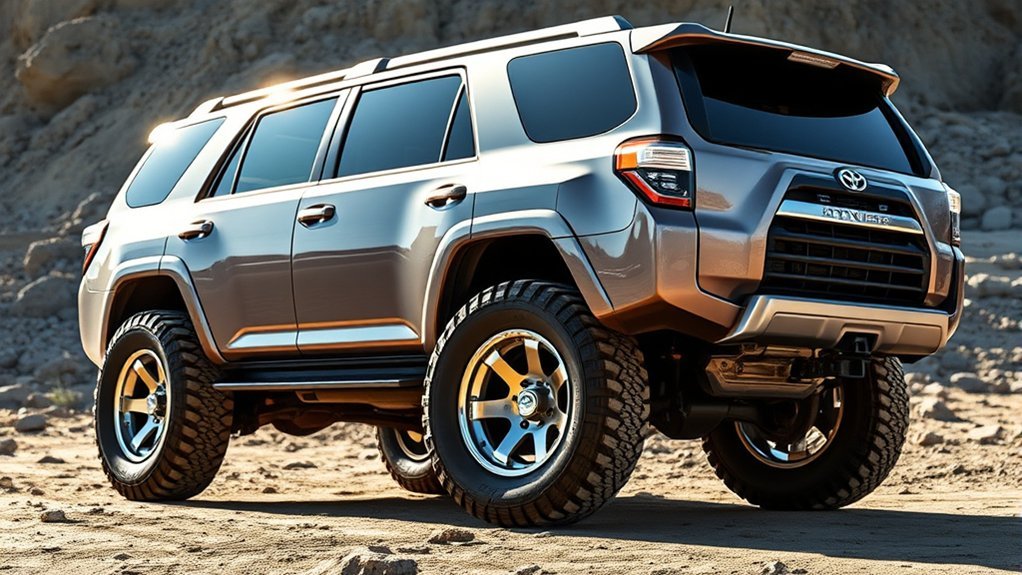
The 3rd Gen Toyota 4Runner covers the 1996-2002 model years in the U.S. market. The most important wheel spec is the 6×139.7mm bolt pattern, also written as 6×5.5 inches. That pattern is common across many Toyota truck and SUV wheels, but bolt pattern alone does not guarantee a safe fit.
You also need to check hub bore, offset, width, brake clearance, lug nut seat style, and tire diameter. A wheel can bolt on and still rub the suspension, sit too far outside the fender, or vibrate if the hub fit is wrong.
| Bolt pattern | 6×139.7mm / 6×5.5 inches |
| Hub bore | 106.1mm |
| Common factory wheel diameter | 15 or 16 inches, depending on year and trim |
| Common factory tire range | Often 225/75R15 or 265/70R16, but verify your door-jamb tire placard |
| Common aftermarket wheel width | 16×8, 17×8, or 17×8.5, depending on tire size and use |
| Safe offset range for mild setups | Usually around +25mm to 0mm; more negative offset increases poke and rubbing risk |
Note: Your door-jamb tire placard and owner’s manual matter more than any general fitment chart. Use them to confirm original tire size, load rating, and recommended cold tire pressure.
Tire Size Compatibility for Different 4Runner Setups
Tire size compatibility depends on your suspension height, wheel offset, tire brand, tread shape, alignment, and how much trimming you are willing to do. Two tires with the same printed size can fit differently because some all-terrain and mud-terrain tires run wider or taller than others.
For many stock-height 3rd Gen 4Runners, a 265/70R16 is a safe factory-style size, while 265/75R16 is a common mild upgrade. A 275/70R17 or 285/70R17 is usually an aftermarket setup and should be checked carefully for rubbing.
| Setup | Common Tire Size | Fitment Notes |
| Factory-style replacement | 225/75R15 or 265/70R16 | Best for stock drivability. Confirm the original size on your tire placard. |
| Mild stock-height upgrade | 265/75R16 or 31×10.50R15 | Often workable, but check mud flaps, fender liners, and full-lock clearance. |
| Aftermarket 17-inch setup | 275/70R17 | May fit some mild setups, but rubbing depends heavily on offset, tire shape, and alignment. |
| Lifted off-road setup | 285/70R17 or 285/75R16 | Usually needs lift, trimming, caster adjustment, and careful wheel offset selection. |
| Aggressive 33-inch plus setup | 33×12.50R15 or similar | Expect trimming, possible body mount work, wider wheel fitment checks, and more road noise. |
Warning: Do not assume a tire fits because someone else runs the same size. Worn suspension, different wheel offset, alignment settings, tire brand, and fender liner position can change the result.
[Products Worth Considering]

These M14x1.5 closed-end chrome lug nuts are a one-piece replacement designed for secure fitment on compatible GM, Ford, and select Chrysler/Dodge models. Featuring a 60-degree conical seat and anti-rust chrome plating, they help resist corrosion and maintain a bright look for everyday driving. Built for long-term durability, they include OEM-style part references and are backed by 12 months of support.

Upgrade your wheels with MIKKUPPA closed-end lug nuts designed for reliable fit and corrosion resistance. The one-piece, cold-forged and heat-treated steel construction helps resist rust and stripping, while the integrated finish delivers a durable black appearance. Built to OEM standards with a conical 60-degree seat, these nuts provide a secure solution for compatible Ford, Honda, Jeep, and Chevrolet models.

Upgrade your wheels with MIKKUPPA M12x1.5 mag seat lug nuts built for secure, corrosion-resistant performance. These closed-end chrome lug nuts are a direct replacement for select Toyota models, including Camry, Corolla, RAV4, Sienna, Avalon, Highlander, Matrix, Venza, and Prius. Triple-chromium plating and cold-forged, heat-treated steel help deliver strength for daily driving and replacement needs.
How to Choose the Ideal Wheel Offset
Wheel offset is the distance between the wheel’s centerline and the mounting surface. Positive offset pulls the wheel inward. Negative offset pushes the wheel outward. On a 3rd Gen 4Runner, offset affects stance, steering feel, fender clearance, upper control arm clearance, and wheel bearing load.
For a near-stock setup, a wheel close to the factory offset usually keeps the best road manners. For larger tires, many owners choose around 0mm to -12mm offset to move the tire away from the upper control arm. That extra poke can help inner clearance, but it can also make the tire hit the mud flap, fender liner, or rear of the front wheel well.
Backspacing is another way to describe where the wheel sits. Less backspacing usually means the wheel sticks out more. More backspacing usually tucks the wheel inward. When comparing wheels, look at both offset and wheel width, because a 0mm offset on an 8-inch wheel does not sit exactly like a 0mm offset on an 8.5-inch wheel.
Pro Tip: If your goal is a daily-driver 4Runner with mild all-terrain tires, avoid going too aggressive with negative offset. A modest stance is easier on steering feel, fenders, and wheel bearings.
[Products Worth Considering]

Keep your tires properly inflated with this analog VONDIOR tire pressure gauge, designed for fast, easy readings without batteries. The swiveling, two-axis hose and large glow dial help you measure at any tire angle with instant visibility. Built with a protective rubber shield, it supports durable, low-maintenance use for cars and trucks.

This professional wheel and rim brush kit makes it easy to lift brake dust, grime, and dirt from wheels and tires without scratching finishes. The brushes feature soft, metal-free wool heads and a flexible 360-degree rim brush design for reaching hard-to-clean areas. Includes multiple brush types plus accessories for thorough car, motorcycle, and general vehicle detailing.

The Trivd Frol 1/2" air impact wrench delivers high performance torque up to 1500 ft-lbs with a twin hammer impact mechanism for strong, balanced blows. It features an ergonomic grip, compact lightweight design, and quick-stop control with 3 forward speeds up to 8000 RPM plus a reverse speed. Built for demanding automotive repair and tire shop work, the rear exhaust helps keep debris away from the surface.
Rubbing Points to Check Before You Buy
Before ordering tires, inspect the areas most likely to rub. This is especially important if you are moving from factory 16-inch wheels to wider 17-inch aftermarket wheels.
- Front mud flaps: Larger tires often contact the rear edge of the front mud flap during turns.
- Fender liner: The lower rear section of the front liner is a common contact point.
- Pinch weld/body seam area: Bigger tires may need trimming or reshaping near the rear of the front wheel well.
- Upper control arm: Wheels with too much positive offset or too much backspacing can push the tire too close to the control arm.
- Front bumper edge: Wider tires with negative offset may contact the front lower bumper area.
- Spare tire location: A larger spare may not fit in the factory spare location without adjustment.
After installation, turn the steering wheel fully left and right while the truck is parked. Then test again slowly over a driveway angle or small bump. If you hear rubbing, stop and inspect the contact point before off-road driving.
Steel or Alloy Wheels: What’s Right for Your 4Runner?
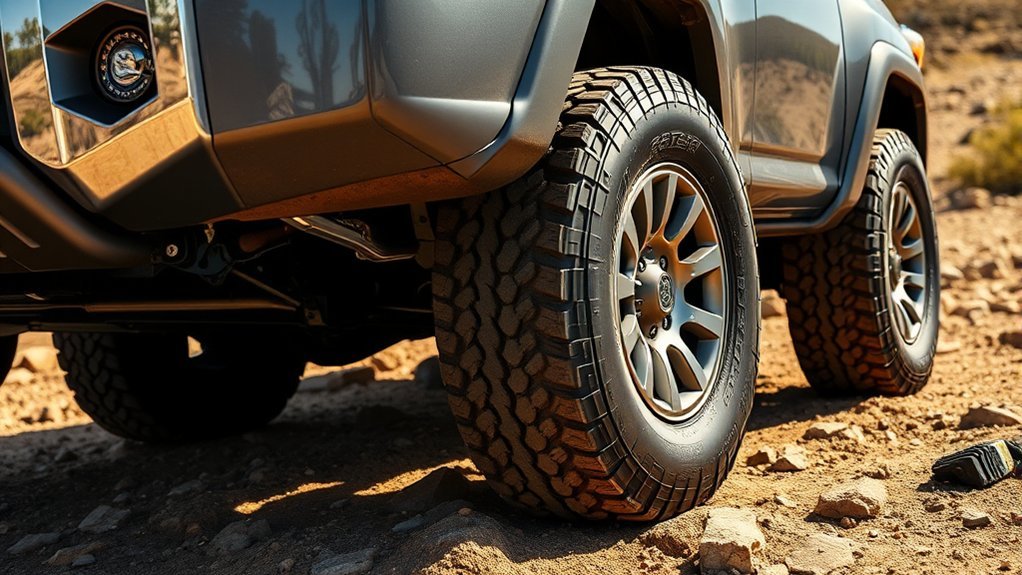
The right wheel material depends on how you use your 4Runner. Steel wheels are usually cheaper and tough enough for trail abuse, but they are often heavier and can rust if the finish is damaged. Alloy wheels are usually lighter and available in more designs, but they can cost more and may crack instead of bending under a hard impact.
| Wheel Type | Best For | Tradeoff |
| Steel | Budget trail builds, simple styling, rough use | Heavier, more likely to rust, fewer style choices |
| Alloy | Daily driving, lighter setups, better appearance options | Usually costs more and can be damaged by hard rock hits |
If you daily drive your 4Runner and only trail ride on weekends, a quality alloy wheel is often the better all-around choice. If you are building a lower-cost trail truck and do not mind extra weight, steel wheels can still make sense.
[Products Worth Considering]

These aluminum alloy tire valve stem caps with an O-ring seal help protect valve stems from corrosion while adding a clean, stylish look to your vehicle. The universal fit works across cars, trucks, motorcycles, bicycles, and more, making them an easy upgrade for everyday driving and off-road use. Installation is quick, and the included four-pack keeps all your tires dressed and protected.

Protect your spare wheel with a waterproof, dustproof tire cover made to resist sun and harsh weather. The elastic band design makes it easy to install and remove without tools, while reinforced stitching helps it keep its shape. Available in multiple sizes, it fits common RV, trailer, Jeep, SUV, and truck spare tires.

This 1/2-inch drive breaker bar delivers powerful leverage for loosening and tightening stubborn lug nuts and automotive fasteners. The 180-degree flex head helps you reach tight spaces at the angle you need, making tire and brake jobs easier. A spring-loaded ball detent design holds 1/2-inch sockets securely while the chrome-moly head provides durable strength for everyday use.
Upgrading Your Setup for Better Off-Road Performance
Better off-road performance comes from the whole package, not just tire size. A taller tire adds ground clearance under the differential, but it can also add weight, reduce acceleration, affect braking feel, and make your speedometer read low.
If you want a mild, reliable setup, start with a tire close to 31 to 32 inches tall and choose a wheel that keeps the tire clear of the upper control arm without pushing it too far outside the fender. If you want a 33-inch tire, plan for more work. A lift alone does not always solve rubbing because the tire still moves rearward and inward as the suspension cycles.
For larger tires, consider these upgrades:
- Suspension lift: Helps vertical clearance, but does not fix every rubbing point.
- Alignment with more caster: Can move the tire slightly forward in the wheel well and improve clearance.
- Upper control arms: Helpful on lifted setups that need better alignment range.
- Trimming: May be needed around mud flaps, fender liners, or the rear of the front wheel well.
- Full-size spare: Match the spare diameter to the running tires, especially if you use 4WD.
The safest wheel and tire upgrade is the one that clears at full lock, clears under compression, matches the truck’s load needs, and still drives predictably on the road.
Load Rating, Tire Pressure, and Installation Safety
When changing tire size, do not focus only on diameter. Check the load index, load range, speed rating, and recommended cold tire pressure. The replacement tire should meet or exceed the original tire’s load capacity unless a tire professional confirms the setup is safe for your specific vehicle and use.
Use the cold tire pressure listed on the vehicle placard as your starting point for factory-size tires. Larger LT tires may need different pressure to carry the same load, so ask a tire professional or use the tire manufacturer’s load inflation data. Do not use the sidewall maximum pressure as your normal daily setting unless the tire maker or installer specifies it for your load.
- Torque lug nuts with a calibrated torque wrench, not just an impact gun.
- Recheck lug torque after the first short drive if the wheel maker or installer recommends it.
- Get an alignment after lift parts, upper control arms, or major tire-size changes.
- Make sure the spare tire is close in diameter to the other tires before using 4WD.
- Inspect tires for age, cracking, uneven wear, and sidewall damage before long trips.
Note: Larger and heavier tires can affect acceleration, braking, fuel economy, and automatic transmission shifting. If the truck feels sluggish after a big tire upgrade, gearing may be part of the issue.
Frequently Asked Questions
What is the bolt pattern on a 3rd Gen 4Runner?
The 3rd Gen Toyota 4Runner uses a 6×139.7mm bolt pattern, also written as 6×5.5 inches. You should still confirm hub bore, offset, lug nut seat style, and brake clearance before buying wheels.
Is 265 or 275 better for a 3rd Gen 4Runner?
A 265-width tire is usually easier to fit, lighter, and better for daily driving. A 275-width tire can add stance and traction, but it may rub depending on wheel offset, tread design, alignment, and suspension condition.
Can I run 285/70R17 tires on a 3rd Gen 4Runner?
Yes, many owners run 285/70R17 tires, but they are not a simple stock replacement. Expect to need a lift, proper wheel offset, alignment work, and possible trimming around the front fender liner, mud flap, or body seam area.
Are 17-inch wheels best for a 3rd Gen 4Runner?
Not always. A 17-inch wheel gives you many modern tire choices, but 16-inch wheels are often lighter, affordable, and closer to the original platform. Pick based on tire availability, brake clearance, weight, offset, and how you use the truck.
What offset should I choose for bigger tires?
For mild setups, staying near factory offset or around 0mm is usually safer. For larger tires, some owners use 0mm to -12mm to gain inner clearance, but too much negative offset can increase outer fender rubbing and change steering feel.
Conclusion
The best 3rd Gen 4Runner wheel and tire setup depends on your starting point and how you drive. For a simple daily-driver replacement, stay close to the factory 15- or 16-inch setup and verify the tire placard. For a mild upgrade, 265/75R16 or similar sizing is often practical. For 275/70R17, 285/70R17, or 33-inch tires, plan for offset checks, trimming, alignment, and suspension work. Choose the setup that clears properly, matches the load rating, and keeps your 4Runner safe on the road and trail.
Sources
- Toyota Owners Manuals and Warranties — owner manual and tire placard verification.
- NHTSA Tire Safety — tire pressure, tire condition, and safe tire maintenance guidance.
- NHTSA Recalls — tire and vehicle recall lookup by VIN or tire information.
- 49 CFR § 571.110 — tire selection and rim labeling requirements for motor vehicles.
- 49 CFR § 575.104 — Uniform Tire Quality Grading standards.