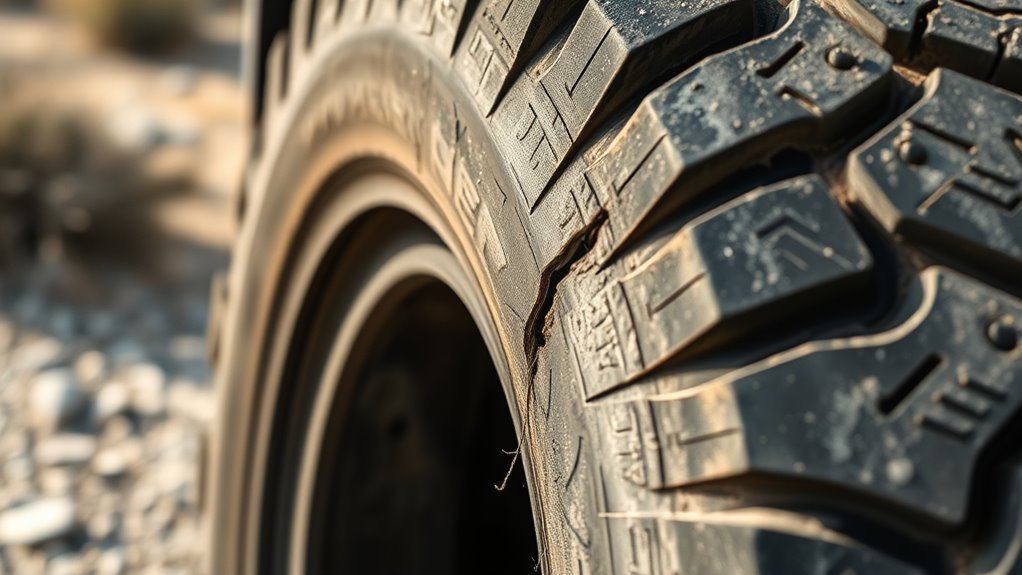
Sidewall damage on a 4Runner tire is not the same as a nail in the tread. The sidewall carries load, flexes every rotation, and protects the internal cords that hold the tire together. If the damage is a puncture, bulge, deep cut, exposed cord, or steady air loss, treat the tire as unsafe and plan on replacement—not a patch, plug, or long drive home.
Quick Answer
You cannot safely repair 4Runner tire sidewall damage if it is a puncture, bulge, deep cut, exposed cord, or leak. Tire-industry repair guidance limits proper repairs to the tread area. Use the spare or tow the vehicle, then replace the damaged tire with one that matches your 4Runner’s tire specs and tread depth closely enough for its drivetrain.
Key Takeaways
- Sidewall punctures, bulges, exposed cords, and leaking cuts are not safe repair candidates.
- A plug, patch, or sealant may hold air briefly, but it does not restore sidewall strength.
- If the tire is structurally damaged, use your spare or call for a tow instead of driving at highway speed.
- On 4WD/AWD-equipped 4Runners, tire size, tread pattern, load rating, speed rating, and tread depth matching matter.
- When replacing fewer than four tires, measure tread depth first and follow Toyota, tire manufacturer, and tire-shop guidance.
At a Glance
| Time Required | 5–10 minutes to inspect; 30–90 minutes for spare installation or roadside service; longer if replacement tires must be ordered. |
| Difficulty | Easy inspection; moderate roadside spare change; professional service required for tire replacement and balancing. |
| Tools Needed | Flashlight, tire pressure gauge, tread depth gauge, spare tire, jack, lug wrench, wheel lock key if equipped, and a safe flat work area. |
| Cost | Sidewall repair should not be performed. Replacement cost depends on tire size, brand, tread matching, mounting, balancing, and whether one, two, or four tires are needed. |
Warning: Do not drive normally on a tire with a sidewall bulge, exposed cords, a puncture, a deep cut, or active air loss. The tire can fail suddenly because the damaged area flexes under load. If you are on the road, get to a safe location, install the spare if it is safe to do so, or call roadside assistance.
Is My 4Runner’s Sidewall Damage Actually Dangerous?
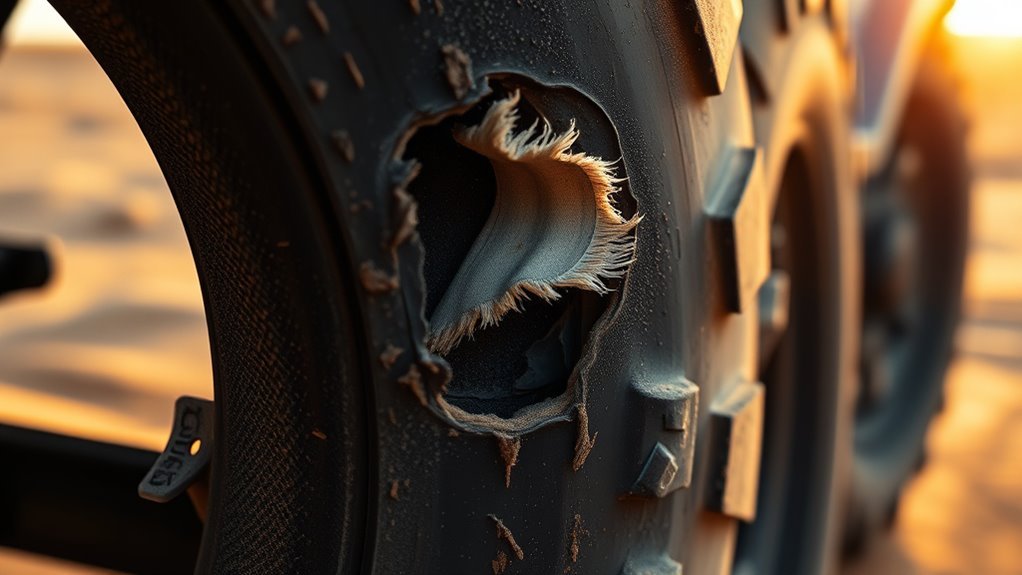
Yes, 4Runner tire sidewall damage can be dangerous when it goes beyond a light surface scuff. A harmless-looking mark may only scrape the outer rubber, but a cut that reaches the internal cords, a bubble, a puncture, or a tire that keeps losing air is a different situation. That tire has lost structural strength.
The National Highway Traffic Safety Administration recommends regular tire inspection for cuts, slashes, and other irregularities because tire condition, inflation, load, and road damage all affect failure risk. For a 4Runner, the risk matters even more when the vehicle is loaded for camping, towing, highway travel, or trail use.
Replace the Tire Immediately If You See These Signs
- Bulge or bubble: This usually means the internal structure has separated or weakened.
- Exposed cords: White, silver, or fabric-like strands mean the reinforcing material is visible.
- Deep cut or gash: If the cut is more than a surface scrape, have the tire removed from service.
- Puncture in the sidewall: Nails, screws, sticks, rocks, or metal through the sidewall are not safe repair candidates.
- Air loss: A tire that loses pressure after sidewall damage is unsafe to keep driving on.
- Damage near the bead: Cuts near the rim edge can affect the seal and tire structure.
Note: A shallow cosmetic scrape that does not expose cords, leak air, or create a bulge may not require immediate replacement, but you should still have it inspected. Sidewall depth is hard to judge accurately while the tire is mounted on the vehicle.
Why Tire Shops Won’t Patch Your Sidewall Even If It Holds Air
Tire shops refuse sidewall repairs because the sidewall is not part of the approved repair zone. The U.S. Tire Manufacturers Association says proper puncture repair is limited to the tread area, and the tire must be removed from the wheel so the inside can be inspected. A plug alone is not an acceptable repair; a proper repair requires filling the injury and sealing the inner liner.
That guidance does not apply to sidewall damage. The sidewall bends, heats, and carries load every time the tire rolls. A patch or plug can seal air for a short time, but it cannot rebuild the cords and rubber structure that keep the tire stable at speed.
A sidewall repair can look successful because the tire holds air. That does not mean the tire is structurally safe.
Repairable vs. Not Repairable
| Damage Location | Usually Repairable? | What to Do |
|---|---|---|
| Center tread puncture | Sometimes | Have a trained technician demount and inspect the tire. If within size and location limits, use a proper plug-and-patch repair. |
| Shoulder or tread edge | Usually no | Replace if the injury extends into the shoulder or belt-edge area. |
| Sidewall puncture, cut, bulge, or exposed cord | No | Use the spare or tow the vehicle, then replace the damaged tire. |
Can You Safely Seal or Plug Sidewall Damage?
No. A plug, patch, or liquid sealant is not a safe permanent fix for sidewall damage. Sealants and emergency inflators may be marketed for temporary mobility, but the USTMA tire repair guidance still requires a proper internal inspection and repair only within the approved tread area. Sidewall damage falls outside that repair zone.
Sealant can also complicate professional service. Some products may interfere with pressure monitoring, leave residue inside the tire, or make it harder for the shop to inspect the inner liner. If your 4Runner has TPMS, tell the tire shop if any sealant was used.
Pro Tip: Keep a tire pressure gauge, tread depth gauge, flashlight, and your wheel lock key in the 4Runner. Those small tools help you decide whether to install the spare, call a tow, or limp only a few yards out of danger.
How to Handle a Damaged Sidewall Until the Tire Is Replaced
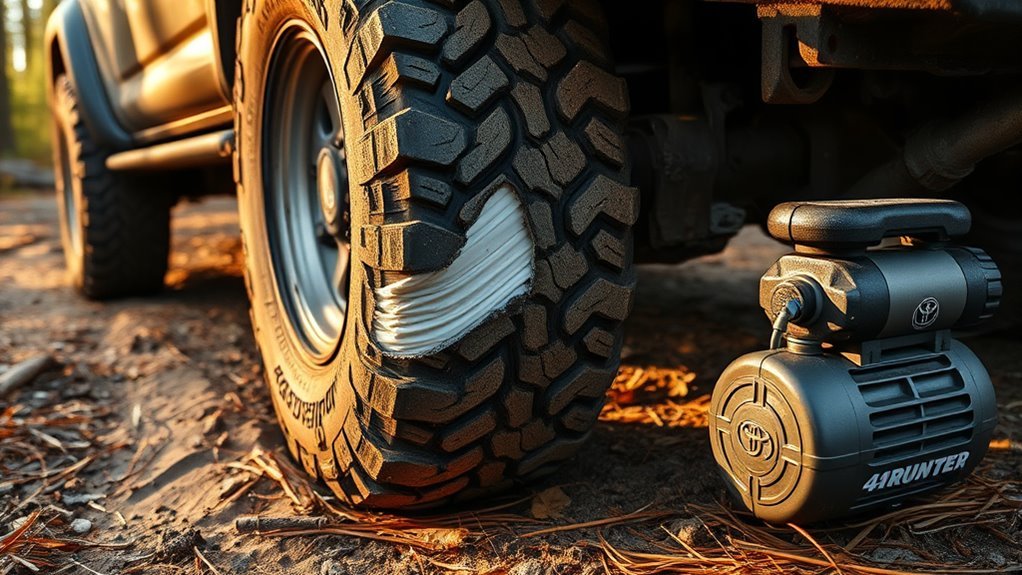
The safest temporary plan is not to drive on the damaged tire. If you discover the damage in your driveway, leave the 4Runner parked until the tire is replaced or a mobile tire service can help. If you discover it on the road, your goal is to get away from traffic without adding heat, speed, or load to the damaged tire.
[Products Worth Considering]

This car D-wheel lock nut key provides an anti-theft solution for D-shaped wheel lock bolts, helping keep your wheels secure. It features a flower-shaped internal pattern that resists micro-adjustment theft while allowing removal and mounting of compatible locking nuts. Made for reliable performance under high torque, it’s easy to use with standard socket wrench turning for quick tire maintenance and emergency repairs.

Vigorder rubber cement glue delivers superior adhesion and cures quickly within about 30 seconds for seamless rubber bonding. Once cured, it helps provide a strong, durable, waterproof seal that holds up to vehicle weight, pressure, and heat. Suitable for cars, motorcycles, trucks, bicycles, and off-road tires, it’s designed for emergency patch and maintenance repairs.

Mosconly tire repair glue and nail kit delivers an elastic, waterproof bond for quick sidewall puncture repairs. The adhesive cures securely to help prevent peeling, flaking, and tearing, while the included nails support a strong, seamless repair. Designed for easy roadside use, it works on car, motorcycle, bike, and other tire types, with full curing within 24 hours.
Risk Assessment Steps
- Get safe first: Pull fully off the road if you can do so without making a sharp maneuver. Turn on hazard lights.
- Check pressure: If the tire is losing air, do not keep driving on it.
- Inspect the sidewall: Look for cords, bulges, cracks, punctures, gashes, or damage near the rim bead.
- Check the spare: Confirm the spare is inflated and not cracked, old, or damaged.
- Choose the safe exit: Install the spare if conditions are safe. If not, call roadside assistance or a tow.
If You Must Move the Vehicle
If the damaged tire is still holding air and you must move the 4Runner out of traffic, move only the shortest distance needed to reach a safer spot. Avoid highway speeds, hard braking, sharp turns, trail obstacles, towing, and heavy loads. This is not a “drive home” plan; it is an emergency movement plan.
Warning: Do not air down and trail-drive on a tire with sidewall damage. Lower pressure makes the sidewall flex more, which is exactly what a damaged sidewall cannot safely handle.
Buying One or Two Tires Without Wrecking Your 4WD or AWD System
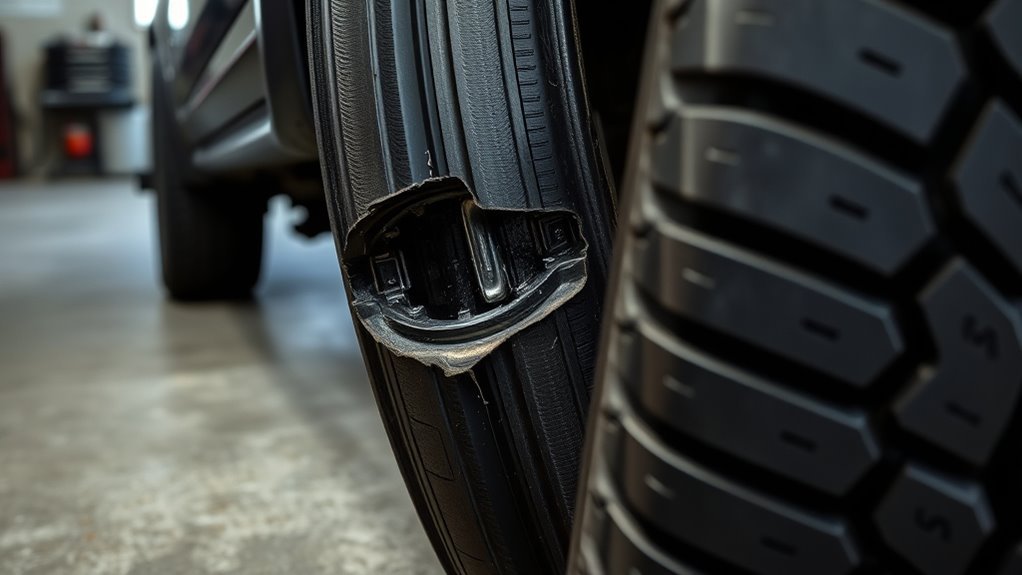
Many 4Runner owners want to replace only the damaged tire because the other three still have tread. That may be possible in limited cases, but do not guess. Toyota’s current 4Runner tire guidance warns against mixing tire makes, models, tread patterns, recommended sizes, and tires with remarkably different treadwear. For 4WD/AWD-equipped models, mismatched rolling diameter can also create driveline stress.
Before buying a single replacement tire, measure the tread depth of the remaining tires with a tread depth gauge. Also confirm the exact tire size, load index, speed rating, brand, model, and tread pattern. If the tire shop cannot match those closely enough, a pair or full set may be the safer choice.
[Products Worth Considering]

Monitor tire tread wear with a smart, color-coded depth gauge that shows clear condition ranges at a glance. The bar is range marked for fast, easy readings, helping you maintain safer traction and performance. Each gauge is portable with a pocket clip, and the set includes 20 units for daily use and sharing.

Measure tire tread depth quickly and accurately with this LUMITECO dial gauge that reads in 1/32" increments up to 14/32". The color-coded green/yellow/red zones make it easy to judge tire wear and know when replacement is needed. A rugged, compact design with a protective pouch helps keep the gauge ready for use on cars, trucks, motorcycles, and more.

Steelman white tire marking crayons provide high-contrast, semi-permanent marks for repairing and inspecting tires and equipment. They write on wet or dry, smooth or coarse surfaces including rubber, metal, glass, and wood, making them ideal for puncture location and damage outlining. The lead- and zinc-free crayons resist weather and fading yet wipe away when you no longer need the marks.
Your Replacement Options
- One exact-match tire: Best only when the other tires are nearly new and the replacement matches size, load rating, speed rating, brand, model, and tread depth closely enough.
- One shaved tire: Some tire sellers can shave a new tire to match the tread depth of the other three. This can help when the other tires still have plenty of life, but not every tire or retailer supports it.
- Two tires: If replacing two tires, the USTMA recommends installing the newer pair on the rear axle when the vehicle uses the same size tires front and rear.
- Four tires: Best for drivetrain harmony, handling consistency, and long-term rotation if the existing set is worn, mismatched, old, or no longer available.
- Used tire match: Only consider this if the tire is the exact size/model, has safe tread depth, has no repairs or sidewall damage, and has an acceptable DOT age.
Note: A common shop rule of thumb is to keep tread-depth differences very small on AWD/4WD vehicles, and Tire Rack notes that some AWD vehicles require closely matched tread depths to prevent driveline damage. Your owner’s manual and tire professional should be the final authority for your exact 4Runner setup.
Where 4Runner Owners Find Affordable Replacement Tires
You still have ways to control cost without gambling on a sidewall repair. The cheapest option is not the tire with the lowest sticker price; it is the option that keeps the tire safe, matched, mounted correctly, balanced correctly, and compatible with your 4Runner.
| Source | Best For | Check Before Buying |
|---|---|---|
| Local tire shop | Fast inspection, mounting, balancing, and matching advice | Ask for installed price, road-hazard warranty, and tread-depth matching. |
| Warehouse club | Rebates, package pricing, and road-hazard coverage | Confirm appointment timing and whether your exact tire is in stock. |
| Online tire retailer | Exact model matching and tire-shaving options | Include shipping, installation, TPMS service, balancing, and disposal fees. |
| 4Runner owner groups | Take-offs from owners upgrading wheels or tires | Inspect DOT date, tread depth, repairs, cupping, plugs, and sidewall scuffs. |
| Dealer or Toyota service center | OEM-size confirmation and model-specific advice | Ask whether a single tire, pair, or full set is recommended for your trim and drivetrain. |
[Products Worth Considering]

The SAFELIFE dial tire tread depth gauge measures tread depth in 1/32 inch increments with clear, easy-to-read 2-inch dial face. Color zones using a traffic light system help you quickly judge whether tread is low, marginal, or ample for safer driving. Built with a durable zinc cast body and a metal detect probe for precise, comfortable use across cars, motorcycles, trucks, and buses.

TireJect Off-Road Tire Sealant Kit provides 5-in-1 sealing to help fix tread punctures up to 3/8", sidewall punctures up to 3/8", bead leaks, slow leaks, and minor dry rot on low-speed tires. It permanently seals with liquid rubber, recycled tire particles, and Aramid fibers, making it ideal for flats caused by thorns, nails, and screws. The included dispensing cap attaches to the valve stem for a no-mess installation, along with a metal valve core remover tool and valve stem cap. This kit is for off-road use only.

This ecocstm ratchet wrench is designed to make emergency and routine tire changes faster with a 360° rotating head and quick forward/reverse switching. The extended handle provides extra leverage to reduce effort and hand fatigue, while the adapter helps fit many scissor jacks on cars, SUVs, trucks, and vans. Built for reliable performance with durable construction, it’s a practical travel essential for on-the-road preparedness.
Check Tire Age, Tread Depth, and Spare Condition
Sidewall damage often exposes a bigger issue: the full tire set may be older, worn unevenly, or mismatched. Before buying, check the DOT date code on every tire, including the spare. Michelin recommends professional inspection after five years of use and replacement at ten years from manufacture as a precaution, even if the tire still has tread. Other tire and vehicle manufacturers may be stricter.
Also measure tread depth across each tire in several spots. Uneven wear can point to alignment, rotation, inflation, or suspension problems. Replacing a damaged tire without fixing the cause of uneven wear can shorten the life of the next tire.
How to Prevent Sidewall Damage on a 4Runner
- Keep tires properly inflated: Underinflation increases heat and sidewall flex; overinflation can make impacts harsher.
- Do not overload the vehicle: Roof loads, cargo drawers, bumpers, armor, towing, and camping gear all add stress.
- Use trail pressure carefully: Airing down improves traction off-road, but too little pressure can pinch the sidewall against rocks.
- Inspect after trails: Check both inner and outer sidewalls before driving home at highway speed.
- Avoid curb pinches: Parking-lot curb hits are a common source of sidewall cuts and bubbles.
- Rotate on schedule: Rotation helps keep tread depth closer across all four tires.
Frequently Asked Questions
How much does it cost to repair sidewall damage on a tire?
A proper sidewall repair should cost nothing because it should not be done. Sidewall punctures, deep cuts, bulges, exposed cords, and leaking damage require tire replacement. Your real cost is the replacement tire plus mounting, balancing, disposal, valve stem or TPMS service if needed, and any tread-matching work.
Can you fix the sidewall in a new tire?
No. A new tire with sidewall damage is still unsafe if the structure is compromised. The age or price of the tire does not change the repair rule. If the sidewall has a puncture, bulge, exposed cord, or deep cut, replace the tire and check whether road-hazard coverage, tire warranty, or shop coverage applies.
Can I drive home if my 4Runner tire has sidewall damage but still holds air?
Do not treat air retention as proof that the tire is safe. If the damage is structural, use the spare or tow the vehicle. If you must move out of traffic, move only the shortest distance needed to reach a safe spot, then stop.
Is a small sidewall scrape always dangerous?
Not always. A shallow cosmetic scuff that does not expose cords, bulge, leak, or cut deeply into the rubber may be acceptable after inspection. Because sidewall depth is difficult to judge, have a tire professional inspect it if there is any doubt.
Can I replace only one tire on my 4Runner?
Sometimes, but only if the replacement matches the other tires closely enough in size, brand, model, load index, speed rating, tread pattern, and tread depth. On 4WD/AWD-equipped 4Runners, mismatched rolling diameter can create drivetrain stress. Measure tread depth and follow Toyota and tire-shop guidance before buying only one tire.
Will tire sealant make sidewall damage safe?
No. Sealant may slow air loss in some emergency situations, but it does not restore the sidewall’s internal cords or structural strength. It can also leave residue inside the tire and may affect TPMS service. Use the spare or tow the vehicle instead.
Conclusion
Sidewall damage on a 4Runner tire is a replacement problem, not a patch problem. A tire shop may be able to repair a small tread puncture after demounting and inspecting the tire, but that repair zone does not include the sidewall. If you see a bulge, exposed cord, puncture, deep cut, bead-area damage, or air loss, stop driving on that tire and switch to the spare or call for a tow.
When it is time to buy the replacement, protect the 4Runner’s handling and drivetrain by matching the tire correctly. Check the remaining tread depth, confirm the exact tire size and rating, inspect the spare, and ask the shop whether one tire, a shaved tire, a pair, or a full set is the safest choice for your setup.
Sources
- U.S. Tire Manufacturers Association — Tire Repair Basics — backs approved tread-only repair procedures, demount inspection, and plug-plus-patch guidance.
- NHTSA TireWise — backs tire safety, maintenance, inspection, tire size, pressure, aging, and tire-labeling guidance.
- Toyota 2026 4Runner Owner’s Manual — Tires — backs Toyota-specific warnings about mixing tire makes, models, tread patterns, sizes, and remarkably different treadwear.
- U.S. Tire Manufacturers Association — Replacing Tires — backs replacement guidance, same size/load/speed rating, and installing two new tires on the rear axle.
- Tire Rack — Mixing Tires With Different Tread Depths — backs tread-depth matching concerns, especially on vehicles where driveline damage can occur.
- Michelin — When Do I Need New Tires? — backs tire age, inspection, and replacement guidance.