Can You Drive With a Nail in Your Tire? Safety Guide & Risks

Finding a nail in your tire is not always an instant emergency, but it is always something to take seriously. The safe choice depends on where the nail is, how fast the tire is losing air, and whether the tire still feels stable. Treat it as a short-term problem, check the pressure, and plan to get the tire inspected as soon as possible.
Quick Answer
You can sometimes drive with a nail in your tire only if the nail is in the tread, the tire is still holding pressure, and the car handles normally. Drive slowly and only as far as needed to reach a safe repair shop. Stop driving if pressure drops, the nail is near the sidewall, or the tire vibrates or pulls.
Key Takeaways
- A nail in the center tread may be repairable, but only after the tire is removed and inspected from the inside.
- Do not drive on a tire that is losing air quickly, bulging, vibrating, pulling, or punctured in the shoulder or sidewall.
- A plug kit is a temporary roadside fix, not a proper permanent repair for a passenger-vehicle tire.
- A professional repair normally uses a plug/stem to fill the injury and a patch to seal the inner liner.
- Check pressure with a gauge; do not rely only on looks or the TPMS light.
At a Glance
| Time Required | 5–10 minutes for a safe roadside check; longer if you need a spare, tow, or professional repair. |
| Difficulty | Easy for inspection; professional-level for a proper permanent repair. |
| Tools Needed | Tire pressure gauge, flashlight, soapy water, portable inflator, spare tire or mobility kit, and roadside help if pressure will not hold. |
| Cost | Varies by shop and damage. A repairable tread puncture is usually much cheaper than replacing a sidewall-damaged or driven-flat tire. |
Can You Drive With a Nail in Your Tire?

Yes, you can sometimes drive with a nail in your tire, but only under limited conditions. The nail should be in the main tread area, the tire should still be holding air, and the vehicle should drive normally. If the tire is flat, the pressure is falling quickly, or the nail is in the shoulder or sidewall, do not keep driving.
The safest move is to check the tire pressure with a gauge and compare it with the vehicle manufacturer’s recommended cold pressure on the driver-door placard or in the owner’s manual. The pressure molded on the tire sidewall is not the normal daily inflation target. For official tire-pressure guidance, see NHTSA TireWise.
Warning: Stop driving right away if you hear a hiss, see the tire sagging, feel vibration, notice pulling, see a bulge, or find the nail in the sidewall or shoulder. Use a spare tire, roadside assistance, or a tow instead.
[Products Worth Considering]

This tire repair kit provides fast emergency puncture repair without removing the tire from the rim, helping you get back on the road quickly. Its screw plug system is designed for punctures in both tread and sidewall and includes a complete patch plug tool set with essential accessories. A portable storage bag makes it easy to carry for cars, trucks, SUVs, motorcycles, and heavy-duty applications.

This tire repair patch tool kit helps you quickly seal small punctures using upgraded mushroom plugs and a built-in roller system that presses for even penetration. The tungsten buffing wheel and HSS twist drill bits prepare the damaged surface for stronger adhesion, while the crown-angle friendly plugs are designed to keep water and debris out. Ideal for puncture repairs on many vehicle types, from cars and trucks to bikes and scooters.
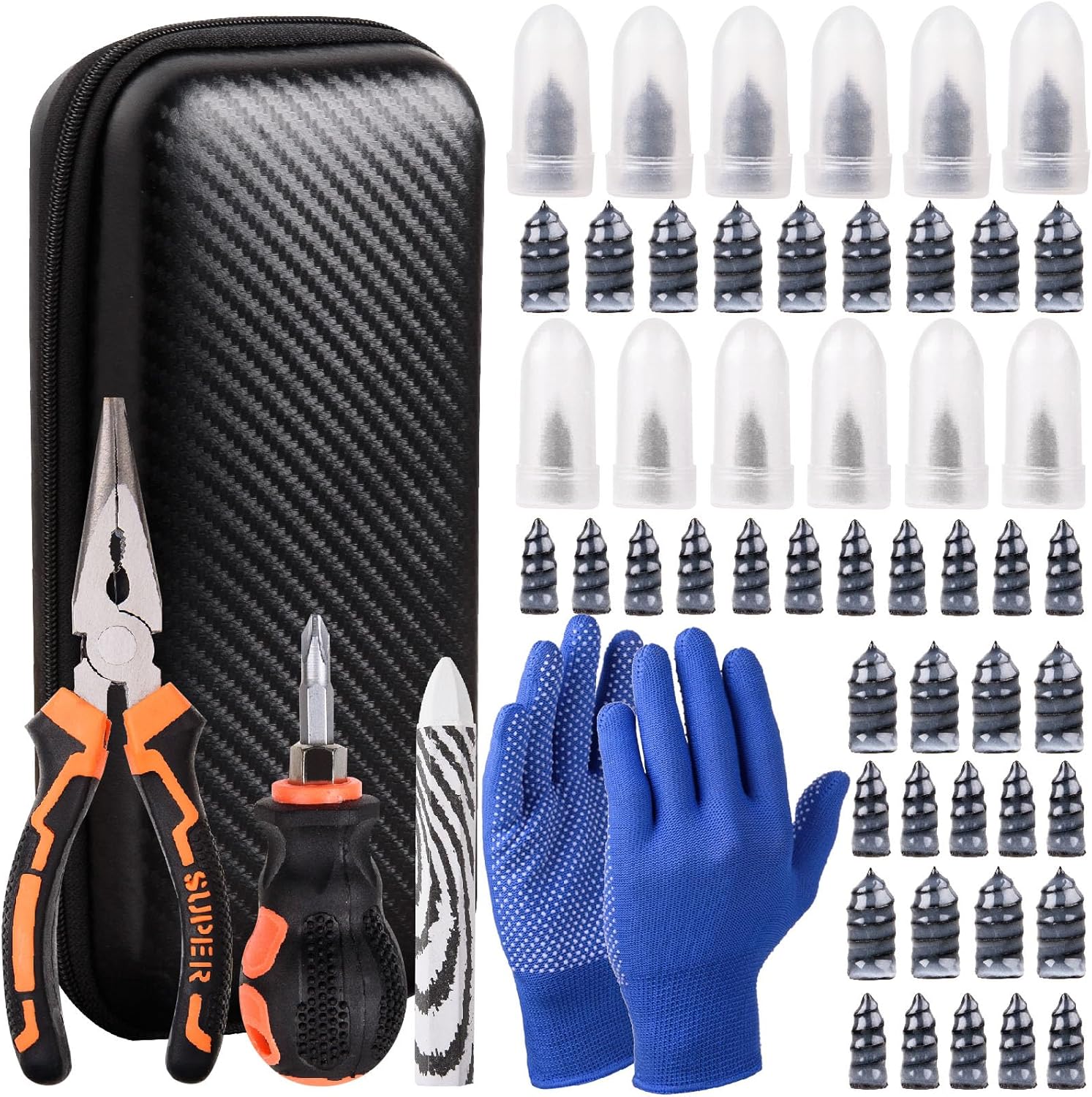
This tire sidewall puncture repair kit fixes flats fast without removing the tire, helping you get back on the road in minutes. It includes self-tapping repair nails, essential tools, gloves, and a portable storage bag for convenient roadside use. Designed for tubeless tires, it helps create a tight, leak-resistant seal for cars, motorcycles, trucks, SUVs, and ATVs.
What to Do First When You See a Nail
Before you decide whether to drive, take a minute to check the tire safely. Park on level ground away from traffic, turn on your hazard lights if needed, and look at the tire from several angles.
- Do not pull the nail out yet. The nail may be slowing the leak. Removing it can turn a slow leak into a flat tire.
- Check the pressure with a gauge. A tire can look normal and still be underinflated.
- Find the nail’s location. Center tread is very different from shoulder or sidewall damage.
- Watch the TPMS light. If it is on, inspect the tire and check pressure as soon as possible. TPMS is helpful, but it is not a replacement for a gauge.
- Decide your next move. If pressure is stable, drive carefully to a tire shop. If pressure drops, install the spare if safe to do so or call for help.
Note: If you use a compact temporary spare, follow the speed and distance limits printed on the spare or listed in your owner’s manual. Many donut spares are limited to short, low-speed use.
How Long Can You Drive on a Punctured Tire?
There is no universal safe mileage for driving on a tire with a nail. A small nail in the center tread may leak slowly, while another puncture can lose pressure fast enough to become dangerous within minutes. The right goal is not to “get the most miles out of it.” The goal is to reach the nearest safe repair option without letting the tire run underinflated.
If the tire is holding pressure and the vehicle feels normal, drive gently and avoid highways, hard braking, sharp turns, heavy loads, and long detours. Check pressure again before you leave and after a short distance. If pressure has dropped, stop driving. Continuing on an underinflated tire builds heat and can damage the tire beyond repair.
A tire that could have been repaired can become a replacement tire if it is driven while low or flat.
How to Find the Nail in Your Tire
Start by parking safely and checking the tire in good light. Nails and screws often hide between tread blocks, so move slowly around the whole tire. Look for shiny metal, a dark wet spot, a cut, or a piece of debris sitting at an angle.
If you cannot see the leak, spray soapy water on the tread, valve stem, and bead area. Bubbles can show where air is escaping. Listen for a faint hiss, but keep your face and hands away from the injury. If the nail is hard to reach, the tire is losing air quickly, or the puncture is near the edge of the tread, stop and get professional help.
Pro Tip: Take a quick photo of the nail’s location before you drive to the shop. It helps the technician find the injury quickly, especially if the nail head is small or buried in the tread.
What Happens If You Keep Driving on It?
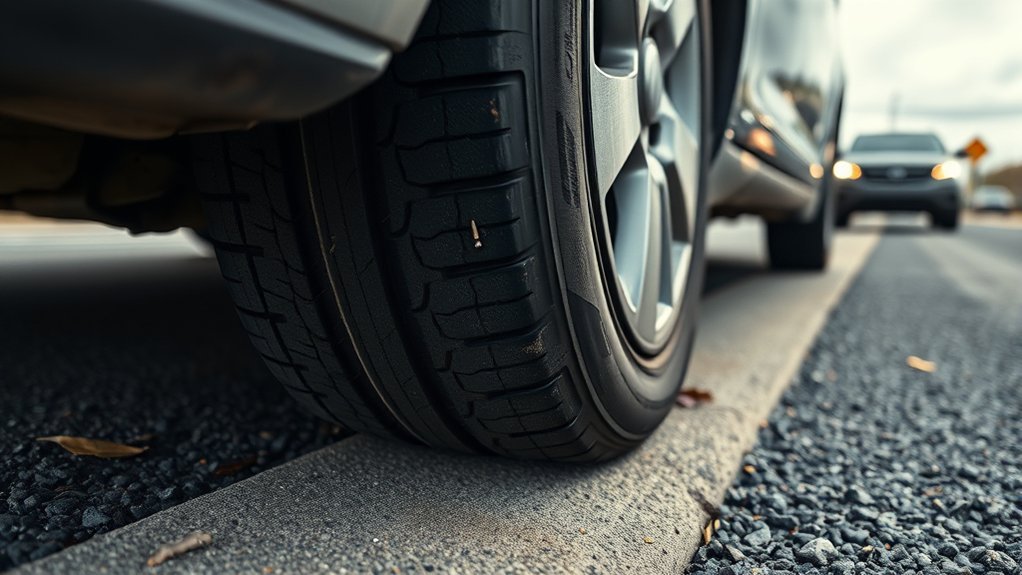
Driving too long with a nail in your tire can turn a small puncture into a major tire failure. As air leaks out, the tire flexes more than it should. That extra flex creates heat, damages the internal structure, and can make steering and braking less predictable.
The risk is higher at speed, in hot weather, with a heavy load, or when the nail is near the shoulder or sidewall. Those areas flex heavily and are not considered safe repair zones for normal passenger-vehicle tire repairs.
Quick action protects both safety and cost. If the tire stays inflated, a proper repair may still be possible. If you drive on it while low, the sidewall and inner liner can be damaged even if the outside still looks acceptable.
Can a Tire With a Nail Be Repaired?
A tire with a nail can often be repaired only when the injury is in the main tread area and small enough for an approved repair. The U.S. Tire Manufacturers Association says repair consideration is limited to tread-area punctures no greater than 1/4 inch, or 6 mm, and that the tire must be removed from the wheel for inspection. The Tire Industry Association also explains that plug-only and patch-only repairs are not proper permanent repairs.
| What You Find | Likely Decision | Why It Matters |
|---|---|---|
| Small nail in center tread | May be repairable | A trained technician still needs to inspect the inside. |
| Puncture larger than 1/4 inch / 6 mm | Usually replace | Oversized injuries exceed common repair limits. |
| Nail in shoulder or sidewall | Replace, do not patch | These areas flex and are not safe repair zones. |
| Tire driven flat or very low | Needs internal inspection; may need replacement | Hidden liner and sidewall damage may already exist. |
| Bulge, exposed cords, cracked sidewall, or severe vibration | Stop driving and replace | These are signs the tire may fail suddenly. |
How to Use a Plug Kit as a Temporary Fix
A tire plug kit can help you get off the roadside when no safer option is available, but it should not be treated as a final repair. A proper tire repair normally fills the injury channel and seals the inner liner after the tire is removed and inspected.
Only consider a temporary plug if the puncture is in the main tread, the hole is small, the tire is not shredded or bulging, and you can work in a safe place away from traffic. Do not plug a sidewall, shoulder, large cut, or tire that has been driven flat.
- Park safely, set the parking brake, and read the plug kit instructions.
- Mark the puncture location before removing the nail.
- Remove the nail straight out with pliers.
- Use the reaming tool only as directed by the kit.
- Insert the plug, trim excess material, and reinflate the tire to the recommended pressure.
- Spray soapy water on the repair area and watch for bubbles.
- Drive only to a tire shop for a proper internal inspection and repair decision.
Warning: Do not use sealant or a plug as a long-term repair. Sealants and outside-in string plugs can hide internal damage and may not seal the inner liner properly.
[Products Worth Considering]

Wykodra tire plugs provide quick vulcanizing repairs for tubeless tires, helping you seal punctures and get back on the road. The industrial-strength rubber creates a long-lasting, leak-resistant bond and is designed for emergency fixes without removing the tire. Choose between two standard plug sizes with color-matched options for small to larger damage across many vehicles and off-road uses.

This portable cordless tire inflator delivers up to 160 PSI with fast 17 L/min airflow to help you quickly top up tires and get back on the road. It features dual power mode, running on a 21V rechargeable battery or a 12V DC adapter for convenient roadside use. An automatic shut-off with digital pressure gauge helps prevent overinflation, and a built-in LED light improves visibility in low-light conditions.
When You Should Skip DIY Tire Repair
Skip DIY repair when the tire shows any sign that the structure may be compromised. A damaged tire can fail faster than you expect, especially once it heats up on the road.
Sidewall and Shoulder Damage
A nail or screw in the sidewall or shoulder is not a safe DIY repair for a normal passenger-vehicle tire. Those areas carry load and flex as the tire rolls. If the injury reaches the shoulder, sidewall, bead area, or belt edge, replace the tire instead of plugging or patching it.
- Look for cuts, cracking, bulges, or exposed cords.
- Skip plugs, patches, and sealants in the sidewall or shoulder.
- Use a spare, roadside assistance, or a tow if the tire will not hold air.
Rapid Air Loss
When your tire starts losing air fast from a nail, do not try to nurse it home. Rapid underinflation can trigger heat buildup, sidewall damage, and loss of control.
| Sign | Risk | Action |
|---|---|---|
| Pressure falls fast | Blowout risk | Stop driving |
| Tire looks soft or sagging | Heat buildup | Park safely |
| Steering pulls or shakes | Reduced control | Slow down and pull over |
| Bulge or wobble appears | Structural failure | Tow or replace |
| Nail is near sidewall | Not safely repairable | Do not plug |
Call a Tire Pro
Call a tire professional if the damage location is unclear, the tire was driven underinflated, the car vibrates, or you see any bulge, cut, wobble, or exposed cord. A trained technician can remove the tire, inspect the inside, check the injury angle, and decide whether repair or replacement is safe.
When to Let a Tire Pro Handle It

You should let a tire pro handle the repair if you plan to keep using the tire. According to Bridgestone tire repair guidance, tread punctures may be repairable only under specific limits, and sidewall or shoulder damage cannot be repaired. A shop can also check whether the tire is worn below safe tread depth, has bead damage, or has internal damage from being driven low.
Signs It Needs Repair or Replacement
Have the tire checked right away if you notice any of these signs:
- Pressure keeps falling after you refill it.
- You hear a hiss or see bubbles during a soapy-water check.
- The steering wheel shakes or the vehicle pulls to one side.
- The puncture is near the shoulder, sidewall, or edge of the tread.
- The tire has a bulge, cut, exposed cord, or uneven wear.
- The TPMS light comes on after you inflate the tire.
When DIY Is Not Enough
DIY is not enough when the repair needs to last. A temporary plug may seal air for a short drive, but it does not allow you to inspect the inner liner or seal the tire from the inside. If the tire is repairable, ask the shop whether it follows industry repair procedures and uses a plug/stem plus patch repair from inside the tire.
Benefits of Pro Service
A tire professional can check the injury size, angle, location, tread depth, previous repairs, and internal liner condition. That matters because a tire may look fine outside while hiding damage inside. Professional repair also gives you a clearer answer: safe to repair, safe only temporarily, or replace now.
What to Keep in Your Car for Tire Punctures
A little preparation can turn a stressful nail-in-tire moment into a safer stop. Keep these items in your vehicle:
- A quality tire pressure gauge.
- A flashlight or headlamp.
- A portable inflator.
- Soapy water in a small spray bottle for leak checks.
- Gloves and basic hand tools.
- Your vehicle’s spare tire, jack, lug wrench, or factory mobility kit.
- Roadside assistance information.
Check the spare tire’s pressure during regular tire checks. A flat spare will not help when the damaged tire cannot be driven.
Frequently Asked Questions
How long can you drive on a tire with a nail in it?
Only long enough to reach a safe repair option, and only if the tire is holding pressure and the car handles normally. There is no universal safe mileage. If pressure drops, the tire feels soft, or the car vibrates or pulls, stop driving and use a spare or tow.
Should I pull the nail out of my tire?
Not right away. The nail may be slowing the air leak. Pulling it out can make the tire go flat quickly. Leave it in place until you are safely at a tire shop or until you are making a temporary roadside repair and can reinflate the tire.
Can a nail in your tire cause a blowout?
Yes. A nail can let air escape slowly or quickly. When pressure drops, the tire flexes more, builds heat, and can fail. The risk is higher at highway speed, in hot weather, with heavy loads, or when the puncture is in the shoulder or sidewall.
Can I plug a tire with a nail in it?
You may use a plug kit only as a temporary roadside fix for a small tread puncture. A plug alone is not considered a proper permanent repair for a passenger-vehicle tire. A proper repair usually requires removing the tire, inspecting the inside, filling the injury, and sealing the inner liner with a patch.
When can a tire with a nail not be repaired?
A tire usually cannot be repaired if the nail is in the sidewall or shoulder, the puncture is larger than 1/4 inch / 6 mm, repairs would overlap, the tire has been driven flat, cords are exposed, a bulge is present, or the tire is worn to unsafe tread depth.
How urgent is a nail in a tire?
It is urgent enough to inspect now and repair as soon as possible. If the tire is holding air, you may be able to drive carefully to a nearby tire shop. If pressure is dropping, the puncture is near the sidewall, or handling changes, stop driving and get roadside help.
Conclusion
You can drive with a nail in your tire only in limited situations: the tire must be holding pressure, the nail should be in the main tread, and the vehicle should feel normal. Even then, the trip should be short and purposeful, ending at a tire shop. Do not keep driving on rapid air loss, sidewall or shoulder damage, vibration, pulling, bulges, or a tire that has been run flat. A safe repair starts with inspection, not guesswork.
Sources
- U.S. Tire Manufacturers Association — Tire Repair Basics — repairable tread-area limits, 1/4 inch / 6 mm puncture guidance, and plug-plus-patch repair requirements.
- Tire Industry Association — Tire Repair — professional repair standards, internal inspection, and why plugs or patches alone are not proper permanent repairs.
- NHTSA TireWise — tire pressure, TPMS, tread checks, and blowout safety guidance.
- Bridgestone Americas — Tire Repair — conditions where a tire cannot be repaired, including sidewall or shoulder damage.
- AAA — How Long Can You Drive on a Spare Tire — compact spare tire speed and distance limits.

Related Articles

Can You Drive on Tires With Cords Showing?
Hoping to keep driving on tires with cords showing, but what’s really at risk may surprise you.
Read More
What Is Hydroplaning? Causes and How to Prevent It
Glide into the surprising causes of hydroplaning and the simple ways to stop it before your tires lose grip.
Read More
Can You Drive on a Tire With a Bulge? Safety Risks
Can you drive on a tire with a bulge, or is a sudden blowout lurking around the corner?
Read More