
What to Do If You Have a Nail in Your Tire: Step-by-Step Fix
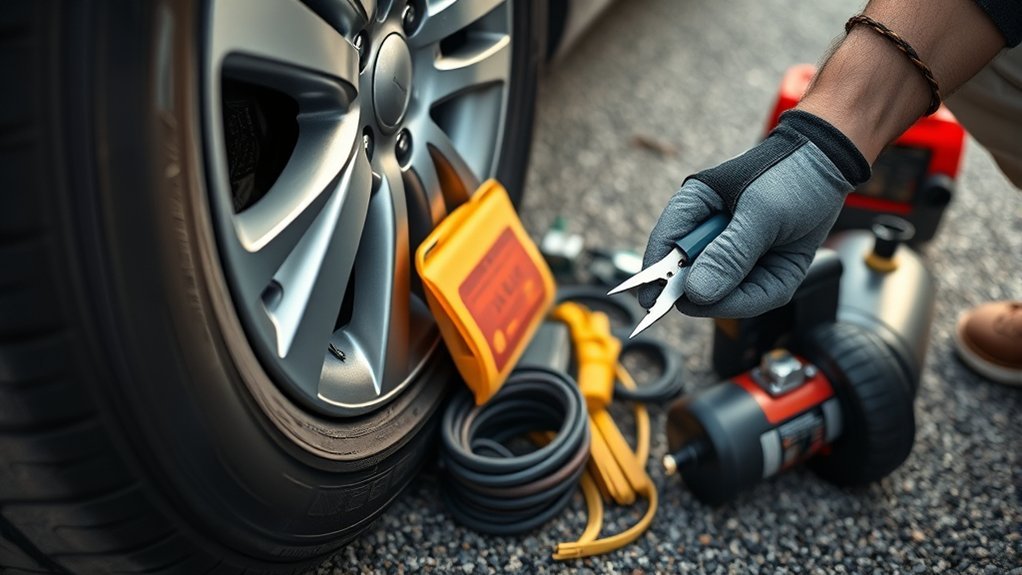
If you find a nail in your tire, do not pull it out right away. The nail may be slowing the leak, and removing it can turn a slow leak into a fast flat. First, get to a safe place, check the tire pressure with a gauge, look at the TPMS warning, and inspect where the nail entered the tire.
If the tire is holding air and the nail is in the tread, you may be able to drive a short, careful distance to a tire shop. If the tire is flat, losing air quickly, damaged on the sidewall, or feels unstable, stop driving and use a spare, inflator kit, or roadside assistance.
Quick Answer
Leave the nail in place, check tire pressure, and inspect the location. A small puncture in the central tread may be repairable with a proper plug-patch. Do not keep driving if pressure drops, the tire is flat, or the nail is in the shoulder or sidewall.
Key Takeaways
- Do not remove the nail until you are ready for repair or a technician has inspected the tire.
- Use a manual tire gauge, even if your TPMS has not turned on.
- Drive only the shortest practical distance to a shop if the tire holds pressure.
- A puncture in the tread up to 1/4 inch may be repairable, but sidewall and shoulder damage usually means replacement.
- A DIY string plug is temporary. A proper repair requires the tire to be removed and inspected from the inside.
At a Glance
| Time Required | 5 to 10 minutes to inspect; 20 to 45 minutes for a shop repair in many cases. |
| Difficulty | Easy inspection; professional repair recommended. |
| Tools Needed | Tire pressure gauge, soapy water or window cleaner, flashlight, spare tire or inflator kit if equipped. |
| Cost | Often low for a basic puncture repair; replacement cost depends on tire size, tire type, and vehicle requirements. |
Warning: Do not drive on a flat tire, a tire that is losing air quickly, or a tire with sidewall bulges, cuts, exposed cords, or shoulder damage. Pull over safely and use a spare or call roadside assistance.
Can You Drive With a Nail in Your Tire?
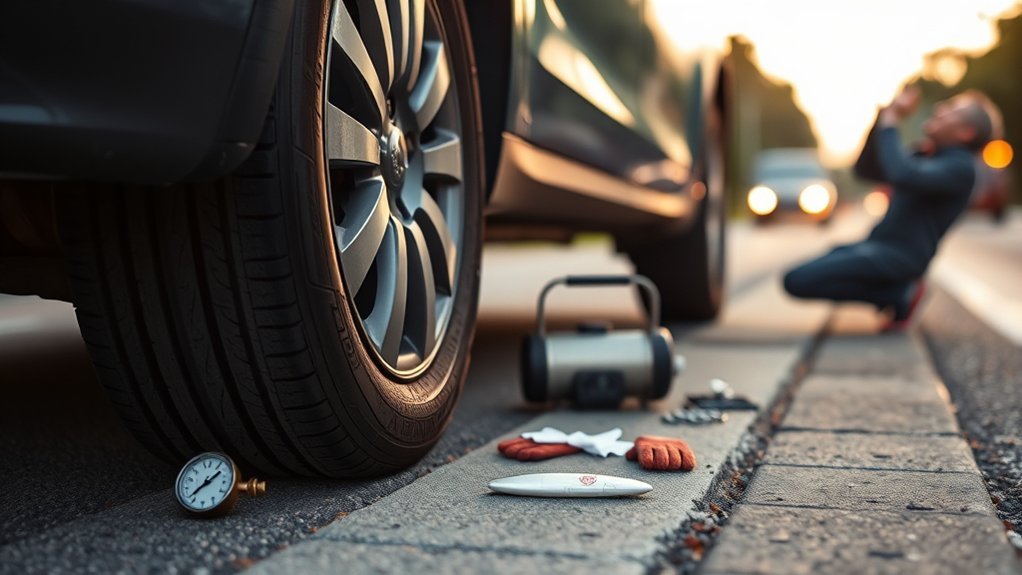
Yes, you can sometimes drive with a nail in your tire, but only if the tire is still holding pressure and the vehicle feels normal. Treat it as an emergency stopgap, not a normal driving condition. Avoid highway speeds, heavy loads, sharp turns, and hard braking. Drive only to a safe repair location.
Check your tire pressure and TPMS warning before moving. A TPMS light means at least one tire is significantly underinflated, but no warning light does not prove the tire is safe. A slow leak may not trigger the light right away, so use a manual gauge whenever possible.
If the tire is visibly low, sagging, hot, shaking, or making noise, stop. A punctured tire can heat up and fail, especially at speed. In winter, dedicated winter tires for icy conditions can help traction, but they do not make a punctured or underinflated tire safe to keep driving.
Tire problems are not just inconvenient. NHTSA reported 511 traffic deaths in tire-related crashes in 2024.
[Products Worth Considering]

This tire repair kit provides fast emergency puncture repair without removing the tire from the rim, helping you get back on the road quickly. Its screw plug system is designed for punctures in both tread and sidewall and includes a complete patch plug tool set with essential accessories. A portable storage bag makes it easy to carry for cars, trucks, SUVs, motorcycles, and heavy-duty applications.

This tire repair patch tool kit helps you quickly seal small punctures using upgraded mushroom plugs and a built-in roller system that presses for even penetration. The tungsten buffing wheel and HSS twist drill bits prepare the damaged surface for stronger adhesion, while the crown-angle friendly plugs are designed to keep water and debris out. Ideal for puncture repairs on many vehicle types, from cars and trucks to bikes and scooters.

This VEVOR tire bead breaker uses a slide-hammer impact and wedge tip to separate tire beads from rims quickly and efficiently without damaging hub surfaces. The long handle and sturdy steel construction help reduce user strain while providing reliable, portable tire changing for cars, trucks, and more. Ideal for home mechanics and repair shops handling multiple vehicle tire sizes.
What to Do First
Once you spot the nail, slow down and choose a safe place to inspect the tire. A parking lot, driveway, or wide shoulder is better than the side of a busy road. Turn on your hazard lights if you are near traffic.
- Leave the nail in place. It may be partly sealing the hole.
- Check pressure with a gauge. Compare the reading with the PSI on the driver-side door label or owner’s manual.
- Look at the nail location. Tread punctures may be repairable. Shoulder or sidewall damage usually is not.
- Look for danger signs. Bulges, cuts, cords, bubbling sidewall damage, or rapid air loss mean you should stop driving.
- Decide your next move. Drive slowly to a shop only if the tire holds pressure. Use the spare or call for help if it does not.
Pro Tip: Keep a small tire pressure gauge in your glove box. TPMS is helpful, but a gauge gives you the actual pressure and helps you spot a slow leak sooner.
Check the Tire Without Pulling the Nail
Before you pull the nail, inspect the tire visually to see where the puncture is and whether the object is still slowing the leak. Look for the nail in the tread, shoulder, or sidewall. Also check for cuts, bulges, exposed cords, and any other embedded debris.
Spray soapy water or window cleaner around the nail. Bubbles mean air is escaping. No bubbles means you may not have an active leak, but you should still get the tire inspected because the puncture may open under heat, load, or movement.
- Check the TPMS display or warning light.
- Use a manual gauge to confirm the actual PSI.
- Recheck pressure after a few minutes if you are deciding whether the tire can move safely.
- Drive only as far as needed to reach a repair shop.
A reliable spare tire kit can help if the tire will not hold pressure, but check your owner’s manual before using any temporary spare. Many compact spares have speed and distance limits printed on the tire.
How to Tell It’s Losing Air
A tire can lose air slowly or all at once. Do not rely on looks alone. Underinflated tires can be hard to spot visually, especially on modern low-profile tires.
Check Tire Pressure
Use a manual tire pressure gauge and compare the reading with the recommended cold PSI on your vehicle’s door label. The number on the tire sidewall is not the recommended daily driving pressure. It is usually the tire’s maximum pressure rating.
- If pressure is stable: you may be able to drive carefully to a tire shop.
- If pressure keeps dropping: stop and use a spare, inflator kit, or roadside assistance.
- If pressure is very low: do not drive. Driving can damage the tire casing and wheel.
Using a compact tire repair kit may help in a roadside emergency, but sealant or a string plug should be treated as temporary unless the tire manufacturer and repair professional confirm otherwise.
Watch for Bubbling
To locate a leak, inflate the tire to the correct pressure if it is safe to do so, then spray soapy water across the nail area, tread grooves, valve stem, and bead area near the rim. Watch for steady bubbling.
| Signal | What It Means | What to Do |
|---|---|---|
| Steady bubbles | Air is escaping | Mark the area and get repair service |
| No bubbles | No visible leak right now | Recheck pressure and inspect again later |
| TPMS light | One or more tires are significantly low | Check all tires with a gauge |
| Bulge or sidewall cut | Possible structural damage | Do not drive on that tire |
Find the Puncture in the Tread
Most nail and screw punctures happen in the tread. That is the grooved area that touches the road. A puncture in the central tread area is more likely to be repairable than damage near the outer shoulder or sidewall.
Inspect Tread Closely
Look at the tire in good light. Turn the wheel if you can do so safely, and scan each groove from shoulder to shoulder. If you see the nail, note whether it is in the central tread, near the shoulder, or on the sidewall.
- Central tread puncture: often repairable if small enough.
- Outer shoulder puncture: usually not safe to repair.
- Sidewall puncture: replacement is usually required.
- Bulge, cord, or tear: stop using the tire.
Routine inspections during regular tire rotations can help you catch tread damage earlier, but a rotation does not fix a puncture. A punctured tire still needs inspection and repair.
Use Soapy Water
A soap test is simple and useful. Mix dish soap with water or use window cleaner, then apply it across the tread, around the nail, around the valve stem, and where the tire meets the rim. Bubbles show where air is escaping.
If bubbles appear at the nail, mark the location with chalk or tape. Do not remove the nail unless you are ready to install a temporary plug and inflate the tire, or unless a tire technician is handling the repair.
Check for Hidden Damage
Some damage is not visible from the outside. A long nail can enter the tread but scrape or cut the inside of the tire. A tire can also be damaged if it was driven while very low on air. That is why a proper repair requires removing the tire from the wheel and inspecting the inside.
- Check for tread separation, bulges, cords, and cuts.
- Ask the shop whether the tire was dismounted for inspection.
- Do not accept a permanent repair if the tire was only plugged from the outside.
Should You Remove the Nail or Screw?
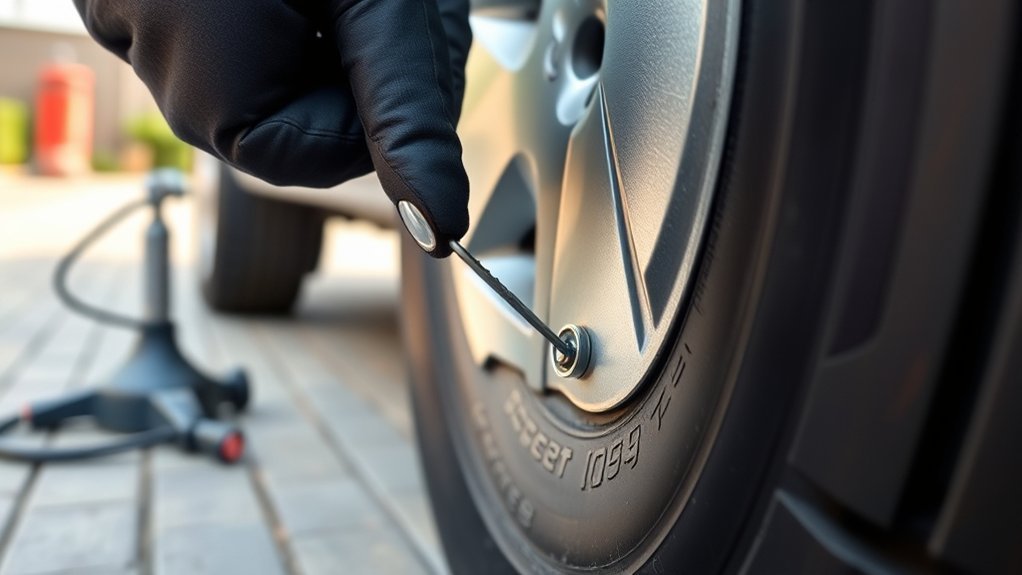
No, do not remove the nail or screw right away. Pulling it out can let air escape quickly. Leave it in place while you check pressure, inspect the tire, and decide whether it is safe to move.
| Action | Why It Matters |
|---|---|
| Leave the nail in place | It may slow the leak until you reach help |
| Check tire pressure | Confirms whether the tire can support the vehicle |
| Watch TPMS | Shows when pressure is significantly low |
| Get professional inspection | Finds inside damage you cannot see |
Some off-road products, including a GlueTread SXS Tire Patch Kit, are marketed for temporary off-road tire damage. Do not treat a sidewall patch product as a safe passenger-vehicle highway repair. Sidewall or shoulder damage usually means the tire should be replaced.
Can the Tire Be Repaired or Replaced?
A nail puncture may be repairable if it is in the tread area, is 1/4 inch or smaller, and the tire has no internal damage. A tire should usually be replaced if the puncture is in the shoulder or sidewall, is too large, is too close to another repair, or the tire was driven while flat.
Before choosing replacement, confirm the tire size, load rating, speed rating, and vehicle requirements. If you drive a Toyota RAV4 or similar SUV, guides on choosing the right tires can help you compare options, but your owner’s manual and door label should guide the final fit.
Repairable Tread Punctures
A tread puncture is often repairable when the hole is no larger than 1/4 inch and sits in the repairable tread zone. The safest standard repair is a combination patch and plug, often called a plug-patch or patch-plug. This seals the inner liner and fills the injury path.
- Likely repairable: small puncture in the central tread.
- Usually not repairable: shoulder, sidewall, large cuts, exposed cords, or bulges.
- Needs inspection: any tire driven low, flat, or with repeated pressure loss.
Signs You Need Replacement
Replace the tire instead of repairing it if the damage affects the sidewall or shoulder, if the hole is larger than 1/4 inch, if multiple punctures are close together, or if the inside of the tire shows abrasion, wrinkling, cord damage, or heat damage.
Replacement is also the safer choice if the tire is old, badly worn, previously repaired near the same area, or not approved for repair by the manufacturer. If price matters, you can compare safe replacement choices such as RAV4 tires under $200, but do not choose a tire only by price. Fit, load rating, and safety matter more.
Professional Tire Inspection
A professional tire inspection matters because the technician can remove the tire, inspect the inner liner, check for run-flat damage, and confirm whether the puncture path can be sealed. Ask the shop these questions:
- Is the puncture in the repairable tread zone?
- Is the hole 1/4 inch or smaller?
- Was the tire removed from the wheel for inspection?
- Will the repair use a combined plug-patch?
- Is there any internal damage, sidewall injury, or prior repair conflict?
If the shop says the tire is not safe to repair, replace it. If you need model-specific options, resources such as tires for a 2023 Toyota RAV4 or tires for RAV4 Adventure driving can help you compare categories after you confirm the correct size.
Temporary Plug vs. Proper Repair
A roadside string plug can help you get out of trouble when the puncture is in the tread and you have no safer option. It is not the same as a proper shop repair. A plug inserted from outside the tire does not let you inspect the inside for hidden damage, and it may not fully protect the steel belts from moisture.
A proper repair removes the tire from the wheel, inspects the inside, cleans and prepares the injury, fills the puncture path, and seals the inner liner with a patch-plug repair. That is the repair you want for continued road use.
Note: If your vehicle has run-flat tires, sealant kits, or no spare tire, follow the owner’s manual. Run-flat driving limits and sealant use vary by vehicle and tire model.
How to Use a Temporary Tire Plug in an Emergency
Only use a DIY plug when the puncture is in the tread, the hole is small, the sidewall is not damaged, and you need temporary mobility to reach a safer place. Do not plug a sidewall or shoulder puncture.
- Move to a safe, flat location away from traffic.
- Check that the nail is in the tread, not the sidewall or shoulder.
- Remove the nail only when you are ready to plug the hole.
- Use the reaming tool from the kit to clean and size the puncture.
- Thread the plug into the insertion tool and push it into the hole as directed by the kit.
- Trim excess plug material if the kit instructs you to do so.
- Inflate the tire to the correct PSI and check for bubbles with soapy water.
- Drive slowly to a tire shop for a proper internal inspection and repair.
A kit such as a tubeless tire puncture repair kit can be useful in an emergency, but it should not replace a professional tire inspection.
[Products Worth Considering]

This compact capsule-style tire repair kit helps you quickly fix punctures and plug flats with minimal effort. The rugged stainless steel shell protects the contents for reliable roadside use, while the simple plug assembly makes repairs fast and tool-free. Suitable for motorcycles, cars, ATVs, UTVs, and even mountain bikes.
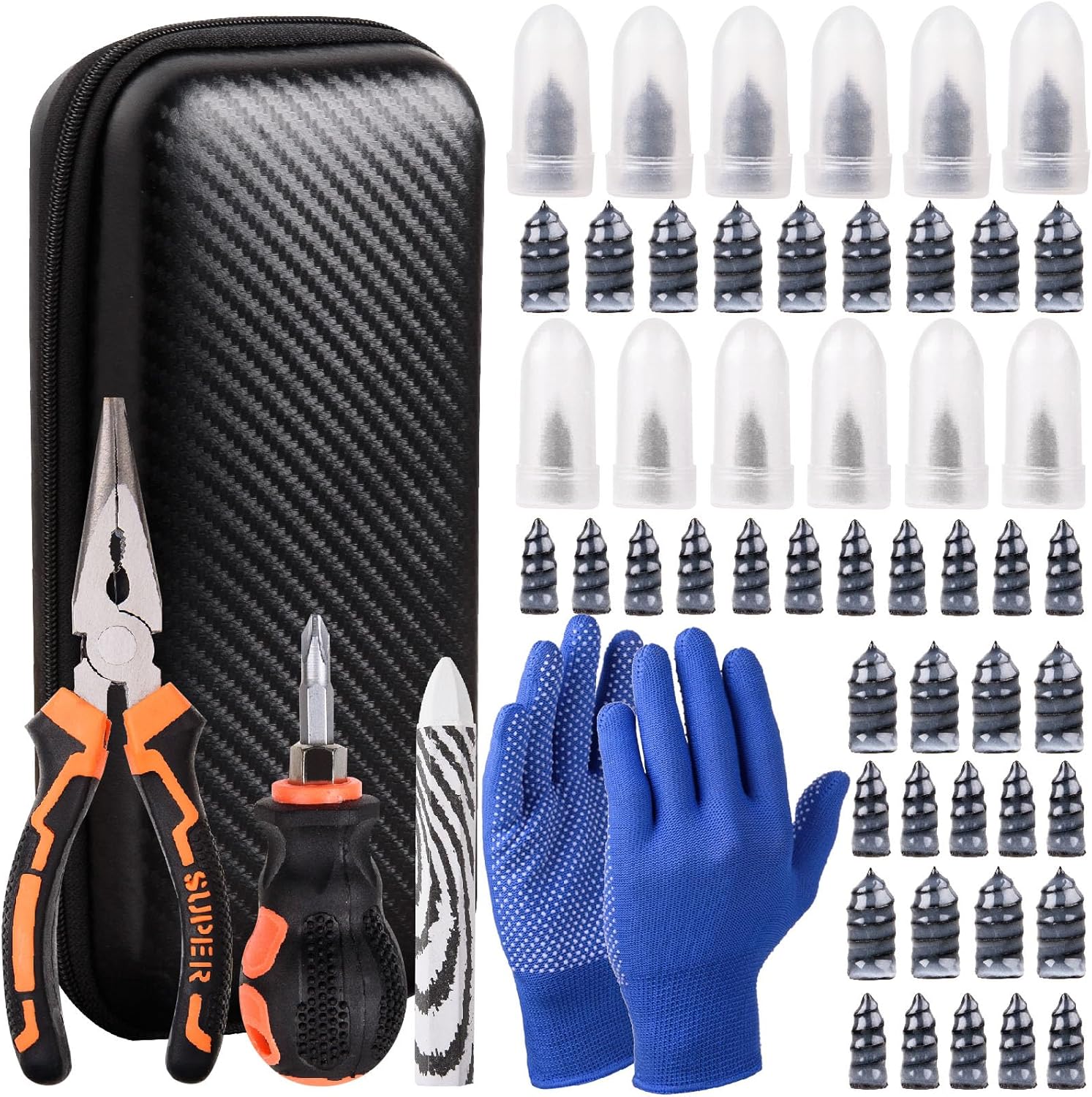
This tire sidewall puncture repair kit fixes flats fast without removing the tire, helping you get back on the road in minutes. It includes self-tapping repair nails, essential tools, gloves, and a portable storage bag for convenient roadside use. Designed for tubeless tires, it helps create a tight, leak-resistant seal for cars, motorcycles, trucks, SUVs, and ATVs.
When to Use a Spare Tire Instead
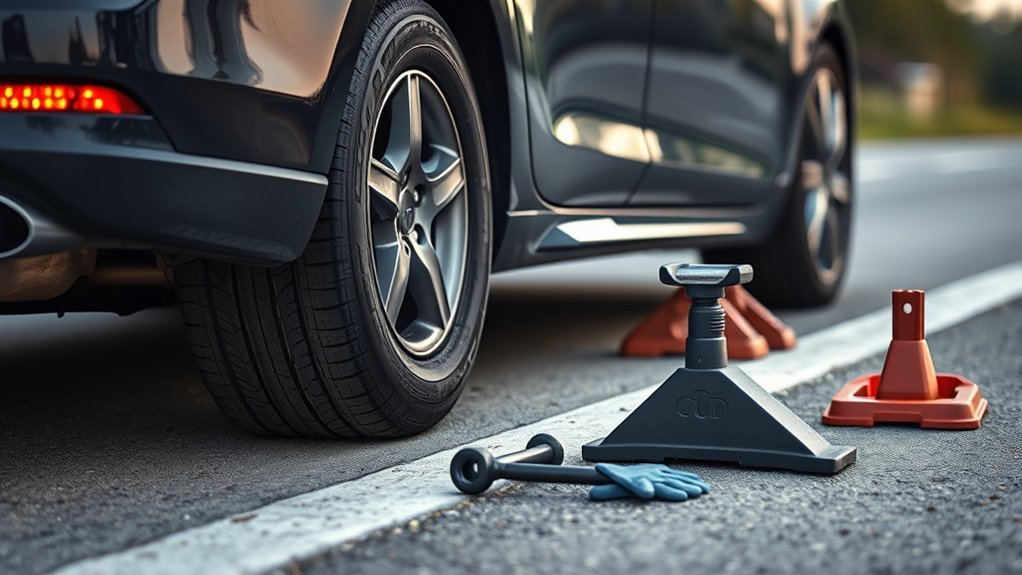
Use the spare tire instead of driving on the punctured tire if the tire is flat, losing pressure quickly, shaking, pulling, smoking, or showing sidewall damage. A spare is also safer if you are far from a shop, on a highway, or carrying a heavy load.
Flat, unstable, or rapidly losing air? Stop driving on that tire and switch to a spare or call roadside assistance.
- Use a compact spare only as a temporary tire.
- Follow the speed and distance limits printed on the spare or listed in your owner’s manual.
- Check the spare’s pressure before driving, if possible.
- Replace or repair the damaged tire as soon as you can.
What If Your Car Has No Spare?
Many newer vehicles come with an inflator kit, sealant kit, or run-flat tires instead of a spare. Check the cargo area and owner’s manual before you need them. If the tire has a small tread puncture and is not flat, a sealant-and-compressor kit may help you reach a tire shop. If the tire has sidewall damage, a large hole, or a blowout, sealant usually will not help.
If you do not have a usable spare or the repair kit is expired, call roadside assistance. Do not drive on the wheel rim or on a tire that cannot hold pressure.
Why a Pro Repair Is Worth It
A professional repair is worth it because a technician can inspect the tire inside and out. From the outside, a small nail hole may look harmless. Inside, the tire may have belt damage, liner damage, moisture intrusion, or heat damage from being driven low.
| Benefit | Why It Matters | Result |
|---|---|---|
| Inside inspection | Finds hidden damage | Safer repair decision |
| Plug-patch repair | Seals the liner and fills the puncture path | More reliable seal |
| Pressure check | Confirms the repair holds air | Less risk of repeat leak |
A shop repair can also protect your wheel, TPMS sensor, and tire warranty. If the tire cannot be repaired safely, replacing it is better than risking a blowout.
Find a Tire Shop Near You
Search by city, ZIP code, or “tire repair near me,” then call ahead. Ask whether the shop performs internal plug-patch repairs, whether they can inspect the tire while you wait, and whether they service your tire type. If your vehicle has run-flat tires, large wheels, or an uncommon size, confirm availability before you drive there.
- Ask if walk-ins are accepted.
- Tell the shop whether the tire is losing air quickly.
- Ask if they will remove the tire from the wheel for inspection.
- Ask whether the repair includes a pressure check and leak test.
- Keep your route short and avoid fast roads if the tire is still on the vehicle.
After the Repair
After the tire is repaired or replaced, check the pressure again when the tire is cold. Watch the TPMS light during the next few drives. If the light returns, the tire loses pressure, or the vehicle vibrates, go back to the shop for another inspection.
Also check the other tires. One nail may be bad luck, but low pressure, worn tread, or old tires can raise the chance of more problems. Keep a gauge in the vehicle, inspect tread monthly, and check your spare or inflator kit before long trips.
Frequently Asked Questions
Can I fix a nail in my tire myself?
You can use a DIY plug only as a temporary emergency fix if the puncture is small, in the tread, and the tire has no sidewall damage. For regular road use, get a professional internal inspection and plug-patch repair.
How do I get a nail out of a tire?
Do not pull the nail out right away. Leave it in place while you check pressure and inspect the tire. Remove it only when the wheel is being repaired, when you are ready to install a temporary plug, or when a tire technician is handling it.
Can I drive on a tire with a nail in it?
You may drive a short, careful distance to a repair shop if the tire holds pressure and feels normal. Do not drive if the tire is flat, pressure is dropping, the nail is in the sidewall, or the vehicle feels unstable.
How much does it usually cost to fix a nail in a tire?
The cost depends on the shop, tire type, and repair method. A simple tread puncture repair is usually much cheaper than replacement. If the puncture is in the sidewall, shoulder, or too large, replacement is the safer option.
Is a plug enough for a nail in a tire?
A plug alone is not the preferred permanent repair for a passenger vehicle tire. A proper repair usually uses a combination plug-patch after the tire is removed and inspected from the inside.
Conclusion
A nail in your tire is not always an instant disaster, but it needs quick attention. Leave the nail in place, check tire pressure, look for leaks, and inspect the location. If the tire holds air and the puncture is in the tread, drive only the shortest practical distance to a tire shop. If the tire is flat, losing air, or damaged on the sidewall or shoulder, use a spare or call roadside assistance.
The safest long-term fix is a professional inspection and proper plug-patch repair when the puncture qualifies. If it does not qualify, replace the tire and get back on the road with confidence.
Sources
- NHTSA TireWise — tire pressure, TPMS limits, tire maintenance, blowout safety, and tire-related crash context.
- Tire Rack: Can Flat Tires Be Repaired? — repairable tread punctures, 1/4-inch limit, sidewall/shoulder cautions, and plug-patch repair guidance.
- Tire Rack Tire Tech: Flat Tire Repair — internal inspection, plug-only repair limitations, and proper repair procedure.

Related Articles
How Long Can a Car Sit on a Flat Tire? Risks Explained
Sitting too long on a flat tire can quietly cause costly damage—discover when repair ends and replacement begins.
Read More
Tire Boot Removal: When and How to Remove It Safely
Never force off a tire boot yourself—learn when removal is legal, what it costs, and how to avoid bigger trouble.
Read More
Squeaky Tires When Turning: Causes and How to Fix Them
How can you tell if squeaky tires when turning mean a simple fix or a bigger problem hiding beneath the noise?
Read More