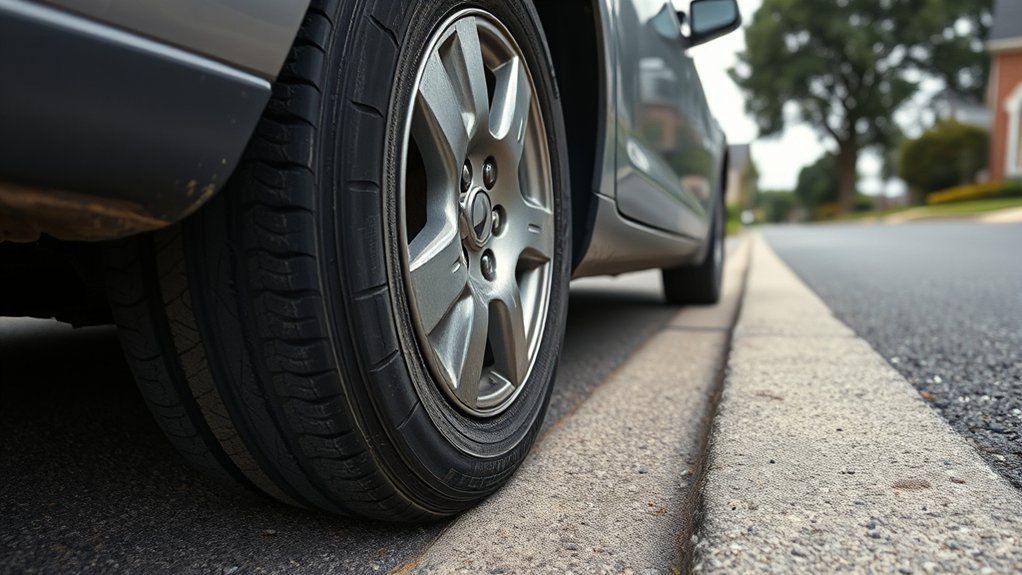
There is no universal number of days that a car can safely sit on a completely flat tire. A tire that has lost its air is no longer carrying the vehicle load the way it was designed to, so leaving the car resting on it can deform the sidewall and internal structure. An overnight flat does not automatically mean the tire is ruined, but you should avoid driving on it and have its condition checked before putting it back into service.
Quick Answer
There is no authoritative “safe” number of days to leave a car resting on a completely flat conventional tire. The longer it stays loaded and deflated, the greater the chance of deformation or hidden damage. Do not drive on it; install a spare, remove the load, or arrange professional tire service as soon as practical.
Key Takeaways
- There is no reliable two-day, three-day, or one-week cutoff that guarantees a flat tire is still safe.
- A tire sitting flat under vehicle weight can deform even when the car has not been driven.
- Driving on a conventional flat tire can rapidly damage the sidewall, inner structure, and wheel.
- A repair decision should be based on an internal inspection, puncture location and size, and the tire manufacturer’s limits.
- Use the vehicle manufacturer’s cold inflation pressure from the door placard or owner’s manual, not a generic PSI range.
At a Glance
| Time Required | Address the flat as soon as practical; there is no universal safe waiting period. |
| Difficulty | Visual checks are simple; determining repairability requires removal and professional inspection. |
| Tools Needed | Accurate pressure gauge and, if appropriate, the vehicle’s approved jack, lug tools, and spare tire; otherwise use roadside assistance. |
| Cost | Varies with the cause of the air loss, tire size, repairability, and whether the tire or wheel has been damaged. |
How Long Can a Car Sit on a Flat Tire?
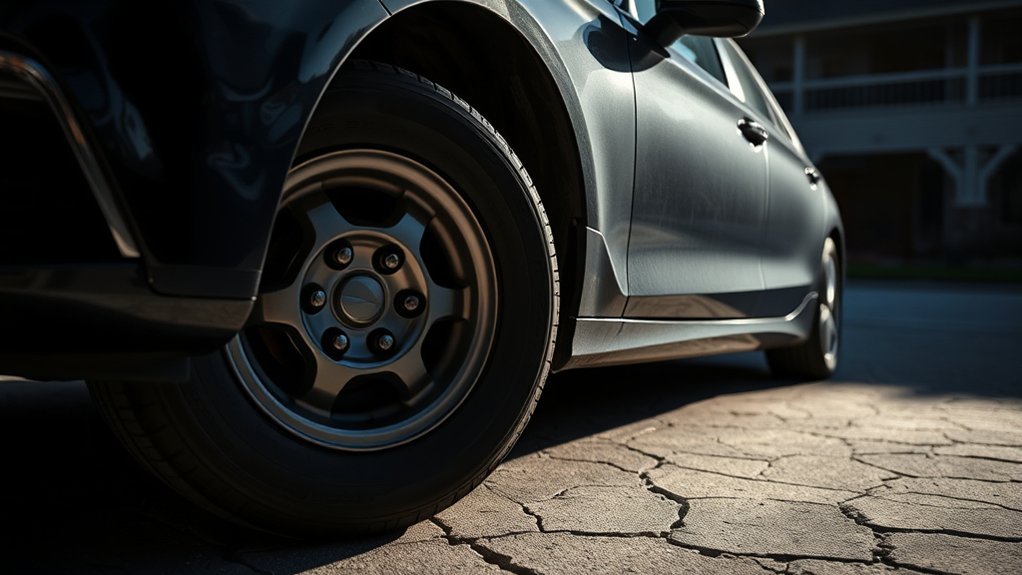
You should not treat any fixed number of days as a guaranteed safe period. A completely flat tire has lost the air pressure that normally supports the load and helps the casing maintain its intended shape. When the vehicle continues resting on that tire, the lower sidewall remains compressed.
A tire that went flat overnight may still be repairable, especially if it was never driven and the air loss came from a small tread puncture. However, elapsed time alone cannot tell you whether the tire is safe. Tire age, construction, vehicle weight, remaining pressure, puncture type, previous damage, and environmental conditions all matter.
If the tire has lost all or most of its pressure, avoid driving on it. Michelin advises that a tire which loses most or all of its air should be removed from the wheel for a complete internal inspection before a repair decision is made. Michelin’s tire-care guidance also warns that conventional tires can be damaged even after short-distance driving while flat.
If the vehicle will remain parked, the best approach is to resolve the flat promptly rather than trying to calculate how many more days the tire can support the car.
Warning: Do not assume a flat tire is safe to drive simply because it still looks round or because the car has only been parked for a short time. Internal damage is not always visible from outside.
What to Do if Your Car Is Sitting on a Flat Tire
If you discover a vehicle resting on a flat tire, focus first on preventing additional load and movement rather than trying to determine exactly when the tire went flat.
- Do not drive on the conventional flat tire. Movement can pinch and flex the unsupported sidewall between the wheel and road.
- Park securely. Keep the vehicle on a firm, level surface when possible and engage the parking brake.
- Use the vehicle manufacturer’s procedure. If you are installing a spare, follow the jacking points and instructions in the owner’s manual.
- Use roadside assistance if needed. A tow or mobile tire service is safer than attempting to drive a conventional flat tire to a shop.
- Have the tire inspected off the wheel. A technician needs to check the inner liner, sidewall, bead area, puncture, and signs of run-flat damage.
- Fix the source of the air loss. The cause could be a tread puncture, valve problem, bead leak, damaged wheel, or another issue.
Pro Tip: If you do not know how long the tire has been flat, tell the technician that. The duration, whether the vehicle moved, and whether the tire was completely deflated can help guide the inspection.
[Products Worth Considering]

ZEHXI’s 60 pack screw-in tire plug kit uses high-grade rubber plugs with sealing threads to help repair minor punctures quickly without removing the tire. The set includes two plug sizes, so you can match different puncture openings and keep repairs organized in a transparent case. A handy screwdriver is included for fast installation, helping drivers get more mileage from existing tires while being ready for flat-tire emergencies.

TireJect Off-Road Tire Sealant Kit provides 5-in-1 sealing to help fix tread punctures up to 3/8", sidewall punctures up to 3/8", bead leaks, slow leaks, and minor dry rot on low-speed tires. It permanently seals with liquid rubber, recycled tire particles, and Aramid fibers, making it ideal for flats caused by thorns, nails, and screws. The included dispensing cap attaches to the valve stem for a no-mess installation, along with a metal valve core remover tool and valve stem cap. This kit is for off-road use only.

The Tymate TM12 RV TPMS delivers real-time tire pressure and temperature monitoring with a stable 433Hz display for safer long-distance driving. It supports simultaneous monitoring across vehicle and trailer zones, includes six alarm modes for pressure, temperature, leakage, battery, and signal loss, and features easy DIY installation with auto calibration. Power is supplied via USB-C charging or solar recharging, with a wide 0–144 PSI range and up to 50 ft signal coverage for RVs and towable trailers.
What Happens to a Flat Tire After Days of Sitting?
There is no guaranteed sequence in which damage appears after a certain number of hours or days. What does happen is that a deflated tire remains compressed at the contact area while the vehicle’s weight bears down on it.
Prolonged loaded storage can distort the sidewall or casing. Tire manufacturers therefore recommend keeping mounted tires properly inflated during storage and, for extended vehicle storage, reducing the load on the tires when appropriate.
Visible cracking, bulges, exposed cords, severe creasing, bead distortion, or an abnormal collapsed shape are reasons to stop considering the tire safe for normal use until a professional inspects it.
If a vehicle must remain parked before service is available, keep it on a firm, dry, stable surface and do not repeatedly roll it back and forth on the flat tire.
Can Sitting Flat Damage the Rim?
If the car remains stationary, wheel damage is generally less likely than when the vehicle is driven on the flat. Driving lets the wheel repeatedly load and pinch the deflated sidewall and can eventually expose the rim to road impacts.
| Checkpoint | What It Tells You |
|---|---|
| Wheel flange condition | Scraping, bending, or impact marks need professional evaluation. |
| Ground contact | Direct wheel-to-ground contact increases concern for wheel damage. |
| Whether the car moved | Driving or rolling on the flat raises the chance of tire and wheel damage. |
| Ability to hold pressure | Persistent air loss may indicate a tire, valve, bead, or wheel problem. |
Continental specifically warns that continuing to drive on a deflated tire can damage the tire and can also lead to costly wheel or vehicle damage. See Continental’s tire repair guidance.
When Does the Sidewall Start to Fail?
There is no reliable clock-based point at which a sidewall begins to fail. A tire’s response depends on the remaining pressure, load, construction, age, condition, and whether it has been driven while deflated.
Once pressure is lost, however, the tire is no longer carrying the load in its normal inflated shape. Continued compression can deform the casing, and driving while flat adds much more damaging flex and friction.
Look for bulges, cracks, exposed cords, severe folds, abrasion, or an unusual shape. These visible signs can indicate compromised structural integrity, but the absence of visible damage does not prove the inside is sound.
Sidewall Stress Over Time
A flat tire places the lower sidewall in an abnormal loaded position because the air pressure that normally supports the tire has been lost.
The longer that condition continues, the more reason there is to be cautious about deformation. There is no verified 48-hour or one-week cutoff that separates a safe tire from a damaged one.
The safest response is to remove the load from the flat tire as soon as practical and have it inspected before reuse, particularly if the tire was completely flat, the vehicle moved, or the duration is unknown.
Signs Of Sidewall Damage
Visible warning signs include cracks, cuts, bulges, blisters, exposed cords, abrasion, or severe deformation. NHTSA recommends inspecting tires for physical damage and consulting a tire professional when damage or pressure-retention problems are present. See NHTSA TireWise.
- Check the outer sidewall for cuts, cracks, bulges, and abnormal folds.
- Have the inner sidewall and inner liner examined after the tire is removed.
- Inspect the bead area and wheel for distortion or damage.
- Do not reuse a tire with structural damage simply because it accepts air.
A bulge, exposed cord, major sidewall damage, or confirmed internal deterioration generally means the tire should be taken out of service rather than repaired.
Can You Repair a Tire That Sat Flat?
Sometimes. The fact that a tire sat flat does not automatically determine whether it can be repaired. What matters is why it went flat and what condition the tire is in after inspection.
The U.S. Tire Manufacturers Association’s puncture-repair procedure says a passenger or light-truck tire must be removed from the wheel for a complete inspection before repair.
For a typical puncture repair, the injury must be confined to the repairable tread area and generally no larger than 1/4 inch (6 mm) in diameter. Damage extending into the shoulder or sidewall is not within the normal repair area.
[Products Worth Considering]
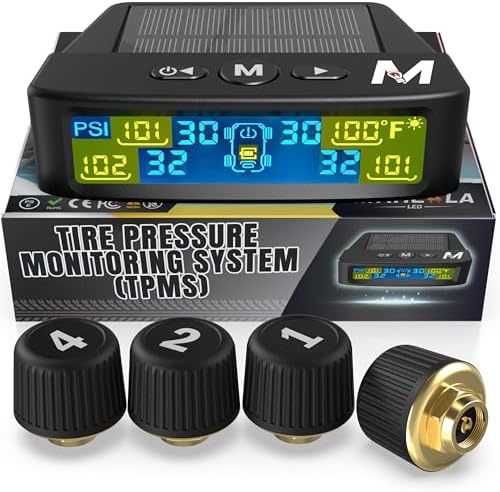
Marcala’s TPMS set of four sensors helps you monitor tire pressure and temperature in real time while driving, with updates every second. The bright color LCD uses auto-dimming for easy viewing, powered by dual solar and USB charging, and offers six alarm modes. Built for trailers, RVs, campers, trucks, and towing setups, the sensors support monitoring 1-4 wheels up to 98 PSI with IP67 waterproof protection.

This 100-piece set of snap-in tubeless tire valve stems is designed for standard 0.453 in (11.5 mm) rim holes and helps maintain reliable, steady tire pressure. Made with ozone-resistant rubber and brass cores, the valves are built for durability and long-term use. Easy to install by hand, they support safe driving and are suitable for cars, light trucks, trailers, and more.

The SAFELIFE dial tire tread depth gauge measures tread depth in 1/32 inch increments with clear, easy-to-read 2-inch dial face. Color zones using a traffic light system help you quickly judge whether tread is low, marginal, or ample for safer driving. Built with a durable zinc cast body and a metal detect probe for precise, comfortable use across cars, motorcycles, trucks, and buses.
Repairability After Sitting Flat
A technician should consider several factors rather than relying on how many days the tire was flat:
- Whether the tire was driven or rolled while deflated.
- Whether the puncture is within the repairable tread area.
- The size and angle of the injury.
- Condition of the inner liner and sidewalls.
- Bead damage or distortion.
- Evidence of abrasion, overheating, broken cords, or other structural damage.
- The tire manufacturer’s specific repair restrictions.
Hidden internal damage cannot be ruled out just by examining the tread and outer sidewall while the tire remains mounted.
When Patch Repair Works
A proper puncture repair may work when the injury is small, limited to the repairable tread area, and the rest of the tire passes an internal inspection.
USTMA states that the repair should fill the puncture with a rubber stem or plug and seal the inner liner with a patch. A one-piece combination repair unit can perform both functions. A plug by itself is not an acceptable permanent industry repair.
You should not repair a conventional passenger tire simply because it can be reinflated. A tire with sidewall damage, run-flat damage, severe bead damage, or structural deterioration needs to be removed from service according to the applicable tire manufacturer’s repair policy.
Should You Move a Car With a Flat Tire?
For a conventional tire, do not drive on it while flat just to reach a nearby shop. Driving causes the unsupported sidewall to flex and become pinched between the wheel and road, which can turn a potentially repairable puncture into a ruined tire.
There is no dependable “20-foot” or “50-foot” safe-distance rule. Damage depends on the tire, vehicle load, surface, speed, and degree of deflation.
If the vehicle is in immediate danger from traffic, protect people first and follow emergency or roadside-safety instructions. Otherwise, use an approved spare tire, mobile tire service, towing service, or roadside assistance instead of driving on the flat.
Run-flat tires are different. Some are designed to support a vehicle for a limited distance after pressure loss, but speed and mileage restrictions vary by tire and vehicle. Follow the exact limits in your tire and vehicle documentation rather than applying a generic rule.
How Hot and Cold Weather Affect a Flat Tire
Temperature affects tire pressure, but it does not create a reliable hot-weather or cold-weather countdown for a parked flat tire.
As outside temperature drops, tire pressure normally drops as well. Michelin notes that a change of about 10°F can change tire pressure by roughly 1 PSI. That means a tire that is already low may trigger a warning or become more noticeably underinflated during colder weather. See Michelin’s tire-pressure guidance.
Heat, sunlight, ozone, moisture, and chemical exposure can also influence tire aging during storage. Continental recommends storing tires in cool, dry conditions away from direct sunlight, heat sources, ozone, fuel, and solvents. See Continental’s tire-storage recommendations.
For a car already sitting on a flat tire, however, the primary issue is still the unsupported loaded tire. Do not assume cold weather automatically cracks the sidewall after a certain number of days, or that hot weather creates a specific failure deadline.
Fix or Replace a Flat Tire After Sitting
Once a flat tire has been sitting under vehicle weight, decide between repair and replacement after the tire has been properly inspected.
- Repair may be possible when the injury is a small repairable tread puncture, the tire was not damaged from being run flat, and its internal structure passes inspection.
- Replacement is appropriate when there is sidewall or shoulder damage, structural damage, significant run-flat damage, an oversized puncture, exposed cords, severe deformation, or another condition outside the manufacturer’s repair limits.
- Inspect the wheel too if the vehicle moved on the flat, the wheel contacted the ground, or the tire will not seal correctly after service.
Do not decide based only on whether the tire accepts air. A damaged casing can sometimes reinflate while still being unsafe for road use.
[Products Worth Considering]

Milton S-921 pencil tire pressure gauge helps you maintain optimal tire pressure for passenger cars with accurate readings in PSI and kPa. It features a built-in deflator valve for convenient pressure adjustments, plus a single chuck head and nylon indicator bar for easy use on the go. Built from durable plated brass and designed for reliable performance, it’s a practical road trip and cold-weather maintenance tool.

This AUTOWN flat tire repair kit is designed for quick, reliable puncture repairs using a plug kit and spiral probe tool to simplify installation. Built for durability and safe handling, it offers strong adhesion and flexibility to help maintain tire air tightness. With a portable storage case and a multi-vehicle approach, it’s suitable for cars, motorcycles, ATVs, tractors, lawn mowers, RVs, jeeps, and trucks.
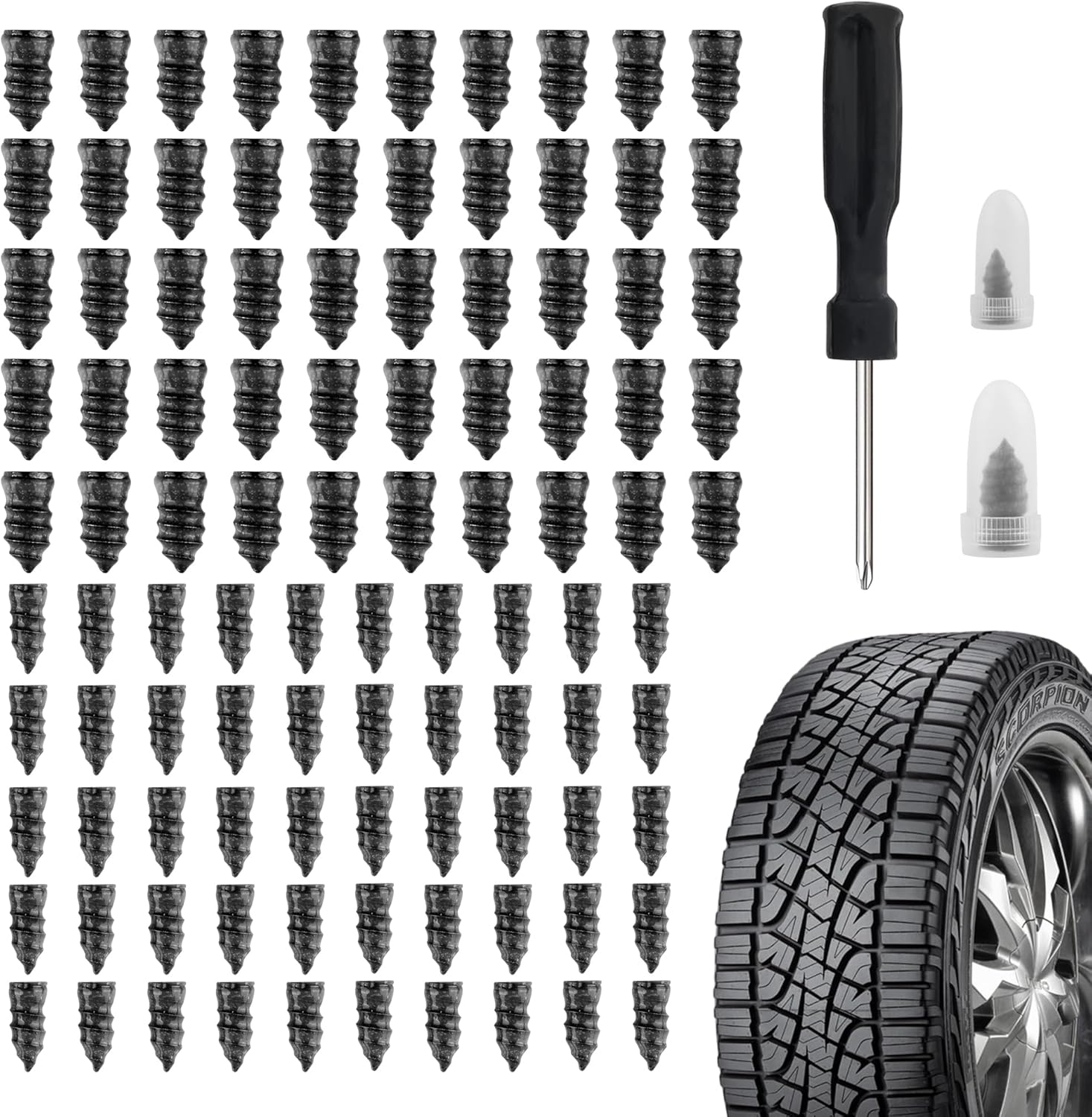
Salior’s tire plug kit provides a fast, reliable self-service fix for punctured or leaking tires without the need for flaring tools. Choose the correct plug size, then screw the nail into the puncture using the included screwdriver for an enhanced seal. The set is durable and convenient for on-the-go maintenance across multiple vehicle types.
How to Prevent Flat Tires in the Future
Start with the correct tire pressure. There is no universal ideal range such as 30 to 35 PSI for every passenger vehicle. NHTSA says to use the cold inflation pressure listed on the driver’s-door Tire and Loading Information label or in the owner’s manual.
The correct tire pressure is the vehicle manufacturer’s placard pressure—not a generic PSI number and not the maximum pressure molded on the tire sidewall.
Check all tires, including the spare when applicable, with an accurate gauge when the tires are cold. NHTSA recommends checking pressure at least monthly.
Inspect the tread and sidewalls regularly for cuts, cracks, bulges, punctures, embedded objects, or abnormal wear. A slow leak found early is easier to address before the tire becomes completely flat.
Avoid unnecessary impacts with potholes, curbs, and road debris. These can damage the tire, wheel, or valve even when the tire does not immediately lose all of its pressure.
Rotate tires according to your vehicle owner’s manual or the tire manufacturer’s recommendations rather than assuming one mileage interval applies to every vehicle.
If your car has a Tire Pressure Monitoring System, treat the warning as a reason to investigate promptly. TPMS is helpful, but NHTSA notes that it does not replace regular pressure checks with a gauge.
For extended vehicle storage, keep the tires properly inflated and follow the vehicle and tire manufacturers’ storage guidance. Where appropriate, taking the vehicle load off the tires can reduce prolonged deformation.
Note: A repeated flat may not be caused by the tread itself. Valve stems, bead sealing surfaces, wheels, previous repairs, and punctures can all cause pressure loss, so repeated air loss deserves a complete diagnosis.
Sources
- National Highway Traffic Safety Administration — TireWise — recommended inflation pressure, cold-pressure checks, TPMS, inspection, and tire safety.
- U.S. Tire Manufacturers Association — Puncture Repair Procedures — repairable tread area, 1/4-inch puncture limit, internal inspection, and proper repair method.
- U.S. Tire Manufacturers Association — Tire Repair Basics — inspection and permanent puncture-repair requirements.
- Michelin USA — Tire FAQs — flat-tire inspection, driving restrictions, temperature effects, storage, and rotation guidance.
- Continental Tires — Tire Repair — sidewall concerns and risks of driving on a deflated tire.
- Continental Tires — Tire Storage — heat, sunlight, ozone, storage conditions, and loaded-tire storage practices.
Frequently Asked Questions
How Long Can a Car Sit on a Completely Flat Tire?
There is no universal safe number of hours or days. A completely deflated tire is being loaded in a way it was not designed to support, so address it as soon as practical. If it has been flat for an unknown or extended period, have the tire inspected before driving.
Can I Drive 30 Minutes on a Flat Tire?
Not on a conventional tire. Thirty minutes of driving while flat can severely damage the sidewall and may also damage the wheel. Install the approved spare or use roadside assistance. If you have run-flat tires, follow the tire and vehicle manufacturer’s specific limits.
Can I Drive 20 Feet on a Flat Tire?
There is no guaranteed safe 20-foot allowance for a conventional flat tire. Even a short movement can add sidewall and wheel damage depending on the load, surface, tire profile, and degree of deflation. Avoid driving on it unless immediate personal safety requires moving the vehicle.
Can You Drive 13 Miles on a Flat Tire?
Do not drive 13 miles on a conventional flat tire. Use a spare, towing service, or roadside assistance. Some run-flat tires permit limited driving after pressure loss, but their speed and distance limits are product-specific and must be followed exactly.
Can I Reinstate a Tire That Was Flat Overnight?
Possibly, but do not assume reinflation proves the tire is safe. If it lost most or all of its pressure, determine why it went flat and have it inspected for sidewall, inner-liner, bead, and puncture damage before returning it to normal road use.
Will a Flat Tire Damage the Rim While the Car Is Parked?
Wheel damage is generally more likely when the car is driven or rolled on the flat. Still, inspect the wheel if its flange contacted the ground, the vehicle shifted, the wheel shows impact marks, or the repaired tire will not seal correctly.
Does the Same Advice Apply to Run-Flat Tires?
No. Run-flat tires have reinforced construction designed to support limited driving after pressure loss, but the permitted speed and distance vary by manufacturer and tire. Follow the exact instructions for your vehicle and tire rather than conventional-flat-tire guidance.
Conclusion
Do not rely on a fixed number of days to decide whether a car can safely remain on a flat tire. Leaving a completely deflated tire under vehicle weight can deform it, while driving on it can cause much more serious sidewall, internal, and wheel damage. Install a spare, remove the load, or arrange roadside service as soon as practical.
If the tire lost most or all of its pressure, have the cause diagnosed and the tire properly inspected before returning it to service. A small tread puncture may still qualify for repair when it meets industry limits, but sidewall damage, run-flat damage, oversized punctures, or structural deterioration can require replacement. Acting promptly gives you the best chance of protecting both the tire and the wheel.