
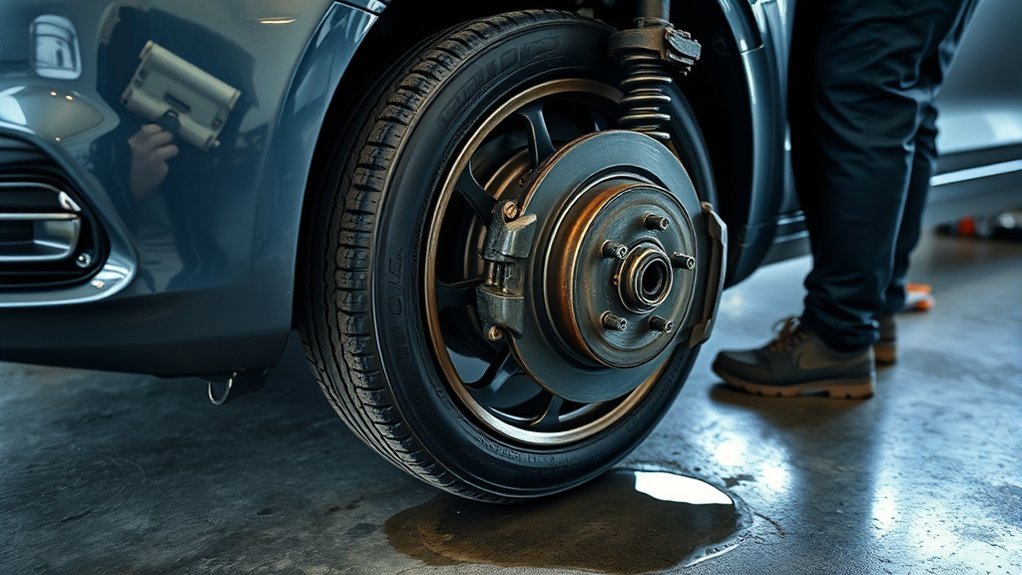
If your tires squeal when you turn, the sound may come from tire scrub, low pressure, uneven tread wear, or wheel alignment problems. But not every turning squeal comes from the tires. Brakes, steering components, wheel bearings, suspension parts, and even a tire rubbing a liner can create similar noises. Start with pressure and tread, then use when and where the sound occurs to narrow down the cause.
Quick Answer
Tires usually squeal when turning because the tread is scrubbing across the road from low pressure, uneven wear, misalignment, or aggressive cornering. A brief squeak during a very tight turn can be normal. Repeated squealing, pulling, vibration, grinding, pressure loss, or steering trouble deserves a closer inspection.
Key Takeaways
- Low tire pressure can increase sidewall flex, heat, tread distortion, and tire scrub in a turn.
- Uneven wear or incorrect wheel alignment can force the tread to drag instead of rolling cleanly.
- A short squeak during a tight parking maneuver on smooth pavement can occur even when the vehicle is healthy.
- Brake, steering, suspension, wheel-bearing, CV-joint, or tire-rubbing noises can easily be mistaken for tire squeal.
- Check cold tire pressure, tread condition, visible damage, and when the sound occurs before deciding what needs repair.
At a Glance
| Time Required | About 10–15 minutes for basic pressure, tread, and visual checks |
| Difficulty | Easy for basic checks; alignment, brake, bearing, and suspension diagnosis may require a technician |
| Tools Needed | Accurate tire-pressure gauge, tread-depth gauge or penny, flashlight |
| Cost | Basic checks can cost nothing if you already have a gauge; alignment or mechanical repairs vary by vehicle and cause |
Why Tires Squeal When Turning

Tire squeal is often created when the rubber briefly scrubs or slips across the pavement instead of rolling smoothly through a corner. This can happen during hard cornering, rapid acceleration while turning, or a very tight low-speed maneuver.
It does not always mean the tire has completely “lost traction.” Tires naturally deform as they generate cornering force, and some surfaces make that movement more audible than others. A short squeak during a tight turn on smooth concrete can therefore be less concerning than repeated squealing during normal street turns.
If your wheels are misaligned, especially if toe is outside specification, the tread can be forced to scrub sideways. Misalignment may also produce uneven tread wear, steering pull, or a steering wheel that no longer sits straight.
Underinflated tires can flex and distort more than intended. NHTSA notes that proper inflation affects tire safety, durability, fuel use, and handling. Check the manufacturer’s recommended cold tire pressure on the Tire and Loading Information label or in the owner’s manual, not the maximum pressure molded into the tire sidewall.
Rapid acceleration or high-speed turning also raises the lateral load placed on the tires. If squealing occurs only when you enter a corner too quickly, the first fix is to reduce speed and drive more smoothly.
Pro Tip: Pay attention to whether the sound happens while the vehicle is parked. If you can reproduce the noise by turning the steering wheel while the car is stationary, the tires are not rolling across the road, so the source is more likely in the steering or suspension system than in tire-road scrub.
Underinflated Tires and Excess Flex
Low tire pressure is one of the first things to check when tires squeal in turns. An underinflated tire flexes more as it carries the vehicle through a corner. That extra deformation can increase heat, change the contact patch, and make the tire feel less precise.
Do not rely on a generic “30 to 35 PSI” rule. Vehicles can require different pressures front to rear, and the correct figure is the manufacturer’s recommended cold inflation pressure on the vehicle placard or in the owner’s manual.
| Condition | Effect | What to Do |
|---|---|---|
| Correct cold pressure | Tire operates near its intended shape | Continue monthly checks |
| Underinflated tire | More flex, heat, and tread distortion | Inflate to vehicle placard specification |
| TPMS warning illuminated | At least one tire may already be significantly underinflated | Check all tire pressures promptly |
NHTSA recommends checking all tires with a gauge at least once a month when they are cold. A cold tire is generally one that has not been driven for at least three hours. The TPMS warning lamp is helpful, but it is not a substitute for routine pressure checks because the warning does not necessarily appear as soon as pressure begins falling.
The correct inflation target comes from the vehicle manufacturer’s tire-information placard—not the maximum-pressure number printed on the tire sidewall.
[Products Worth Considering]

Measure tire tread depth quickly and accurately with this LUMITECO dial gauge that reads in 1/32" increments up to 14/32". The color-coded green/yellow/red zones make it easy to judge tire wear and know when replacement is needed. A rugged, compact design with a protective pouch helps keep the gauge ready for use on cars, trucks, motorcycles, and more.

The SAFELIFE dial tire tread depth gauge measures tread depth in 1/32 inch increments with clear, easy-to-read 2-inch dial face. Color zones using a traffic light system help you quickly judge whether tread is low, marginal, or ample for safer driving. Built with a durable zinc cast body and a metal detect probe for precise, comfortable use across cars, motorcycles, trucks, and buses.

Monitor tire tread wear with a smart, color-coded depth gauge that shows clear condition ranges at a glance. The bar is range marked for fast, easy readings, helping you maintain safer traction and performance. Each gauge is portable with a pocket clip, and the set includes 20 units for daily use and sharing.
Worn Tread and Uneven Wear
As tread depth decreases, the tire has less usable tread to manage water and maintain predictable grip. Low tread may make an existing alignment, inflation, or cornering problem easier to notice.
Uneven wear patterns often tell you more than tread depth alone. Feathering, shoulder wear, cupping, or a large difference between the inside and outside edges can indicate pressure, alignment, balance, suspension, or maintenance problems.
Inspect the entire tread, not just the easiest outer edge to see. Also check the sidewall for bulges, cuts, cracking, punctures, or other visible damage.
Tread Depth Loss
NHTSA says a tire should be replaced when its tread is worn to 2/32 inch. Federal tire standards also use treadwear indicators at that depth. However, calling 2/32 inch the universal “legal limit” is too broad because vehicle-use requirements can vary by state.
Waiting until the tread is almost gone can also leave you with less wet-road capability than you had when the tire was newer. Measure several grooves and several positions around each tire because wear may not be uniform.
Underinflation can accelerate shoulder wear, while overinflation can contribute to center wear. Alignment and worn suspension components can produce one-sided or irregular patterns.
If tread is at 2/32 inch, a wear bar is flush with the tread, or the tire has significant damage, replacement is more appropriate than attempting to “rotate away” the problem.
Uneven Wear Patterns
Uneven wear can make squeaky tires more noticeable because different areas of the tread do not contact the road in the same way.
Look for cupping, feathering, center wear, and inner- or outer-shoulder wear. Feathering commonly points toward a toe-related alignment problem, while cupping can be associated with wheel balance or worn suspension components.
Check tire air pressure before drawing conclusions because both underinflation and overinflation can change the wear pattern.
You should also verify wheel alignment when wear is strongly one-sided, the vehicle pulls, the steering wheel is off-center, or the problem appeared after a pothole or curb impact.
For rotation, follow your vehicle owner’s manual first. If the manufacturer does not provide an interval, tire manufacturers often publish their own guidance. For example, Bridgestone’s current maintenance manual recommends following the vehicle manufacturer or using about 8,000 km (approximately 5,000 miles) as its fallback interval.
Wheel Alignment Problems That Cause Tire Squeal
Misaligned wheels can make tires squeal during turns because the tread may scrub against the pavement instead of tracking cleanly. Alignment also affects how evenly the tire carries load across its tread.
Toe misalignment is especially relevant to tire scrub. If the wheels point too far inward or outward relative to specification, the tread is continually dragged slightly sideways as the vehicle rolls.
Do not schedule alignment solely because a fixed number of months has passed. Instead, follow the vehicle manufacturer’s maintenance guidance and have the alignment checked when there are signs such as:
- Steering pull on a reasonably level road.
- A steering wheel that is noticeably off-center when traveling straight.
- Feathering or one-sided tread wear.
- A significant pothole, curb, or road-hazard impact.
- Recent steering or suspension repair.
Correcting the underlying alignment problem helps stop new irregular wear. However, an already badly worn tire may remain noisy even after the alignment itself is corrected.
[Products Worth Considering]

This TPMS relearn tool helps you quickly activate, match, and reset GM tire pressure sensors to keep the vehicle monitoring system working properly. It clears tire pressure alarms and dashboard warning lights after sensor replacement or tire rotation, and supports learning for common 315/433 MHz TPMS sensors. Designed for simple one-button operation, it can help you avoid unnecessary trips to repair shops.

This professional wheel and rim cleaning brush set lifts brake dust, grime, and dirt with soft, scratch-free microfiber and synthetic wool fibers. The rim brush bends up to 360 degrees for easy access to hard-to-reach areas around spokes, lips, and faces. Ideal for thorough cleaning of car, truck, motorcycle, bicycle, RV, and more wheel and tire surfaces.

Accurately measure tire tread depth with a calibrated gauge marked from 0 to 1 inch in 1/32 inch increments. The color-coded bar helps you quickly identify tread condition ranges, supporting safe driving for trucks, motorcycles, automobiles, and passenger vehicles.
Quick Diagnosis: When Does the Squeal Happen?
The timing of the sound is often more useful than the volume. Use the pattern below to narrow the source before replacing parts.
| When You Hear It | Possible Sources |
|---|---|
| Only during very tight, slow turns | Normal tire scrub, road surface, low pressure, tire rubbing |
| During ordinary turns at normal speeds | Low pressure, alignment, uneven wear, steering or suspension issue |
| While turning the steering wheel when parked | Steering system, belt-driven hydraulic pump, strut mount, steering/suspension joint |
| Mostly while braking | Brake pad wear indicator, pad/rotor vibration, caliper or brake hardware |
| Hum or growl that changes when turning | Wheel bearing or tire wear |
| Clicking during tight acceleration turns | CV joint or axle issue |
| Scraping only when turning one direction | Fender liner, splash shield, brake dust shield, oversized tire, damaged trim |
Brake, Belt, and Bearing Noise Sources
If pressure, tread, and alignment do not explain the sound, inspect other systems near the wheel and steering assembly.
Start with brake pads. Many disc-brake pads use a wear indicator that produces a high-pitched squeal when the friction material becomes thin. Toyota describes this type of squealing or squeaking as a common warning that pads may need replacement. By contrast, grinding or scraping can indicate more severe brake-pad wear and metal-to-metal contact.
A bent or displaced brake dust shield can also lightly touch the rotor and create a scraping or squeaking sound that changes as the vehicle turns.
Worn wheel bearings can change their noise as cornering shifts vehicle weight from one side to the other. A failing bearing more commonly produces humming, rumbling, growling, whining, or grinding than classic tire squeal. MOOG lists noise that changes with vehicle speed or turning among common wheel-bearing warning signs.
A serpentine or accessory belt can sometimes squeal when turning on vehicles that use a belt-driven hydraulic power-steering pump because steering increases pump load. This explanation does not apply to every vehicle. Many newer models use electric power steering and have no hydraulic steering pump or power-steering fluid.
Dry, worn, or binding steering and suspension joints can also create squeaks, creaks, pops, or clunks. Possible sources include ball joints, tie-rod ends, control-arm bushings, and upper strut mounts.
Loose wheel hardware is a separate safety concern rather than a normal explanation for tire squeal. If you suspect a loose wheel or recently had wheel service, have the wheel installation and lug-nut torque checked according to the vehicle or wheel manufacturer’s procedure.
Tire Rubbing, CV Joints, and Suspension Noise
If the noise appears only near full steering lock or only when turning one direction, inspect for physical rubbing. A tire can contact a plastic fender liner, splash shield, mud flap, or suspension component if something is damaged, displaced, or incorrectly fitted.
Rubbing is especially worth checking after installing different-size tires, aftermarket wheels, spacers, suspension modifications, or replacement body liners.
A worn outer CV joint usually sounds more like repeated clicking or popping than a smooth tire squeal, particularly when accelerating through a tight turn. Suspension joints and strut mounts are more likely to creak, groan, pop, or squeak as steering angle changes.
If you cannot confidently identify the sound, avoid replacing parts based only on the noise description. A technician can inspect the vehicle while the steering and suspension are loaded and determine which component is actually moving or rubbing.
Road Conditions That Trigger Tire Noise
Road conditions can change how loud a healthy tire sounds. Tire noise depends on tread design, rubber compound, speed, temperature, and pavement texture.
Smooth or sealed concrete, such as some parking-garage floors, can make low-speed tire scrub unusually noticeable. Rough pavement can create a different type of tread roar or vibration. Michelin also notes that road surface has a significant effect on tire noise.
Wet pavement reduces available grip, while gravel and loose stones allow the tread to move against an unstable surface. These conditions can change the sound and feel of a turn, but they do not automatically mean the tire itself is defective.
- Smooth or sealed concrete: can make tire scrub easier to hear during tight turns.
- Wet or slippery pavement: reduces available grip and requires gentler steering and acceleration.
- Potholes, cracks, or gravel: can change loading, vibration, and steering feel.
If the noise occurs only on one unusual surface and the tires have correct pressure, healthy tread, no damage, and normal handling, the surface may be the main reason. If it happens on nearly every turn, continue troubleshooting.
How to Stop Tire Squealing in Turns
To stop tire squealing in turns, work from the simplest checks to the more involved ones.
- Check all four tire pressures cold. Inflate them to the vehicle manufacturer’s placard specification.
- Inspect tread depth and tire damage. Look across the full width of every tire for irregular wear, cuts, cracks, bulges, punctures, or exposed material.
- Notice when the sound occurs. Compare parked steering, slow tight turns, ordinary turns, braking, and acceleration.
- Check for tire rubbing. Look for shiny or freshly scuffed areas on liners, shields, and nearby suspension parts.
- Have alignment checked when symptoms support it. Pulling, off-center steering, irregular tread, or an impact are stronger reasons than an arbitrary calendar interval.
- Inspect brakes, bearings, and steering/suspension parts if the tire checks are normal.
Avoid aggressive turning and sudden acceleration during diagnosis. If the squeal disappears when you drive smoothly, excessive cornering load may have been the main trigger.
Note: Correcting alignment or pressure prevents additional abnormal wear, but it cannot restore tread that is already badly feathered, cupped, or damaged. A worn tire may remain noisy until it is replaced.
[Products Worth Considering]

The Tymate TM12 RV TPMS delivers real-time tire pressure and temperature monitoring with a stable 433Hz display for safer long-distance driving. It supports simultaneous monitoring across vehicle and trailer zones, includes six alarm modes for pressure, temperature, leakage, battery, and signal loss, and features easy DIY installation with auto calibration. Power is supplied via USB-C charging or solar recharging, with a wide 0–144 PSI range and up to 50 ft signal coverage for RVs and towable trailers.

This universal wheel alignment tool helps you accurately restore tire tilt angles after tire or suspension repairs using an adjustable camber gauge. It features a powerful magnetic base that firmly attaches to brake rotors for stationary, slip-free readings, improving consistency during measurement. Built from durable PC plastic, it resists wear and corrosion and is compact enough for car, truck, RV, and motorcycle alignment tasks.

The Ziopetru adjustable magnetic wheel alignment tool helps you check and restore camber and caster positioning after removing and reinstalling undercarriage components. With a clear leveling/bubble measurement system and an easy zeroing adjustment knob, it supports precise horizontal angle checking. The strong magnetic base mounts to metal surfaces for convenient use at home on cars, motorcycles, trucks, vans, and SUVs.
When Tire Squeal Means Bigger Trouble
If your tires squeal on nearly every normal turn, especially when the vehicle also pulls, vibrates, loses pressure, or handles differently, treat the sound as a warning rather than normal tire scrub.
Check for tire damage first. NHTSA advises drivers to pay attention to tire noise, vibration, irregular wear, visible damage, and problems maintaining inflation pressure.
You should also consider brake, steering, suspension, and wheel-bearing issues if pressure and tread look normal.
Warning: Stop driving as soon as it is safe if you find a bulging tire, rapidly falling tire pressure, exposed tire structure, severe vibration, grinding, major steering difficulty, braking problems, or a wheel that feels loose. These symptoms can indicate a problem more serious than ordinary tire squeal.
Signs Of Serious Damage
Persistent tire squealing during turns can point to a developing tire or mechanical problem, especially when another symptom appears at the same time.
Check these warning signs:
- Squealing plus severely worn or damaged tires: Low tread, exposed cords, bulges, deep cuts, or rapid pressure loss require prompt attention.
- Vibration or pulling: This can accompany tire damage, alignment problems, wheel imbalance, worn suspension components, or a wheel-bearing problem.
- Grinding or rapidly worsening noise: This is more concerning than a mild tire squeak and can point toward brakes, bearings, or another rotating component.
Do not continue a long trip simply to see whether a serious symptom goes away. Inspect the vehicle or have it professionally diagnosed first.
Hidden Brake Problems
Sometimes tire squeal during turns is not coming from the tires at all. Brake components sit close to the wheel and can create sounds that seem to come directly from the tread.
Worn brake-pad indicators can produce a high-pitched squeal. Brake hardware, pads, or rotor contact can also produce squeaks or vibration. Severe pad wear may progress to grinding or scraping as metal contacts the rotor.
A low brake-fluid level is not a normal cause of tire squeal. However, unexpectedly low fluid, a brake warning light, or a soft pedal is a separate safety concern because it can indicate hydraulic leakage or another brake-system problem.
| Symptom | Possible Brake-Related Source |
|---|---|
| High-pitched noise mainly while braking | Pad wear indicator or brake vibration |
| Light scrape that changes during a turn | Dust shield or brake hardware contact |
| Grinding during braking | Severely worn pads or damaged friction surfaces |
| Soft pedal or unexpectedly low fluid | Possible hydraulic problem requiring inspection |
A professional brake inspection can confirm the source without relying on sound alone.
When To Get Help
When tire squealing keeps returning after pressure and visual checks, professional diagnosis is sensible. Alignment equipment, a lift, and component-load testing can reveal problems that are difficult to confirm in a driveway.
- Check cold pressure and inspect tread and sidewalls first.
- Schedule alignment diagnosis if you see irregular wear, steering pull, or an off-center steering wheel.
- Get mechanical diagnosis if you feel vibration, steering looseness, braking changes, grinding, clicking, or poor handling.
Do not wait for a fixed six- or twelve-month interval if new symptoms appear. Tire checks should be performed regularly, while brake, steering, alignment, and suspension service should follow the vehicle manufacturer’s schedule and any symptoms that develop.
How to Keep Tires Quiet Longer
Keeping tires quiet starts with maintenance that preserves even wear and proper tire shape.
Check tire pressure monthly when the tires are cold and adjust it to the vehicle manufacturer’s specified pressure. Low pressure increases flex and heat, while excessive pressure can also affect wear and ride quality.
Rotate the tires according to your vehicle owner’s manual. If the vehicle manufacturer does not provide an interval, follow the tire manufacturer’s recommendation. Rotation helps distribute normal wear, but it does not fix an alignment or suspension defect.
Inspect tread depth and the full tread surface regularly. NHTSA says tires worn to 2/32 inch should be replaced. Also inspect for cuts, cracks, bulges, punctures, and irregular wear rather than looking only at tread depth.
Have wheel alignment checked when the vehicle pulls, the steering wheel is off-center, tread wear becomes irregular, or the vehicle has taken a significant impact. After suspension or steering repairs, follow the repair procedure or manufacturer’s recommendation regarding alignment.
When replacing tires, choose the correct size, load rating, speed rating, and type for the vehicle and driving conditions. Price alone does not reliably predict how quiet a tire will remain.
Finally, avoid harsh acceleration and unnecessary high-speed cornering. Smooth driving reduces the forces that make tires scrub and also makes abnormal noises easier to identify.
Sources
- National Highway Traffic Safety Administration — TireWise — tire pressure, TPMS, inspection, tread, tire age, and safety guidance.
- National Highway Traffic Safety Administration — Summer Safety Road Tips — monthly cold-pressure checks and 2/32-inch replacement guidance.
- Bridgestone Tire Maintenance and Safety Manual — inflation, rotation, tread inspection, and irregular-wear guidance.
- Toyota — Signs You May Need New Brake Pads — brake-pad squeal, wear indicators, and grinding symptoms.
- MOOG — Wheel Bearing Symptoms — humming, rumbling, growling, vibration, and noise changes during turns.
Frequently Asked Questions
Is It Safe to Drive With a Squeaky Tire?
A brief squeak during a tight parking maneuver can be harmless, but repeated squealing deserves inspection. Check pressure, tread, and visible tire damage first. Stop driving if the noise comes with a bulge, rapid pressure loss, severe vibration, grinding, steering difficulty, braking problems, or a loose wheel.
Why Do My Wheels Squeak When I Turn Hard?
During a hard or very tight turn, the tires experience greater lateral load and may scrub across the pavement. Low pressure, alignment problems, uneven tread, smooth concrete, steering or suspension components, and brake hardware can make the sound louder. If it also happens during gentle turns, inspect the vehicle.
Why Do My Car Tires Squeak After Rotation?
Rotation can move a tire with an existing feathered, cupped, or uneven wear pattern to a position where the sound is easier to hear. Check pressure after rotation and confirm the tires were installed in the correct positions for any directional or vehicle-specific requirements. Persistent noise may indicate wear, balance, alignment, or suspension problems that existed before the rotation.
Why Does My Car Squeal When I Turn the Corner?
If the sound comes from the tire-road contact, common causes include low pressure, uneven tread, misalignment, or aggressive cornering. If the sound occurs while the vehicle is stationary, comes mainly while braking, or sounds more like a click, growl, or grind, investigate steering, brakes, CV joints, bearings, or suspension components instead.
Is Tire Squeal in a Parking Garage Normal?
It can be. Smooth or sealed concrete can make tire scrub during tight, low-speed turns sound much louder than it does on ordinary asphalt. If the tires have correct pressure, even tread, no damage, and the vehicle handles normally, an occasional garage-only squeak is less concerning than a squeal that occurs on every road.
Why Does My Car Squeal When I Turn the Steering Wheel While Parked?
Because the tires are not rolling, a parked steering squeal is less likely to be ordinary tire-road scrub. On vehicles with hydraulic power steering, a belt, pump, or steering-fluid problem may be involved. Strut mounts and other steering or suspension joints can also squeak or creak. Vehicles with electric power steering do not use a hydraulic steering pump.
Conclusion
When your tires squeal in a turn, start with the basics: check cold tire pressure, inspect tread depth and wear patterns, and look for visible damage. Then pay attention to exactly when the sound appears. A brief squeak during a tight turn on smooth pavement can be normal, while repeated squealing with pulling, vibration, grinding, pressure loss, or steering changes points toward a problem that needs attention.
If the tire checks are normal, broaden the inspection to alignment, brakes, wheel bearings, steering, suspension, CV joints, and possible tire rubbing. Finding the actual source early can prevent additional tire wear and help keep the vehicle predictable and safe.
