
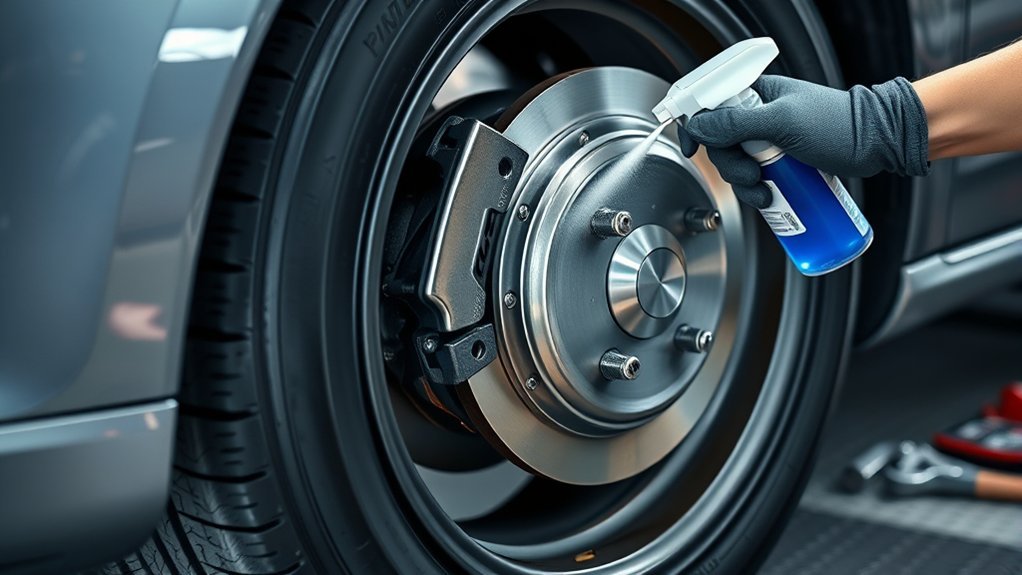
You can sometimes stop brakes from squeaking without removing the tire by cleaning exposed brake dust, checking the visible pad edge, and letting light surface rust wear away during gentle driving. The key is knowing what is safe to do through the wheel opening—and what is not. Never spray oil, WD-40 Multi-Use, silicone lubricant, or general grease on the rotor or pad friction surface.
Quick Answer
To quiet squeaky brakes without taking the tire off, let the brakes cool, inspect through the wheel, spray only brake cleaner on visible rotor and caliper areas, let it evaporate fully, then test with gentle stops. Do not apply lubricant unless you can clearly reach non-friction contact points without touching the rotor or pad face.
Key Takeaways
- Brake cleaner can remove dust and grime from visible brake parts, but it must be used on cool brakes in a ventilated area.
- A quick visual check can reveal thin pads, rust, grooves, leaks, or a wear indicator that is causing squeal.
- Anti-squeal lubricant belongs only on pad backing plates and caliper contact points—not on rotors or pad friction material.
- Most proper lubricant work requires wheel removal, so do not smear or spray blindly through the wheel.
- Grinding, vibration, pulling, a soft pedal, a warning light, or weak stopping power means the car needs brake service.
At a Glance
| Time Required | 10–20 minutes for inspection and cleaning, plus a short gentle test drive |
| Difficulty | Easy for cleaning and visual checks; moderate to professional if pads, rotors, or caliper hardware need service |
| Tools Needed | Brake cleaner, safety glasses, nitrile gloves, flashlight, soft detailing brush, clean lint-free rag |
| Cost | Usually under $20 for cleaner and gloves if you already have a brush and flashlight |
Why Brakes Squeak Without Tire Removal
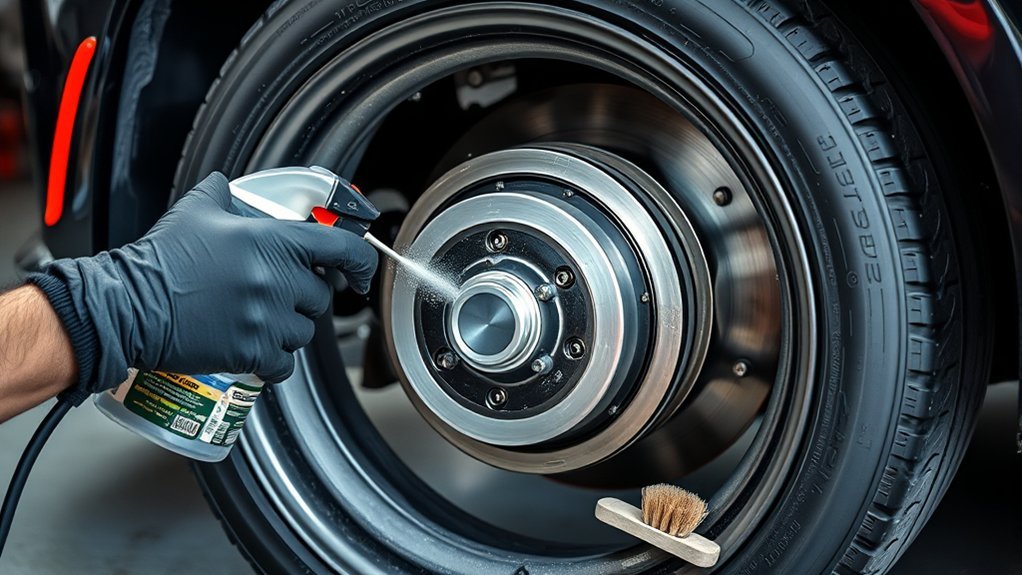
Most brake squeak comes from vibration, dust, light rust, pad material, or worn brake hardware. You may hear it after rain, after the car sits overnight, during the first few stops of the day, or when the pads are near their wear limit. Light moisture and surface rust can disappear after a few careful stops, but repeated squeaking needs a closer look.
Some brake noise can be checked through the wheel spokes. You may be able to see the rotor face, the outer pad edge, the caliper, and heavy dust buildup. However, you cannot fully inspect the inside pad, caliper slides, rotor thickness, or hardware without removing the wheel.
Warning: Brake noise is not just an annoyance. If the squeak turns into grinding, the car pulls while braking, the brake pedal feels soft, the steering wheel shakes, or a brake warning light is on, do not rely on cleaning. Have the brake system inspected before driving normally.
Safety First Before Cleaning Brakes
Before you spray anything near the brakes, park on a flat surface, let the brakes cool completely, and work outdoors or in a very well-ventilated area. Wear safety glasses and gloves. Keep brake cleaner away from flames, sparks, hot exhaust parts, and painted surfaces unless the product label says it is safe for that surface.
Use only a dedicated brake cleaner on visible brake parts. A brake cleaner such as CRC Brakleen is designed to clean brake parts, dry fast, and leave no residue. Do not substitute WD-40 Multi-Use Product, penetrating oil, chain lube, tire shine, silicone spray, or household degreaser.
If you use a chlorinated brake cleaner, read the label carefully and avoid high heat or welding near cleaned parts. The CDC/ATSDR phosgene guidance notes that phosgene can be produced when chlorinated hydrocarbons are exposed to welding conditions.
What You Can Fix Without Removing the Tire
Without taking the tire or wheel off, you can safely handle only the simple surface-level checks and cleaning steps:
- Remove loose brake dust from visible rotor and caliper areas.
- Check for obvious outer pad wear through the wheel opening.
- Look for surface rust, rotor grooves, wet oily areas, or loose debris.
- Confirm whether the squeak happens only after rain or during the first few stops.
- Listen for a wear-indicator squeal that repeats every time the wheel turns or during light braking.
You usually cannot properly replace pads, grease pad backing plates, service caliper slide pins, resurface rotors, or inspect the inner pad without wheel removal. If the noise points to any of those issues, cleaning through the wheel is only a temporary diagnostic step.
Clean Brake Dust and Road Grime
Brake dust and road grime can build up around the rotor, caliper, and pad edges. That buildup can contribute to squeaking, especially when moisture turns the dust into a thin film. Cleaning the visible parts may quiet the brakes if the problem is contamination rather than worn parts.
- Make sure the brakes are cool to the touch.
- Turn the steering wheel to improve access to the front caliper area, if needed.
- Put cardboard or an absorbent pad under the wheel to catch runoff.
- Spray short bursts of brake cleaner onto the visible rotor face, rotor edge, caliper area, and pad opening.
- Use a soft brush only where you can clearly see what you are touching.
- Wipe accessible non-friction surfaces with a clean lint-free rag.
- Let the cleaner evaporate completely before moving the car.
Pro Tip: Use short, controlled sprays instead of soaking the whole wheel well. Overspray wastes cleaner, can stain nearby surfaces, and makes it harder to tell where the noise actually came from.
[Products Worth Considering]

This professional wheel and rim cleaning brush set lifts brake dust, grime, and dirt with soft, scratch-free microfiber and synthetic wool fibers. The rim brush bends up to 360 degrees for easy access to hard-to-reach areas around spokes, lips, and faces. Ideal for thorough cleaning of car, truck, motorcycle, bicycle, RV, and more wheel and tire surfaces.

This 3-piece wheel brush set makes it easy to clean wheels and tires with soft, scratch-free brushes designed for lifting brake dust and grime. The flexible rim brush bends up to 360 degrees to reach hard-to-access areas for a thorough clean, while the comfortable grip helps control during detailing. A dedicated detailing brush supports gentle cleaning for sensitive surfaces, including interior use.

The SPTA wheel and tire brush kit makes it easy to remove dirt from wheels, rims, and hard-to-reach areas without needing a high pressure washer. Ergonomic handles and soft, chemical-resistant bristles help you clean faster while reducing the risk of scratching. The set is versatile for cars, trucks, motorcycles, bicycles, RVs, boats, and more.
Check for Worn Pads and Rotors
After cleaning, use a flashlight to inspect what you can see through the wheel. Focus on the outer pad, the rotor face, and the caliper area. If the pad material looks very thin, uneven, cracked, or down near the wear indicator, schedule brake service. The GOV.UK MOT brake inspection manual treats pads worn to the wear indicator as a major defect and pads below 1.5 mm as dangerous.
[Products Worth Considering]

Cristal Products Untouchable Tire Shine Spray delivers a deep, wet-look gloss that enhances your vehicle’s tires. It’s quick-drying and spreads smoothly for consistent, streak-free coverage, while forming a protective coating against UV rays, road grime, and weather. Suitable for all tire types, it helps restore dull, faded tires to a showroom-quality finish.

This 7-piece car wheel brush kit delivers gentle, scratch-free cleaning with extra-soft, metal-free brush heads designed to lift brake dust, dirt, and grime. The brushes bend up to 360 degrees for hard-to-reach wheel areas, while the included tire shine applicator pad helps apply tire dressing evenly with less build-up. An organizer bag is included for convenient storage, making it ideal for regular wheel and tire detailing.

This professional wheel and rim brush kit makes it easy to lift brake dust, grime, and dirt from wheels and tires without scratching finishes. The brushes feature soft, metal-free wool heads and a flexible 360-degree rim brush design for reaching hard-to-clean areas. Includes multiple brush types plus accessories for thorough car, motorcycle, and general vehicle detailing.
Pad Wear Signs
Worn pads often announce themselves before they fail. A high-pitched squeal can come from a wear indicator touching the rotor. Grinding usually means the friction material may be gone or nearly gone, and that can damage the rotor quickly.
| What You Notice | What It May Mean | What To Do |
|---|---|---|
| Thin outer pad | Pads are near service time | Plan pad inspection or replacement |
| Sharp squeal during light braking | Wear indicator, dust, vibration, or pad material | Clean and inspect; service if it returns |
| Grinding sound | Severe wear or metal contact | Stop normal driving and get a brake inspection |
| Oily or greasy pad area | Contaminated pad or leak | Do not clean-and-ignore; have it checked |
Rotor Damage Check
Look at the visible rotor face and outer edge. Light orange surface rust after rain or washing is common and may disappear after gentle stops. Deep grooves, heavy scoring, cracks, blue heat marks, or pulsing through the pedal are different. Those signs point to rotor wear, heat damage, uneven deposits, or a caliper issue.
If the rotor looks rough enough to catch a fingernail, or if the steering wheel shakes when braking, cleaning will not solve the root cause. The wheel should come off for a proper inspection.
Apply Anti-Squeal Lubricant Correctly
Anti-squeal lubricant can reduce vibration, but only when it is applied to the correct non-friction points. That usually means the back of the brake pad, shim contact areas, and caliper bracket contact points. These areas are not normally easy to reach properly with the tire still on.
Do not spray lubricant through the wheel. Do not put lubricant on the rotor, the shiny friction face of the pad, or any surface that clamps the rotor. Oil or grease contamination can reduce braking performance and may require pad replacement.
[Products Worth Considering]

The Chemical Guys Gerbil Wheel & Rim Brush is designed to safely clean wheels, rims, exhaust tips, tires, and engine bay components without scratching delicate finishes. Its soft natural bristles help lift brake dust, grime, and buildup while conforming to tight spaces and intricate contours. A comfort grip handle delivers control for extended detailing sessions.

Clean wheels and rims with soft feathered bristles that safely remove dirt and road grime while helping restore original luster. The short non-slip handle makes it easy to scrub in tight wheel wells, and the brush is suitable for vehicles and hard-to-reach areas. It can also be soaked and rubbed to help restore bristles to their shape after use.

The Mothers wheel and fender brush is designed for gentle, scratch-free scrubbing to remove road grime and brake dust. Its ergonomic shape and soft triple-flagged bristles deliver maximum coverage, including hard-to-reach wheel wells and undercarriage areas. With rubberized gripping and a protective rubber bumper, it helps clean safely while protecting delicate finishes on wheels, fenders, and bumpers.
Proper Application Points
If you can clearly and safely access a non-friction caliper contact point through an open wheel design, use only a brake-rated, high-temperature product and apply a tiny amount with a swab. If you cannot see the contact point clearly, skip this step. Guessing is not safe.
- Pad backing plate, only when the pad is accessible and the product label allows it.
- Caliper bracket contact points, only after cleaning and only away from friction surfaces.
- Pad ears or hardware contact areas, usually during a proper brake service with the wheel removed.
Pad Backing Preparation
Proper pad-backing preparation normally requires removing the wheel and accessing the pads. The backing plate must be clean and dry before any anti-squeal compound or brake grease is applied. Dirt, rust, or old lubricant can keep the product from working and may trap grit.
| Step | Correct Action |
|---|---|
| 1 | Clean the backing plate and contact points. |
| 2 | Dry the area completely. |
| 3 | Apply a thin, even film only where specified. |
| 4 | Keep all lubricant away from the rotor and pad friction face. |
Avoiding Excess Lubricant
More lubricant does not mean quieter brakes. Excess product can migrate, collect dust, or contaminate friction surfaces. Use the smallest amount needed, and use only products labeled for brake hardware or anti-squeal use.
Note: If your goal is to avoid removing the tire, brake cleaner and inspection are the realistic DIY steps. Anti-squeal compound, pad replacement, caliper slide service, and rotor work are usually wheel-off jobs.
Bed In New Brakes Gently
New pads or rotors can squeak while the surfaces settle. If the brakes were recently replaced and the noise is light, ask whether the installer followed the pad manufacturer’s bedding procedure. Bedding helps create an even transfer layer between pad and rotor.
For normal street driving, avoid hard panic stops for the first short break-in period unless safety requires it. Use smooth, moderate stops and let the brakes cool between heavier braking. If the squeal stays loud, gets worse, or comes with vibration, the pads, shims, hardware, or rotor surface may need correction.
Identify Weather, Rust, and Glazing Problems
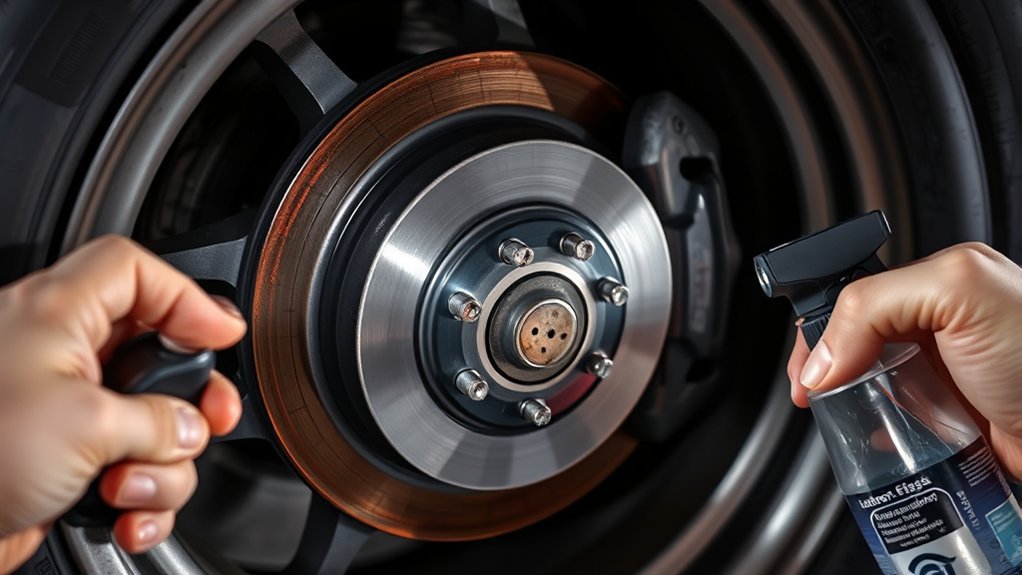
Cold, wet weather can make brake squeak appear suddenly. Moisture can leave light rust on the rotor overnight, and the first few stops may sound scratchy or squeaky. If the sound fades quickly and braking feels normal, cleaning and normal use may be enough.
Glazing is different. A glazed pad or rotor surface looks shiny and smooth because heat hardened the friction surface. Glazed brakes may squeal, feel less responsive, or create a burning smell after heavy braking. Cleaning through the wheel will not fix glazing; the pads and rotors need proper inspection.
| Sign | Likely Cause | Best Next Step |
|---|---|---|
| Light rust after rain | Moisture on rotor surface | Gentle stops; inspect if noise remains |
| Dusty caliper and rotor edge | Brake dust buildup | Clean with brake cleaner |
| Shiny pad face or glazed rotor | Heat glazing | Professional inspection |
| Deep rotor grooves | Worn pads or debris damage | Wheel-off brake service |
Troubleshooting Brake Squeak by Symptom
Use the sound pattern to decide whether cleaning is worth trying or whether the brakes need service.
| Symptom | Possible Cause | Try This First |
|---|---|---|
| Squeak only on the first few stops | Moisture or light surface rust | Drive gently and recheck |
| Squeak during light braking | Dust, vibration, pad material, or wear indicator | Clean and inspect pad thickness |
| Squeak while not braking | Wear indicator, debris, dragging pad, or dust shield contact | Inspect; schedule service if it repeats |
| Grinding | Severe pad wear or rotor damage | Stop normal driving; call a mechanic |
| Vibration or pulsing | Rotor variation, uneven deposits, or warped/damaged rotor | Professional inspection |
| Soft pedal or warning light | Hydraulic, fluid, sensor, or brake system fault | Do not rely on cleaning; inspect immediately |
When to Call a Brake Mechanic
Call a brake mechanic if cleaning does not stop the squeak or if the noise returns quickly. You should also schedule service if you see thin pads, deep rotor grooves, fluid leaks, uneven pad wear, a loose dust shield, or heavy rust.
Get help immediately if you notice any of these warning signs:
- Grinding at each stop.
- A soft brake pedal that sinks or feels spongy.
- Steering wheel shake, brake pedal pulsing, or the car pulling to one side.
- A brake warning light, ABS light, or brake fluid warning.
- Burning smell, smoke, or one wheel that feels much hotter than the others.
A technician can remove the wheel, measure pad and rotor thickness, inspect inner pads, check caliper movement, clean and lubricate hardware correctly, and confirm the braking system is safe.
Frequently Asked Questions
Can you spray WD-40 on brakes to stop squeaking?
No. Do not spray WD-40 Multi-Use Product, penetrating oil, silicone spray, or general lubricant on brakes. Brake pads and rotors need friction to stop the vehicle. Use a dedicated brake cleaner for cleaning, and use brake-rated lubricant only on specified non-friction contact points.
How do mechanics stop brakes from squeaking?
Mechanics inspect pad thickness, rotor condition, caliper slides, shims, clips, dust shields, and brake hardware. They clean parts, replace worn pads or rotors, lubricate the correct contact points, and bed in new pads when required.
Can I fix squeaky brakes myself without removing the tire?
You can safely try basic cleaning and visual inspection without removing the tire. You should not attempt pad replacement, rotor repair, caliper slide service, or blind lubricant application through the wheel. If cleaning does not solve the noise, the wheel needs to come off for a proper inspection.
Will brakes eventually stop squeaking?
Sometimes. Brakes may quiet down if the squeak comes from moisture, light surface rust, or new pads bedding in. Brakes usually will not stop squeaking on their own if the cause is worn pads, glazed surfaces, loose hardware, rotor damage, or contamination.
Is it safe to drive with squeaky brakes?
A light squeak after rain may be harmless, but repeated squeaking should be inspected. Do not keep driving normally if the sound becomes grinding, the pedal feels soft, the car pulls, braking feels weak, or any brake warning light appears.
Can brake cleaner damage brakes?
Brake cleaner is made for brake parts, but it can still damage paint, some plastics, rubber, coatings, or finishes depending on the formula. Follow the label, use it on cool parts, avoid overspray, and let it evaporate fully before driving.
Conclusion
You can often reduce squeaky brakes without removing the tire by cleaning visible brake dust, checking for obvious pad and rotor problems, and taking a gentle test drive after the cleaner fully evaporates. Keep the fix simple: brake cleaner for cleaning, a flashlight for inspection, and no lubricant on friction surfaces. If the squeak keeps coming back, changes to grinding, or comes with vibration, pulling, soft pedal feel, or warning lights, the safe next step is a proper wheel-off brake inspection.
Sources
- CRC Industries Brakleen Pro-Series Brake Parts Cleaner — supports brake-cleaner use, no-residue drying, and safety precautions.
- GOV.UK MOT Inspection Manual: Brakes — supports brake pad wear indicator, pad contamination, and dangerous wear thresholds.
- WD-40 Company Safety Data Sheets — supports checking product-specific safety sheets and not substituting general lubricants for brake cleaning.
- CDC/ATSDR Phosgene Medical Management Guidelines — supports the warning about chlorinated hydrocarbons and welding/high-heat exposure.
- Deep Learning for Brake Squeal: Vibration Detection, Characterization and Prediction — supports the explanation that brake squeal is related to friction-brake vibration and noise generation.
