

Rivian R1T and R1S vehicles use regenerative braking automatically when you lift off the accelerator. The drive motors resist the vehicle’s motion, slowing it while returning some energy to the battery. When regenerative braking is not enough, you still use the brake pedal normally. Rivian also uses Regenerative Braking Assist to help keep deceleration consistent when regen is limited.
Quick Answer
Rivian regenerative braking starts when you lift off the accelerator, using the electric motors to slow the vehicle and recover energy. The brake pedal remains available whenever you need more stopping force. Depending on the R1 model year and configuration, you can also adjust Brake Regen between Standard, High, and Low settings.
Key Takeaways
- Rivian regenerative braking happens automatically when you lift off the accelerator pedal.
- The drive motors slow the vehicle while recovering energy that would otherwise be lost as heat.
- Rivian documents Standard, High, and Low Brake Regen settings, although availability varies by model year, configuration, and drive mode.
- Regenerative Braking Assist can add supplemental braking to help keep lift-off deceleration consistent when regen is limited.
- Regen can be reduced when the battery is cold, fully charged, or almost fully charged, so you must always be ready to use the brake pedal.
- Vehicle Hold helps bring the R1 to a stop and keep it stationary, creating the one-pedal driving behavior many owners notice.
What Is Regen Braking in Rivian?

Regenerative braking uses an electric vehicle’s drive motors in reverse: instead of using electrical energy to create motion, the motors resist the vehicle’s motion and recover some of that energy as electricity.
In a Rivian R1T or R1S, this process starts automatically when you lift your foot off the accelerator pedal. Rivian’s MY2025–2026 R1S Owner’s Guide says this captures energy, increases range, and reduces wear on the brake pads.
This is different from simply coasting. As you lift farther off the accelerator, the vehicle can slow noticeably. You can therefore control much of your speed by smoothly changing accelerator position instead of constantly moving your foot between two pedals.
The National Highway Traffic Safety Administration describes regenerative braking in the same general way: an electrified vehicle’s motor can slow the vehicle while capturing energy that a conventional braking system would otherwise lose as heat.
The important distinction is simple: normal Rivian regen begins with accelerator lift-off. The brake pedal remains your direct control whenever you need additional or immediate stopping force.
How Do Rivian Regen and Friction Brakes Work Together?
Rivian uses regenerative braking for much of the deceleration you feel after lifting off the accelerator. The conventional braking system remains available through the brake pedal for stronger stopping, sudden stops, low-regen conditions, or any situation where you need more braking than accelerator lift-off provides.
Current R1 vehicles also use Regenerative Braking Assist. Rivian describes it as an automatically enabled feature that helps maintain more consistent deceleration by augmenting regenerative braking when needed. The driver’s power gauge can show a combined deceleration value that includes regenerative braking and supplemental braking from this assist feature.
That is more precise than saying every brake-pedal press first activates regen and then blends in friction braking. Rivian’s current owner documentation specifically identifies accelerator lift-off as the trigger for regenerative braking and tells you to press the brake pedal when you need to slow or stop the vehicle.
Warning: Never depend on regenerative braking as your only way to stop. Regen strength can change with battery temperature, state of charge, speed, vehicle conditions, and system status. If the vehicle is not slowing as expected, use the brake pedal immediately.
Regenerative Braking Assist also has an important limitation: according to Rivian’s current R1 guide, the assist feature is unavailable while towing a trailer. That does not mean regenerative braking itself is switched off; it means you should not expect Regenerative Braking Assist to supplement it while towing.
Rivian Brake Regen Settings: Standard, High, and Low
You can find Rivian’s Brake Regen setting under Drive Modes > Brake Regen on the center display. Current MY2025–2026 R1 documentation lists three levels:
| Standard | Moderate regenerative braking. It is the default setting for most drive modes. |
| High | Stronger regenerative braking. The vehicle slows faster after accelerator lift-off and can capture more energy. High is not available on MY2025 and MY2026 Dual Standard vehicles. |
| Low | Limited regenerative braking. Rivian lists Low as the default Brake Regen setting for Snow and Soft Sand modes. |
Note: Brake Regen availability can vary with model year, vehicle configuration, drive mode, and software version. Check the Owner’s Guide displayed for your exact Rivian rather than assuming every R1 has the same menu choices.
[Products Worth Considering]

This car emergency kit keeps essential roadside tools organized in a durable, portable bag so you can respond quickly during common driving emergencies. It includes battery jumper cables, a bright LED headlight, first aid supplies, a tire pressure gauge, and safety essentials like gloves and an emergency poncho. Designed for trunk or storage use, it helps you be prepared for dead batteries, minor malfunctions, and unexpected roadside issues.

Add style while helping protect your tire valve stems with handmade crystal rhinestone caps and a durable plastic insert. These caps resist corrosion and help keep out rain, snow, and muddy water, extending tire life. Textured non-slip design makes them easy to grip for quick install and removal when checking tire pressure.

Enjoy soothing heat with 3D shiatsu kneading, compression, rolling, and vibration to help relieve tired feet, toes, arches, ankles, and heels. Choose from 4 massage modes with 5 intensity levels, plus optional warmth, vibration, and a convenient remote with a safe 30-minute auto shut-off. Removable machine-washable sleeves make it easy to keep hygienic, and the spacious design fits up to men's size 12.
What Does One-Pedal Driving Feel Like in a Rivian?
Rivian’s lift-off regeneration creates the one-pedal driving behavior many EV drivers like. Instead of completely releasing the accelerator whenever you want to slow, you gradually ease off it. The farther you release it, the more deceleration you can feel within the available regen limit.
With practice, you can use the accelerator to manage both speed and slowdown through much of normal traffic. This can reduce how often you need to move your foot to the brake pedal, although the brake pedal should always be used whenever more stopping force is needed.
Vehicle Hold completes much of the one-pedal experience. Rivian says Vehicle Hold can bring the vehicle to a stop and keep it stationary without you needing to keep the brake pedal pressed. If you lift off the accelerator without braking, the R1 can slow and stop, after which Vehicle Hold keeps it in place when the feature is available.
- Ease off the accelerator gradually when approaching slower traffic or a stop.
- Use a higher available regen setting if you prefer stronger lift-off deceleration.
- Keep your foot ready for the brake pedal because regen strength is not constant in every condition.
One-pedal driving normally feels strongest in urban and stop-and-go traffic. New Rivian drivers may need a little time to learn how much accelerator release produces the desired slowdown.
When Is Rivian Regen Braking Limited?
Regenerative braking cannot always provide the same deceleration. Rivian specifically warns that regen may be reduced temporarily when the battery is cold, fully charged, or almost fully charged.
A full battery has little room to accept additional recovered energy. A cold battery can also be limited in how quickly it accepts energy until the pack reaches a more suitable operating temperature.
Rivian’s power-gauge documentation also notes that environmental conditions and vehicle-system faults can restrict regenerative braking. In some limited-regen situations, the effect can be more noticeable at higher speeds.
- Cold battery: Regen may temporarily decrease until battery conditions improve.
- Full or nearly full battery: There may be less capacity available to accept recovered energy.
- Vehicle or system limitation: The driver display may indicate reduced regenerative-braking capability.
- Regenerative Braking Assist unavailable: Consistent lift-off deceleration may be harder to maintain, including while towing.
- Strong or emergency stopping: Use the brake pedal rather than trying to rely on lift-off regen alone.
Rivian’s driver display can alert you when regeneration is limited. Treat a change in lift-off deceleration as a signal to increase following distance and be prepared to brake normally.
How Should You Use Regen in Rain, Snow, and Low Traction?
You do not need to select lower regen simply because the pavement is wet. Rivian’s MY2025–2026 guide recommends All-Purpose mode for normal on-road conditions, including rainy weather.
Snow, slush, and ice are different. Rivian’s Snow mode uses a more relaxed accelerator response and reduced regenerative braking to give you more precise control on low-grip surfaces.
Soft Sand mode also uses reduced regenerative braking as part of its traction and handling calibration for deep sand.
Pro Tip: Use Rivian’s drive mode designed for the surface instead of choosing a regen level based on a general rule. All-Purpose is intended for normal road driving, including rain, while Snow mode is specifically calibrated for snow, slush, and ice.
[Products Worth Considering]

Secure your parked vehicle quickly with AFA Tooling 4T rubber wheel chocks in a 4-pack for two dual-wheel sets. The ribbed design and textured base grip fast without pounding, so you can chock tires on trailers, RVs, ATVs, and work vehicles with confidence. EZ rustproof handles with rope ties keep the pair together for easy placement and removal, while nylon-reinforced rubber stands up to dirt, ice, salt, and harsh weather.

The Tymate TM12 RV TPMS delivers real-time tire pressure and temperature monitoring with a stable 433Hz display for safer long-distance driving. It supports simultaneous monitoring across vehicle and trailer zones, includes six alarm modes for pressure, temperature, leakage, battery, and signal loss, and features easy DIY installation with auto calibration. Power is supplied via USB-C charging or solar recharging, with a wide 0–144 PSI range and up to 50 ft signal coverage for RVs and towable trailers.
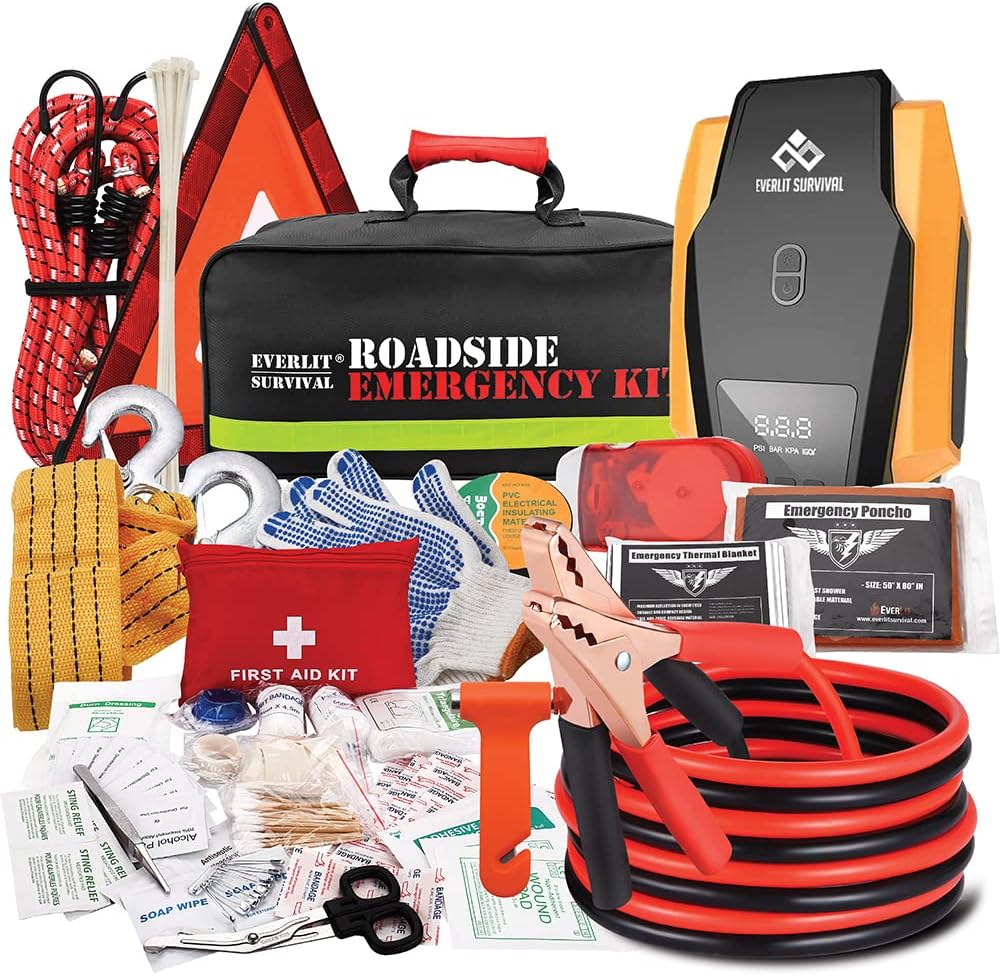
The Everlit Road Guardian emergency kit is designed for roadside breakdowns, combining essential safety gear and roadside tools in one compact bag. It includes a digital 12V auto tire inflator with preset and auto shutoff, plus 12-foot 8-gauge jumper cables to get you moving again. You also get a full 108-piece first aid kit, reflective warning tools, safety gloves, and emergency convenience items for safer travel.
Brake Lights, ABS, Vehicle Hold, and the Parking Brake
Regeneration is only one part of the R1 braking system. Several other systems work alongside it.
Brake Lights During Regen
Rivian says the brake lights automatically illuminate during regenerative braking when the vehicle slows, helping drivers behind you recognize the deceleration even when your foot is not on the brake pedal.
Anti-Lock Braking System
When you press the brake pedal during a sudden stop or on a slippery surface, the anti-lock braking system helps prevent the wheels from locking. This helps you maintain steering control while braking.
Vehicle Hold
Vehicle Hold can bring the vehicle to a stop and keep it stationary without you continuously pressing the brake pedal. Rivian’s current guide says that after the vehicle remains stopped through Vehicle Hold for 10 minutes, it automatically shifts into Park and engages the electronic parking brake.
Electronic Parking Brake
When the vehicle is stopped and placed in P (Park), the electronic parking brake engages to help keep the vehicle from rolling.
Warning: Rivian’s current R1 guide provides a separate emergency-deceleration procedure if the normal brakes do not work properly: press and hold the P (Park) button to decelerate. This is an emergency procedure, not a substitute for normal braking. Review the Owner’s Guide for your exact model year so you know the procedure before an emergency occurs.
How Can You Maximize Rivian Regen Efficiency?
The best way to recover energy is to drive smoothly and give the vehicle time to decelerate through regeneration instead of repeatedly accelerating hard and then braking hard.
- Look farther ahead. Ease off the accelerator early when traffic or a stop is approaching.
- Modulate the pedal smoothly. Gradual accelerator changes make it easier to stay within available regenerative braking.
- Use High when appropriate and available. Rivian says High produces stronger regenerative braking and captures more energy than Standard.
- Warm a cold battery when practical. Rivian’s 2026 winter-performance guidance recommends plugging in and preconditioning in cold conditions so the vehicle can warm the battery before driving.
- Follow your vehicle’s charging guidance. Do not use a blanket rule that says every Rivian should avoid 100% charge.
A full or almost-full battery can temporarily reduce regenerative braking. However, battery-management instructions vary. For example, Rivian’s MY2025–2026 guide tells owners of Dual Standard vehicles to charge to 100% at least once every two weeks or every 500 miles (800 km) to support optimal range estimation, charging speed, and regenerative braking.
In other words, follow the charge recommendations shown for your exact battery configuration. Do not sacrifice required battery calibration just to keep maximum regen available immediately after charging.
[Products Worth Considering]
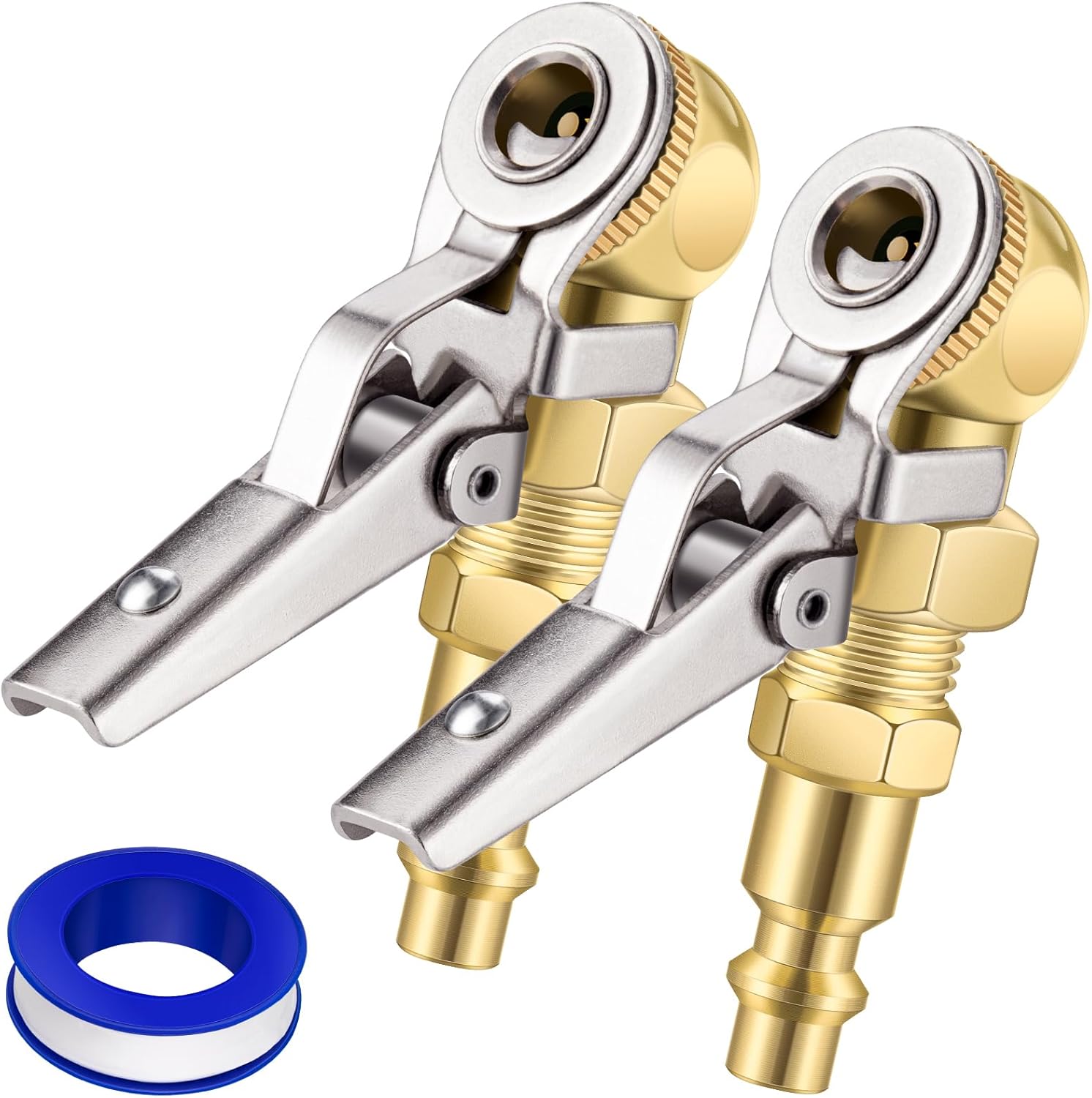
EVOULTES 2-pack closed ball tire chucks lock onto Schrader valves to help you inflate tires hands-free. The set includes both chucks with quick plug compatibility and a 2-way connection approach for easy setup to your air line or compressor. Durable metal construction supports reliable use for cars, trucks, RVs, bikes, and other Schrader-valve tires up to 250 PSI.

Protect your Tesla during lifting with durable rubber jack pads designed to cushion pressure and help safeguard the battery and chassis. The non-slip, plug-and-play puck set fits Tesla Model 3/Y/X/S for safe, secure jacking. Each pack includes a portable storage case for cleaner trunk organization.

AstroAI’s heavy-duty digital tire pressure gauge delivers quick, accurate readings with 0.1 increments and a secure valve-stem seal. It features a green backlit LCD and built-in flashlight for easy use in low light, plus an ergonomic non-slip stainless-steel design. The wide 0–230 PSI range works across common vehicle tires, with unit selection and an auto shut-off to save battery.
Does Regenerative Braking Reduce Brake Wear?
Yes. Because lift-off regenerative braking can handle a significant share of routine deceleration, the friction brake pads and rotors may be used less often than they would be in a comparable vehicle without strong regen. Rivian specifically says regenerative braking saves wear and tear on the brake pads.
That does not make the friction braking system maintenance-free. The brake pedal, pads, rotors, ABS, hydraulic components, and parking brake remain safety-critical systems. Rivian’s current R1 guide recommends overall vehicle maintenance every 7,500 miles (12,000 km), while actual service needs depend on vehicle condition and the guidance shown by Rivian.
If you notice unusual brake noise, vibration, warning messages, a change in pedal feel, or unexpectedly weak stopping performance, request service rather than assuming regenerative braking is responsible.
Frequently Asked Questions
Does regenerative braking use the actual brake pads?
The regenerative part does not rely on the brake pads. It uses resistance from the electric drive motors to slow the vehicle and recover energy. Rivian’s conventional braking system is still available through the brake pedal, and Regenerative Braking Assist can add supplemental braking when needed.
What are the downsides of regenerative braking?
Regen strength is not constant. It may decrease with a cold, full, or almost-full battery, and strong lift-off deceleration can take time for a new driver to learn. You still need conventional brakes for situations where regen cannot provide enough stopping force.
Can you turn regen braking off in a Rivian?
The current MY2025–2026 R1 Owner’s Guide lists Standard, High, and Low Brake Regen settings but does not list an Off setting. Available choices vary by configuration and drive mode, so check the controls and Owner’s Guide for your exact vehicle.
How does regenerative braking work in a Rivian?
When you lift off the accelerator, the electric drive motors resist the vehicle’s motion. That resistance slows the R1 while converting some kinetic energy into electrical energy that can return to the battery.
Why does my Rivian regen suddenly feel weaker?
Common reasons include a cold battery or a battery that is fully or almost fully charged. Environmental conditions and vehicle-system limitations can also reduce regenerative braking. Watch the driver display and use the brake pedal whenever lift-off deceleration is weaker than expected.
Do Rivian brake lights come on during regenerative braking?
Yes. Rivian says the brake lights automatically illuminate during regenerative braking when the vehicle slows, warning following drivers even though you may not be pressing the brake pedal.
Does towing disable regenerative braking in a Rivian?
Rivian’s current R1 guide says Regenerative Braking Assist is unavailable while towing a trailer. It does not say that regenerative braking itself is disabled. Expect the assist feature that helps maintain consistent deceleration to be unavailable while towing.
Conclusion
Rivian braking is easiest to understand as several systems working together. Lift off the accelerator and the motors provide regenerative braking while recovering energy. Use the brake pedal whenever you need more stopping force. Regenerative Braking Assist helps keep deceleration consistent when available, while Vehicle Hold, ABS, and the electronic parking brake handle other parts of stopping and holding the vehicle.
The amount of regen you feel can change with battery temperature, charge level, drive mode, vehicle configuration, and system conditions. Learn the pedal response, follow the settings and charging guidance for your exact Rivian, and always be ready to use the conventional brakes when regenerative braking is reduced.
Sources
- Rivian R1S Owner’s Guide, Model Year 2025–2026 — regenerative braking, Brake Regen settings, Regenerative Braking Assist, brake lights, ABS, Vehicle Hold, emergency deceleration, and charging guidance.
- Rivian R1T Owner’s Guide, Model Year 2025–2026 — R1T operating and braking-system guidance.
- Rivian: A Guide to Winter Performance — battery temperature, cold-weather operation, plugging in, and preconditioning guidance.
- NHTSA: Electric and Hybrid Vehicles — general regenerative-braking principles and the role of conventional brakes.
- Rivian Service — official service and vehicle-care information.
