
Why Do EV Tires Wear Out Faster?
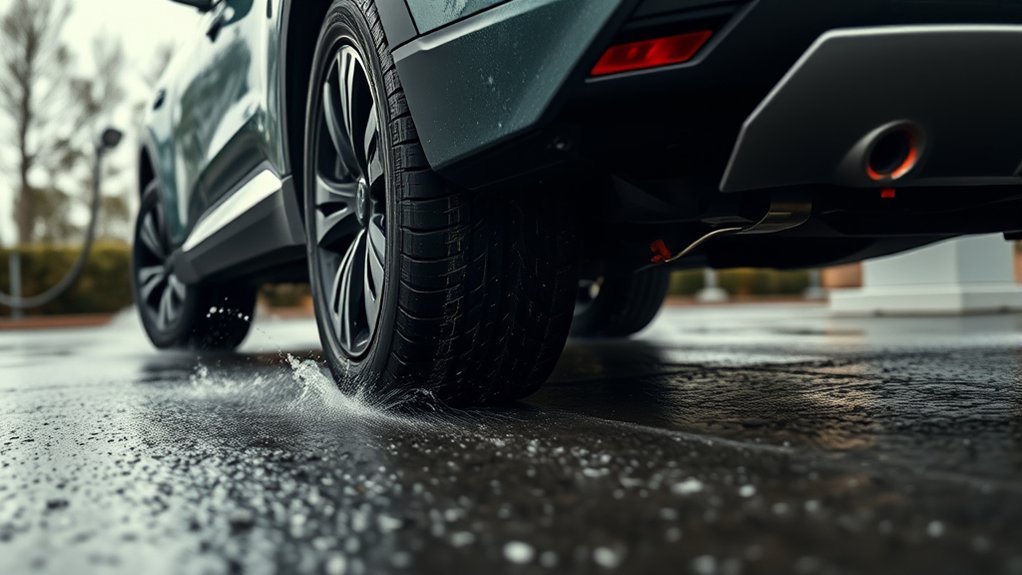
EV tires wear out faster because you’re asking them to handle more weight, more torque, and often less forgiving tread designs. Battery mass increases contact pressure, while instant electric torque can micro-slip the tread before it fully settles. Low-profile, larger-wheel setups also amplify wear from small alignment errors, especially at the shoulders. Aggressive braking and underinflation add more scrubbing. If you keep going, you’ll see exactly how to reduce that extra wear.
Key Takeaways
- EV tires wear faster because heavier battery packs increase load and contact pressure on the tread.
- Instant electric torque causes micro-slipping, which scuffs the tire surface during hard acceleration.
- EV tire compounds often favor range and low noise over maximum abrasion resistance.
- Large wheels and low-profile tires are more sensitive to alignment errors and uneven wear.
- Underinflation, poor alignment, and aggressive braking all increase tire wear, so regular maintenance matters.
[Products Worth Considering]

Monitor tire tread wear with a smart, color-coded depth gauge that shows clear condition ranges at a glance. The bar is range marked for fast, easy readings, helping you maintain safer traction and performance. Each gauge is portable with a pocket clip, and the set includes 20 units for daily use and sharing.

Measure tire tread depth quickly and accurately with this LUMITECO dial gauge that reads in 1/32" increments up to 14/32". The color-coded green/yellow/red zones make it easy to judge tire wear and know when replacement is needed. A rugged, compact design with a protective pouch helps keep the gauge ready for use on cars, trucks, motorcycles, and more.

The Trivd Frol 1/2" air impact wrench delivers high performance torque up to 1500 ft-lbs with a twin hammer impact mechanism for strong, balanced blows. It features an ergonomic grip, compact lightweight design, and quick-stop control with 3 forward speeds up to 8000 RPM plus a reverse speed. Built for demanding automotive repair and tire shop work, the rear exhaust helps keep debris away from the surface.
Why EV Tires Wear Out Faster
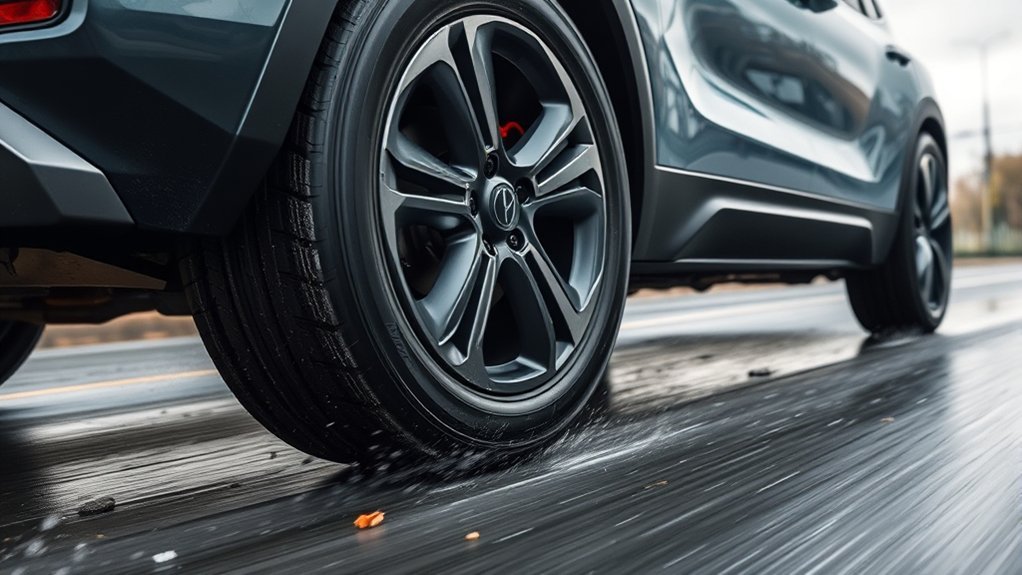
EV tires often wear out up to 20% faster than conventional tires because they’re engineered with rubber compounds and tread patterns that prioritize range and low noise, which can reduce wear resistance.
In your electric vehicle, added battery mass increases vertical load on each contact patch, so tire wear rises as tread blocks flex and heat build.
You also see faster degradation when the tread compound sacrifices abrasion resistance for efficiency.
If you keep pressures low or alignment off, you increase shoulder and inside-edge wear, especially with excessive camber.
Your driving style matters too: hard launches and abrupt stops raise shear forces across the tread, accelerating loss.
To limit premature wear, you should maintain correct inflation, verify alignment, rotate tires on schedule, and drive smoothly.
These controls won’t eliminate tire wear, but they can improve tread life and reduce operating cost.
How EV Instant Torque Scrubs Tires
Because electric motors deliver full torque almost instantly, your tires can break traction slightly the moment you accelerate, creating micro-slipping at the contact patch. That brief slip doesn’t feel dramatic, but it repeatedly scuffs the tread against the pavement and raises wear rates.
With instant torque, you load the tire before it can fully settle into steady rolling, so the rubber shears instead of simply turning. Over time, that repeated scrubbing accelerates tread loss and can shorten tire life by as much as 20% versus conventional vehicles.
Instant torque loads the tire before steady rolling begins, causing shear that speeds tread wear over time.
You’ll also see uneven wear, often concentrated on the outer edges, because high-acceleration events don’t distribute force perfectly across the contact patch. If you use gentle throttle application and avoid hard launches, you reduce slip, lower heat buildup in the tread, and preserve tire longevity.
In EVs, driving style directly changes how fast the tires lose usable rubber.
How Heavy Batteries Increase Tire Load
When you add a large battery pack, your EV can weigh about 1,000 pounds more than a comparable ICE vehicle.
That extra mass increases the static load on each tire. The higher load raises contact pressure at the tread, so you’ll see faster wear under the same driving conditions.
In heavy EVs, that added stress can push tire wear toward roughly 20% faster than in lighter vehicles.
Battery Weight Load
Even with a low center of gravity, a large EV battery can add roughly 1,000 pounds to the vehicle’s mass, increasing the load each tire must carry during normal driving. This battery weight load raises contact pressure, so you’ll see faster tire wear than in lighter ICE vehicles.
As the added mass shifts force into the tread, it can also distort wear patterns, especially on inner edges.
- Higher static load increases tread deformation
- Greater force during cornering raises scrubbing
- Uneven distribution can accelerate inner-edge wear
When you combine that mass with instant torque, you can measure about 20% faster tire wear overall.
That means you need closer inspections and more frequent rotations to manage the extra demand efficiently.
Higher Tire Stress
EV batteries typically add about 1,000 pounds to the vehicle, and that extra mass raises the static load each tire must carry every mile you drive.
You increase tire stress further when you accelerate, because EV motors deliver peak torque instantly and transfer higher force into the contact patch. That combination raises tread shear and can push wear rates up by roughly 20% versus lighter vehicles.
Because the battery sits low in the chassis, you also load some tires more than others, which can wear the inner and outer edges unevenly.
To control this, you need robust EV tires with stiffer carcasses, reinforced sidewalls, and heat-resistant compounds that can handle sustained load without losing grip or wearing prematurely.
Why Wheel Size and Alignment Matter
Larger wheels with low-profile tires often wear faster because they reduce sidewall flex and cushioning, so any alignment error shows up more quickly at the tread.
When you choose a big wheel package, you’re tightening the margin for wheel alignment, and tire wear becomes more sensitive to camber and toe deviation. Even a small shift from an ideal camber near -1.2 to -1.5 degrees can load one shoulder harder than the other, especially under EV torque and mass.
Big wheel packages narrow alignment margins, making tire wear far more sensitive to camber and toe deviation.
- Check wheel alignment regularly, not just after impacts.
- Use adjustable camber and toe arms when settings drift.
- Correct errors early to slow tire wear and preserve safety.
If you ignore misalignment, you’ll accelerate uneven loading and shorten service life.
Precision matters because EVs amplify small errors, and the tread responds immediately.
How Toe and Thrust Angle Cause Feathering
When toe is out of spec, the tire is dragged slightly across the road surface instead of rolling straight, and that lateral scrub wears the tread into feathering: one edge of each tread block feels smooth and rounded while the opposite edge stays sharper.
In your EV, improper toe alignment creates this angled wear because the tire slips a little on every rotation instead of tracking cleanly. You’ll usually see irregular wear patterns first at the tread blocks, and those patterns can cut tire life and degrade grip.
If the thrust angle is off, the vehicle doesn’t track straight, so you keep making small steering corrections. That constant correction adds more lateral force and makes feathering worse.
You can prevent most of this with regular alignment checks and precise adjustments, which keep the wheels tracking in line and help your tires wear evenly, perform consistently, and last longer under EV torque.
Why Low-Profile EV Tires Wear Faster
When you run low-profile EV tires, reduced sidewall flex cuts cushioning and transmits more impact into the tread.
You also get greater alignment sensitivity, so small camber or toe errors can translate into uneven wear much faster.
Under EV torque and heavier loads, the tire scrubs more across the contact patch, which accelerates tread loss.
[Products Worth Considering]

This professional wheel and rim cleaning brush set lifts brake dust, grime, and dirt with soft, scratch-free microfiber and synthetic wool fibers. The rim brush bends up to 360 degrees for easy access to hard-to-reach areas around spokes, lips, and faces. Ideal for thorough cleaning of car, truck, motorcycle, bicycle, RV, and more wheel and tire surfaces.

This 3-piece wheel brush set makes it easy to clean wheels and tires with soft, scratch-free brushes designed for lifting brake dust and grime. The flexible rim brush bends up to 360 degrees to reach hard-to-access areas for a thorough clean, while the comfortable grip helps control during detailing. A dedicated detailing brush supports gentle cleaning for sensitive surfaces, including interior use.

The Ziopetru adjustable magnetic wheel alignment tool helps you check and restore camber and caster positioning after removing and reinstalling undercarriage components. With a clear leveling/bubble measurement system and an easy zeroing adjustment knob, it supports precise horizontal angle checking. The strong magnetic base mounts to metal surfaces for convenient use at home on cars, motorcycles, trucks, vans, and SUVs.
Reduced Sidewall Flex
Low-profile EV tires have stiffer sidewalls, so they flex less over bumps, potholes, and other road imperfections. That reduced compliance means your tires wear the tread faster because the casing can’t dissipate impact energy as effectively. You feel more of the road force, and the tread takes the load directly.
- Less sidewall deflection increases tread stress.
- Larger wheels reduce cushioning and amplify impacts.
- Research shows about 20% faster wear than standard tires.
Because EVs also carry heavy battery packs, the rigid tire structure can concentrate forces on the inner and outer edges, worsening wear patterns.
In practice, you get less shock absorption, more abrasion, and a shorter service life from the tire design alone.
Greater Alignment Sensitivity
Even a slight alignment error can wear EV tires down quickly, because low-profile designs have less sidewall height to absorb misalignment forces.
When your alignment drifts, low-profile tires react fast: their short sidewalls flex less, so camber and toe errors load the tread edges harder.
On a heavy EV, that extra load raises contact stress and accelerates uneven wear.
Because these tires spread more rubber on the road, small geometry mistakes affect a larger footprint, making edge wear more pronounced.
You can’t rely on the tire to compensate for poor setup.
Regular alignment checks matter, since even minor deviations can shorten service life and force earlier replacement.
Keeping alignment within spec protects tread durability and helps your EV tires wear more evenly.
Higher Tread Scrubbing
Higher tread scrubbing is another reason EV tires, especially low-profile designs, wear out faster. When you corner hard, your tire can’t flex much, so the tread slides instead of rolls cleanly. That scrubbing grows with instant torque, because rapid launches create micro-slipping at the contact patch.
Low-profile tires also run on larger wheels, so they absorb less impact from road irregularities and transfer more force into the tread.
- Less sidewall flex increases scrub during turns
- Instant torque raises micro-slip and heat
- Larger contact patches boost friction and wear
The added battery weight of your EV increases load, raising contact stress and accelerating wear further.
Over time, these factors combine to make low-profile EV tires degrade faster than standard tires.
How Regenerative Braking Affects Tires
Regenerative braking in EVs recovers energy during deceleration, which can reduce brake pad wear. However, it can also increase tire wear if the braking force is applied abruptly.
When you use regenerative braking, the motor reverses load and transfers torque through the contact patch. Any sharp deceleration can mimic friction braking stress. That sudden torque shift can trigger micro slipping, where the tires momentarily lose traction and scrub the road surface.
Over time, that scrubbing accelerates tread removal and creates wear patterns similar to conventional braking. In tests, aggressive regenerative braking has produced roughly 10-20% more tire wear than gradual deceleration.
You can limit this effect by applying regenerative braking smoothly, because controlled deceleration maintains traction while still recovering energy efficiently.
In short, regenerative braking helps efficiency, but if it’s too abrupt, it increases tire wear through torque spikes, micro slip, and surface scrubbing.
Driving Habits That Reduce EV Tire Wear
You can reduce EV tire wear by accelerating smoothly and braking gradually, which lowers peak slip and shear forces at the contact patch.
You should also apply regenerative braking progressively rather than abruptly, since harsh deceleration increases tread abrasion.
If your EV offers Chill Mode, use it to cap acceleration demand and reduce wear rates over time.
Smooth Acceleration
Smooth acceleration reduces immediate torque application, which limits tire scrubbing and lowers wear, especially on heavy EVs.
When you apply the throttle gently, you improve traction and cut the abrasive force that drives tire wear. Rapid launches can create micro slipping, which increases heat and accelerates rubber loss on the contact patch.
A steady rise in speed keeps the tire loaded more consistently, so you get more uniform performance over time. Eco-driving or chill mode can reinforce this behavior and may extend tire life by thousands of miles.
- Apply throttle progressively
- Avoid sudden full-power starts
- Maintain a gradual speed increase
Gentle Braking
Gentle braking reduces tire wear by limiting surface scrubbing and the strain imposed on the contact patch, which helps EV tires last longer under repeated deceleration.
When you apply gentle braking, you lower peak slip forces and keep tread loading more uniform, so your wear tires less aggressively. Smooth regenerative braking also recovers energy while reducing reliance on friction brakes, which helps preserve tread depth.
In contrast, abrupt stops transfer higher shear to the tire shoulders and can create uneven edge wear, accelerating replacement. If you decelerate gradually, you can improve tire life by up to 20% and maintain more stable handling.
This approach also reduces heat buildup, supports consistent grip, and improves ride comfort without compromising control.
Chill Mode Driving
Chill Mode limits throttle sensitivity, so the EV doesn’t surge forward with the instant torque that often scrubs tread and overloads the contact patch, especially in heavier vehicles.
When you select Chill Mode, you reduce aggressive launches, lower tire wear, and keep load transfer more controlled. That smoother input matters because rapid starts and hard braking accelerate tread loss and can shorten tire life from 40,000 miles to 20,000 miles in some cases.
- Softer throttle maps cut wheelspin and abrasion.
- More gradual acceleration reduces tire scrubbing.
- Consistent driving can improve efficiency and range.
If you drive in Chill Mode regularly, you’ll usually preserve tread depth longer and maintain more uniform wear across all four tires.
EV Tire Pressure and Rotation Basics
Keeping your EV’s tires at the manufacturer’s recommended pressure is critical, because underinflation increases wear on the outer edges while overinflation concentrates wear in the center. You should check tire pressure regularly and keep it within spec to preserve traction, handling, and efficiency, all of which support range.
Because EVs carry more mass and deliver high torque, you need to inspect tires more often than you might on a conventional car. You should also rotate tires every 5,000 to 7,500 miles to distribute load evenly and expose alignment problems early. If you skip rotation, wear can become asymmetric and reduce tire life by as much as 20%.
Consistent tire pressure checks and scheduled rotate tires service help you control wear patterns, maintain predictable handling, and extend tread life. In practice, disciplined maintenance is the simplest way to limit avoidable degradation.
How To Choose Longer-Lasting EV Tires
When you’re choosing EV tires, prioritize models engineered for electric-vehicle loads and torque, since standard tires often wear too quickly under that stress.
You should favor EV specific options such as the Michelin Defender2, because their construction supports higher vehicle mass and instant torque more effectively.
Examine tread compounds and casing strength; technologies like Michelin’s Evertread™ improve wear resistance by reducing abrasion under repeated acceleration and braking.
Select tires with lower rolling resistance to limit energy loss and heat buildup, which can slow degradation and improve efficiency.
Also evaluate tread patterns designed for even wear and reliable grip, since aggressive torque can scrub tread unevenly.
Check the manufacturer’s warranty and tread life rating before buying, because those numbers help you compare real-world longevity objectively.
- EV specific fitment
- lower rolling resistance
- Warranty and tread life ratings
Frequently Asked Questions
How Long Do Tires Last on an EV?
You can expect EV tires to last about 20,000 to 50,000 miles, depending on tire composition, driving habits, inflation, alignment, and load. If you drive aggressively, they’ll wear sooner than that range.
Do EVS Wear Out Tires Quicker?
Yes, you’ll usually wear tires quicker in an EV because tire composition, weight distribution, driving habits, and regenerative braking all affect load and abrasion. Smooth inputs and proper pressure can noticeably improve lifespan.
What Happens to EV After 8 Years?
After 8 years, your EV often loses 20%–30% of range. You’ll notice battery degradation, more tire wear, and possibly software updates or recalls; charging infrastructure stays useful, but reduced efficiency can limit trips and increase maintenance.
How to Make EV Tires Last Longer?
You can make EV tires last longer by keeping pressure correct, rotating them often, checking alignment and tread, choosing EV-specific tires, and using smooth driving habits. These tire maintenance tips reduce wear and improve durability.
Conclusion
You can make EV tires last longer, but the physics is always working against you. The instant torque can shred tread like sandpaper on wet chalk, while heavy battery packs press the contact patch into the pavement like a loaded vice. If your alignment is off, toe and thrust angle can feather the shoulders fast. Keep pressures set, rotate regularly, and choose EV-rated tires, and you’ll dramatically slow the tire-gobbling grind.
[Products Worth Considering]

A concentrated tire and tube mounting compound designed to help simplify mounting rubber tires and tubes on passenger, semi truck, construction, and OTR applications. Its ultra-thick formula packs beads effectively and includes rust inhibitors to help protect against corrosion during use.

This professional wheel and rim brush kit makes it easy to lift brake dust, grime, and dirt from wheels and tires without scratching finishes. The brushes feature soft, metal-free wool heads and a flexible 360-degree rim brush design for reaching hard-to-clean areas. Includes multiple brush types plus accessories for thorough car, motorcycle, and general vehicle detailing.

Measure tyre tread depth precisely with a digital gauge that reads in both MM and inches, helping you monitor safe driving conditions. The large LCD screen is easy to operate, and the compact tool fits for cars, trucks, and motorcycles. It provides high accuracy with a 0-25.4mm range and includes a 1-year warranty for added peace of mind.

Related Articles
What Are Run-Flat Tires and How Do They Work?
Need a tire that keeps you moving after a puncture? Discover how run-flat tires work and why their hidden limits matter.
Read More
How to Stop Tires From Rubbing: 10 Clearance Fixes
Baffled by tire rub? Discover 10 proven clearance fixes that can save your setup—and find out which one actually works best.
Read More
How to Reduce Road Noise From Tires: 8 Proven Fixes
Muffle tire drone with 8 proven fixes that reveal the easiest ways to quiet your ride—and one overlooked step may surprise you.
Read More