Run-flat tires are built to give you temporary mobility after certain types of pressure loss. Instead of collapsing immediately when air escapes, they use reinforced construction to help support the vehicle long enough to reach a safer location or tire shop. They can reduce the need for a roadside tire change, but their speed, distance, repair, and replacement limits vary by tire and vehicle.
Quick Answer
Run-flat tires use reinforced sidewalls or another load-supporting structure to keep the tire from collapsing immediately after pressure loss. Many traditional run-flats allow roughly 50 miles of emergency travel at no more than 50 mph, but the exact limit depends on the tire, vehicle, load, damage, temperature, and manufacturer instructions.
Key Takeaways
- Run-flat tires are designed to support a vehicle temporarily after significant pressure loss rather than prevent punctures.
- Most modern passenger-car run-flats use reinforced sidewalls; support-ring systems use a separate internal load-supporting structure.
- About 50 miles at a maximum of 50 mph is a common emergency-mobility limit, but it is not universal. Always follow the tire sidewall and vehicle owner’s manual.
- A functioning TPMS is essential because a run-flat may not visibly look flat when pressure has dropped.
- Some run-flat punctures can be repaired, while others cannot. Repairability depends on the tire manufacturer’s rules, the damage, and how the tire was driven after pressure loss.
- Run-flats can reduce roadside exposure and eliminate the immediate need to install a spare, but they can cost more, ride more firmly on some vehicles, and offer fewer replacement choices.
What Are Run-Flat Tires?
Run-flat tires are engineered to keep carrying the vehicle for a limited period after a major loss of inflation pressure. Most modern passenger-car versions do this with reinforced sidewalls. Another design uses an internal support structure beneath the tread.
The purpose is controlled emergency mobility. Instead of immediately stopping to install a spare beside the road, you may be able to drive carefully to a safer location or service facility.
Run-flat technology does not make the tire puncture-proof. A nail, road hazard, impact, sidewall cut, or other damage can still disable the tire. The difference is that an eligible run-flat tire may retain enough structure to support the vehicle temporarily after inflation pressure is lost.
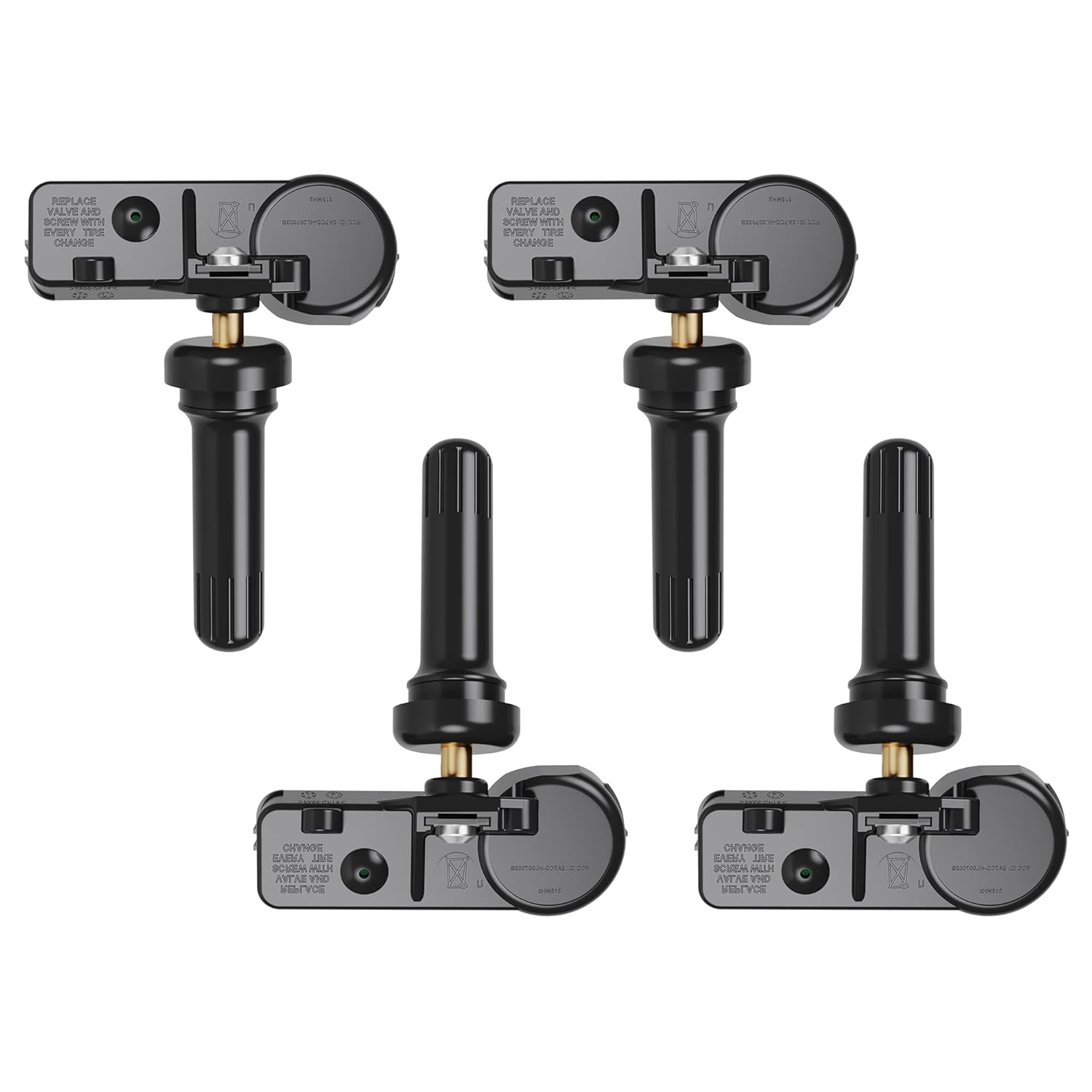
A functioning Tire Pressure Monitoring System (TPMS) is especially important with run-flat tires because a deflated run-flat may not look obviously flat from outside.
Many familiar run-flat systems publish an emergency limit of approximately 50 miles at no more than 50 mph. Bridgestone, Michelin ZP, Continental SSR, and Pirelli Run Flat products use limits around this figure. However, it is not a universal specification. Some newer extended-mobility products have shorter ranges, so the instructions for your exact tire and vehicle always take priority.
Note: “Run-flat” describes emergency mobility after pressure loss. It does not mean the tire is immune to punctures, impact damage, sidewall tears, bead damage, or wheel damage.
How Do Run-Flat Tires Work?
A normal pneumatic tire depends heavily on air pressure to hold its shape and carry the vehicle’s load. When a conventional tire loses most of its air, its sidewall can collapse between the wheel and the road.
A self-supporting run-flat tire adds stronger, heat-resistant sidewall construction. When pressure drops, those reinforced sidewalls temporarily carry more of the vehicle’s weight and help prevent the tire from immediately collapsing.
A support-ring system uses a separate structural element mounted around the wheel inside the tire. If inflation pressure disappears, the tire can rest on that support instead of relying entirely on the deflated sidewall.
The result is not normal tire performance. Steering, braking, ride quality, and heat buildup can change once the tire enters run-flat operation. That is why manufacturers impose speed and distance limits.
Your TPMS alerts you when inflation pressure has fallen significantly. Under U.S. federal requirements, TPMS is designed to warn drivers when a tire becomes substantially underinflated, but it does not replace regular pressure checks. You should still check cold tire pressure at least monthly using the vehicle manufacturer’s recommended pressure on the door placard or in the owner’s manual.
Warning: Run-flat capability is only temporary. If you feel unusual vibration, severe pulling, major handling difficulty, hear abnormal tire noise, see obvious structural damage, or the vehicle manufacturer tells you to stop, reduce speed and stop as soon as it is safe. A run-flat tire cannot protect you from every type of tire or wheel failure.
Self-Supporting vs. Support Ring Run-Flat Tires
Both systems provide temporary mobility after pressure loss, but they support the vehicle in different ways. Self-supporting tires use reinforced sidewalls, while support-ring systems rely on a separate internal load-supporting structure.
| Type | Load Method | Key Trait |
|---|---|---|
| Self-supporting | Reinforced sidewalls | Most common modern passenger-car approach |
| Support ring | Internal ring or support structure | Carries load when the tire loses pressure |
| Both | Temporary structural support | Require pressure-loss awareness and strict operating limits |
Neither design should be described as inherently more puncture-resistant simply because it is a run-flat. The technology is mainly intended to preserve mobility after pressure has been lost.
A properly functioning TPMS is important with either design. After any significant pressure-loss event, the tire should be professionally inspected before you assume it is safe to continue using.
[Products Worth Considering]

The Milton S-693 straight foot dual head air chuck is designed for accurate tire pressure checks and quick, secure valve-core engagement with lock-on threads on both ends. With a 1/4" FNPT connection and a maximum 150 PSI rating, it’s built for use on inner duals and common vehicle tires, including trucks and RVs.

The Tymate TM12 RV TPMS delivers real-time tire pressure and temperature monitoring with a stable 433Hz display for safer long-distance driving. It supports simultaneous monitoring across vehicle and trailer zones, includes six alarm modes for pressure, temperature, leakage, battery, and signal loss, and features easy DIY installation with auto calibration. Power is supplied via USB-C charging or solar recharging, with a wide 0–144 PSI range and up to 50 ft signal coverage for RVs and towable trailers.

TireJect Off-Road Tire Sealant Kit provides 5-in-1 sealing to help fix tread punctures up to 3/8", sidewall punctures up to 3/8", bead leaks, slow leaks, and minor dry rot on low-speed tires. It permanently seals with liquid rubber, recycled tire particles, and Aramid fibers, making it ideal for flats caused by thorns, nails, and screws. The included dispensing cap attaches to the valve stem for a no-mess installation, along with a metal valve core remover tool and valve stem cap. This kit is for off-road use only.
How Can You Tell if a Tire Is Run-Flat?
Check the tire sidewall rather than relying on appearance. Run-flat tires look similar to conventional tires, and brands use different markings.
Depending on the manufacturer, you may see terms or abbreviations such as RFT, RF, ROF, SSR, ZP, or the words RUN FLAT. Bridgestone also explains that some self-supporting tire sizes use an “F” before the rim-diameter designation, such as 225/40RF18.
If you are unsure, check the vehicle owner’s manual and the tire manufacturer’s documentation. Do not assume a stiff-looking low-profile tire is a run-flat.
Run-Flat Tires vs. Self-Sealing Tires
Run-flat and self-sealing tires solve different problems.
| Technology | What It Does | Main Limitation |
|---|---|---|
| Run-flat | Supports the vehicle temporarily after major pressure loss | Limited distance and speed after deflation |
| Self-sealing | Uses sealant inside the tire to close certain small tread punctures | Cannot seal every puncture or structural injury |
| Conventional tire | Relies on normal inflation pressure for support | Usually should not be driven after going flat |
Some drivers confuse these technologies because both address puncture-related inconvenience. A self-sealing tire aims to prevent or slow pressure loss from certain tread punctures. A run-flat tire is designed to remain temporarily drivable even after substantial pressure has already been lost.
[Products Worth Considering]

Steelman white tire marking crayons provide high-contrast, semi-permanent marks for repairing and inspecting tires and equipment. They write on wet or dry, smooth or coarse surfaces including rubber, metal, glass, and wood, making them ideal for puncture location and damage outlining. The lead- and zinc-free crayons resist weather and fading yet wipe away when you no longer need the marks.

The TYAMATE TM8 solar-powered wireless TPMS delivers real-time tire pressure and temperature monitoring with six alarm modes for safer driving. A vibrant color LCD display shows readings clearly while windshield mounting keeps it hands-free and easy to read. With a wide 0–87 PSI range, strong 433.92 MHz signal transmission, and quick sensor pairing, it’s ideal for RV, sedan, SUV, MPV, and truck use.

Monitor tire tread wear with a smart, color-coded depth gauge that shows clear condition ranges at a glance. The bar is range marked for fast, easy readings, helping you maintain safer traction and performance. Each gauge is portable with a pocket clip, and the set includes 20 units for daily use and sharing.
What Are the Pros and Cons of Run-Flat Tires?
The biggest advantage of run-flat tires is emergency mobility. If an eligible pressure-loss event occurs, you may be able to avoid stopping immediately on a highway shoulder or in another unsafe location.
They can also allow a vehicle manufacturer to omit a spare tire, freeing cargo space and eliminating the need to change a wheel at the roadside.
The tradeoffs are cost, availability, ride characteristics, and service restrictions. Comparable run-flat tires often cost more than conventional alternatives, and some sizes or original-equipment specifications may offer fewer replacement choices.
[Products Worth Considering]

AstroAI’s heavy-duty digital tire pressure gauge delivers quick, accurate readings with 0.1 increments and a secure valve-stem seal. It features a green backlit LCD and built-in flashlight for easy use in low light, plus an ergonomic non-slip stainless-steel design. The wide 0–230 PSI range works across common vehicle tires, with unit selection and an auto shut-off to save battery.
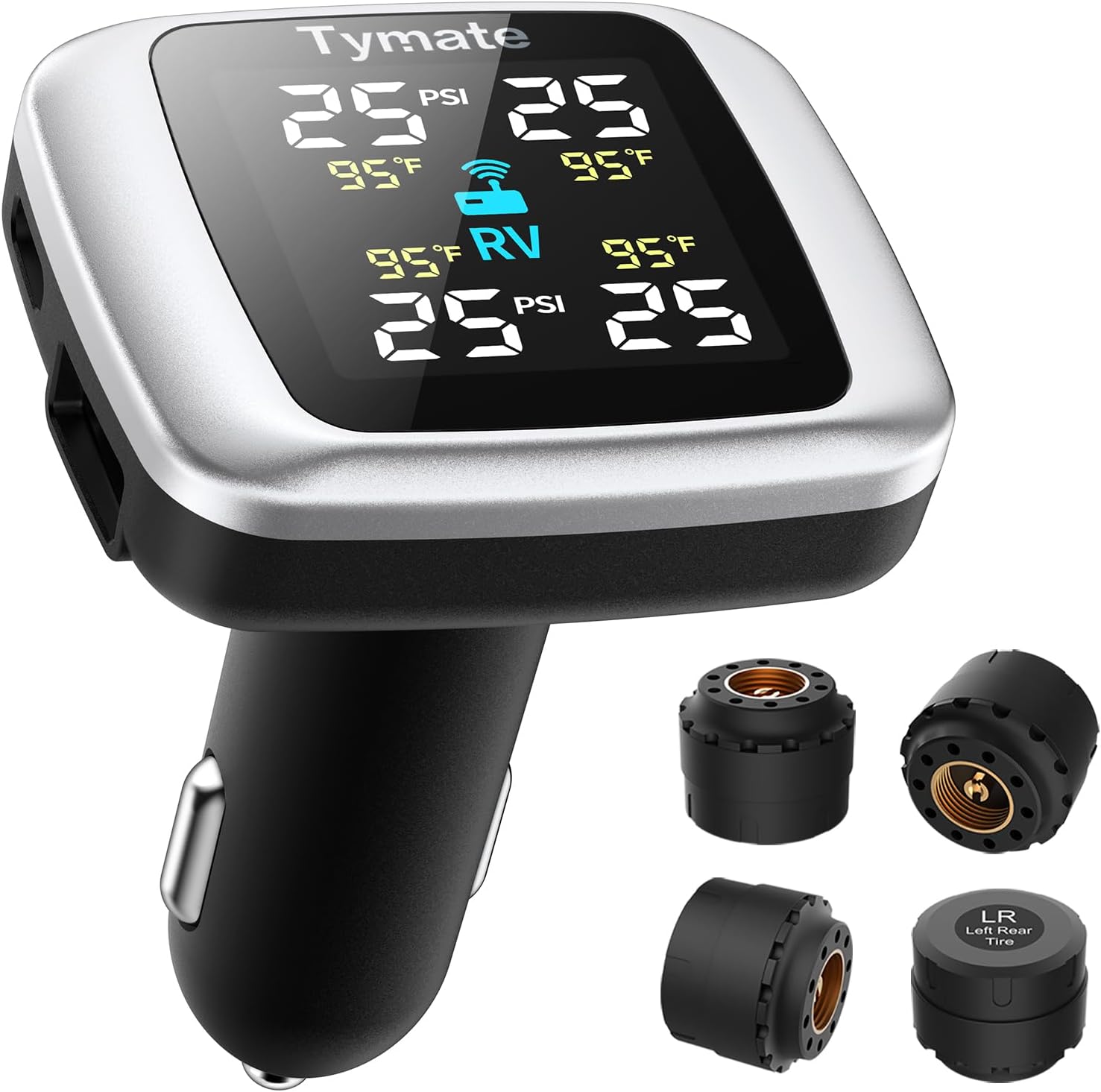
Tymate TM7 is a wireless tire pressure monitoring system that delivers real-time pressure and temperature readings for safer driving. It includes four external sensors, a bright color LCD display with adjustable backlight, and six alarm modes for high/low pressure, fast leakage, high temperature, and sensor signal or battery issues. The system covers a wide 0–144 PSI range and plugs into your vehicle’s cigarette lighter socket for quick DIY setup.

This universal wheel alignment tool helps you accurately restore tire tilt angles after tire or suspension repairs using an adjustable camber gauge. It features a powerful magnetic base that firmly attaches to brake rotors for stationary, slip-free readings, improving consistency during measurement. Built from durable PC plastic, it resists wear and corrosion and is compact enough for car, truck, RV, and motorcycle alignment tasks.
Safety and Convenience
Run-flat tires can help preserve steering control and vehicle mobility after certain pressure-loss events. That can reduce roadside exposure and give you time to reach a safer place.
| Feature | Effect |
|---|---|
| Reinforced construction | Temporarily supports the vehicle after pressure loss |
| TPMS | Warns the driver when pressure becomes significantly low |
| Emergency mobility | May reduce the need to stop immediately beside the road |
| Possible spare-tire deletion | Can free cargo space |
These benefits do not eliminate the need for an inspection. Run-flat tires can suffer internal damage while operating under low or zero pressure, and that damage may not be visible from outside.
Cost and Ride Quality
Run-flat tires often carry a higher purchase price than comparable conventional tires because of their specialized construction and original-equipment requirements. The actual difference varies widely by tire size, brand, performance category, retailer, and vehicle application, so there is no reliable universal percentage premium.
Ride quality can also differ. Reinforced sidewalls may transmit sharper impacts on rough pavement, although modern tire designs and vehicle suspension tuning can reduce this effect substantially.
Handling differences are also vehicle-specific. A stiff sidewall can change steering response, but it is inaccurate to say every run-flat handles better or worse than every conventional tire.
Another practical consideration is availability. If you damage a specialized run-flat while traveling, the exact replacement size and specification may not be stocked by every tire shop.
How Far and How Fast Can You Drive on Them?
For many traditional passenger-car run-flat systems, about 50 miles at a maximum of 50 mph is a common emergency limit. However, you should never treat that figure as a universal allowance.
Bridgestone’s current tire safety guidance explains that run-flat distance can change with vehicle speed, load, maneuvering, inflation loss, tire damage, and ambient temperature. The tire sidewall and vehicle owner’s manual may also specify a different limit.
Some technologies use shorter limits. For example, Pirelli’s RunForward technology specifies up to 25 miles at a maximum of 50 mph, showing why you must identify the exact tire before assuming you have 50 miles available.
Think of 50 miles at 50 mph as a common maximum for many run-flats, not a guaranteed amount of remaining range.
Speed Limits After Puncture
When your TPMS signals a pressure-loss condition, reduce speed as soon as it is safe. For tires whose published run-flat limit is 50 mph, that number is a maximum rather than a target cruising speed.
| Condition | Guidance |
|---|---|
| TPMS pressure-loss warning | Reduce speed and avoid aggressive maneuvers |
| Common maximum on many run-flats | 50 mph |
| Common distance limit on many run-flats | About 50 miles |
| Exact limit | Follow the tire and vehicle manufacturer |
Avoid hard acceleration, abrupt braking, sharp cornering, potholes, and other road hazards. These actions increase heat and stress while the tire is operating without normal inflation support.
Distance Range After Deflation
Remaining distance depends on far more than the number on the tire brochure. A heavily loaded vehicle, high ambient temperature, high speed, aggressive driving, or severe tire damage can reduce the distance available.
- Check the dashboard warning and reduce speed.
- Avoid abrupt steering, acceleration, and braking.
- Follow the exact speed and distance limit for your tire and vehicle.
- Drive only far enough to reach a safe location or qualified tire service facility.
- Have the tire inspected after any significant low- or zero-pressure operation.
Factors That Affect Mobility
Your actual emergency range can be affected by:
- Vehicle load: More passengers or cargo increase the load carried by the deflated tire.
- Temperature: Higher temperatures can increase heat stress.
- Speed: Higher speed creates more heat and flexing.
- Damage severity: A simple pressure-loss event is different from severe sidewall, bead, or structural damage.
- Driving style: Hard braking, fast cornering, and abrupt acceleration increase stress.
- Road conditions: Potholes, debris, and rough pavement can worsen damage.
- Tire model: Different run-flat technologies have different zero-pressure limits.
Treat the published range as an emergency ceiling, not a travel allowance that you should try to use completely.
What Should You Do When the TPMS Warning Comes On?
If your vehicle has run-flat tires and the low-pressure warning illuminates, use this sequence:
- Stay calm and reduce speed. Avoid sudden steering or hard braking.
- Pay attention to how the vehicle feels. Severe vibration, pulling, noise, or poor control can indicate damage that makes continued driving unsafe.
- Check the owner’s manual. Your vehicle may display additional instructions or identify the affected tire.
- Follow the tire’s run-flat limit. Do not automatically assume you have 50 miles available.
- Head to a safe service location. Minimize distance rather than using the full emergency range unnecessarily.
- Have the tire inspected. Internal run-flat damage may be invisible from outside.
Pro Tip: Keep the owner’s manual or manufacturer’s run-flat instructions available on your phone. Knowing your exact tire’s speed and distance limits is more useful than relying on the general “50 miles at 50 mph” rule.
Can Run-Flat Tires Be Repaired?
Sometimes, but there is no single repair rule that applies to every run-flat tire.
Under U.S. Tire Manufacturers Association repair guidance, an otherwise repairable passenger-tire puncture generally must be confined to the tread repair area and measure no more than 1/4 inch (6 mm). The tire must be removed from the wheel so the inside can be inspected.
A proper puncture repair is not simply an outside plug. Industry procedures call for the puncture channel to be filled and the inner liner to be sealed with an appropriate patch/stem repair system.
- Determine where the puncture occurred.
- Remove the tire from the wheel and inspect the inside.
- Check for wrinkling, separation, abrasion, heat damage, or other evidence of low-pressure operation.
- Confirm that the puncture meets normal tire-repair limits.
- Apply the run-flat tire manufacturer’s own repair policy.
- Follow any additional restriction from the vehicle manufacturer.
Sidewall and shoulder injuries are not normal puncture-repair candidates. A tire that has suffered serious internal damage, structural separation, excessive abrasion, or other disqualifying damage should be replaced.
Manufacturer policies differ. Bridgestone permits some run-flat repairs under defined restrictions, while some other manufacturers or individual run-flat product lines may advise replacement after zero-pressure operation. That is why a qualified tire professional should make the final decision.
Can You Replace Run-Flat Tires With Regular Tires?
In some vehicles, yes, but you should not make the switch by replacing one tire at random.
Bridgestone advises that replacing all four original-equipment run-flats with conventional tires may be acceptable in some applications after consulting the vehicle manufacturer. The change can affect handling, stability, TPMS logic, and emergency-mobility provisions.
If you switch to conventional tires, make sure the replacements meet the vehicle’s approved size, load capacity, speed rating, and inflation requirements. You should also plan for what happens during a flat, because many vehicles supplied with factory run-flats do not include a spare wheel or jack.
A compact spare, manufacturer-approved mobility kit, or roadside-assistance plan may therefore become more important after the switch.
Note: Avoid mixing conventional and run-flat tires for normal use unless the vehicle and tire manufacturers specifically approve the combination. Different constructions can change handling and stability.
How Do You Maintain Run-Flat Tires?
Run-flat tires need normal tire maintenance even though they can temporarily operate after pressure loss.
Check cold tire pressure at least once a month with a reliable gauge. Use the vehicle manufacturer’s recommended pressure on the driver’s-door placard or in the owner’s manual rather than the maximum pressure printed on the tire sidewall.
Do not wait for TPMS to become your pressure gauge. NHTSA explains that the warning system is designed to alert you when a tire is already significantly underinflated.
Inspect each tire for cuts, bulges, cracking, embedded objects, irregular tread wear, or other visible damage. After any low- or zero-pressure event, arrange a professional inspection even if the tire still looks normal.
Rotate the tires according to the vehicle manufacturer’s schedule. Rotation can help promote even wear, although some staggered or directional tire setups have special restrictions.
Maintain wheel alignment and balance when needed. Uneven tread wear, vibration, or pulling may indicate an alignment, suspension, wheel, or tire problem that should be corrected rather than blamed automatically on run-flat construction.
Frequently Asked Questions
Can I replace run-flat tires with regular tires?
Sometimes. Some vehicles can use four approved conventional tires instead of run-flats, but you should confirm compatibility with the vehicle manufacturer first. The switch removes run-flat emergency mobility and may affect handling, TPMS behavior, and the need for a spare tire or another flat-tire solution.
Do you put air in a run-flat tire?
Yes. Run-flat tires are normal pneumatic tires during everyday driving and must be kept at the vehicle manufacturer’s recommended cold inflation pressure. Their reinforced construction is for temporary emergency operation after pressure loss, not for routine driving without air.
What is the lifespan of a run-flat tire?
There is no universal run-flat mileage lifespan. Tread life depends on the specific tire model, driving style, inflation pressure, alignment, rotation, road conditions, vehicle weight, and whether the tire has experienced low- or zero-pressure operation. Use the tire’s actual tread condition, manufacturer guidance, and any model-specific mileage warranty rather than a generic mileage estimate.
What are the common problems with BMW run-flat tires?
BMW models equipped with run-flats can have the same tradeoffs seen on other vehicles using this tire technology: a firmer impact feel on some wheel-and-tire combinations, higher replacement prices, fewer repair options after pressure loss, and limited local availability for certain OE sizes. The experience varies greatly by BMW model, wheel size, suspension setup, tire brand, and tire generation, so check the exact approved specification rather than assuming every BMW run-flat behaves the same way.
Can you drive normally after a run-flat tire loses pressure?
No. Once a run-flat enters low- or zero-pressure operation, reduce speed, avoid aggressive acceleration, braking, cornering, potholes, and unnecessary distance. Follow the exact limits listed by the tire and vehicle manufacturer and seek service as soon as practical.
Do run-flat tires prevent blowouts?
No. Run-flat construction can provide temporary support after certain pressure-loss events, but it cannot prevent every puncture, sidewall failure, impact injury, structural separation, or wheel problem. Severe damage may require you to stop rather than continue driving.
Do run-flat tires need TPMS?
Yes, a functioning pressure-monitoring system is a key part of a run-flat setup. Because a reinforced tire can continue supporting the vehicle after losing air, you may not be able to identify the pressure loss by appearance or normal driving feel alone.
Conclusion
Run-flat tires give you a valuable emergency buffer when inflation pressure is lost. Reinforced construction can keep the vehicle supported long enough to reach a safer location without immediately changing a tire beside the road.
The key is understanding their limits. A frequently quoted figure of 50 miles at 50 mph applies to many run-flat systems, but not every tire. Your exact tire, vehicle, load, temperature, damage, and driving conditions determine what is safe.
Keep the tires properly inflated, maintain a functioning TPMS, avoid assuming every puncture is repairable, and arrange a professional inspection after low- or zero-pressure operation. Used that way, run-flat technology is a useful emergency-mobility system rather than a substitute for normal tire care.
Sources
- Bridgestone Tire Maintenance and Safety Manual — run-flat operation, distance limits, repair criteria, TPMS, inspection, and replacement guidance.
- National Highway Traffic Safety Administration — TireWise — TPMS operation, monthly pressure checks, tire inspection, and inflation guidance.
- U.S. Tire Manufacturers Association — Tire Repair Basics — approved puncture location, 1/4-inch repair limit, internal inspection, and patch/stem repair procedure.
- Michelin — Run-Flat Tires — run-flat construction, TPMS, inspection, maintenance, ride tradeoffs, and replacement considerations.
- Continental — Self-Supporting Runflat Technology — reinforced-sidewall construction and emergency mobility guidance.
- Pirelli — Run Flat Technology — self-supporting technology and manufacturer-specific emergency driving limits.