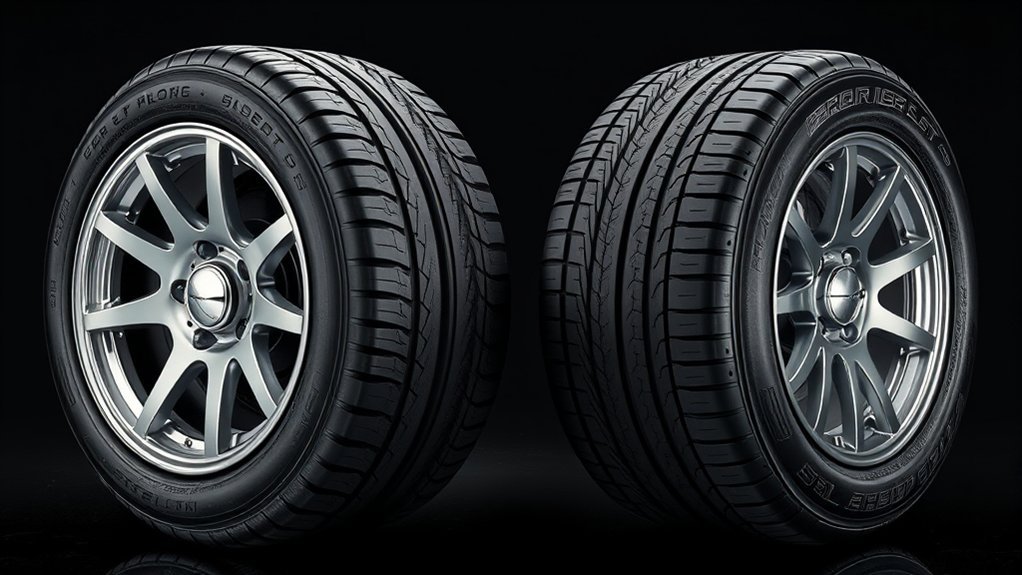
EV tires and regular tires can both work on an electric vehicle when they meet the vehicle manufacturer’s fitment requirements, but they are not always engineered with the same priorities. Tires developed or tuned for EV use often focus more heavily on load capability, low rolling resistance, tread durability, and noise control. The right choice depends on your EV, climate, driving style, and the exact tire specifications—not simply whether the sidewall carries EV-related branding.
Quick Answer
EV tires are typically optimized for the weight, torque, efficiency, and quiet cabin of electric vehicles. However, you do not automatically need a tire labeled specifically for EVs. A replacement tire can work if its size, load index, speed rating, load range, and other specifications meet your vehicle manufacturer’s requirements.
Key Takeaways
- Many EV-focused tires are designed to handle higher loads and strong electric-motor torque.
- Low rolling resistance can reduce energy losses and help preserve driving range.
- Some EV-oriented tires use tread tuning or internal acoustic foam to reduce noise, but these features are not universal.
- A tire marketed for EVs does not automatically have the correct load capacity for your particular vehicle.
- Regular passenger tires can be suitable for an EV when they meet all manufacturer-required size, load, speed, and service specifications.
- Range, grip, tread life, handling, and quietness involve trade-offs, so there is no single tire that is best for every EV driver.
What Makes a Tire an EV Tire?
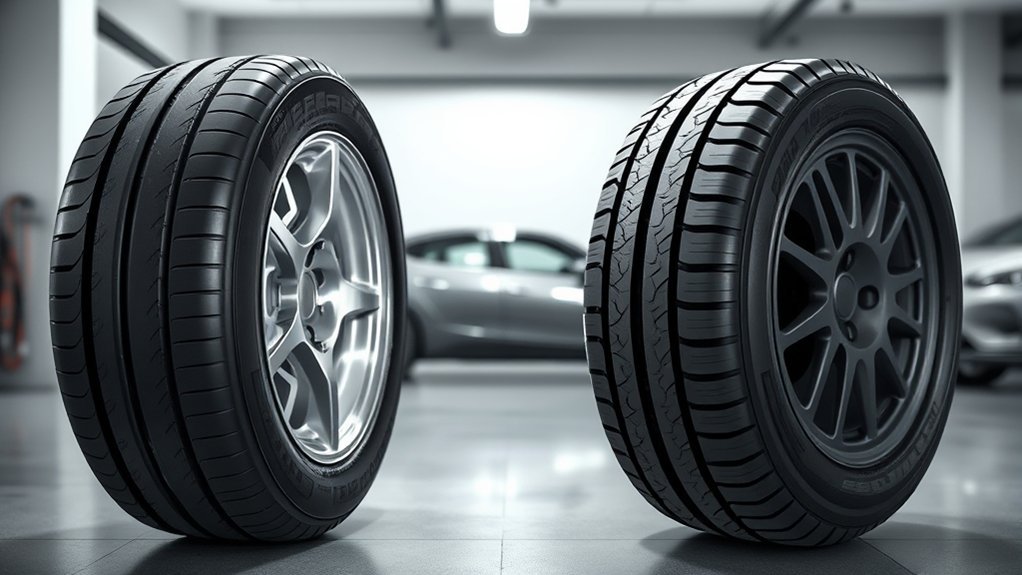
An EV tire is generally a tire designed, tuned, or marketed with electric-vehicle demands in mind. Common priorities include low rolling resistance, sufficient load capability, durability under high torque, predictable grip, and reduced road or cavity noise.
These priorities matter because many EVs carry substantial battery weight and can deliver strong torque immediately. Tire manufacturer Continental notes that battery weight and instant torque can place additional demands on EV tires, while low rolling resistance can improve efficiency. You can read its current technical overview in Continental’s electric-vehicle tire guide.
However, “EV tire” should not be treated as a universal performance standard. Different manufacturers use different designs and EV-related markings. Some tires have reinforced construction, some emphasize efficiency, and some include acoustic technology. Other conventional-looking touring or performance tires may also be approved for EV use.
The safest way to judge compatibility is therefore to check the actual tire specifications against your vehicle’s requirements.
How EV Tires Differ From Regular Tires
EV-focused tires and conventional passenger tires use the same basic tire technology, but manufacturers may tune them differently to balance the demands of electric vehicles.
| Factor | EV-Focused Tire | Regular Tire |
|---|---|---|
| Load | Often offered in load ratings suited to heavier EV applications | Varies widely by size, load index, and load range |
| Rolling resistance | Often prioritized to reduce energy loss | Can be low or high depending on tire category and design |
| Noise | May include tread or acoustic technology aimed at quieter operation | Noise performance varies substantially by model |
| Torque and wear | Compound and construction may be tuned for high torque and vehicle mass | Durability depends on category, compound, load and driving conditions |
| Fitment | Must still match the EV’s required specifications | Can be suitable when all required specifications match |
EV Weight and Wear
Many battery-electric vehicles are heavier than comparable combustion-engine vehicles. More mass means each tire may have to carry a greater load and manage more force during acceleration, braking, and cornering.
That does not mean every EV automatically destroys tires quickly. Tire life also depends on tread compound, tire size, pressure, alignment, road surface, temperature, suspension setup, and how aggressively you use the accelerator.
A properly specified EV tire may use reinforced construction or a more wear-resistant compound to manage these demands. Regular tires can also have high load ratings, so the actual sidewall specification matters more than the marketing category.
Noise, Range, and Grip
EV tire development often focuses on noise, efficiency, and grip at the same time. These goals can conflict.
A low-rolling-resistance compound wastes less energy as the tire deforms, which can help an EV travel farther on the same battery energy. A softer or more performance-oriented compound may provide stronger grip but create more rolling resistance or wear faster.
Michelin’s current EV guidance emphasizes this balance: no tire can maximize range, grip, wear, and noise performance simultaneously. See Michelin’s EV tire buying guide.
For EV drivers, the best tire is usually the one that balances efficiency, wet grip, tread life, comfort, and correct fitment rather than maximizing one number.
Why EV Weight Can Increase Tire Wear
Battery weight can increase the work a tire performs during every rotation. Higher load can increase deformation, heat generation, and stress at the contact patch. Strong acceleration can add further tread stress.
However, there is no reliable rule that every EV will wear its tires a fixed percentage faster than every gasoline vehicle. Driving style and tire selection can change the result considerably.
Battery Load Stress
As vehicle load rises, a tire must support more weight while maintaining its intended contact shape. That is why the load index and load range are critical when choosing EV replacement tires.
Never assume a tire is suitable simply because its size matches. Two tires with the same dimensions can have different load ratings.
Michelin explains that the load index represents how much weight an individual tire can support when correctly inflated and that replacement tires should meet the vehicle manufacturer’s required rating. See its load and speed rating guide.
Heat and Flexing
A tire continuously flexes as it enters and leaves the road contact patch. That deformation produces heat and consumes energy. Higher load, incorrect pressure, high speed, and aggressive driving can increase the demands placed on the tire.
| Factor | What It Changes | Possible Result |
|---|---|---|
| Higher vehicle load | Tire deformation and contact forces | Greater heat and wear if the tire is poorly matched |
| Low inflation pressure | More flex and rolling resistance | Higher energy use and irregular wear |
| Strong acceleration | Higher traction demand | Faster tread wear when repeated aggressively |
| Poor alignment | Uneven loading across the tread | Shoulder wear or rapid irregular wear |
Alignment and Inflation
Alignment and inflation have a major effect on tire life regardless of powertrain. On an EV with high load or strong torque, irregular wear may become especially noticeable.
Check tire pressure when the tires are cold and use the pressure listed on the vehicle’s Tire and Loading Information Label or in the owner’s manual. Do not use the maximum pressure molded on the tire sidewall as your normal inflation target.
Warning: Never replace an EV tire with one that has an insufficient load rating or inflate a tire based only on the maximum pressure shown on its sidewall. Follow the vehicle manufacturer’s specified tire size, load requirements, and cold inflation pressure.
The National Highway Traffic Safety Administration recommends checking tire pressure at least once a month when the tires are cold. It also recommends following the owner’s manual for rotation guidance and having alignment corrected when needed.
Why Some EV Tires Are Quieter Inside
Road and tire noise can seem more noticeable in an electric vehicle because there is less engine noise to mask it, especially at lower speeds.
Manufacturers address this in several ways. Tread-block shape and spacing can reduce certain frequencies, while some tires use foam or other acoustic treatments inside the tire cavity to reduce sound transmitted into the vehicle.
These features are not present on every tire labeled for EV use, and a tire designed for a gasoline vehicle can also be very quiet. Compare the actual tire model rather than assuming all EV-specific tires will produce less cabin noise.
Note: The EU tire label’s noise value is for external rolling noise measured outside the vehicle. It is not a cabin-noise rating, and the European Commission states that tire-cavity noise transmitted into the cabin is a different phenomenon.
How EV Tires Affect Range and Efficiency
Tires affect EV efficiency mainly through rolling resistance. As a tire rolls, its rubber and internal structure repeatedly deform. Some energy is converted into heat instead of moving the vehicle forward.
A tire with lower rolling resistance requires less energy to keep moving under comparable conditions. That can help preserve EV range.
There is no single honest answer such as “EV tires add 5% range” or “you will gain 35 km.” The effect depends on the tires being compared, vehicle, wheel size, pressure, temperature, speed, road conditions, and driving style.
The European Commission’s tire-label guidance states that rolling resistance affects the energy required to move a vehicle and that differences between efficiency classes can translate into meaningful differences in battery-electric driving range.
Inflation is part of the equation too. Underinflation increases deformation and rolling resistance. Keeping the tires at the vehicle manufacturer’s specified cold pressure supports both efficiency and safe load carrying.
Can Regular Tires Work on EVs?
Yes. A tire does not necessarily need an EV-specific name or logo to function safely on an electric vehicle.
The replacement tire must be suitable for the particular vehicle. Check:
- Correct tire size
- Required load index
- Required load range, such as XL when specified
- Required speed rating
- Wheel and vehicle compatibility
- Season and weather suitability
- Any additional requirements in the owner’s manual
Michelin’s EV guidance states that a tire meeting the vehicle’s size, load, and speed requirements can function on an EV, while EV-engineered tires may offer advantages in areas such as durability, rolling resistance, and noise reduction.
That makes “EV-specific versus regular” only part of the buying decision. A high-quality compatible touring tire may suit one EV driver better than an aggressively performance-oriented EV tire, while another driver may prioritize maximum efficiency or quieter highway travel.
Key EV Tire Specs to Check
Start with the specifications provided by the vehicle manufacturer. They determine whether the tire is suitable before you compare price, noise, range, or tread warranty.
| Specification | What to Check | Why It Matters |
|---|---|---|
| Size | Match an approved vehicle size | Affects fit, handling, clearance and calibration |
| Load index | Meet the manufacturer-specified rating | Determines how much load each tire can support |
| Load range | Check for specifications such as XL when required | Affects load-carrying capability at specified pressures |
| Speed rating | Follow the vehicle manufacturer’s specification | Relates to the tire’s designed operating limits and heat resistance |
| Rolling resistance | Compare efficiency data where available | Can influence energy consumption and range |
| Wet grip | Compare tested wet-performance information | Important for braking and control in rain |
| Season rating | Choose summer, all-season/all-weather, or winter capability appropriate to your climate | Compound and tread behavior change with temperature, snow and ice |
[Products Worth Considering]

Adam’s Pro Tire Hex Grip applicators are molded foam sponges designed for precise, even tire dressing application. The ergonomic grip helps you spread product without overapplying, reducing sling that can splash onto paint and helping keep your hands clean during wheel and trim detailing. They’re durable, washable, and reusable for repeated detailing sessions.

Monitor tire tread wear with a smart, color-coded depth gauge that shows clear condition ranges at a glance. The bar is range marked for fast, easy readings, helping you maintain safer traction and performance. Each gauge is portable with a pocket clip, and the set includes 20 units for daily use and sharing.

This tire inflator with pressure gauge delivers long-lasting performance with a durable rubber-protected gauge and sturdy build. The longer hose and 360 swivel air chuck help you seal the valve securely and keep your hands free while measuring, inflating, or deflating. It’s battery-free for reliable use and provides ±2 PSI accuracy in the mid-range for most typical tires, with universal compatibility for 1/4 NPT compressor outputs.
How to Read EV Tire Markings and Labels
The most useful tire markings are the standardized size and service-description information on the sidewall. A marking such as 205/55 R17 91V identifies width, aspect ratio, radial construction, wheel diameter, load index, and speed rating.
If a tire is marked XL, it means Extra Load. XL tires use construction and inflation specifications that allow greater load capacity than a standard-load version of the same size. Many heavier vehicles use XL tires, including some EVs, but you should use XL when your vehicle’s specification calls for it rather than simply assuming every EV needs it.
EV-related names and symbols vary by tire manufacturer. Treat them as information about the product’s intended tuning—not as a substitute for the service description and your vehicle manufacturer’s requirements.
What the EU Tire Label Can Tell You
For tires covered by the European Union labeling system, the label provides standardized information on:
- Rolling resistance class: A to E
- Wet grip class: A to E
- External rolling noise: measured in dB(A) with a noise class
- Severe snow capability: where applicable
- Ice capability: for eligible tires where applicable
The label is useful for comparing selected performance characteristics, but it does not measure every aspect of a tire. It does not tell you tread life, dry handling, steering response, ride comfort, or cabin cavity noise.
Wet Weather, Winter, and Seasonal Performance
Do not choose a tire for range alone. Traction becomes more important when roads are wet, cold, snowy, or icy.
Low rolling resistance and maximum grip are competing engineering goals, so compare wet-braking performance alongside efficiency. If you live where severe winter conditions occur, use tires appropriate for those conditions and follow your vehicle manufacturer’s recommendations.
NHTSA notes that winter tires are more effective than all-season tires in deep snow and that summer tires are not designed for freezing temperatures, snow, or ice.
Where the 3-Peak Mountain Snowflake (3PMSF) marking is used, it identifies a tire that has met a defined severe-snow performance requirement. The EU label can also display the severe-snow symbol where applicable.
Do EV Tires Justify the Extra Cost?
They can, but the answer depends on what you are paying for.
An EV-focused model may justify a higher price if it provides a useful combination of:
- Low rolling resistance
- Correct high-load capability
- Strong wet and dry performance
- Durability suited to your vehicle and driving style
- Reduced road or cavity noise
- A useful treadwear warranty
Do not assume the most expensive EV-branded tire automatically gives the best range or longest life. Compare tires within the same size and performance category and look at their actual specifications, independent tests where available, and manufacturer warranties.
Pro Tip: Start with the exact vehicle-approved fitment, then compare tires for the qualities you actually value—wet grip, efficiency, tread life, quietness, winter capability, or performance. This prevents an EV marketing label from outweighing more important specifications.
[Products Worth Considering]

A concentrated tire and tube mounting compound designed to help simplify mounting rubber tires and tubes on passenger, semi truck, construction, and OTR applications. Its ultra-thick formula packs beads effectively and includes rust inhibitors to help protect against corrosion during use.

Measure tire tread depth quickly and accurately with this LUMITECO dial gauge that reads in 1/32" increments up to 14/32". The color-coded green/yellow/red zones make it easy to judge tire wear and know when replacement is needed. A rugged, compact design with a protective pouch helps keep the gauge ready for use on cars, trucks, motorcycles, and more.

Vigorder rubber cement glue delivers superior adhesion and cures quickly within about 30 seconds for seamless rubber bonding. Once cured, it helps provide a strong, durable, waterproof seal that holds up to vehicle weight, pressure, and heat. Suitable for cars, motorcycles, trucks, bicycles, and off-road tires, it’s designed for emergency patch and maintenance repairs.
How to Choose EV Tires
Use this order when choosing replacement tires for an electric vehicle:
- Check the door-jamb tire placard and owner’s manual. Record the approved tire size and cold inflation pressure.
- Confirm the load index and load range. Never install a tire that cannot support the required load.
- Confirm the speed rating. Follow the vehicle manufacturer’s replacement requirements.
- Choose the correct seasonal category. Match the tire to your temperature, rain, snow, and ice conditions.
- Compare wet grip. Do not sacrifice necessary braking performance merely to chase efficiency.
- Compare rolling resistance. Lower resistance can help reduce EV energy consumption.
- Consider noise technology. If cabin quietness matters, look for model-specific acoustic features and tests rather than relying on the EU external-noise value alone.
- Check tread-life coverage. Manufacturer warranties can help you compare durability expectations, although actual wear still depends on use and maintenance.
The best EV tire is therefore not simply the tire with the lowest rolling resistance or the word “EV” on its sidewall. It is the tire that safely fits the vehicle while balancing efficiency, grip, durability, comfort, and climate performance.
[Products Worth Considering]

Chemical Guys ShineLogic Tire Shine delivers a deep wet black, high-shine finish for rubber tires with a sleek look. It’s designed for durable, one-step application with minimal drips, streaks, or runs, and it helps produce effortless, long-lasting shine. Choose aerosol or trigger spray for easy use on cars, trucks, motorcycles, RVs, and more.

Add style while helping protect your tire valve stems with handmade crystal rhinestone caps and a durable plastic insert. These caps resist corrosion and help keep out rain, snow, and muddy water, extending tire life. Textured non-slip design makes them easy to grip for quick install and removal when checking tire pressure.

The Topeak SmartGauge D2 delivers precise digital tire pressure readings for bikes, motorcycles, and sports equipment up to 250 psi (17 bar). Its rotating SmartHead works with both Presta and Schrader valves, so you can check pressure quickly without adapters. The LCD display makes it easy to read results in psi, bar, or kg/cm² with an included CR2032 battery for immediate use.
EV Tire Maintenance for Range and Tire Life
Good maintenance matters as much as the label on the tire.
- Check pressure monthly: Measure pressure when the tires are cold and use the vehicle manufacturer’s recommended value.
- Inspect the tread: Look for low tread depth, cuts, bulges, embedded objects, and unusual wear.
- Follow the vehicle’s rotation schedule: Some EVs use staggered tire sizes that cannot be rotated front to rear, so check the owner’s manual.
- Watch for alignment problems: Rapid inner-edge, outer-edge, or feathered wear can indicate an alignment or suspension issue.
- Balance new tires correctly: Imbalance can cause vibration and irregular wear.
- Drive smoothly: Repeated hard acceleration can increase tread stress even when the tire is designed for high torque.
NHTSA recommends monthly cold-pressure and tread checks and notes that rotation, balance, and alignment can help tires wear more evenly and last longer.
Frequently Asked Questions
Do EV Tires Really Make a Difference?
They can. Tires developed with EV use in mind may prioritize low rolling resistance, higher-load applications, torque durability, or noise control. The amount of improvement depends on the specific tire and vehicle, however, so EV branding alone does not guarantee better performance in every category.
Can I Use EV Tires on a Regular Car?
Yes, an EV-focused tire can be used on a combustion-engine vehicle when its size, load rating, speed rating, wheel fitment, and other specifications are suitable for that vehicle. It may cost more or offer a different balance of rolling resistance, ride, grip, and wear than another tire designed for the same car.
Do You Need Special Tires for an EV?
Not necessarily. A replacement tire can work on an EV if it meets the manufacturer’s required size, load, speed, and other fitment specifications. EV-optimized models may provide useful advantages in efficiency, load handling, durability, or noise, but the correct specifications come first.
Do EV Tires Last Longer Than Regular Tires?
Not necessarily. Some EV-focused tires use compounds and construction designed to withstand high load and torque, but tire life varies by model, tread compound, driving style, pressure, alignment, climate, and road conditions. Compare the actual treadwear information and warranty instead of assuming an EV tire will automatically last longer.
How Often Should I Check EV Tire Pressure?
Check it at least once a month and before long trips. Measure when the tires are cold and inflate them to the pressure specified on the vehicle’s Tire and Loading Information Label or in the owner’s manual.
Does an EV Logo Mean a Tire Will Fit My Electric Car?
No. EV-related markings can indicate that a manufacturer has optimized a tire for electric-vehicle priorities, but they do not replace the vehicle’s required size, load index, speed rating, load range, and other fitment specifications.
Conclusion
EV tires are designed around challenges that matter strongly to electric vehicles: load, torque, efficiency, grip, wear, and noise. But an EV label is not what makes a tire safe for your car. Start with the manufacturer-approved size, load index, load range, speed rating, and cold inflation pressure. Then compare rolling resistance, wet grip, seasonal capability, tread life, and noise. A properly matched regular tire can work on an EV, while a well-designed EV-focused tire may give you a better balance of efficiency, comfort, and durability for your particular driving needs.
Sources
- National Highway Traffic Safety Administration — TireWise — tire sizing, inflation, tread, rotation, balance, alignment, and tire-safety guidance.
- European Commission — Tyres and Energy Labelling — rolling resistance, wet grip, external rolling noise, snow/ice markings, and EV efficiency information.
- Michelin — Choosing Tires for an EV — EV tire compatibility and the trade-offs among range, grip, wear, and noise.
- Michelin — Tire Load Rating and Speed Rating — load index, XL construction, service descriptions, and replacement-tire specifications.
- Continental — Electric Vehicle Tires — EV weight, torque, rolling resistance, load requirements, grip, durability, and tire-noise technology.