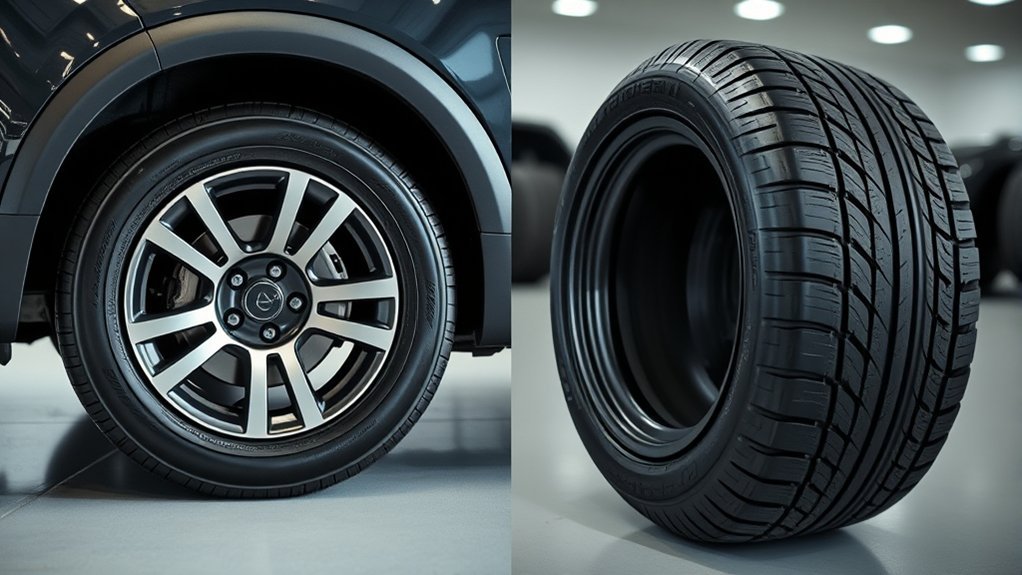
OE tires are the original equipment tires selected for your vehicle when it was developed, while replacement tires are the tires you choose later when the originals wear out or your driving needs change. The important difference is not simply factory versus aftermarket: OE tires may be tuned for a particular vehicle, while replacement tires let you prioritize qualities such as tread life, wet grip, winter traction, comfort, noise, or steering response.
Quick Answer
OE tires are selected or developed to match a vehicle manufacturer’s handling, comfort, noise, efficiency, and load targets. Replacement tires can preserve that factory feel or shift the balance toward longer tread life, stronger wet or winter traction, lower noise, or another priority. Always follow your vehicle’s approved tire specifications.
Key Takeaways
- OE tires are factory-selected or vehicle-specific tires intended to support the automaker’s balance of handling, comfort, noise, braking, durability, and efficiency.
- Replacement tires give you more freedom to prioritize longevity, wet grip, winter traction, comfort, price, or performance.
- A replacement that has the same basic size can still feel different because tread compound, construction, sidewall stiffness, tread design, and OE-specific tuning can vary.
- Use the tire placard and owner’s manual as your starting point for size, load capacity, inflation pressure, and other vehicle-specific requirements.
- For the most predictable handling, use a matched set when possible and follow special replacement rules for partial sets, AWD, 4WD, or staggered fitments.
OE Tires Vs Replacement Tires: What’s the Difference?
Original equipment (OE) tires are the tires a vehicle manufacturer selects or approves for a specific vehicle during development and factory assembly. Replacement tires are tires purchased later to replace worn or damaged tires or to change particular performance characteristics.
You can think of the OE tire as the vehicle’s factory baseline. On vehicle-specific OE versions, engineers may tune tread compound, sidewall behavior, internal construction, rolling resistance, and noise characteristics to support the manufacturer’s handling, comfort, efficiency, and durability targets.
Replacement tires provide a wider range of choices. You may choose a tire with a longer treadwear warranty, stronger rain performance, dedicated winter capability, a quieter ride, firmer steering response, lower rolling resistance, or a different price point.
Replacement tires give you broader choice, letting you prioritize longevity, wet grip, winter traction, comfort, noise, or steering response.
The important point is that one tire cannot maximize every performance characteristic at the same time. A replacement tire may outperform the OE tire in one area while changing ride quality, noise, steering feel, efficiency, or tread life in another.
| Factor | OE Tire | Replacement Tire |
|---|---|---|
| Primary goal | Match the vehicle manufacturer’s original targets | Replace the original or change selected performance traits |
| Vehicle-specific tuning | May include model- or manufacturer-specific development | Varies; some replacement tires also carry the exact OE marking |
| Choice | Limited to factory-approved configurations | Much broader range of compounds, tread designs, warranties, and prices |
| Factory driving feel | Best reference for preserving the original setup | Can feel similar or noticeably different depending on the tire |
| Tread life | Depends on the exact tire and its engineering priorities | Can be selected specifically for longer life if desired |
| Cost | Varies by model, OE specification, and availability | Broader choice across budget, touring, performance, and specialty categories |
You should verify the vehicle manufacturer’s required tire specifications before buying. The National Highway Traffic Safety Administration recommends using the original tire size or another size recommended by the vehicle manufacturer and checking the Tire and Loading Information label or owner’s manual.
For comparisons, you can also review treadwear warranties, independent tire tests, wet and dry braking results, noise performance, and applicable UTQG ratings. UTQG can help compare treadwear, traction, and temperature characteristics of many passenger tires, but the treadwear number is a comparative laboratory rating rather than a guaranteed mileage figure.
What Are OE Tires?
OE tires are Original Equipment tires: tires selected or approved for the vehicle when it is produced. Depending on the vehicle and tire, the OE version may simply be an approved factory fitment or may have been developed specifically with the automaker.
They are chosen around factory fitment specifications such as tire size, load capacity, speed capability, wheel dimensions, inflation requirements, handling behavior, and other manufacturer targets.
They must also satisfy the applicable regulatory requirements for the market in which the vehicle and tire are sold.
OE Tire Meaning
Think of the tires that came on your vehicle when it left the factory. Those are its original equipment tires. They give you a useful reference for the ride, steering response, noise, grip, efficiency, and comfort the vehicle manufacturer intended for that configuration.
| Attribute | OE Tire Meaning |
|---|---|
| Fit | Matches an approved factory application |
| Tuning | May be optimized for the vehicle’s handling, comfort, noise, and efficiency targets |
| Materials | Compound and construction are chosen for specific performance goals |
| Wear | Depends on the exact tire, vehicle, maintenance, roads, climate, and driving style |
| Cost | Varies by specification and availability rather than following a universal OE premium |
You should treat OE tires as the vehicle’s original reference point, not as proof that they are the best tire for every owner. A driver in heavy snow, frequent rain, rough roads, or high-mileage highway use may reasonably prefer a different replacement tire.
Factory Fitment Specs
A vehicle’s factory fitment specs establish approved tire dimensions and operating requirements. Important information can include tire size, load capacity, speed rating, front and rear fitment, and recommended cold inflation pressure.
The tire’s section width, aspect ratio, rim diameter, load capability, and overall rolling diameter influence clearance, steering response, ride height, braking behavior, and the information used by systems such as ABS, traction control, stability control, and—in some vehicles—AWD or 4WD systems.
For that reason, the safest reference is the vehicle’s Tire and Loading Information label and owner’s manual. The pressure molded on the tire sidewall is a maximum tire specification, not automatically the correct operating pressure for the vehicle. NHTSA advises using the vehicle manufacturer’s recommended cold inflation pressure.
Vehicle Manufacturer Standards
A vehicle manufacturer may evaluate an OE tire against targets for handling, braking, comfort, noise, durability, fuel efficiency, steering response, and other vehicle-specific characteristics.
Vehicle-specific tire development can involve adjustments to tread compound, sidewall compliance, belt construction, tread pattern, rolling resistance, and noise treatment. The tire is therefore evaluated as part of the complete vehicle rather than only as an isolated component.
Michelin explains that its manufacturer-marked tires can be jointly developed, tested, validated, and fine-tuned with an automaker to meet vehicle-specific performance objectives. That is why two tires carrying the same basic size designation can still perform or feel different.
How OE Tire Markings Work
Some OE tires carry a manufacturer-specific symbol, letter, or code molded into the sidewall. These markings identify a tire version that was approved or developed for a particular vehicle manufacturer or application.
Examples documented by Michelin’s OE-marking guide include AO for certain Audi applications, MO-family markings for Mercedes-Benz applications, N-series markings for Porsche, and T-series markings for Tesla.
An OE marking matters because a manufacturer-specific version can use different internal construction, compound, noise treatment, or other tuning even when the tire family name and basic size resemble a standard aftermarket version.
Pro Tip: If you like the way your vehicle currently rides and handles, photograph the full sidewall before ordering tires. Record the tire line, size, load index, speed rating, and any OE-specific letters or symbols so you can identify the closest exact replacement.
How OE Tires Differ From Replacements
OE tires are chosen for a particular factory application, so their specifications and tuning support the automaker’s intended balance of load capacity, noise, ride quality, steering response, efficiency, and grip.
A replacement tire can preserve that balance if you buy the same OE-approved version. It can also deliberately change the balance when you choose another compatible tire designed around different priorities.
That flexibility is one of the main advantages of the replacement market.
Vehicle-Specific Tuning
Although two tires may share the same basic size and service description, an OE tire may be tuned around the chassis, suspension, steering, vehicle weight, drivetrain, and other characteristics of its intended application.
Changes to construction and rubber formulation can influence measurable handling characteristics, ride isolation, noise, rolling resistance, and behavior during hard braking or cornering.
- Firmer sidewalls can produce sharper steering response.
- Different compounds can change grip, wear, and breakaway behavior.
- Tread patterns can influence water evacuation and road noise.
- Construction choices can influence ride comfort and rolling resistance.
A general replacement tire may satisfy the required vehicle specifications without reproducing every aspect of the original tire’s calibrated behavior. That is not automatically unsafe or inferior; it simply means the tire may emphasize a different set of strengths.
Factory-Fitted Performance
Factory-fitted tires support the vehicle’s intended performance envelope rather than simply fitting the wheel. Compound, carcass construction, tread design, and sidewall characteristics can all contribute to braking, steering, ride, noise, durability, and efficiency.
| Attribute | OE Tire | Effect |
|---|---|---|
| Compound | Selected or tuned for the vehicle’s targets | Influences grip, wear, temperature behavior, and efficiency |
| Structure | May use vehicle-specific construction | Influences steering, comfort, and load behavior |
| Testing | Evaluated against automaker requirements | Supports consistent factory performance targets |
For a driver who is satisfied with the factory setup, choosing the same OE-marked tire again can be the simplest way to preserve familiar behavior.
Replacement Flexibility
Replacement tires usually give you more choice in tread pattern, compound, seasonal category, warranty, noise characteristics, and price. That lets you adapt the vehicle to the way you actually drive.
- A grip-focused compound may improve traction while wearing faster.
- A touring tire may emphasize comfort, low noise, and tread life.
- A dedicated winter tire may provide substantially better cold-weather and snow capability than an OE all-season tire.
- A different tread design may improve water evacuation while changing noise or steering feel.
The key is to make those choices without ignoring vehicle requirements. Do not assume that a tire is suitable merely because it can be mounted on the wheel.
Why Automakers Choose OE Tire Designs
Automakers choose OE tire designs because tires influence nearly every part of the driving experience. Vehicle weight distribution, suspension tuning, steering geometry, braking behavior, efficiency targets, cabin noise, and ride quality are all affected by the tire.
Engineers therefore evaluate design considerations such as load capability, rolling resistance, tread pattern, wet grip, construction, and steering response. Some vehicle trims may also use different tire specifications because power output, suspension settings, wheel size, curb weight, or drivetrain configuration changes from one trim to another.
This is why an OE tire should be viewed as a calibrated part of the vehicle rather than simply a generic tire in the correct diameter.
How Replacement Tires Affect Performance
When you switch from the original tire to a different replacement design, you introduce a new variable into the chassis setup. The vehicle can therefore accelerate, brake, steer, corner, ride, and sound slightly different even when the new tire is fully compatible.
A replacement tire may use a different tread pattern, rubber compound, belt package, sidewall design, or overall construction. A softer sidewall can increase ride comfort but reduce steering immediacy, while a firmer construction may sharpen response and transmit more road impact.
Dry traction cannot be predicted from tread-block width alone. Compound, temperature, tread design, tire pressure, construction, vehicle setup, and road surface all influence grip.
Weather performance can also change. Tread channels, sipes, rubber formulation, and winter certification affect how a tire manages rain, cold temperatures, snow, and ice.
- Steering feel
- Braking distance
- Wet and winter traction
- Cabin noise
- Ride comfort
- Rolling resistance
- Tread wear
Fuel economy can change because rolling resistance differs among tire designs. NHTSA estimates that a 10% reduction in tire rolling resistance can improve vehicle fuel economy by roughly 1% to 2%. That does not mean every replacement tire changes fuel economy by a fixed percentage; the actual difference depends on the tire, vehicle, inflation pressure, size, driving conditions, and other factors.
[Products Worth Considering]

Upgrade your ride with a 2-pack set of 26x1.95 folding mountain bike tires built for dependable traction on mud, rocks, and trail surfaces. A reinforced puncture-resistant layer helps protect against sharp debris, while included butyl inner tubes provide strong sealing and shock absorption. Ready for fast swaps with included tire levers and universal sizing for most bikes.

Measure tire tread depth quickly and accurately with this LUMITECO dial gauge that reads in 1/32" increments up to 14/32". The color-coded green/yellow/red zones make it easy to judge tire wear and know when replacement is needed. A rugged, compact design with a protective pouch helps keep the gauge ready for use on cars, trucks, motorcycles, and more.

The SAFELIFE dial tire tread depth gauge measures tread depth in 1/32 inch increments with clear, easy-to-read 2-inch dial face. Color zones using a traffic light system help you quickly judge whether tread is low, marginal, or ample for safer driving. Built with a durable zinc cast body and a metal detect probe for precise, comfortable use across cars, motorcycles, trucks, and buses.
When Replacement Tires Make More Sense
If your driving priorities differ from the vehicle’s original design targets, an aftermarket replacement can make more sense than buying the exact OE tire again.
If you drive high annual mileage, you may prefer a touring tire with a strong treadwear warranty. If you regularly encounter heavy rain, you can prioritize wet braking and hydroplaning resistance. If you live in a cold or snowy climate, a dedicated winter tire may offer the performance you need. Drivers on rough pavement may instead prioritize ride comfort or tougher construction.
| Factor | OE Tire | Replacement Tire |
|---|---|---|
| Longevity | Depends on the exact OE specification | Can be selected specifically for higher-mileage use |
| Wet grip | Balanced around factory targets | Can be prioritized when comparing models |
| Ride feel | Factory reference | Can be shifted toward comfort or response |
| Load capacity | Meets the approved factory requirement | Must satisfy the vehicle manufacturer’s required capacity |
| Driving conditions | Chosen around the original vehicle program | Can be specialized for climate, mileage, off-road use, or performance |
Replacement tires can also broaden your price options. However, the cheapest tire is not necessarily the lowest-cost choice over its full service life, and a more expensive OE tire is not automatically better. Compare performance, warranty coverage, expected use, and total ownership needs rather than judging by OE status alone.
[Products Worth Considering]

This tire inflator with pressure gauge delivers long-lasting performance with a durable rubber-protected gauge and sturdy build. The longer hose and 360 swivel air chuck help you seal the valve securely and keep your hands free while measuring, inflating, or deflating. It’s battery-free for reliable use and provides ±2 PSI accuracy in the mid-range for most typical tires, with universal compatibility for 1/4 NPT compressor outputs.

Monitor tire tread wear with a smart, color-coded depth gauge that shows clear condition ranges at a glance. The bar is range marked for fast, easy readings, helping you maintain safer traction and performance. Each gauge is portable with a pocket clip, and the set includes 20 units for daily use and sharing.

These pre-assembled 15x6.00-6 front tire and wheel assemblies are designed for quick replacement on riding lawn mowers and lawn tractors. Built with natural rubber pneumatic tires and turf-friendly tread for solid traction and improved shock absorption. A thickened welded rim and 3/4" sintered iron bushing help provide stable, heavy-duty support for everyday mowing use.
How OE Tire Sizes and Fitment Work
OE tire sizes are selected to work with wheel dimensions, suspension geometry, wheel-well clearance, gearing, speedometer calibration, braking systems, and load requirements. Proper fitment therefore involves more than matching rim diameter.
You need to consider width, aspect ratio, construction, rim diameter, load capacity, speed rating, and overall rolling diameter. On some vehicles, front and rear tire sizes are intentionally different, so all four positions should not automatically use the same size.
- A wider tire can create clearance problems if the wheel, offset, suspension, or body does not provide enough space.
- A different sidewall height can change overall diameter, ride behavior, and steering response.
- A tire with insufficient load capacity can be dangerous.
- A substantial circumference change can affect speedometer readings and vehicle-control systems.
Warning: Do not choose a replacement only because the sidewall size appears close to your existing tire. Check the Tire and Loading Information label and owner’s manual, and follow vehicle-specific requirements for tire type, load capacity, speed rating, axle fitment, and approved alternate sizes.
The U.S. Tire Manufacturers Association advises that replacement tires use the size, load index, and speed-rating designation recommended by the vehicle or tire manufacturer and should not have a smaller size or load-carrying capacity than originally specified.
Replacing Two Tires or Tires on AWD/4WD Vehicles
Replacing fewer than four tires requires extra care because differences in tread depth, traction, and rolling circumference can affect vehicle balance.
USTMA recommends replacing all four tires at the same time for optimal performance. When only two tires are replaced, it recommends installing the new tires on the rear axle. The deeper tread generally provides greater wet grip, which helps reduce the risk of rear-axle traction loss and oversteer.
If only one tire must be replaced, USTMA advises pairing it with the existing tire that has the deepest tread and placing that pair on the rear axle, while still following vehicle-manufacturer requirements.
AWD and 4WD vehicles can require even closer matching. Differences in tire circumference or tread depth may affect traction-control logic or place additional stress on drivetrain components. Michelin’s current guidance advises checking the vehicle manufacturer’s tolerances because some AWD and 4WD systems specify a maximum allowable difference among the tires.
Note: Staggered vehicles are an exception to the idea that every tire should have the same size. If your vehicle was designed with different front and rear sizes, maintain the manufacturer-approved staggered configuration.
Can You Buy the Same OE Tires Again?
Yes, you can often buy the same original equipment tire again if the exact specification is still produced and available through tire retailers, authorized dealers, or the tire manufacturer.
Do not rely on tire size alone. Check the tire brand, tire line, complete service description, and any vehicle-specific OE marking on the sidewall. A standard version of a tire and an OE-marked version can share the same family name and size while using different tuning.
Michelin recommends replacing its OE-marked tires with the same approved marking when applicable and available because the marked version was developed to preserve the vehicle’s intended characteristics.
A different OE code or non-OE version may change rolling resistance, noise, ride quality, steering response, or grip even when it physically fits the same wheel.
If the exact original tire has been discontinued, another compatible tire may be the better practical choice. In that case, use the vehicle specifications as the minimum requirement and compare the replacement’s actual performance characteristics instead of trying to duplicate a tire that is no longer available.
How To Choose the Right Replacement Tires
Choosing the right replacement tires starts with the vehicle rather than with a tire advertisement.
- Check the vehicle placard and owner’s manual. Confirm the approved tire size or sizes, load requirements, speed rating guidance, and recommended cold inflation pressure.
- Check whether the vehicle uses a special configuration. Look for staggered front/rear sizes, run-flat requirements, OE-specific markings, or AWD/4WD tread-depth restrictions.
- Choose the correct tire category. Select all-season, summer, winter, all-weather, touring, performance, all-terrain, or another category based on your climate and driving conditions.
- Compare objective performance. Review reputable wet braking, dry braking, snow traction, hydroplaning, noise, ride, and rolling-resistance tests where available.
- Compare tread information carefully. Use treadwear warranties and UTQG as comparison tools where applicable, but do not treat a UTQG treadwear number as a guaranteed mileage figure.
- Keep the set consistent. A matched set generally provides the most predictable handling. Follow manufacturer guidance if you replace fewer than four.
- Install and maintain them correctly. Balance new tires, set them to the vehicle manufacturer’s recommended cold pressure, inspect alignment when wear indicates a problem, and rotate them according to the vehicle or tire manufacturer’s guidance.
If you commute in frequent rain, prioritize strong wet braking and hydroplaning resistance. If you tow or carry heavy loads, load capacity and heat management are especially important. Performance driving places more emphasis on steering response and cornering grip, while severe winter driving calls for a tire engineered for low temperatures, snow, and ice.
NHTSA also advises replacing tires when tread reaches 2/32 inch and inspecting tires for damage, irregular wear, pressure loss, vibration, and age-related concerns. Some vehicle and tire manufacturers recommend replacement after a specified number of years even when tread remains, so consult the recommendations that apply to your vehicle and tire.
[Products Worth Considering]

The Topeak SmartGauge D2 delivers precise digital tire pressure readings for bikes, motorcycles, and sports equipment up to 250 psi (17 bar). Its rotating SmartHead works with both Presta and Schrader valves, so you can check pressure quickly without adapters. The LCD display makes it easy to read results in psi, bar, or kg/cm² with an included CR2032 battery for immediate use.

Accurately measure tire tread depth with a calibrated gauge marked from 0 to 1 inch in 1/32 inch increments. The color-coded bar helps you quickly identify tread condition ranges, supporting safe driving for trucks, motorcycles, automobiles, and passenger vehicles.

The Continental Grand Prix 5000 is an allround road bike tire engineered for faster rolling, improved ride comfort, and enhanced puncture protection. It features a Vectran Breaker cut-protection layer, Lazer Grip micro-profile tread for confident cornering control, and Active Comfort Technology to damp vibration for smoother rides. BlackChili compound optimizes grip and speed for everyday performance and long-lasting confidence.
Frequently Asked Questions
How Long Do OE Tires Typically Last?
There is no universal mileage range for OE tires. Life depends on the exact tire, vehicle, alignment, inflation pressure, rotation, climate, road conditions, and driving style. Use tread depth, physical condition, age guidance, and the tire’s own warranty or manufacturer recommendations rather than assuming every OE tire should reach the same mileage.
Do Replacement Tires Affect Fuel Economy?
Yes. Tire rolling resistance, size, construction, tread design, inflation pressure, and vehicle setup can affect fuel economy or EV range. NHTSA estimates that reducing tire rolling resistance by 10% can improve vehicle fuel economy by roughly 1% to 2%, but there is no fixed MPG change that applies to every replacement tire.
Are OE Tires Always Better in Winter?
No. OE status does not automatically make a tire better in snow, ice, or severe cold. A dedicated winter tire designed and tested for winter conditions can provide better cold-weather performance than an OE all-season or summer tire. Choose the tire category that matches the conditions you actually drive in.
Can I Mix OE and Replacement Tire Brands?
Avoid mixing tires when possible. A matched set gives the most predictable handling because tread design, compound, construction, size, load capacity, and speed rating remain consistent. If only two tires are replaced, USTMA recommends putting the new tires on the rear axle. AWD and 4WD vehicles may require even closer tread-depth and circumference matching.
Do Replacement Tires Void My Vehicle Warranty?
Using aftermarket replacement tires does not automatically void your vehicle warranty. The Federal Trade Commission explains that aftermarket parts do not by themselves cancel warranty coverage. However, coverage may be denied for damage that the manufacturer or dealer can show was caused by a defective, unsuitable, or incorrectly installed aftermarket part. Always follow the vehicle manufacturer’s tire requirements and keep installation and maintenance records.
Are OE Tires and Store-Bought Tires With the Same Name Identical?
Not always. A manufacturer-specific OE version can share a tire family name and basic size with a standard replacement version while using different compound, construction, noise treatment, or other tuning. Check the exact OE sidewall marking if you want to reproduce the factory specification.
Do I Have to Buy the Exact OE Tire Again?
Not in every case. A compatible replacement can be a good choice if it satisfies the vehicle manufacturer’s requirements and better matches your climate, mileage, comfort, or traction priorities. If preserving the original driving feel is your top goal, buying the same OE-marked tire is the most direct option when it is still available.
Should I Replace All Four Tires at Once?
Replacing all four with a matched set is generally best for consistent handling. USTMA recommends all-four replacement for optimal performance. If only two are replaced, install the new tires on the rear axle and follow any additional vehicle-manufacturer guidance, especially for AWD or 4WD vehicles.
Conclusion
OE tires are designed or selected to support your vehicle’s original balance of handling, comfort, noise, load capability, braking, and efficiency. Replacement tires give you more freedom to optimize the vehicle for the way you drive now.
The factory tire is therefore not automatically the best tire for every owner, and an aftermarket tire is not automatically an upgrade. The best choice is the one that satisfies the vehicle manufacturer’s specifications while delivering the wet grip, winter traction, tread life, ride quality, noise level, efficiency, and handling characteristics that matter most to you.
Start with the tire placard and owner’s manual, keep the set properly matched, maintain the manufacturer’s recommended cold inflation pressure, and pay extra attention to OE markings, staggered fitments, partial tire replacement, and AWD or 4WD requirements.
Sources
- National Highway Traffic Safety Administration — TireWise — tire sizing, placard guidance, inflation pressure, tread depth, UTQG, maintenance, tire aging, and rolling resistance.
- U.S. Tire Manufacturers Association — Replacing Tires — replacement specifications and guidance for replacing fewer than four tires.
- Michelin — Michelin-Developed Marked Tires — vehicle-specific OE development, manufacturer markings, and replacement guidance.
- Michelin — Can You Mix Tires? — tire matching, partial replacement, tread-depth differences, and AWD/4WD considerations.
- Federal Trade Commission — Auto Warranties and Auto Service Contracts — aftermarket parts and vehicle warranty coverage.