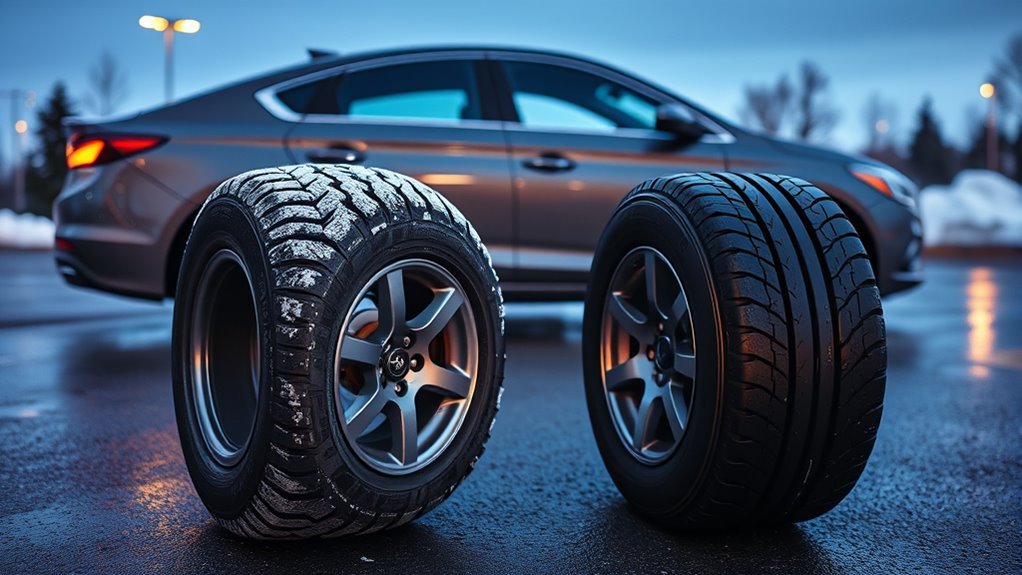
Choosing between all-season and winter tires for your Hyundai Sonata depends on your local weather, road conditions, and how often you drive when temperatures fall below 45°F (7°C). All-season tires can work well in mild climates, but dedicated winter tires give a Sonata much better cold-weather grip when snow, ice, slush, or freezing pavement are part of your normal driving season.
Quick Answer
For a Hyundai Sonata driven through regular snow, ice, or long stretches below 45°F (7°C), winter tires are the safer choice. All-season tires are fine for mild winters and mostly clear roads. All-weather tires sit in the middle because many carry the 3PMSF snow rating, but they still do not match dedicated winter tires in severe winter conditions.
Key Takeaways
- Choose winter tires if your Sonata regularly faces snow, ice, slush, steep roads, or temperatures below 45°F (7°C).
- Choose all-season tires if your winters are mild, roads are usually clear, and snow is rare or light.
- Choose all-weather tires if you want one set year-round and only face moderate winter weather.
- Mount winter tires on all four wheels to keep braking, steering, and rear stability balanced.
- Check the 3PMSF symbol if you need a tire rated for severe snow service.
Understanding the Differences Between All-Season and Winter Tires
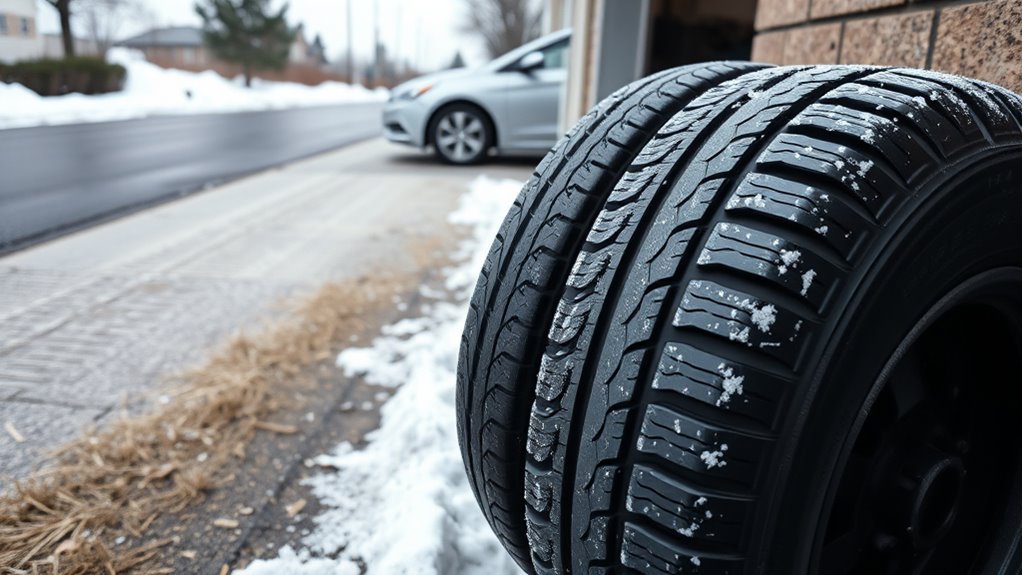
All-season tires are built to handle a wide range of everyday driving conditions: dry pavement, rain, warm weather, and light snow. They are convenient because you can leave them on the car all year in many areas. The trade-off is that they are a compromise tire, not a specialist tire.
Winter tires are built for cold weather first. Their rubber compounds stay more flexible in low temperatures, and their tread patterns use deeper grooves and biting edges to grip snow and slush. Michelin’s winter tire guidance notes that winter tires stay flexible below 45°F (7°C), while all-season tires are designed more for moderate climates and light snow.
For a Hyundai Sonata, that difference matters because the car depends on four small contact patches to accelerate, brake, and steer. Even if your Sonata has modern traction control, stability control, anti-lock brakes, or available all-wheel drive on newer trims, those systems still need tire grip to work well.
Winter vs. All-Season vs. All-Weather Tires for a Hyundai Sonata
| Tire Type | Best For | Main Limitation |
| Winter tires | Snow, ice, slush, freezing pavement, and regular sub-45°F driving | Wear faster in warm weather and require seasonal storage or swapovers |
| All-season tires | Mild climates, rain, dry roads, and occasional light snow | Less grip than winter tires in cold snow and ice |
| All-weather tires | Drivers who want one set of tires and face moderate winter weather | Better than many all-seasons in snow, but not equal to dedicated winter tires |
Why Winter Tires Excel in Cold Weather Conditions
Winter tires help most when the road is cold, slippery, or unpredictable. The biggest advantages are not just in deep snow; they also help on packed snow, icy intersections, slush, and freezing wet roads.
Superior Traction on Ice
Winter tires use rubber and tread designs made for low-temperature grip. Their grooves, sipes, and biting edges help the tire press into snow and move slush away from the contact patch. That gives the Sonata more grip when pulling away from a stop, turning through a slippery corner, or climbing a snow-covered driveway.
The National Highway Traffic Safety Administration notes that winter tires are more effective than all-season tires in deep snow. That is the practical reason drivers in cold regions often keep a dedicated winter set.
Enhanced Stopping Distance
Winter tires can stop much shorter than all-season tires on ice, but the exact distance depends on the vehicle, speed, tire model, road surface, and temperature. In one Tire Rack ice test, studless winter tires stopped from 10 mph in about 21 feet, while all-season tires took nearly 40 feet. In another test reported by MotorTrend, winter tires stopped 23 feet shorter than all-season tires from 12 mph on ice.
On ice, even low-speed stopping-distance differences can be large enough to turn a crash into a close call.
Flexible Rubber Composition
Cold weather changes how tires behave. Winter tires are made to remain pliable in low temperatures, which helps them conform to rough pavement, packed snow, and icy surfaces. All-season tires are more versatile across the year, but they usually do not stay as soft or as grippy in severe winter conditions.
Pros and Cons of All-Season Tires
All-season tires are still the right choice for many Sonata owners. The key is being honest about your winter conditions.
Versatility Across Seasons
All-season tires are convenient because you do not need to schedule seasonal tire changes or store a second set. They are a strong choice if you drive mainly on dry or wet roads, live where winter temperatures are short-lived, and see only occasional light snow.
They are less ideal if your normal winter includes icy mornings, rural roads, hills, lake-effect snow, long commutes before plows arrive, or repeated temperatures below 45°F (7°C).
Cost-Effective Option
All-season tires often cost less up front because you buy one set instead of two. They may also carry longer treadwear warranties than winter tires, depending on the model. However, tread life varies widely by tire design, driving style, alignment, rotation schedule, road surface, and storage conditions.
A second set of winter tires costs more initially, but it also splits annual mileage between two tire sets. If you keep a Sonata for several years in a snowy region, winter tires can be easier to justify because they improve winter control while preserving your warmer-season tires.
How All-Weather Tires Fit Into the Equation
All-weather tires are the middle ground between all-season and winter tires. Many carry the Three-Peak Mountain Snowflake symbol, also called 3PMSF, which means the tire meets a defined severe-snow traction standard. Under U.S. federal tire rules, a snow tire must meet a required snow-traction index and carry the Alpine symbol on the sidewall.
That does not mean all-weather tires are the same as dedicated winter tires. Tire Rack explains that all-weather tires are designed as a year-round solution for areas with four seasons but not enough snow or ice to require dedicated winter tires. They can be a smart compromise, but dedicated winter tires still offer the strongest winter performance.
Note: The 3PMSF mark is a severe-snow service rating. It does not guarantee that a tire will brake, corner, or grip on ice as well as a dedicated winter tire.
Essential Safety Benefits of Winter Tires for Winter Driving
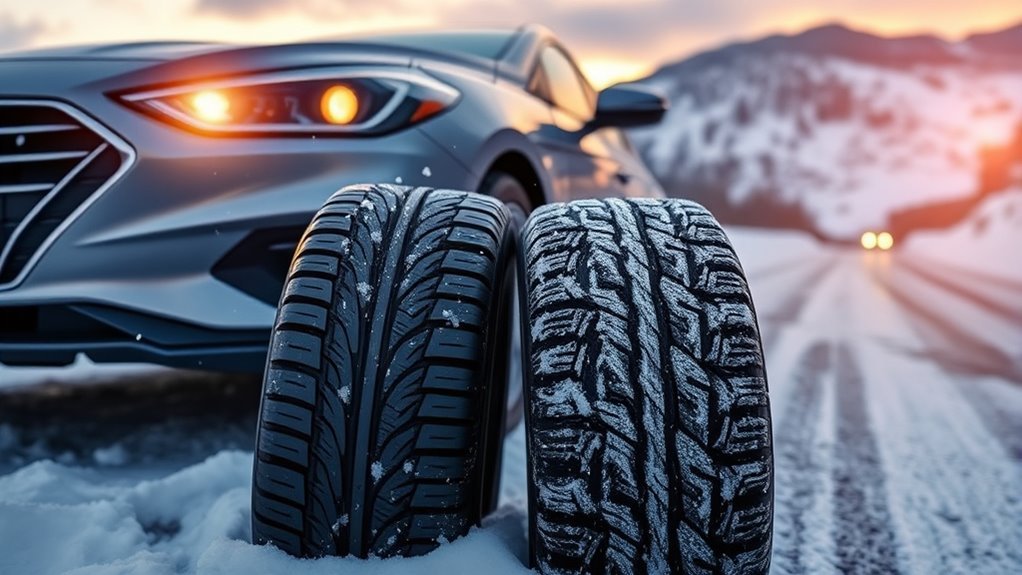
The biggest safety benefit of winter tires is predictable grip. A Hyundai Sonata is a stable midsize sedan, but it still needs traction to brake, turn, and accelerate. Winter tires help reduce wheelspin, improve steering response, and make emergency stops more controlled in cold weather.
For Sonata owners, winter tires can be especially helpful in these situations:
- Stopping at icy intersections
- Driving before roads are fully plowed
- Climbing snowy residential streets
- Turning on packed snow
- Crossing bridges and overpasses that freeze first
- Driving at night when wet roads can refreeze
Winter tires also help the car’s safety systems work better. Anti-lock brakes, traction control, and stability control can reduce skids, but they cannot create grip if the tires cannot bite into the surface.
Hyundai Sonata-Specific Winter Tire Guidance
Before buying winter tires for a Hyundai Sonata, check the driver-side door placard and your owner’s manual for the exact tire size, load rating, speed rating, and recommended cold tire pressure for your model year and trim.
Hyundai’s winter-driving guidance says snow tires should be equivalent in size and type to the vehicle’s standard tires, should use the same inflation pressure as the original tires, and should be mounted on all four wheels to balance handling. Hyundai also recommends snow tires when road temperature is below 45°F (7°C).
Warning: Do not install only two winter tires on a Sonata. Mixing winter and non-winter tires can create uneven grip, which may cause the front or rear of the car to slide unexpectedly.
If you use tire chains, follow Hyundai’s manual and the chain manufacturer’s instructions. Hyundai’s guidance says chains should be installed on the front wheels when required, driven at low speed, and removed once you return to cleared roads. Studded tires and chains may be restricted by local law, so check your state, province, or municipality before using them.
[Products Worth Considering]

The SAFELIFE dial tire tread depth gauge measures tread depth in 1/32 inch increments with clear, easy-to-read 2-inch dial face. Color zones using a traffic light system help you quickly judge whether tread is low, marginal, or ample for safer driving. Built with a durable zinc cast body and a metal detect probe for precise, comfortable use across cars, motorcycles, trucks, and buses.

The Kurgo Seasonal Tire Tote helps protect your car interior, clothes, and garage from tire grime, brake dust, and residue during seasonal tire changes. Its universal design fits most passenger tires between 22" and 31" in diameter, making storage and transport simpler with less mess. Built for rugged, repeated use, it’s machine washable for easy care and comes with a lifetime warranty.

Measure tire tread depth quickly and accurately with this LUMITECO dial gauge that reads in 1/32" increments up to 14/32". The color-coded green/yellow/red zones make it easy to judge tire wear and know when replacement is needed. A rugged, compact design with a protective pouch helps keep the gauge ready for use on cars, trucks, motorcycles, and more.
Are Winter Tires Really Worth the Cost?
Winter tires are worth the cost if your Sonata regularly sees winter roads that are cold, snowy, icy, or slushy. They are less urgent if you live in a warm climate, work from home during storms, or can avoid driving until roads are clear.
When comparing cost, look beyond the tire price. Include mounting or wheel costs, seasonal storage, rotations, tire pressure checks, and expected ownership time. A second wheel set can make seasonal swaps faster and may reduce repeated mount-and-balance costs, but it adds up-front expense.
Also check local rules and insurance programs. For example, Québec requires most vehicles registered in Québec to be winter-ready from December 1 to March 15, while other regions may have highway-specific chain or winter-tire rules. Some insurers may offer winter tire discounts, but programs vary by location and company.
Comparing Stopping Distances: Winter vs. All-Season Tires
Stopping distance is where winter tires often make the strongest case. The exact number changes from one test to another, but the pattern is consistent: on ice and snow, winter tires usually stop shorter than all-season tires.
| Example Test | Winter Tire Result | All-Season Result | Takeaway |
| Tire Rack ice braking test from 10 mph | About 21 ft 2 in | About 39 ft 10 in | Winter tires stopped much shorter on ice in this test. |
| MotorTrend-reported ice test from 12 mph | 34 ft | 57 ft | A 23-foot difference at neighborhood speed can be significant. |
Use these numbers as examples, not promises. Your Sonata’s stopping distance will also depend on tire age, tread depth, road treatment, temperature, vehicle load, ABS behavior, and driver reaction time.
When to Switch Tires for Seasons
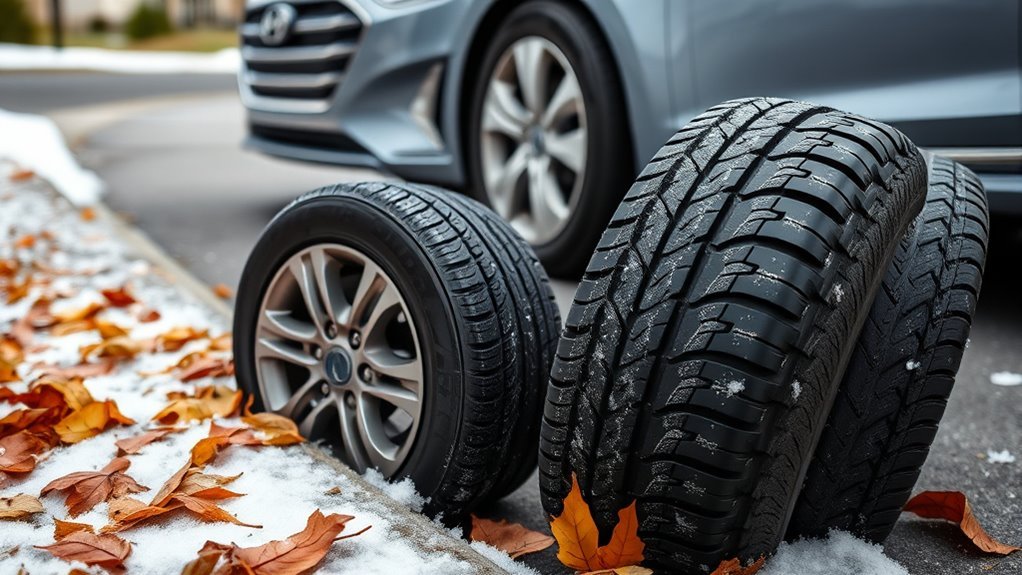
A good rule is to install winter tires when daily temperatures are consistently near or below 45°F (7°C). Do not wait for the first major snowfall if your schedule depends on driving every day. Tire shops fill up quickly once the forecast changes.
Switch back to all-season, all-weather, or summer tires when spring temperatures are consistently above the same range and winter road conditions have passed. Leaving winter tires on warm pavement too long can increase tread wear and reduce handling precision.
Pro Tip: Book your winter tire appointment before the first storm. Switching based on temperature instead of snowfall usually gives you better appointment availability and safer early-season driving.
Choosing Tires Based on Your Driving Conditions
Use your worst normal driving conditions, not your best days, to choose tires for your Hyundai Sonata.
- Choose winter tires if you drive in frequent snow, ice, slush, freezing rain, rural roads, steep streets, or long sub-45°F stretches.
- Choose all-season tires if your winters are mild, roads are usually wet or dry, and snow is rare or quickly cleared.
- Choose all-weather tires if you want one set year-round and need better snow capability than a typical all-season tire without managing a second tire set.
- Choose performance winter tires if you drive a sportier Sonata trim and want better cold-weather handling on dry and wet winter pavement, with some snow ability.
Always buy tires in a size and load rating appropriate for your Sonata. If you change wheel size for winter, confirm the alternate size is approved for your vehicle and clears the brakes, suspension, and wheel wells.
[Products Worth Considering]

This professional wheel and rim brush kit makes it easy to lift brake dust, grime, and dirt from wheels and tires without scratching finishes. The brushes feature soft, metal-free wool heads and a flexible 360-degree rim brush design for reaching hard-to-clean areas. Includes multiple brush types plus accessories for thorough car, motorcycle, and general vehicle detailing.

Monitor tire tread wear with a smart, color-coded depth gauge that shows clear condition ranges at a glance. The bar is range marked for fast, easy readings, helping you maintain safer traction and performance. Each gauge is portable with a pocket clip, and the set includes 20 units for daily use and sharing.

Steelman white tire marking crayons provide high-contrast, semi-permanent marks for repairing and inspecting tires and equipment. They write on wet or dry, smooth or coarse surfaces including rubber, metal, glass, and wood, making them ideal for puncture location and damage outlining. The lead- and zinc-free crayons resist weather and fading yet wipe away when you no longer need the marks.
Maintenance Tips to Get More Life From Your Tires
The right tire choice only works if the tires are maintained. Before each winter season, check tread depth, sidewall condition, tire age, and pressure. Cold weather can lower tire pressure, so check pressures when the tires are cold and adjust them to the placard value for your Sonata.
- Rotate tires on schedule to even out wear.
- Check alignment if the Sonata pulls, vibrates, or wears tires unevenly.
- Store off-season tires in a cool, dry place away from direct sunlight.
- Clean road salt and grime before storing wheels and tires.
- Replace tires that are cracked, damaged, unevenly worn, or too old for safe use.
Finding the Best Deals on Tires for Your Hyundai Sonata
To find a good tire deal, compare the total installed cost, not just the tire price. The best value includes the right tire rating, mounting, balancing, valve stems or TPMS service if needed, road-hazard coverage, rotations, and storage options.
Look for these details before buying:
- The exact tire size on your Sonata’s door placard
- Load index and speed rating that match the vehicle requirements
- 3PMSF marking if you need winter or all-weather snow capability
- Clear treadwear warranty terms
- Installation and seasonal swap costs
- Availability of a second wheel set for easier winter changes
A cheaper tire is not a bargain if it performs poorly in the conditions you actually drive in. For safety, prioritize the tire category that matches your climate first, then compare brands and prices inside that category.
[Products Worth Considering]

Milton S-921 pencil tire pressure gauge helps you maintain optimal tire pressure for passenger cars with accurate readings in PSI and kPa. It features a built-in deflator valve for convenient pressure adjustments, plus a single chuck head and nylon indicator bar for easy use on the go. Built from durable plated brass and designed for reliable performance, it’s a practical road trip and cold-weather maintenance tool.

The Naked Bee Foot Balm for Restoration Heel is an intensive foot treatment designed to penetrate and soften calloused, dry, and cracked feet. Honey, beeswax, and neem oil help deeply moisturize and soothe, while meadowfoam oil supports a protective barrier against moisture loss. Simply roll on to target tired feet and support visibly healthier-looking heels.

Accurately measure tire tread depth with a calibrated gauge marked from 0 to 1 inch in 1/32 inch increments. The color-coded bar helps you quickly identify tread condition ranges, supporting safe driving for trucks, motorcycles, automobiles, and passenger vehicles.
Frequently Asked Questions
Is it better to get winter tires or all-season tires for a Hyundai Sonata?
Winter tires are better if you regularly drive in snow, ice, slush, or temperatures below 45°F (7°C). All-season tires are better if your winters are mild, roads are usually clear, and you want one tire set for the whole year.
Is a Hyundai Sonata good in snow?
A Hyundai Sonata can handle light snow reasonably well with the right tires and careful driving, but it is not a substitute for winter tires in harsh conditions. Tire grip matters more than drivetrain in braking and steering, so a Sonata on winter tires will usually feel more controlled than one on standard all-season tires in snow and ice.
Is there a downside to snow tires?
Yes. Winter tires cost more up front, require seasonal storage or changeovers, and wear faster if used on warm pavement. They may also feel less sharp than performance all-season tires on dry warm roads. Their advantage is much better grip in cold winter conditions.
Can I put winter tires only on the front wheels of my Sonata?
No. Winter tires should be installed on all four wheels. Installing only two can create a traction imbalance, which may cause poor steering, longer stopping distances, or rear-end sliding during turns and braking.
Are all-weather tires enough for a Hyundai Sonata in winter?
All-weather tires can be enough for moderate winters, especially if they carry the 3PMSF symbol. They are a good one-set solution for drivers who see some snow but not severe winter roads. For frequent ice, heavy snow, rural winter roads, or mountain driving, dedicated winter tires are still the safer choice.
Conclusion
For a Hyundai Sonata, winter tires are the best choice when cold, snow, ice, or slush are part of normal driving. All-season tires are practical for mild climates, and all-weather tires are a useful compromise for moderate winter conditions. The safest decision comes down to where you drive, how often temperatures stay below 45°F (7°C), and whether you can avoid roads during winter storms.
If winter weather is routine in your area, choose a full set of properly sized winter tires, keep them inflated to the correct pressure, and switch them seasonally. If your winters are mostly clear and mild, quality all-season or all-weather tires may be enough for your Sonata.
Sources
- NHTSA TireWise: Tire Safety Ratings and Awareness — supports general tire safety and winter tire effectiveness in deep snow.
- Michelin Winter Tire Buying Guide — supports the 45°F (7°C) cold-weather tire guidance and winter tire flexibility.
- 49 CFR §571.139 — supports the U.S. federal snow tire definition and Alpine symbol requirement.
- Hyundai Owner’s Manual: Snow or Icy Conditions — supports Hyundai-specific guidance for snow tires, tire pressure, four-wheel installation, and tire chains.
- Tire Rack Ice Test: Winter/Snow vs. All-Season vs. Summer Tires — supports example braking differences on ice.
- Gouvernement du Québec: Requirements for Winter Tires — supports location-specific winter tire legal requirements.