
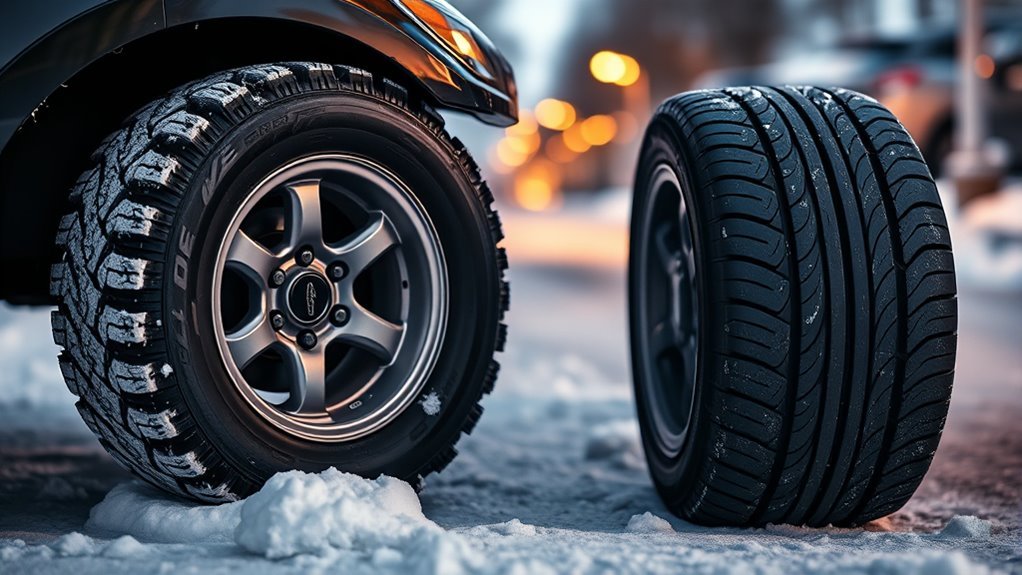
Choosing between studded and studless winter tires for a Hyundai Sonata comes down to the roads you actually drive on: clear ice, packed snow, slush, wet pavement, or mostly plowed city streets. Studded tires can help on smooth ice near freezing, but studless winter tires are usually the better all-around choice for mixed winter driving, daily commuting, and quieter highway use.
Quick Answer
For most Hyundai Sonata drivers, studless winter tires are the smarter choice because they handle snow, slush, cold rain, and plowed pavement without the noise, road damage, and legal limits of studs. Choose studded tires only if your local roads often stay icy, untreated, and legally allow them.
Key Takeaways
- Studded tires work best on smooth ice near freezing, but they are louder, can damage pavement, and may be restricted by local law.
- Studless winter tires are better for mixed winter roads, including packed snow, slush, wet pavement, and cleared city streets.
- For a Hyundai Sonata, always match the tire size, load index, speed rating, and pressure shown in the owner’s manual or driver-door tire placard.
- Install winter tires in a set of four. Mixing two winter tires with two all-season tires can make the car less stable in a turn or emergency stop.
- Studded tires may not count as chains where chains are required, so check posted winter travel rules before mountain trips.
Studded vs. Studless: Understanding Winter Tire Options
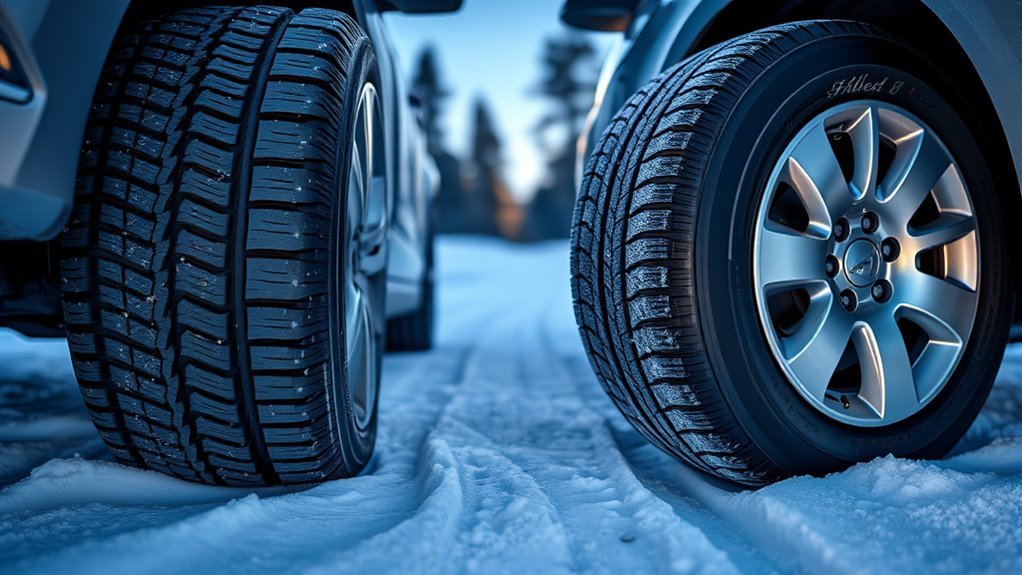
Winter tires are not all built for the same job. A studded winter tire has small metal studs set into the tread. These studs bite into hard ice, especially when the ice is smooth and close to the freezing point. That can make a real difference on rural roads, steep driveways, mountain routes, and untreated icy streets.
A studless winter tire uses soft cold-weather rubber, deep grooves, and many tiny cuts called sipes to grip snow and ice without metal studs. These tires are often marked with the three-peak mountain snowflake symbol, which means the tire meets specific snow traction performance requirements.
A third option is a studdable tire. This is a winter tire designed to accept studs, but it may be sold without studs installed. If you choose this type, decide before the tire is used on the road because many shops will not stud a tire after it has already been driven.
Note: Tire size and chain clearance can vary by Hyundai Sonata year and trim. Before buying winter tires, check the driver-door Tire and Loading Information Label and your Hyundai owner’s manual.
Benefits of Studded Tires for Icy Conditions
Studded tires are most useful when your Sonata regularly faces hard, untreated ice. On this type of road, the metal studs can scratch into the surface and give the tire extra bite. That can improve takeoff, braking, and steering compared with a regular all-season tire.
They make the most sense if you drive in places where ice lingers for days, plows are slow to reach side roads, or your commute includes steep hills that glaze over after freezing rain. In those situations, the extra ice grip may be worth the noise, cost, and seasonal restrictions.
Even then, studded tires are not magic. A front-wheel-drive Sonata still needs gentle throttle, longer following distance, and smooth steering. If the road is covered in deep snow, slush, or wet pavement instead of clear ice, a high-quality studless winter tire can be just as useful, and often more comfortable.
[Products Worth Considering]

Steelman white tire marking crayons provide high-contrast, semi-permanent marks for repairing and inspecting tires and equipment. They write on wet or dry, smooth or coarse surfaces including rubber, metal, glass, and wood, making them ideal for puncture location and damage outlining. The lead- and zinc-free crayons resist weather and fading yet wipe away when you no longer need the marks.

Monitor tire tread wear with a smart, color-coded depth gauge that shows clear condition ranges at a glance. The bar is range marked for fast, easy readings, helping you maintain safer traction and performance. Each gauge is portable with a pocket clip, and the set includes 20 units for daily use and sharing.

The 22800 wheel stud installer makes replacing wheel studs quick and secure, saving time and effort during tire service. It uses a ratchet or impact wrench to pull new studs firmly into place, helping when existing studs are too long. Compatible with most automotive wheels and light-duty truck wheel studs, it’s designed for easy, tool-assisted installation.
Drawbacks of Studded Tires: Noise and Road Damage
The biggest downside of studded tires is that they are noisy on bare pavement. The clicking or grinding sound from the studs can become tiring on daily commutes, especially when roads are only wet or dry.
Studded tires can also damage pavement. The Washington State Department of Transportation says studded tires are legal in Washington only from November 1 through March 31 and estimates that they cause $20 million to $29 million in pavement damage to state-owned asphalt and concrete roadways each year. Rules vary by state and province, so check local law before installing them.
There is also a performance trade-off. A WSDOT review of studded and studless tire traction found that studded tires are most helpful on snow or ice near freezing, while their advantage over studless tires exists only under a narrowing set of conditions. On many cold, snowy, wet, or bare-road surfaces, the advantage can be small or disappear.
Warning: Studded tires may not satisfy chain requirements. On some mountain routes, you may still need chains even if your Sonata has studded tires. Always follow posted signs and current road-condition rules.
Advantages of Studless Winter Tires
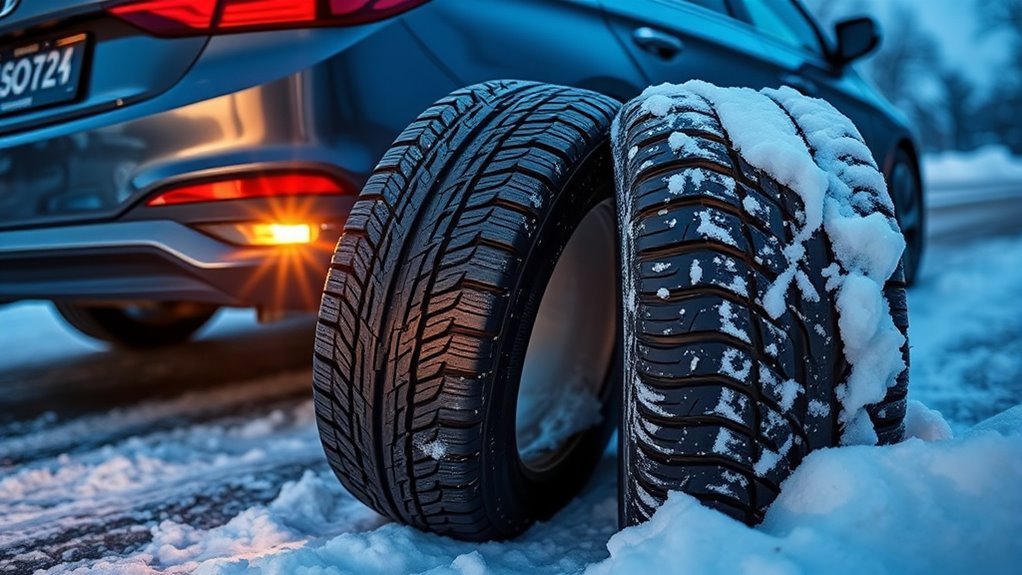
Studless winter tires are the best fit for many Hyundai Sonata owners because they handle the mixed conditions most drivers see: plowed roads, packed snow, slush, cold rain, and occasional icy patches. They also ride more quietly than studded tires and do not chew up pavement in the same way.
The key is the rubber compound. Winter tires are designed to stay flexible in cold weather, helping the tread conform to the road. Transport Canada notes that all-season and summer tires begin to lose elasticity below 7°C, while winter tires keep their elasticity and grip at much lower temperatures.
For a Sonata used as a commuter car, that broad winter performance matters. You may start the morning on icy neighborhood streets, drive on a salted highway, then park on a wet city road by lunch. A studless tire is built for that variety.
Pro Tip: Look for the three-peak mountain snowflake symbol, not just “M+S.” The snowflake symbol is the better sign that the tire was built for severe snow service.
Studless Winter Tires: Performance in Mixed Conditions
Studless winter tires shine when the road surface keeps changing. Their tread blocks, sipes, and grooves help move water and slush away from the contact patch, while the softer compound helps the tire stay pliable in cold weather.
That makes them well suited to urban and suburban Sonata drivers. If your roads are usually plowed but still have slush piles, packed snow, icy intersections, and cold wet pavement, studless tires offer a balanced mix of grip, braking, comfort, and noise control.
Enhanced Traction Features
Modern studless tires use several design features to create grip without metal studs:
| Feature | What It Does | Why It Helps a Sonata |
|---|---|---|
| Cold-weather rubber | Stays flexible in low temperatures | Improves braking and steering feel on cold pavement |
| Sipes | Create biting edges in snow and light ice | Helps with stop-and-go city driving |
| Deep grooves | Channel slush and water away | Adds control on messy, partially plowed roads |
| 3PMSF marking | Shows the tire meets snow traction requirements | Makes shopping easier and safer |
Versatility in Winter Conditions
Studless tires are usually the better match if you drive on a mix of snow, slush, wet roads, and dry pavement. They are also easier to live with because they do not have the same seasonal stud restrictions in many areas.
If your winters are mild but still cold, consider a 3PMSF-rated all-weather tire. It is not the same as a dedicated winter tire, and it may not match a true winter tire on ice, but it can be a practical option if your Sonata rarely sees deep snow or untreated ice.
Comparing Performance: Studded vs. Studless Tires for the Sonata
The Hyundai Sonata is a midsize sedan, so winter tire choice should focus on predictable braking, stable steering, and correct fitment. Use the same tire type on all four wheels, and do not mix studded and studless tires on the same car.
| Driving Condition | Better Choice | Why |
|---|---|---|
| Smooth ice near freezing | Studded | Studs can bite into the ice surface. |
| Packed snow | Studless or studded | Good winter tread matters more than studs alone. |
| Slush and wet pavement | Studless | Grooves and sipes clear slush without stud noise. |
| Dry winter pavement | Studless | Quieter ride and less pavement wear. |
| Mostly plowed city roads | Studless | Better all-around comfort and traction balance. |
| Untreated rural ice | Studded if legal | Extra ice bite can be useful where roads stay icy. |
[Products Worth Considering]

Keep your tires properly inflated with this analog VONDIOR tire pressure gauge, designed for fast, easy readings without batteries. The swiveling, two-axis hose and large glow dial help you measure at any tire angle with instant visibility. Built with a protective rubber shield, it supports durable, low-maintenance use for cars and trucks.

The SAFELIFE dial tire tread depth gauge measures tread depth in 1/32 inch increments with clear, easy-to-read 2-inch dial face. Color zones using a traffic light system help you quickly judge whether tread is low, marginal, or ample for safer driving. Built with a durable zinc cast body and a metal detect probe for precise, comfortable use across cars, motorcycles, trucks, and buses.

Measure tire tread depth quickly and accurately with this LUMITECO dial gauge that reads in 1/32" increments up to 14/32". The color-coded green/yellow/red zones make it easy to judge tire wear and know when replacement is needed. A rugged, compact design with a protective pouch helps keep the gauge ready for use on cars, trucks, motorcycles, and more.
Regional Considerations: Which Tire Is Best for Your Area?
Your local winter pattern matters more than the tire label alone. A driver in a snowy mountain town may need a different setup than a Sonata owner commuting on salted suburban highways.
[Products Worth Considering]

The Kurgo Seasonal Tire Tote helps protect your car interior, clothes, and garage from tire grime, brake dust, and residue during seasonal tire changes. Its universal design fits most passenger tires between 22" and 31" in diameter, making storage and transport simpler with less mess. Built for rugged, repeated use, it’s machine washable for easy care and comes with a lifetime warranty.

Milton S-921 pencil tire pressure gauge helps you maintain optimal tire pressure for passenger cars with accurate readings in PSI and kPa. It features a built-in deflator valve for convenient pressure adjustments, plus a single chuck head and nylon indicator bar for easy use on the go. Built from durable plated brass and designed for reliable performance, it’s a practical road trip and cold-weather maintenance tool.

Accurately measure tire tread depth with a calibrated gauge marked from 0 to 1 inch in 1/32 inch increments. The color-coded bar helps you quickly identify tread condition ranges, supporting safe driving for trucks, motorcycles, automobiles, and passenger vehicles.
Climate Impact on Tires
If winter means frequent freezing rain, shaded icy hills, and untreated roads, studded tires may be worth considering where they are legal. If winter means cold mornings, plowed roads, slush, and occasional snowstorms, studless winter tires are usually the better daily-driving choice.
For areas with cold weather but limited snow, a 3PMSF-rated all-weather tire can be a compromise. For areas with heavy snow, steep grades, or mountain passes, dedicated winter tires are the safer pick.
Road Conditions Assessment
Use this quick guide before buying:
| Your Normal Road Condition | Recommended Tire Type |
|---|---|
| Frequent untreated ice | Studded winter tires, if legal |
| Snow, slush, wet pavement, and cleared roads | Studless winter tires |
| Mild winters with occasional snow | 3PMSF all-weather tires or studless winter tires |
| Mountain travel with chain signs | Winter tires plus approved chains or traction devices as required |
Local Tire Regulations
Studded tire rules are local. Some places allow them only during a fixed winter season, some restrict the type of stud, and some roads still require chains even when you have winter tires installed. Before buying studded tires, check your state, province, or transportation department rules for the current season.
If you travel across state lines, do not assume your home-state rule applies everywhere. A legal studded setup in one state may be illegal or out of season in another.
Tips for Maintaining Your Winter Tires for Optimal Performance
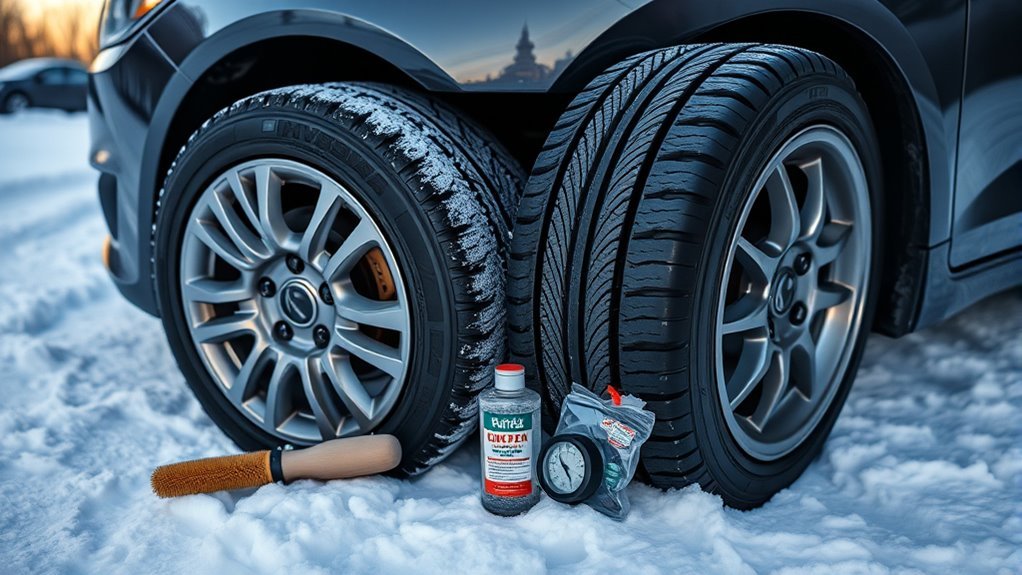
Winter tire performance depends on maintenance as much as tire type. A worn, underinflated premium winter tire can perform worse than a well-maintained midrange tire.
- Check pressure cold: NHTSA recommends checking tire pressure at least once a month when the tires are cold, meaning the car has not been driven for at least three hours.
- Use the placard PSI: Inflate to the pressure on the Sonata’s driver-door label or owner’s manual, not the maximum pressure printed on the tire sidewall.
- Watch tread depth: NHTSA says tread should be at least 2/32 inch, but winter traction drops before tires reach the legal minimum. Transport Canada advises against using tires worn close to 5/32 inch on snow-covered roads.
- Rotate regularly: Follow your Hyundai maintenance schedule and tire warranty. As a general range, NHTSA notes that rotation every 5,000 to 8,000 miles may be recommended by the vehicle manufacturer.
- Install four matching tires: Use the same type, size, load index, and speed rating on all four wheels unless Hyundai specifies otherwise.
- Store them properly: Keep off-season tires clean, dry, cool, and away from direct sunlight or heat sources.
Note: If your Sonata uses directional winter tires, they usually rotate front-to-rear on the same side. If you are unsure, ask the installer to mark each wheel position before storage.
Frequently Asked Questions
Are studless snow tires as good as studded tires?
Studless snow tires can be as good as, or better than, studded tires in many mixed winter conditions such as packed snow, slush, wet pavement, and cold dry roads. Studded tires still have an advantage on smooth ice near freezing, but that advantage is narrower than many drivers assume.
Do studless winter tires work on ice?
Yes, quality studless winter tires work on ice because their rubber stays flexible and their tread creates many biting edges. However, no tire makes ice safe at normal dry-road speeds. Slow down, brake early, and leave extra space.
When should I use studless tires on a Hyundai Sonata?
Use studless tires if your Sonata sees a mix of plowed roads, packed snow, slush, wet pavement, and occasional ice. They are the best everyday winter choice for most city, suburban, and highway driving.
Is it better to have studded tires or not?
It is better to have studded tires only if you regularly drive on untreated ice and your local law allows them. For most Hyundai Sonata drivers, studless winter tires are quieter, more versatile, and easier to use legally through the winter season.
Can I put only two winter tires on my Sonata?
No. Install winter tires in a set of four. Mixing winter tires with all-season tires can reduce stability because the front and rear of the car may grip differently in a turn, lane change, or emergency stop.
Do studded tires replace chains?
Not always. Some roads require chains or approved traction devices even if your vehicle has studded tires or winter tires. Check posted signs and current road rules before traveling through mountain passes or chain-control areas.
Conclusion
For most Hyundai Sonata drivers, studless winter tires are the best overall choice. They handle the widest range of real winter conditions, ride more quietly, and avoid the road-damage and legal issues that come with metal studs.
Choose studded tires only if you regularly drive on untreated icy roads, local laws allow them, and you accept the extra noise and seasonal limits. Either way, buy the correct Sonata tire size, install four matching tires, check pressure often, and drive as if ice can still win.
Sources
- NHTSA Winter Weather Driving Tips — tire inspection, tread depth, winter driving preparation.
- NHTSA Tire Safety Month — cold tire pressure checks, tire size placard, rotation guidance.
- Transport Canada: Using Winter Tires — 3PMSF symbol, cold-weather grip, four-tire installation, winter tread guidance.
- WSDOT Research: Studded and Studless Tire Traction and Safety — performance differences between studded and studless winter tires.
- WSDOT Winter Snow and Ice Preparation — studded tire dates, chain requirements, and pavement damage estimates.
- Hyundai Owner’s Manual Portal — model-specific tire size, pressure, and equipment guidance.
