What Is a Studdable Tire? Complete Guide & Best Options

A studdable tire is a winter tire made with small pre-molded holes that can accept metal studs for extra bite on ice. It can be driven without studs, or it can be professionally studded where studded tires are legal. The right choice depends on your local laws, road conditions, vehicle fitment, and how often you drive on glare ice or hard-packed snow.
Quick Answer
A studdable tire is a winter tire with built-in stud holes. You can run it as a regular winter tire or add approved metal studs for stronger grip on smooth ice and hard-packed snow. Studs help most in severe icy climates, but they are noisy, restricted by law in many places, and can damage pavement.
Key Takeaways
- A studdable tire is different from a factory-studded tire: it has holes for optional studs, but the studs are not always installed.
- Studs help most on smooth ice, black ice, and hard-packed snow; studless winter tires are often better for mixed pavement, slush, and everyday city driving.
- Local law matters. Some places allow studs only during set winter dates, while others restrict or ban them.
- Use the exact tire size, load index, speed rating, and stud type approved for your vehicle and tire model.
- For safety, have a tire shop install studs unless you have the correct stud gun, stud size, tire specification, and experience.
At a Glance
| Best For | Frequent ice, mountain passes, rural roads, hard-packed snow, and freeze-thaw areas |
| Difficulty | Choosing: easy to moderate; stud installation: best handled by a tire professional |
| Tools Needed | Tread-depth gauge, tire-pressure gauge, vehicle placard or owner’s manual, and professional studding equipment if studs are installed |
| Cost | Varies by tire size, brand, vehicle, retailer, mounting/balancing, and whether studs are added |
What Is a Studdable Tire?
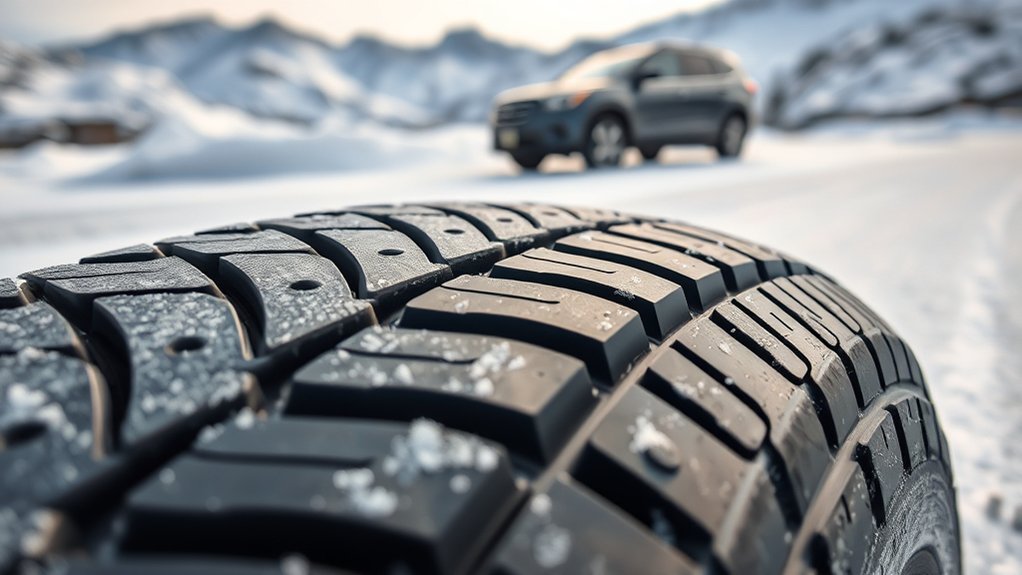
A studdable tire is a dedicated winter tire built with small holes in the tread blocks. Those holes are designed to accept approved metal studs. The tire can usually be driven without studs, but if your climate and local laws justify it, a tire shop can install studs for more mechanical bite on ice.
That makes a studdable tire a flexible middle ground between a studless winter tire and a factory-studded tire. You get a cold-weather rubber compound, winter tread blocks, deep grooves, and siping. If the tire also carries the Three-Peak Mountain Snowflake severe-snow designation, it has been identified for severe snow service by tire-industry standards.
Note: “Studdable” does not mean “studs are already installed.” It means the tire is designed so approved studs can be added. Always check the tire’s sidewall, product page, and your tire shop’s fitment data before buying studs.
[Products Worth Considering]

ETENWOLF’s tire pressure gauge helps you quickly and accurately check tire PSI across cars, trucks, motorcycles, bikes, and more. It’s manually calibrated to ANSI B40.1 Grade A for reliable readings, includes a large glow dial for easy nighttime viewing, and features a 360-degree swivel chuck for use at any valve angle. The gauge also works consistently in extreme hot or cold weather.

Accurately measure tire tread depth with a calibrated gauge marked from 0 to 1 inch in 1/32 inch increments. The color-coded bar helps you quickly identify tread condition ranges, supporting safe driving for trucks, motorcycles, automobiles, and passenger vehicles.

Measure tire tread depth quickly and accurately with this LUMITECO dial gauge that reads in 1/32" increments up to 14/32". The color-coded green/yellow/red zones make it easy to judge tire wear and know when replacement is needed. A rugged, compact design with a protective pouch helps keep the gauge ready for use on cars, trucks, motorcycles, and more.
How Studdable Tires Grip Ice
When studs are installed, each metal pin protrudes slightly from the tread and presses into slick ice. This creates a mechanical grip that rubber alone cannot always provide on smooth ice. That extra bite can improve starting, braking, and cornering on black ice, glare ice, and hard-packed snow.
| Feature | What It Does | Best Conditions |
|---|---|---|
| Metal studs | Bite into ice for added mechanical grip | Glare ice, black ice, hard-packed snow |
| Winter rubber compound | Stays more flexible in freezing weather than all-season rubber | Cold pavement, snow, mixed winter roads |
| Deep tread and sipes | Creates biting edges and helps move slush and snow | Loose snow, packed snow, slush |
The tradeoff is that studs are not magic on every surface. On bare, wet, or dry pavement, they can add noise, reduce ride comfort, and contribute to pavement wear. The Oregon Department of Transportation notes that studded tires can be more effective on icy roads but less effective in many other conditions because they can reduce traction between the tire and the road.
Studs are most useful when ice is the main problem. If your winter driving is mostly plowed pavement, wet roads, or slush, a high-quality studless winter tire may be the better everyday choice.
Studdable vs. Studded vs. Studless Tires
These tire names sound similar, but they are not the same. The easiest way to choose is to match the tire type to the road you actually drive most often.
| Tire Type | What It Means | Best Use | Main Tradeoff |
|---|---|---|---|
| Studdable winter tire | Winter tire with holes for optional metal studs | Drivers who may need studs for part of the winter | Requires legal check and proper stud installation |
| Studded winter tire | Tire already fitted with metal studs | Severe ice, rural roads, mountain roads | Noise, road wear, legal restrictions |
| Studless winter tire | Winter tire that relies on rubber compound, tread design, and sipes | Snow, slush, wet cold roads, city driving | May not match studs on smooth glare ice |
| All-weather / 3PMSF tire | Year-round tire that carries the severe-snow symbol | Milder winters and drivers who do not want seasonal swaps | Usually not as strong as dedicated winter tires in deep cold or severe ice |
Studded Tire Ice Grip
Studs give the clearest advantage on smooth ice and hard-packed snow. They help the tire dig through the slick surface instead of depending only on rubber friction. This can be valuable on steep rural roads, frozen gravel roads, icy driveways, and shaded mountain routes where ice lingers for days.
But that advantage shrinks when the road is bare, wet, rough, or only lightly snowy. Studs can be louder than studless tires, and they can wear road surfaces. This is why many regions limit studded tires to specific winter dates or ban them entirely.
Studless Tire Winter Balance
Studless winter tires are often the better choice for mixed winter driving. They use soft winter compounds, aggressive siping, and tread designs to grip snow and cold pavement without metal studs. They are usually quieter, kinder to pavement, and legal year-round in more places than studded tires.
Choose studless winter tires if your roads are usually plowed, wet, slushy, snowy, or only occasionally icy. Choose studdable tires if ice is a frequent, serious problem and you are legally allowed to run studs.
When Studdable Tires Are Worth It
Studdable tires are worth considering when your winter risk is mostly ice, not just snow. They make the most sense if you regularly face one or more of these conditions:
- Glare ice or black ice that forms often
- Long freeze-thaw cycles that turn wet pavement into ice overnight
- Mountain passes, steep grades, or shaded roads
- Rural roads with delayed plowing or sanding
- Hard-packed snow that stays on the road for long periods
- Work routes where you cannot simply stay home during icy weather
Warning: Do not buy or install studs until you check your current state, province, or local road rules. Some places allow studs only between specific dates; others restrict stud size, vehicle type, or road use.
Ice-Prone Roads
On roads that stay icy instead of simply snowy, studdable tires can add a useful safety margin. The studs help with braking and steering when the tire meets smooth ice. This is where studded traction matters most.
If your roads are usually cleared to bare pavement, studs may not be worth the noise, legal limits, and road-wear concerns. In that case, a studless winter tire or an all-weather tire with the severe-snow symbol may be more practical.
Severe Winter Climate
In severe winter climates, the value of a studdable tire is flexibility. You can choose the tire for its winter compound and tread, then add studs if your local conditions and laws call for them. This works best for drivers who know they will face ice often enough to justify the tradeoffs.
In milder winter climates, studs usually make less sense. They can wear faster on bare pavement, increase noise, and may be illegal for much or all of the year.
Mountain and Rural Driving
Mountain and rural roads are often where studdable tires make the strongest case. These routes may have steep grades, shaded curves, less frequent maintenance, frozen gravel, and long stretches without quick help nearby.
- Use studs for repeated ice and hard-packed snow.
- Use studless winter tires for mixed snow, slush, and paved-road comfort.
- Use chains where road signs require them, even if you have winter tires.
- Carry emergency gear if you drive isolated winter routes.
Where You Can Use Studdable Tires

You can use studdable tires without studs anywhere a winter tire is legal and properly fitted. The legal issue begins when studs are installed. Studded tire laws vary by state, province, country, road agency, season, and sometimes vehicle type.
For example, Oregon allows studded tires from Nov. 1 through March 31 and warns that off-season use can lead to fines. Washington also uses a Nov. 1 through March 31 studded-tire season and states that there are no individual “out-of-state” waivers. These are only examples, not a rule for every location.
Before installing studs, check your current Department of Transportation, motor vehicle agency, or local road authority. Also check your travel route if you cross state or provincial lines, because the tire that is legal where you live may not be legal where you drive.
How to Choose Studdable Tires
To choose the right studdable tires, start with fitment and safety before brand or price. A tire that does not match your vehicle’s required size, load rating, and speed rating is the wrong tire even if it has excellent reviews.
- Check your vehicle placard and owner’s manual. Confirm tire size, load index, speed rating, and inflation pressure.
- Confirm winter certification. Look for the Three-Peak Mountain Snowflake symbol if you need severe-snow performance.
- Verify stud compatibility. Use only the stud size and stud pattern approved for that tire model.
- Match all four tires. This is especially important for AWD and 4WD vehicles, where mismatched tire diameter can stress the drivetrain.
- Choose based on your road surface. Frequent smooth ice favors studs; mixed slush and pavement often favors studless winter tires.
- Check local laws before buying studs. Do this before you pay for installation.
- Use a qualified installer. Stud depth, alignment, and seating matter for safety and stud retention.
Pro Tip: If you are not sure whether you need studs, buy the winter tire that best matches your normal roads first. In many areas, a strong studless winter tire is easier to live with than a studded setup.
Studdable Tire Examples to Compare
There is no single “best” studdable tire for every driver. Vehicle size, wheel size, climate, road surface, budget, noise tolerance, and local law all matter. Still, these examples are useful starting points when you compare current options:
- Firestone Winterforce 2: a winter tire line that Firestone lists as 3PMSF-certified and pinned for #11 studs.
- General AltiMAX Arctic 12: a studdable winter tire for passenger cars and crossovers that General Tire lists with the 3PMSF symbol.
- Goodyear WinterCommand: a winter tire family to compare if you want a mainstream winter option for snow and ice conditions.
- Nokian Hakkapeliitta 10 or Hakkapeliitta 01: strong examples of factory-studded or adaptive-studded winter technology, but not conventional “add studs later” studdable tires in the same sense as a pinned tire.
Use this section as a comparison list, not a final buying recommendation. Always confirm current availability, tire size, load rating, stud rules, and whether the tire is sold studless, studdable, factory-studded, or adaptive-studded.
[Products Worth Considering]

Steelman white tire marking crayons provide high-contrast, semi-permanent marks for repairing and inspecting tires and equipment. They write on wet or dry, smooth or coarse surfaces including rubber, metal, glass, and wood, making them ideal for puncture location and damage outlining. The lead- and zinc-free crayons resist weather and fading yet wipe away when you no longer need the marks.

Measure tyre tread depth precisely with a digital gauge that reads in both MM and inches, helping you monitor safe driving conditions. The large LCD screen is easy to operate, and the compact tool fits for cars, trucks, and motorcycles. It provides high accuracy with a 0-25.4mm range and includes a 1-year warranty for added peace of mind.

Monitor tire tread wear with a smart, color-coded depth gauge that shows clear condition ranges at a glance. The bar is range marked for fast, easy readings, helping you maintain safer traction and performance. Each gauge is portable with a pocket clip, and the set includes 20 units for daily use and sharing.
How to Install or Remove Studs
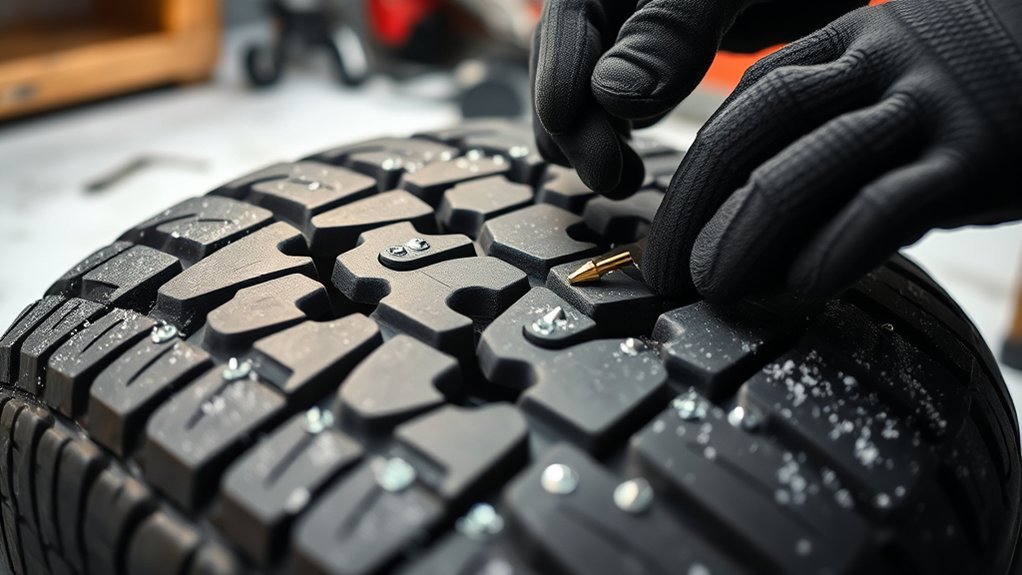
Stud installation is not just a matter of pushing metal pins into rubber. The installer must use the correct stud size, correct stud gun, correct pressure, and the tire maker’s approved stud pattern. Poor installation can damage the tire, cause uneven stud seating, or lead to studs coming loose.
For most drivers, the best answer is simple: have a tire shop install the studs before the tires are used. Stud holes can collect dirt and wear after driving, and not every used studdable tire is a good candidate for later studding.
Warning: Never add studs to a tire unless the tire is specifically designed for studs and the stud type matches the tire. Do not stud damaged tires, badly worn tires, or tires that do not have approved stud holes.
Removing studs may be possible, but it is not a perfect reset. The tire may keep empty stud holes, and its winter performance may not match a dedicated studless tire. If your goal is quiet mixed-road winter driving, buy a studless winter tire instead of planning to remove studs later.
How to Care for Studdable Tires
Good care keeps studdable tires safer and helps them last longer. Use the same tire-maintenance habits you would use for any winter tire, plus extra attention to stud condition if studs are installed.
- Check tire pressure cold. Use the pressure listed on the vehicle placard or owner’s manual, not the number molded into the tire sidewall.
- Inspect the tread and sidewalls monthly. Look for cuts, bulges, cracks, uneven wear, and exposed material.
- Check stud condition. Look for missing, loose, tilted, or badly worn studs.
- Rotate on schedule. Follow the vehicle or tire manufacturer’s rotation interval to reduce uneven wear.
- Measure tread depth. Legal wear bars are commonly at 2/32 inch, but winter traction can decline before that. Many drivers replace winter tires earlier for snow performance.
- Store tires correctly. Keep them cool, dry, clean, and out of direct sunlight when they are off the vehicle.
- Remove them after the winter season. Do not run winter tires or studs deep into warm weather unless the tire maker and local law allow it.
The National Highway Traffic Safety Administration recommends checking tire pressure, using the vehicle’s recommended cold inflation pressure, rotating tires, and confirming tire size from the vehicle placard or owner’s manual. The Tire Industry Association also recommends inspecting tread, sidewalls, wear indicators, bulges, and irregular wear.
Common Mistakes to Avoid
- Buying studs before checking the law: studded tires may be restricted by date, road, or vehicle type.
- Assuming all winter tires are studdable: only tires built with approved stud holes should be studded.
- Using studs for mostly dry pavement: this adds noise and can reduce the benefits you expected.
- Mixing tire types: do not mix studded and non-studded tires on the same vehicle unless the tire maker and vehicle maker allow it.
- Ignoring AWD fitment: mismatched tread depth or tire diameter can cause drivetrain problems on some AWD vehicles.
- Waiting too long to replace winter tires: legal tread depth is not always the same as safe winter performance.
Frequently Asked Questions
What’s the difference between studded and studdable tires?
A studded tire already has metal studs installed. A studdable tire has pre-molded holes that allow approved studs to be added later. You can often drive a studdable winter tire without studs, but it will not have the same ice bite as the same tire with properly installed studs.
Can you drive studdable tires without studs?
Yes, in many cases you can drive studdable winter tires without studs. They still work as winter tires because they use cold-weather rubber and winter tread patterns. However, if you know you will never use studs, a dedicated studless winter tire may be quieter and better balanced for mixed roads.
How much do studded or studdable tires cost?
The cost depends on tire size, vehicle type, brand, load rating, retailer, season, mounting and balancing, and whether studs are installed. Budget passenger-car winter tires may cost far less than premium SUV or truck winter tires. Always price the full installed set, not just one tire.
Can you drive with studded tires all winter?
You can drive with studded tires during winter only if your local law allows it. Some places allow studs during a specific date window, while others restrict or ban them. Even when legal, studs are best reserved for frequent ice and hard-packed snow, not mostly dry pavement.
How long do studded tires last?
Lifespan depends on mileage, road surface, alignment, rotation, inflation, driving style, and how often the tires run on bare pavement. Inspect tread depth, sidewall condition, and stud condition regularly. Replace tires if they are worn, damaged, cracked, unevenly worn, or no longer provide safe winter grip.
Are studdable tires legal everywhere?
Studdable tires without studs are generally treated like winter tires, but studded tires are not legal everywhere. Once metal studs are installed, state, provincial, or local rules may limit when and where you can drive them. Check the current rule for every area where you plan to drive.
Conclusion
Studdable tires are a smart option when you want winter-tire flexibility and may need metal studs for serious ice. They are most useful for drivers who face smooth ice, black ice, hard-packed snow, mountain roads, or rural routes that stay frozen. They are not the best match for every winter driver.
If your roads are mostly plowed, wet, slushy, or dry, a studless winter tire may be quieter, simpler, and easier to live with. If ice is a daily hazard and studs are legal where you drive, a properly fitted and professionally studded tire can add valuable grip. The safest choice is the tire that matches your vehicle, your laws, and your real winter roads.
Sources
- U.S. Tire Manufacturers Association — Severe Snow Conditions definition — supports 3PMSF/severe-snow context.
- Oregon Department of Transportation — Traction Tires — supports studded tire use, legal season example, and performance/road-wear cautions.
- Oregon Department of Transportation — Snow Zone Signs — supports traction tire definitions, 3PMSF sidewall marking, and studded tire terminology.
- NHTSA TireWise — supports tire pressure, rotation, fitment, and tire-safety guidance.
- Tire Industry Association — Tire Replacement — supports tread, sidewall, wear indicator, and replacement inspection guidance.
- General Tire — AltiMAX Arctic 12 — supports an example of a studdable winter tire with 3PMSF marking.
[Products Worth Considering]

The SAFELIFE dial tire tread depth gauge measures tread depth in 1/32 inch increments with clear, easy-to-read 2-inch dial face. Color zones using a traffic light system help you quickly judge whether tread is low, marginal, or ample for safer driving. Built with a durable zinc cast body and a metal detect probe for precise, comfortable use across cars, motorcycles, trucks, and buses.

The 22800 wheel stud installer makes replacing wheel studs quick and secure, saving time and effort during tire service. It uses a ratchet or impact wrench to pull new studs firmly into place, helping when existing studs are too long. Compatible with most automotive wheels and light-duty truck wheel studs, it’s designed for easy, tool-assisted installation.
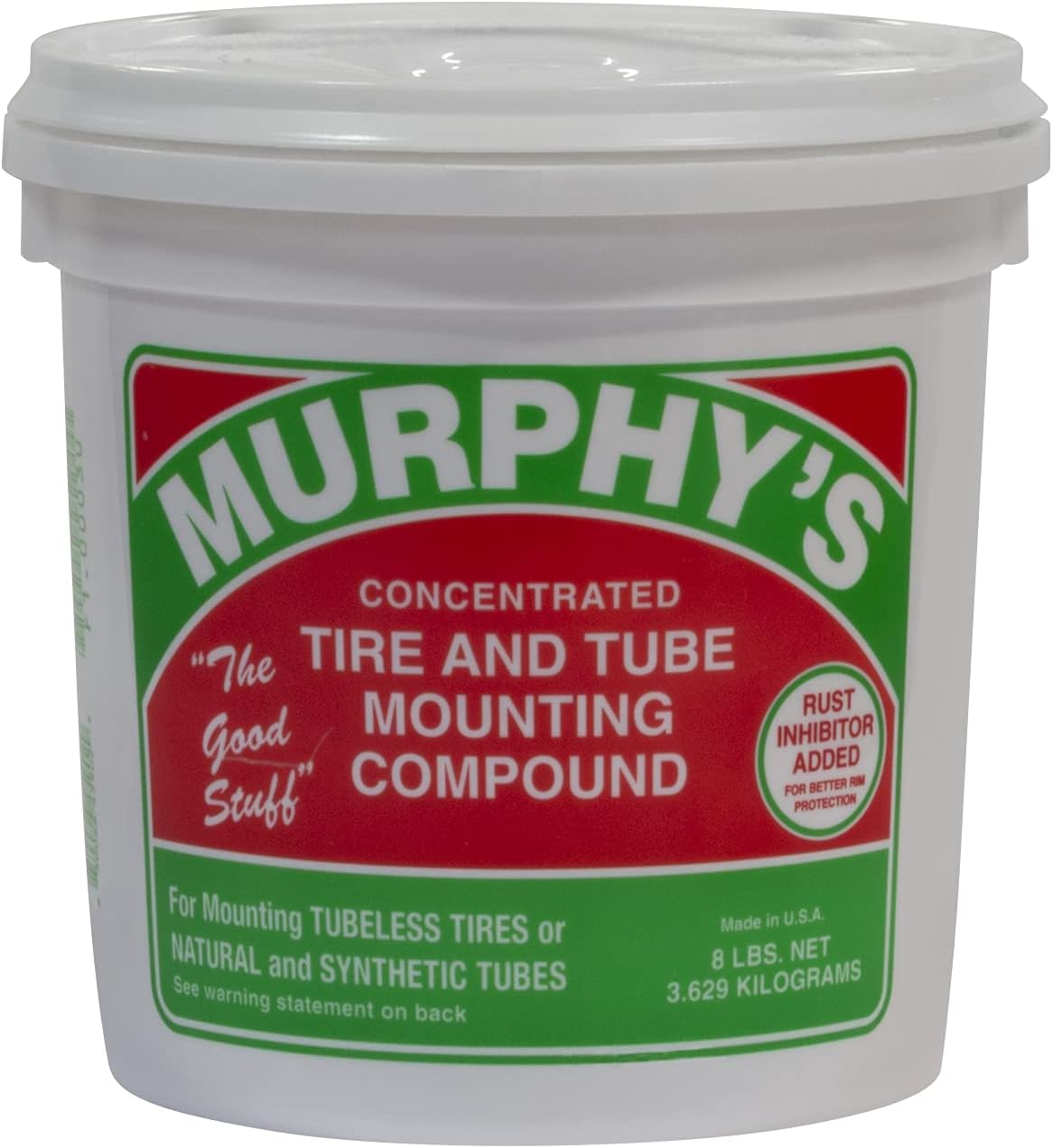
A concentrated tire and tube mounting compound designed to help simplify mounting rubber tires and tubes on passenger, semi truck, construction, and OTR applications. Its ultra-thick formula packs beads effectively and includes rust inhibitors to help protect against corrosion during use.

Related Articles
How Much Do Tire Chains Cost? Price Guide
Tire chains can cost anywhere from $50 to $200, but what drives the price difference may surprise you.
Read More
How Much Do Winter Tires Cost? Price Guide
Keen to know winter tire costs? Discover price ranges, hidden fees, and money-saving tips before you buy.
Read More
Can You Drive Studded Tires in Summer? Legal Rules
Just when you think studded tires are fine year-round, summer laws and hidden penalties may say otherwise—find out what could surprise you.
Read More