
What Does All-Season Really Mean for Honda Accord Tires

All-season tires can be a smart fit for a Honda Accord if you drive mostly on dry roads, rain, and occasional light snow. They are built to balance comfort, tread life, fuel economy, and year-round convenience, but they are not the safest choice for frequent ice, deep snow, or severe winter driving.
Quick Answer
All-season tires are good for a Honda Accord in mild to moderate climates where roads are mostly dry, wet, or lightly snowy. Choose winter tires for regular ice, packed snow, or mountain travel. For stronger winter grip without seasonal swaps, look for all-weather tires with the Three-Peak Mountain Snowflake symbol.
Key Takeaways
- All-season tires suit most Honda Accord drivers who face rain, warm pavement, cool weather, and occasional light snow.
- Standard all-season tires are not the same as winter tires; winter tires are still better for frequent snow, ice, and freezing road conditions.
- Some all-season or all-weather tires carry the Three-Peak Mountain Snowflake symbol, so always check the sidewall and tire specifications before buying.
- Use the tire size, load rating, speed rating, and cold pressure listed on your Accord’s driver-side doorjamb label or owner’s manual.
- Check pressure monthly, rotate tires as recommended by Honda’s Maintenance Minder, and replace tires before worn tread compromises safety.
At a Glance
| Time Required | About 10 minutes for a monthly pressure and tread check; longer if you are comparing tire options before purchase. |
| Difficulty | Easy for inspection and pressure checks; professional installation is recommended for mounting, balancing, alignment, or tire replacement. |
| Tools Needed | Tire pressure gauge, tread-depth gauge or penny, flashlight, and your Honda Accord tire placard or owner’s manual. |
| Cost | A gauge usually costs little; a set of quality Accord-size all-season tires varies by brand, size, speed rating, warranty, and installation fees. |
Understanding All-Season Tires for Your Honda Accord

All-season tires are designed to give your Honda Accord dependable everyday performance without switching tires every spring and fall. They usually use a tread pattern that balances dry-road stability, wet-road water evacuation, quiet ride quality, and limited light-snow traction.
That balance is the reason they are popular on midsize sedans like the Accord. A commuter who drives through rain, hot pavement, cool mornings, and the occasional dusting of snow will often get the best mix of comfort and convenience from a quality all-season tire.
The tradeoff is that “all-season” does not mean “best in every season.” A tire built to last longer and ride quietly in summer cannot match the cold-weather rubber compound and aggressive siping of a true winter tire on ice or packed snow.
Note: Before buying tires, check the tire and loading information label on your Accord’s driver-side doorjamb. Honda uses that label to list the original tire size, vehicle load limit, and proper cold tire pressure for your specific model.
[Products Worth Considering]

Monitor tire tread wear with a smart, color-coded depth gauge that shows clear condition ranges at a glance. The bar is range marked for fast, easy readings, helping you maintain safer traction and performance. Each gauge is portable with a pocket clip, and the set includes 20 units for daily use and sharing.

Keep your tires properly inflated with this analog VONDIOR tire pressure gauge, designed for fast, easy readings without batteries. The swiveling, two-axis hose and large glow dial help you measure at any tire angle with instant visibility. Built with a protective rubber shield, it supports durable, low-maintenance use for cars and trucks.

The SAFELIFE dial tire tread depth gauge measures tread depth in 1/32 inch increments with clear, easy-to-read 2-inch dial face. Color zones using a traffic light system help you quickly judge whether tread is low, marginal, or ample for safer driving. Built with a durable zinc cast body and a metal detect probe for precise, comfortable use across cars, motorcycles, trucks, and buses.
All-Season vs. All-Weather vs. Winter Tires
For a Honda Accord, the right tire category depends more on your climate than the calendar. The key difference is how much winter grip you need.
| Tire Type | Best For | Main Limitation |
| Standard all-season | Dry roads, rain, comfort, daily commuting, and occasional light snow. | Not ideal for frequent ice, deep snow, or severe winter driving. |
| All-weather / 3PMSF all-season | Drivers who want one year-round tire with stronger snow traction than a standard all-season tire. | Still may not match a dedicated winter tire on ice, mountain roads, or repeated storms. |
| Winter tire | Regular freezing temperatures, packed snow, icy roads, and winter travel. | Extra cost, storage, seasonal changeovers, and faster wear if used in warm weather. |
The easiest winter-traction clue is the Three-Peak Mountain Snowflake symbol, also called the Alpine symbol. Under the federal tire standard, a tire marked as a snow tire must meet a snow-traction test requirement and carry the Alpine symbol on the sidewall. You can read the rule in 49 CFR § 571.139.
For most Accord drivers, the real question is not “Are all-season tires good?” It is “Are my winters mild enough for all-season tires?”
Benefits of All-Season Tires on a Honda Accord
All-season tires offer a practical mix of comfort, value, and convenience. For many Honda Accord owners, that mix is exactly what daily driving requires.
- No seasonal changeover: You can keep one set of tires on the car all year if your climate is mild enough.
- Comfortable ride: Many touring all-season tires are tuned for low road noise and a smooth highway feel, which suits the Accord’s commuter-friendly character.
- Good wet-road usability: Quality all-season tread patterns use grooves and sipes to help move water away from the contact patch.
- Longer treadwear options: Many touring all-season tires include mileage warranties, but the actual life depends on tire model, inflation, alignment, rotation habits, road surfaces, and driving style.
- Fuel-economy support: The tire itself matters, but pressure matters too. FuelEconomy.gov says keeping tires inflated to the proper pressure can improve gas mileage by 0.6% on average and up to 3% in some cases.
Pro Tip: If you drive an Accord Hybrid or spend a lot of time on highways, compare tires for low rolling resistance, wet braking, road noise, and warranty—not just price.
When All-Season Tires Fall Short in Extreme Weather
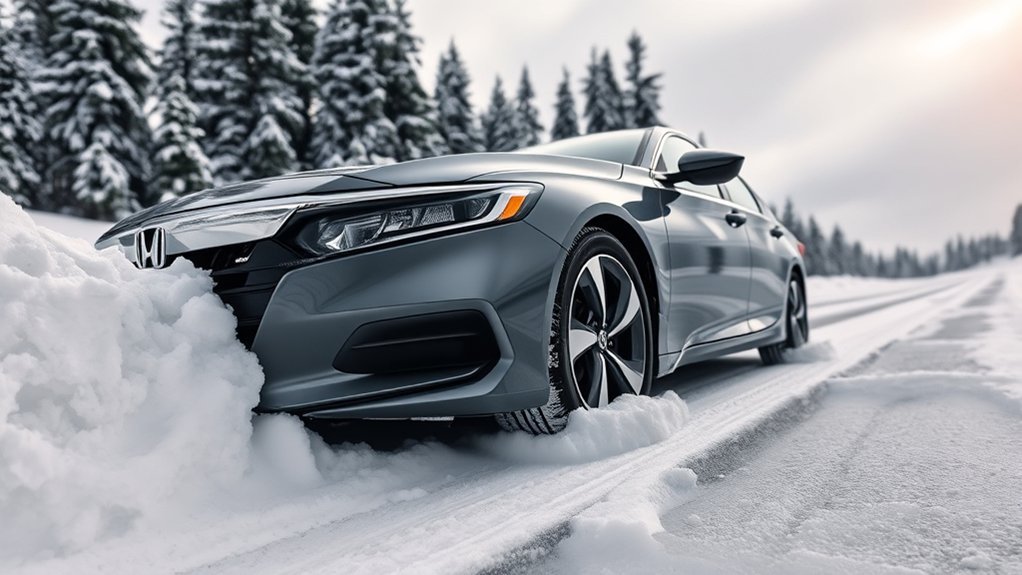
All-season tires can handle light winter weather, but they are not built for every winter road. Their limits become clear when roads are icy, snow is packed down, or temperatures stay below freezing for long stretches.
- Ice: Standard all-season tires usually cannot match winter tires for grip on icy roads.
- Deep or packed snow: The tread pattern may not bite or clear snow as effectively as a dedicated winter tire.
- Cold rubber behavior: Winter tires use compounds designed to stay more flexible in cold conditions.
- Mountain travel: Mountain roads may require stronger winter traction, chains, or tires that meet local winter-driving rules.
- Worn tread: Any tire becomes less capable as tread depth drops, especially in rain, slush, and snow.
Warning: Do not rely on standard all-season tires for frequent snowstorms, black ice, steep snowy roads, or winter mountain trips. If those conditions are normal for you, choose dedicated winter tires or a 3PMSF-rated all-weather tire that fits your Accord.
How to Choose All-Season Tires for a Honda Accord
The best all-season tire for your Accord is the one that matches your exact vehicle, climate, and driving habits. Use this checklist before buying:
- Match the size on your Accord: Check the driver-side doorjamb label and owner’s manual. Honda’s online owner information explains that the tire and loading label lists the original tire sizes and proper cold tire pressures.
- Match or exceed the required load and speed rating: Do not buy a tire with a lower load index or speed rating than Honda specifies for your model unless a qualified tire professional confirms it is appropriate.
- Pick the right winter capability: Choose standard all-season tires for mild climates, 3PMSF all-weather tires for stronger snow capability, and winter tires for regular ice or deep snow.
- Compare wet braking and hydroplaning resistance: Rain performance matters more than snow for many Accord drivers.
- Check ride comfort and noise: A quiet touring tire usually fits the Accord better than an aggressive tire if you mainly commute.
- Read the treadwear warranty carefully: Mileage warranties vary by tire line and often require proper inflation, rotation records, alignment, and even wear.
- Avoid mismatched tires: Keep the same size, construction, and similar tread pattern across an axle. For best results, replace all four tires as a matched set.
Note: If your Accord has directional tires, Honda says they should be rotated front to back rather than side to side. After rotation, some Accord models also require TPMS calibration.
[Products Worth Considering]

Measure tire tread depth quickly and accurately with this LUMITECO dial gauge that reads in 1/32" increments up to 14/32". The color-coded green/yellow/red zones make it easy to judge tire wear and know when replacement is needed. A rugged, compact design with a protective pouch helps keep the gauge ready for use on cars, trucks, motorcycles, and more.

Accurately measure tire tread depth with a calibrated gauge marked from 0 to 1 inch in 1/32 inch increments. The color-coded bar helps you quickly identify tread condition ranges, supporting safe driving for trucks, motorcycles, automobiles, and passenger vehicles.

This tire inflator with pressure gauge delivers long-lasting performance with a durable rubber-protected gauge and sturdy build. The longer hose and 360 swivel air chuck help you seal the valve securely and keep your hands free while measuring, inflating, or deflating. It’s battery-free for reliable use and provides ±2 PSI accuracy in the mid-range for most typical tires, with universal compatibility for 1/4 NPT compressor outputs.
Maintenance Tips for All-Season Tires
Good tire maintenance makes your Honda Accord safer, smoother, and more efficient. It also helps you get the full value from your all-season tires.
Check Cold Tire Pressure Monthly
Use a tire pressure gauge at least once a month and before long trips. Honda’s owner guidance says even tires in good condition can lose pressure over time, and pressure should be measured when the tires are cold. Use the cold tire pressure listed on your driver-side doorjamb label, not the maximum pressure molded into the tire sidewall.
Rotate Tires on Schedule
Rotate your Accord’s tires according to Honda’s Maintenance Minder or your owner’s manual. Rotation helps even out front-to-rear wear, which is especially important on front-wheel-drive Accord models because the front tires handle steering, braking, and most driving force.
Monitor Tread Depth
The federal minimum tread depth for passenger-car tires is 2/32 inch, but wet and snow traction can decline before a tire reaches that legal minimum. Use a tread-depth gauge and check several spots across each tire. Uneven wear can point to alignment, balancing, suspension, or inflation problems.
Inspect for Damage and Aging
Look for cracks, bulges, exposed cords, punctures, sidewall cuts, and vibration while driving. Replace a damaged tire immediately if a tire professional says it is unsafe. Also check the tire date code because rubber ages even when tread looks usable.
Keep Alignment and Balance in Check
If your Accord pulls to one side, shakes at highway speed, or wears one shoulder of the tire faster than the other, schedule an inspection. Alignment and balance problems can shorten tire life and reduce handling stability.
Frequently Asked Questions
How long do all-season tires typically last on a Honda Accord?
Many all-season tires for midsize sedans carry mileage warranties, but real tire life depends on the tire model, driving style, road surfaces, alignment, inflation, and rotation schedule. Some drivers may see around 40,000 miles, while long-wearing touring tires can last longer when properly maintained.
Can I use all-season tires year-round in cold climates?
You can use them year-round in some cold climates, but they are not the best choice if you regularly drive on ice, packed snow, or untreated winter roads. In those conditions, dedicated winter tires or 3PMSF-rated all-weather tires are safer choices.
What tread depth is best for all-season tire performance?
The legal minimum is 2/32 inch, but that is a last limit, not a performance target. For better wet-road confidence, start shopping before the tire is nearly bald. For winter use, deeper tread is especially important because shallow tread cannot move slush and snow as well.
Are all-season tires suitable for off-road driving?
No. A Honda Accord is a road-focused sedan, and all-season passenger tires are designed for pavement, rain, and light snow—not mud, rocks, ruts, or trail use. Avoid off-road terrain that can damage the tire sidewall, wheel, or suspension.
How do I know when to replace my all-season tires?
Replace them when tread reaches 2/32 inch, when traction noticeably drops, or when you see unsafe damage such as bulges, exposed cord, deep cracks, or sidewall cuts. Also replace tires that are aging out according to the tire manufacturer’s guidance, even if tread remains.
Do I need 3PMSF tires on a Honda Accord?
You do not need 3PMSF tires for mild climates, but they are worth considering if you want one tire set for year-round use and you see regular winter weather. If you face frequent ice or heavy snow, dedicated winter tires are still the stronger choice.
Can I replace only two tires on my Honda Accord?
A matched set of four is best for consistent braking, steering, and wet traction. If you replace only two, ask a qualified tire professional where they should be installed and make sure the tires match the correct size, construction, and ratings for your Accord.
Conclusion
All-season tires are a strong everyday choice for many Honda Accord drivers because they balance comfort, wet traction, tread life, and year-round convenience. They work best in mild and moderate climates, especially when roads are mostly dry, rainy, or only lightly snowy.
If your winters include frequent ice, packed snow, steep roads, or mountain travel, standard all-season tires are not enough. Choose dedicated winter tires or a 3PMSF-rated all-weather tire that fits your Accord’s required size, load rating, and speed rating.
The safest approach is simple: buy tires that match your climate, follow the Honda tire label for cold pressure, rotate tires on schedule, and check tread depth before traction becomes a problem.
Sources
- Honda — Tire and Loading Information Label — backs up Accord tire size, load, and cold-pressure label guidance.
- Honda — Checking Tires — backs up monthly pressure checks, cold-pressure guidance, and tire inspection advice.
- Honda — Tire Rotation — backs up tire rotation and directional tire guidance.
- NHTSA TireWise — backs up general tire safety, maintenance, pressure, tread, and recall awareness.
- FuelEconomy.gov — Gas Mileage Tips — backs up the fuel-economy benefit of proper tire inflation.
- 49 CFR § 571.139 — backs up the snow tire / Alpine symbol standard.
[Products Worth Considering]

Milton S-921 pencil tire pressure gauge helps you maintain optimal tire pressure for passenger cars with accurate readings in PSI and kPa. It features a built-in deflator valve for convenient pressure adjustments, plus a single chuck head and nylon indicator bar for easy use on the go. Built from durable plated brass and designed for reliable performance, it’s a practical road trip and cold-weather maintenance tool.

ETENWOLF’s calibrated digital tire pressure gauges deliver accurate readings across a wide pressure range, from below 12 PSI to above 140 PSI. The built-in thermal compensation helps maintain performance in extreme cold and hot conditions, while the LED light improves visibility for quick checks. Includes replaceable AAA batteries for long-lasting use and convenience for everyday tire monitoring.

Measure tyre tread depth precisely with a digital gauge that reads in both MM and inches, helping you monitor safe driving conditions. The large LCD screen is easy to operate, and the compact tool fits for cars, trucks, and motorcycles. It provides high accuracy with a 0-25.4mm range and includes a 1-year warranty for added peace of mind.

Related Articles
How Tall Is a 305 70 R17 Tire? Exact Height, Width & Dimensions
Curious how tall a 305 70 R17 tire really is—and whether it fits your truck?
Read More
Can-Am Defender Tire Size Guide: Stock Specs & Upgrade Options
Just how big can you go on a Can-Am Defender before mods become necessary?
Read More
How Tall Is a 275 65 20 Tire? Exact Height, Width & Dimensions
Check the exact height, width, and hidden fitment effects of a 275/65R20 tire before you buy or upgrade.
Read More