Last updated: July 8, 2026
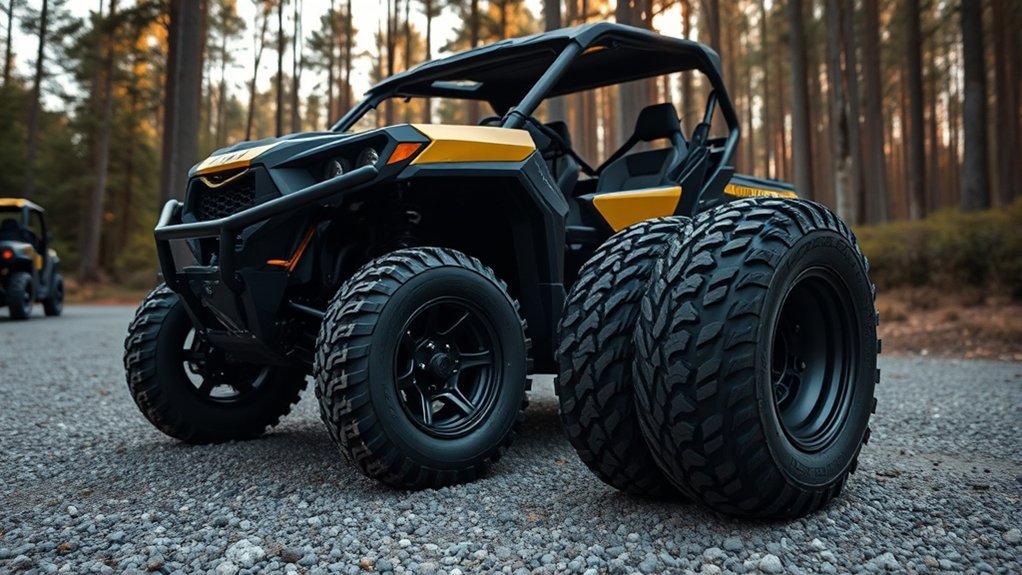
The right Can-Am Defender tire size starts with your exact model year, trim, tire-pressure label, and wheel setup. For the 2026 Defender Series operator guide checked here, BRP lists 27 x 9R14 front tires and 27 x 11R14 rear tires with 14-inch wheels for the referenced technical specs. Can-Am also lists select larger Defender packages with 30 x 9/10 x 14 XPS Trac Force tires, so do not assume every Defender uses the same size.
Quick Answer
For many current Can-Am Defender models, the safest replacement is the size on your existing tire sidewall and vehicle tire-pressure label. The 2026 Defender Series guide lists 27 x 9R14 front and 27 x 11R14 rear for the referenced specs. Some factory packages use 30 x 9/10 x 14 tires, but larger upgrades still need clearance, pressure, lug-torque, load-rating, and drivetrain checks.
Key Takeaways
- A common Can-Am Defender stock setup is 27 x 9R14 front and 27 x 11R14 rear, but trim and market can change fitment.
- Can-Am lists 14-inch wheels on many current Defender packages, including steel and cast-aluminum versions.
- The 2026 BRP operator guide lists 14 x 7 in front rims, 14 x 8.5 in rear rims, 100 ± 10 Nm wheel-lug torque, and a 3 mm minimum tread-depth spec for the referenced Defender Series technical table.
- Do not treat “4+3” as the same thing as official wheel offset. It is commonly used as UTV backspacing shorthand.
- Larger tires can add clearance, but they can also reduce throttle response, increase clutch heat, and create rubbing under load.
Fitment at a Glance
| Common Stock Tire Size | 27 x 9R14 front and 27 x 11R14 rear on many Defender Series models |
| Larger Factory Examples | Select Limited, PRO, and 6×6 listings show 30 x 9/10 x 14 XPS Trac Force tires |
| Wheel Size | 14-inch wheels are common on current verified Defender packages |
| Before You Buy | Check the tire sidewall, tire-pressure label, operator guide, wheel width, offset or backspacing, and full steering/suspension clearance |
What Are the Stock Can-Am Defender Tire Sizes?
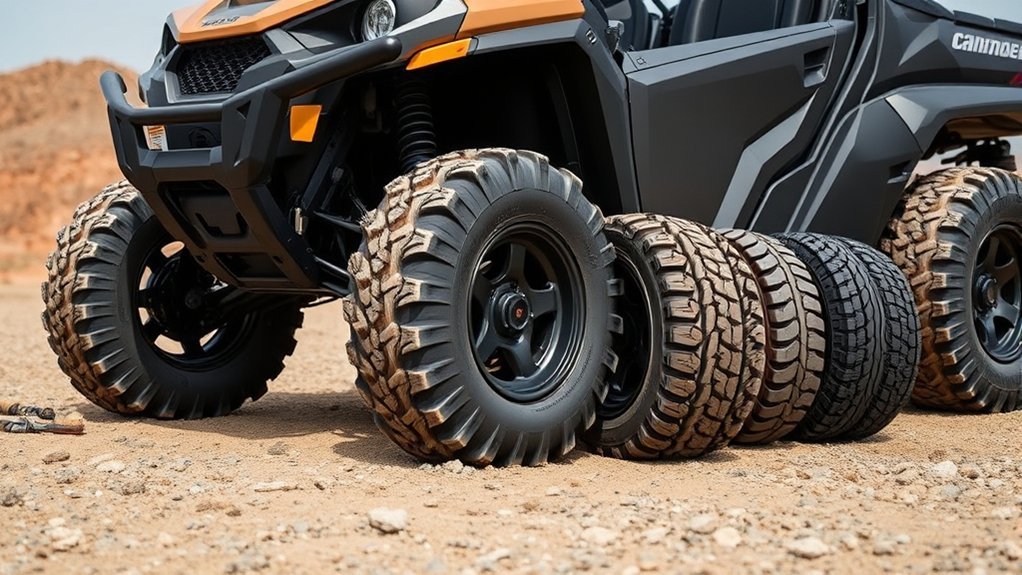
Stock Can-Am Defender tire sizes vary by trim, package, region, and model year. On many current Defender Series models, the BRP operator guide lists 27 x 9R14 in front and 27 x 11R14 in rear. Can-Am’s current Defender package listings also show many 27-inch tire setups on 14-inch wheels.
That staggered setup uses a narrower front tire and wider rear tire. The goal is simple: keep steering light in front while giving the rear axle more footprint for work, towing, and off-road traction.
| Defender / Defender DPS examples | Can-Am lists 27-inch tires on 14-inch steel or cast-aluminum wheels on many packages. |
| Defender MAX examples | Many MAX listings also use 27-inch XPS Trail Force or XPS Trail King tires on 14-inch wheels. |
| Defender PRO Limited / 6×6 Limited examples | Can-Am lists 30 x 9/10 x 14 XPS Trac Force tires on select larger packages. |
For the safest answer, check three places before you order tires: the sidewall on your current tire, the vehicle tire-pressure/load label, and the official operator guide for your exact model year. Aftermarket listings can be useful, but your vehicle label is the best starting point.
How Do You Read Defender Tire Size Numbers?
A tire marked 27 x 9R14 gives you three important measurements. The first number, 27, is the approximate outside tire diameter in inches. The second number, 9, is the tire width in inches. The final number, 14, is the wheel diameter the tire fits.
The letter R means radial construction. If your rear tire says 27 x 11R14, it is the same 27-inch diameter and 14-inch wheel size, but it is about 11 inches wide instead of 9 inches.
Note: Tire brand and tread style can change real-world height. One “30-inch” tire may measure slightly shorter or taller than another after mounting and inflation.
What Are the Stock Wheel Specs on a Defender?
Can-Am wheel specs depend on the package, but the 2026 BRP Defender Series operator guide lists 14 x 7 in front rims and 14 x 8.5 in rear rims for the referenced Defender Series technical specifications. It also lists wheel-lug torque at 100 ± 10 Nm, or 74 ± 7 lbf-ft.
The same guide lists wheel offset as 41.2 mm front and 51 mm rear for that technical-specification set. This matters because offset changes where the tire sits in relation to the suspension arms, fenders, steering parts, and wheel bearings.
You will often see Defender aftermarket wheels described with a 4/137 bolt pattern and UTV-style backspacing such as 4+3. Treat those as buying clues, not as a substitute for checking your exact model. Match the bolt pattern, stud/lug hardware, center fit, wheel width, and offset or backspacing before you mount anything.
Which Defender Models Use 12-Inch or 14-Inch Wheels?
For current verified 2026 Can-Am Defender package listings, 14-inch wheels appear across the Defender models checked, including steel and cast-aluminum versions. Older models, region-specific versions, or previous owner changes may differ, so do not buy only from a general year range.
If you are not sure what you have, inspect the tire sidewall first. The last number in a size such as 27 x 9R14 tells you the wheel diameter. You can also look for markings stamped or cast into the wheel, then compare those details with the operator guide and the tire-pressure label.
What Wheel Offset and Bolt Pattern Does a Defender Need?
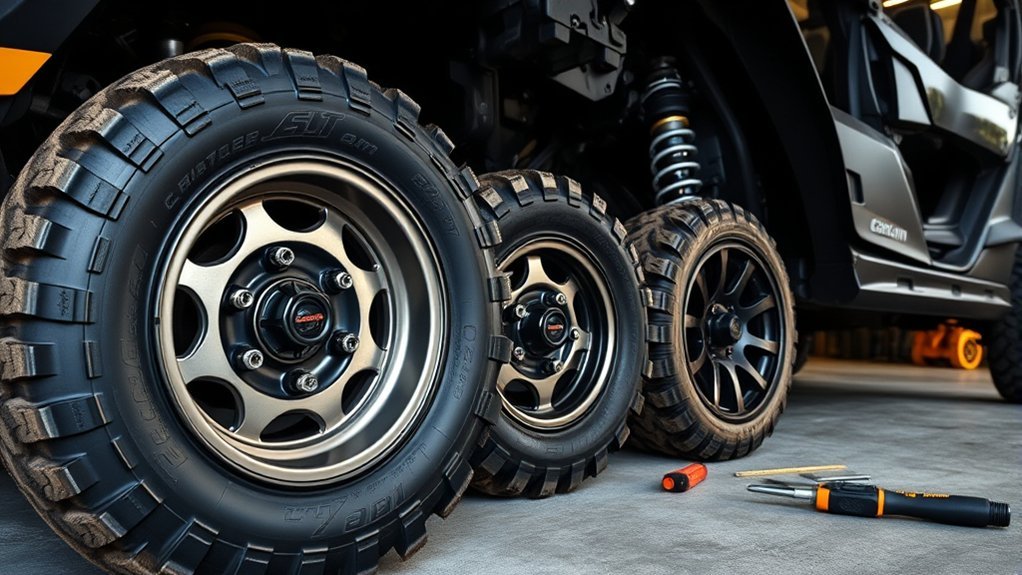
You need wheel specs that match your Defender’s hub and keep the tire in the correct position under the fender. Bolt pattern determines whether the wheel can mount to the hub. Offset or backspacing determines where that mounted wheel sits.
[Products Worth Considering]

These pre-assembled 15x6.00-6 front tire and wheel assemblies are designed for quick replacement on riding lawn mowers and lawn tractors. Built with natural rubber pneumatic tires and turf-friendly tread for solid traction and improved shock absorption. A thickened welded rim and 3/4" sintered iron bushing help provide stable, heavy-duty support for everyday mowing use.

These M14x1.5 closed-end chrome lug nuts are a one-piece replacement designed for secure fitment on compatible GM, Ford, and select Chrysler/Dodge models. Featuring a 60-degree conical seat and anti-rust chrome plating, they help resist corrosion and maintain a bright look for everyday driving. Built for long-term durability, they include OEM-style part references and are backed by 12 months of support.

Upgrade your wheels with MIKKUPPA M12x1.5 mag seat lug nuts built for secure, corrosion-resistant performance. These closed-end chrome lug nuts are a direct replacement for select Toyota models, including Camry, Corolla, RAV4, Sienna, Avalon, Highlander, Matrix, Venza, and Prius. Triple-chromium plating and cold-forged, heat-treated steel help deliver strength for daily driving and replacement needs.
Defender Bolt Pattern
The commonly listed Can-Am Defender bolt pattern in the UTV aftermarket is 4/137. That means four lug holes arranged on a 137 mm circle. You should still verify the pattern before buying, especially if your machine has aftermarket hubs, previous-owner changes, or market-specific equipment.
Do not force a close-looking wheel onto the hub. A mismatched bolt pattern, wrong lug seat, or incorrect lug hardware can damage studs and create a wheel-retention risk.
Factory Wheel Offset
Official wheel offset is not the same as the casual “4+3” language you may see in UTV wheel listings. Offset is the distance from the wheel centerline to the mounting face. Backspacing is the distance from the mounting face to the inner wheel lip.
For the referenced 2026 Defender Series technical specs, BRP lists wheel offset as 41.2 mm front and 51 mm rear. If you move far away from the original wheel position, you can increase rubbing, change steering feel, and add load to suspension and wheel-bearing parts.
Offset Fitment Choices
Use these checks before choosing aftermarket wheels:
- Match the Defender bolt pattern and lug-seat style.
- Confirm the wheel width works with your tire width.
- Compare offset or backspacing against your stock wheel.
- Check inner clearance to suspension arms and outer clearance to fenders.
- Turn the steering fully left and right after installation.
- Recheck lug torque after the first ride, following the operator guide.
Pro Tip: Before ordering wheels, take photos of your current tire sidewall, wheel markings, and tire-pressure label. Those details help a dealer or tire shop confirm fitment faster.
What Tire Sizes Fit a Defender Without Mods?
The safest no-mod replacement is the same size already listed for your model. For many Defender owners, that means staying close to 27 x 9R14 front and 27 x 11R14 rear. That keeps steering, gearing, ground clearance, and suspension movement closest to factory design.
A mild move to 28-inch tires may work on some machines, but you still need to check clearance at full steering lock and through suspension travel. Tire shape matters too. A square-shouldered mud tire may rub where a rounder all-terrain tire clears.
Moving to 30-inch tires needs more care. Some factory packages already list 30-inch tires, but that does not mean every Defender trim can accept every 30-inch aftermarket tire without rubbing. Compare your trim, wheel width, offset/backspacing, suspension setup, and load use before assuming bolt-on fitment.
| Tire move | Best use case | Checks before riding |
|---|---|---|
| Stock size | Work, towing, hauling, and easiest replacement | Match sidewall size, load rating, rim diameter, and cold pressure label |
| 28-inch tire | Mild clearance gain without a major build | Check full-lock steering, loaded suspension movement, and tire shape |
| 30-inch tire | Factory-style larger package look or deeper terrain | Compare trim, offset/backspacing, suspension clearance, tire weight, and clutch response |
| 32-inch or larger | Custom mud, lift, or specialty trail build | Plan for suspension, clutching, axle, braking, and rubbing checks |
Warning: Never judge fitment by driveway clearance alone. Check full steering lock, suspension compression, loaded cargo, passenger weight, brake-line clearance, and inner fender clearance before riding hard.
[Products Worth Considering]

Upgrade your wheels with MIKKUPPA closed-end lug nuts designed for reliable fit and corrosion resistance. The one-piece, cold-forged and heat-treated steel construction helps resist rust and stripping, while the integrated finish delivers a durable black appearance. Built to OEM standards with a conical 60-degree seat, these nuts provide a secure solution for compatible Ford, Honda, Jeep, and Chevrolet models.

The Trivd Frol 1/2" air impact wrench delivers high performance torque up to 1500 ft-lbs with a twin hammer impact mechanism for strong, balanced blows. It features an ergonomic grip, compact lightweight design, and quick-stop control with 3 forward speeds up to 8000 RPM plus a reverse speed. Built for demanding automotive repair and tire shop work, the rear exhaust helps keep debris away from the surface.

The 22800 wheel stud installer makes replacing wheel studs quick and secure, saving time and effort during tire service. It uses a ratchet or impact wrench to pull new studs firmly into place, helping when existing studs are too long. Compatible with most automotive wheels and light-duty truck wheel studs, it’s designed for easy, tool-assisted installation.
When Do You Need Suspension or Clutch Mods?
You start thinking about suspension or clutch changes when the tire is taller, heavier, or more aggressive than stock. Larger tires change effective gearing because the engine has to turn a bigger rolling diameter. That can make takeoff feel slower and can add heat to the CVT system when you crawl, tow, or run heavy mud.
- Stock-size replacement: Usually no supporting changes if load rating, rim size, and pressure match your vehicle requirements.
- 28-inch tires: Often a mild upgrade, but still check steering and suspension clearance.
- 30-inch tires: May need specific wheel offset/backspacing, more clearance, and clutch attention depending on trim and tire weight.
- 32-inch tires and larger: Treat this as a custom build. You may need suspension changes, clutch tuning, axle upgrades, and careful rubbing checks.
Do not assume that a tire “fits” just because it bolts on. A proper upgrade should clear the body, keep steering predictable, maintain safe pressure, and avoid overworking the drivetrain.
[Products Worth Considering]

This car D-wheel lock nut key provides an anti-theft solution for D-shaped wheel lock bolts, helping keep your wheels secure. It features a flower-shaped internal pattern that resists micro-adjustment theft while allowing removal and mounting of compatible locking nuts. Made for reliable performance under high torque, it’s easy to use with standard socket wrench turning for quick tire maintenance and emergency repairs.

The Tymate TM2 RV tire pressure monitoring system keeps you informed with a color LCD display, automatic backlight, and solar charging for dependable operation. It supports up to 10 tire positions with four pre-paired sensors, while offering multiple alarm modes for fast leak detection, pressure extremes, temperature alerts, and low-signal warnings. Built-in monitoring uses accurate readings and reliable 433.92MHz communication to help protect your RV, trailer, truck, or SUV.

This 1/2-inch drive breaker bar delivers powerful leverage for loosening and tightening stubborn lug nuts and automotive fasteners. The 180-degree flex head helps you reach tight spaces at the angle you need, making tire and brake jobs easier. A spring-loaded ball detent design holds 1/2-inch sockets securely while the chrome-moly head provides durable strength for everyday use.
How Do Bigger Tires Affect Defender Ride and Power?
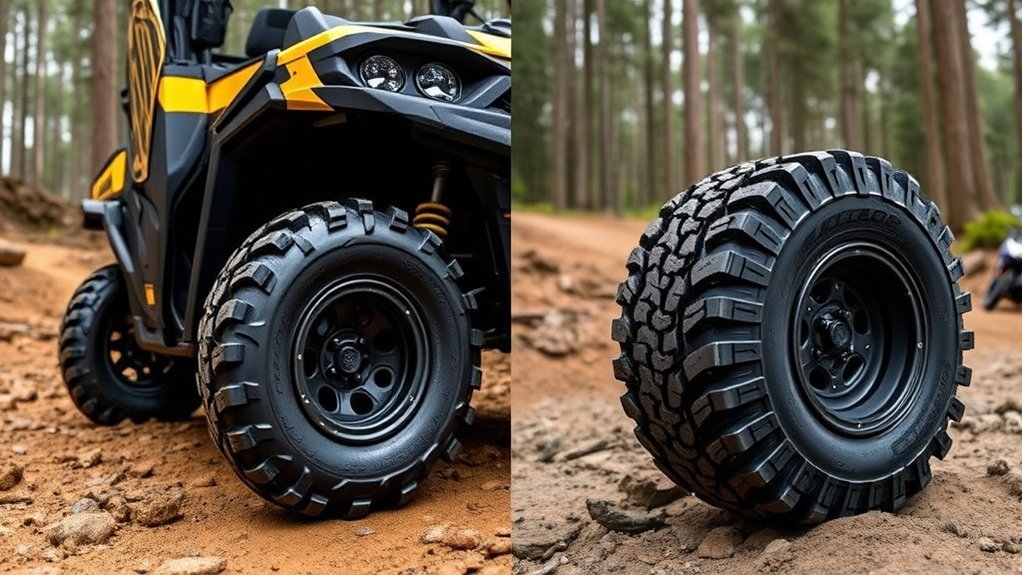
Bigger tires can give your Defender more ground clearance and a stronger stance. They can also improve breakover and approach clearance in ruts, mud, and rocky trails. The tradeoff is that bigger tires usually weigh more and take more effort to turn.
That added rotating weight can reduce throttle response, slow low-speed takeoff, and increase clutch heat. Heavier tires can also make steering feel duller and put more load on bearings, axles, brakes, and suspension parts.
Ride comfort can change too. A taller tire with more sidewall may feel smoother over small bumps, but an aggressive mud tire with stiff lugs can vibrate more and feel harsher on hard surfaces. Choose the tire for how you actually use your Defender, not just for the biggest size that might fit.
What Should You Check Before Upgrading Tires?
Before you upgrade, confirm the exact tire size, rim size, wheel specs, and load needs for your Defender. This matters most if you use the machine for towing, hauling, hunting, snow work, or deep mud.
Stock Fitment Specs
Start with these details:
- Current front and rear tire sidewall sizes
- Vehicle tire-pressure and maximum-load label
- Operator guide for your exact model year
- Wheel diameter and width
- Wheel offset or backspacing
- Bolt pattern, lug-seat style, and lug hardware
- Minimum tread depth and tire condition
Suspension And Clearance
Even if the tire mounts correctly, it still needs room to move. Check clearance with the wheels straight, turned fully left, turned fully right, and compressed under load.
| Check | Why it matters | Risk if ignored |
|---|---|---|
| Inner clearance | Keeps tire away from arms, shocks, and brake lines | Rubbing or part damage |
| Outer clearance | Keeps tire away from fenders and mud guards | Cut tires or broken plastics |
| Loaded height | Shows real clearance with passengers and cargo | Rubbing under work use |
| Clutch response | Bigger tires change effective gearing | Sluggish launch or belt heat |
How Important Are Tire Pressure and Lug Torque?
Tire pressure is a safety and handling item, not just a comfort setting. BRP warns that tire pressure affects vehicle handling and stability, and it tells owners to check pressure when the tires are cold. Use the pressure shown on your vehicle’s tire-pressure and maximum-load label, then adjust according to load.
Wheel installation matters too. The BRP operator guide says to inspect the studs and lug nuts, install the lug nuts by hand, and tighten them in the recommended sequence. For the referenced Defender Series guide, wheel lug nut torque is 100 ± 10 Nm, or 74 ± 7 lbf-ft.
A tire upgrade is not finished until pressure, lug torque, clearance, and load rating are checked.
Final Pre-Buy Checklist
Before you buy Can-Am Defender tires, run through this checklist:
- Match your current front and rear tire sizes unless you have a clear upgrade plan.
- Confirm your wheel diameter before ordering tires.
- Check tire load capacity for passengers, cargo, tools, accessories, and trailer tongue weight.
- Compare tire weight if you are moving to a larger mud or all-terrain tire.
- Confirm rim width works with the new tire.
- Check offset or backspacing before changing wheels.
- Inspect clearance with steering turned and suspension loaded.
- Use cold tire pressure from the vehicle label.
- Torque wheel lug nuts to the operator-guide spec.
- Take a slow test ride and recheck rubbing before riding hard.
Frequently Asked Questions
What size tires can you put on a stock Can-Am Defender?
The safest stock replacement is the size already listed on your tire sidewall and vehicle label. Many Defender Series models use 27 x 9R14 front and 27 x 11R14 rear tires. Some owners move to 28-inch tires, but you should check full steering, suspension, and loaded clearance first.
What is the Can-Am Defender factory tire size?
A common factory size is 27 x 9R14 in front and 27 x 11R14 in rear, but factory size changes by trim and package. Select larger packages list 30 x 9/10 x 14 tires. Always confirm your exact model year, trim, and tire-pressure label before buying.
Will 30-inch tires fit a stock Can-Am Defender?
Some factory Defender packages already list 30 x 9/10 x 14 tires, but that does not make every 30-inch tire a no-mod fit on every trim. Check your wheel width, offset or backspacing, full steering lock, suspension compression, loaded ride height, and clutch response before riding hard.
How do I find my factory tire size?
Read the tire sidewall first. You should see a size such as 27 x 9R14 or 27 x 11R14. Then compare it with the vehicle tire-pressure/load label and your operator guide. This helps you avoid ordering tires that fit the wheel but rub the body or suspension.
Is a 285 tire the same as a 33-inch tire?
No. A 285 marking usually refers to tire width in millimeters, not overall diameter. A size like 285/70R17 can be close to 33 inches tall, but not every 285 tire is a 33. Check the manufacturer’s measured diameter before comparing it with UTV sizes.
Do bigger Defender tires need clutch tuning?
Sometimes. Heavier or taller tires can reduce low-speed response and add CVT heat, especially in mud, towing, or heavy cargo use. Mild tire changes may not need tuning, but 30-inch and larger upgrades deserve a clutch and clearance review.
Conclusion
Choosing the right Can-Am Defender tire size starts with your exact trim, not a general size chart. Many current Defender setups use 27-inch tires on 14-inch wheels, while select larger packages list 30-inch tires. For the lowest-risk replacement, match the tire sidewall and tire-pressure label. For an upgrade, confirm clearance, cold pressure, wheel specs, lug torque, load rating, tire weight, and drivetrain response before you ride.
Sources
- Can-Am 2026 Defender official specifications — backs current Defender package tire and wheel listings.
- BRP 2026 Defender Series Operator Guide — backs tire size, rim size, wheel offset, tire-pressure guidance, and wheel-lug torque.
- BRP Operator’s Guide Library — helps owners find the correct guide by vehicle type, year, and model.