
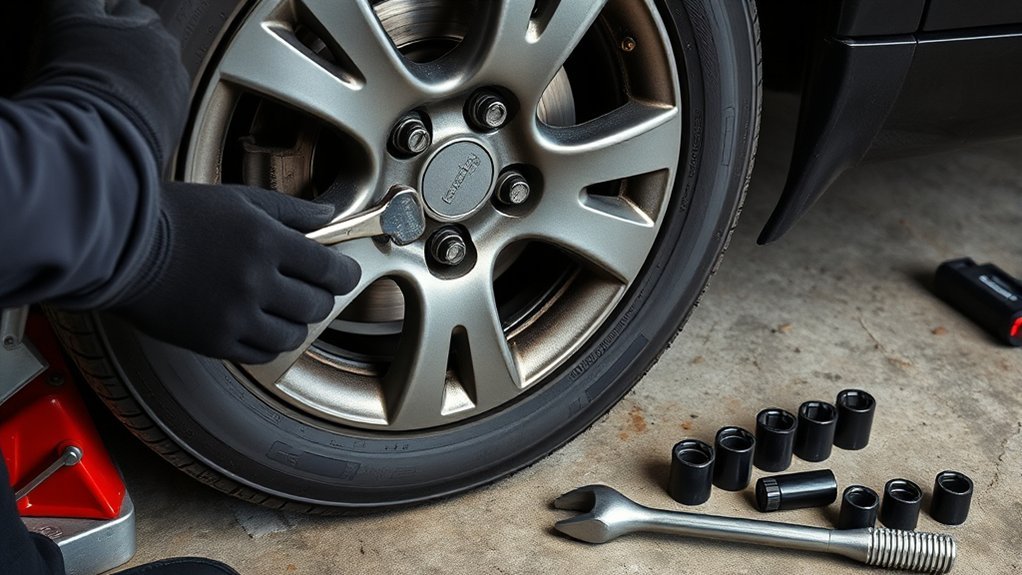
Don’t use a torque wrench to break loose tire or wheel lug nuts. A torque wrench is a precision tool for final tightening, not a breaker bar for high breakaway force. For removal, park on stable ground, set the parking brake, loosen the lug nuts slightly while the tire is still on the ground, and use a lug wrench, breaker bar, or impact wrench when extra force is needed.
Quick Answer
Do not use a torque wrench to loosen lug nuts. It is a precision tightening tool, and breakaway force can damage its calibration or mechanism. Loosen lug nuts with the vehicle stable on the ground, using a snug lug wrench, breaker bar, or impact wrench. Save the torque wrench for final tightening to the vehicle’s exact specification.
Key Takeaways
- Use a breaker bar, 4-way lug wrench, or impact wrench to loosen stubborn lug nuts; do not use a torque wrench as a breaker bar.
- Loosen lug nuts only slightly while the tire is still on the ground, then lift the vehicle according to the owner’s manual.
- Use penetrating oil for rusted threads, but clean the hardware before final reinstallation so torque readings stay accurate.
- Tighten lug nuts in a star or crisscross pattern with a torque wrench set to your vehicle’s exact specification.
- Stop and call a professional if a lug nut rounds off, a stud spins, the vehicle is unstable, or the wheel is in an unsafe roadside location.
At a Glance
| Time Required | 10–30 minutes for normal lug nuts; longer if rusted or over-tightened. |
| Difficulty | Beginner for normal wheel removal; intermediate if the nuts are seized, rounded, or badly rusted. |
| Tools Needed | Correct-size socket, lug wrench or breaker bar, wheel chocks, jack, jack stands for supported work, penetrating oil, gloves, eye protection, and a torque wrench for final tightening. |
| Cost | $0 if you already own the tools; about $10–$80 for penetrating oil, a breaker bar, or basic sockets. |
Warning: Never crawl under a vehicle supported only by a jack. Use the jack points in the owner’s manual, work on solid level ground, chock the opposite wheels when possible, and use properly rated jack stands for any work beyond a quick roadside wheel swap.
Why You Shouldn’t Use a Torque Wrench to Loosen Lug Nuts
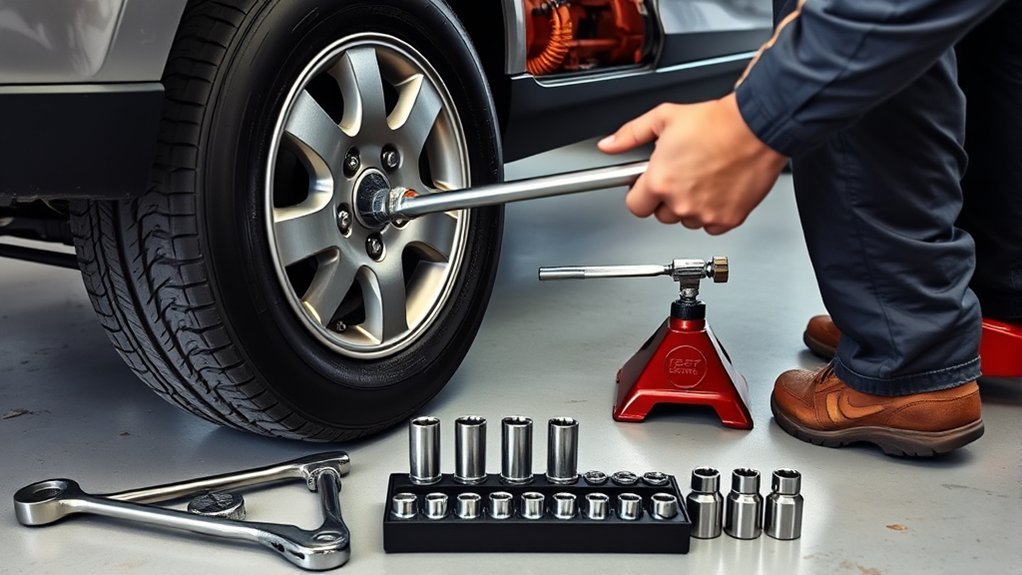
Although it may seem convenient, you shouldn’t use a torque wrench to loosen lug nuts. It is built to measure and apply a controlled tightening force, not to absorb the shock and high breakaway force needed to free stuck hardware. Some torque wrench manuals specifically warn, “Do not use for loosening fasteners,” and also warn not to use the tool as a breaker bar or with a handle extension. You can see this type of warning in this official click-type torque wrench manual.
When a lug nut is rusted, over-tightened, cross-threaded, or bonded to the seat, the force needed to break it loose can be much higher than the final torque value used to install it. Forcing that load through a torque wrench can damage the internal mechanism, knock the tool out of calibration, or leave you with inaccurate readings later. That matters because your torque wrench is the tool you rely on to tighten the wheel safely after installation.
Use a torque wrench only at the end of the job, when the lug nuts are clean, started by hand, snugged evenly, and ready for final tightening to the vehicle manufacturer’s specification. For removal, use a breaker bar, 4-way lug wrench, or impact wrench instead.
Gather the Right Tools for Lug Nuts
Start with the right gear before you apply force. A short factory lug wrench may work for properly torqued lug nuts, but stubborn lug nuts usually need more leverage and a better-fitting socket.
- Breaker bar: Best hand tool for controlled leverage on tight lug nuts.
- 4-way lug wrench: Useful because it gives more grip options and multiple socket sizes.
- Correct-size socket: The socket must fit snugly. A loose socket can round the nut.
- Impact wrench: Helpful for removal, but do not rely on it for final torque unless the manufacturer specifically provides a calibrated torque-control process.
- Penetrating oil: A dedicated penetrant can help free rusted threads before you add more force.
- Wheel chocks: These help keep the vehicle from rolling while one corner is lifted.
- Torque wrench: Use it only for final tightening to the specified torque value.
- Safety gear: Wear gloves and eye protection, especially if you are using penetrant, impact tools, or working around rust.
If your vehicle uses locking lug nuts, find the wheel-lock key before you start. If the key is missing, do not hammer random sockets onto the lock unless you are prepared to damage the lock and possibly the wheel. In that case, roadside assistance or a tire shop is usually the safer choice. A reliable spare tire kit can also save time during roadside emergencies, but it should still include the correct socket or wheel-lock key for your vehicle.
[Products Worth Considering]

These M14x1.5 closed-end chrome lug nuts are a one-piece replacement designed for secure fitment on compatible GM, Ford, and select Chrysler/Dodge models. Featuring a 60-degree conical seat and anti-rust chrome plating, they help resist corrosion and maintain a bright look for everyday driving. Built for long-term durability, they include OEM-style part references and are backed by 12 months of support.

This 1/2-inch drive breaker bar delivers powerful leverage for loosening and tightening stubborn lug nuts and automotive fasteners. The 180-degree flex head helps you reach tight spaces at the angle you need, making tire and brake jobs easier. A spring-loaded ball detent design holds 1/2-inch sockets securely while the chrome-moly head provides durable strength for everyday use.

The Trivd Frol 1/2" air impact wrench delivers high performance torque up to 1500 ft-lbs with a twin hammer impact mechanism for strong, balanced blows. It features an ergonomic grip, compact lightweight design, and quick-stop control with 3 forward speeds up to 8000 RPM plus a reverse speed. Built for demanding automotive repair and tire shop work, the rear exhaust helps keep debris away from the surface.
Prep Your Vehicle Before Loosening Lug Nuts
Good preparation keeps the wheel from spinning, reduces tool strain, and lowers the risk of the vehicle shifting while you work. Michelin’s tire-change guidance also says to loosen the lug nuts before lifting the vehicle, without removing them completely, and to check the manual for the correct jack point. You can review the tire-change sequence from Michelin USA.
Park On Level Ground
Park on a flat, solid surface before you touch the lug nuts. Avoid slopes, loose gravel, mud, soft shoulders, and traffic exposure. If you have a flat on a highway shoulder and the spot is unsafe, move as far from traffic as you safely can, turn on your hazard lights, and call roadside assistance instead of forcing the job.
Set the transmission in Park for an automatic or in gear for a manual. Keep the vehicle stable and give yourself room to pull on the wrench without stepping into traffic or losing your balance.
Engage Parking Brake
Engage the parking brake before loosening lug nuts so the vehicle is less likely to roll. The parking brake is not a substitute for solid ground or wheel chocks, but it is an important safety step.
| Action | Purpose | Result |
|---|---|---|
| Engage parking brake | Reduce vehicle movement | More stable setup |
| Park level | Reduce shift risk | Safer lifting |
| Chock opposite wheels | Block rolling | Better control |
| Loosen on ground | Keep wheel from spinning | Less tool strain |
| Use jack stands when needed | Support the vehicle | Avoid jack-only reliance |
With the brake set and the tire still bearing weight, you can crack the lug nuts loose more cleanly while minimizing stress on the wrench and hardware.
Loosen Before Lifting
Loosen the lug nuts while the wheel is still on the ground. Turn each nut counterclockwise only enough to break it free, usually about a quarter turn. Do not remove the nuts yet. The vehicle’s weight helps keep the wheel from rotating while you apply force.
Use a lug wrench or breaker bar for this step. Do not use a torque wrench to apply the initial breakaway force. Once the nuts are cracked loose, place the jack at the correct factory jack point, lift the vehicle, and support it safely before removing the nuts all the way. If you are unsure about your tire size, spare compatibility, or tool fit, checking tire specifications before a roadside emergency can help you avoid surprises.
Break Loose Lug Nuts With Better Leverage

Use a breaker bar or 4-way lug wrench instead of a short standard wrench when a lug nut will not move. Extra handle length gives you more leverage with less strain. Keep the socket squarely seated on the nut, pull smoothly, and avoid side-loading the socket.
[Products Worth Considering]

This car D-wheel lock nut key provides an anti-theft solution for D-shaped wheel lock bolts, helping keep your wheels secure. It features a flower-shaped internal pattern that resists micro-adjustment theft while allowing removal and mounting of compatible locking nuts. Made for reliable performance under high torque, it’s easy to use with standard socket wrench turning for quick tire maintenance and emergency repairs.

The 22800 wheel stud installer makes replacing wheel studs quick and secure, saving time and effort during tire service. It uses a ratchet or impact wrench to pull new studs firmly into place, helping when existing studs are too long. Compatible with most automotive wheels and light-duty truck wheel studs, it’s designed for easy, tool-assisted installation.

This spare tire tool kit is designed for the 2004 to 2018 Ford F-150 to help you loosen and tighten wheel lug nuts and manage the spare tire and provided jack functions from underneath the vehicle. It includes the lug nut wrench and extension pieces plus a convenient storage carrying case for organized transport. The jack itself is not included.
Better Leverage Tools
A breaker bar is the simplest upgrade for stubborn lug nuts. Choose a 1/2-inch drive breaker bar with a socket that fully matches the lug nut size. If space is tight, a 4-way lug wrench gives you more hand positions and can help you keep force centered. An impact wrench can also work well for removal if you have the right impact-rated socket.
Do not put a pipe over a torque wrench handle. If you use a cheater pipe, use it only on a breaker bar that is made for high leverage, and apply force slowly. A tire pressure routine will not loosen stuck lug nuts, but keeping a consistent tire-pressure check schedule often encourages regular wheel and tire inspections, which can help you spot rusted or damaged hardware earlier.
Breaker Bar Technique
Fit the socket fully over the lug nut. Keep the bar level and aligned with the nut so the socket does not slip. Pull the breaker bar toward you when possible instead of pushing away. Pulling gives you better body control and reduces the chance of falling forward if the nut breaks loose suddenly.
Use steady pressure. Do not jerk the bar, bounce on it, or kick it. Sudden force can round the nut, damage the stud, or make the wrench slip. If the nut does not move, stop and add penetrant rather than escalating blindly.
Safe Force Application
Safe force is controlled force. Stand with your feet balanced, keep your hands clear of pinch points, and pull gradually. If the socket begins to twist off the nut, stop immediately and reseat it. A rounded lug nut is much harder to remove than a tight one.
Pro Tip: If the wrench slips, the problem is usually socket fit, angle, or rounded hardware. Fix the grip before adding more force.
Apply Penetrating Oil to Lug Nuts
Spray a dedicated penetrating oil at the base of each stuck lug nut and let it soak before trying again. WD-40 Specialist Penetrant, for example, is designed to penetrate threads and break the rust bonds that hold stuck parts together, according to the official WD-40 Specialist Penetrant product page.
- Coat the lug nut where it meets the wheel seat and where the threads may be exposed.
- Wait at least 10–15 minutes. More time can help on heavily rusted hardware.
- Tap the side of the nut lightly with a small hammer to help vibration carry the penetrant into the threads.
- Try the breaker bar again with steady pressure.
- After removal, clean oil from the threads and seating surfaces before final torque unless your vehicle manufacturer specifically says otherwise.
Use penetrant strategically, not as a substitute for correct torque. Tire Rack notes that wheel hardware torque specifications are for dry threads and that lubricating hardware can change friction and produce inaccurate torque readings. That is why oil can help with removal but should not be left on the hardware during final tightening unless the manufacturer specifically calls for it.
Regular tire maintenance does not prevent lug nuts from seizing by itself, but it does create chances to inspect the wheel area. When checking all-season performance tires, also look for rust, missing caps, damaged studs, or lug nuts that no longer seat cleanly.
[Products Worth Considering]

Upgrade your wheels with MIKKUPPA M12x1.5 mag seat lug nuts built for secure, corrosion-resistant performance. These closed-end chrome lug nuts are a direct replacement for select Toyota models, including Camry, Corolla, RAV4, Sienna, Avalon, Highlander, Matrix, Venza, and Prius. Triple-chromium plating and cold-forged, heat-treated steel help deliver strength for daily driving and replacement needs.

Upgrade your wheels with MIKKUPPA closed-end lug nuts designed for reliable fit and corrosion resistance. The one-piece, cold-forged and heat-treated steel construction helps resist rust and stripping, while the integrated finish delivers a durable black appearance. Built to OEM standards with a conical 60-degree seat, these nuts provide a secure solution for compatible Ford, Honda, Jeep, and Chevrolet models.

The Dr.Roc spare tire tool kit helps you release, lower, or raise your spare tire with reliable extension tools and a lug nut wrench. It is made from rustproof automotive-grade steel and includes an organized carry case for convenient storage. Designed for compatibility with select GM models from the late 1990s through 2019, it uses upgraded extension components to install and remove spare tires with less hassle.
Use Impact Carefully and Leave Heat to a Professional
If penetrating oil and a breaker bar do not work, an impact wrench may help. Use only impact-rated sockets, keep the socket square to the lug nut, and stop if the nut starts to round. Impact tools are good for removal because they deliver short bursts of torque, but they should not replace a torque wrench for final tightening.
Warning: Avoid open flame on a mounted wheel as a DIY method. Heat can damage tires, valve stems, TPMS sensors, wheel finishes, brake parts, and nearby lines. If heat is truly needed, have a tire shop or mechanic handle it safely.
If your vehicle uses a compact spare or a special wheel size, make sure you understand the correct fitment and driving limits before reinstalling. Knowing the correct tire sizes for your vehicle can prevent a second problem after the stuck lug nut is finally removed.
Know When a Lug Nut Won’t Budge
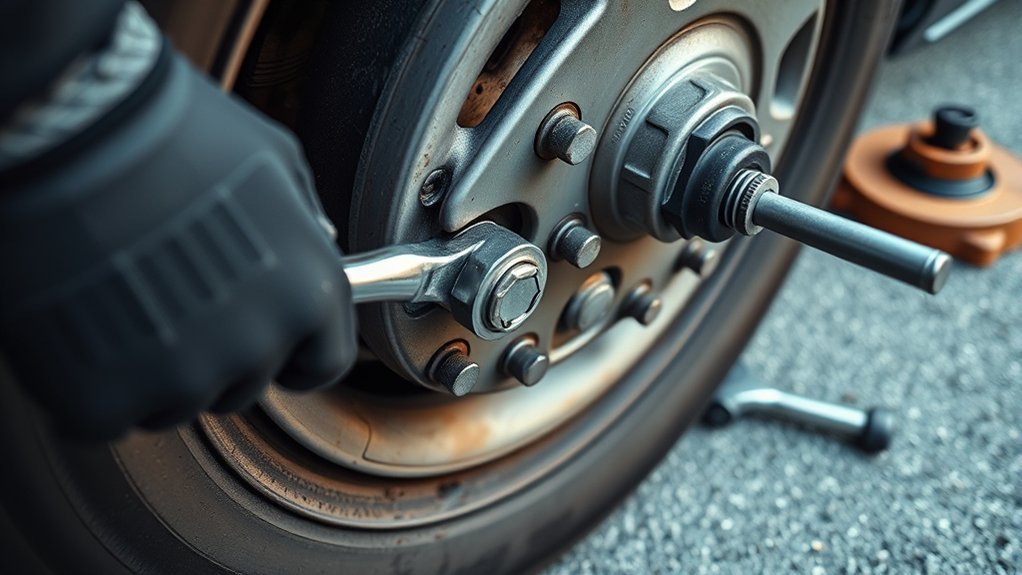
If the lug nut will not move after penetrant, correct socket fit, and controlled breaker-bar force, it may be seized by corrosion, cross-threading, damaged seats, or previous over-tightening. At that point, the safest next move may be to stop and get help before damaging the stud, wheel, or brake components.
Signs It’s Seized
Look for rust flakes around the nut, rounded corners, a socket that no longer grips cleanly, or a nut that squeaks and binds without turning. If the stud turns with the nut, the stud may be damaged or loose in the hub. If a nut moves slightly and then locks up, the threads may be galled or cross-threaded.
- Inspect the nut for rust, deformation, and damaged edges.
- Check that the socket is the exact size and fully seated.
- Stop if the nut rounds, the stud spins, or the wrench repeatedly slips.
Tire durability matters for driving safety, but even strong tires and wheels still depend on clean, properly torqued hardware. If you are already reviewing tire durability features, include lug nuts and studs in the same inspection routine.
Safe Breaker Bar Use
A breaker bar gives you the leverage needed to free a stubborn lug nut, but it must be used with control. Pull smoothly, keep the bar aligned, and use the shortest extension that gives safe leverage. If a longer pipe is needed, apply pressure slowly and stop if the socket twists or the vehicle shifts.
Do not stand on the bar unless you can do so without slipping and without side-loading the socket; in most DIY situations, standing or jumping on the bar is a bad idea. A controlled pull is safer than a sudden stomp.
When To Get Help
Call a tire professional, mechanic, or roadside assistance if the vehicle is on an unsafe shoulder, the wheel lock key is missing, the lug nut is rounded, the stud spins, the nut will not move after several controlled attempts, or you feel the vehicle shift while applying force. AAA notes that roadside assistance can help with stuck or over-tightened lug nuts and unsafe flat-tire locations; see AAA Club Alliance’s flat-tire guidance.
Remove Lug Nuts in a Safe Pattern
Once each lug nut is cracked loose and the vehicle is properly lifted and supported, remove the lug nuts in a star or crisscross pattern. This is especially useful when the wheel is still partly seated and you want to release clamping force evenly. Keep one hand on the wheel as the last nut comes off so the wheel does not tip unexpectedly.
For final installation, the star pattern matters even more. Discount Tire explains that applying torque evenly across the wheel promotes wheel centering and evens the stress shared by all lug nuts and studs. You can review common tightening and loosening patterns on Discount Tire’s wheel torque guide.
Before reinstalling, inspect tire condition and age, because wheel service is also a good time to consider tire longevity and replacement frequency. Tire condition does not change lug nut torque, but it does affect whether the wheel service solves the full safety problem.
Replace Damaged Lug Nuts and Studs
Inspect the lug nuts and studs before reinstalling the wheel. Replace any lug nut that is rounded, cracked, badly rusted, swollen, or difficult to thread by hand. Replace any stud that is bent, stripped, stretched, broken, or spinning in the hub.
A lug nut that cannot be threaded by hand is not ready for torque. Fix the threads first, or the torque reading will not mean what you think it means.
- Match replacement lug nuts to the correct seat type, thread pitch, and size for your vehicle.
- Start each nut by hand to avoid cross-threading.
- Replace damaged studs with the correct part and make sure the new stud is fully seated.
- Use a torque wrench only after the wheel is mounted and the nuts are ready for final tightening.
Do not guess at replacement hardware. Lug nuts can look similar while having different seat shapes or thread pitches. The wrong lug nut can damage the wheel seat or fail to clamp the wheel correctly. When reinstalling, use a star pattern for even pressure across the wheel.
Torque Lug Nuts Correctly After Installation
After the wheel is seated, tighten the lug nuts with a torque wrench to the manufacturer’s specified value for your exact vehicle. Tire Rack explains that proper wheel installation requires the wheel hardware to be tightened to the recommended torque for the vehicle make, model, and year, and that the specification is usually found in the owner’s manual.
- Clean the studs and lug nut seats. Remove oil, grit, heavy rust, and debris.
- Install each lug nut by hand until it turns freely and seats lightly.
- Snug the nuts in a star or crisscross pattern.
- Lower the vehicle until the tire touches the ground enough to prevent rotation, but do not put full weight on it if the wheel is not yet fully torqued.
- Set the torque wrench to the exact specification from the owner’s manual or service information.
- Tighten in a star pattern until the wrench clicks once. Do not keep clicking repeatedly.
- Lower the vehicle completely and verify the pattern one more time.
- Recheck torque after 50–100 miles if your vehicle, wheel, tire shop, or service guidance calls for it.
Do not use an impact wrench for final torque unless you are following a verified professional procedure with calibrated equipment. Under-tightening can allow the wheel to loosen; over-tightening can stretch studs, strip threads, distort brake components, or make future removal much harder. While checking final torque, also confirm your tires have proper tread depth for safe driving.
Note: A torque wrench reading assumes the hardware is in the condition specified by the vehicle manufacturer. If the threads are oily, dirty, corroded, cross-threaded, or binding, the reading can be misleading.
Common Mistakes to Avoid
- Using a torque wrench to loosen nuts: Save it for final tightening.
- Using the wrong socket: A loose socket can round the nut.
- Removing nuts before lifting: Crack them loose first, but remove them only after the vehicle is lifted and stable.
- Lubricating final threads without approval: Penetrant helps removal, but final torque is usually based on clean, dry hardware unless the manufacturer says otherwise.
- Ignoring damaged studs: A damaged stud cannot provide reliable clamping force.
- Forcing the job in traffic: If the roadside location is unsafe, call for help.
Frequently Asked Questions
Can you loosen lug nuts with a torque wrench?
No. A torque wrench should be used for final tightening, not for breaking lug nuts loose. Use a lug wrench, breaker bar, or impact wrench for removal, then use the torque wrench to tighten the lug nuts to the vehicle’s exact specification.
What is the best tool to loosen really tight lug nuts?
A breaker bar with the correct-size socket is usually the best hand tool. It gives more leverage than a short lug wrench and lets you apply force smoothly. For severe rust or shop work, an impact wrench with impact-rated sockets can also help.
How do you loosen over-torqued lug nuts?
Park safely, set the parking brake, keep the tire on the ground, seat the correct socket fully, and use a breaker bar with steady pressure. If rust is present, apply penetrating oil and wait before trying again. Stop if the nut rounds, the stud spins, or the vehicle shifts.
Will WD-40 loosen lug nuts?
A dedicated penetrating product such as WD-40 Specialist Penetrant can help loosen rusted nuts and bolts. Spray it at the base of the lug nut, let it soak, then use a breaker bar. After removal, clean the threads and seating surfaces before final torque unless your vehicle manufacturer says otherwise.
Should lug nuts be loosened before jacking up the car?
Yes. Loosen each lug nut slightly while the tire is still on the ground. The vehicle’s weight helps keep the wheel from spinning. Do not remove the nuts completely until the vehicle is lifted at the correct jack point and safely supported.
How tight should lug nuts be after reinstalling the wheel?
Use the torque value listed in your owner’s manual or official service information for your exact vehicle. There is no single universal torque number for every car, truck, wheel, and lug nut design.
When should you call a professional for stuck lug nuts?
Call a professional if the vehicle is in an unsafe location, the lug nut is rounded, the wheel-lock key is missing, the stud spins, a stud breaks, or the nut still will not move after controlled force and penetrating oil. Continuing to force it can turn a stuck nut into a damaged hub or wheel repair.
Conclusion
Use the right tool for each part of the job. A torque wrench belongs at the end of wheel installation, when you are tightening clean lug nuts to the exact vehicle specification. For removal, use a snug socket, lug wrench, breaker bar, or impact wrench with controlled force. If rust or over-tightening makes a lug nut stubborn, add penetrating oil, wait, and try again carefully. If the nut still will not move, stop before you damage the stud or wheel. The safest repair is the one that leaves the wheel hardware clean, undamaged, evenly tightened, and ready to hold the wheel securely.
Sources
- Harbor Freight Pittsburgh 3/8 in. Drive Click-Type Torque Wrench Manual — backs up not using a torque wrench to loosen fasteners or as a breaker bar.
- Tire Rack: How Do I Properly Torque My Wheel Lug Nuts or Bolts? — backs up using vehicle-specific torque specs, correct procedures, dry threads, and tightening patterns.
- Michelin USA: How to Change a Car Tire — backs up loosening lug nuts before lifting and checking the manual for the jack point.
- WD-40 Specialist Penetrant — backs up the use of a dedicated penetrant on rusted nuts and bolts.
- NHTSA Research Note: Injuries Associated With Hazards Involving Motor Vehicle Jack Failures — backs up stronger jack and vehicle-support warnings.
- Bauer Built: Retorquing Lug Nuts After Tire Service — backs up common 50–100 mile retorque guidance after wheel removal or tire service.
