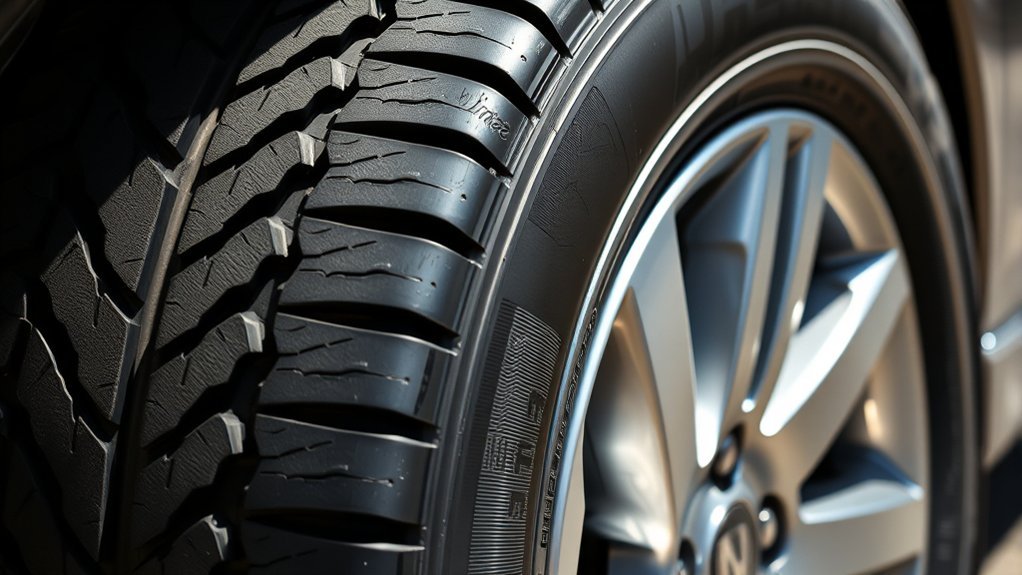
Steel-belted radial tires are the normal, modern tire construction for most Honda Accord models, but the right choice still depends on your Accord’s model year, trim, wheel size, load rating, speed rating, climate, and driving style. The safest approach is simple: match the tire information placard first, then choose the tread type that fits your weather and comfort needs.
Quick Answer
Steel-belted radial tires are a strong choice for a Honda Accord because they support stable handling, even tread wear, ride comfort, and fuel efficiency. For safety, choose tires that match your Accord’s door-jamb placard for size, load index, speed rating, and cold tire pressure.
Key Takeaways
- The “R” in a tire size such as 225/50R17 means radial construction.
- For current Accord trims, common factory examples include 225/50R17 94V and 235/40R19 96V, but always verify your exact year and trim.
- Do not install tires with a lower load index or incompatible speed rating than your vehicle requires.
- TPMS is helpful, but it does not replace monthly cold-pressure checks with a tire gauge.
- Tread depth, age, alignment, rotation, and pressure matter as much as tire construction.
At a Glance
| Time Required | 10–15 minutes to confirm tire size, pressure, load index, speed rating, and tread condition. |
| Difficulty | Easy for inspection; professional help is recommended before changing tire size or wheel size. |
| Tools Needed | Tire-pressure gauge, flashlight, tread-depth gauge or penny, and your driver-door tire placard. |
| Cost | Inspection is free; a basic gauge is usually inexpensive; replacement tire cost varies by size, brand, and tire type. |
Why Choose Steel-Belted Radial Tires for Your Honda Accord?
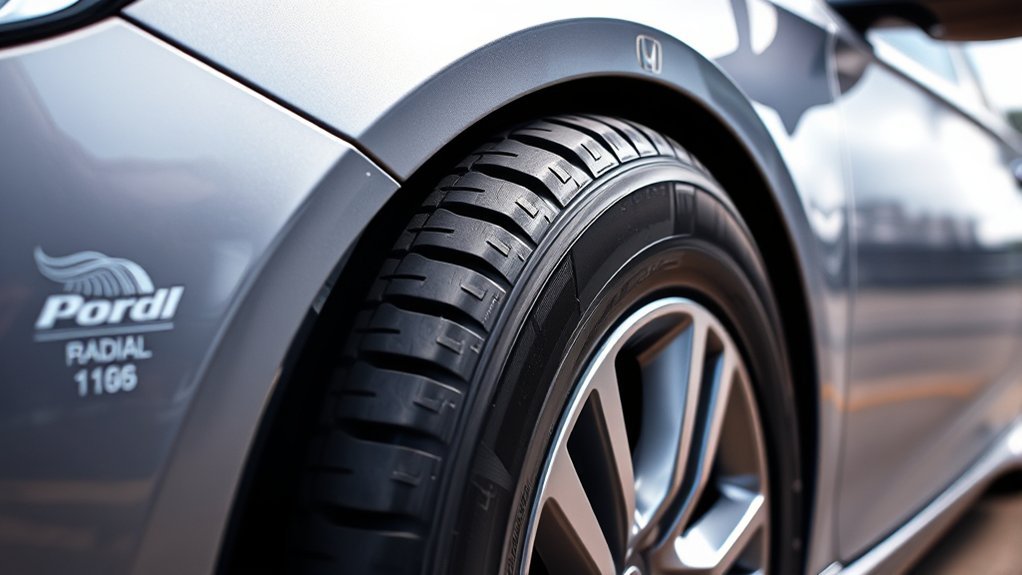
Steel-belted radial tires work well on a Honda Accord because their construction separates the job of the tread from the job of the sidewall. The tread stays more stable on the road, while the sidewall can flex to absorb small bumps. That helps with steering feel, braking grip, ride comfort, and even tread wear.
In radial tire construction, cords run across the tire from bead to bead, and steel belts sit under the tread area. Michelin explains that radial tire construction uses carcass threads arranged at right angles to the direction of travel, with a belt placed around the crown of the tire. This design became a major tire innovation after Michelin patented steel-belted radial tire construction in 1946.
For Accord drivers, the real-world benefit is not magic; it is better structure. A quality steel-belted radial tire can help the car feel more planted on highways, more predictable in corners, and more comfortable over rough pavement.
Warning: Tire construction alone does not prevent tire failure. Underinflation, overloading, road damage, old rubber, poor alignment, and worn tread can still make any tire unsafe.
How Radial Tire Construction Works
A radial tire is built in layers. Each layer has a job, and the way those layers work together affects comfort, grip, heat control, and tire life.
What the “R” Means on a Tire Sidewall
In a tire size such as 225/50R17, the letter R means radial construction. It does not mean racing, reinforced, or run-flat. It simply tells you how the tire body is built.
- 225 = tire width in millimeters.
- 50 = aspect ratio, or sidewall height as a percentage of tire width.
- R = radial construction.
- 17 = wheel diameter in inches.
- 94V or 96V = load index and speed symbol.
The load index and speed symbol are not decoration. The U.S. Tire Manufacturers Association explains that load index relates to how much weight a tire can carry, while the speed symbol relates to speed capability under specified conditions.
Key Components of a Steel-Belted Radial Tire
- Tread: The rubber pattern that contacts the road and affects wet grip, dry grip, noise, and tread life.
- Steel belts: Reinforcing layers under the tread that help stabilize the contact patch.
- Sidewall: The flexible outer side area that affects ride comfort and steering response.
- Beads: Strong wire loops that help hold the tire securely to the wheel.
- Inner liner: The air-retaining layer inside most modern tubeless tires.
This construction is why radial tires are the standard choice for most modern passenger cars, including the Honda Accord.
Why Are Steel-Belted Radial Tires Safer?
Steel-belted radial tires can improve safety because they support a stable tread area, predictable handling, and good road contact. But tire safety depends on both construction and care.
| Feature | Benefit | Safety Impact |
|---|---|---|
| Steel belts under the tread | Help stabilize the contact patch | Supports braking, steering, and even wear |
| Flexible radial sidewalls | Absorb small road impacts | Improves comfort and control |
| Proper inflation | Controls heat and load support | Reduces avoidable tire stress |
Your Accord’s tires are the only parts of the car touching the road, so size, pressure, tread, and condition matter every time you drive.
The National Highway Traffic Safety Administration says tire care includes checking pressure, tread, rotation, aging, and tire recalls. Honda’s TPMS guidance also notes that underinflation can cause heat buildup, reduce fuel efficiency, shorten tread life, and affect handling and stopping ability.
Enhancing Performance With Radial Tires on Your Honda Accord
A Honda Accord is tuned for everyday comfort, fuel economy, and predictable handling. Steel-belted radial tires support that balance when the tire size and tire type match the car.
- Handling: A stable tread area helps the car respond more predictably to steering input.
- Ride comfort: Radial sidewalls help absorb small road irregularities.
- Braking: A healthy tread pattern and correct pressure help the tire maintain road contact.
- Fuel economy: Proper tire pressure reduces wasted energy from underinflated tires.
- Tread life: Rotation, alignment, and pressure checks help the tread wear evenly.
The best tire is not always the most expensive or the sportiest. For many Accord owners, a quality touring or grand-touring all-season tire gives the best mix of quiet ride, wet traction, and long wear. Drivers who want sharper steering may prefer a performance tire, while drivers in regular snow should consider dedicated winter tires.
Identifying the Right Radial Tires for Your Honda Accord
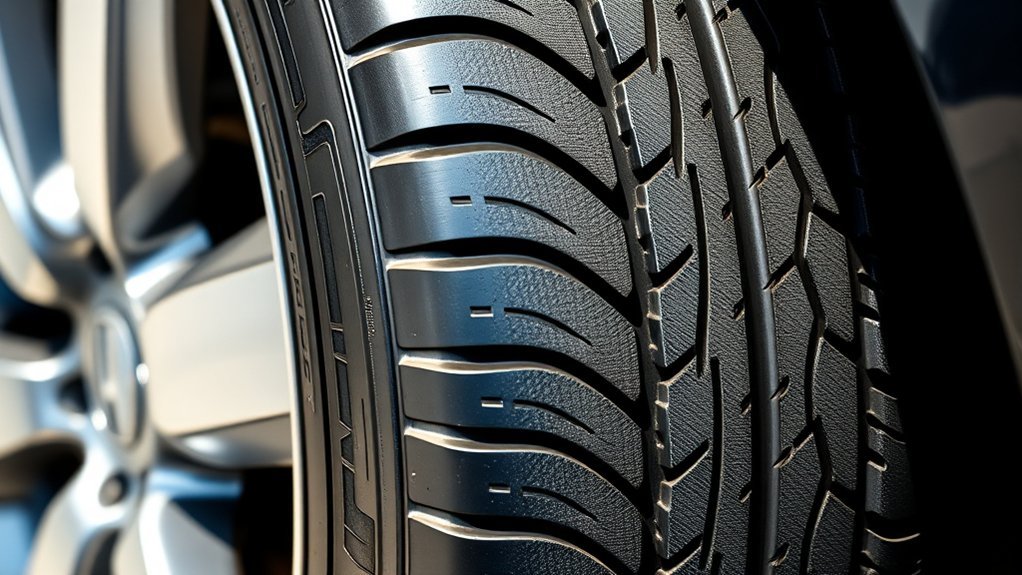
The right tire for your Accord starts with the tire information placard on the driver-side door jamb. That placard lists the original tire size and recommended cold tire pressure for your vehicle. Your owner’s manual and current tire sidewall can also help, but the placard is the first place to check.
Pro Tip: Take a photo of your Accord’s door-jamb tire placard before shopping. Use it to compare tire size, load index, speed rating, and recommended cold PSI.
[Products Worth Considering]

TP-M13W combination repair unit kit includes wrapped stems with matching patches for fast, reliable tire repairs. It’s suitable for both radial and bias ply tires and is designed for chemical or heat vulcanization. Gray vulcanizing gum with blue backing helps create a strong bond, with the stem portion wrapped for added effectiveness.

The SAFELIFE dial tire tread depth gauge measures tread depth in 1/32 inch increments with clear, easy-to-read 2-inch dial face. Color zones using a traffic light system help you quickly judge whether tread is low, marginal, or ample for safer driving. Built with a durable zinc cast body and a metal detect probe for precise, comfortable use across cars, motorcycles, trucks, and buses.

Measure tire tread depth quickly and accurately with this LUMITECO dial gauge that reads in 1/32" increments up to 14/32". The color-coded green/yellow/red zones make it easy to judge tire wear and know when replacement is needed. A rugged, compact design with a protective pouch helps keep the gauge ready for use on cars, trucks, motorcycles, and more.
Current Honda Accord Tire Size Examples
For the current Accord generation, Honda lists all-season tire examples such as 225/50R17 94V and 235/40R19 96V, depending on trim. Always verify your exact model year and trim because Accord tire sizes have changed across generations.
Honda’s current Accord specifications show 17-inch wheel packages on some trims and 19-inch wheel packages on others. That means a tire that fits one Accord trim may not fit another Accord trim correctly.
What to Match Before You Buy
- Size: Match the door placard unless a tire professional confirms a safe alternate size.
- Load index: Do not go lower than the required load capacity.
- Speed rating: Use a rating that meets or exceeds the vehicle and tire maker’s guidance.
- Wheel diameter: A 17-inch tire fits a 17-inch wheel; a 19-inch tire fits a 19-inch wheel.
- Driving climate: Choose all-season, performance, or winter tires based on your weather.
- Treadwear and traction ratings: Use UTQG as a comparison tool, not as the only buying factor.
Note: The maximum PSI printed on a tire sidewall is not the same as your Honda’s recommended cold tire pressure. Use the pressure listed on the vehicle placard unless a qualified tire professional gives different guidance for an approved alternate fitment.
Choosing All-Season, Performance, or Winter Tires
Most Honda Accord owners choose one of three tire categories:
- Touring or grand-touring all-season tires: Best for comfort, low road noise, daily commuting, and long tread life.
- Performance all-season tires: Better steering response and grip, usually with a firmer ride and shorter tread life.
- Winter tires: Best for regular snow, ice, and freezing temperatures. NHTSA notes that winter tires are more effective than all-season tires in deep snow.
If you drive mostly in mild weather, a quality all-season radial tire is usually the easiest choice. If your Accord sees real winter weather every year, a dedicated winter tire set can be a safer choice than relying on all-season tires alone.
[Products Worth Considering]

Monitor tire tread wear with a smart, color-coded depth gauge that shows clear condition ranges at a glance. The bar is range marked for fast, easy readings, helping you maintain safer traction and performance. Each gauge is portable with a pocket clip, and the set includes 20 units for daily use and sharing.

Keep your tires properly inflated with this analog VONDIOR tire pressure gauge, designed for fast, easy readings without batteries. The swiveling, two-axis hose and large glow dial help you measure at any tire angle with instant visibility. Built with a protective rubber shield, it supports durable, low-maintenance use for cars and trucks.

Accurately measure tire tread depth with a calibrated gauge marked from 0 to 1 inch in 1/32 inch increments. The color-coded bar helps you quickly identify tread condition ranges, supporting safe driving for trucks, motorcycles, automobiles, and passenger vehicles.
How Do Seasonal Conditions Affect Radial Tire Performance?
Temperature changes affect tire pressure, grip, and wear. USTMA notes that tire pressure can change by about one to two PSI for every 10-degree temperature shift, so seasonal pressure checks are important.
Winter Performance Challenges
Cold weather can reduce tire pressure and stiffen rubber. That can hurt traction, especially if the tread is worn. For snowy regions, begin shopping before the tread gets too low. A tire may still be legal at 2/32 inch, but wet and snow traction usually decline well before that point.
- Check tire pressure when the tires are cold.
- Inspect tread depth before winter starts.
- Consider winter tires if you regularly drive in snow or ice.
- Replace tires earlier if wet braking or snow grip feels weak.
Summer Heat Impact
Summer heat can raise tire pressure after driving and increase stress on tires that are overloaded, underinflated, damaged, or worn. Hot pavement can also accelerate wear. Before long trips, check pressure, tread depth, sidewall condition, and tire age.
Do not bleed air from a hot tire just because the pressure reading is higher after driving. For the most accurate reading, check pressure when the tires have been parked for at least three hours.
Tips for Maintaining and Extending the Life of Your Honda Accord Tires
Good maintenance is what turns a quality tire into a long-lasting tire. The tire brand matters, but pressure, alignment, rotation, and inspection matter just as much.
Check Tire Pressure Monthly
Use a tire-pressure gauge at least once a month and before long trips. Check pressure when the tires are cold. If the TPMS light comes on, stop and check the tires as soon as it is safe.
Rotate and Align as Needed
Follow your Honda maintenance schedule or tire manufacturer guidance for rotation. Many drivers rotate tires around every 5,000 to 7,500 miles, but your driving habits and tire type can change the best interval. If the Accord pulls, vibrates, or wears tires unevenly, have alignment and balance checked.
Inspect Tread and Sidewalls
Look for uneven wear, bulges, cracks, cuts, nails, exposed cords, and sidewall damage. Use a tread-depth gauge for the best reading. As a practical guide, 2/32 inch is the replacement floor, while wet and winter driving often call for replacement sooner.
Check Tire Age
Even if tread looks acceptable, tires age. Find the DOT date code on the sidewall and inspect older tires more carefully for cracking, hardening, or weathering. If you are unsure about tire age or condition, have a tire professional inspect them.
Common Mistakes to Avoid When Buying Accord Tires
- Buying by wheel size only: A 17-inch tire is not automatically correct just because your Accord has 17-inch wheels.
- Ignoring load index: A same-size tire with the wrong load rating may not be suitable.
- Confusing max PSI with recommended PSI: Use the vehicle placard for normal cold pressure.
- Mixing tire types: Avoid mixing winter, summer, all-season, and performance tires on the same vehicle unless a professional confirms it is safe.
- Choosing tread life over traction: Long-wearing tires are useful, but wet braking and comfort matter too.
- Waiting too long to replace tires: Worn tires can lose wet and snow grip before they look completely bald.
[Products Worth Considering]

The 22800 wheel stud installer makes replacing wheel studs quick and secure, saving time and effort during tire service. It uses a ratchet or impact wrench to pull new studs firmly into place, helping when existing studs are too long. Compatible with most automotive wheels and light-duty truck wheel studs, it’s designed for easy, tool-assisted installation.

Milton S-921 pencil tire pressure gauge helps you maintain optimal tire pressure for passenger cars with accurate readings in PSI and kPa. It features a built-in deflator valve for convenient pressure adjustments, plus a single chuck head and nylon indicator bar for easy use on the go. Built from durable plated brass and designed for reliable performance, it’s a practical road trip and cold-weather maintenance tool.

Measure tyre tread depth precisely with a digital gauge that reads in both MM and inches, helping you monitor safe driving conditions. The large LCD screen is easy to operate, and the compact tool fits for cars, trucks, and motorcycles. It provides high accuracy with a 0-25.4mm range and includes a 1-year warranty for added peace of mind.
Frequently Asked Questions
What is the difference between ZR and R radial construction?
R means radial construction. ZR is not a separate construction type; it is a speed-capability marking used in some radial tire size designations. For an Accord, focus first on the tire size, load index, and speed rating required for your exact model year and trim.
Who came up with steel-belted radial tires?
Michelin patented steel-belted radial tire construction in 1946. That design helped shape modern passenger-car tire construction by combining radial carcass cords with a stabilizing belt under the tread.
What tire size does a Honda Accord use?
It depends on the model year and trim. Current Accord examples include 225/50R17 94V and 235/40R19 96V, but you should always confirm your exact size on the driver-door tire placard or in the owner’s manual.
Are steel-belted radial tires good for fuel economy?
They can support good fuel economy when properly inflated and correctly matched to the car. Underinflated tires create extra heat and rolling resistance, which can reduce fuel economy and shorten tread life.
Do I need winter tires for a Honda Accord?
If you regularly drive in snow, ice, or freezing temperatures, winter tires are usually the safer choice. All-season tires can handle light mixed conditions, but winter tires are designed to stay more effective in deep snow and cold weather.
Can I use a different tire size on my Accord?
Only use a different size if a qualified tire professional confirms the fitment. The wrong size can affect clearance, speedometer accuracy, braking, handling, traction control, and ride comfort.
Conclusion
Steel-belted radial tires are a strong fit for the Honda Accord because they support stable handling, comfort, and efficient everyday driving. The key is choosing the correct tire for your exact Accord, not just choosing any radial tire. Match the door-jamb placard, confirm the load index and speed rating, choose the right tire type for your weather, and keep up with pressure, rotation, tread, and alignment checks.
When in doubt, use your Honda placard and owner’s manual as the starting point, then ask a trusted tire professional before changing size, rating, or tire category.
Sources
- Honda Accord Sedan Features & Specs — supports current Accord tire-size examples by trim.
- NHTSA TireWise — supports tire safety, pressure, tread, TPMS, and tire-care guidance.
- U.S. Tire Manufacturers Association Tire Care Essentials — supports monthly pressure checks, tread checks, rotation, and alignment guidance.
- USTMA Care and Service of Passenger and Light Truck Tires — supports load index, speed symbol, and sidewall-marking guidance.
- Michelin Major Tire Innovations — supports radial tire history and construction basics.
- Consumer Reports Winter Tread Guidance — supports practical winter tread-depth planning.