How Wide Is a 275 Tire? Exact Width & Fitment Guide
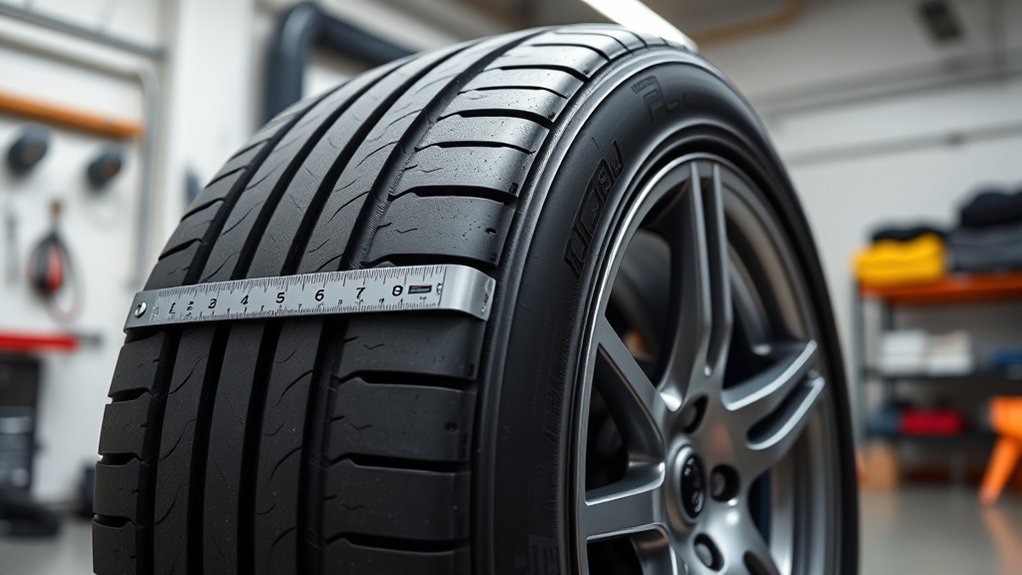
A 275 tire has a nominal section width of 275 millimeters, which converts to about 10.8 inches. That does not mean the tread itself is exactly 10.8 inches wide. In tire sizing, the first number describes the tire’s approximate sidewall-to-sidewall section width, while the tire’s height, diameter, rim fitment, and rubbing risk depend on the full size code, wheel width, offset, suspension, and vehicle clearance.
Quick Answer
A 275 tire is about 10.83 inches wide because 275 mm divided by 25.4 equals 10.83 inches. Most common 275 performance tires fit wheels around 9.0 to 11.0 inches wide, with 9.5 inches often used as a measuring rim, but the exact approved rim range depends on the specific tire size and model.
Key Takeaways
- A 275 tire has a nominal section width of 275 mm, or about 10.83 inches.
- The “275” number is not the same as tread width; it refers to approximate sidewall-to-sidewall section width.
- Many common 275 tires use a 9.0- to 11.0-inch approved rim range, but you must verify the exact tire model.
- Aspect ratio changes the tire’s height, so 275/30, 275/35, 275/40, and 275/45 tires are not the same overall size.
- Rubbing depends on wheel width, offset, backspacing, suspension travel, steering angle, camber, and fender clearance.
At a Glance
| Time Required | 10–30 minutes to compare specs and check basic clearance; longer if test-fitting wheels |
| Difficulty | Easy for size conversion; moderate for fitment and rubbing checks |
| Tools Needed | Tape measure, tire spec sheet, wheel specs, flashlight, straightedge, and access to your vehicle placard or owner’s manual |
| Cost | Free for research and measuring; professional mount, balance, alignment, spacers, or suspension changes add cost |
How Wide Is a 275 Tire?
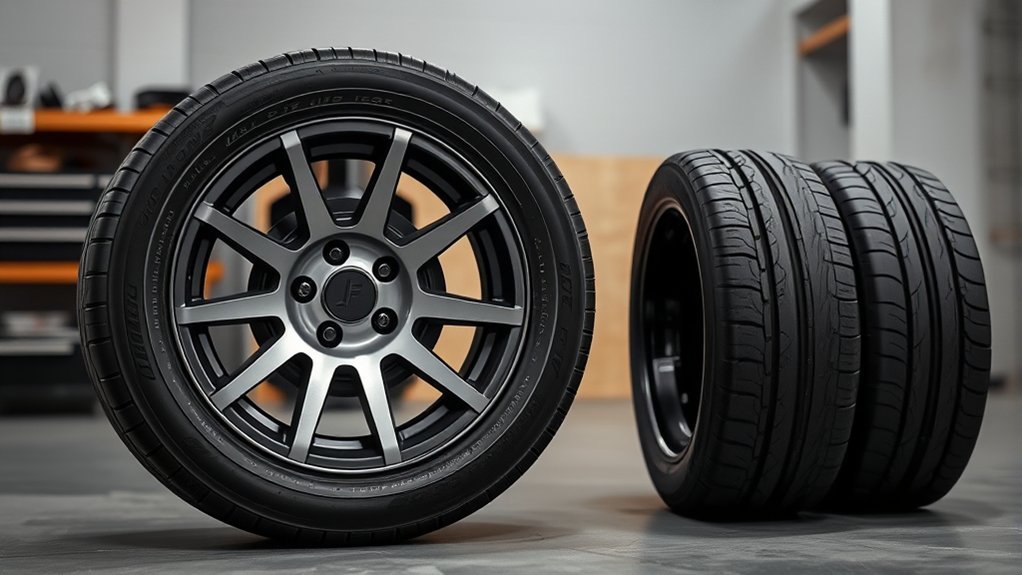
A 275 tire is 275 millimeters wide in nominal section width. Converted to inches, that is:
275 mm ÷ 25.4 = 10.83 inches
That 10.83-inch number is a useful baseline, but it is not a guarantee that every 275 tire will measure exactly 10.83 inches once mounted. Tire makers measure section width on an assigned measuring rim, and the mounted width can change slightly when the same tire is installed on a narrower or wider wheel. Tire Rack explains section width as the distance from the inner sidewall to the outer sidewall at the tire’s widest point, excluding raised lettering and protective ribs.
The key distinction is simple: 275 is not tread width. Tread width is the part of the tire that has the tread pattern, and it varies by tire model, category, shoulder shape, and manufacturer. A 275 summer performance tire and a 275 all-terrain tire may share the same nominal section width but have different tread widths and sidewall shapes.
Note: When a tire sidewall reads 275/40R18, the 275 is section width in millimeters, the 40 is aspect ratio, and the 18 is wheel diameter in inches. Continental’s tire size guide explains these markings as width, sidewall percentage, construction, rim diameter, load index, and speed rating.
[Products Worth Considering]

Clean grills, fenders, fender flares, bumpers, and wheel wells with a long-handled brush built for detailed car washing. The soft, triple-flagged bristles and dense scrub coverage help lift dirt gently while making coverage fast and easy. Use it with your favorite car wash soap for tires and exterior surfaces, and it also works for bike, motorcycle, boat, or RV cleaning.

This 3-piece wheel and tire brush set makes it easy to clean light, medium, and heavy dirt from wheels, rims, tires, and exterior surfaces. It includes both soft and stiff bristle options for gentle scrubbing and tough grime removal, helping lift brake dust and road buildup. The long-handle design supports comfortable cleaning across cars, trucks, SUVs, RVs, motorcycles, and more, with simple care instructions to restore brush shape.

This 15-inch tire spoons kit makes tire removal and installation easier with added leverage, reducing time and effort for everyday repairs. It includes tire spoons, rim protectors, a valve tool, and valve cores/caps, helping protect rims and streamline deflation and re-sealing. Built with durable hardened steel and a non-slip ergonomic grip for confident use on motorcycles, dirt bikes, ATVs, and lawn equipment.
275 Tire Width in Inches and Millimeters
In millimeters, the width is easy: 275 mm. In inches, it is about 10.83 inches. Most people round that to 10.8 inches.
| Measurement | Value | What It Means |
|---|---|---|
| Metric width | 275 mm | Nominal section width |
| Inch conversion | 10.83 in | 275 ÷ 25.4 |
| Rounded width | 10.8 in | Common quick-reference number |
The tire’s height is a separate calculation. The aspect ratio tells you how tall the sidewall is as a percentage of the section width. For example, a 275/40 tire has a sidewall height of 40% of 275 mm.
Sidewall height formula: 275 × aspect ratio ÷ 100
Overall diameter formula: wheel diameter + sidewall height × 2
| Tire Size | Approx. Sidewall Height | Approx. Overall Diameter | Main Fitment Difference |
|---|---|---|---|
| 275/30R20 | 3.25 in | 26.5 in | Shorter sidewall, sharper response, less cushion |
| 275/35R20 | 3.79 in | 27.6 in | Taller than 275/30, more sidewall |
| 275/40R18 | 4.33 in | 26.7 in | Common performance fitment with moderate sidewall |
| 275/45R20 | 4.87 in | 29.7 in | Much taller; more likely to affect clearance and speedometer reading |
These numbers are close calculated values, not a replacement for the manufacturer’s spec sheet. Actual mounted dimensions can vary by tire model, load rating, construction, and measuring rim.
What Rim Width Fits 275 Tires?
For many common 275 performance tires, the approved wheel width is around 9.0 to 11.0 inches. A 9.5-inch wheel is often a common measuring or balanced fit for 275/35 and 275/40 tires, but it is not a universal rule for every 275 tire.
The safest answer is this: check the approved rim width range for your exact tire size and tire model. A 275/30 tire, 275/35 tire, 275/40 tire, and 275/55 tire can have different approved rim ranges because sidewall height and construction change how the tire sits on the wheel.
| Rim Width | Typical Result With Many 275 Tires | Fitment Note |
|---|---|---|
| 8.5 in | Often too narrow for common 275 performance sizes | Use only if your exact tire’s approved range allows it |
| 9.0 in | Common minimum for many 275/35 and 275/40 tires | More sidewall bulge than a wider wheel |
| 9.5 in | Common measuring or balanced rim for many 275 tires | Good starting point when approved by the tire maker |
| 10.0 in | Common performance fit | Can sharpen response but may move the tire closer to fender or suspension parts |
| 10.5–11.0 in | Approved for many, but not all, 275 tires | Requires careful offset and fender clearance checks |
Rim width changes the way the sidewall sits. A narrower rim can make the sidewall bulge more, while a wider rim can pull the sidewalls outward. Tire Rack’s rim width guide notes that section width changes by roughly 0.2 inch for every 0.5-inch change in rim width. That small change can be enough to cause rubbing on a tight setup.
Pro Tip: If two wheel widths are both approved for your tire, choose based on your goal. A narrower approved wheel usually gives more sidewall bulge and rim protection, while a wider approved wheel can improve steering response but may require more fender clearance.
Will a 275 Tire Rub on Your Vehicle?
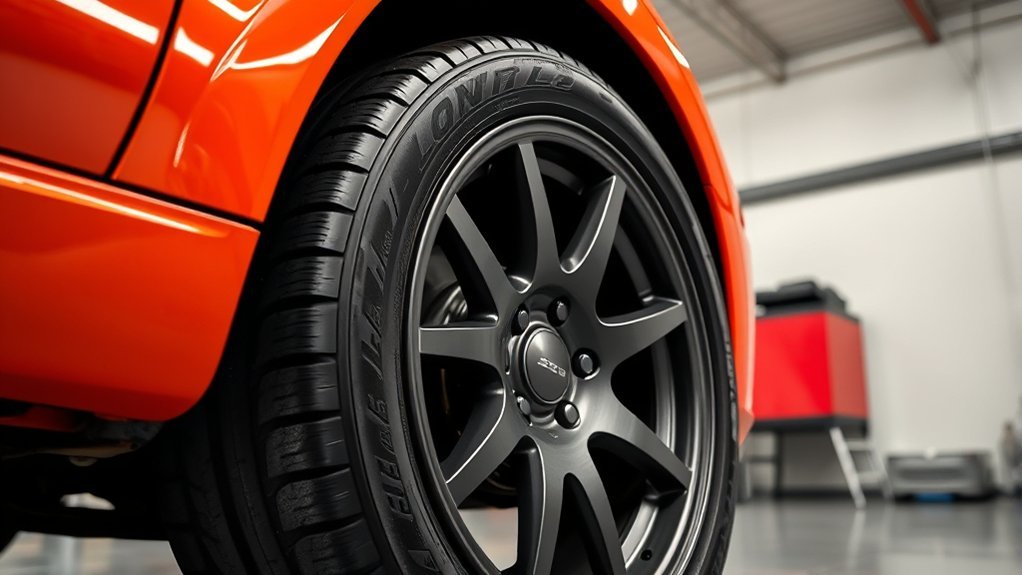
Yes, a 275 tire can rub if the wheel, tire, offset, or suspension setup puts the tire too close to the fender, liner, frame, strut, control arm, brake duct, or bumper tab. The 275 width alone does not decide fitment. A 275/30R20 and a 275/45R20 are both 275 tires, but the taller 275/45R20 has much more sidewall and a much larger overall diameter.
Rubbing usually happens in four places:
- Outer fender or fender liner: often caused by low offset, wide wheels, lowered suspension, or too much tire diameter.
- Inner suspension side: often caused by high offset, too much backspacing, or a wheel that pulls the tire inward.
- Front bumper tab or liner edge: common at full steering lock on front fitments.
- Top of the wheel well: usually appears under suspension compression, heavy load, or aggressive lowering.
Warning: Do not choose a 275 tire by width alone. Confirm the tire’s load index, speed rating, approved rim width, wheel load rating, overall diameter, and vehicle placard requirements before installation. USTMA recommends using replacement tires that match the size, load index, and speed rating recommended by the vehicle or tire manufacturer.
How to Fit 275 Tires Without Rub
To fit 275 tires without rub, you need to compare the complete tire size and wheel specs, not just the 275 width. Use this process before buying tires or wheels.
- Start with your original tire size. Check the tire placard, owner’s manual, and current tire sidewall. Michelin’s tire-size guide explains that correct tire size information is found on the tire sidewall, owner’s manual, or vehicle tire information placard.
- Compare overall diameter. Keep the new diameter close to the original unless you know the vehicle has room for a larger tire. A big diameter change can affect clearance, gearing feel, ABS behavior, traction control, and speedometer accuracy.
- Verify the approved rim width. Look up the exact 275 tire model. Do not assume every 275 tire fits the same wheel width.
- Check wheel width and offset together. A wider wheel can move the tire both inward and outward. Offset decides where the wheel sits inside the wheel well.
- Measure inner clearance. Check the strut, control arm, sway bar, frame, brake lines, and any plastic liners.
- Measure outer clearance. Check the fender lip, bumper tab, mud flap, and wheel arch liner.
- Test full steering lock. On front tires, turn the wheel fully left and right and inspect both sides.
- Account for suspension compression. A setup that clears while parked can still rub over bumps, during cornering, or with passengers and cargo.
- Align the vehicle after installation. Camber and toe changes can affect both clearance and tire wear.
- Recheck after a short drive. Look for polished plastic, fresh rubber marks, or scuffed paint inside the wheel well.
| Fitment Check | What to Confirm |
|---|---|
| Tire width | 275 mm nominal section width, about 10.83 in |
| Rim width | Must fall inside the tire manufacturer’s approved range |
| Overall diameter | Compare with original tire diameter before installing |
| Offset and backspacing | Check inner suspension clearance and outer fender clearance |
| Steering and suspension travel | Inspect at full lock and under compression, not only while parked straight |
Note: Spacers, rolled fenders, camber changes, or suspension parts may help a tight 275 setup clear, but they can also affect handling, bearing load, alignment, and legality. Use quality parts and have the setup inspected by a qualified tire or suspension professional.
[Products Worth Considering]

This professional wheel and rim cleaning brush set lifts brake dust, grime, and dirt with soft, scratch-free microfiber and synthetic wool fibers. The rim brush bends up to 360 degrees for easy access to hard-to-reach areas around spokes, lips, and faces. Ideal for thorough cleaning of car, truck, motorcycle, bicycle, RV, and more wheel and tire surfaces.

This metal-free wheel and tire cleaning brush uses dense, fluffy synthetic wool to safely clean rims, spokes, fenders, and engine areas without worrying about damaging surfaces. Its flexible, comfortable design helps you reach detailed areas while maintaining durability, and the extra absorbent fibers work well with wheel spray cleaners for faster cleanup. Reusable and washable performance helps prevent grime and build-up for cleaner vehicles and easier maintenance at home.

Clean wheels and rims with soft feathered bristles that safely remove dirt and road grime while helping restore original luster. The short non-slip handle makes it easy to scrub in tight wheel wells, and the brush is suitable for vehicles and hard-to-reach areas. It can also be soaked and rubbed to help restore bristles to their shape after use.
How 275 Compares to 285, 295, 33, and 35 Tires
Many people compare 275 tires with 285, 295, 33-inch, or 35-inch tires, but these numbers do not all describe the same measurement. A 275, 285, or 295 metric tire number refers to nominal section width in millimeters. A 33 or 35 tire usually refers to approximate overall diameter in inches, especially in flotation sizing used for many truck and off-road tires.
| Size Term | What It Usually Means | Difference From 275 |
|---|---|---|
| 275 | 275 mm nominal section width | Baseline: about 10.83 in wide |
| 285 | 285 mm nominal section width | 10 mm wider, about 0.39 in |
| 295 | 295 mm nominal section width | 20 mm wider, about 0.79 in |
| 33 | About 33 in overall diameter | Not directly comparable; diameter, not width |
| 35 | About 35 in overall diameter | Not directly comparable; usually much taller than most 275 passenger sizes |
Frequently Asked Questions
How much wider is a 285 than a 275 tire?
A 285 tire is 10 mm wider than a 275 tire. Converted to inches, that is about 0.39 inch wider. The real mounted difference can vary slightly by brand, tire model, and rim width.
How much wider is a 295 tire than a 275?
A 295 tire is 20 mm wider than a 275 tire, or about 0.79 inch wider. That extra width can improve footprint potential, but it also needs more wheel and vehicle clearance.
Is a 275 the same as a 33 tire?
No. A 275 tire size uses metric section width, while a 33-inch tire usually describes approximate overall diameter. A 275 can be close to 33 inches tall only in certain aspect ratios and rim sizes, such as some truck sizes, but 275 by itself does not mean 33 inches tall.
Are 275 tires the same as 35s?
No. A 275 tire is identified by nominal width in millimeters. A 35 usually means an approximate 35-inch overall diameter. Some 275 truck tires can be tall, but most 275 passenger and performance sizes are not the same as 35-inch tires.
Can you put a 275 tire on an 8.5-inch rim?
Only if the exact tire manufacturer approves 8.5 inches for that specific 275 size and model. Many common 275 performance sizes list 9.0 inches as the minimum approved rim width, so 8.5 inches is often too narrow. Always check the tire spec sheet before mounting.
Does 275 mean tread width?
No. In a metric tire size, 275 refers to nominal section width in millimeters, measured from sidewall to sidewall. Tread width is a separate measurement and can be narrower than the section width.
Conclusion
A 275 tire is about 10.83 inches wide in nominal section width, but that number is only the starting point. The full tire size, aspect ratio, rim width, measuring rim, wheel offset, and vehicle clearance all decide whether the tire will fit safely and avoid rubbing.
For most buyers, the best approach is simple: convert the width, compare the full tire diameter, confirm the tire maker’s approved rim range, and test inner and outer clearance before driving. A 275 tire can deliver a wide, planted setup, but only when it matches the wheel, suspension, and vehicle correctly.
Sources
- Continental Tire Size Guide — supports tire sidewall markings, tire width, aspect ratio, rim diameter, load index, and speed rating.
- Tire Rack: How To Determine The Section Width Of A Tire — supports section-width definition and measuring-rim explanation.
- Tire Rack: What Is The Rim Width Range For A Tire? — supports rim-width range, measuring rim width, and section-width change from wheel width.
- USTMA: Replacing Tires — supports safety guidance for matching tire size, load index, and speed rating to vehicle or tire manufacturer recommendations.
- Michelin: Choosing the Right Tire Size for Your Vehicle — supports using the sidewall, owner’s manual, and tire information placard for correct tire sizing.
- Goodyear Eagle F1 SuperCar 3 Specifications — example of a 275/40R19 tire with a 9.0–11.0 inch approved rim width range and 9.5 inch measured rim width.
[Products Worth Considering]

Vigorder rubber cement glue delivers superior adhesion and cures quickly within about 30 seconds for seamless rubber bonding. Once cured, it helps provide a strong, durable, waterproof seal that holds up to vehicle weight, pressure, and heat. Suitable for cars, motorcycles, trucks, bicycles, and off-road tires, it’s designed for emergency patch and maintenance repairs.

ETENWOLF T300 is a calibrated digital tire pressure gauge for accurate readings from 3 to 200 PSI across light and heavy-duty vehicles. It includes thermal compensation for reliable performance in extreme cold or heat, with an auto shut-off to extend battery life and an LED for easier reading. The sturdy design supports rugged everyday use, making it ideal for pickups, RVs, and industrial applications.
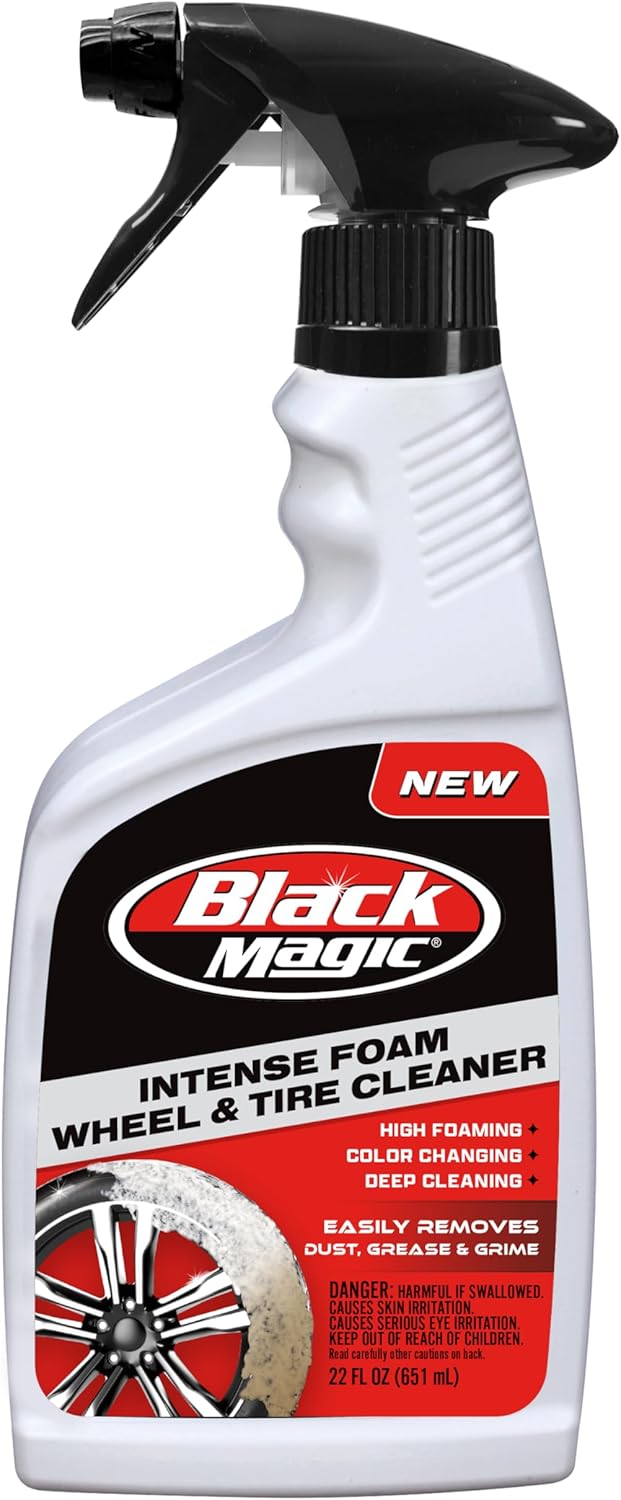
Black Magic Intense Foam Wheel & Tire Cleaner uses a high-foaming action to lift away dirt, grime, and brake dust without scrubbing. The color-changing formula helps show contaminants being dissolved as foam turns from white to brown. Safe for all wheel types and even wheel wells, it leaves a like-new, slick finish with a fresh cherry scent.

Related Articles
225 Vs 245 Tires: Which Size Fits Your Vehicle?
Smaller 225 or beefier 245 tires—discover which one fits your vehicle best before making a costly mismatch.
Read More
215 Vs 225 Tires: Which Size Should You Choose?
Jump into 215 vs 225 tires to see which size fits your driving style, boosts performance, and avoids costly fitment mistakes.
Read More
205 Vs 215 Tires: What’s the Difference?
A 205 vs 215 tires comparison reveals subtle differences in grip, comfort, and efficiency that could change your drive more than you expect.
Read More