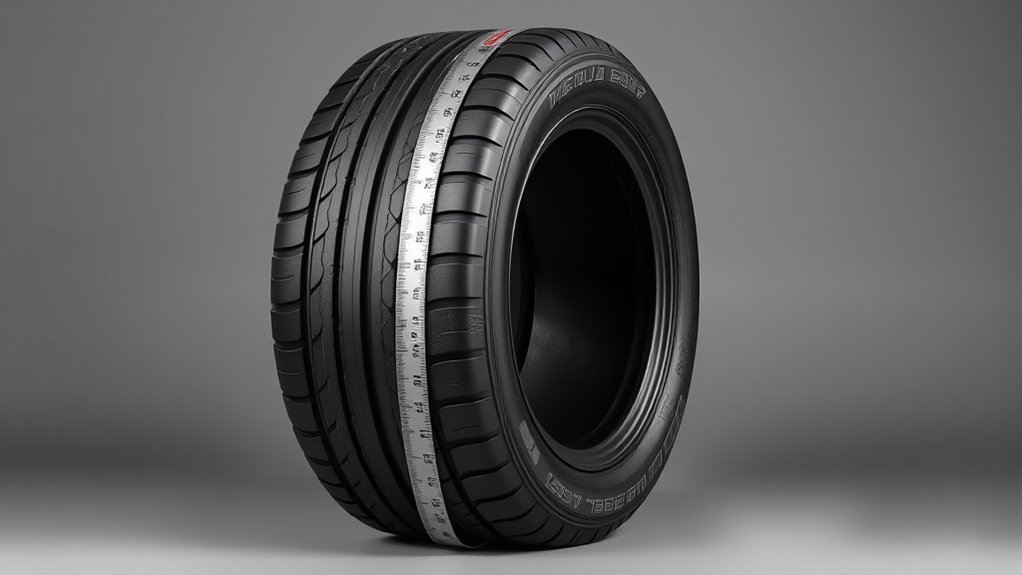
A 275 tire has a nominal section width of 275 millimeters, which converts to about 10.83 inches. That number describes the tire’s widest sidewall-to-sidewall dimension under standardized measuring conditions. It does not tell you the tread width, overall diameter, or whether the tire will fit your vehicle. Those details depend on the complete tire size, wheel width, tire model, and vehicle clearance.
Quick Answer
A 275 tire is nominally 275 millimeters, or 10.83 inches, wide from sidewall to sidewall. Its actual mounted width can differ because of tire construction and wheel width. You need the full size, such as 275/70R18, to calculate sidewall height and overall diameter.
Key Takeaways
- 275 millimeters equals approximately 10.83 inches.
- The 275 label is a nominal section width, not the tread width or overall tire diameter.
- Actual mounted width varies by tire model, construction, inflation, and measuring rim width.
- There is no single wheel-width range for every 275 tire; use the exact manufacturer specification.
- The aspect ratio and rim diameter determine sidewall height and theoretical overall diameter.
- Before changing tire size, verify load rating, speed rating, offset, clearance, and vehicle-manufacturer requirements.
How Wide Is a 275 Tire in Inches?
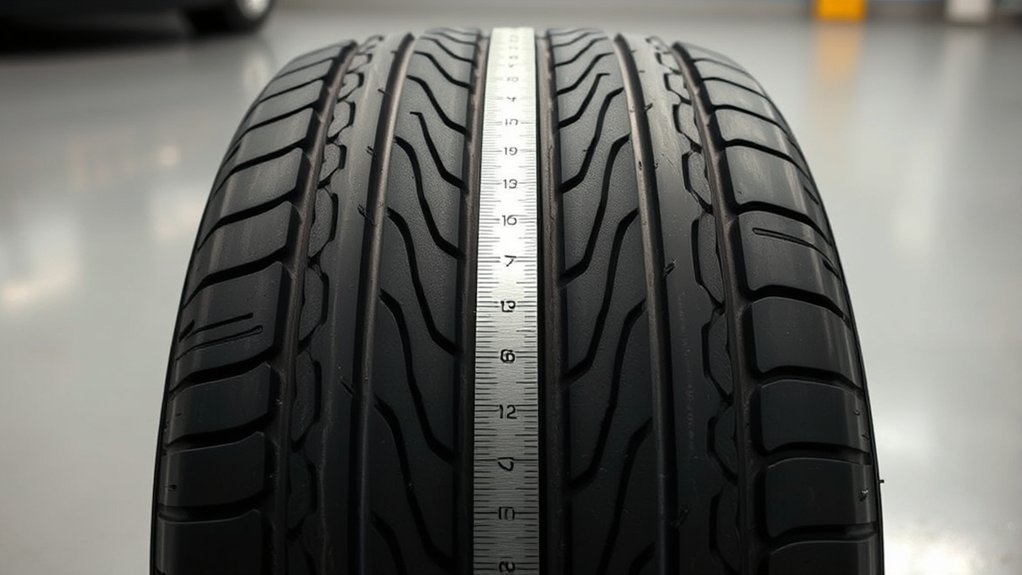
A 275 tire is nominally 275 millimeters wide. The conversion is straightforward:
275 ÷ 25.4 = 10.8268 inches
Rounded to two decimal places, that is 10.83 inches. The number refers to nominal section width, which is the widest part of the inflated tire from one normal sidewall to the other. It does not include decorative side ribs or raised lettering. The U.S. Tire Manufacturers Association distinguishes section width from tread width, rim width, section height, and overall diameter.
The number 275 describes nominal tire width. It does not mean the tire is 27.5 inches tall, 275 millimeters in tread width, or automatically equivalent to a 33-inch tire.
The size designation stays 275 across sizes such as 275/35R18, 275/65R18, and 275/70R18. However, that does not mean every tire will measure exactly 275 millimeters after mounting. Tire construction and wheel width can change the measured section width.
Note: Michelin states in its published tire specifications that section width can change by approximately 0.2 inch for every 0.5-inch change in rim width. Treat that as manufacturer guidance rather than a universal substitute for the exact tire data sheet.
What Does 275 Mean on the Sidewall?
In a metric tire size, 275 is the nominal section width in millimeters. Michelin’s tire-marking guide defines the first number in a size code as the tire’s nominal section width.
For example, consider 275/70R18 125/122S Load Range E:
- 275: Nominal section width in millimeters
- 70: Sidewall height is 70% of the nominal section width
- R: Radial construction
- 18: Wheel diameter in inches
- 125/122: Load indexes for single and dual applications on an LT tire
- S: Speed rating
- Load Range E: The tire’s load and inflation category
Tire Width Meaning
Section width is measured across the tire’s widest normal sidewalls, not across the tread blocks. That distinction matters because the tread may be noticeably narrower than the section width, especially on rounded passenger tires or tires with large sidewall shoulders.
Three measurements are often confused:
- Section width: The widest normal sidewall-to-sidewall measurement
- Overall width: May include protective ribs, lettering, or other sidewall features
- Tread width: The width of the tread surface specified by the tire manufacturer
Two tires with the same 275 size designation can have different tread widths, shoulder shapes, rim protectors, and measured overall widths.
Sidewall Number Breakdown
The first number cannot tell you the complete physical size. The aspect ratio is needed to calculate sidewall height, and the wheel diameter is needed to estimate overall tire diameter.
For a 275/70R18:
- Sidewall height: 275 × 0.70 = 192.5 millimeters
- Sidewall height in inches: 192.5 ÷ 25.4 = 7.58 inches
- Theoretical diameter: 18 + 7.58 + 7.58 = 33.16 inches
The actual tire listed by a manufacturer may differ slightly because the formula does not account for every tread, casing, inflation, and measuring-rim variation.
How to Interpret a Complete 275 Size
Use these formulas for a metric radial tire:
Sidewall height in inches = width in millimeters × aspect ratio ÷ 100 ÷ 25.4
Theoretical overall diameter = wheel diameter + two sidewall heights
For example, a 275/35R18 and a 275/70R18 have the same nominal section width, but they are very different in height:
- 275/35R18: Approximately 25.58 inches in theoretical diameter
- 275/70R18: Approximately 33.16 inches in theoretical diameter
The 275 designation stays the same because the nominal width stays the same. The aspect ratio changes the sidewall height.
275 Tire Width vs. Actual Tread Width
A 275 tire’s 10.83-inch figure is not a promise that its tread is 10.83 inches wide. The tread sits between the shoulders, while section width is taken across the tire’s widest normal sidewalls.
Actual tread width depends on:
- Tire model and intended use
- Rounded or square shoulder design
- Street, all-terrain, mud-terrain, or performance tread pattern
- Approved measuring rim
- Rim-protector and sidewall construction
- Passenger, XL, LT, or other load construction
A manufacturer specification sheet may list section width, overall width, tread width, approved rim range, measuring rim, overall diameter, revolutions per mile, load rating, and maximum pressure. Those published measurements are more useful for close-clearance fitment than the sidewall code alone.
Pro Tip: When clearance is tight, compare the manufacturer’s inflated overall width and diameter for the exact product code. Do not rely only on “275” or on a generic online calculator.
275 Tire Size Examples by Rim Diameter
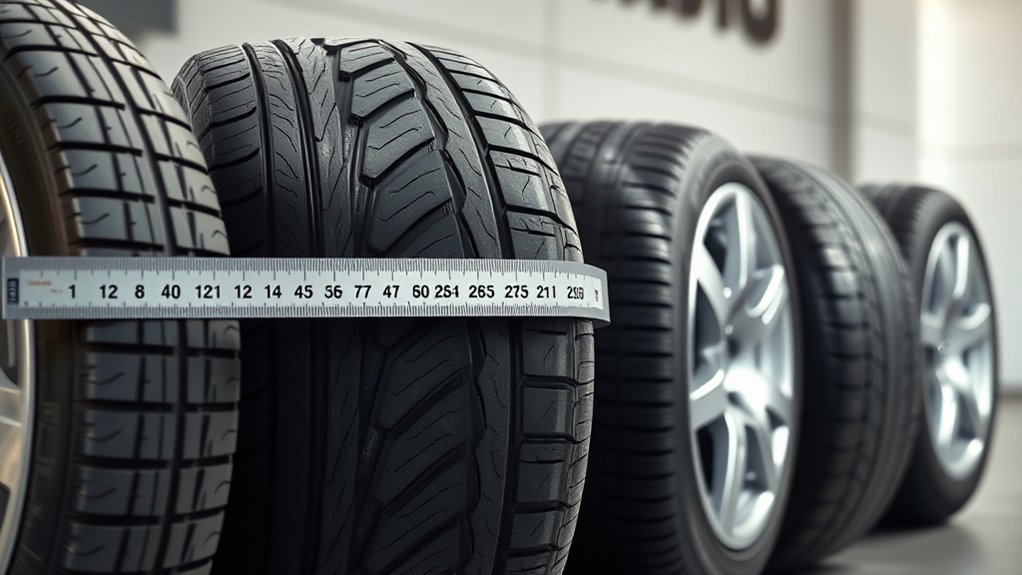
All the sizes below begin with 275, but their sidewall heights and overall diameters differ. The table uses the standard metric-size formula and should be treated as a theoretical comparison.
| Tire Size | Sidewall Height | Theoretical Diameter | General Profile |
| 275/35R18 | 3.79 in. | 25.58 in. | Low-profile performance |
| 275/55R20 | 5.95 in. | 31.91 in. | SUV and truck street fitment |
| 275/60R20 | 6.50 in. | 32.99 in. | Approximately 33-inch diameter |
| 275/65R18 | 7.04 in. | 32.07 in. | Truck and SUV |
| 275/65R20 | 7.04 in. | 34.07 in. | Approximately 34-inch diameter |
| 275/70R16 | 7.58 in. | 31.16 in. | Tall sidewall on a smaller wheel |
| 275/70R18 | 7.58 in. | 33.16 in. | Approximately 33-inch diameter |
| 275/75R17 | 8.12 in. | 33.24 in. | Tall LT-style profile |
Manufacturer-published diameter may vary slightly from the calculations above. Tread depth, casing construction, measuring rim, and production tolerances can all affect the final measurement.
275 Width Basics
The nominal 275 width remains part of the size code regardless of the aspect ratio. What changes is the height of each sidewall. A higher aspect ratio produces a taller sidewall, while a lower ratio produces a shorter sidewall.
That change can affect:
- Ride comfort
- Steering response
- Wheel protection
- Overall diameter
- Clearance
- Revolutions per mile
- Speedometer and odometer readings
Rim Diameter Examples
The final number identifies the required wheel diameter. A 275/70R18 must be mounted on an 18-inch-diameter wheel, while a 275/70R16 requires a 16-inch-diameter wheel.
Wheel diameter and wheel width are different measurements:
- Wheel diameter: Must match the tire’s final size number exactly.
- Wheel width: Must fall inside the approved range for the exact tire model and size.
A tire designed for a 17-inch wheel must never be mounted on a 17.5-inch wheel, even if the numbers look close.
Fitment and Clearance
A tire can fit the wheel and still rub the vehicle. Before installing a 275 tire, verify:
- The size listed on the driver-door tire placard or in the owner’s manual
- The tire manufacturer’s approved wheel-width range
- Load index and speed rating
- Wheel offset and backspacing
- Inner clearance to struts, control arms, brake hoses, and liners
- Outer clearance to the fender and wheel arch
- Clearance at full left and right steering lock
- Clearance throughout suspension compression and rebound
- Brake-caliper clearance
- Effects on speedometer, ABS, stability control, gearing, and spare-tire compatibility
Warning: Tire and wheel assemblies can separate explosively during improper mounting. Use a trained tire professional, match the wheel diameter exactly, and follow the vehicle placard for operating pressure. The maximum pressure molded on the tire is not automatically the correct pressure for your vehicle.
How Does a 275 Tire Compare to 33- and 35-Inch Tires?
A direct comparison is not possible until you know the complete 275 size. In metric sizing, 275 describes nominal width. In a flotation size such as 35×12.50R20LT, the first number describes nominal overall diameter and the second describes nominal section width in inches.
Examples show why the full size matters:
- A 275/35R18 is only about 25.58 inches tall.
- A 275/60R20 is about 32.99 inches tall.
- A 275/70R18 is about 33.16 inches tall.
- A 275/65R20 is about 34.07 inches tall.
Therefore, some 275 sizes are close to a nominal 33-inch tire, while others are much shorter or slightly over 34 inches.
A common 33×12.50 or 35×12.50 flotation tire is also nominally 12.5 inches wide, which is wider than the 10.83-inch nominal width of a 275 metric tire. However, flotation tires are also available in other widths, so “33-inch” or “35-inch” does not always mean 12.5 inches wide.
Diameter affects ground clearance differently from width. If you move from a 33-inch tire to a 35-inch tire, the nominal diameter increases by 2 inches, but axle and differential clearance increase by only about 1 inch because the axle sits at the tire’s radius.
Will a 275 Tire Fit on Your Wheels?
It may, but “275” alone is not enough to decide. You need the complete tire size and the exact tire manufacturer’s approved wheel-width range.
Different 275 profiles can require very different wheels. For example, Toyo’s published specifications for a 275/35R18 include an approved range extending from 9.0 to 11.0 inches for one listed product. A tall LT275/70R18 truck tire may be approved for a substantially narrower wheel. This is why a universal 8.5- to 10.5-inch recommendation is unreliable.
[Products Worth Considering]

This professional wheel and rim cleaning brush set lifts brake dust, grime, and dirt with soft, scratch-free microfiber and synthetic wool fibers. The rim brush bends up to 360 degrees for easy access to hard-to-reach areas around spokes, lips, and faces. Ideal for thorough cleaning of car, truck, motorcycle, bicycle, RV, and more wheel and tire surfaces.

The 22800 wheel stud installer makes replacing wheel studs quick and secure, saving time and effort during tire service. It uses a ratchet or impact wrench to pull new studs firmly into place, helping when existing studs are too long. Compatible with most automotive wheels and light-duty truck wheel studs, it’s designed for easy, tool-assisted installation.

Protect your spare wheel with a waterproof, dustproof tire cover made to resist sun and harsh weather. The elastic band design makes it easy to install and remove without tools, while reinforced stitching helps it keep its shape. Available in multiple sizes, it fits common RV, trailer, Jeep, SUV, and truck spare tires.
Wheel Width Limits
The approved range is designed to keep the casing, beads, sidewalls, and tread in the intended shape.
- Wheel too narrow: The sidewalls bulge more and the tread may crown.
- Wheel too wide: The sidewalls are pulled outward and the tread profile may flatten or stretch.
- Wheel inside the approved range: The tire can maintain its intended geometry and load behavior.
The measuring rim is the wheel width on which the manufacturer records the tire’s published section width and diameter. Moving to another approved wheel width can change the mounted measurement.
Offset and Clearance
Wheel offset controls where the tire sits relative to the hub:
- More positive offset: Moves the wheel and tire farther inboard.
- Less positive or negative offset: Moves the wheel and tire farther outward.
Moving inward can reduce clearance to suspension parts. Moving outward can increase fender contact, alter scrub radius, increase debris exposure, and place different loads on steering and wheel-bearing components.
Static parking-lot clearance is not enough. Check the tire at full steering lock and through the suspension’s usable travel. Loaded cargo, passengers, towing tongue weight, bumps, and body roll can expose rubbing that is not visible while the vehicle is parked.
What Is the Best Wheel Width for a 275 Tire?
There is no single best wheel width for every 275 tire. The correct answer is the measuring rim or approved range listed for the exact tire product.
As a broad pattern:
- Low-profile performance sizes such as 275/35R18 often use wider wheels.
- Higher-profile truck sizes such as LT275/70R18 often use narrower wheels.
- Passenger, XL, and LT versions may have different approved ranges even when the metric size looks similar.
For a street vehicle, the manufacturer’s measuring rim often provides a balanced starting point for published width, tread shape, and handling. Other approved widths may be used when the vehicle, wheel, clearance, and intended use support them.
Do not choose a wheel solely to create a stretched sidewall, oversized bulge, or particular stance. Appearance does not override bead seating, load support, clearance, or vehicle-manufacturer limits.
[Products Worth Considering]

This 20-piece tire changer kit makes motorcycle and bike tire repairs easier with extended 14.5-inch spoons for leverage and access. Built from CrV steel with a corrosion-resistant chrome finish, it helps resist bending while protecting rims and tubes using smooth rounded spoons and included rim protectors. The all-in-one set includes valve removal and accessory tools for faster tire changes across motorcycles, bicycles, ATVs, and lawn equipment.

A concentrated tire and tube mounting compound designed to help simplify mounting rubber tires and tubes on passenger, semi truck, construction, and OTR applications. Its ultra-thick formula packs beads effectively and includes rust inhibitors to help protect against corrosion during use.

This wheel brush kit delivers pro-level cleaning at home, lifting dirt, grime, and brake dust to help restore wheel appearance. It includes multiple brush styles and applicator pads for tackling different wheel surfaces, with gentle, metal-free bristles designed to reduce scratching risk. The flat and double-ended brushes are built for comfort and reach, making wheel care easier for cars, trucks, and RVs.
How Load Range and Ply Rating Affect 275 Tire Dimensions
Load range does not change the meaning of 275. A 275 tire remains nominally 275 millimeters wide, but different constructions may have different published weights, tread depths, overall widths, and diameters.
The term “ply rating” is historical. Bridgestone’s tire terminology guide explains that load range replaced the former ply-rating term and identifies load and inflation limits.
For example:
- Load Range C is commonly called 6-ply rated.
- Load Range D is commonly called 8-ply rated.
- Load Range E is commonly called 10-ply rated.
- Load Range F is commonly called 12-ply rated.
A 10-ply-rated tire does not necessarily contain ten physical body plies. Modern materials can provide the required strength with fewer actual layers. The sidewall lists the real ply composition and cord materials separately.
Do not select a replacement based only on load range. Confirm the complete size, load index, maximum load, approved inflation data, wheel rating, and the vehicle manufacturer’s requirements.
[Products Worth Considering]

This VEVOR tire bead breaker uses a slide-hammer impact and wedge tip to separate tire beads from rims quickly and efficiently without damaging hub surfaces. The long handle and sturdy steel construction help reduce user strain while providing reliable, portable tire changing for cars, trucks, and more. Ideal for home mechanics and repair shops handling multiple vehicle tire sizes.

This digital tire pressure gauge with built-in inflator helps you accurately check and adjust tire pressure for safer driving and better fuel efficiency. It supports multiple units (PSI, KPA, BAR, KG/CM²) and reads within 1% for reliable results. The 3-in-1 design inflates, deflates, and measures, with a quick-connect air chuck and compatible hose setup for cars, trucks, SUVs, RVs, and motorcycles.

Chemical Guys ShineLogic Tire Shine delivers a deep wet black, high-shine finish for rubber tires with a sleek look. It’s designed for durable, one-step application with minimal drips, streaks, or runs, and it helps produce effortless, long-lasting shine. Choose aerosol or trigger spray for easy use on cars, trucks, motorcycles, RVs, and more.
How Does 275 Tire Width Affect Traction?
A 275 tire may provide a wider tread and a broader contact-patch shape than a narrower tire in a comparable line, but width alone does not guarantee more traction.
Grip also depends on:
- Rubber compound
- Tread pattern and tread depth
- Temperature
- Wet, dry, snow, mud, gravel, or ice conditions
- Inflation pressure
- Vehicle load
- Alignment and suspension geometry
- Wheel width
- Tire construction and intended use
A properly matched wider performance tire can improve dry steering response and lateral grip. A wider all-terrain tire may provide useful flotation on some loose surfaces. However, increased width can also add weight, steering effort, aerodynamic drag, rolling resistance, road noise, and clearance problems.
In standing water or deep snow, a wider tire is not automatically better. Tread design, water evacuation, pressure distribution, compound, and vehicle weight may matter more than the nominal width.
For safe road use, choose a tire designed for the conditions rather than assuming that the widest option will stop or corner best.
Other Common 275 Tire Sizes
Common 275 sizes include:
- 275/35R18
- 275/40R18
- 275/55R20
- 275/60R20
- 275/65R18
- 275/65R20
- 275/70R16
- 275/70R17
- 275/70R18
- 275/75R17
These sizes do not share one load index, load range, wheel-width range, or intended vehicle type. A performance-car tire, passenger SUV tire, and LT truck tire can all begin with 275 while having very different operating limits.
The load index and speed rating form part of the service description. Michelin’s load and speed rating guide recommends using ratings that meet or exceed the vehicle manufacturer’s specification. A higher tire load rating does not increase the vehicle’s legal or engineered payload capacity.
Frequently Asked Questions
Is a 275 tire the same as a 33-inch tire?
Not by itself. The number 275 describes nominal section width, while 33 inches describes overall diameter. Some full sizes, including 275/60R20 and 275/70R18, calculate to approximately 33 inches tall. Other 275 sizes are much shorter or taller.
How much bigger is a 35-inch tire than a 275 tire?
You need the full 275 size to answer. Compared with a theoretical 275/70R18 at 33.16 inches, a nominal 35-inch tire is about 1.84 inches larger in diameter and raises axle clearance by about 0.92 inch. Compared with a 275/35R18, the difference is much greater.
Which tire is wider, 275 or 285?
A 285 tire is nominally 10 millimeters wider. That equals about 0.39 inch. Actual mounted measurements can overlap because tire models and wheel widths vary, so compare the manufacturer’s published overall width before assuming you gain exactly 10 millimeters.
What is the actual size of a 275 tire?
Its nominal section width is 275 millimeters, or 10.83 inches. The actual width and diameter require the full size and tire model. For example, a 275/75R17 has an 8.12-inch theoretical sidewall and a 33.24-inch theoretical diameter, while a 275/35R18 is only about 25.58 inches tall.
Will a 275 tire fit a 9-inch wheel?
Many 275 tires are approved for a 9-inch wheel, but not every one is. Check the approved rim-width range for the exact tire size, load construction, model, and product code. Wheel diameter must also match the final number in the tire size exactly.
Does 275 describe the tread width?
No. It describes nominal section width across the normal sidewalls. Tread width is a separate manufacturer measurement and is commonly narrower than the tire’s section width.
Conclusion
A 275 tire is nominally 275 millimeters, or 10.83 inches, wide. That measurement is section width, not tread width or overall diameter. Actual mounted width can vary with the wheel and tire design, while aspect ratio and wheel diameter determine the tire’s height.
For accurate fitment, use the complete tire size and the manufacturer’s specification sheet. Confirm the approved wheel-width range, vehicle placard, load index, speed rating, wheel offset, and clearance throughout steering and suspension travel. Those checks are more reliable than any universal wheel-width rule based only on the number 275.
Sources
- Michelin — Tire Markings Explained — defines nominal section width, aspect ratio, construction, wheel diameter, and service description.
- U.S. Tire Manufacturers Association — Care and Service of Passenger and Light Truck Tires — defines section width, tread width, rim width, and overall diameter.
- Michelin — Choosing the Right Tire Size — supports placard checks and warnings about changing diameter, width, ABS, stability control, and clearance.
- Michelin LTX M/S2 Technical Specifications — explains measuring-rim values and how rim width can affect measured section width.
- Bridgestone — Tire Terminology — defines load range, nominal dimensions, and related tire terms.
- Toyo Tires — 275/35R18 Specifications and LT275/70R18 Fitment Data — demonstrate that approved wheel-width ranges differ among complete 275 sizes.