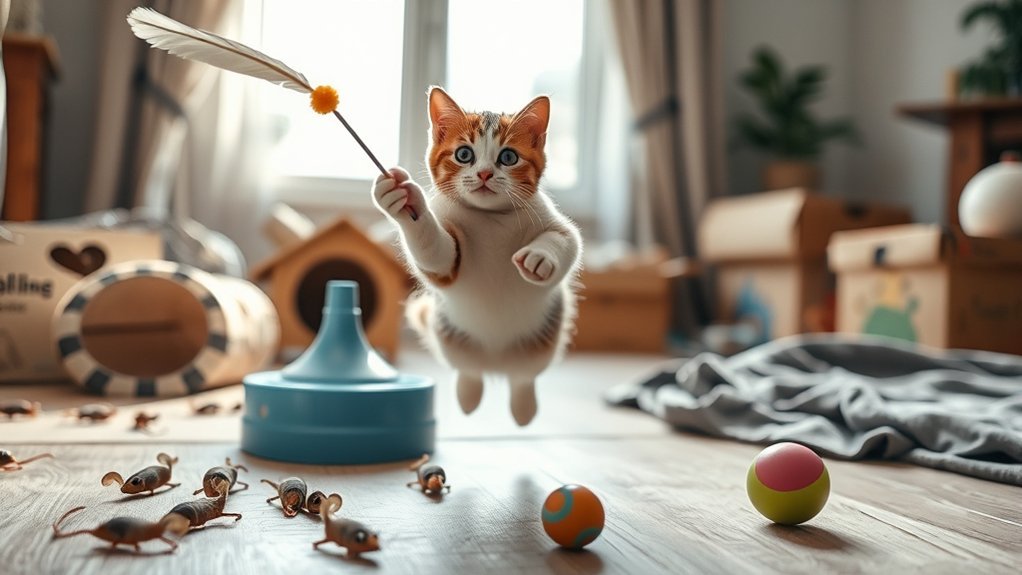
Tiring out a cat safely is not about pushing it to exhaustion. The goal is to satisfy its need to stalk, chase, pounce, climb, explore, and solve problems. A few short, well-timed play sessions usually work better than one long workout, especially when you match the activity to your cat’s age, health, and preferred hunting style.
Quick Answer
The safest way to tire out a cat is to offer several short, prey-like play sessions each day. Let your cat stalk, chase, pounce, and catch a physical toy, then offer part of a meal. Add puzzle feeding, climbing, and brief training, while stopping before panting, pain, or distress.
Key Takeaways
- Start with at least two short play opportunities each day, then adjust the number and length to your cat’s interest and physical ability.
- Move wand toys like prey and let your cat catch them regularly so the hunt has a satisfying ending.
- Use puzzle feeders, treat searches, climbing areas, and reward-based training to work the mind as well as the body.
- Supervise strings, ribbons, feathers, lasers, harnesses, and small toy parts.
- Panting, open-mouth breathing, collapse, coughing, or sudden exercise intolerance requires veterinary attention.
At a Glance
| Time Required | About 3–15 minutes per session, with at least two play opportunities daily as a starting point |
| Difficulty | Easy, but the pace should be adjusted for the individual cat |
| Tools Needed | Wand toy, toss toy or kicker, food puzzle, measured treats or kibble, and a safe climbing or hiding area |
| Cost | About $0–$30 for basic enrichment; cat trees, harnesses, and catios can cost more |
Warning: Panting or open-mouth breathing is not a normal exercise goal for a cat and can signal respiratory distress. Stop play and seek urgent veterinary advice. Never leave string, ribbon, feathers, or damaged toys where a cat can swallow them, and never aim a laser at the eyes.
Before You Start: Match Play to Your Cat
There is no single play schedule that fits every cat. Kittens may ask for many brief games, while some adults prefer two concentrated sessions. Seniors and cats with arthritis, obesity, heart disease, breathing problems, or recent surgery may need slower, lower-impact activity. The AAHA/AAFP feline life-stage guidelines recommend adjusting enrichment, exercise, nutrition, and preventive care throughout a cat’s life.
Watch which movement attracts your cat:
- Ground hunter: Prefers toys that creep behind furniture or move along the floor.
- Air hunter: Prefers fluttering feathers or toys that make short, low jumps.
- Ambush hunter: Waits behind a box, tunnel, or chair before pouncing.
- Forager: Becomes most engaged when searching or working for food.
Use that preference as your starting point. Do not force a cat to jump, run, wear a harness, or interact when it chooses to leave.
Schedule Play When Your Cat Is Most Active
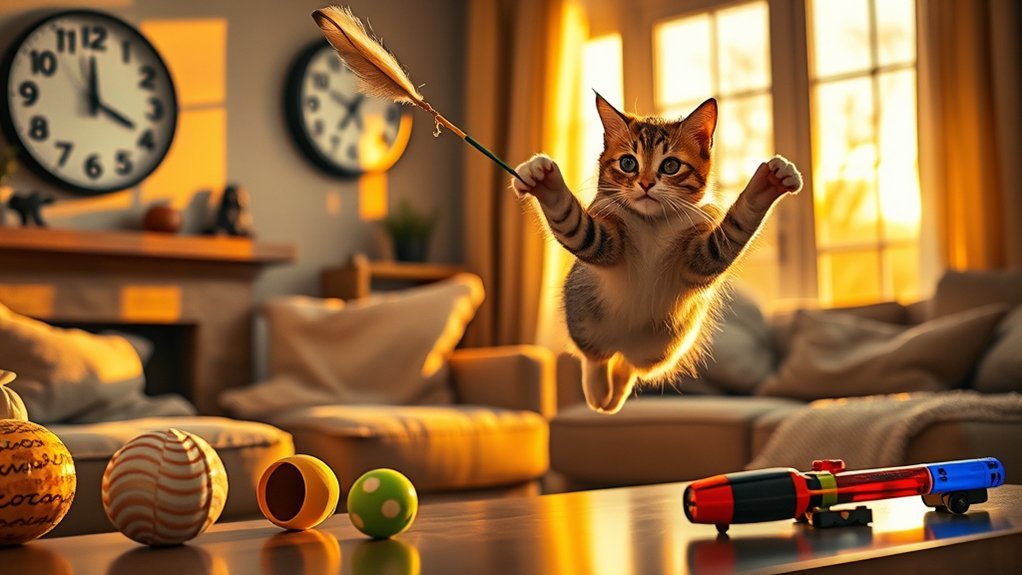
Many cats have bursts of activity around dawn and dusk, but domestic cats can also adjust their routines around people, meals, lighting, and access to the outdoors. Instead of following the clock rigidly, observe when your cat naturally starts exploring, carrying toys, watching movement, or getting the zoomies.
Commonly effective times include:
- Shortly after you wake up
- Before a scheduled meal
- In the early evening
- Before your normal bedtime routine
A lively evening session followed by part of the cat’s measured meal may help some cats settle. Keep feeding and play times reasonably predictable, but adjust them when your cat’s behavior shows that another time works better.
Keep Cat Play Sessions Short and Frequent
Short play bursts usually match feline hunting behavior better than a long, continuous workout. The Feline Veterinary Medical Association advises routine object play at least twice daily, with sessions that can consist of brief bursts lasting only a few minutes.
Start With Short Play Bursts
Begin with three to five minutes, especially if your cat is older, overweight, out of condition, or new to interactive play. A highly engaged cat may continue for 10–15 minutes, but the cat’s behavior should determine the stopping point rather than a timer.
Pause or end the session when your cat:
- Walks away or turns its back
- Stops tracking the toy
- Lies down and no longer re-engages
- Begins flicking its tail sharply, flattening its ears, or showing irritation
- Appears stiff, painful, unsteady, or unusually tired
Offer Multiple Daily Sessions
Use two sessions a day as a practical starting point, then add brief opportunities if your cat remains interested. A kitten may initiate play frequently, while a senior may prefer several gentle one- or two-minute games. Age alone does not determine the correct quota.
In a multi-cat home, provide individual play whenever possible. One cat may block another from participating even when there is no obvious fight. Separate sessions also let you match the movement and pace to each cat’s preferences.
Use Wand Toys for High-Energy Play
A wand toy creates distance between your hands and the moving target, making it useful for safe stalking and pouncing. Keep the toy moving away from the cat rather than repeatedly pushing it into the cat’s face.
[Products Worth Considering]

Keep RV, trailer, or truck dual-axle tires protected with waterproof, UV-resistant covers that help guard against sunlight, snow, rust, and dirt. The dual tire covers are easy to install with a rope/bungee fastener for a stable fit that won’t easily slip. Designed for 27–30 inch diameter wheels, they help maintain tire condition through harsh weather.

Dr. Scholl’s self-heating foot mask warms gently to relax and soothe tired, achy feet for immediate relief. The booties infuse Epsom salt and menthol for deep comfort, while shea butter and essential oils help moisturize and revitalize your skin. Designed for easy, mess-free use, it’s a convenient self-care step after a long day.

Mighty Patch for Tired Eyes helps visibly awaken and de-puff under eyes with soothing hydrogel comfort. Infused with niacinamide, tri-hyaluronic acid, panthenol, and allantoin, the patches cool the eye area and refresh the look of tired eyes. Contoured to fit and designed not to slip, they’re worn for 30+ minutes or until clear for a quick morning pick-me-up.
Use Prey-Like Wand Movements
Real prey does not wave continuously in front of a predator. It hides, pauses, changes direction, and occasionally escapes. Recreate that pattern by:
- Dragging the toy slowly along the floor
- Moving it behind a box, chair leg, or paper bag with the handles removed
- Pausing when your cat crouches and watches
- Using one or two quick bursts after a slow stalk
- Making low jumps rather than forcing repeated high leaps
Keep the motion unpredictable but controlled. Young, healthy cats may enjoy faster changes of direction. Seniors and cats with mobility limitations often do better with a toy that stays on the floor and moves within easy reach.
Finish With a Safe Catch and Pounce
The FelineVMA environmental-needs guidance recommends allowing cats to capture simulated prey intermittently. A successful catch helps complete the game and may reduce frustration.
| Action | Purpose |
|---|---|
| Move the toy low and slowly | Encourages stalking |
| Flick it away in a short burst | Triggers pursuit |
| Pause behind cover | Builds anticipation |
| Let the cat grab the toy | Provides a satisfying catch |
| Store the wand afterward | Reduces string and chewing hazards |
Allow a brief grab or kick, then trade the wand attachment for a safe kicker toy or a small portion of food. Inspect feathers, clips, strings, and glued parts after every session.
Pro Tip: Do not yank the toy from your cat every time it catches it. Hold the wand still for a few seconds, let the cat enjoy the capture, and then restart the movement or trade for another reward.
Rotate Toys to Keep Cats Interested
Leaving every toy on the floor all the time can make the environment feel predictable. Keep a small selection available and switch some items every few days or whenever interest falls. Reintroducing an old toy after a break can make it appealing again.
A simple rotation might include:
- A lightweight ball or spring for solo play
- A sturdy kicker toy
- A cardboard box or tunnel
- A supervised wand toy
- A food puzzle or treat ball
Safe homemade options include an empty cardboard box, a loosely crumpled paper ball that is too large to swallow, or a cardboard tube with smooth edges. Remove staples, tape, string handles, loose plastic, sharp edges, and anything your cat tears into swallowable pieces.
Store ribbon, yarn, elastic bands, hair ties, fishing-line toys, and damaged attachments in a closed cabinet. Toy rotation should create novelty without increasing ingestion risk.
Hide Treats and Toys for Hunting Fun
A controlled search game lets your cat use scent, hearing, memory, and paw movement. Begin with one or two pieces of kibble in easy-to-see locations. As your cat learns the game, place food beside a box, on a low cat-tree platform, or beneath a lightweight paper cup that can be moved easily.
Use food from the cat’s measured daily ration whenever possible. Extra treats still contain calories and can undermine a weight-management plan.
Choose locations that are:
- Clean and dry
- Easy for the cat to enter and leave
- Away from appliances, wires, cleaners, medications, and fragile objects
- Accessible to the cat’s current mobility level
- Separate from another cat that may guard food
Change the locations gradually, but do not add essential oils, perfumes, scented cleaners, or unfamiliar fragrance to make the search “more interesting.” Cats rely heavily on scent, and added odors may be stressful or unsafe.
Try Puzzle Feeders and Interactive Toys
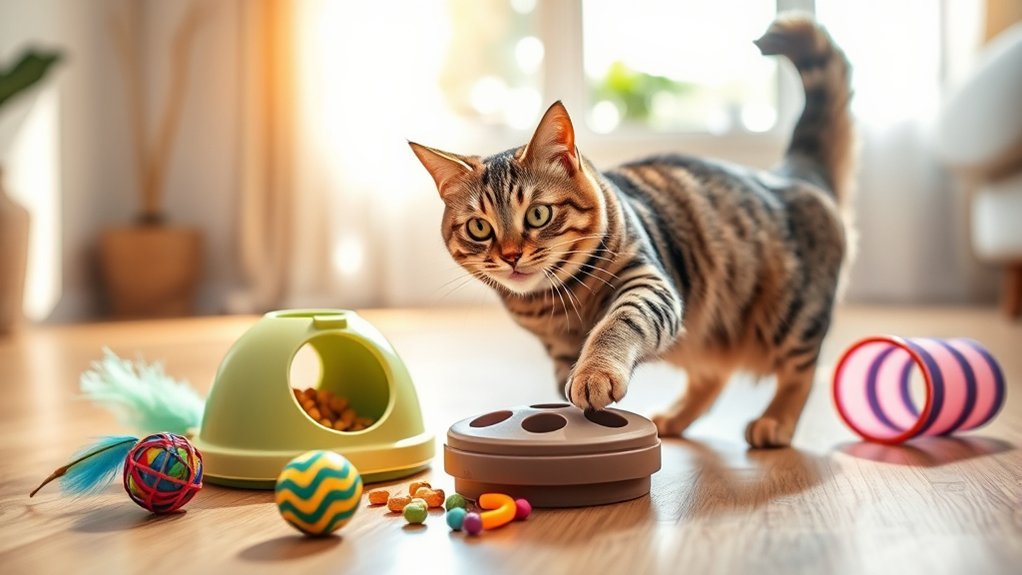
Puzzle feeders turn part of a meal into a foraging task. A review published in the Journal of Feline Medicine and Surgery describes food puzzles as biologically relevant enrichment and reports useful case examples, although they should not be presented as a guaranteed treatment for obesity or behavior problems.
[Products Worth Considering]

The SPTA wheel and tire brush kit makes it easy to remove dirt from wheels, rims, and hard-to-reach areas without needing a high pressure washer. Ergonomic handles and soft, chemical-resistant bristles help you clean faster while reducing the risk of scratching. The set is versatile for cars, trucks, motorcycles, bicycles, RVs, boats, and more.

Gently exfoliate and lift away dead skin with jojoba beads while hyaluronic acid and caffeine help moisturize and revive tired-looking skin. This fragrance-free scrub is designed for normal to dry skin types and supports a healthy skin barrier for a refreshed, smoother feel.

A fun climbing and balance swing for outdoor play, featuring a circular disc kids can stand or sit on, plus platforms to help them climb. The thick braided rope is easy to grip and supports skill-building through repeated swings and careful balance. It’s designed for quick installation and includes an adjustable rope length and a tree strap for a perfect fit.
Introduce Puzzle Feeders Gradually
Start with a puzzle that releases food easily. Place a few pieces beside it so your cat can investigate without becoming hungry or frustrated. Once your cat uses it reliably, make the task slightly harder by changing the opening, adding a movable obstacle, or spreading food among several stations.
Watch the first several uses. Some cats chew plastic, flip the device forcefully, or give up when the challenge is too difficult. Clean the feeder according to its instructions and replace it if it cracks or develops sharp edges.
Ask your veterinarian before changing feeding methods if your cat has a prescribed diet, dental pain, swallowing difficulty, diabetes, severe food anxiety, limited mobility, or a history of not eating reliably.
Combine Different Interactive Toys
| Toy Type | Main Benefit | Safety Point |
|---|---|---|
| Puzzle feeder | Encourages foraging and can slow access to food | Count food toward the daily ration |
| Wand toy | Supports stalking, chasing, and pouncing | Supervise and store after use |
| Treat ball | Adds movement and problem-solving | Use the correct size and inspect for cracks |
| Kicker toy | Provides a physical object to grab and kick | Remove it if seams open or filling escapes |
Battery-powered toys can add variety, but they should not replace social play. Check moving parts, battery compartments, and automatic timers, and supervise any device that uses string, feathers, or rapidly rotating attachments.
Add Vertical Spaces for Climbing and Perching
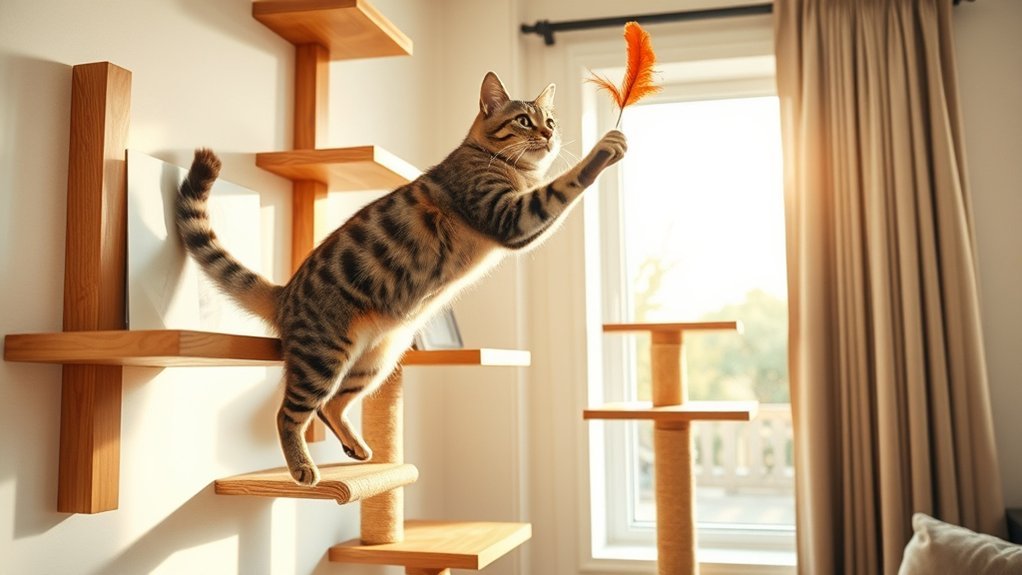
Cat trees, window perches, shelving, and sturdy furniture routes create opportunities to climb, stretch, observe, and rest. Elevated safe spaces are also part of the environmental resources recommended by feline-welfare guidance.
Build a route your cat can use confidently:
- Anchor tall cat trees and wall-mounted shelves securely.
- Check the manufacturer’s weight limit.
- Use nonslip surfaces and avoid large gaps.
- Place landing areas away from glass objects, hot appliances, and unstable furniture.
- Use screened, securely closed windows near perches.
For a senior or mobility-limited cat, arrange low platforms like steps instead of requiring one large jump. Carpet squares, stable ramps, and wide resting surfaces may improve confidence.
In a multi-cat home, offer more than one elevated route and resting place. A single prized perch can become a guarded resource even when the cats do not openly fight.
Train Your Cat With Simple Tricks
Reward-based training can tire a cat mentally without requiring intense running. The FelineVMA positive-reinforcement guidance supports using a clicker, word, toy, food, petting, or another reward the individual cat values.
Start with one simple behavior:
- Choose a reward your cat wants at that moment.
- Wait for or gently guide a small part of the behavior.
- Mark the correct action with a click or short word.
- Deliver the reward immediately.
- Repeat only a few times before taking a break.
Useful beginner behaviors include touching a target stick, sitting before a meal, stepping onto a mat, entering a carrier, or offering a paw. One- to three-minute sessions are enough for many cats. Five to ten minutes should be treated as an upper limit rather than a requirement.
Never punish mistakes or physically force a position. If the cat loses interest, lower the difficulty or stop and try later.
Use Laser Pointers Sparingly and Carefully
A laser can trigger fast chasing, but it does not give the cat anything physical to capture. Survey-based studies have found an association between frequent laser-pointer play and guardian-reported repetitive behaviors. The research does not prove that lasers caused those behaviors, but it supports a cautious approach.
Physical wand, toss, and kicker toys are better primary choices. When you do use a laser:
- Use it only for a short, supervised session.
- Never shine it at the cat’s eyes, another person, or a reflective surface.
- Keep the dot on safe floor areas rather than walls, stairs, windows, or breakable objects.
- Avoid impossible jumps or abrupt turns on slippery flooring.
- Guide the dot onto a physical toy or small food reward that the cat can capture.
- Stop using it if the cat keeps searching for the light, stares at reflections, chases shadows, or appears frustrated afterward.
Note: Research on laser play is observational and cannot establish cause and effect. It is still sensible to limit laser sessions and provide a tangible catch every time.
Try Harness Walks or a Catio
Controlled outdoor access can provide new scents, surfaces, sounds, and opportunities to explore. The 2024 FelineVMA indoor/outdoor lifestyle position identifies harness-and-leash walks and outdoor enclosures as ways to add stimulation while reducing many free-roaming risks.
For harness training:
- Choose a secure, cat-specific harness that cannot be backed out of easily.
- Let your cat inspect it indoors.
- Reward brief contact with the harness.
- Fasten it for only a few seconds, then remove it.
- Gradually add indoor movement and a lightweight leash.
- Move outside only after your cat walks comfortably indoors.
Attach the leash to the harness, not to a neck collar. Begin in a quiet, enclosed area and keep the first outing brief. Carry the cat outside in a secure carrier if walking through an unsecured doorway would create an escape risk.
Before outdoor activity, discuss identification, microchipping, vaccination, parasite prevention, local wildlife, and regional disease risks with your veterinarian.
A catio is another option. It should have secure mesh, a roof, shaded resting areas, weather protection, stable shelves, and an escape-proof connection to the home. Inspect doors, screens, fasteners, and digging gaps regularly.
[Products Worth Considering]

The Nerf Dog Tire Flyer is a 10-inch flying disc dog fetch toy designed for medium and large dogs. It’s lightweight and durable for long play sessions, and it floats while staying waterproof and weather-resistant for outdoor games. The bright blue color helps make the disc easy to spot for you and your dog.

This IOPE Expert PDRN Caffeine Shot Serum delivers an energizing “espresso shot” to visibly depuff, smooth, and rejuvenate tired-looking skin. Powered by BIO-PDRN and caffeine, it helps support the moisture barrier while reducing the appearance of puffiness and rough texture. The fast-absorbing formula hydrates for a refreshed, balanced glow without heavy or sticky residue.
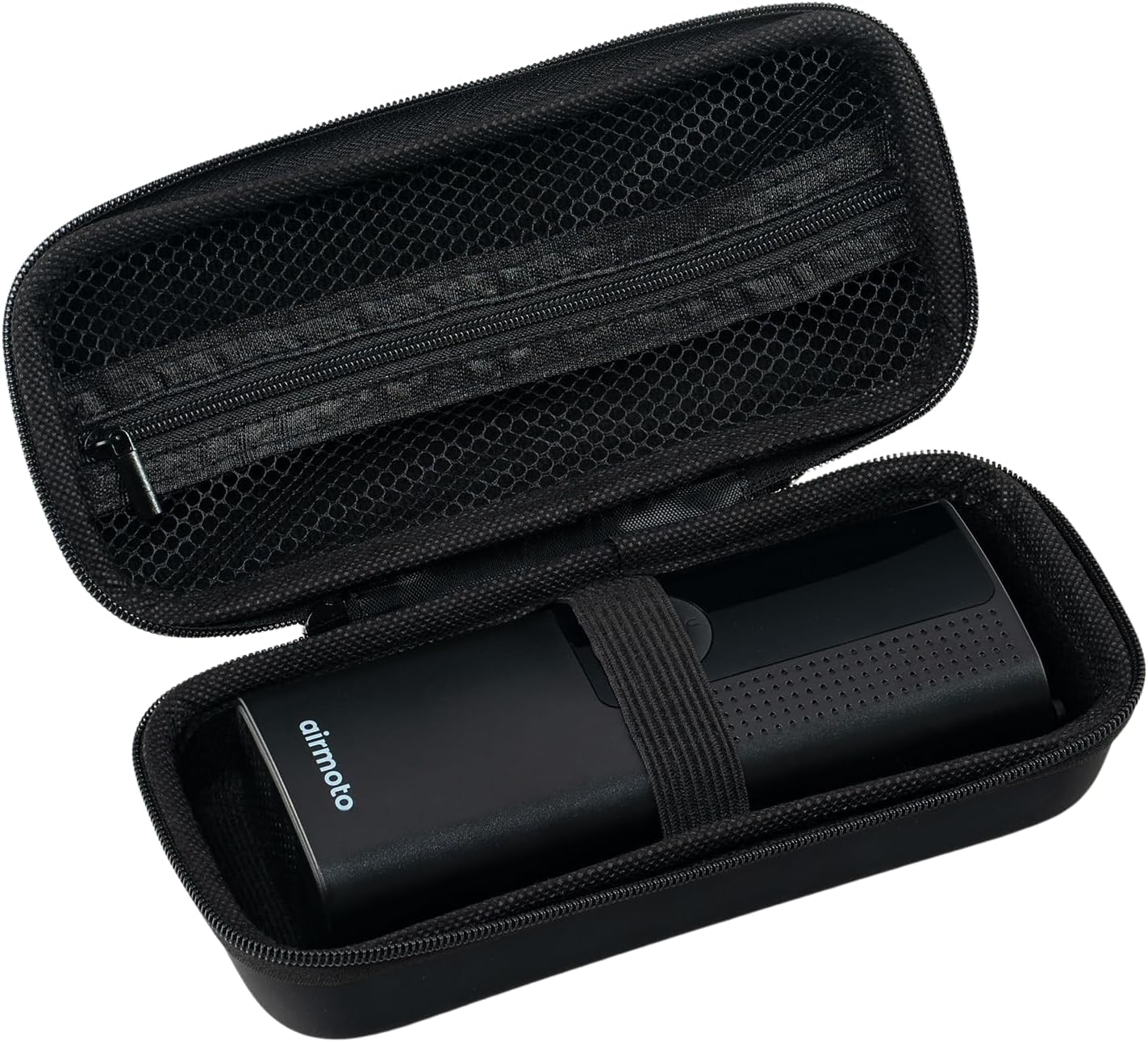
Protect and organize your Airmoto tire inflator with a purpose-designed carrying case made for a precise fit. The durable polyurethane shell and soft interior help guard against cuts, tears, and road wear, while a mesh pocket stores connectors and accessories. This travel box measures 7.5*3.5*2.8 inches and can work with most handheld portable air compressor models; this listing includes the case only.
Sample Daily Play Routine
This routine takes about 10 minutes and can be shortened or repeated according to your cat’s response:
- One to two minutes of stalking: Move a wand toy slowly along the floor and behind cover.
- Three to five minutes of pursuit: Add short bursts, pauses, and direction changes.
- One minute of capture: Let your cat hold the toy or switch to a kicker.
- One to two minutes of searching: Hide a few pieces of the measured meal nearby.
- Quiet finish: Offer the rest of the meal or let the cat groom and settle.
Repeat a shorter version later in the day. A cat that becomes bored with one routine may respond better when wand play, food searching, training, and climbing alternate throughout the week.
How to Know When Your Cat Has Had Enough
A successfully enriched cat does not need to collapse from fatigue. Healthy signs that a session is ending include:
- Slower pursuit and longer pauses
- A successful catch followed by licking, grooming, or eating
- Choosing a resting perch
- Relaxed ears, whiskers, tail, and body posture
- Walking away without immediately attacking feet or furniture
Stop immediately if you see open-mouth breathing, panting, coughing, weakness, collapse, limping, sudden aggression, obvious pain, or poor coordination.
The goal is not to exhaust your cat. It is to provide enough choice, movement, problem-solving, and successful capture for your cat to feel satisfied.
Troubleshooting Common Play Problems
Your Cat Ignores Every Toy
Try the activity at a different time, warm the toy up with slower movement, hide most of it behind an object, or test a different prey style. Some cats are more interested in food searches, cardboard boxes, target training, or watching outdoor movement than in feathers.
Remove other pets from the room and reduce noise. If a previously playful cat suddenly stops participating, schedule a veterinary examination rather than assuming the cat is lazy.
Your Cat Attacks Hands or Feet
Do not wrestle with bare hands. Freeze briefly, disengage without yelling, and redirect the stalking behavior to a long wand or toss toy. Carrying a suitable toy during predictable ambush times can help provide a safer target.
Your Cat Still Has Nighttime Zoomies
Add an evening play-and-food routine, provide independent enrichment before bed, and keep morning feeding predictable. An automatic feeder may help when early waking is driven by meal anticipation. Do not punish normal nighttime activity.
Sudden nighttime pacing, crying, confusion, or restlessness—especially in a senior cat—can also have a medical cause and should be discussed with a veterinarian.
Your Cat Gets Overstimulated
Use slower movement, fewer repetitions, and more pauses. End before tail lashing, skin twitching, hard staring, growling, or biting begins. Avoid petting an aroused cat immediately after a high-energy chase.
When to Contact a Veterinarian
Arrange veterinary advice if your cat develops a sudden increase or decrease in activity, loses interest in normal play, becomes reluctant to jump, gains or loses weight unexpectedly, cries during movement, limps, or becomes unusually irritable.
Seek urgent care for:
- Panting or open-mouth breathing
- Labored, noisy, or unusually rapid breathing
- Blue, gray, or very pale gums
- Collapse, fainting, or severe weakness
- A suspected swallowed string, ribbon, toy piece, or other foreign object
- A fall or injury followed by pain or breathing changes
The guidance in this article is general enrichment information and does not replace an examination or an exercise plan from your veterinarian.
Frequently Asked Questions
What is the 3-3-3 rule for cats?
The 3-3-3 rule is an informal guide suggesting that a newly adopted cat may need about three days to decompress, three weeks to learn the routine, and three months to feel settled. It is not a deadline or scientifically fixed schedule. Some cats adjust sooner, while fearful or medically affected cats may need much longer.
How do you tire out an active cat?
Use short prey-like games that include stalking, chasing, pouncing, and catching. Combine wand play with food searches, puzzle feeders, climbing, kicker toys, and brief training. Offer at least two daily play opportunities as a starting point and adjust them to your cat’s interest and health.
How do you entertain an understimulated cat?
Provide several types of enrichment rather than relying on one toy. Add boxes, tunnels, elevated perches, window views, food puzzles, hiding games, reward-based training, and supervised interactive play. Rotate some options regularly and let the cat choose whether to participate.
How do you entertain a cat that gets bored easily?
Change the movement, location, and challenge before the cat loses interest. Alternate wand play, tossing, food searches, puzzle feeders, boxes, target training, and climbing. Keep sessions brief and store special toys between uses so they retain novelty.
How much play does a cat need each day?
There is no universal number of minutes. At least two short play opportunities daily is a useful starting point, but kittens may request more and cats with health or mobility limitations may need gentler sessions. Stop when the cat disengages or shows fatigue, irritation, pain, or breathing changes.
Why does my cat still get zoomies after playing?
The session may have been too short, may not have included a satisfying catch, or may have increased arousal without a calm ending. Try a slower stalk-and-catch sequence followed by a small portion of the measured meal. Persistent or sudden nighttime restlessness may need veterinary evaluation.
Conclusion
The best way to tire out a cat is to satisfy its hunting, climbing, exploring, and problem-solving needs without pushing it to exhaustion. Use short sessions, let the cat capture the toy, rotate activities, and end while the experience is still positive. A calmer cat is usually the result of consistent, well-matched enrichment—not one punishing workout.
Watch your cat’s posture, breathing, mobility, and willingness to continue. When play is adjusted to the individual cat, it can support physical activity, confidence, healthy routines, and a more peaceful home.
Sources
- FelineVMA and International Cat Care: Your Cat’s Environmental Needs — supports prey-like play, intermittent capture, toy rotation, food puzzles, individual play, and elevated safe spaces.
- FelineVMA: Training Techniques for Addressing Undesirable Behaviors — supports short, routine object-play sessions and positive redirection.
- 2021 AAHA/AAFP Feline Life Stage Guidelines — supports life-stage-specific health, enrichment, exercise, and weight guidance.
- Food Puzzles for Cats: Feeding for Physical and Emotional Wellbeing — reviews food puzzles as feline enrichment and discusses practical use.
- Laser Light Pointers for Use in Companion Cat Play — examines the association between laser play and guardian-reported repetitive behaviors.
- FelineVMA 2024 Indoor/Outdoor Lifestyle Position Statement — supports controlled outdoor access through enclosures, cat-safe fencing, and harness-and-leash walks.