Tire Section Width Meaning: First Number on Your Tire
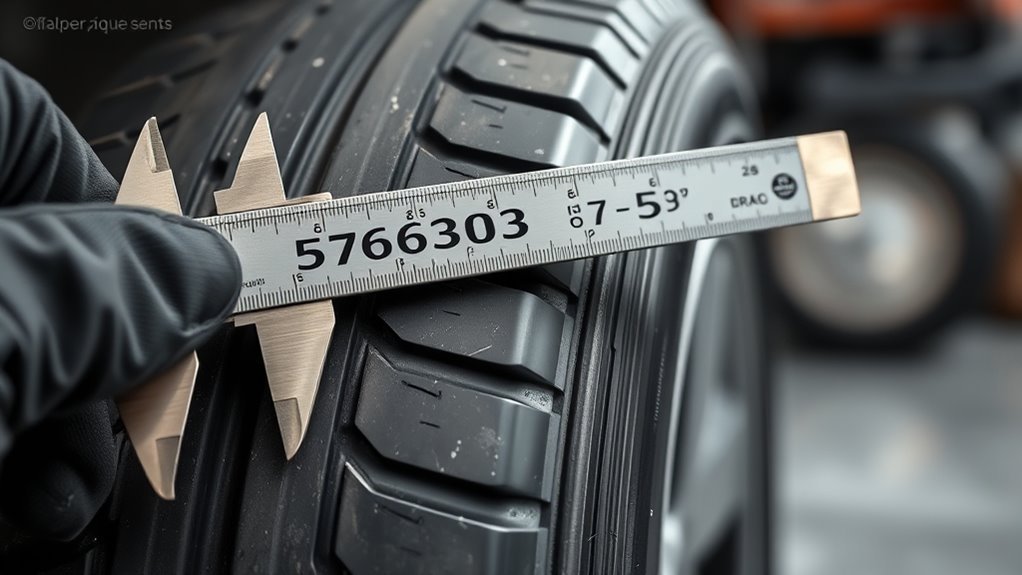
The first number in a metric tire size is the tire’s section width. In a size like 225/60R16, the “225” means the tire is nominally 225 millimeters wide from sidewall to sidewall when mounted on its specified measuring rim and properly inflated. That number helps you judge wheel fitment, clearance, handling, ride feel, and replacement compatibility.
Quick Answer
The first number on a tire, such as 225 in 225/60R16, is the tire’s nominal section width in millimeters. It measures the tire from sidewall to sidewall, not the tread width. Wider tires can improve dry grip, but they must match the vehicle, wheel width, load rating, and available clearance.
Key Takeaways
- The section width is the first three-digit number in most metric tire sizes and is measured in millimeters.
- Section width is a sidewall-to-sidewall measurement, so it is not the same as tread width or the exact contact patch on the road.
- Changing tire width can affect steering feel, grip, ride comfort, fuel economy, snow traction, speedometer accuracy, and rubbing clearance.
- Always compare any replacement size with the tire placard, owner’s manual, tire manufacturer data, load index, speed rating, and approved rim-width range.
Who This Guide Is For and How to Use It

This guide is for vehicle owners, new tire shoppers, and enthusiasts who want to understand the first number in a tire size before buying replacements or changing sizes. You’ll learn what section width measures, how it affects fitment and driving feel, and what to check before switching to a wider or narrower tire.
Use this as a practical sizing guide, not as a substitute for your vehicle’s official tire information. The safest starting point is always the tire information placard, owner’s manual, or manufacturer-approved replacement sizes. The National Highway Traffic Safety Administration recommends choosing the same tire size as the original tire or another size recommended by the vehicle manufacturer.
At a Glance
| Time Required | 5–10 minutes to read your tire size and compare basic fitment |
| Difficulty | Beginner |
| Tools Needed | Your tire sidewall, vehicle tire placard, owner’s manual, and a tire manufacturer spec sheet if changing sizes |
| Cost | Free to check; tire and wheel costs vary if you change size |
[Products Worth Considering]

This tire repair kit provides fast emergency puncture repair without removing the tire from the rim, helping you get back on the road quickly. Its screw plug system is designed for punctures in both tread and sidewall and includes a complete patch plug tool set with essential accessories. A portable storage bag makes it easy to carry for cars, trucks, SUVs, motorcycles, and heavy-duty applications.

This tire repair patch tool kit helps you quickly seal small punctures using upgraded mushroom plugs and a built-in roller system that presses for even penetration. The tungsten buffing wheel and HSS twist drill bits prepare the damaged surface for stronger adhesion, while the crown-angle friendly plugs are designed to keep water and debris out. Ideal for puncture repairs on many vehicle types, from cars and trucks to bikes and scooters.

This compact capsule-style tire repair kit helps you quickly fix punctures and plug flats with minimal effort. The rugged stainless steel shell protects the contents for reliable roadside use, while the simple plug assembly makes repairs fast and tool-free. Suitable for motorcycles, cars, ATVs, UTVs, and even mountain bikes.
What the Section Width Number Measures in Millimeters
Section width is the nominal width of the tire in millimeters. In a tire size such as P225/60R16, the section width is 225 mm. According to Bridgestone Americas, the first number in the size refers to the tire width measured from one sidewall to the other.
This number is mainly used for tire selection, wheel compatibility, and clearance planning. It tells you the tire’s nominal cross-section, but it does not tell you the exact tread width, contact patch size, or real-world grip by itself.
| Example Size | Section Width | What It Means |
|---|---|---|
| 205/55R16 | 205 mm | A narrower common passenger-car width |
| 225/60R16 | 225 mm | A mid-range width used on many cars and crossovers |
| 245/45R18 | 245 mm | A wider width often used for sportier handling or larger vehicles |
Note: Section width is measured on a specified rim width and under standardized conditions. Mounting the same tire on a wider or narrower wheel can slightly change the measured section width.
Where to Find the Section Width on Your Tire
Look for the size code molded into the tire sidewall. It usually looks like one of these examples:
- P225/60R16 97H — the section width is 225 mm.
- 205/55R16 91V — the section width is 205 mm.
- LT275/70R18 125/122S — the section width is 275 mm.
The letters before the number give more context. P usually indicates a passenger tire, LT indicates a light-truck tire, and some metric sizes have no leading letter. The load index and speed rating after the rim diameter also matter, so do not choose a tire by section width alone.
Warning: Do not replace tires with a lower load index or inappropriate speed rating just because the width fits. Load capacity, tire type, and inflation pressure are safety-critical.
Why Section Width and Actual Tread Width Can Differ
The sidewall number is not the same as tread width. Section width measures the tire’s widest sidewall-to-sidewall distance, while tread width is the portion of tread across the tire face. Two tires labeled 225 mm can have different tread widths because of their casing shape, shoulder design, tread pattern, rim width, and intended use.
For example, a touring tire and a performance tire may share the same section width but use different shoulder profiles. The performance tire may look “squarer,” while the touring tire may have more rounded shoulders. That difference can change steering feel, road noise, and the way the tire uses its contact patch.
Manufacturing tolerances also matter. Section width is a standardized sizing value, but it should not be treated as a perfect ruler for the tread that touches the road. When exact clearance matters, check the tire manufacturer’s published specs for section width, tread width, approved rim range, and overall diameter.
How Section Width Affects Grip, Fuel Economy, and Comfort

Changing section width changes the tire’s shape and can affect how your vehicle feels. Wider tires often improve dry grip and steering response when paired with the right wheel, suspension setup, and tire compound. Narrower tires can improve clearance, reduce weight, and perform better in some snow and slush conditions because they can cut through loose material more easily.
Grip and Handling
A wider tire can create a wider contact patch shape and may improve dry cornering grip, especially when the tire compound and tread design are also performance-focused. Wider tires can also feel more stable during quick steering inputs.
However, width is not a magic upgrade. A wider low-quality tire may grip worse than a narrower high-quality tire. In wet conditions, tread design, water evacuation, tire age, tread depth, and inflation pressure can matter more than section width alone.
Fuel Economy and Ride Comfort
Wider tires can increase rolling resistance, aerodynamic drag, and tire weight. That can reduce fuel economy, especially if the new tire is heavier or has a stickier compound. Wider tires are also often paired with shorter sidewalls, which can make the ride firmer.
Narrower tires often have lower rolling resistance and can feel more compliant when paired with a taller sidewall. For everyday driving, the best tire width is usually the one recommended by the vehicle manufacturer or a size that stays within approved limits.
| Change | Possible Benefit | Possible Trade-Off |
|---|---|---|
| Wider section width | More dry grip and sharper response | More weight, rolling resistance, road noise, or rubbing risk |
| Narrower section width | Better clearance, efficiency, and some snow performance | Less dry grip or lateral stability in some setups |
| Same width, different tire model | Can improve comfort, wet grip, or noise | Specs may still differ by tread width and casing design |
A wider tire is not automatically safer or faster. Tire quality, compound, tread design, load rating, wheel width, alignment, and vehicle fitment all matter.
Convert Section Width to Sidewall Height and Overall Diameter
The section width also helps you calculate sidewall height. In a size such as 225/60R16, the aspect ratio is 60, meaning the sidewall height is 60% of the section width. Michelin explains that the second number in the tire size is the sidewall height as a percentage of the tire width.
Use this formula:
- Sidewall height = section width × aspect ratio
- Wheel diameter in millimeters = wheel diameter in inches × 25.4
- Overall diameter = wheel diameter + 2 × sidewall height
Example for 225/60R16:
- 225 mm × 0.60 = 135 mm sidewall height
- 16 inches × 25.4 = 406.4 mm wheel diameter
- 406.4 + 2 × 135 = 676.4 mm overall diameter
This calculation matters because a large change in overall diameter can affect speedometer accuracy, odometer readings, gearing feel, anti-lock braking behavior, and clearance.
Pro Tip: When comparing tire sizes, compare overall diameter as well as width. A wider tire with a lower aspect ratio may have nearly the same diameter as the original size, while another “similar-looking” size may change diameter too much.
Choosing the Right Section Width for Your Vehicle and Driving Style
The right section width depends on your vehicle, wheel size, driving conditions, and goals. Start with the original equipment size, then compare any alternative size against the tire placard, owner’s manual, tire manufacturer specs, and wheel manufacturer guidance.
| Driving Goal | What to Consider |
|---|---|
| Daily commuting | Stay close to OEM width for balanced comfort, economy, and predictable handling |
| Performance street driving | A modestly wider tire may help, but only with the right wheel width, compound, and clearance |
| Winter driving | A narrower approved winter size may improve snow and slush traction |
| Off-road use | Width depends on terrain, wheel offset, load rating, sidewall strength, and clearance |
| Comfort-focused driving | Avoid unnecessary width increases that add stiffness, road noise, or unsprung weight |
If you are changing width, check these items before buying:
- Approved tire sizes for your vehicle
- Load index and speed rating
- Approved rim-width range for the tire
- Wheel offset and backspacing
- Brake, strut, control-arm, and fender clearance
- Overall tire diameter compared with the original size
- Whether your vehicle uses staggered tires or all-wheel drive size limits
[Products Worth Considering]

Wykodra tire plugs provide quick vulcanizing repairs for tubeless tires, helping you seal punctures and get back on the road. The industrial-strength rubber creates a long-lasting, leak-resistant bond and is designed for emergency fixes without removing the tire. Choose between two standard plug sizes with color-matched options for small to larger damage across many vehicles and off-road uses.
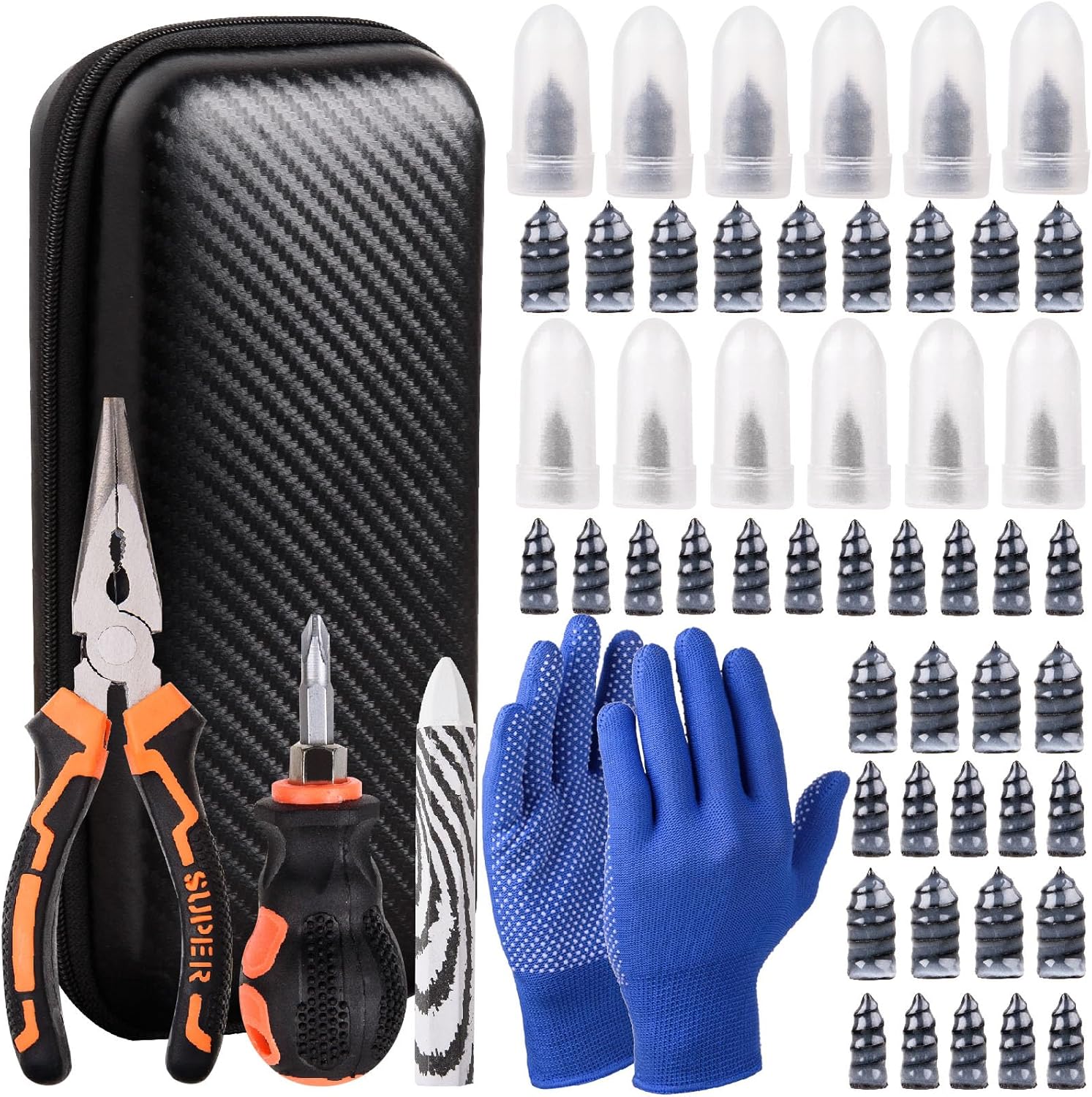
This tire sidewall puncture repair kit fixes flats fast without removing the tire, helping you get back on the road in minutes. It includes self-tapping repair nails, essential tools, gloves, and a portable storage bag for convenient roadside use. Designed for tubeless tires, it helps create a tight, leak-resistant seal for cars, motorcycles, trucks, SUVs, and ATVs.
Fitment Changes and Modifications When You Change Width
Changing tire section width can affect more than the tire itself. A wider tire may need a wider wheel, different offset, more inner clearance, more fender clearance, or alignment changes. If the new tire is too wide for the wheel, the sidewalls may bulge and reduce steering precision. If the wheel is too wide for the tire, the tire may be stretched outside its intended shape.
Before increasing width, inspect or confirm:
- Wheel width: The tire must be approved for the rim width you plan to use.
- Offset and backspacing: These control where the tire sits in the wheel well.
- Inner clearance: Check struts, shocks, control arms, brake lines, and suspension links.
- Outer clearance: Check fenders, liners, mud flaps, and bodywork during steering and suspension compression.
- Diameter change: Keep overall diameter close to the original unless the vehicle manufacturer or tire professional confirms the change is acceptable.
- Alignment: Wider tires can make poor alignment more noticeable and may increase uneven wear.
Warning: A tire that clears while parked may still rub while turning, braking, carrying passengers, hitting bumps, or compressing the suspension. Always check clearance under real steering and suspension movement.
Common Mistakes and Safety Risks of Mixing Section Widths
Mixing section widths randomly can create handling and braking problems. Most vehicles should use matching tire sizes on the same axle, and many all-wheel-drive vehicles require all four tires to stay very close in circumference. Uneven sizes can strain driveline components and confuse stability-control or traction-control systems.
Common mistakes include:
- Replacing one tire with a different section width because it “looks close”
- Assuming a 225 tire from one brand has the same tread width as a 225 tire from another brand
- Ignoring load index and speed rating when changing size
- Installing wider tires without checking wheel width and offset
- Changing width and aspect ratio without checking overall diameter
- Using tire pressure changes to compensate for an incorrect tire size
During routine tire maintenance, check air pressure when tires are cold, measure tread depth, inspect for uneven wear, and confirm that replacement tires match the size and service description your vehicle requires.
Quick Reference: Matching Section Width to Wheel Width and OEM Specs
The safest way to match tire width to wheel width is to use the tire manufacturer’s approved rim-width range for that exact tire size. Avoid relying on a simple percentage rule. Tire sizing standards vary by size, aspect ratio, construction, and intended use, so a shortcut can be misleading.
Use this checklist:
- Find the original tire size on the tire placard or owner’s manual.
- Read the first number to identify section width in millimeters.
- Compare the replacement tire’s approved rim-width range with your wheel width.
- Check overall diameter, load index, speed rating, and tire type.
- Confirm physical clearance before driving aggressively or carrying heavy loads.
- Consult a qualified tire professional if you are changing size, wheel offset, or suspension height.
Section Width Examples
| Tire Size | Section Width | Aspect Ratio | Wheel Diameter |
|---|---|---|---|
| 195/65R15 | 195 mm | 65% | 15 in |
| 225/60R16 | 225 mm | 60% | 16 in |
| 245/40R18 | 245 mm | 40% | 18 in |
| 275/70R18 | 275 mm | 70% | 18 in |
Frequently Asked Questions
Is 285 the width of a tire?
Yes. In a size such as 285/70R17, the 285 is the tire’s nominal section width in millimeters. It means the tire is about 285 mm wide from sidewall to sidewall when measured under standardized conditions.
What is section width on a tire?
Section width is the tire’s nominal sidewall-to-sidewall width in millimeters. It is the first number in most metric tire sizes, such as 225 in 225/60R16. It helps determine fitment, clearance, and wheel compatibility.
Which tire is wider, 225/50 or 225/45?
Neither is wider if both begin with 225. They have the same nominal section width. The difference is sidewall height: a 225/50 tire has a taller sidewall than a 225/45 tire.
Does a wider tire always have more grip?
No. A wider tire can improve dry grip when it is properly matched to the vehicle and wheel, but compound, tread design, tire temperature, road surface, load, and inflation pressure also matter. A high-quality narrower tire can outperform a poor wider tire.
Is section width the same as tread width?
No. Section width is measured from sidewall to sidewall. Tread width is the width of the tread surface. The tread width is usually different and can vary between tire models even when the section width number is the same.
Can I use a different section width than my original tires?
Sometimes, but it must be an approved or professionally verified size. Check the vehicle placard, owner’s manual, tire load rating, speed rating, wheel width, clearance, and overall diameter before changing tire width.
Conclusion
The first number on your tire is the section width, measured in millimeters. It tells you the tire’s nominal sidewall-to-sidewall width and helps you compare fitment, wheel compatibility, handling, and clearance. Just remember that section width is not the same as tread width, and it is only one part of the full tire size.
For safe, predictable performance, start with the size recommended by your vehicle manufacturer. If you want a wider or narrower tire, compare the full tire size, load index, speed rating, rim-width range, overall diameter, and real-world clearance before making the switch.
Sources
- NHTSA TireWise — tire safety guidance, tire selection, placard use, inflation, and tire maintenance.
- NHTSA Tire Safety Brochure — recommendation to use the original tire size or another manufacturer-recommended size.
- Bridgestone Americas: How to Determine Tire Size — explanation of tire width, aspect ratio, construction, and rim diameter.
- Michelin: Tire Markings Explained — sidewall markings, tire-size reading, and replacement tire considerations.
- Tire Rack: How to Determine Section Width — practical explanation of section width and tire measurement.
- U.S. Tire Manufacturers Association Tire Care and Safety Guide — tire sizing, load capacity, inflation, and safety maintenance basics.

Related Articles
10 Ply Vs 14 Ply Tires: Load Range Compared
A 10 ply vs 14 ply tire comparison reveals surprising load range differences, but the best choice depends on more than just ply count.
Read More
4 Ply Vs 6 Ply Tires: Which Do You Actually Need?
Better understand 4 ply vs 6 ply tires before you buy—one choice could change your ride, safety, and load capacity.
Read More
6 Ply Vs 8 Ply Tires: Which Do You Need?
Torn between 6 ply and 8 ply tires? Discover which one fits your driving needs before you buy.
Read More