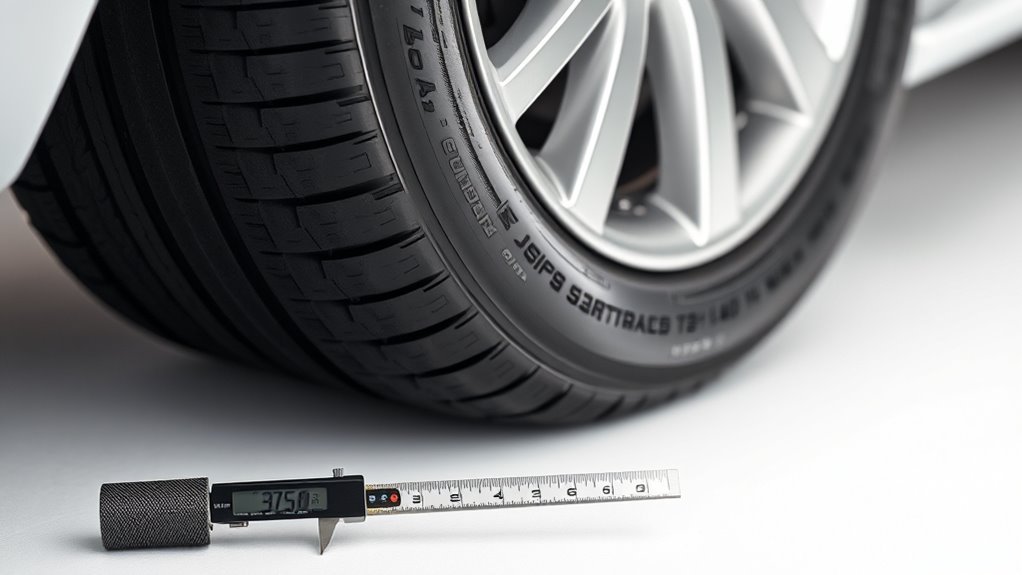
What Does Tire Aspect Ratio Mean? (Quick Answer)
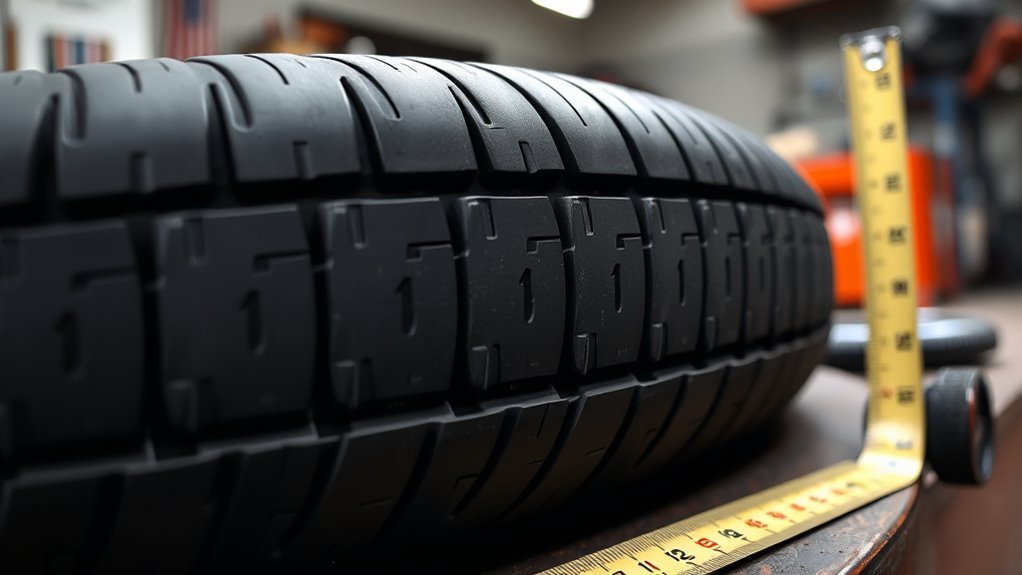
Last updated: August 18, 2026.
Tire aspect ratio is the tire’s section height expressed as a percentage of its section width. In 205/65R16, the 65 means the nominal sidewall height is 65% of the 205 mm section width, or about 133.25 mm. A higher ratio generally creates a taller sidewall when width stays the same, while a lower ratio creates a shorter sidewall.
Aspect ratio is only one part of fitment. Changing tire size can alter overall diameter, speedometer and odometer readings, wheel-well clearance, and the replacement tire’s load and speed ratings. It can also affect systems that use wheel-speed data. Start with the tire size on the driver-side Tire and Loading Information label or owner’s manual, then compare the complete replacement size before buying.
Important: terms such as “low profile” and “high profile” do not have one universal cutoff that applies to every tire. Compare the full size code, because the same aspect ratio can produce different sidewall heights on different tire widths.
| Example Ratio | Sidewall Height Means | Typical Geometry Effect | What To Check |
|---|---|---|---|
| 40 | 40% of section width | Shorter sidewall when compared at the same width | Ride firmness, wheel protection, approved wheel width |
| 55 | 55% of section width | Mid-height sidewall when compared at the same width | Overall diameter, load index, speed rating |
| 65 | 65% of section width | Taller sidewall when compared at the same width | Clearance, diameter, manufacturer-approved fitment |
| 70 | 70% of section width | Still taller when compared at the same width | Clearance, steering feel, service description |
How Do You Read 205/65R16?
- 205 = nominal section width in millimeters.
- 65 = aspect ratio; the section height is 65% of the 205 mm width.
- R = radial construction.
- 16 = wheel diameter in inches.
This size code tells you geometry and construction, but not the whole service requirement. The load index and speed rating that follow the size also matter when choosing a replacement tire.
How to Calculate Sidewall Height and Overall Diameter
Use this formula to turn the aspect ratio into a real sidewall height:
- Sidewall height in mm = tire width × aspect ratio as a decimal.
- Sidewall height in inches = sidewall height in mm ÷ 25.4.
- Overall tire diameter = rim diameter + (2 × sidewall height in inches).
For example, a 235/65R16 tire has a sidewall height of 235 mm × 0.65 = 152.75 mm. Divide by 25.4 to get about 6.01 inches. Add twice that sidewall height to the 16-inch wheel: 16 + (2 × 6.01) = about 28.03 inches overall. Use this as a close calculation, then verify the exact tire model’s published diameter because real measured sizes vary by brand, tread depth, load rating, and construction.
Converting Millimeters To Inches
Metric tire sizes mix millimeters and inches, so you need one conversion step. Divide millimeters by 25.4 to convert to inches. For width, 235 mm ÷ 25.4 = about 9.25 inches. For sidewall height, calculate the millimeters first, then convert that result.
Example: a 235/80R16 tire has a sidewall height of 235 × 0.80 = 188 mm. That equals about 7.40 inches. Overall diameter is (7.40 × 2) + 16 = about 30.80 inches.
Calculating Sidewall Height
To calculate a tire’s sidewall height, multiply the tire width by the aspect ratio. In a 205/55R16 size, 205 × 0.55 = 112.75 mm. That is about 4.44 inches of sidewall height.
This number helps you predict comfort and impact protection. Taller sidewalls have more room to flex over bumps. Shorter sidewalls flex less, which can improve steering response but can also make pothole impacts harsher.
Determining Overall Diameter
Overall tire diameter matters because it affects clearance, gearing, speedometer accuracy, and wheel-speed-based systems. Calculate it by adding the wheel diameter to two sidewalls.
- Compute sidewall: width (mm) × aspect ratio as a decimal.
- Convert: sidewall mm ÷ 25.4 = sidewall inches.
- Double: 2 × sidewall inches = total sidewall contribution.
- Add rim: total sidewall contribution + rim diameter = approximate overall diameter.
| Tire Size | Sidewall Height | Approx. Overall Diameter | What It Shows |
|---|---|---|---|
| 205/55R16 | 112.75 mm / 4.44 in | 24.88 in | Common balanced passenger-car profile |
| 235/65R16 | 152.75 mm / 6.01 in | 28.03 in | Taller sidewall for more cushion |
| 235/80R16 | 188.00 mm / 7.40 in | 30.80 in | High-profile truck-style fitment |
| 225/40R18 | 90.00 mm / 3.54 in | 25.09 in | Low-profile performance-style fitment |
How Aspect Ratio Changes Ride, Handling, and Fuel Economy
A tire’s aspect ratio changes how much sidewall the tire has between the wheel and the road. That sidewall acts like part of the vehicle’s cushion. A higher ratio, such as 65 or 70, usually absorbs rough pavement better because the sidewall can flex more. A lower ratio, such as 35 or 40, usually makes steering feel quicker because the sidewall flexes less during cornering.
Fuel economy is more complicated. Rolling resistance depends on tire compound, tread design, inflation pressure, load, size, and construction, not aspect ratio alone. Low-profile tire packages often use wider tires and larger wheels, which can add weight and rolling resistance. A taller sidewall can ride more comfortably, but it does not automatically make a tire more efficient. Compare actual tire model specifications when fuel economy or EV range matters.
The practical trade-off is simple: shorter sidewalls can feel sharper on smooth roads, while taller sidewalls usually protect comfort and wheels better on rough roads. Any size change should keep the overall diameter, load index, speed rating, and clearance close to the vehicle manufacturer’s approved fitment.
[Products Worth Considering]

The 22800 wheel stud installer makes replacing wheel studs quick and secure, saving time and effort during tire service. It uses a ratchet or impact wrench to pull new studs firmly into place, helping when existing studs are too long. Compatible with most automotive wheels and light-duty truck wheel studs, it’s designed for easy, tool-assisted installation.

Keep your tires properly inflated with this analog VONDIOR tire pressure gauge, designed for fast, easy readings without batteries. The swiveling, two-axis hose and large glow dial help you measure at any tire angle with instant visibility. Built with a protective rubber shield, it supports durable, low-maintenance use for cars and trucks.

Measure tire tread depth quickly and accurately with this LUMITECO dial gauge that reads in 1/32" increments up to 14/32". The color-coded green/yellow/red zones make it easy to judge tire wear and know when replacement is needed. A rugged, compact design with a protective pouch helps keep the gauge ready for use on cars, trucks, motorcycles, and more.
Choose the Best Tire Aspect Ratio for Your Car and Driving Style
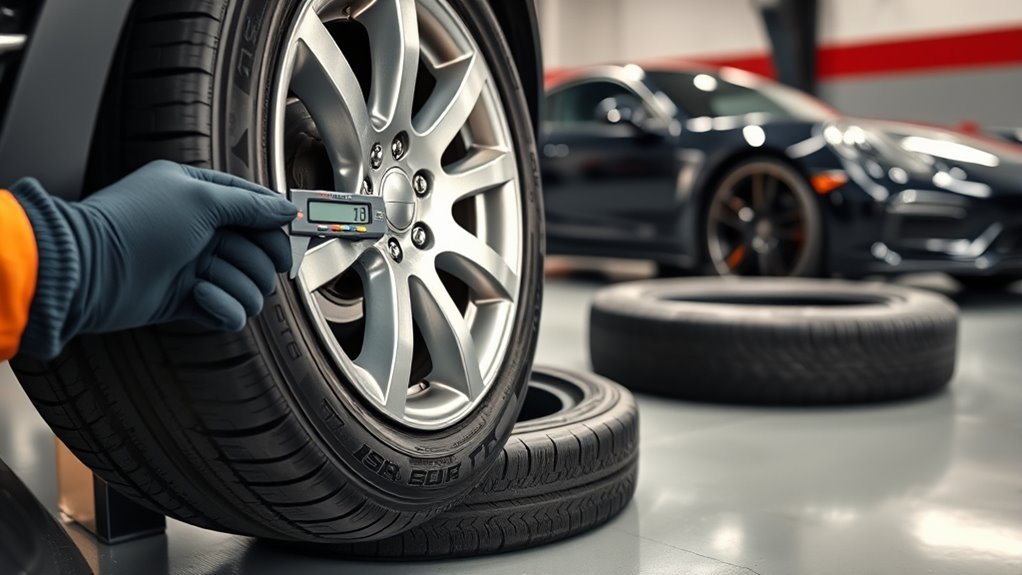
The best tire aspect ratio depends on your factory tire size, wheel size, roads, and driving priorities. For most drivers, the safest choice is the original equipment size listed on the door placard. That size already accounts for clearance, load rating, speed rating, braking, steering geometry, and electronic stability systems.
- Urban commute: start with the vehicle manufacturer’s approved size for predictable comfort, braking, and handling.
- Sport driving: consider a lower-profile package only when the complete tire-and-wheel combination is approved or professionally verified for diameter, wheel width, load index, speed rating, and clearance.
- Rough roads or light off-road use: a taller sidewall can add impact compliance when the vehicle and wheel package allow it, but tread pattern, compound, construction, and inflation pressure remain major traction factors.
- Practical upgrade: compare the new size with a tire-size calculator, then confirm it against manufacturer-approved replacement sizes. A small diameter difference is a screening check, not automatic proof that a tire fits safely.
Quick rule: if a tire changes more than one number in the size code, compare the full diameter, circumference, load index, speed symbol, rim-width range, and clearance instead of judging by aspect ratio alone.
[Products Worth Considering]

The SAFELIFE dial tire tread depth gauge measures tread depth in 1/32 inch increments with clear, easy-to-read 2-inch dial face. Color zones using a traffic light system help you quickly judge whether tread is low, marginal, or ample for safer driving. Built with a durable zinc cast body and a metal detect probe for precise, comfortable use across cars, motorcycles, trucks, and buses.

This VEVOR tire bead breaker uses a slide-hammer impact and wedge tip to separate tire beads from rims quickly and efficiently without damaging hub surfaces. The long handle and sturdy steel construction help reduce user strain while providing reliable, portable tire changing for cars, trucks, and more. Ideal for home mechanics and repair shops handling multiple vehicle tire sizes.

Vigorder rubber cement glue delivers superior adhesion and cures quickly within about 30 seconds for seamless rubber bonding. Once cured, it helps provide a strong, durable, waterproof seal that holds up to vehicle weight, pressure, and heat. Suitable for cars, motorcycles, trucks, bicycles, and off-road tires, it’s designed for emergency patch and maintenance repairs.
Will It Fit? Speedometer, Clearance, and Vehicle Systems
When you change aspect ratio, the tire’s overall diameter can shift. A larger tire travels farther with each rotation, so the speedometer can read slower than your true road speed. For example, going from a 30-inch tire to a 31.5-inch tire is a 5% increase. At an indicated 60 mph, your actual speed would be about 63 mph.
Clearance also matters. A taller or wider tire can rub the fender liner, strut, control arm, mud flap, or bumper edge during turns or suspension compression. Large diameter changes can also affect ABS, traction control, stability control, transmission shift behavior, and AWD systems because those systems rely on wheel-speed data.
[Products Worth Considering]

Monitor tire tread wear with a smart, color-coded depth gauge that shows clear condition ranges at a glance. The bar is range marked for fast, easy readings, helping you maintain safer traction and performance. Each gauge is portable with a pocket clip, and the set includes 20 units for daily use and sharing.

Upgrade your vehicle’s look with glossy hubcap wheel covers designed for 16-inch steel wheels. These snap-on replacements help protect against scratches, rust, and brake dust while offering durable, impact-resistant ABS construction. Installation is quick with no special tools, and the covers are easy to clean with water. Note: they are not compatible with alloy rims or damaged/deformed steel wheels.
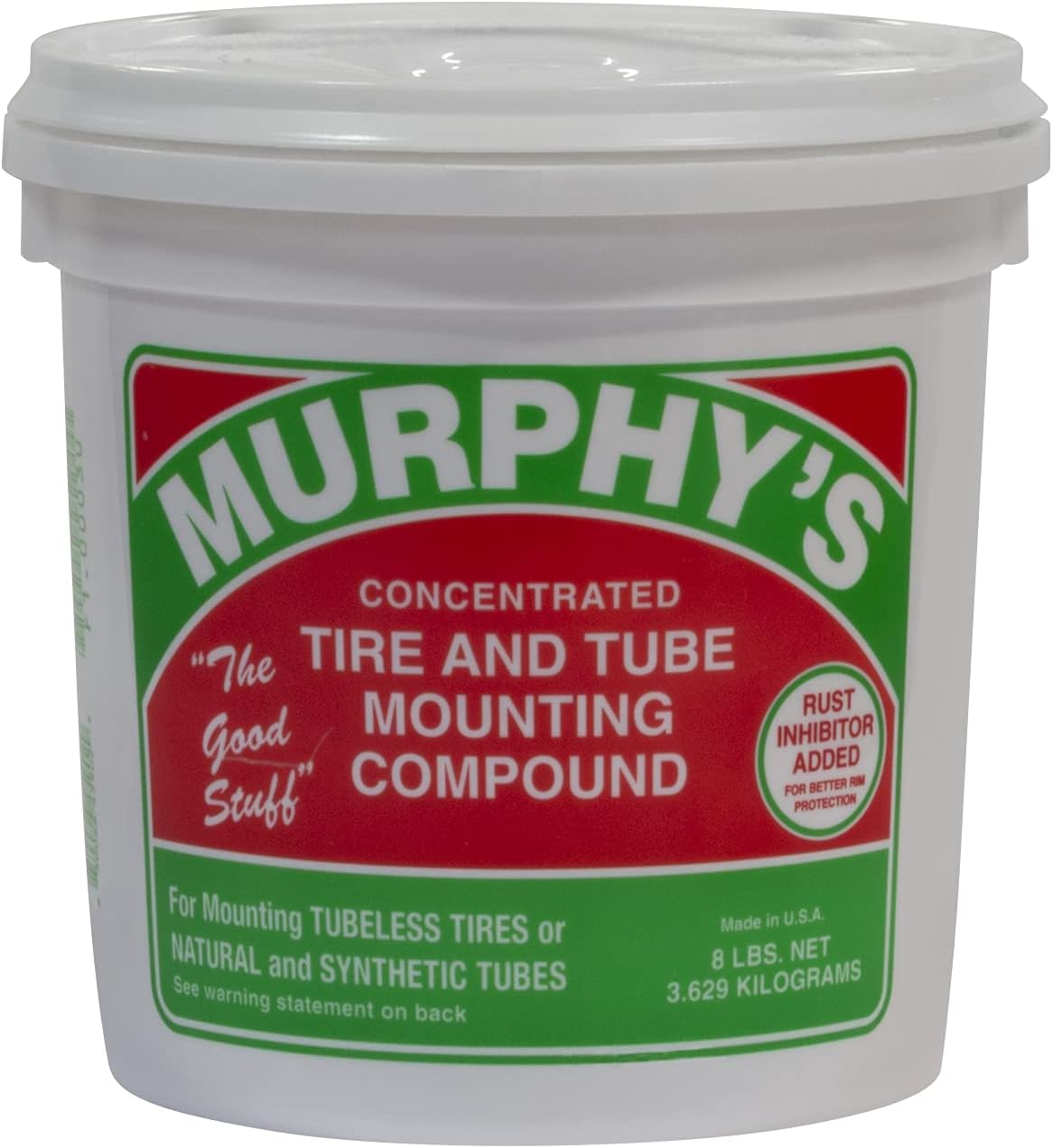
A concentrated tire and tube mounting compound designed to help simplify mounting rubber tires and tubes on passenger, semi truck, construction, and OTR applications. Its ultra-thick formula packs beads effectively and includes rust inhibitors to help protect against corrosion during use.
Speedometer & Odometer Accuracy
If you change a tire’s aspect ratio, you may also change its overall diameter. A larger tire than stock causes the speedometer to under-read, so you travel faster than the dashboard shows. A smaller tire causes the opposite.
- Find the original tire size on the driver-side door placard or owner’s manual.
- Calculate the original and new overall diameters.
- Estimate the percent difference: (new diameter ÷ original diameter – 1) × 100.
- Verify actual speed with GPS after installation, especially if the change is near your acceptable limit.
- Ask a qualified shop about calibration if the size change is outside the manufacturer’s approved options.
Clearance And Suspension Interference
Because aspect ratio affects sidewall height and overall diameter, check physical clearance before buying. Measure static clearance around the wheel well, then consider dynamic clearance when the suspension compresses or the steering reaches full lock. Online tire-size calculators can compare diameter, circumference, sidewall height, width, and speedometer change before you order.
| Checkpoint | Method | Pass Standard |
|---|---|---|
| Static clearance | Measure tire-to-arch, tire-to-strut, and tire-to-liner gaps | No contact at rest |
| Dynamic travel | Check full steering lock and suspension compression | No rubbing over bumps or turns |
| Wheel offset | Compare offset, width, and backspacing to stock | Compatible with brakes, suspension, and bodywork |
| Speedometer change | Compare overall diameter and circumference | Within the vehicle maker’s approved replacement sizing |
| Load and speed rating | Compare service description after the tire size | Meets or exceeds the vehicle requirement |
Avoid fender trimming, spacer use, or suspension changes unless a qualified professional confirms the setup remains safe.
Common Tire Aspect Ratio Mistakes and Compatibility Rules
The most common mistake is treating the aspect ratio as a stand-alone number. It is not. A 55-series tire can have a very different sidewall height depending on width. For example, a 205/55 size has an approximate section height of 112.75 mm, while a 275/55 size has an approximate section height of 151.25 mm. Both use a 55 aspect ratio, yet the wider tire’s sidewall is about 38.5 mm taller before wheel diameter is even considered.
- Do not exceed the vehicle’s approved fitment without checking. Large diameter changes can affect speedometer accuracy, clearance, gearing, ABS, traction control, and stability control.
- Do not mix noticeably different overall diameters on the same axle. It can create uneven grip, odd handling, and drivetrain stress.
- Do not ignore load index and speed rating. A tire that fits physically can still be unsafe if it does not meet the vehicle’s required service description.
- Do not assume lower profile means better. Low-profile tires can improve response, but they can also ride harsher, cost more, wear differently, and expose wheels to pothole damage.
- Do not assume taller sidewalls fix traction. Snow, rain, mud, and off-road grip depend heavily on tread design, compound, inflation pressure, and tire type.
For EVs and heavy SUVs, be extra careful. Many use specific load-rated tires because battery weight, torque, noise control, and rolling resistance place extra demands on the tire.
Quick Reference: How to Compare Aspect Ratios Safely
Look at the tire size on your sidewall. The aspect ratio is the number after the slash, such as the 65 in 205/65R16. That number tells you section height as a percentage of section width, but it does not identify a safe replacement size by itself.
- Compare like with like: at the same section width, a lower ratio means a shorter sidewall and a higher ratio means a taller sidewall.
- Compare full diameter: changing width, aspect ratio, or wheel diameter can change overall tire diameter and speedometer behavior.
- Check the service description: the replacement tire must meet the vehicle’s load and speed requirements.
- Check the wheel: confirm the tire manufacturer’s approved rim-width range for the exact tire size.
- Check the vehicle: use the Tire and Loading Information label, owner’s manual, and manufacturer-approved replacement sizes as the primary fitment references.
If you are unsure, match the original tire size first. Then use a tire-size calculator to understand the geometry and a qualified tire professional to confirm any alternate fitment.
Related Reading
- Tire section width meaning: first number on your tire
- What is a low profile tire?
- Metric vs flotation tire sizing
- How to tell the age of a tire
References
- NHTSA TireWise: tire sizing, placard, and tire safety guidance
- Bridgestone: How to read tire size and aspect ratio
- Michelin: Tire load rating and speed rating explained
- Continental: Tire size, aspect ratio, and fitment considerations
- Tire Industry Association: Reading a tire sidewall
- Discount Tire: Tire size calculator
Frequently Asked Questions
What Is a Good Aspect Ratio for a Tire?
There is no single best aspect ratio for every vehicle. A good aspect ratio is the one used in a tire size approved for your vehicle, with the correct wheel fit, overall diameter, load index, and speed rating. Start with the factory size on the Tire and Loading Information label or owner’s manual, then verify any alternative as a complete tire size.
What Does 65 Mean on a Tire?
In a size like 205/65R16, the 65 is the aspect ratio. It means the sidewall height is 65% of the tire’s 205 mm section width. The approximate sidewall height is 205 × 0.65 = 133.25 mm, or about 5.25 inches.
Is a Lower Tire Aspect Ratio Better?
A lower tire aspect ratio is not automatically better. It can improve steering response and cornering feel on smooth roads, but it usually gives a firmer ride and less sidewall protection against potholes. For comfort, rough roads, and wheel protection, a moderate or taller sidewall often makes more sense.
Can I Change Tire Aspect Ratio Without Changing Rims?
You can sometimes change aspect ratio without changing wheel diameter, but the replacement tire still has to be approved for the wheel’s width, fit the vehicle without rubbing, keep the vehicle’s required load and speed ratings, and fall within an approved replacement size. Compare the complete tire size, not just the aspect ratio.
Does Tire Aspect Ratio Affect Speedometer Accuracy?
Yes, it can. Aspect ratio affects sidewall height, which affects overall tire diameter. A taller overall diameter makes the speedometer read slower than your true speed. A smaller overall diameter makes it read faster. The actual error depends on the full tire size.
Does Aspect Ratio Affect Load Rating?
Aspect ratio does not tell you a tire’s load rating by itself. Load capability is identified by the tire’s load index and depends on the tire’s full specification and operating conditions. Match the vehicle manufacturer’s required load index and never assume a taller or wider tire automatically carries the right load.
Conclusion
Tire aspect ratio is section height expressed as a percentage of section width. When width stays the same, a lower ratio creates a shorter sidewall and a higher ratio creates a taller one. That change can influence ride feel, steering response, wheel protection, and overall tire diameter.
Before changing sizes, calculate sidewall height and overall diameter, compare the complete replacement size with the original, and confirm wheel-width compatibility, clearance, load index, speed rating, and manufacturer-approved fitment. The safest starting point is the tire size listed by the vehicle manufacturer.