A 97H tire has a load index of 97 and an H speed rating. In plain English, that means the tire can carry up to 1,609 pounds per tire when properly inflated and is speed-rated up to 130 mph under specified conditions. Those two characters are part of the tire’s service description, and they help you confirm whether a replacement tire matches your vehicle’s weight, speed, handling, and safety requirements.
Quick Answer
A 97H tire means the tire has a 97 load index, rated for 1,609 pounds per tire when properly inflated, and an H speed rating, rated up to 130 mph. It is common on passenger cars, sedans, crossovers, and some SUVs, but it must still match the tire size and rating listed on your vehicle placard or owner’s manual.
Key Takeaways
- 97 is the tire’s load index, meaning up to 1,609 pounds per tire when the tire is properly inflated.
- H is the speed rating, meaning up to 130 mph under specified test conditions.
- A 97H tire can be a solid everyday-driving rating, but only if it meets or exceeds your vehicle manufacturer’s required size, load index, and speed rating.
- The rating does not tell you treadwear, tire age, weather performance, or whether the tire is right for your vehicle by itself.
- Avoid mixing tire ratings unless the vehicle or tire manufacturer allows it, because mismatched tires can affect handling, grip, and stability.
What Does 97H Mean on a Tire?
When you see 97H on a tire, the 97 is the load index, and the H is the speed rating. Together, they form part of the tire’s service description.
The load index tells you how much weight one tire can support. For a 97 load index, that number is 1,609 pounds per tire. The speed rating tells you the maximum speed capability the tire is designed to sustain under specified conditions. For an H rating, that number is 130 mph.
Warning: A 97H rating does not override your owner’s manual, vehicle placard, local speed laws, road conditions, tire condition, or inflation pressure. Never use the speed rating as permission to drive at 130 mph on public roads.
| Code | Meaning | Practical takeaway |
| 97 | Load index: 1,609 lb per tire | The tire must meet or exceed the load index required by your vehicle. |
| H | Speed rating: up to 130 mph | The tire should match or exceed your vehicle’s required speed rating unless the manufacturer allows an exception. |
What Does the 97 Load Index Mean?
The 97 load index means the tire can carry up to 1,609 pounds when it is properly inflated and used within its design limits. That number is not the tire size, the tire pressure, or the vehicle payload rating. It is the maximum load assigned to that tire load-index number.
Load index values for many passenger and light-truck tires commonly run from about 70 to 126. On that scale, 97 is a common rating for many passenger cars, sedans, crossovers, and some SUVs. If your vehicle’s placard or manual calls for 97, you should use a tire with a load index of 97 or higher, unless your vehicle manufacturer or a qualified tire professional gives different guidance.
Note: Do not calculate your vehicle’s safe payload by multiplying 1,609 pounds by four. Vehicle weight limits are controlled by the manufacturer’s GVWR, GAWR, suspension, wheels, brakes, and placard information, not just the tire’s load index.
What Does the H Speed Rating Mean?
The H speed rating means the tire is rated up to 130 mph under specified test conditions. It sits above T-rated tires and below V-rated tires in common passenger-tire speed ratings.
Speed ratings are about more than top speed. They also reflect the tire’s heat resistance, construction, and ability to carry its rated load at speed. A damaged, underinflated, overloaded, or improperly repaired tire may not safely perform to its original speed rating.
- S rating: up to 112 mph
- T rating: up to 118 mph
- H rating: up to 130 mph
- V rating: up to 149 mph
- W rating: up to 168 mph
For everyday driving, H-rated tires usually provide more speed capability than normal U.S. highway driving requires. Still, you should choose the rating your vehicle manufacturer specifies, because the rating can affect ride, handling, heat resistance, and replacement compatibility.
How Do Load Index and Speed Rating Work Together?
The load index and speed rating work together because a tire must be able to carry the vehicle’s weight and handle the speed capability required by the vehicle. A tire marked 97H combines a 1,609-pound load capacity with a 130-mph speed rating.
That does not mean every 97H tire fits every vehicle. You still need the correct tire size, construction, load rating, speed rating, and inflation pressure. For example, two tires can have the same size but different load or speed ratings, and those differences can affect whether the tire is an acceptable replacement.
Pro Tip: When replacing tires, compare the full service description, not just the size. A tire marked 225/60R17 97H is not the same specification as 225/60R17 99V.
Is 97H Good for Everyday Driving?
A 97H tire rating can be very good for everyday driving when it matches the vehicle’s required tire specifications. The 97 load index gives practical load capacity for many passenger vehicles, and the H speed rating gives a high enough speed capability for normal commuting, highway travel, and loaded family driving.
For most drivers, the value of a 97H tire is balance. It is not usually as firm or performance-focused as a higher-speed-rated sport tire, but it still provides strong highway-speed capability. That can make it a practical rating for drivers who want comfort, predictable handling, and safe daily performance.
Use 97H only when it matches your vehicle’s required size and service description. If your placard calls for a higher load index or speed rating, choose the higher required rating instead.
[Products Worth Considering]

The 22800 wheel stud installer makes replacing wheel studs quick and secure, saving time and effort during tire service. It uses a ratchet or impact wrench to pull new studs firmly into place, helping when existing studs are too long. Compatible with most automotive wheels and light-duty truck wheel studs, it’s designed for easy, tool-assisted installation.

The SAFELIFE dial tire tread depth gauge measures tread depth in 1/32 inch increments with clear, easy-to-read 2-inch dial face. Color zones using a traffic light system help you quickly judge whether tread is low, marginal, or ample for safer driving. Built with a durable zinc cast body and a metal detect probe for precise, comfortable use across cars, motorcycles, trucks, and buses.
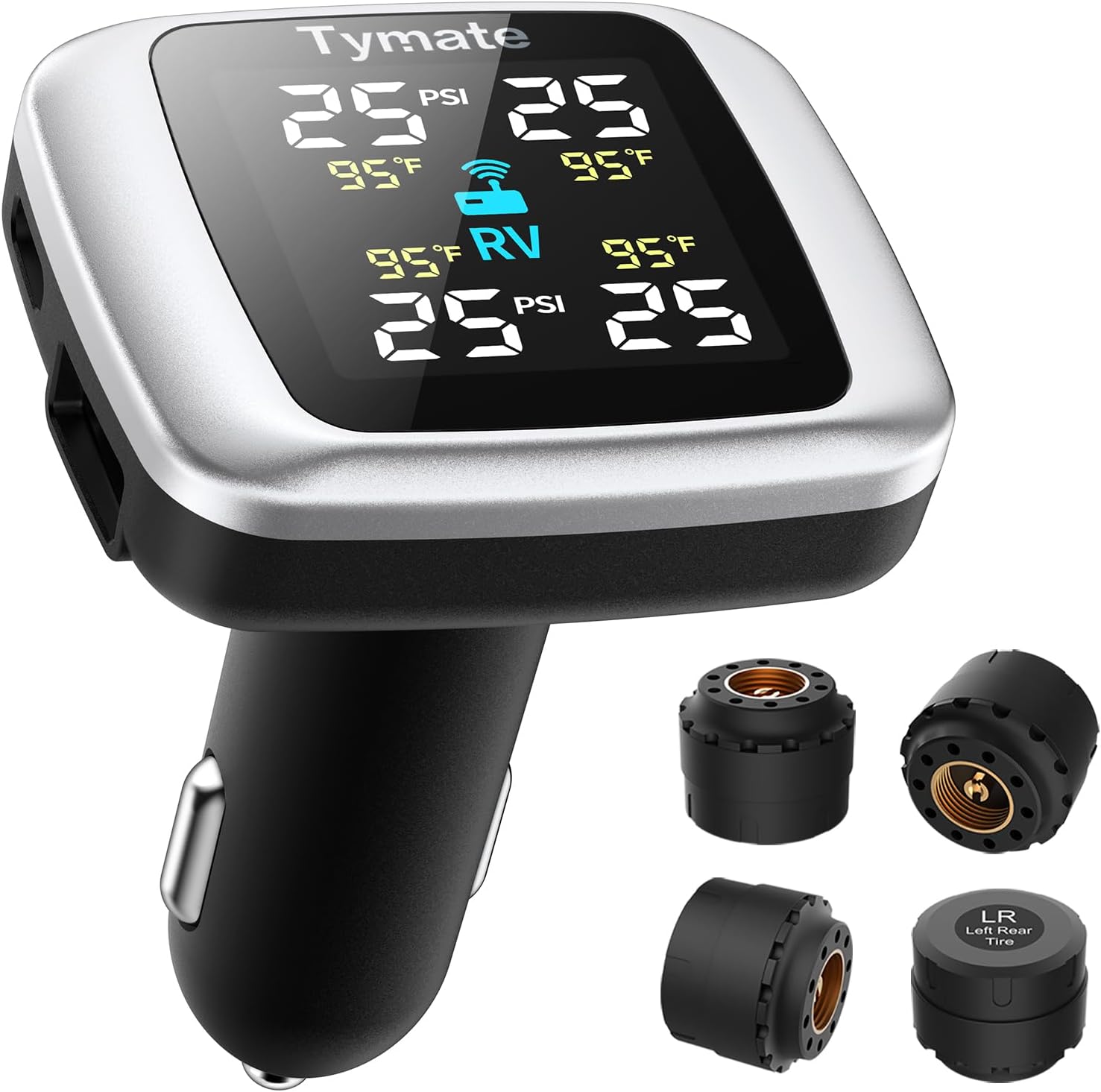
Tymate TM7 is a wireless tire pressure monitoring system that delivers real-time pressure and temperature readings for safer driving. It includes four external sensors, a bright color LCD display with adjustable backlight, and six alarm modes for high/low pressure, fast leakage, high temperature, and sensor signal or battery issues. The system covers a wide 0–144 PSI range and plugs into your vehicle’s cigarette lighter socket for quick DIY setup.
Why Must Tire Size Match Your Vehicle?
Tire size affects more than whether the tire fits on the wheel. It affects steering response, braking, ride height, speedometer accuracy, traction-control behavior, load capacity, and clearance around the suspension and bodywork.
The safest starting point is the tire size and inflation pressure listed in your owner’s manual or on the Tire and Loading Information Label on the driver’s side door edge or doorjamb. That label is the vehicle manufacturer’s recommendation for your car or truck.
If you choose a different tire size without proper guidance, you may change the vehicle’s handling, reduce load capacity, create uneven tread wear, or cause clearance problems. If you are considering a size change, ask the vehicle manufacturer, tire manufacturer, or a qualified tire professional before buying.
Where Can You Find Your Tire Size?
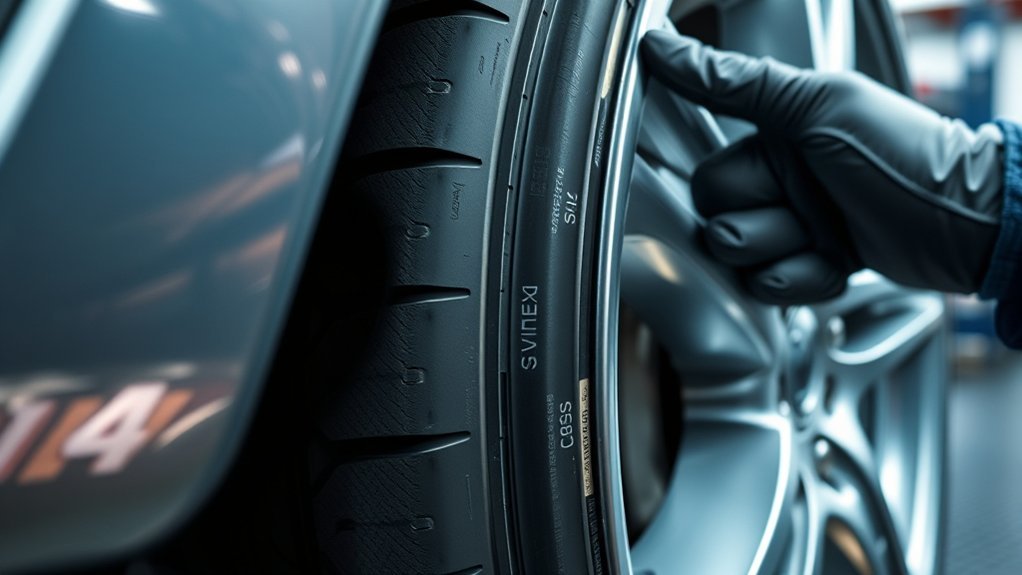
You can find your recommended tire size and rating in several reliable places:
- Driver’s side door jamb: look for the Tire and Loading Information Label.
- Owner’s manual: check the tire, wheel, or specifications section.
- Current tire sidewall: useful for reading what is installed now, but it may not prove the tire is the correct replacement.
- Vehicle manufacturer lookup tools: helpful when you enter the exact year, make, model, and trim.
- Qualified tire shop: useful if your vehicle has staggered sizes, optional wheels, or non-original tires.
The vehicle placard and owner’s manual are more reliable than guessing from the tire already on the car, especially if the previous owner installed the wrong size.
What 97H Does Not Tell You
The 97H code is important, but it does not tell the whole story. It does not tell you:
- the tire width, aspect ratio, or wheel diameter;
- whether the tire is all-season, summer, winter, touring, performance, or all-terrain;
- the tire’s treadwear, traction, or temperature grade;
- the tire’s age or DOT date code;
- whether the tire is damaged, worn, underinflated, or safe to keep using;
- whether the tire is compatible with your exact vehicle trim and wheel package.
For example, treadwear and traction grades are separate markings under the Uniform Tire Quality Grading system. A tire can be 97H and still vary widely in tread life, wet grip, road noise, ride comfort, and winter performance.
Can You Mix Different Tire Ratings?
You should avoid mixing different tire ratings unless the vehicle manufacturer or tire manufacturer allows it. For the best handling and safety, all four tires should match in size, brand/model, tread pattern, load index, speed rating, construction, and similar tread depth.
If you mix ratings, the vehicle’s safe capability is limited by the lowest-rated tire. For example, if three tires are 97V and one tire is 97H, the set should be treated as limited to the H-rated tire’s speed capability. Handling may also change because different speed ratings can have different casing stiffness, tread compounds, and response characteristics.
Mixing Risks
Mixing different ratings can reduce predictable handling. The biggest risks include uneven grip, different steering response, longer stopping distances in some conditions, uneven wear, and reduced stability during emergency maneuvers.
- One axle may respond faster than the other.
- The vehicle may understeer or oversteer more easily.
- Wet-road stability can suffer.
- All-wheel-drive systems may require closely matched tires.
- The vehicle may no longer meet the tire specification chosen by the manufacturer.
Lowest Rating Wins
When ratings do not match, the lowest-rated tire controls the practical limit of the set. That applies to speed rating and, in many cases, load capacity. Never install a tire with a lower load index than your vehicle requires.
Some tire-industry guidance says that if different speed ratings must be used temporarily, the lower speed-rated pair should be placed on the front axle to help reduce potential oversteer. Other guidance emphasizes installing higher-rated or better-grip tires on the rear axle. Because tire placement can depend on tire type, vehicle layout, tread depth, and manufacturer instructions, the safest answer is simple: match all four tires whenever possible and follow your vehicle manufacturer’s guidance first.
How Do You Read Other Tire Sidewall Numbers?
A full tire sidewall code gives you more information than 97H alone. A common example looks like this:
P215/65R16 97H
Size Code Basics
- P = passenger tire. Some tires omit the P or use LT for light truck.
- 215 = tire width in millimeters.
- 65 = aspect ratio, meaning the sidewall height is 65% of the tire width.
- R = radial construction.
- 16 = wheel diameter in inches.
- 97 = load index.
- H = speed rating.
Load and Speed
The load and speed rating usually appear at the end of the size code. In P215/65R16 97H, the 97H is the service description. It tells you the tire’s load capacity and speed capability, but it still must be read with the complete tire size and vehicle requirements.
Sidewall Markings Explained
Sidewall markings help you confirm fitment before buying replacement tires. Check the full size, load index, speed rating, DOT date code, maximum pressure marking, and tire type. Then compare those details with your vehicle placard and owner’s manual.
Note: The pressure printed on the tire sidewall is not the recommended everyday inflation pressure for your vehicle. Use the cold tire pressure listed on the vehicle placard or in the owner’s manual.
97H vs. Other Common Ratings
Here is how 97H compares with a few similar service descriptions you may see while shopping:
| Rating | Load capacity | Speed capability | Main difference |
| 95H | 1,521 lb | 130 mph | Lower load capacity than 97H. |
| 97H | 1,609 lb | 130 mph | Balanced everyday rating for many passenger vehicles. |
| 97V | 1,609 lb | 149 mph | Same load as 97H, higher speed rating. |
| 97W | 1,609 lb | 168 mph | Same load as 97H, much higher speed rating. |
A higher speed rating is not automatically “better” for every driver. Higher-rated tires may have sharper response, but they can also cost more, ride firmer, or wear differently depending on the tire model. The best rating is the one that matches your vehicle and driving needs.
[Products Worth Considering]

The TYAMATE TM8 solar-powered wireless TPMS delivers real-time tire pressure and temperature monitoring with six alarm modes for safer driving. A vibrant color LCD display shows readings clearly while windshield mounting keeps it hands-free and easy to read. With a wide 0–87 PSI range, strong 433.92 MHz signal transmission, and quick sensor pairing, it’s ideal for RV, sedan, SUV, MPV, and truck use.
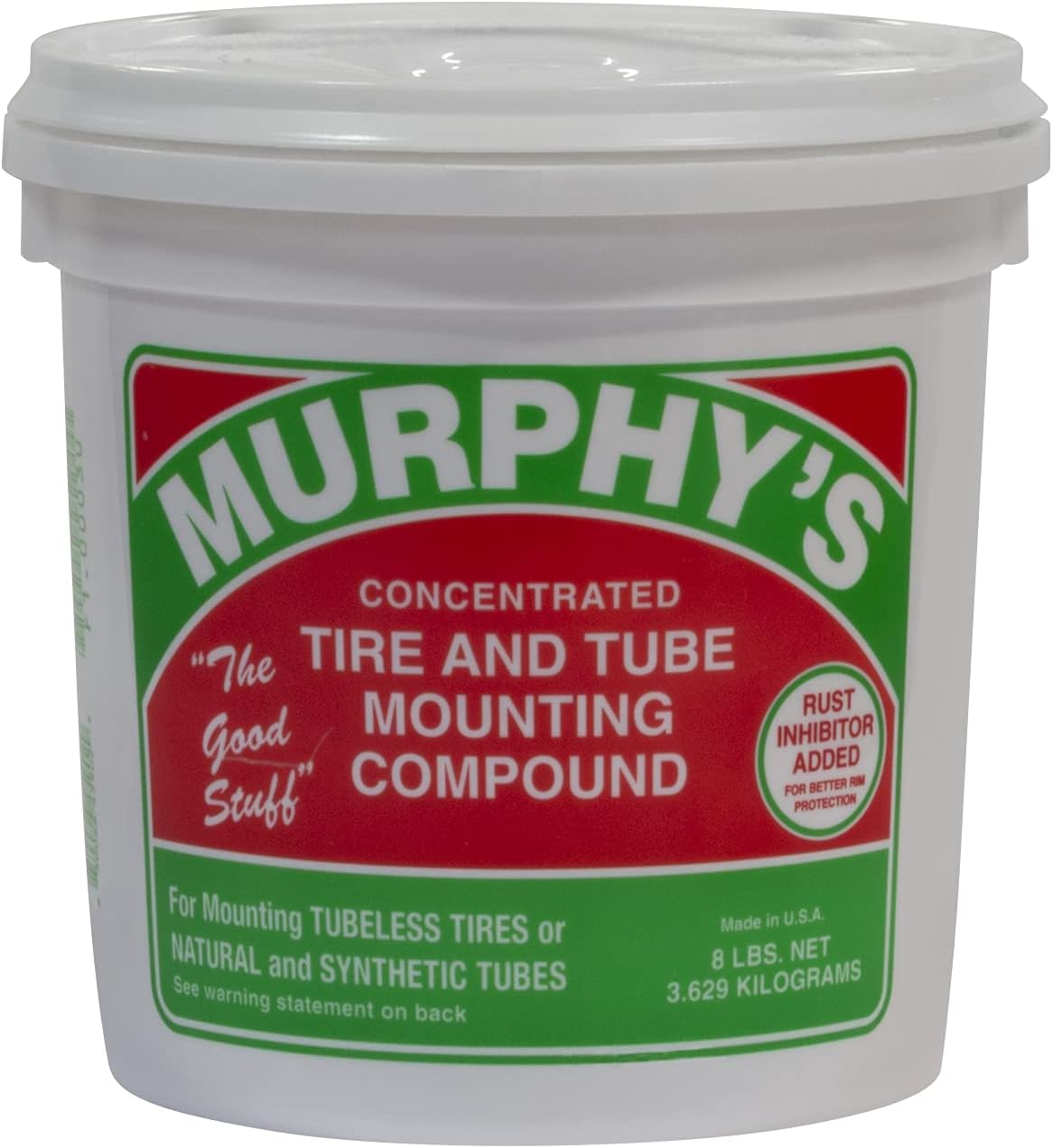
A concentrated tire and tube mounting compound designed to help simplify mounting rubber tires and tubes on passenger, semi truck, construction, and OTR applications. Its ultra-thick formula packs beads effectively and includes rust inhibitors to help protect against corrosion during use.

Malco tire mounting and demounting lubricant is a ready-to-use tire lube formulated to reduce friction during tire installation for passenger cars, light trucks, farm tires, and heavy-duty equipment. It provides rust-inhibiting protection to help reduce corrosion on rims and wheels, and helps support proper tire bead seating during inflation to reduce air leakage. The silicone-free, soap-free formula is whitewall safe to help prevent discoloration on whitewall tires and sensitive sidewall markings.
How to Confirm a 97H Tire Is Right for Your Vehicle
Before buying a 97H tire, run through this quick check:
- Find the placard: check the Tire and Loading Information Label on the driver’s side door area.
- Match the size: confirm the tire width, aspect ratio, construction, and wheel diameter match the recommended size.
- Check the load index: make sure 97 meets or exceeds the manufacturer’s required load index.
- Check the speed rating: make sure H meets or exceeds the required speed rating, unless an approved exception applies.
- Check tire type: choose the correct category for your climate and use, such as all-season, winter, touring, performance, or all-terrain.
- Check condition and age: inspect tread depth, damage, cracking, repairs, and DOT date code.
- Inflate correctly: use the vehicle’s cold tire pressure, not the maximum pressure printed on the tire sidewall.
If any detail does not match, pause before buying. A tire can have the correct 97H rating and still be wrong for your vehicle if the size, type, or application is incorrect.
[Products Worth Considering]

AstroAI AIRUN H is a compact 12V tire inflator designed for fast, convenient inflation with an easy-to-read digital pressure gauge. Set your target pressure with programmable controls and let the auto shut-off turn off the pump when the preset is reached. It also includes a backlit screen and LED flashlight for nighttime use, with a ToughUltra durability design for longer service life.

Monitor tire tread wear with a smart, color-coded depth gauge that shows clear condition ranges at a glance. The bar is range marked for fast, easy readings, helping you maintain safer traction and performance. Each gauge is portable with a pocket clip, and the set includes 20 units for daily use and sharing.

Measure tire tread depth quickly and accurately with this LUMITECO dial gauge that reads in 1/32" increments up to 14/32". The color-coded green/yellow/red zones make it easy to judge tire wear and know when replacement is needed. A rugged, compact design with a protective pouch helps keep the gauge ready for use on cars, trucks, motorcycles, and more.
Frequently Asked Questions
What is the difference between 97H and 97W tires?
97H and 97W tires have the same load index, so both are rated for 1,609 pounds per tire when properly inflated. The difference is speed rating: H is rated up to 130 mph, while W is rated up to 168 mph. Use the speed rating required by your vehicle manufacturer.
What tire rating is better, H or V?
V is the higher speed rating because it is rated up to 149 mph, while H is rated up to 130 mph. That does not make V better for every vehicle. H may be the correct choice if your vehicle specifies H and you prioritize daily comfort, while V may be required for vehicles engineered for higher speed capability or sharper handling.
What is the difference between 97V and 97W tires?
97V and 97W tires share the same load index, so both are rated for 1,609 pounds per tire. The speed rating is different: V is rated up to 149 mph, and W is rated up to 168 mph. W-rated tires are often used on higher-performance vehicles, but you should follow your vehicle’s required rating.
Which is better, 95H or 95V?
95H and 95V have the same load index, so both are rated for 1,521 pounds per tire. The difference is speed rating: H is rated up to 130 mph, and V is rated up to 149 mph. Choose the one that matches or exceeds your vehicle manufacturer’s specification.
Can I use 97H instead of 97V?
Do not install 97H if your vehicle requires 97V unless the vehicle manufacturer, tire manufacturer, or qualified tire professional confirms it is acceptable for your use. The load index is the same, but the speed rating is lower, and handling or warranty coverage may be affected.
Is 97H good for SUVs?
97H can be suitable for some crossovers and smaller SUVs, but it is not automatically right for every SUV. Heavier SUVs may require a higher load index, different tire construction, or a different speed rating. Always check the door placard and owner’s manual.
Does a 97H tire carry 1,521 or 1,609 pounds?
A 97 load index is rated for 1,609 pounds per tire. A 95 load index is rated for 1,521 pounds per tire. If you see 1,521 pounds listed for 97, that is a load-index error.
Can I mix H-rated tires with V-rated or W-rated tires?
Mixing speed ratings is not recommended unless the manufacturer allows it. If different speed ratings are installed, the vehicle should be treated as limited by the lowest speed-rated tire, and handling may be affected. Matching all four tires is the safest and most predictable setup.
Conclusion
A 97H tire means the tire has a 97 load index and an H speed rating. The 97 load index equals 1,609 pounds per tire when properly inflated, and the H speed rating equals 130 mph under specified conditions. For many passenger vehicles, that is a practical everyday rating, but it is only correct if it matches your vehicle’s recommended tire size, load index, speed rating, and inflation requirements.
Before buying replacement tires, check the driver-side tire placard and owner’s manual. Match the full tire specification, not just the 97H code, and ask a qualified tire professional if your vehicle has optional wheels, staggered sizes, AWD requirements, or non-original tire fitment.
Sources
- Tire Rack — What Is Load Index? — confirms load index 97 equals 1,609 pounds and load index 95 equals 1,521 pounds.
- Tire Rack — How Do I Check a Tire’s Speed Rating? — confirms H, V, and W speed-rating mph values and speed-rating conditions.
- Michelin — Tire Load Rating and Speed Rating Explained — explains service descriptions, replacement-rating guidance, and why load/speed ratings matter.
- NHTSA TireWise — Tires — supports tire placard, tire size, inflation-pressure, tread, and maintenance guidance.
- Continental Tires — Mixing Tires — supports matching tire size, tread pattern, load index, and speed rating across wheel positions.
- Uniroyal Tires — Technical Info and Definitions — supports caution around lower speed ratings, mixed speed ratings, and lowest-rating limitations.