
103H on a tire is a service description that tells you two things: how much weight the tire can carry and the maximum speed category it was built to handle under proper conditions. The 103 is the load index, and the H is the speed rating. For most passenger tires, that means 1,929 pounds (875 kg) per tire and a speed rating of up to 130 mph (210 km/h).
Quick Answer
103H on a tire means the tire has a 103 load index, rated for 1,929 pounds (875 kg) per tire when properly inflated, and an H speed rating, rated for up to 130 mph (210 km/h) under specified conditions. Always match or exceed your vehicle’s required rating.
Key Takeaways
- 103 is the load index, which equals 1,929 pounds (875 kg) per tire when the tire is properly inflated.
- H is the speed rating, which means the tire is rated for speeds up to 130 mph (210 km/h) under specified test conditions.
- You can usually find 103H after the tire size on the sidewall, such as 225/60R18 103H.
- The correct rating is the one listed on your vehicle’s tire placard, owner’s manual, or manufacturer-approved tire-size chart.
- Do not use a lower load index or speed rating unless the vehicle manufacturer allows it for a specific tire type, such as certain winter tires.
What Does 103H Mean on a Tire?
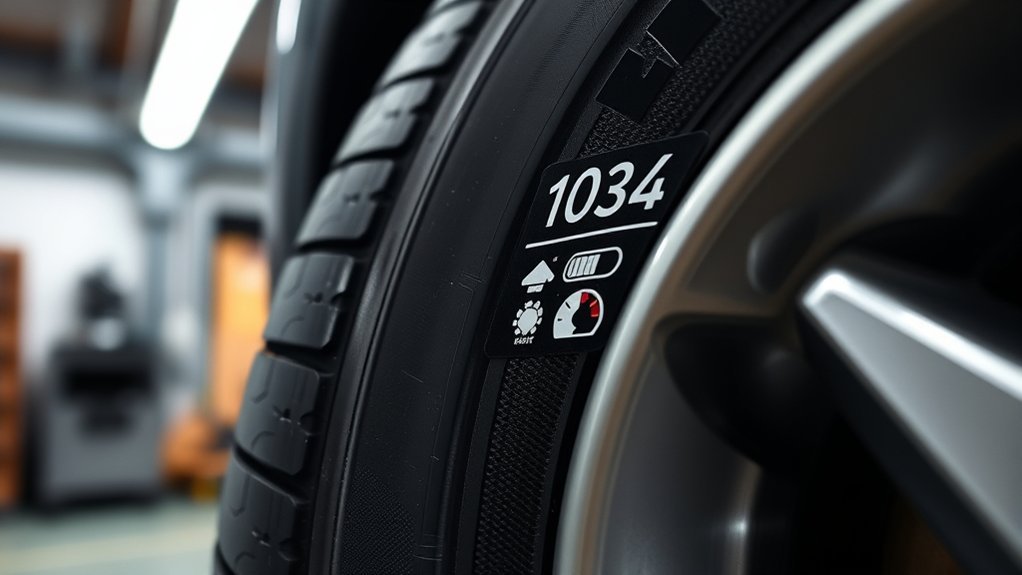
A tire marked 103H combines a load index and a speed rating into one short code. Tire professionals call this the tire’s service description. It usually appears after the tire size on the sidewall. For example, in 225/60R18 103H, the tire size is 225/60R18, the load index is 103, and the speed rating is H.
| Code Part | Meaning | What It Means for 103H |
| 103 | Load index | Up to 1,929 lb / 875 kg per tire when properly inflated |
| H | Speed rating | Rated for up to 130 mph / 210 km/h under specified conditions |
The load index does not tell you the tire’s size, and the speed rating does not tell you how much weight the tire can carry. You need both parts together to choose a tire that matches the vehicle’s weight, handling, and manufacturer requirements. Tire Rack’s load index table lists load index 103 at 1,929 pounds, while Continental lists H as a 130 mph speed rating.
Where Can You Find the 103H Code?
You can find the 103H code on the tire sidewall, usually after the tire size. Look for a sequence similar to this:
225/60R18 103H
In that example, 225/60R18 is the tire size, 103 is the load index, and H is the speed rating. The same rating may also appear on your vehicle’s tire information placard, usually on the driver’s door jamb, and in the owner’s manual.
Pro Tip: Before buying replacement tires, compare the tire sidewall code with the vehicle placard and owner’s manual. The replacement tire should normally meet or exceed the original load index and speed rating recommended by the vehicle manufacturer.
What Does the 103 Load Index Mean?
The 103 load index means one tire can carry up to 1,929 pounds (875 kg) when properly inflated and used within its rated conditions. This is a per-tire rating, not the payload rating of your whole vehicle.
For example, four tires with a 103 load index have a combined tire load capacity of up to 7,716 pounds. That does not mean your vehicle can safely carry that much weight. Your vehicle’s safe load is still limited by the manufacturer’s gross vehicle weight rating, axle ratings, wheels, suspension, and inflation-pressure requirements.
| Load Index | Capacity Per Tire | Common Meaning |
| 101 | 1,819 lb / 825 kg | Lower than 103 |
| 102 | 1,874 lb / 850 kg | Lower than 103 |
| 103 | 1,929 lb / 875 kg | The rating in 103H |
| 104 | 1,984 lb / 900 kg | Higher than 103 |
| 107 | 2,149 lb / 975 kg | Higher load capacity, same H speed if marked 107H |
Proper inflation is essential. A tire only carries its rated load when it is inflated according to the vehicle or tire manufacturer’s specifications. Underinflation can increase heat buildup, reduce stability, and shorten tire life.
What Does the H Speed Rating Mean?
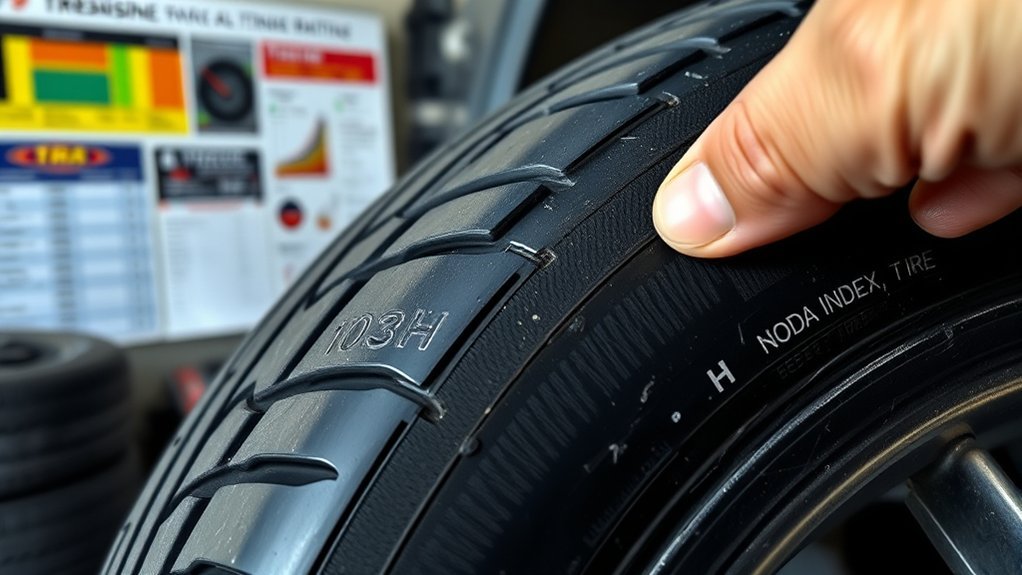
The H speed rating means the tire is rated for speeds up to 130 mph (210 km/h) under specified load, inflation, and test conditions. The speed rating is not just about top speed; it also reflects the tire’s ability to manage heat and maintain structure at its rated speed.
Warning: A 130 mph H rating is not permission to drive 130 mph. Always obey posted speed limits, road conditions, and vehicle manufacturer guidance. A damaged, underinflated, overloaded, old, or mismatched tire may not perform safely even below its rating.
Common speed ratings include:
- S: up to 112 mph
- T: up to 118 mph
- H: up to 130 mph
- V: up to 149 mph
- W: up to 168 mph
- Y: up to 186 mph
If your vehicle came with H-rated tires, replacing them with a lower speed rating can affect handling, heat resistance, and manufacturer-intended performance. A higher speed rating may be allowed, but it can change ride comfort, cost, treadwear, or road noise depending on the specific tire model.
How Does 103H Affect Safety and Handling?
A correct 103H tire helps the vehicle carry weight, manage heat, and respond as designed. The rating matters most when the vehicle is loaded with passengers, cargo, or sustained highway driving. It also matters during braking, cornering, and emergency maneuvers, when tire structure and grip are under stress.
Load Capacity Impact
With a 103 load index, each tire is rated for 1,929 pounds when properly inflated. That load rating helps support the vehicle’s weight, passengers, and cargo within the limits set by the vehicle manufacturer.
If you install tires with a lower load index than required, the tire may flex more than intended, build excess heat, wear unevenly, or fail under load. If you install a tire with a higher load index, it may add load reserve, but it does not raise the vehicle’s legal or mechanical carrying capacity.
NHTSA reports nearly 11,000 tire-related motor vehicle crashes each year and more than 600 deaths in those crashes, which is why tire fitment, inflation, tread depth, and maintenance matter.
Speed Rating Effects
The H speed rating tells you the tire was built to carry its rated load at speeds up to 130 mph under specified conditions. This can matter even during normal highway driving because higher speed creates more heat in the tire.
Still, speed rating is only one part of tire performance. A tire’s grip, braking, wet traction, snow traction, comfort, and tread life also depend on tread pattern, rubber compound, tire category, age, alignment, inflation pressure, and road conditions.
Can You Mix Tires With Different Ratings?
Mixing tires with different load indexes, speed ratings, brands, tread depths, or tire types is not recommended unless your vehicle manufacturer or a qualified tire professional approves it. The safest setup is usually four matching tires with the correct size, load index, speed rating, construction, and tire category.
If one tire has a lower speed rating than the others, the vehicle’s safe speed capability is limited by the lowest-rated tire. Mixing can also change the vehicle’s handling balance, especially in emergency braking, wet roads, or quick steering maneuvers.
Be extra careful with AWD and 4WD vehicles. Many of these vehicles require closely matched tires in size, tread depth, and rolling circumference to protect the drivetrain. When in doubt, replace tires in matched pairs or sets according to the owner’s manual.
[Products Worth Considering]

Measure tire tread depth quickly and accurately with this LUMITECO dial gauge that reads in 1/32" increments up to 14/32". The color-coded green/yellow/red zones make it easy to judge tire wear and know when replacement is needed. A rugged, compact design with a protective pouch helps keep the gauge ready for use on cars, trucks, motorcycles, and more.
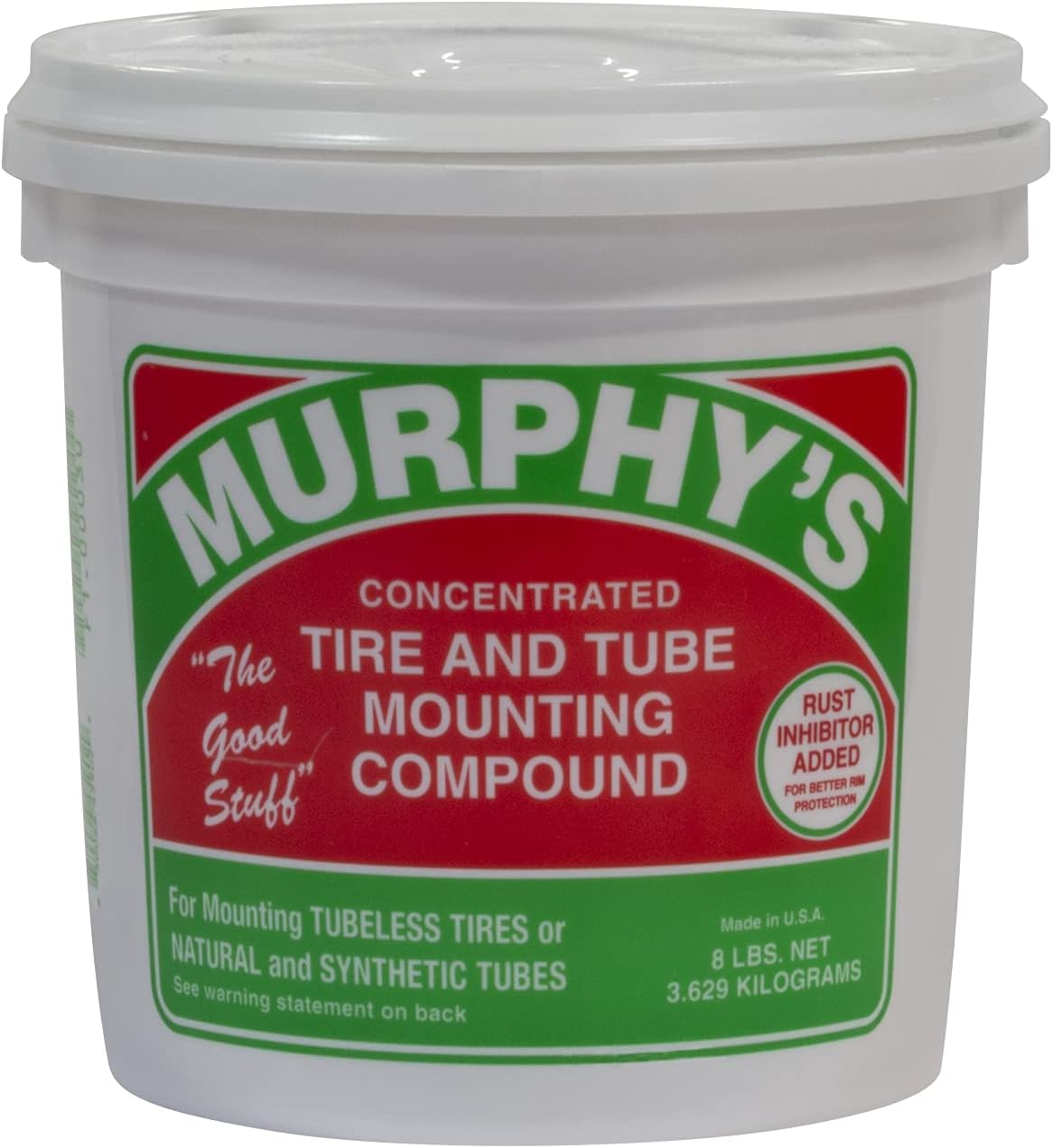
A concentrated tire and tube mounting compound designed to help simplify mounting rubber tires and tubes on passenger, semi truck, construction, and OTR applications. Its ultra-thick formula packs beads effectively and includes rust inhibitors to help protect against corrosion during use.

Monitor tire tread wear with a smart, color-coded depth gauge that shows clear condition ranges at a glance. The bar is range marked for fast, easy readings, helping you maintain safer traction and performance. Each gauge is portable with a pocket clip, and the set includes 20 units for daily use and sharing.
Is 103H Right for Your Vehicle?
A 103H tire is right for your vehicle only if it matches or exceeds the tire rating specified by the vehicle manufacturer for your tire size. Do not choose 103H just because it looks close to your old tire. Check the exact tire size, load index, speed rating, and any special markings such as XL, Extra Load, LT, or original-equipment markings.
Use this checklist before buying 103H tires:
- Check the tire information placard on the driver’s door jamb.
- Check the owner’s manual for approved tire sizes and ratings.
- Match the full tire size, not just the 103H code.
- Make sure the load index is not lower than required.
- Make sure the speed rating is not lower than required unless the manufacturer allows it for a specific tire type.
- Confirm whether your vehicle needs XL, run-flat, winter, all-terrain, or other special tire construction.
- Use the recommended cold tire pressure listed on the vehicle placard, not the maximum pressure printed on the tire sidewall.
[Products Worth Considering]

Measure tyre tread depth precisely with a digital gauge that reads in both MM and inches, helping you monitor safe driving conditions. The large LCD screen is easy to operate, and the compact tool fits for cars, trucks, and motorcycles. It provides high accuracy with a 0-25.4mm range and includes a 1-year warranty for added peace of mind.

The Continental Grand Prix 5000 is an allround road bike tire engineered for faster rolling, improved ride comfort, and enhanced puncture protection. It features a Vectran Breaker cut-protection layer, Lazer Grip micro-profile tread for confident cornering control, and Active Comfort Technology to damp vibration for smoother rides. BlackChili compound optimizes grip and speed for everyday performance and long-lasting confidence.

The SAFELIFE dial tire tread depth gauge measures tread depth in 1/32 inch increments with clear, easy-to-read 2-inch dial face. Color zones using a traffic light system help you quickly judge whether tread is low, marginal, or ample for safer driving. Built with a durable zinc cast body and a metal detect probe for precise, comfortable use across cars, motorcycles, trucks, and buses.
Is 103H Better Than 107H?
103H is not automatically better or worse than 107H. The difference is load capacity. A 103H tire is rated for 1,929 pounds per tire, while a 107H tire is rated for 2,149 pounds per tire. Both have the same H speed rating if both end in H.
Choose the rating your vehicle calls for. A 107H tire may provide more load reserve, but it may also be built differently and could affect ride feel, weight, price, or availability. If your vehicle specifies 103H, a 107H may be acceptable in some cases, but you should still confirm the full tire size and manufacturer guidance.
[Products Worth Considering]

Accurately measure tire tread depth with a calibrated gauge marked from 0 to 1 inch in 1/32 inch increments. The color-coded bar helps you quickly identify tread condition ranges, supporting safe driving for trucks, motorcycles, automobiles, and passenger vehicles.

Secure your trailer or RV tires with a scissor-style wheel chock stabilizer that applies opposing force to help prevent wheel shift. It fits tight wheel gaps from 3.5 inches up to 12 inches and works for travel trailers, campers, fifth wheels, toy haulers, and heavy-duty trucks. The surface uses new electrophoretic technology to help prevent rust for reliable travel use.

Vigorder rubber cement glue delivers superior adhesion and cures quickly within about 30 seconds for seamless rubber bonding. Once cured, it helps provide a strong, durable, waterproof seal that holds up to vehicle weight, pressure, and heat. Suitable for cars, motorcycles, trucks, bicycles, and off-road tires, it’s designed for emergency patch and maintenance repairs.
Frequently Asked Questions
What tire rating is better, H or V?
V has a higher speed rating than H. H is rated up to 130 mph, while V is rated up to 149 mph. That does not make V automatically better for every vehicle. The better choice is the rating your vehicle manufacturer recommends for your tire size and driving needs.
Which is better, S or H speed rating?
H is the higher speed rating. S is rated up to 112 mph, while H is rated up to 130 mph. If your vehicle requires H-rated tires, do not downgrade to S unless the vehicle manufacturer specifically allows it for a certain tire type or use case.
Is 103H better than 107H tires?
107H has a higher load index than 103H, so it can carry more weight per tire. A 103H tire is rated for 1,929 pounds, while a 107H tire is rated for 2,149 pounds. Both have the same H speed rating. Use the rating that matches your vehicle’s required size and specifications.
Is H or T better on tires?
H is the higher speed rating. T is rated up to 118 mph, while H is rated up to 130 mph. H may be required on vehicles designed for higher speed capability or specific handling targets. T can be fine only when it meets the vehicle manufacturer’s recommendation.
Can I use 103V instead of 103H?
In many cases, a higher speed rating such as V can replace H if the tire size, load index, construction, and vehicle requirements match. However, the tire may ride differently or cost more. Check your owner’s manual or ask a qualified tire professional before switching.
Does 103H mean the tire is good for towing?
Not by itself. 103H tells you the tire’s load and speed rating, but towing also depends on the vehicle’s tow rating, axle ratings, tire pressure, wheel rating, trailer tongue weight, and tire type. Never use tire load index alone to decide towing capacity.
Conclusion
103H on a tire means load index 103 and H speed rating. In practical terms, that is 1,929 pounds (875 kg) per tire when properly inflated and a speed rating of up to 130 mph (210 km/h) under specified conditions. The rating helps you choose a tire that can support your vehicle’s weight and performance requirements, but it must match the tire placard, owner’s manual, and full tire size. For safe replacement, never guess from the sidewall alone—verify the complete specification before you buy.
Sources
- Tire Rack — What Is Load Index? — load index chart showing 103 = 1,929 lb / 875 kg.
- Continental Tire — How To Read Your Tire Sidewall — sidewall code placement and H speed rating at 130 mph.
- Michelin — Tire Load Rating & Speed Rating Explained — manufacturer guidance on load rating, speed rating, placard checks, and replacement ratings.
- Discount Tire — Tire Speed Ratings — speed rating chart and mixing-rating safety guidance.
- NHTSA — Safety and Savings Ride on Your Tires — tire-related crash statistic and tire-maintenance safety context.
