When you see 103V on a tire sidewall, you are looking at the tire’s service description. The number tells you how much weight the tire can carry, and the letter tells you the tire’s speed capability. These ratings matter when you replace tires, carry passengers or cargo, tow, or compare one tire option with another.
Quick Answer
103V means the tire has a 103 load index and a V speed rating. Load index 103 equals 1,929 pounds per tire when properly inflated. V means the tire is rated for up to 149 mph under controlled conditions. Your replacement tires should meet or exceed your vehicle’s required ratings.
Key Takeaways
- 103 is the load index, which equals 1,929 pounds or 875 kg per tire when the tire is properly inflated.
- V is the speed rating, which means the tire is rated for up to 149 mph or 240 km/h under rated conditions.
- You will usually find 103V after the tire size, such as 235/55R18 103V.
- Replacement tires should match or exceed the load index and speed rating listed by your vehicle manufacturer.
- Always confirm tire size, pressure, load rating, and speed rating on the owner’s manual, tire placard, or with a qualified tire professional.
What Does 103V Mean on a Tire?
103V combines two tire ratings into one short code. The 103 is the tire’s load index. The V is the tire’s speed rating.
For example, a tire marked 235/55R18 103V breaks down like this:
| 235 | Tire width in millimeters |
| 55 | Sidewall height as a percentage of tire width |
| R18 | Radial construction for an 18-inch wheel |
| 103 | Load index: 1,929 lb / 875 kg per tire |
| V | Speed rating: up to 149 mph / 240 km/h under rated conditions |
The 103V marking does not mean you should drive at 149 mph. It means the tire has been rated for that speed under controlled test conditions when it is correctly sized, properly inflated, not overloaded, and in good condition.
What Does the 103 Load Index Mean?
The 103 load index means each tire can carry up to 1,929 pounds or 875 kg when properly inflated. This value comes from standardized load index charts, not from the tire size alone. You can verify the value on a published load index chart.
That capacity is per tire. Four 103-rated tires have a combined tire capacity of 7,716 pounds, but that does not mean your vehicle can carry that much cargo. Your actual safe load is limited by the vehicle’s gross vehicle weight rating, axle ratings, tire pressure, suspension, wheels, and manufacturer instructions.
103 Load Capacity
A 103 load index is common on many SUVs, crossovers, minivans, and heavier passenger vehicles. It sits above the load indexes found on many smaller cars, but it still has to match the exact tire size and vehicle requirement.
| Load Index | Max Load Per Tire | What It Means |
|---|---|---|
| 102 | 1,874 lb / 850 kg | Lower than 103 |
| 103 | 1,929 lb / 875 kg | The load index in 103V |
| 104 | 1,984 lb / 900 kg | Slightly higher capacity |
| 107 | 2,149 lb / 975 kg | Higher capacity than 103 |
Note: Load capacity depends on correct cold inflation pressure. A 103 tire that is underinflated, damaged, mismatched, or overloaded cannot safely deliver its rated capacity.
Where To Find It
You will usually find the load index near the end of the tire size on the sidewall. It appears just before the speed rating. In 235/55R18 103V, the 103 is the load index and the V is the speed rating.
You should also check your vehicle’s Tire and Loading Information Label, usually on the driver’s side doorjamb, and your owner’s manual. NHTSA advises drivers to use the vehicle label or owner’s manual for the correct tire size and inflation pressure, not just the number printed on the tire sidewall.
Pro Tip: Take a photo of your tire placard before shopping for tires. Compare the size, load index, speed rating, and cold tire pressure against any replacement tire before you buy.
What Does the V Speed Rating Mean?
The V speed rating means the tire is rated for speeds up to 149 mph or 240 km/h under rated test conditions. It is part of the tire’s service description, so it works together with the load index.
A V-rated tire may use construction designed for higher heat and speed than lower-rated tires, but speed rating alone does not prove that a tire has better wet grip, shorter braking distance, longer tread life, or a smoother ride. Tread design, compound, temperature, inflation, tire age, and vehicle setup all matter.
V Speed Rating Basics
Speed ratings are letters that show the tire’s tested speed capability. Common passenger-vehicle ratings include H, V, W, and Y.
| Speed Rating | Maximum Rated Speed | Common Use |
|---|---|---|
| H | 130 mph / 210 km/h | Many sedans and touring tires |
| V | 149 mph / 240 km/h | Performance touring, SUVs, and some sport sedans |
| W | 168 mph / 270 km/h | Higher-performance vehicles |
| Y | 186 mph / 300 km/h | Ultra-high-performance vehicles |
V Rating Road Speeds
The V rating is not a suggestion to drive at 149 mph. Public road speed limits, weather, traffic, tread depth, tire pressure, road surface, and vehicle condition all control what is safe and legal. The rating simply tells you the tire’s tested speed capability when used correctly.
Warning: Never exceed the vehicle manufacturer’s required tire load rating, axle rating, inflation guidance, or legal speed limit. A tire with a higher speed rating can still fail if it is overloaded, underinflated, damaged, aged, or installed in the wrong size.
Where Can You Find the 103V Marking?
You can usually find the 103V marking on the tire sidewall after the tire size. It may appear after other markings such as tire width, aspect ratio, wheel diameter, and construction type.
- Sidewall: Look near the end of the tire size, such as 235/55R18 103V.
- Driver’s doorjamb placard: Check the Tire and Loading Information Label for the original tire size and pressure.
- Owner’s manual: Confirm the tire size, load rating, speed rating, and inflation guidance.
- Tire retailer or installer record: Ask for the complete service description before installation.
Federal tire-selection rules also require vehicle tire load limits and placard information for many light vehicles. The 49 CFR 571.110 tire selection standard explains tire load limits and the type of tire and loading information shown on vehicle placards.
Can You Replace Tires With a Different Rating?
Yes, but only when the replacement tire still meets the vehicle manufacturer’s requirements for size, load index, speed rating, load range, wheel fitment, and inflation pressure. The safest rule is simple: match the original equipment rating or use a tire that exceeds it in the correct size and category.
| Replacement Choice | Usually Safe? | What To Check |
|---|---|---|
| Same size and same 103V rating | Yes, if all other specs match | Confirm pressure, tire type, and wheel fitment |
| Higher load index, same speed rating | Often yes | Confirm ride, pressure, XL/load range, and vehicle approval |
| Same load index, higher speed rating | Often yes | Confirm tire category, climate, comfort, and wear expectations |
| Lower load index | No, unless explicitly approved | Do not reduce load capacity without manufacturer or tire professional guidance |
| Lower speed rating | Usually no | May be allowed only in specific seasonal/winter cases with clear speed limits and vehicle approval |
If you replace only two tires, keep the same size, load index, speed rating, and tire type on the same axle. Avoid mixing speed ratings, load indexes, tread types, or tire categories unless your vehicle manufacturer allows it.
[Products Worth Considering]

The SAFELIFE dial tire tread depth gauge measures tread depth in 1/32 inch increments with clear, easy-to-read 2-inch dial face. Color zones using a traffic light system help you quickly judge whether tread is low, marginal, or ample for safer driving. Built with a durable zinc cast body and a metal detect probe for precise, comfortable use across cars, motorcycles, trucks, and buses.

Keep your tires properly inflated with this analog VONDIOR tire pressure gauge, designed for fast, easy readings without batteries. The swiveling, two-axis hose and large glow dial help you measure at any tire angle with instant visibility. Built with a protective rubber shield, it supports durable, low-maintenance use for cars and trucks.

Measure tyre tread depth precisely with a digital gauge that reads in both MM and inches, helping you monitor safe driving conditions. The large LCD screen is easy to operate, and the compact tool fits for cars, trucks, and motorcycles. It provides high accuracy with a 0-25.4mm range and includes a 1-year warranty for added peace of mind.
Why Do Load and Speed Ratings Matter?
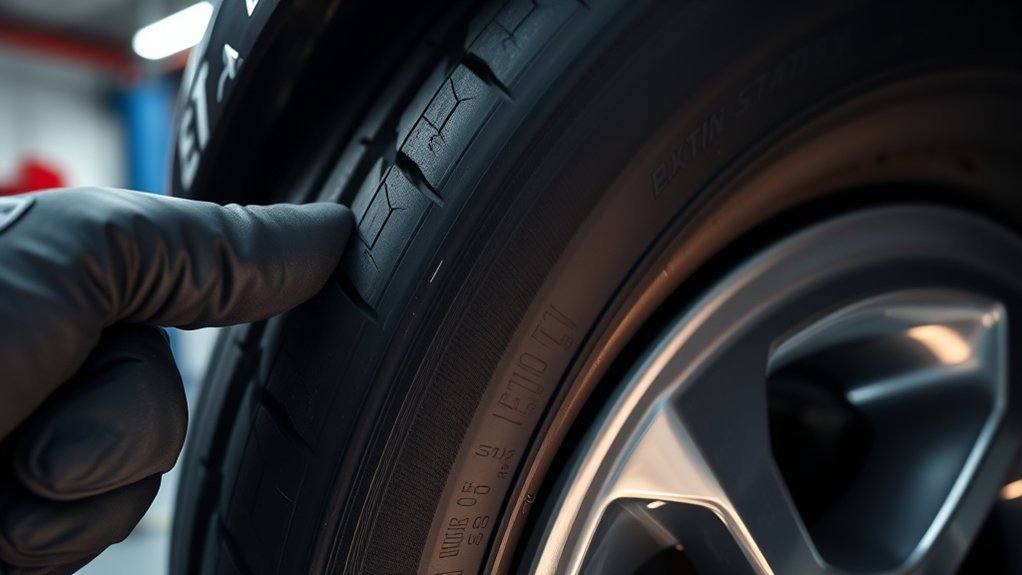
Load and speed ratings matter because they define part of the tire’s safe operating range. The load index tells you how much weight the tire can carry. The speed rating tells you the tire’s tested speed capability. Together, they help protect handling, braking, stability, heat resistance, and tire life.
- Load rating: Helps prevent overloading, heat buildup, and sidewall stress.
- Speed rating: Helps show how the tire handles heat and speed under rated conditions.
- Correct inflation: Supports load capacity, tread wear, fuel economy, and safety.
- Correct size: Protects steering response, braking, clearance, speedometer accuracy, and stability systems.
- Matching tires: Helps keep grip and handling balanced across the vehicle.
Ratings only work when the tire is used as designed. An underinflated 103V tire can overheat. A damaged 103V tire may not safely carry its rated load. A wrong-size 103V tire may not fit the wheel or vehicle properly.
How Does 103V Affect Tire Safety?
A 103V tire can be a safe choice when it matches your vehicle’s required size, load index, speed rating, tire type, and pressure. It gives you a specific load capacity of 1,929 pounds per tire and a speed rating of 149 mph under rated conditions.
It may be unsafe if any of these are true:
- Your tire placard requires a higher load index than 103.
- Your owner’s manual requires a higher speed rating than V.
- The tire size does not match the wheel or vehicle clearance.
- The tire is underinflated, overinflated, cracked, bulging, punctured, or unevenly worn.
- You are carrying heavy cargo, towing, or using the vehicle for commercial loads without checking axle and tire ratings.
- You mix 103V with lower-rated tires on the same axle or vehicle without approval.
For safety, check tire pressure at least monthly and when the tires are cold. NHTSA notes that proper tire pressure affects safety, durability, and fuel consumption, and the correct pressure is found on the Tire and Loading Information Label or in the owner’s manual.
Will 103V Fit Your Vehicle?
103V will fit your vehicle only if the full tire size and rating match what your vehicle requires. Do not judge by the 103V code alone. You must compare the full sidewall size, wheel diameter, load index, speed rating, and tire type against the vehicle placard or owner’s manual.
Use this checklist before buying 103V tires:
- Does the full tire size match the placard, such as 235/55R18?
- Does the load index meet or exceed the required load rating?
- Does the V speed rating meet or exceed the required speed rating?
- Does the tire match your wheel diameter and approved rim width?
- Does the tire type match your needs, such as all-season, summer, winter, touring, performance, or light-truck use?
- If the tire is XL or a different load range, does the installer confirm the correct pressure?
- Are all tires on the axle the same size, type, load index, and speed rating?
If the answer to any item is unclear, ask a qualified tire professional to confirm fitment. This matters most when changing tire size, switching to XL tires, towing, driving an EV, using winter tires, or replacing tires on a performance vehicle.
[Products Worth Considering]

The Topeak SmartGauge D2 delivers precise digital tire pressure readings for bikes, motorcycles, and sports equipment up to 250 psi (17 bar). Its rotating SmartHead works with both Presta and Schrader valves, so you can check pressure quickly without adapters. The LCD display makes it easy to read results in psi, bar, or kg/cm² with an included CR2032 battery for immediate use.

The 22800 wheel stud installer makes replacing wheel studs quick and secure, saving time and effort during tire service. It uses a ratchet or impact wrench to pull new studs firmly into place, helping when existing studs are too long. Compatible with most automotive wheels and light-duty truck wheel studs, it’s designed for easy, tool-assisted installation.

Measure tire tread depth quickly and accurately with this LUMITECO dial gauge that reads in 1/32" increments up to 14/32". The color-coded green/yellow/red zones make it easy to judge tire wear and know when replacement is needed. A rugged, compact design with a protective pouch helps keep the gauge ready for use on cars, trucks, motorcycles, and more.
Load Index vs. Load Range vs. Speed Rating
These tire terms are easy to mix up, but they do different jobs.
| Term | Example | Meaning |
|---|---|---|
| Load index | 103 | Maximum load capacity per tire at the correct inflation pressure |
| Speed rating | V | Maximum tested speed capability under rated conditions |
| XL / Extra Load | XL 103V | A tire built to carry more load at higher inflation than a standard-load tire of some sizes |
| Load range | C, D, E | Common on light-truck tires; relates to load-carrying construction and pressure capacity |
| UTQG | 500 A A | Treadwear, traction, and temperature grading; separate from 103V |
[Products Worth Considering]
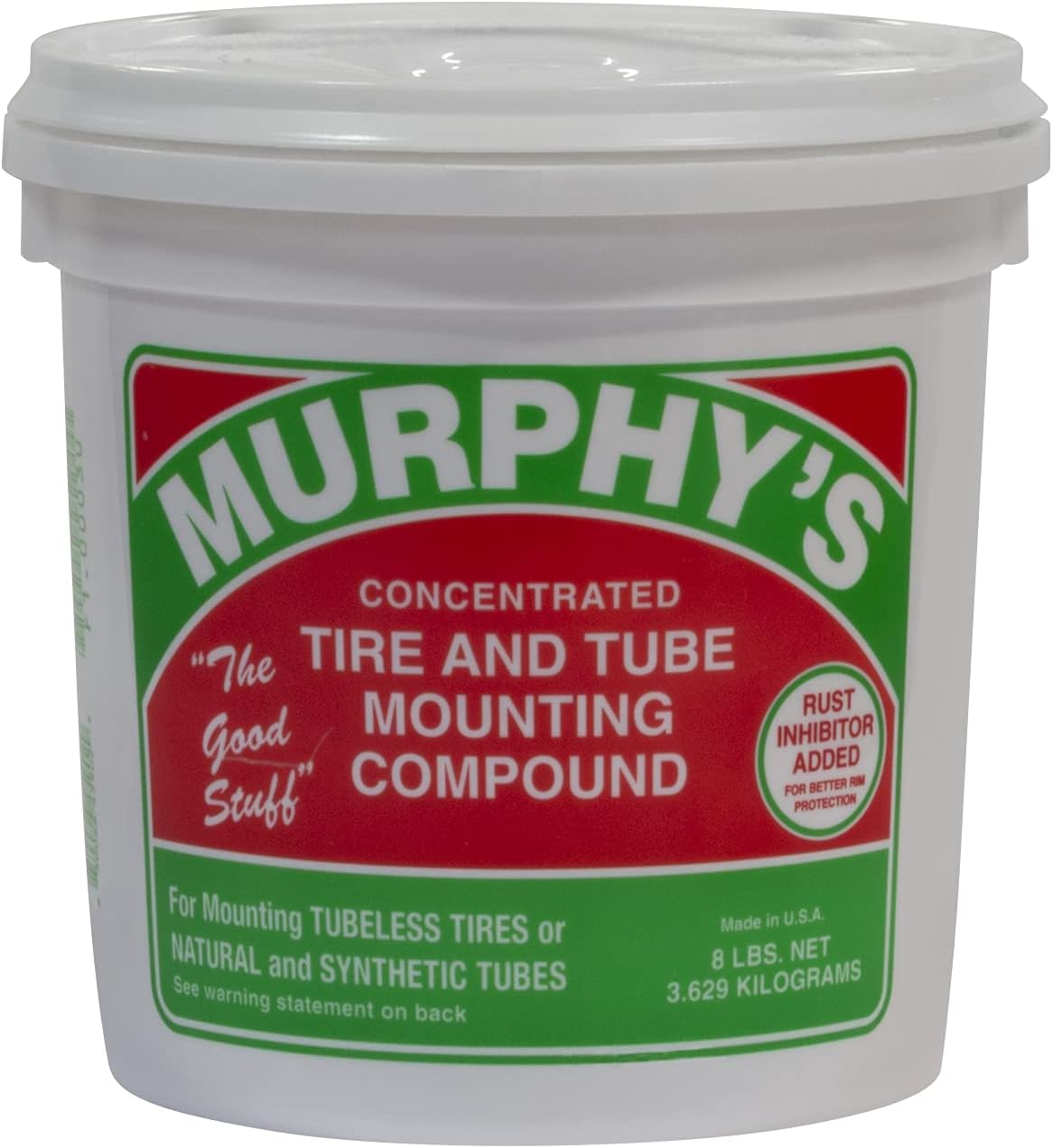
A concentrated tire and tube mounting compound designed to help simplify mounting rubber tires and tubes on passenger, semi truck, construction, and OTR applications. Its ultra-thick formula packs beads effectively and includes rust inhibitors to help protect against corrosion during use.

The Big Rig Defense Tire Thumper is a truck tire pressure checker that lets you quickly check multiple tires by giving them a firm whack. Listen for a reassuring thump and feel the stick bounce when a tire is fully inflated, helping you get back on the road safely. It features a comfortable, glove-friendly handle and a secure wrist strap for confident use on busy routes.

This manual duck head tire changer kit makes tire installation and removal simpler by letting you embed the duck head into the tire with applied pressure. The integrated design and durable steel construction help reduce friction and improve efficiency and safety during use. Suitable for 16–21 inch wheels, it’s convenient for cars, trucks, SUVs, and ATV tires, with 24-hour after-sales support.
Frequently Asked Questions
What is the difference between 103V and 107V tires?
The difference is load capacity. A 103V tire carries up to 1,929 pounds per tire, while a 107V tire carries up to 2,149 pounds per tire. Both have the same V speed rating, so both are rated up to 149 mph under rated conditions. Use the rating required by your vehicle, not just the higher number.
Is W or V better for tires?
W has a higher speed rating than V. V is rated up to 149 mph, while W is rated up to 168 mph. That does not automatically make W better for every driver. Choose the tire that matches your vehicle’s required size, load index, speed rating, climate, tread type, comfort needs, and budget.
What is the H or V rating on tires?
H and V are speed ratings. H is rated up to 130 mph, and V is rated up to 149 mph under rated conditions. These letters do not show load capacity by themselves. The load index number before the letter tells you the tire’s weight capacity.
What does the V stand for in tires?
V is a tire speed rating. It means the tire is rated for up to 149 mph or 240 km/h under controlled conditions. It does not mean “vehicle,” “van,” or “value,” and it does not tell you the tire’s load capacity. In 103V, the load capacity comes from 103.
Can I use 103V instead of 103H?
Often, yes, if the tire is the correct size and type for your vehicle. Both have the same 103 load index, but V has a higher speed rating than H. Still, check your owner’s manual, tire placard, and installer guidance because ride, tread life, winter use, and tire category can differ.
Can I use a lower load index than 103?
Do not use a lower load index unless your vehicle manufacturer or a qualified tire professional confirms it is safe for your exact vehicle and use. A lower load index can reduce load capacity, increase heat stress, and affect handling under passengers, cargo, towing, or hard braking.
Conclusion
103V on a tire means the tire has a 103 load index and a V speed rating. The 103 rating equals 1,929 pounds per tire when properly inflated. The V rating means the tire is rated for up to 149 mph under rated conditions.
Before you buy replacement tires, compare the full tire size and service description with your vehicle’s tire placard and owner’s manual. Match or exceed the required load index and speed rating, keep tire pressure correct, avoid mismatched tires, and ask a qualified tire professional when changing size, load range, or tire category.
Sources
- Tire Rack — What Is Load Index? — backs the 103 load index value of 1,929 lb / 875 kg and nearby load index comparisons.
- NHTSA TireWise — backs tire placard, owner’s manual, tire pressure, tire size, and tire maintenance guidance.
- 49 CFR 571.110 — Tire Selection and Rims — backs vehicle tire load-limit and placard requirements for many light vehicles.