
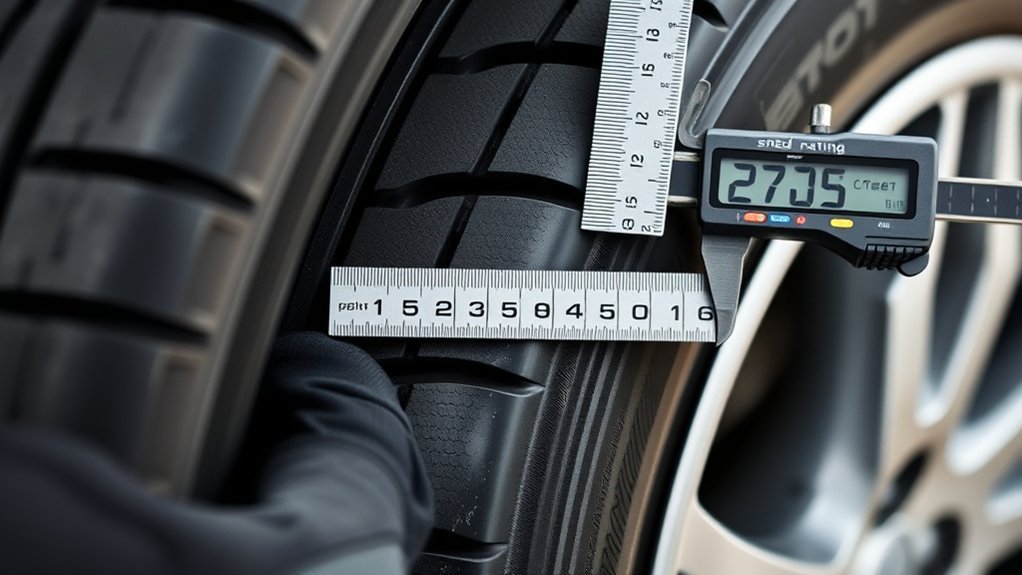
When you see 275 on a tire, it tells you the tire’s width, not its height, rim size, load capacity, or age. To choose the right tire, you need to read the whole sidewall code, including the aspect ratio, construction letter, rim diameter, load index, speed rating, and DOT date code.
Quick Answer
A 275 on a tire usually means the tire’s nominal section width is 275 millimeters, or about 10.8 inches. In a size such as 275/60R15, the 275 is only the width. The 60, R, 15, load index, speed rating, and DOT code tell you the rest.
Key Takeaways
- 275 means the tire’s nominal section width is 275 millimeters, measured sidewall to sidewall.
- A 275 tire is about 10.8 inches wide, but actual mounted width can vary by tire model and rim width.
- A size like 275/60R15 also includes sidewall ratio, radial construction, and rim diameter.
- Load index and speed rating are separate markings and must match your vehicle’s requirements.
- Use the vehicle placard, owner’s manual, and tire professional guidance before changing tire size.
At a Glance
| Time Required | 1 to 3 minutes to read the sidewall and check the vehicle label. |
| Difficulty | Easy, as long as the sidewall markings are clean and visible. |
| Tools Needed | Flashlight, tire pressure gauge, owner’s manual, and the Tire and Loading Information Label on the vehicle. |
| Cost | Free if you are only reading the tire code. A basic tire pressure gauge usually costs only a few dollars. |
What Does 275 Mean on a Tire?

The number 275 on a tire refers to the tire’s nominal section width in millimeters. Section width is the distance across the tire at its widest sidewall-to-sidewall point when the tire is mounted on an approved rim and inflated properly.
In simple terms, a 275 tire is about 10.8 inches wide. The math is straightforward:
275 mm ÷ 25.4 = about 10.8 inches.
That number does not tell you the tread width by itself. It also does not tell you total tire height. To understand height, rim fit, and driving behavior, you need the full tire size, such as 275/60R15, plus the load index and speed rating.
A wider 275 tire can add grip and a stronger stance when it is approved for your vehicle, but width alone is not a fitment guarantee. The full tire size, rim width, wheel offset, brake clearance, suspension clearance, and vehicle load requirements all matter. Learning the complete sidewall code also helps you compare tire performance features more accurately.
Warning: Do not install a 275 tire just because it looks close to your current size. Use the vehicle’s Tire and Loading Information Label, owner’s manual, approved rim width, load index, and speed rating before changing size.
How to Read a Tire Size Like 275/60R15
A tire size such as 275/60R15 has several parts. Each part tells you something different about the tire’s shape and fit.
| Marking | Meaning | What It Tells You |
|---|---|---|
| 275 | Section width | The tire is 275 millimeters wide, or about 10.8 inches. |
| 60 | Aspect ratio | The sidewall height is 60% of the tire width. |
| R | Construction | R means radial construction, the common design for modern passenger and light-truck tires. |
| 15 | Rim diameter | The tire fits a 15-inch wheel. |
| 113H | Service description | 113 is the load index and H is the speed rating. Your tire may show a different code. |
The second number is especially important. A 275/40R20 and a 275/70R18 both have a 275 mm section width, but they are very different in total diameter, sidewall height, and likely vehicle fit.
Pro Tip: The correct tire size is not the number printed on the tire alone. Check the Tire and Loading Information Label on the driver’s door edge or post, then compare it with your owner’s manual.
How to Convert a 275 Tire Size to Inches
To convert the tire width, divide the millimeter width by 25.4. For a 275 tire, that gives you about 10.8 inches.
| Calculation | Result |
|---|---|
| 275 ÷ 25.4 | About 10.8 inches wide |
| 275 × 0.60 | 165 mm sidewall height on a 275/60 tire |
| 15 + 2 × (165 ÷ 25.4) | About 28.0 inches total diameter for 275/60R15 |
Use this formula for a quick estimate:
Total tire diameter in inches = rim diameter + 2 × (section width × aspect ratio ÷ 25.4)
That formula gives you a useful comparison, but the exact mounted size can vary by brand, tread design, tire line, and measuring rim. For final fitment, check the tire maker’s specification sheet and the vehicle manufacturer’s approved size range.
Load Index and Speed Ratings
After the tire size, you may see a code such as 113H, 114T, or 115S. This is the service description. The number is the load index, and the letter is the speed rating.
The load index is not the same thing as the 275 width. A 275 tire can come with different load indexes depending on its construction, size, and intended vehicle. The speed rating is also separate. It tells you the maximum speed category the tire is designed to handle under specified conditions.
For safety, your replacement tires should match the size, load index, and speed rating recommended by the vehicle or tire manufacturer. The U.S. Tire Manufacturers Association warns that replacement tires should not be smaller or have less load-carrying capacity than originally specified.
Note: The maximum PSI printed on the tire sidewall is not your vehicle’s recommended tire pressure. Use the Tire and Loading Information Label or owner’s manual for the correct cold inflation pressure.
What Vehicles Fit 275 Tires?
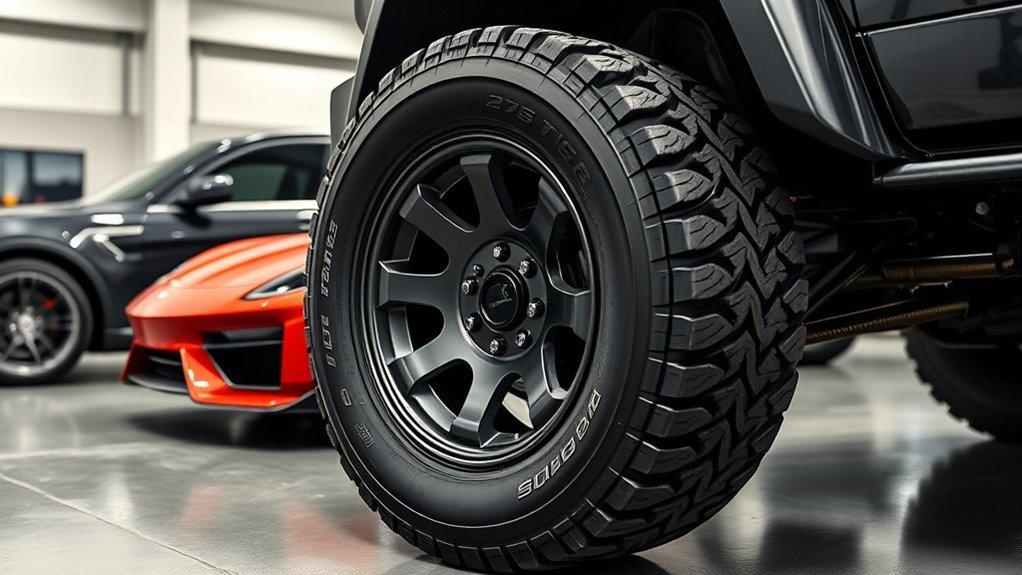
Many 275 tires are used on pickups, SUVs, muscle cars, performance sedans, and sports cars, but fitment depends on the full tire size and the vehicle’s wheel package. A truck with 275/65R18 tires and a sports car with 275/35R19 tires are using the same nominal width, but the tires are not interchangeable.
Before choosing a 275 tire, check these items:
- Factory tire size: Read the Tire and Loading Information Label and owner’s manual.
- Wheel diameter: The rim diameter in the tire code must match the wheel, such as 17, 18, 19, or 20 inches.
- Rim width: The wheel must fall within the tire maker’s approved rim width range.
- Load index: The tire must carry at least the load rating required for your vehicle.
- Speed rating: The rating should meet or exceed the vehicle manufacturer’s requirement.
- Clearance: Check fenders, suspension, brake components, mud flaps, and steering lock-to-lock movement.
- Offset and stance: Wheel offset can make a 275 tire rub even when the tire size seems close.
- Tire type: All-season, summer, all-terrain, and winter tires behave differently in traction, noise, wear, and comfort.
The right 275 tire can improve grip, stability, and road feel when it is designed for your vehicle. The wrong 275 tire can rub, overload the tire, affect speedometer accuracy, reduce fuel economy, or create unsafe handling. Compare the size with your approved tire list, then consider the tread life and traction you need for your driving conditions.
[Products Worth Considering]

Accurately measure tire tread depth with a calibrated gauge marked from 0 to 1 inch in 1/32 inch increments. The color-coded bar helps you quickly identify tread condition ranges, supporting safe driving for trucks, motorcycles, automobiles, and passenger vehicles.

Keep your tires properly inflated with this analog VONDIOR tire pressure gauge, designed for fast, easy readings without batteries. The swiveling, two-axis hose and large glow dial help you measure at any tire angle with instant visibility. Built with a protective rubber shield, it supports durable, low-maintenance use for cars and trucks.

ETENWOLF’s tire pressure gauge helps you quickly and accurately check tire PSI across cars, trucks, motorcycles, bikes, and more. It’s manually calibrated to ANSI B40.1 Grade A for reliable readings, includes a large glow dial for easy nighttime viewing, and features a 360-degree swivel chuck for use at any valve angle. The gauge also works consistently in extreme hot or cold weather.
275 vs 265 vs 285 Tires
If you are comparing nearby widths, the difference is measured in millimeters. A 265 tire is 10 mm narrower than a 275, and a 285 tire is 10 mm wider than a 275.
| Size Width | Approx. Inches | What It May Change |
|---|---|---|
| 265 mm | About 10.4 inches | Often easier to fit and may reduce weight or rolling resistance, depending on the tire. |
| 275 mm | About 10.8 inches | Common middle option for traction, stance, and stability when approved for the vehicle. |
| 285 mm | About 11.2 inches | May add footprint and stance, but needs more clearance and the right wheel width. |
Width is only one part of the choice. Aspect ratio, tread pattern, tire compound, load range, and tire category can matter even more. For example, all-season tire performance will not match a dedicated winter tire on snow or a summer tire in warm dry handling.
[Products Worth Considering]

Measure tire tread depth quickly and accurately with this LUMITECO dial gauge that reads in 1/32" increments up to 14/32". The color-coded green/yellow/red zones make it easy to judge tire wear and know when replacement is needed. A rugged, compact design with a protective pouch helps keep the gauge ready for use on cars, trucks, motorcycles, and more.

Monitor tire tread wear with a smart, color-coded depth gauge that shows clear condition ranges at a glance. The bar is range marked for fast, easy readings, helping you maintain safer traction and performance. Each gauge is portable with a pocket clip, and the set includes 20 units for daily use and sharing.

Milton S-921 pencil tire pressure gauge helps you maintain optimal tire pressure for passenger cars with accurate readings in PSI and kPa. It features a built-in deflator valve for convenient pressure adjustments, plus a single chuck head and nylon indicator bar for easy use on the go. Built from durable plated brass and designed for reliable performance, it’s a practical road trip and cold-weather maintenance tool.
How to Read the DOT Code
The DOT Tire Identification Number, often called the DOT code or TIN, helps identify the tire and its manufacture date. The last four digits show the week and year the tire was made. For example, a code ending in 4811 means the tire was made in the 48th week of 2011.
Look on both sidewalls, because the full TIN may not appear on both sides of the tire. This matters when you are buying used tires, checking a spare, or inspecting a low-mileage vehicle.
Tire age is a safety issue because rubber and internal materials change over time. The National Highway Traffic Safety Administration says tire aging can increase crash risk and cannot be detected simply by looking at the tire. Some vehicle and tire manufacturers recommend replacing tires that are six to 10 years old, regardless of treadwear.
DOT age is only one check. You should also inspect tread depth, cracks, bulges, cuts, uneven wear, vibration, air loss, and correct tire pressure.
Quick Safety Check Before Buying 275 Tires
Use this quick checklist before buying or installing a 275 tire:
- Find the recommended size on the vehicle’s Tire and Loading Information Label.
- Confirm the full size, not just the 275 width.
- Match or exceed the recommended load index and speed rating.
- Confirm the tire fits your wheel diameter and approved rim width range.
- Check clearance at full steering lock and through suspension movement.
- Use the vehicle manufacturer’s cold inflation pressure, not the tire’s maximum sidewall PSI.
- Check the DOT date code, especially on used, spare, or discounted tires.
- Ask a tire professional if you are changing width, aspect ratio, wheel offset, or load range.
These steps give you a safer way to apply tire selection criteria instead of choosing by width alone.
[Products Worth Considering]

The SAFELIFE dial tire tread depth gauge measures tread depth in 1/32 inch increments with clear, easy-to-read 2-inch dial face. Color zones using a traffic light system help you quickly judge whether tread is low, marginal, or ample for safer driving. Built with a durable zinc cast body and a metal detect probe for precise, comfortable use across cars, motorcycles, trucks, and buses.

This professional wheel and rim cleaning brush set lifts brake dust, grime, and dirt with soft, scratch-free microfiber and synthetic wool fibers. The rim brush bends up to 360 degrees for easy access to hard-to-reach areas around spokes, lips, and faces. Ideal for thorough cleaning of car, truck, motorcycle, bicycle, RV, and more wheel and tire surfaces.

ETENWOLF’s calibrated tire pressure gauge delivers accurate readings for cars, trucks, motorcycles, bikes, SUVs, RVs, and ATVs across a 0–75 PSI range. The large glow dial improves visibility in low light, while the 360° swivel chuck makes it easy to check valve pressure from any angle. It’s designed to stay accurate even in extreme hot or cold weather.
Frequently Asked Questions
Which is wider, 285 or 275?
A 285 tire is wider than a 275 tire by 10 millimeters, or about 0.39 inches. That extra width can change clearance, steering feel, rolling resistance, and traction. Before switching from 275 to 285, check rim width, offset, suspension clearance, load index, speed rating, and the vehicle manufacturer’s recommendations.
Is a 275 tire equal to a 33-inch tire?
Not always. The 275 only tells you width. Total diameter depends on aspect ratio and rim diameter. For example, a 275/70R18 is about 33.2 inches by formula, while a 275/60R15 is about 28.0 inches. Always check the manufacturer’s actual tire specs before assuming it is a 33-inch tire.
Is a 265 or 275 tire better?
Neither is automatically better. A 275 tire is wider and may offer more grip or a stronger stance when properly fitted. A 265 tire may be easier to fit, lighter, and more efficient depending on the tire model. Choose the size your vehicle approves, then compare load index, speed rating, tread type, and driving conditions.
What does a 275 tire equal in inches?
A 275 tire is about 10.8 inches wide because 275 divided by 25.4 equals 10.83. That is the section width, not the total tire height. To estimate total diameter, you also need the aspect ratio and rim diameter.
Where do I find the correct tire size for my vehicle?
Check the Tire and Loading Information Label on the driver’s door edge or door post, then confirm it in the owner’s manual. If you are changing from the factory size, ask a tire professional to verify wheel width, clearance, load index, speed rating, and pressure requirements.
Conclusion
A 275 on a tire means the tire is about 275 millimeters wide, or roughly 10.8 inches. It is only one part of the sidewall code. To make a safe choice, read the full size, confirm the aspect ratio and rim diameter, match the load index and speed rating, and check the DOT date code. When in doubt, use the vehicle placard, owner’s manual, and a qualified tire professional before changing tire size.
Sources
- NHTSA TireWise – tire size, pressure, tread, aging, DOT/TIN, and safety guidance.
- NHTSA Tire Buyers’ FAQ – correct tire size source and DOT/TIN date-code basics.
- NHTSA Congratulations on Your New Tire Purchase – manufacture date, tire pressure, rotation, tread checks, and recall alerts.
- USTMA Replacing Tires – matching size, load index, speed rating, and replacement safety requirements.
- USTMA Tire Care Essentials – pressure, tread, rotation, alignment, and monthly inspection guidance.
- NHTSA Consumer Guide to Uniform Tire Quality Grading – official DOT tire rating resource.

