
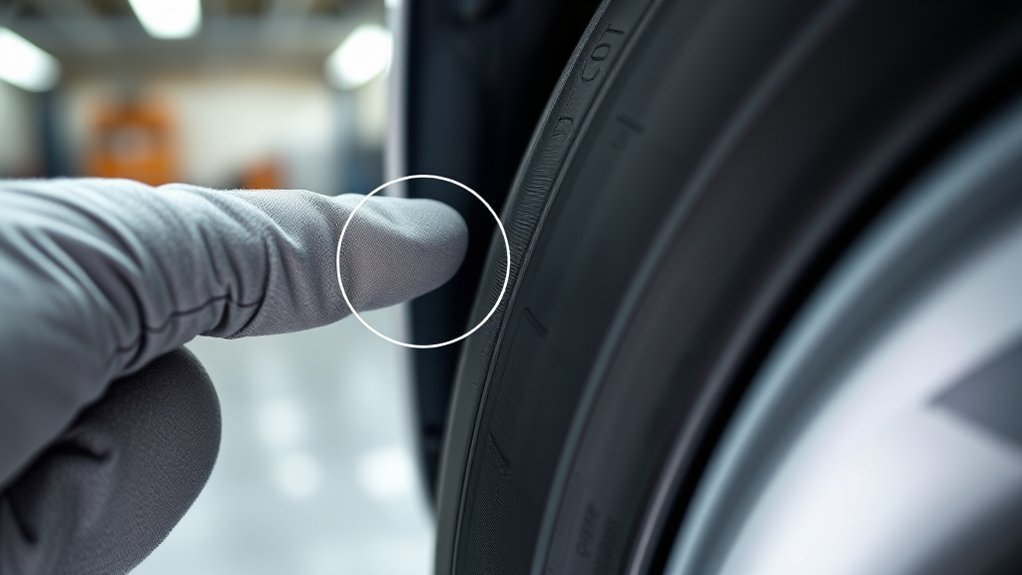
You can find a tire’s manufacture year by reading the DOT Tire Identification Number, often shortened to DOT code or TIN, molded into the tire sidewall. The key is the date code at the end of the full DOT/TIN. For most tires made in 2000 or later, the last four digits show the production week and year.
Quick Answer
Look for the full DOT code on the tire sidewall, then read the last four digits. The first two digits are the manufacture week, and the last two digits are the year. For example, 2319 means the tire was made in the 23rd week of 2019.
Key Takeaways
- The tire manufacture year is usually shown by the last two digits of the DOT/TIN date code.
- A modern four-digit code uses the format WWYY: week first, year second.
- The full DOT/TIN may be on only one sidewall, so check both sides of the tire.
- A three-digit date code means the tire was made before 2000 and is too old for normal road use today.
- Age is only one safety factor; also check tread depth, cracks, bulges, damage, pressure, recalls, and the vehicle or tire maker’s replacement guidance.
At a Glance
| Time Required | 2–5 minutes per tire |
| Difficulty | Easy |
| Tools Needed | Flashlight, phone camera, cloth to wipe the sidewall, and tire gauge for a safety check |
| Cost | Free |
What Is a Tire DOT Code?
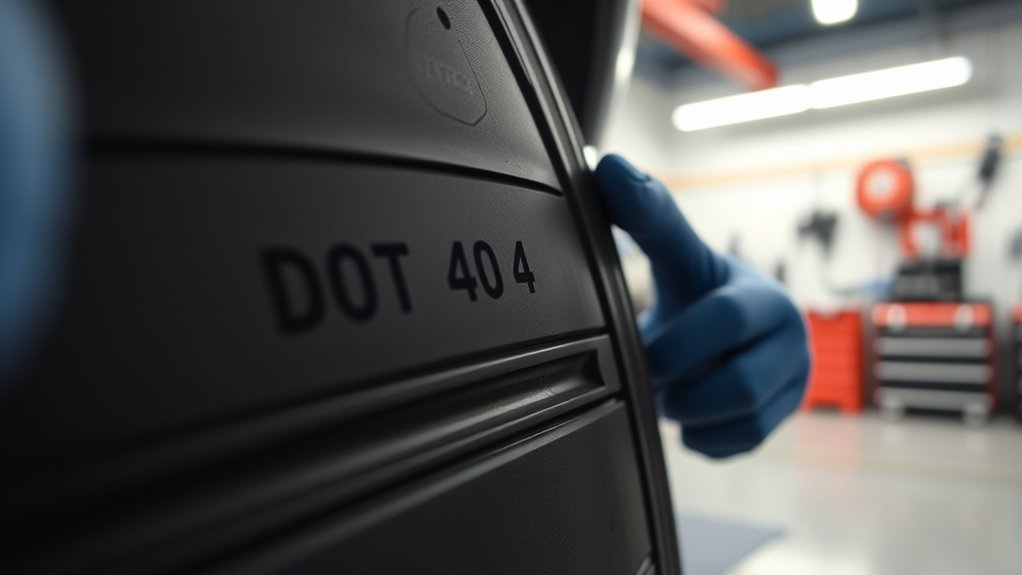
A tire DOT code is the sidewall marking used to identify a tire for safety, registration, and recall purposes. In U.S. rules, this marking is called the Tire Identification Number, or TIN. It can include information about the manufacturer, plant, tire size or other identifying details, and the date code.
For a driver checking tire age, the most important part is the date code at the end of the full DOT/TIN. For tires made in 2000 or later, that date code has four numbers. The first two numbers show the week of manufacture, and the last two numbers show the year.
Note: The letters “DOT” are a helpful starting point, but you need the full code to confirm the date. Some tires show a partial code on one side and the complete code on the other.
Where to Find the DOT Code
Look on the tire sidewall near the rim. The code usually begins with the letters DOT, followed by a mix of letters and numbers. The complete DOT/TIN may be on the outer sidewall, the inner sidewall, or only one side of the tire.
DOT Code Location
- Park safely and make sure the tire is cool enough to touch.
- Use a flashlight and look near the bead area where the tire meets the wheel.
- Find the letters DOT.
- Follow the code to the final group of numbers.
- If you do not see a four-digit date code, check the opposite sidewall.
- Repeat this for every tire, including the spare.
Pro Tip: If the code is on the inner sidewall, use your phone camera with flash to take a photo from behind the wheel. Zoom in on the photo instead of trying to read the code while crouched beside the car.
Sidewall Markings
The DOT/TIN sits among other sidewall markings, so do not confuse the tire size or speed rating with the date code. The tire date code is the final numeric date group in the full DOT/TIN.
| Marking | What It Means | What To Do |
|---|---|---|
| DOT | Start of the Department of Transportation marking | Use it as your starting point |
| Letters and numbers after DOT | Plant, size, manufacturer, or optional identifying details | Keep these if checking a recall |
| Last four digits | Manufacture week and year for tires made in 2000 or later | Decode as WWYY |
| Example: 2319 | 23rd week of 2019 | Treat 2019 as the manufacture year |
How to Read the Tire Date Code
To read the tire date code, use the final four digits of the full DOT/TIN. The format is simple:
- First two digits: week of manufacture
- Last two digits: year of manufacture
For example, a code ending in 2319 means the tire was manufactured in the 23rd week of 2019. A code ending in 0924 means the tire was manufactured in the 9th week of 2024. NHTSA explains that the final two digits identify the year, and the two digits before them identify the week within that year.
| Date Code | Week | Year | Meaning |
|---|---|---|---|
| 0619 | 06 | 2019 | Made in the 6th week of 2019 |
| 2319 | 23 | 2019 | Made in the 23rd week of 2019 |
| 4123 | 41 | 2023 | Made in the 41st week of 2023 |
| 0924 | 09 | 2024 | Made in the 9th week of 2024 |
DOT Code Formats Explained
DOT/TIN formats can vary by tire age, tire type, and regulatory timing, so do not rely only on the total number of characters you see. For age checking, the date code is what matters most.
For tires made in 2000 or later, look for the final four-number date code. On older tires made before 2000, the date code may have only three numbers. Those older three-digit codes are no longer useful for safe road service because any tire carrying one is now decades old.
Warning: Do not judge a tire by tread alone. A tire can have deep tread and still be unsafe because of age, cracking, impact damage, internal damage, poor storage, heat exposure, or a recall.
How to Read Pre-2000 DOT Codes?

Pre-2000 tire date codes used three digits instead of four. The first two digits showed the week, and the last digit showed the final digit of the year. That sounds simple, but the decade can be unclear. For example, a code ending in 439 could point to a 43rd week in a year ending in 9, but the code alone may not clearly prove the decade.
In practical safety terms, you do not need to solve the decade. If a tire has a three-digit date code, it was made before 2000. That makes it far beyond normal service age today, even if it has never been used.
Warning: A tire with a three-digit date code should not be used for normal driving. Replace it and inspect the other tires, including the spare.
Why Tire Age Affects Safety
Tires are made from rubber compounds and reinforcing materials that change over time. Heat, sunlight, oxygen, ozone, road use, underinflation, overloading, and storage conditions can all speed up aging. An older tire may lose flexibility, develop sidewall cracks, or become more vulnerable to separation and failure.
Tread depth still matters, but it is not the whole safety picture. When checking tire age, also inspect for:
- Cracks in the sidewall or between tread blocks
- Bulges, bubbles, cuts, exposed cords, or punctures
- Uneven tread wear
- Vibration, pulling, or new road noise
- Low tread depth
- Low pressure or repeated pressure loss
- Recall notices that match your tire model and DOT/TIN range
The DOT date code tells you when a tire was made, but the safest decision comes from checking age, condition, pressure, tread depth, recall status, and the manufacturer’s guidance together.
How Old Is Too Old for a Tire?
There is no single age that makes every tire fail on the same day. Tire service life depends on the tire, the vehicle, climate, storage, use, maintenance, and manufacturer guidance. NHTSA tells tire buyers that service-life recommendations vary by vehicle and tire manufacturer, so your owner’s manual and tire maker’s guidance matter.
Use this practical age guide:
| Tire Age | What It Means | What To Do |
|---|---|---|
| 0–4 years | Age alone is usually not the main concern if the tire is maintained and undamaged. | Check pressure monthly and inspect tread and sidewalls regularly. |
| 5+ years | Some manufacturers recommend closer inspections as tires age. | Have a tire professional inspect the tire if you see cracks, damage, or unusual wear. |
| 6–10 years | Many drivers begin replacement planning in this range, especially in hot climates or with hard use. | Follow the vehicle and tire maker’s service-life guidance. Replace sooner if damage appears. |
| 10+ years | Several tire manufacturers recommend removing tires from service around this point, including spares. | Replace the tire unless the tire maker gives different written guidance for your specific tire. |
Bridgestone, for example, recommends taking tires manufactured 10 years prior or longer out of service and replacing them, even if they appear new. Always follow your own tire brand, vehicle owner’s manual, and a qualified tire professional’s inspection.
Products Worth Considering

The Tymate TM12 RV TPMS delivers real-time tire pressure and temperature monitoring with a stable 433Hz display for safer long-distance driving. It supports simultaneous monitoring across vehicle and trailer zones, includes six alarm modes for pressure, temperature, leakage, battery, and signal loss, and features easy DIY installation with auto calibration. Power is supplied via USB-C charging or solar recharging, with a wide 0–144 PSI range and up to 50 ft signal coverage for RVs and towable trailers.

The SAFELIFE dial tire tread depth gauge measures tread depth in 1/32 inch increments with clear, easy-to-read 2-inch dial face. Color zones using a traffic light system help you quickly judge whether tread is low, marginal, or ample for safer driving. Built with a durable zinc cast body and a metal detect probe for precise, comfortable use across cars, motorcycles, trucks, and buses.

Measure tire tread depth quickly and accurately with this LUMITECO dial gauge that reads in 1/32" increments up to 14/32". The color-coded green/yellow/red zones make it easy to judge tire wear and know when replacement is needed. A rugged, compact design with a protective pouch helps keep the gauge ready for use on cars, trucks, motorcycles, and more.
How to Check Tire Recalls by DOT Code
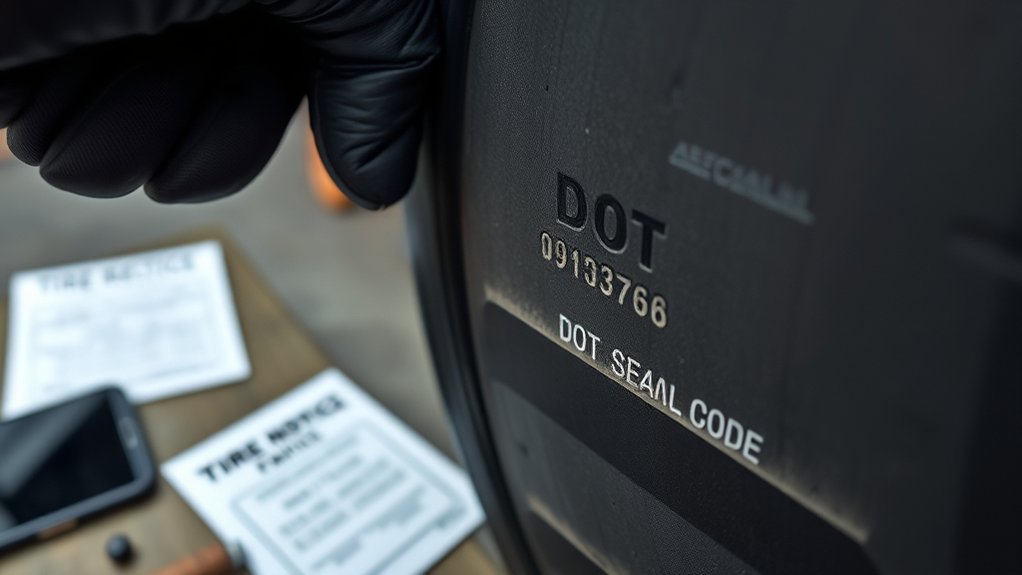
The DOT/TIN helps identify whether a tire may be included in a recall. To check, you need more than the last four date digits. Record the full DOT/TIN, tire brand, tire line or model, tire size, and date code from each tire.
- Find the full DOT/TIN on each tire, not just one tire.
- Write down the tire brand, model name, size, and final four-digit date code.
- Search the NHTSA recalls database under the tire search option.
- Compare your full tire information with the recall notice, including production date range and tire size.
- If your tire may match, contact the tire manufacturer, retailer, or dealer before continuing normal use.
- Register new tires with the manufacturer so you can receive recall notices directly.
Note: Tire recalls can apply to specific models, sizes, plants, and production weeks. The final four digits help with the date range, but the full DOT/TIN is safer for recall matching.
Products Worth Considering

Monitor tire tread wear with a smart, color-coded depth gauge that shows clear condition ranges at a glance. The bar is range marked for fast, easy readings, helping you maintain safer traction and performance. Each gauge is portable with a pocket clip, and the set includes 20 units for daily use and sharing.

Accurately measure tire tread depth with a calibrated gauge marked from 0 to 1 inch in 1/32 inch increments. The color-coded bar helps you quickly identify tread condition ranges, supporting safe driving for trucks, motorcycles, automobiles, and passenger vehicles.

This tire inflator with pressure gauge delivers long-lasting performance with a durable rubber-protected gauge and sturdy build. The longer hose and 360 swivel air chuck help you seal the valve securely and keep your hands free while measuring, inflating, or deflating. It’s battery-free for reliable use and provides ±2 PSI accuracy in the mid-range for most typical tires, with universal compatibility for 1/4 NPT compressor outputs.
What if the DOT Code Is Missing, Hidden, or Hard To Read?
If you cannot find the date code, do not assume the tire is new. Try these checks:
- Check the other sidewall: the full code may face inward.
- Clean the sidewall: dirt, tire shine, and road grime can hide raised letters.
- Use a camera: take a flash photo and zoom in.
- Check the spare: spares often age unnoticed because they are rarely used.
- Ask a tire shop: if the code is damaged, missing, or unreadable, get a professional inspection.
If a tire has no readable date code and you cannot verify its age, treat that as a safety concern. This is especially important when buying a used car, used tire, trailer tire, or spare tire.
Products Worth Considering

Measure tyre tread depth precisely with a digital gauge that reads in both MM and inches, helping you monitor safe driving conditions. The large LCD screen is easy to operate, and the compact tool fits for cars, trucks, and motorcycles. It provides high accuracy with a 0-25.4mm range and includes a 1-year warranty for added peace of mind.

Mount your spare tire directly to the inside wall of an enclosed trailer or garage to save space and keep your tire secure. This wall-mount spare tire carrier is designed for universal trailer tire fit and includes a fixed plate and chute for convenient screw replacement. Nylon insert hex lock nuts help prevent the tire from falling off, and wing hardware enables faster load and unload during maintenance.

Malco tire mounting and demounting lubricant is a ready-to-use tire lube formulated to reduce friction during tire installation for passenger cars, light trucks, farm tires, and heavy-duty equipment. It provides rust-inhibiting protection to help reduce corrosion on rims and wheels, and helps support proper tire bead seating during inflation to reduce air leakage. The silicone-free, soap-free formula is whitewall safe to help prevent discoloration on whitewall tires and sensitive sidewall markings.
Common Mistakes When Checking Tire Age
- Reading the tire size instead of the date code: a marking like P225/65R17 is the size, not the manufacture date.
- Checking only one tire: tires on the same vehicle may have different manufacture dates.
- Ignoring the spare: NHTSA notes that spare tires are prone to aging because they are seldom replaced.
- Assuming good tread means safe: age and damage can matter even when tread looks deep.
- Using only the last four digits for recalls: recall matching may require the full DOT/TIN, size, brand, and model.
- Buying used tires without checking age: a used tire can look clean but still be old, damaged, or recalled.
Frequently Asked Questions
Does the DOT code tell me the tire’s age?
Yes. For most tires made in 2000 or later, the last four digits of the full DOT/TIN tell you the tire’s manufacture week and year. A code ending in 2319 means the tire was made in the 23rd week of 2019.
How do I read the DOT manufacture date on tires?
Find the full DOT/TIN on the tire sidewall and read the final four numbers as WWYY. The first two numbers are the week, and the last two numbers are the year. For example, 0924 means the tire was made in the 9th week of 2024.
How old are my tires by DOT number?
Use the year from the last two digits, then compare it with the current year. For a more accurate estimate, also use the week number. A tire ending in 2319 was made in the 23rd week of 2019, so it became about seven years old around the 23rd week of 2026.
What if my tire doesn’t have a date code?
Check the opposite sidewall first because the complete DOT/TIN may be on only one side. If the date code is still missing, damaged, or unreadable, have the tire inspected by a qualified tire professional and avoid relying on it until its age and condition are verified.
Is a 10-year-old tire illegal?
A 10-year age mark is usually a manufacturer safety recommendation, not a simple universal law for every tire in every situation. Many manufacturers recommend replacing tires around 10 years from manufacture, including spares, even if tread remains. Always follow your tire maker, vehicle owner’s manual, and local requirements.
Should I check the spare tire’s DOT code?
Yes. Spare tires can age even when they are rarely used. Check the spare’s DOT date code, pressure, sidewall condition, and any use limits printed on the tire or listed in the owner’s manual.
Can I check tire recalls with the DOT code?
Yes, but use the full DOT/TIN, not just the final four digits. Tire recalls may apply only to specific brands, models, sizes, plants, and production weeks. Search NHTSA’s recall database and compare your tire details with the recall notice.
Conclusion
You can find a tire’s manufacture year by checking the full DOT/TIN on the sidewall and reading the last four digits. The first two digits show the production week, and the last two show the production year. That small code helps you estimate tire age, avoid old used tires, check recalls, and make safer replacement decisions.
Do not stop at the date code alone. Inspect the tread and sidewalls, check pressure monthly, look for recalls, and follow your vehicle and tire manufacturer’s service-life guidance. When age or condition is uncertain, have the tire checked by a qualified tire professional before you drive on it.
Sources
- NHTSA interpretation: tire date code week and year — supports the WWYY explanation for the final four digits.
- NHTSA interpretation: Tire Identification Number purpose — supports TIN use for identification and recall traceability.
- NHTSA TireWise new tire purchase letter — supports service-life variation, monthly pressure checks, and tire registration.
- NHTSA recalls database — supports tire recall search and recall-check guidance.
- NHTSA TireWise tire safety page — supports spare tire aging and general tire safety guidance.
- Bridgestone tire replacement guidance — supports inspection after several years and replacement guidance around 10 years.