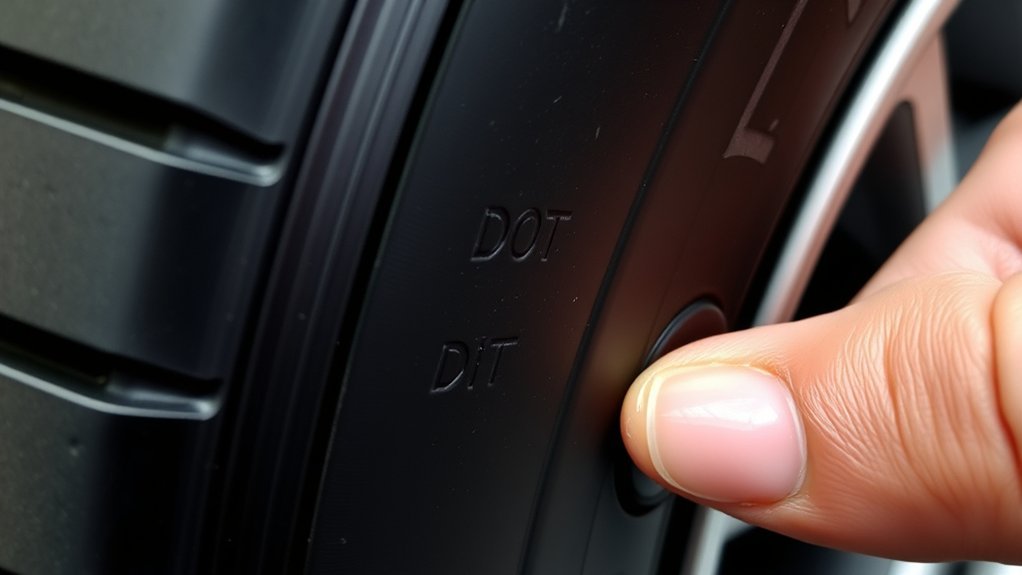
You can tell the year of a tire by reading the DOT Tire Identification Number on the sidewall. On tires made in 2000 or later, the date code is the final four digits of the full DOT/TIN marking. The first two digits show the production week, and the last two digits show the year. For example, 2519 means the tire was made in the 25th week of 2019.
Quick Answer
Look for the DOT code on the tire sidewall, then read the final four digits of the full Tire Identification Number. The first two digits show the production week, and the last two digits show the year. A code ending in 2519 means week 25 of 2019.
Key Takeaways
- The tire’s manufacturing year is in the final four digits of the DOT/TIN date code on tires made in 2000 or later.
- The first two digits show the production week, and the last two digits show the year.
- The complete DOT/TIN may appear on only one sidewall, so check both sides if you cannot find the date code.
- If you find only a three-digit date code, treat the tire as too old for normal road use.
- Tire age does not replace a safety inspection. Cracks, bulges, exposed cords, vibration, or pressure loss mean the tire needs professional attention.
At a Glance
| Time Required | 2 to 5 minutes per tire |
| Difficulty | Easy |
| Tools Needed | Flashlight, clean cloth, and tire-pressure gauge if you are also checking tire condition |
| Cost | Free if you inspect the sidewall yourself |
What the DOT Tire Code Means
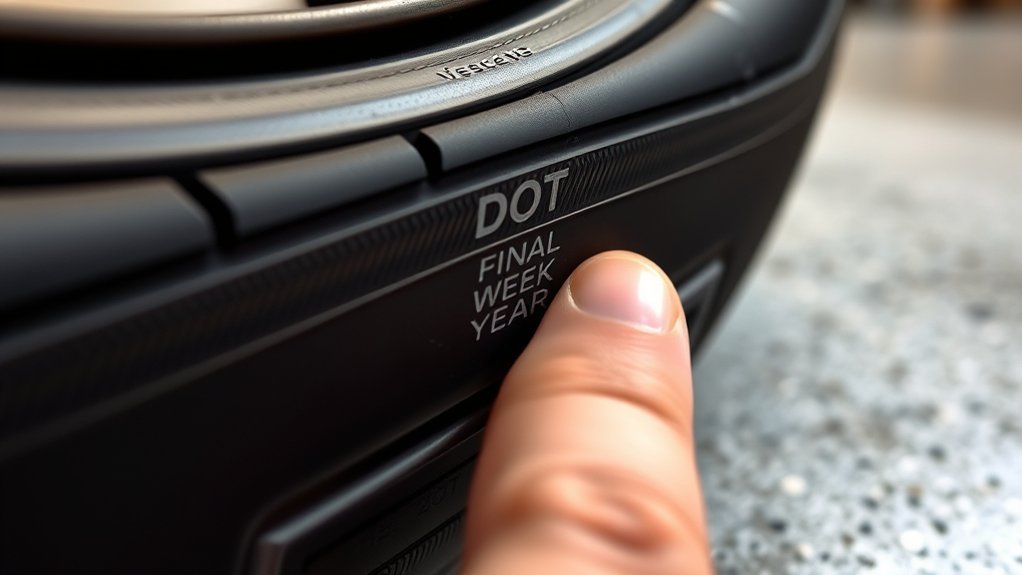
The DOT code, also called the Tire Identification Number or TIN, is a sidewall marking used to identify the tire. Under 49 CFR Part 574, the date code is the final group of the TIN and uses four numerical symbols to identify the week and year of manufacture.
For tires made in 2000 or later, the date code works like this:
- First two digits: week of the year
- Last two digits: last two digits of the manufacturing year
- Example: 2519 means the tire was made in week 25 of 2019
This code matters because tire age affects safety checks, recall tracking, and replacement decisions. The U.S. Tire Manufacturers Association says tire registration uses the DOT TIN so manufacturers can contact owners if a recall affects their tires.
How to Decode the Full DOT/TIN
The date code is only one part of the full DOT/TIN. You do not need to decode every symbol to find the tire’s age, but knowing the structure helps you avoid reading the wrong sidewall marking.
| Marking Part | What It Tells You |
| DOT | Shows the tire was marked under U.S. Department of Transportation requirements. |
| Plant code | Identifies the tire manufacturer or retreader plant. |
| Manufacturer or descriptive code | May identify tire size, brand owner, or other manufacturer information. |
| Final four digits | The date code. These digits show the week and year the tire was made. |
For age checks, skip tire size markings such as 225/65R17, load index numbers, speed ratings, UTQG grades, and maximum pressure text. Those markings do not tell you the manufacturing year.
Where to Find the Tire Date Code
Start on the tire sidewall and look for the letters DOT. The full code may sit in a long oval or raised sidewall marking. On many tires, the complete TIN appears on only one sidewall, while the opposite side may show a shorter partial code.
If you cannot find the final four digits, check the other side of the tire. On a tire mounted on your vehicle, the full code may face inward. Use a flashlight, clean dirt from the sidewall with a cloth, and rotate the tire if it is off the vehicle.
Pro Tip: Check all four tires and the spare. Tires on the same vehicle may have different manufacturing dates, especially if one tire was replaced after a puncture, road damage, or uneven wear.
How to Read a Tire Date Code
To read a tire date code, focus on the final four digits of the full DOT/TIN marking. Break those four digits into two pairs. The first pair gives the production week, and the second pair gives the manufacturing year.
| Date Code | How to Read It |
| 2519 | 25th week of 2019 |
| 5107 | 51st week of 2007 |
| 0308 | 3rd week of 2008 |
| 0109 | 1st full calendar week of 2009 |
| 4722 | 47th week of 2022 |
A valid modern tire date code uses a real week number, usually 01 through 52 or 53 depending on the calendar year. A code that appears to show week 00 or week 99 is not a valid manufacturing week, so recheck the marking or ask a tire professional to inspect it.
Warning: The DOT date tells you when the tire was made, not whether it is safe today. Replace or professionally inspect any tire with cracks, bulges, exposed cords, vibration, repeated pressure loss, puncture damage, or unknown service history.
How to Estimate Tire Age After You Read the Code
After you decode the week and year, compare that date with the current date. A tire marked 2519 was made around the middle of 2019. A tire marked 4722 was made near the end of 2022. You do not need the exact day for a normal age check because the DOT code gives you the manufacturing week and year.
Use tire age as one part of your decision. A newer tire can still be unsafe if it has impact damage, puncture damage, sidewall cracks, uneven wear, or a history of underinflation. An older tire may look clean but still need replacement because tire aging can affect the rubber and internal materials.
Tires Made Since 2000
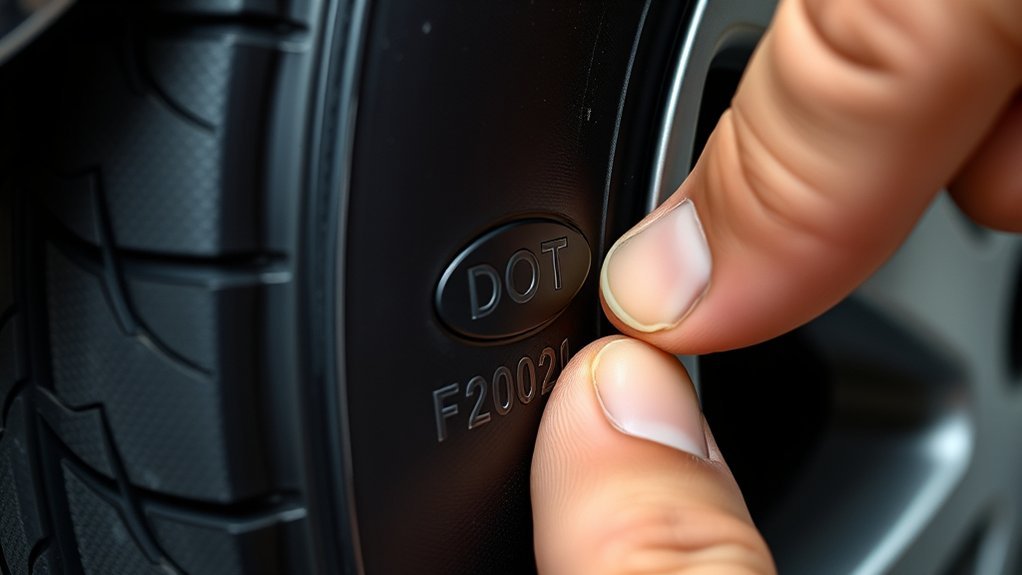
Most tires you inspect today should have a four-digit DOT date code. This format makes the manufacturing year easy to confirm. Once you find the full DOT/TIN marking, read the final four digits from left to right.
Locate the Date Code
Look after the DOT marking and follow the full Tire Identification Number to the end. The date code is the final four-number group. If you see a partial DOT code with no date at the end, look on the other sidewall.
Read Week and Year
Break the four digits into two pairs. The first pair is the week. The second pair is the year. For example, 4722 means the tire was made in the 47th week of 2022. You do not need to calculate the exact calendar day for most safety checks; the week and year are enough to estimate age.
Understand Sidewall Placement
The complete TIN may not appear on both sides of the tire. If the date code faces inward, you may need to inspect from under the vehicle, turn the steering wheel for better access, or ask a tire shop to check it during service.
Tires Made Before 2000
Some older tires made before 2000 used a three-digit date code. The first two digits show the production week, and the final digit shows a year-ending number. For example, 408 means week 40 of a year ending in 8. It does not reliably prove the full decade by itself.
If you find only a three-digit date code on a tire, treat the tire as too old for normal driving. Even if the tread looks deep, a pre-2000 tire has aged far beyond a reasonable service window for regular road use.
Pre-2000 Date Codes
A pre-2000 code gives less detail than a modern four-digit code. It may also be harder to read because older rubber can be cracked, dirty, faded, or worn. Do not rely on a three-digit date code to make a tire seem safe.
Week and Year Format
| Older Code | Meaning |
| 408 | Week 40 of a year ending in 8 |
| 219 | Week 21 of a year ending in 9 |
| 051 | Week 05 of a year ending in 1 |
Decade Identification Limits
A three-digit code does not give the same certainty as a modern four-digit date code. Some older tires used extra marks to help identify the decade, but you should not depend on that for safety. If the tire has only a three-digit date code, replace it instead of trying to keep it in service.
Why Tire Age Matters
Tire age matters because rubber and internal materials change over time. Heat, sunlight, storage conditions, low use, poor maintenance, and climate can all affect aging. The National Highway Traffic Safety Administration warns that you cannot detect tire aging simply by looking at a tire.
That is why the DOT date code is useful. It gives you a starting point for judging age, but you still need to check tread depth, air pressure, sidewall condition, and driving behavior. A tire can be too old even if the tread still looks usable.
NHTSA reported 511 traffic fatalities in tire-related crashes in 2024. Tire age, inflation, tread depth, and visible damage all deserve regular attention.
When to Replace Old Tires
Replace a tire immediately if you see sidewall cracks, bulges, exposed cords, tread separation, deep cuts, or repeated pressure loss. You should also replace a tire if a tire professional says the casing is unsafe, even when the tread still looks acceptable.
For age alone, follow your vehicle owner’s manual and tire manufacturer guidance. NHTSA says some vehicle and tire manufacturers recommend replacing tires that are six to 10 years old, regardless of treadwear. If a tire is more than 10 years from its manufacturing date, you should treat it as a strong replacement candidate unless the tire maker gives different guidance for that specific tire and use case.
Do not forget the spare. Spare tires age even when they rarely touch the road. A full-size spare should not become a long-term replacement for worn tires, and a compact spare should be used only as your vehicle manual allows.
[Products Worth Considering]

Accurately measure tire tread depth with a calibrated gauge marked from 0 to 1 inch in 1/32 inch increments. The color-coded bar helps you quickly identify tread condition ranges, supporting safe driving for trucks, motorcycles, automobiles, and passenger vehicles.

Measure tire tread depth quickly and accurately with this LUMITECO dial gauge that reads in 1/32" increments up to 14/32". The color-coded green/yellow/red zones make it easy to judge tire wear and know when replacement is needed. A rugged, compact design with a protective pouch helps keep the gauge ready for use on cars, trucks, motorcycles, and more.

Monitor tire tread wear with a smart, color-coded depth gauge that shows clear condition ranges at a glance. The bar is range marked for fast, easy readings, helping you maintain safer traction and performance. Each gauge is portable with a pocket clip, and the set includes 20 units for daily use and sharing.
Used Tires, Stored Tires, and New Old Stock
Be extra careful with used tires and tires that sat in storage for years. The DOT date tells you when the tire was manufactured, but it does not tell you how the tire was stored, whether it was overloaded, whether it ran underinflated, or whether it suffered impact damage.
If you are buying used tires, read the DOT date on each tire before paying. Avoid any tire with a missing date code, sidewall cracking, exposed cords, repairs near the sidewall, uneven wear, bulges, or unknown damage history. If a tire is sold as “new” but the DOT date is several years old, ask the seller about storage conditions, warranty coverage, and the tire maker’s age guidance before installation.
Note: A tire’s age starts from its manufacturing date, not the date you bought it. Keep your receipt and registration details so you can support warranty questions and recall notices.
[Products Worth Considering]

The SAFELIFE dial tire tread depth gauge measures tread depth in 1/32 inch increments with clear, easy-to-read 2-inch dial face. Color zones using a traffic light system help you quickly judge whether tread is low, marginal, or ample for safer driving. Built with a durable zinc cast body and a metal detect probe for precise, comfortable use across cars, motorcycles, trucks, and buses.

Measure tyre tread depth precisely with a digital gauge that reads in both MM and inches, helping you monitor safe driving conditions. The large LCD screen is easy to operate, and the compact tool fits for cars, trucks, and motorcycles. It provides high accuracy with a 0-25.4mm range and includes a 1-year warranty for added peace of mind.

The Big Rig Defense Tire Thumper is a truck tire pressure checker that lets you quickly check multiple tires by giving them a firm whack. Listen for a reassuring thump and feel the stick bounce when a tire is fully inflated, helping you get back on the road safely. It features a comfortable, glove-friendly handle and a secure wrist strap for confident use on busy routes.
What if the Date Code Is Missing or Hard to Read?
If you cannot find the date code, do not assume the tire is new. First, clean the sidewall and check both sides of the tire. The full TIN may face inward. If the tire is mounted and you cannot see the inner side clearly, ask a tire shop to read it during a rotation, inspection, or pressure check.
If the marking is worn away, damaged, or missing, treat the tire as suspicious. A tire with no readable manufacturing date gives you no reliable way to confirm age. That matters most for used tires, spare tires, trailers, RVs, collector cars, and vehicles that sit for long periods.
[Products Worth Considering]

Vigorder rubber cement glue delivers superior adhesion and cures quickly within about 30 seconds for seamless rubber bonding. Once cured, it helps provide a strong, durable, waterproof seal that holds up to vehicle weight, pressure, and heat. Suitable for cars, motorcycles, trucks, bicycles, and off-road tires, it’s designed for emergency patch and maintenance repairs.
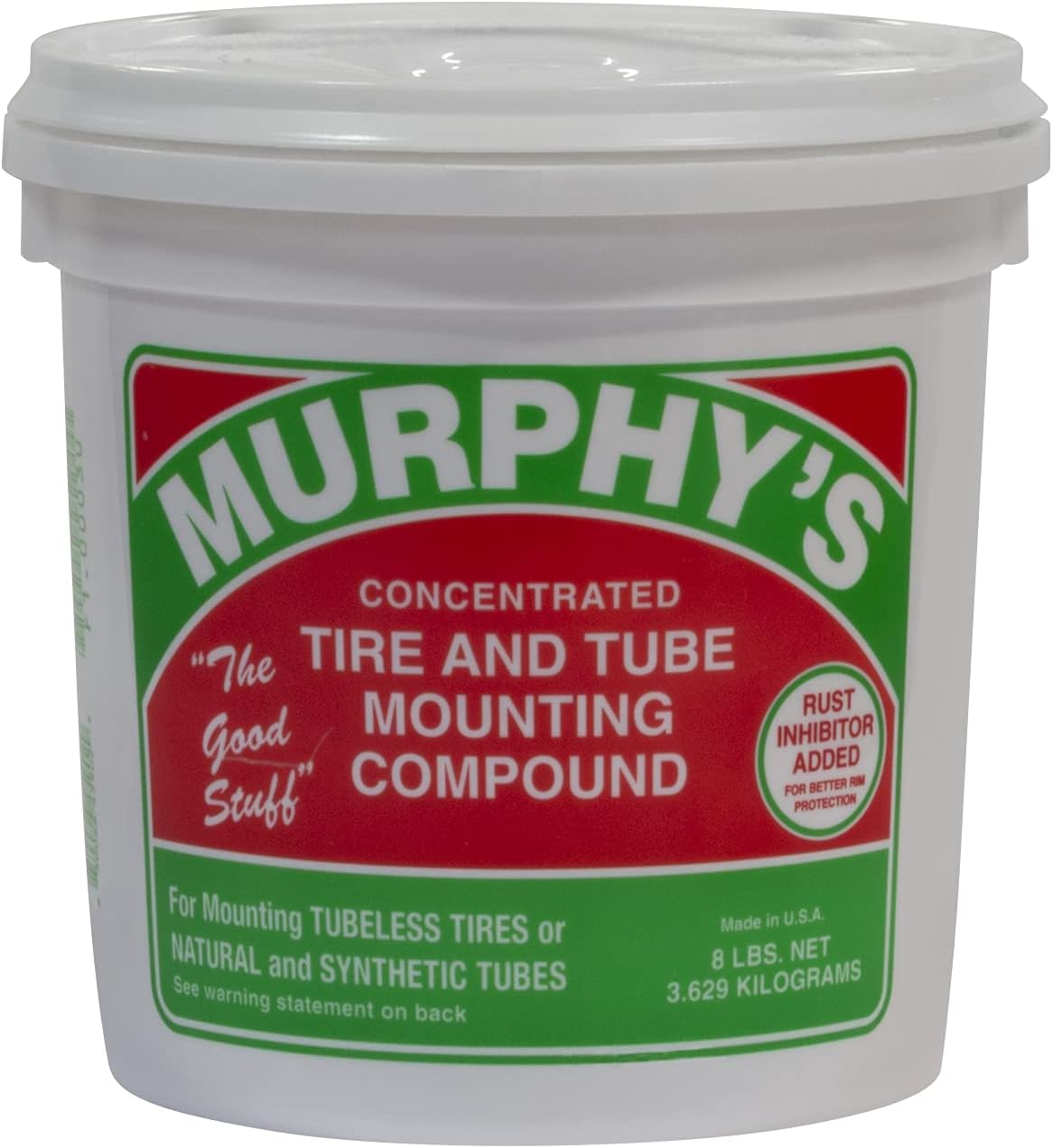
A concentrated tire and tube mounting compound designed to help simplify mounting rubber tires and tubes on passenger, semi truck, construction, and OTR applications. Its ultra-thick formula packs beads effectively and includes rust inhibitors to help protect against corrosion during use.
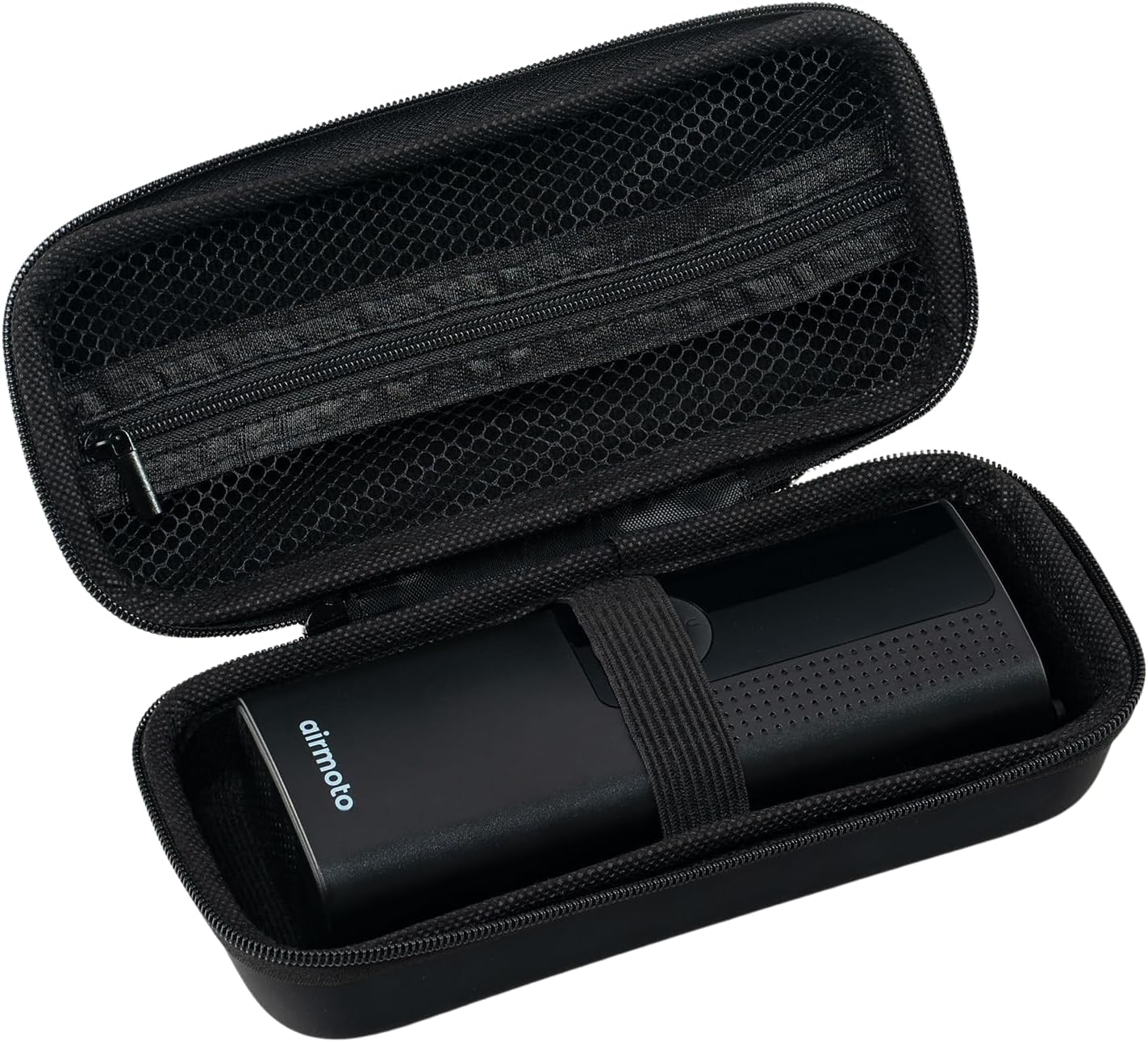
Protect and organize your Airmoto tire inflator with a purpose-designed carrying case made for a precise fit. The durable polyurethane shell and soft interior help guard against cuts, tears, and road wear, while a mesh pocket stores connectors and accessories. This travel box measures 7.5*3.5*2.8 inches and can work with most handheld portable air compressor models; this listing includes the case only.
How to Check All Tires and the Spare
- Park safely: Choose a flat area with good lighting.
- Find the DOT marking: Start on the outer sidewall, then check the inner side if needed.
- Read the final four digits: Use the first two digits for the week and the last two for the year.
- Write down each date: Check all four tires and the spare because they may not match.
- Inspect condition: Look for cracks, bulges, cuts, uneven wear, exposed cords, and pressure loss.
- Get help when unsure: Ask a qualified tire professional if the code is unclear or the tire shows damage.
Tire Recalls and Registration
The DOT/TIN also helps with recall tracking. When you register new tires, the manufacturer can contact you if a recall affects your tire model or production batch. USTMA says you need your contact information and the DOT Tire Identification Number to register tires.
You can also use the NHTSA recalls page to search for tire recalls and safety information. If you find a recall, follow the manufacturer’s instructions and do not ignore interim safety guidance.
Frequently Asked Questions
Can I still use a 7-year-old tire?
A 7-year-old tire may still be usable in some cases, but you should not assume it is safe. Check the DOT date, tread depth, sidewalls, air pressure, and service history. Replace it if you see cracks, bulges, exposed cords, uneven wear, vibration, repeated pressure loss, or if your tire or vehicle manufacturer recommends replacement at that age.
What if my tire does not have a date code?
Check both sidewalls first because the full DOT/TIN may appear on only one side. If the date code is missing, worn away, or impossible to read, treat the tire as suspect and have a tire professional inspect it. Do not rely on an unknown-age tire for regular driving.
Do tires expire after 10 years?
Tires do not have one universal legal expiration date for every use, but many tire and vehicle manufacturers recommend replacement within the six-to-10-year range, regardless of tread depth. A tire that is 10 years old should be treated as a serious replacement candidate unless the tire maker gives different guidance for that specific product.
Can a tire look good but still be too old?
Yes. Tire aging can affect rubber and internal materials even when the tread still looks deep. That is why you should check the DOT date code, inspect the tire regularly, and follow tire manufacturer and vehicle manufacturer replacement guidance.
Is the DOT code the same as the tire size?
No. Tire size markings, such as 225/65R17, describe the tire’s size and construction. The DOT/TIN identifies the tire and includes the manufacturing date code at the end. Use the DOT/TIN date code, not the size marking, to tell the tire’s year.
Should I check the spare tire’s date code too?
Yes. Spare tires age even when they are rarely used. Check the spare’s DOT date, air pressure, and sidewall condition. If the spare is old, cracked, flat, or damaged, replace it before you need it in an emergency.
Can a tire be sold as new if the DOT date is older?
A tire can sit in inventory before it is sold, so the manufacturing date may be earlier than the purchase date. Before buying an older unused tire, ask how it was stored, confirm warranty coverage, and compare the DOT date with the tire and vehicle manufacturer’s age guidance.
Do all four tires need the same DOT date?
No. Tires on the same vehicle may have different manufacturing dates, especially if one tire was replaced later. The more important checks are correct size, matching type where required, tread condition, pressure, load rating, and age-based replacement guidance.
How old is a tire with code 4722?
A tire with date code 4722 was made in the 47th week of 2022. To estimate its age, compare late 2022 with today’s date, then inspect the tire’s tread, sidewall, pressure history, and service condition.
Should I buy used tires if I cannot read the DOT date?
No. If you cannot read the DOT date, you cannot confirm the tire’s manufacturing age. Avoid unknown-age used tires, especially if they also show cracks, repairs, sidewall damage, uneven wear, or any sign of poor storage.
Conclusion
You can find the year of your tire by locating the DOT/TIN marking on the sidewall and reading the final four digits. The first two digits show the manufacturing week, and the last two digits show the year. A code ending in 2519 means the tire was made in the 25th week of 2019.
Use the date code as a safety starting point, not the only decision. Check all tires and the spare, look for damage, follow your vehicle and tire manufacturer guidance, register new tires for recall support, and replace old or damaged tires before they become a roadside risk.
Sources
- GovInfo — 49 CFR Part 574 Tire Identification and Recordkeeping — backs up the DOT/TIN date-code structure, week digits, and year digits.
- NHTSA TireWise — backs up tire aging, inspection guidance, tread safety, pressure checks, spare tire guidance, and 2024 tire-related fatality data.
- U.S. Tire Manufacturers Association — Tire Registration — backs up the role of DOT TINs in tire registration and recall notification.
- NHTSA Recalls — official recall lookup resource for vehicles, tires, car seats, and equipment.