Heavy truck tires work harder at highway speed because load, heat, air pressure, tread depth, and tire condition all stack together. A tire that looks fine at a glance can still be unsafe if it is underinflated, overloaded, damaged, mismatched to the route speed, or past your fleet’s service limits.
Quick Answer
Heavy truck tire performance at high speeds depends on cold inflation pressure, axle load, tread depth, tire condition, load rating, and speed capability. Before highway driving, check pressure against the load chart, inspect for damage, confirm legal tread depth, obey posted limits, and never exceed a tire’s marked speed or load restriction.
Key Takeaways
- Use the tire maker’s load and inflation data for the actual axle load, not the maximum pressure stamped on the sidewall as a routine target.
- Federal commercial motor vehicle rules require at least 4/32 inch tread on front tires and 2/32 inch on most other tires, but more tread is safer in rain.
- Do not run speed-restricted tires above their marked limit, and never use highway speed to “test” a questionable tire.
- Pull a tire from service if you see exposed cord, tread or sidewall separation, bulges, audible leaks, flatness, or cuts that expose ply or belt material.
- TPMS can help, but it does not replace cold-pressure checks with an accurate gauge.
At a Glance
| Time Required | 10 to 20 minutes for a basic walkaround, longer if you check duals, record tread depths, or adjust pressure after a load change. |
| Difficulty | Moderate. Drivers can inspect and measure, but tire mounting, repairs, balancing, and alignment should be handled by qualified service technicians. |
| Tools Needed | Calibrated truck tire pressure gauge, tread depth gauge, flashlight, valve caps, tire crayon or log sheet, and the correct load/inflation table for your tire size. |
| Cost | About $15 to $75 for basic gauges. Professional tire inspection, balancing, repair, alignment, or replacement varies by tire size and fleet setup. |
Warning: Never exceed posted speed limits, axle weight limits, tire load ratings, or tire speed restrictions. If a tire is flat, leaking, bulging, separated, cut to the ply or belt, or showing exposed cord, stop using it until a qualified tire professional inspects it.
Why Tire Performance Matters at Highway Speeds

At highway speed, a heavy truck tire flexes thousands of times per minute while carrying a major share of the vehicle’s weight. If the tire is underinflated, overloaded, damaged, or mismatched to the application, that flex creates extra heat. Heat weakens tire structure, shortens casing life, and can lead to sudden failure.
Tire safety is not only about comfort or fuel cost. The National Highway Traffic Safety Administration reports that 511 people died in tire-related crashes in 2024. Good tire checks reduce the risk of blowouts, tread separation, loss of control, roadside delays, and expensive casing damage.
A tire that is legal by tread depth can still be a bad highway tire if it is underinflated, overloaded, overheated, damaged, or speed-restricted.
Key Factors That Control Heavy Truck Tire Stability
Cold Inflation Pressure
Pressure is the first high-speed tire check because it controls heat, casing flex, rolling resistance, and tread contact. Check pressure when tires are cold, before the truck has been driven, or after enough rest for the tire to cool. Use a calibrated gauge, not a kick test.
The correct pressure is based on the tire size, axle load, single or dual position, and the tire maker’s load/inflation table. Do not use the maximum pressure on the sidewall as your everyday target unless the load table and your fleet policy call for it. The sidewall marking shows a maximum load and its corresponding cold pressure, not a universal setting for every load.
Note: Tire pressure can rise after driving because the tire warms up. If you must add air to a warm tire that is clearly low, treat it as a temporary correction and recheck the pressure cold as soon as possible.
Load Rating and Axle Weight
A tire must be able to carry the load placed on it. Federal commercial motor vehicle rules say a motor vehicle must not operate with tires carrying more weight than marked on the sidewall or allowed by recognized tire publications, unless a narrow special-permit exception applies. The same rules also require cold inflation pressure suitable for the load being carried.
Before long highway runs, compare your axle weights with the tire’s load rating and the correct single or dual load table. This is especially important after a change in cargo, trailer, body equipment, lift axle use, route, or tire size.
Speed Capability and Sidewall Markings
Heavy truck tires may carry markings for DOT compliance, size, load range, maximum load, corresponding cold pressure, and speed restriction. Under FMVSS No. 119, certain tires must show maximum load and cold inflation pressure, and tires speed-restricted to 55 mph or less must be marked with that speed restriction.
Do not assume every truck tire is suitable for every highway speed. Match the tire’s service description, application, casing condition, route speed, and load to the work you expect it to do. If the tire is marked with a lower speed limit, follow it. If the tire’s speed capability is unclear, check the tire data book or ask the tire manufacturer or fleet tire vendor before using it on highway routes.
Tread Depth and Road Grip
Tread depth helps the tire move water and maintain grip. Under 49 CFR 393.75, front tires on a bus, truck, or truck tractor must have at least 4/32 inch tread depth in a major tread groove. Other tires covered by the rule must have at least 2/32 inch.
Those are minimum legal limits, not ideal wet-road targets. For high-speed highway use, especially in rain, inspect tread before the tire reaches the legal limit. Replace or remove tires sooner if your fleet policy, customer requirements, route conditions, or tire professional calls for it.
How to Check Heavy Truck Tires Before High-Speed Driving
Use this sequence before a long highway run, after a load change, after hitting debris, or any time the truck develops vibration, pull, noise, or a TPMS warning.
- Park safely and let tires cool. Check pressure cold when possible. If you just drove, note that the reading may be higher because of heat.
- Confirm the tire is the correct size and type. Check the sidewall size, load range, service description, single/dual position rating, and any speed restriction.
- Check cold pressure with a gauge. Compare the reading to the load/inflation table for your axle load, not a guess or a kick test.
- Inspect the tread face. Look for low tread, exposed cord, stone drilling, cuts, punctures, flat spots, cupping, feathering, or irregular shoulder wear.
- Inspect sidewalls and bead areas. Look for bulges, cracks, deep cuts, rubbed sidewalls, impact breaks, and signs of air loss.
- Check dual assemblies carefully. Make sure both tires in a dual set are properly inflated, similar in diameter, and free from trapped debris between the tires.
- Check valve stems and caps. Replace missing caps, listen for leaks, and inspect extensions or hoses for rubbing or damage.
- Record concerns. Log pressure, tread depth, tire position, and damage so the driver, shop, or fleet manager can see changes over time.
Pro Tip: Track tread depth and pressure by wheel position. A trend, such as one tire repeatedly losing pressure or one steer tire wearing faster, often reveals an alignment, valve, load, or suspension problem before it becomes a roadside failure.
[Products Worth Considering]

Accurately measure tire tread depth with a calibrated gauge marked from 0 to 1 inch in 1/32 inch increments. The color-coded bar helps you quickly identify tread condition ranges, supporting safe driving for trucks, motorcycles, automobiles, and passenger vehicles.

Monitor tire tread wear with a smart, color-coded depth gauge that shows clear condition ranges at a glance. The bar is range marked for fast, easy readings, helping you maintain safer traction and performance. Each gauge is portable with a pocket clip, and the set includes 20 units for daily use and sharing.

The SAFELIFE dial tire tread depth gauge measures tread depth in 1/32 inch increments with clear, easy-to-read 2-inch dial face. Color zones using a traffic light system help you quickly judge whether tread is low, marginal, or ample for safer driving. Built with a durable zinc cast body and a metal detect probe for precise, comfortable use across cars, motorcycles, trucks, and buses.
Maintaining Proper Tire Inflation Under Load
Heavy trucks rarely operate at the same load all the time. A pressure that was acceptable for one route may be wrong after a payload change, trailer swap, axle-weight change, or seasonal temperature shift. Recheck pressure after major operating changes and before long highway trips.
Underinflation increases flex and heat. Overinflation can reduce the contact patch, make the tire more sensitive to impact damage, and create uneven center wear. The best target is the pressure required for the actual load, with any margin required by the tire manufacturer or fleet policy.
Fuel cost is another reason to keep pressure correct. FuelEconomy.gov says underinflated tires can lower gas mileage by about 0.2% for every 1 psi drop in the average pressure of all tires, and properly inflated tires are safer and last longer.
| Condition | High-Speed Risk | What To Do |
|---|---|---|
| Underinflated | More heat, more flex, faster wear, higher failure risk | Inflate to the correct cold pressure for the actual load |
| Overinflated | Smaller contact patch, center wear, harsher impacts | Adjust only when cold and within approved pressure limits |
| Unequal dual pressure | One tire carries more load and runs hotter | Match dual pressures and inspect for leaks or diameter mismatch |
| TPMS warning | One or more tires may already be significantly low | Stop when safe, inspect, and confirm with a gauge |
[Products Worth Considering]

Measure tire tread depth quickly and accurately with this LUMITECO dial gauge that reads in 1/32" increments up to 14/32". The color-coded green/yellow/red zones make it easy to judge tire wear and know when replacement is needed. A rugged, compact design with a protective pouch helps keep the gauge ready for use on cars, trucks, motorcycles, and more.

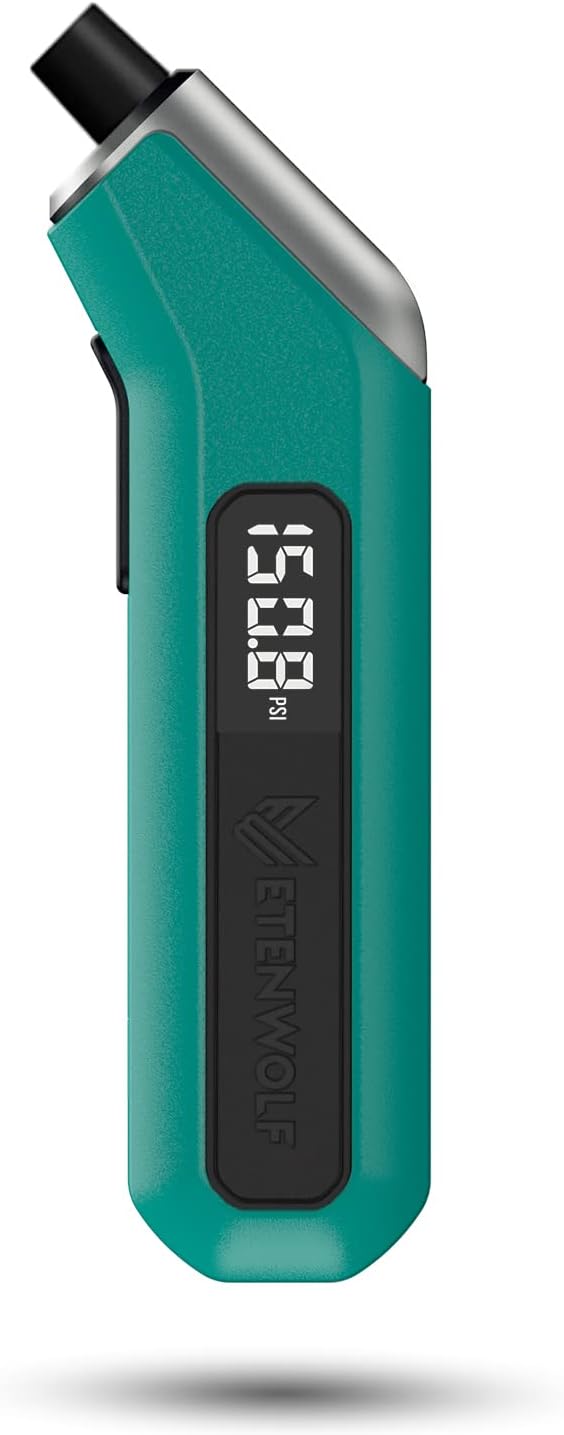
ETENWOLF T300 is a calibrated digital tire pressure gauge for accurate readings from 3 to 200 PSI across light and heavy-duty vehicles. It includes thermal compensation for reliable performance in extreme cold or heat, with an auto shut-off to extend battery life and an LED for easier reading. The sturdy design supports rugged everyday use, making it ideal for pickups, RVs, and industrial applications.

Steelman white tire marking crayons provide high-contrast, semi-permanent marks for repairing and inspecting tires and equipment. They write on wet or dry, smooth or coarse surfaces including rubber, metal, glass, and wood, making them ideal for puncture location and damage outlining. The lead- and zinc-free crayons resist weather and fading yet wipe away when you no longer need the marks.
How to Spot Tire Wear and Damage
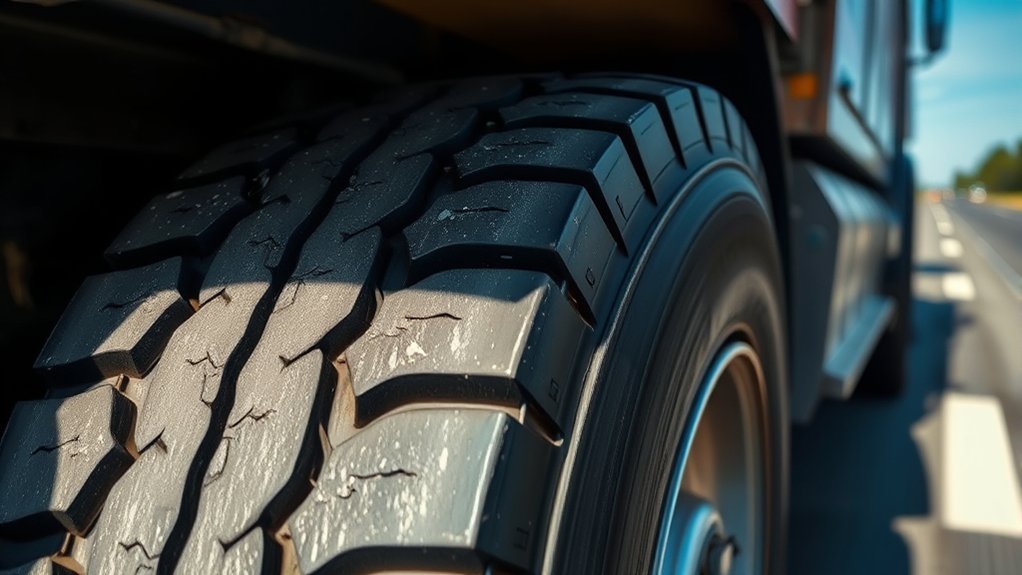
Walk around the truck and inspect each tire from tread to sidewall. Use a flashlight on inner duals and hard-to-see shoulder areas. Do not rely on a tire that only “looks round.” Many dangerous conditions are subtle until the tire heats up under speed and load.
Remove the tire from service or call a tire professional if you see body ply or belt material exposed, tread or sidewall separation, a flat tire, an audible leak, or a cut deep enough to expose ply or belt material. These are not cosmetic issues. They are out-of-service-level safety concerns under federal commercial motor vehicle tire rules.
Also watch for uneven wear patterns:
- Cupping: Often points to imbalance, worn suspension parts, or shock issues.
- Feathering: Often points to alignment or toe problems.
- One-shoulder wear: Often points to camber, axle, or load issues.
- Center wear: May point to overinflation or mismatched load pressure.
- Both-edge wear: May point to underinflation or overloading.
Do not judge tire age by appearance alone. Check the DOT date code, then follow your tire maker’s, retreader’s, and fleet’s age policy. If a tire is older, repeatedly loses air, vibrates, has cracks, or shows any performance change, have it inspected before highway operation.
The Importance of Tire Rotation, Balancing, and Alignment
Rotation, balancing, and alignment help tires wear evenly and reduce vibration. Vibration at highway speed is more than annoying; it can signal tire imbalance, irregular wear, belt issues, bent wheels, loose components, or suspension problems.
The NHTSA TireWise guidance says tire rotation can reduce irregular wear and help tires last longer, and it advises following the owner’s manual for rotation frequency and pattern. If the vehicle manufacturer recommends rotation, NHTSA notes a common interval of 5,000 to 8,000 miles or sooner if uneven wear appears.
| Service | Why It Matters | When To Check |
|---|---|---|
| Rotation | Helps control irregular wear when rotation is approved for the tire setup | Follow the vehicle, tire, and fleet schedule |
| Balancing | Reduces vibration and uneven wear at speed | At installation, rotation, vibration complaints, or irregular wear |
| Alignment | Helps keep the tire flat on the road and prevents pull or shoulder wear | After suspension work, impact damage, new steer tires, or abnormal wear |
[Products Worth Considering]

Add style while helping protect your tire valve stems with handmade crystal rhinestone caps and a durable plastic insert. These caps resist corrosion and help keep out rain, snow, and muddy water, extending tire life. Textured non-slip design makes them easy to grip for quick install and removal when checking tire pressure.
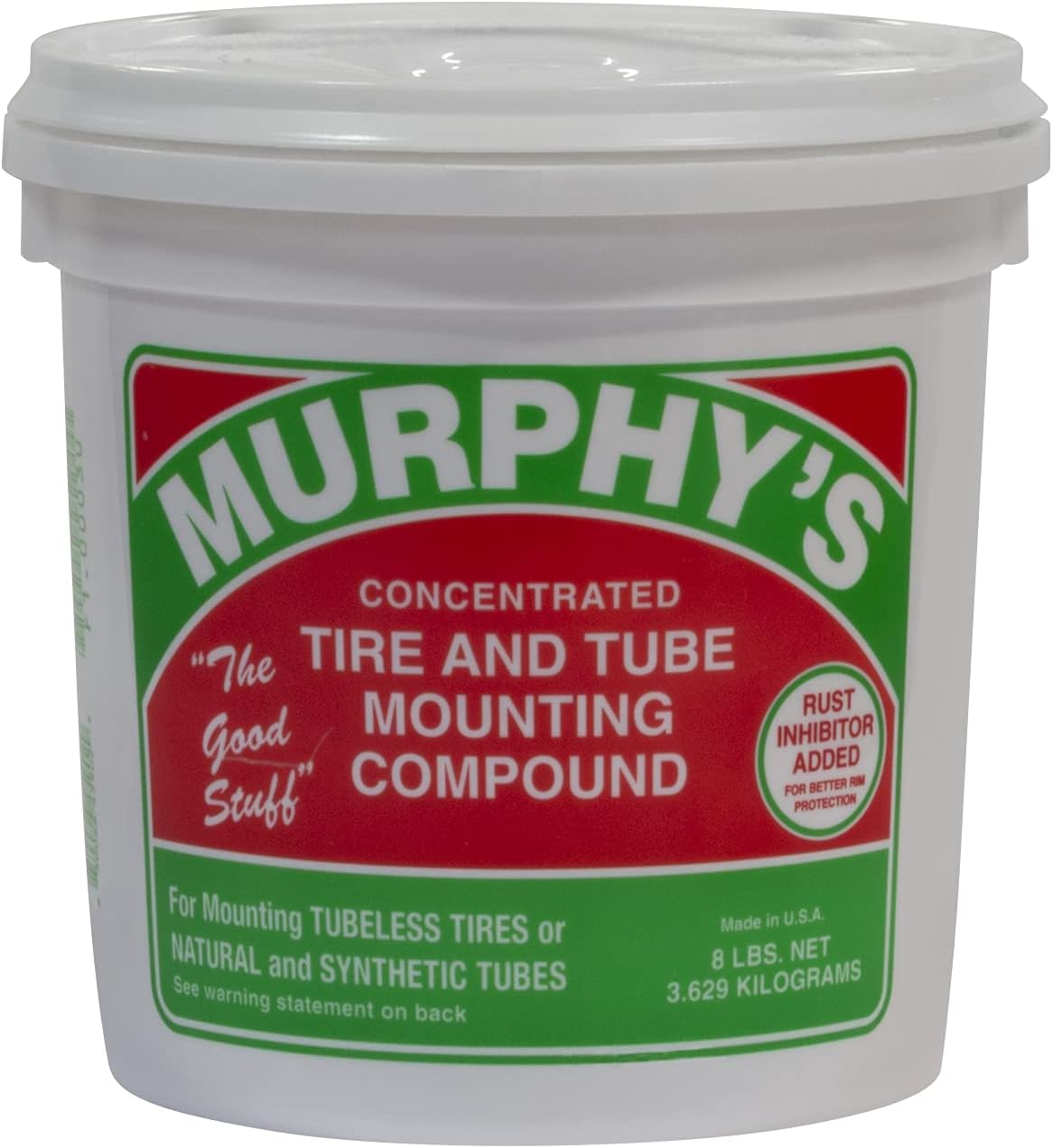
A concentrated tire and tube mounting compound designed to help simplify mounting rubber tires and tubes on passenger, semi truck, construction, and OTR applications. Its ultra-thick formula packs beads effectively and includes rust inhibitors to help protect against corrosion during use.

ETENWOLF’s calibrated digital tire pressure gauges deliver accurate readings across a wide pressure range, from below 12 PSI to above 140 PSI. The built-in thermal compensation helps maintain performance in extreme cold and hot conditions, while the LED light improves visibility for quick checks. Includes replaceable AAA batteries for long-lasting use and convenience for everyday tire monitoring.
TPMS Is Helpful, But Not Enough
A tire-pressure monitoring system can warn you when pressure drops too far, and aftermarket systems can be useful for fleet monitoring. But TPMS should be treated as a backup, not your main tire inspection method.
For vehicles covered by FMVSS No. 138, TPMS is designed to warn of significant underinflation. Heavy-duty trucks above that standard’s weight range may use different factory or aftermarket systems. Either way, a warning light or alert means you should stop when safe, inspect the tire, and confirm pressure with a gauge.
Warning: If a tire blows out, do not slam on the brakes. Hold the steering wheel firmly, keep the vehicle stable, ease off the accelerator, correct steering gently, and pull off the road only when it is safe.
When to Seek Professional Tire Service
Get professional tire service before highway operation if you notice any of these problems:
- Exposed cord, ply, or belt material
- Tread or sidewall separation
- Bulges, blisters, or impact breaks
- Flat tire, audible leak, or repeated air loss
- Deep cuts, punctures, or objects lodged in the tread
- Steer tire tread near 4/32 inch or other tire tread near 2/32 inch
- Vibration, pull, thumping, shaking, or new tire noise
- Uneven wear that points to alignment, suspension, pressure, or load problems
- Dual tires with large pressure differences, size mismatch, or debris trapped between them
Do not “run it and see” with a questionable truck tire at highway speed. The cost of a roadside tire failure can include tire and wheel damage, cargo delay, body damage, lost casing value, and serious safety risk.
Frequently Asked Questions
Can you use high-performance tires for daily driving?
Yes, if the tires match your vehicle, axle loads, route speeds, weather, application, and manufacturer guidance. Do not choose a tire only because it is labeled “high performance.” For heavy trucks, load capacity, casing durability, retread policy, tread design, and correct pressure matter more than a broad performance label.
What tire pressure should a heavy truck use at highway speed?
Use the cold inflation pressure required for the actual load on that tire position, based on the tire manufacturer’s load/inflation table and your fleet policy. Do not guess, use a kick test, or use the sidewall maximum as the routine pressure unless the load data supports it.
How much tread depth do heavy truck tires need?
For covered commercial motor vehicles, front tires on a bus, truck, or truck tractor need at least 4/32 inch tread depth in a major tread groove. Other tires generally need at least 2/32 inch. More tread may be needed for rain, snow, fleet policy, customer rules, or demanding routes.
Is TPMS enough for heavy truck tire safety?
No. TPMS can help alert you to low pressure, but it does not replace monthly or pre-trip checks with an accurate gauge, tread-depth inspection, sidewall inspection, and professional service when damage or abnormal wear appears.
When should you replace or remove a truck tire from service?
Remove the tire from service if it has exposed ply or belt, tread or sidewall separation, a flat condition, an audible leak, a deep cut, a bulge, illegal tread depth, repeated air loss, severe irregular wear, or any condition your tire professional rejects. Also follow your tire manufacturer’s and fleet’s age policy.
Conclusion
Heavy truck tire performance at high speeds comes down to control: correct cold pressure, correct load capacity, legal tread depth, sound casing condition, proper rotation and balancing, and respect for tire speed markings. Check tires before highway runs, investigate pressure loss or vibration early, and use professional service whenever damage appears. Your tires carry the truck, protect the cargo, and give you the grip you need when the road changes fast.
Sources
- 49 CFR 393.75, Tires — commercial motor vehicle tire condition, tread depth, load, inflation, and speed-restricted tire rules.
- NHTSA TireWise — tire pressure, tread, rotation, balance, alignment, aging, TPMS, and blowout safety guidance.
- FuelEconomy.gov, Keeping Your Vehicle in Shape — fuel-economy impact of tire underinflation and proper tire pressure.
- 49 CFR 571.119, FMVSS No. 119 — tire markings for heavy vehicles, specialty tires, and motorcycles, including load, pressure, and speed-restriction markings.
- 49 CFR 571.138, FMVSS No. 138 — TPMS purpose, covered vehicle range, warning threshold, and owner-manual language about underinflation.