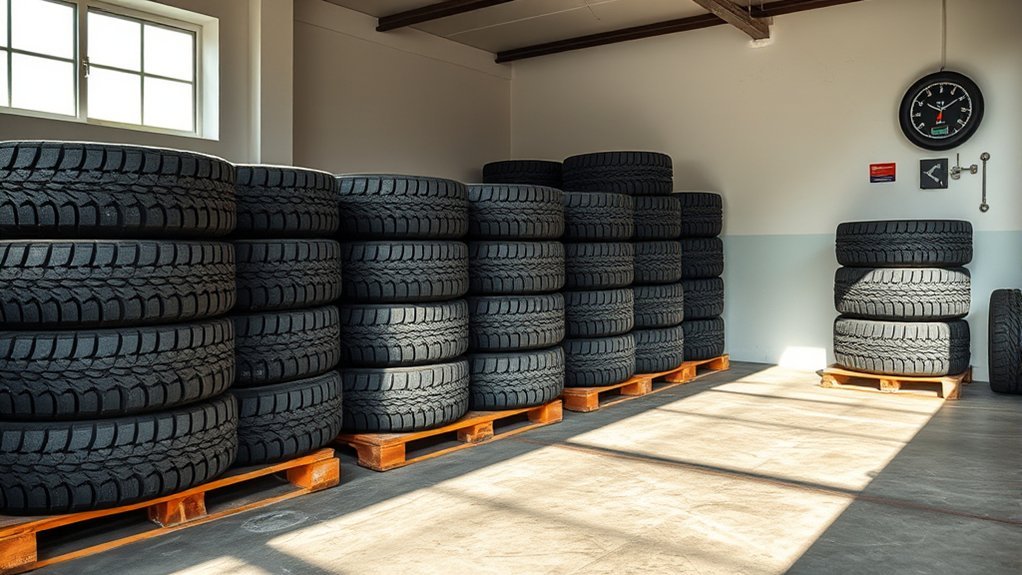
Seasonal tire storage for a Toyota Hilux is simple, but it matters. Heat, sunlight, moisture, poor pressure, and rough handling can age the rubber while the tires are off the truck. Before you put winter, summer, or all-terrain tires away, clean them, inspect them, label their wheel positions, and store them in a cool, dry indoor space.
Quick Answer
To store Toyota Hilux tires between seasons, wash and dry each tire, inspect for cuts, cracks, bulges, punctures, and uneven wear, then seal each tire in an opaque bag. Store them indoors in a cool, dry, dark area, away from sunlight, moisture, fuels, solvents, and ozone-producing equipment.
Key Takeaways
- Clean and dry tires before storage so brake dust, road salt, mud, and moisture do not sit on the rubber for months.
- Store tires indoors, away from direct sun, heaters, battery chargers, electric motors, generators, gasoline, and solvents.
- Unmounted tires are usually best stored upright; tires mounted on wheels can be stacked flat, hung, or stored upright if pressure is checked.
- Check the DOT date code, tread depth, sidewalls, bead area, and valve stems before storage and again before reinstalling.
At a Glance
| Time Required | 30 to 60 minutes for a set of four tires |
| Difficulty | Easy, as long as the tires are already removed from the Hilux |
| Tools Needed | Mild car soap, water, tire brush, microfiber towel, tire pressure gauge, marker, labels, opaque tire bags |
| Cost | Usually $0 to $30 if you already have cleaning supplies; more if you buy tire totes or a rack |
Why Proper Tire Storage Is Crucial for Your Hilux
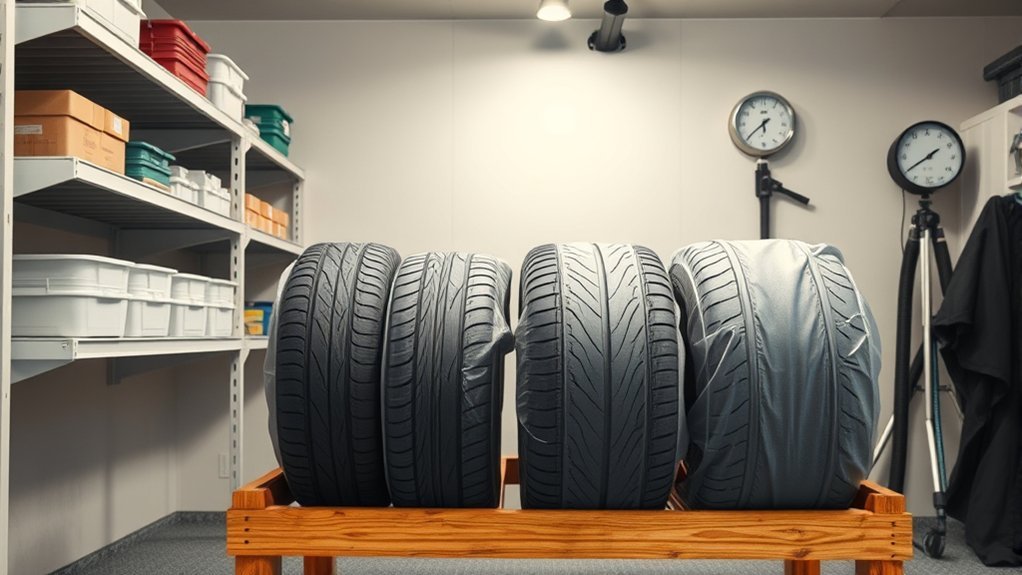
Proper tire storage helps protect your Toyota Hilux tires from avoidable aging while they are off the truck. The National Highway Traffic Safety Administration explains that tire aging happens as rubber and other tire components change over time because of service, storage, and environmental conditions.
That means storage is not only about keeping your garage tidy. Heat, sunlight, moisture, and poor maintenance can all contribute to tire aging. If your Hilux uses separate seasonal sets, such as winter tires, summer tires, or all-terrain tires, the way you store the unused set can affect how ready it is when conditions change.
Good storage slows avoidable tire damage, but it does not stop tire aging. Always inspect stored tires before putting them back on your Hilux.
Inspect Your Tires for Damage Before Storage
Before you store your Toyota Hilux tires, inspect each one in bright light. Look at the tread, sidewalls, bead area, and valve stem. You are checking for anything that could make the tire unsafe later.
- Cuts, cracks, or splits: Pay close attention to sidewalls and between tread blocks.
- Bulges or bubbles: These can point to internal damage and should be checked by a tire professional.
- Nails, screws, or punctures: Do not store a tire with a possible leak without having it inspected.
- Uneven tread wear: Feathering, cupping, or one-sided wear can point to alignment, balance, suspension, or pressure issues.
- Low tread depth: If the tread is near the wear bars, plan replacement instead of seasonal reuse.
- Age: Find the DOT Tire Identification Number. The last four digits show the week and year the tire was made.
Warning: Do not reinstall a tire with exposed cords, a bulge, deep cracking, a large sidewall cut, or a leak that has not been repaired correctly. Have it checked by a qualified tire shop before using it on your Hilux.
It also helps to label each tire before storage. Use masking tape, a tire crayon, or a tag to mark positions such as “front left,” “front right,” “rear left,” and “rear right.” This makes the next rotation or reinstall easier to plan.
How to Clean Your Tires for Optimal Storage
Cleaning your tires before storage removes road salt, mud, brake dust, oils, and grit that can sit on the rubber for months. Use mild soap and water, not harsh solvents.
- Rinse first: Spray off loose dirt, stones, mud, and salt from the tread and sidewall.
- Scrub with mild soap: Use a tire brush and a gentle car-wash soap or mild dish soap solution.
- Clean the tread grooves: Remove trapped stones or debris that could press into the rubber during storage.
- Rinse thoroughly: Soap residue should not be left on the tire.
- Dry completely: Use a towel, then let the tires air-dry before bagging.
Avoid petroleum-based cleaners, strong degreasers, bleach, and glossy tire dressings before long storage. They can leave residue on the rubber or trap grime instead of protecting the tire.
Pro Tip: Clean the wheels too if the tires are mounted. Brake dust can cling to alloy wheels, lug holes, and the inner barrel, so it is easier to remove before months of storage.
Where’s the Best Place to Store Your Tires?
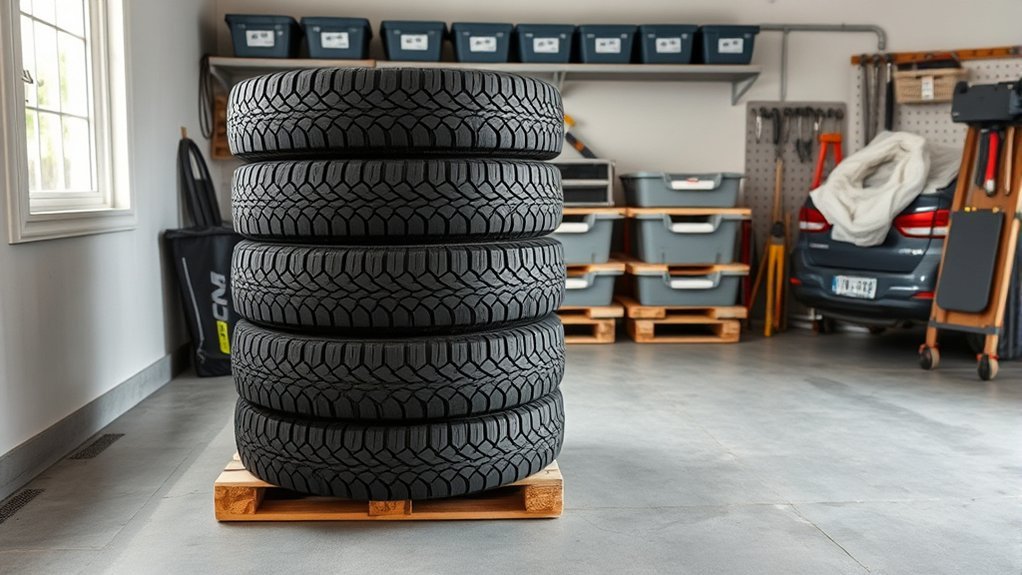
The best place to store Toyota Hilux tires is indoors in a cool, dry, dark, and stable space. A garage, basement, insulated storage room, or tire rack is usually better than a shed, balcony, driveway, or backyard.
Avoid direct sunlight, standing water, high humidity, and major temperature swings. NHTSA notes that sunlight, warmer climate, poor storage, and poor maintenance can contribute to tire aging. That is why outdoor storage, even under a tarp, is not ideal for seasonal tires.
Keep tires away from gasoline, oil, solvents, paint, pool chemicals, and strong cleaners. Also keep them away from ozone-producing or heat-producing equipment, such as generators, furnaces, compressors, welders, battery chargers, and electric motors. Ozone can attack susceptible rubber compounds and contribute to cracking over time.
Note: A tire hotel or tire shop storage service can be useful if you do not have a clean indoor space, especially for heavy Hilux wheel-and-tire assemblies.
[Products Worth Considering]

Malco tire mounting and demounting lubricant is a ready-to-use tire lube formulated to reduce friction during tire installation for passenger cars, light trucks, farm tires, and heavy-duty equipment. It provides rust-inhibiting protection to help reduce corrosion on rims and wheels, and helps support proper tire bead seating during inflation to reduce air leakage. The silicone-free, soap-free formula is whitewall safe to help prevent discoloration on whitewall tires and sensitive sidewall markings.

This oesee 8-piece wheel care kit helps you clean, scrub, and dry wheels safely with purpose-built brushes and towels. The scratch-free microfiber wheel brush lifts brake dust and grime, while the stiff pro-grip tire brush removes tire browning and embedded dirt. A twist loop microfiber drying towel and an applicator help achieve a streak-free finish and cleaner, more even product application.

This 3-piece wheel and tire brush set makes it easy to clean light, medium, and heavy dirt from wheels, rims, tires, and exterior surfaces. It includes both soft and stiff bristle options for gentle scrubbing and tough grime removal, helping lift brake dust and road buildup. The long-handle design supports comfortable cleaning across cars, trucks, SUVs, RVs, motorcycles, and more, with simple care instructions to restore brush shape.
How to Bag and Seal Your Tires for Protection
Bagging tires helps reduce contact with dust, light, moisture, and air movement. Use opaque tire storage bags, tire totes with inner liners, or heavy-duty dark plastic bags. Clear bags are less useful if the tires will be exposed to light.
- Make sure each tire is dry: Never seal a damp tire in a bag.
- Bag each tire separately: This helps prevent scuffing and makes each tire easier to label.
- Remove extra air: Press out as much air as practical before sealing. You do not need a perfect vacuum, but a tighter seal helps.
- Seal the bag: Use tape, zip ties, or the built-in closure on a tire bag.
- Label the outside: Mark the tire position, season, tire size, and date stored.
If the tires are mounted on wheels, place the valve stem area so it is not pressed hard against a wall, rack, or another tire. This helps prevent accidental valve-stem damage while the tires are being moved or stored.
[Products Worth Considering]

Measure tire tread depth quickly and accurately with this LUMITECO dial gauge that reads in 1/32" increments up to 14/32". The color-coded green/yellow/red zones make it easy to judge tire wear and know when replacement is needed. A rugged, compact design with a protective pouch helps keep the gauge ready for use on cars, trucks, motorcycles, and more.

The SAFELIFE dial tire tread depth gauge measures tread depth in 1/32 inch increments with clear, easy-to-read 2-inch dial face. Color zones using a traffic light system help you quickly judge whether tread is low, marginal, or ample for safer driving. Built with a durable zinc cast body and a metal detect probe for precise, comfortable use across cars, motorcycles, trucks, and buses.

Clean wheels and rims with soft feathered bristles that safely remove dirt and road grime while helping restore original luster. The short non-slip handle makes it easy to scrub in tight wheel wells, and the brush is suitable for vehicles and hard-to-reach areas. It can also be soaked and rubbed to help restore bristles to their shape after use.
Store Mounted and Unmounted Tires the Right Way
The best position depends on whether the tires are mounted on wheels. If your Hilux tires are mounted on rims, they have more support. If they are unmounted, the sidewalls need more care.
[Products Worth Considering]

Chemical Guys Tire Kicker Sprayable Extra Glossy Tire Shine restores a deep, wet look on tires, rubber, vinyl, and plastic trim. It delivers a rich showroom shine that enhances color and luster while helping protect against fading, cracking, and discoloration. The spray application dries to the touch with a streak-free finish and no greasy sling, for fast results on cars, trucks, motorcycles, RVs, and boats.

This professional wheel and rim brush kit makes it easy to lift brake dust, grime, and dirt from wheels and tires without scratching finishes. The brushes feature soft, metal-free wool heads and a flexible 360-degree rim brush design for reaching hard-to-clean areas. Includes multiple brush types plus accessories for thorough car, motorcycle, and general vehicle detailing.

The Kurgo Seasonal Tire Tote helps protect your car interior, clothes, and garage from tire grime, brake dust, and residue during seasonal tire changes. Its universal design fits most passenger tires between 22" and 31" in diameter, making storage and transport simpler with less mess. Built for rugged, repeated use, it’s machine washable for easy care and comes with a lifetime warranty.
If the Tires Are Mounted on Wheels
- Stack flat: This is usually fine for mounted wheel-and-tire assemblies.
- Hang them: A sturdy wall rack or wheel hook can work if it is rated for the weight.
- Store upright: This can also work, but check pressure and rotate the tire position occasionally.
- Inflate to the vehicle-recommended pressure: Use the Hilux door placard or owner’s manual, not the maximum pressure molded on the tire sidewall.
If the Tires Are Not Mounted on Wheels
- Store upright when possible: This helps reduce sidewall stress.
- Do not hang unmounted tires: Hanging can distort the tire bead.
- Avoid long-term flat stacking if possible: If you must stack them, keep the stack short and rotate positions during long storage.
- Rotate occasionally: Turn each tire about a quarter turn every month or two during long storage.
Warning: Hilux tires and wheels can be heavy. Use safe lifting, keep children away from stacked tires, and do not build tall stacks that could tip over.
Maintain Tire Condition During Storage
Once the tires are stored, they still need light attention. Check the storage area once in a while for water leaks, pests, chemical spills, or direct sunlight reaching the tires. If the tires are mounted on wheels, check pressure with a tire gauge every month or two.
For mounted tires, the correct cold inflation pressure should come from your Toyota Hilux tire placard or owner’s manual. NHTSA also reminds drivers that the correct pressure is the vehicle manufacturer’s recommended cold pressure, not the maximum pressure printed on the tire sidewall.
If the tires are stacked, do not place heavy boxes, tools, or parts on top of them. Weight on the sidewalls for months can distort the tire or damage the bag. Keep the tires off oily floors and away from sharp edges.
Before You Put the Tires Back on Your Hilux
Before reinstalling your seasonal tires, give them one more inspection. Storage can hide problems that were easy to miss when the tires came off the truck.
- Check the tread depth and treadwear indicators.
- Look for cracking, sidewall cuts, bulges, punctures, or exposed cords.
- Check the DOT date code and compare it with the tire and vehicle manufacturer’s service-life guidance.
- Check cold pressure after the tires are mounted and before regular driving.
- Have the tires balanced if you notice vibration.
- Ask a tire shop to inspect any tire that loses pressure, looks distorted, or has damage.
If you remove and install the wheels yourself, follow the Toyota Hilux owner’s manual for jacking points, wheel nut tightening, and torque sequence. If you are unsure, use a qualified tire shop.
Frequently Asked Questions
How do you store Toyota Hilux tires between seasons?
Clean and dry each tire, inspect for damage, label the tire position, place each tire in an opaque sealed bag, and store the set indoors in a cool, dry, dark area. Keep tires away from sunlight, moisture, petroleum products, solvents, heat sources, and ozone-producing equipment.
Should Hilux tires be stored standing up or stacked?
Unmounted tires are usually best stored upright and rotated occasionally. Tires mounted on wheels can usually be stacked flat, hung on a strong rack, or stored upright. Avoid hanging unmounted tires because it can distort the bead area.
Should I inflate mounted tires before storage?
Yes. If the tires are mounted on wheels, inflate them to the cold pressure recommended on your Hilux tire placard or in the owner’s manual. Check pressure again before reinstalling, because tires can slowly lose air during storage.
Can I store Hilux tires outside under a tarp?
Outdoor storage is not ideal. A tarp may block some rain and sun, but outdoor heat, moisture, temperature swings, and ground contact can still speed up aging. Indoor storage in a cool, dry, dark space is better.
How long can stored tires last?
There is no single age limit for every tire. NHTSA notes that service-life recommendations vary by vehicle and tire manufacturer, and some manufacturers recommend replacement after six to ten years regardless of tread. Check the DOT date code and follow the tire maker’s guidance.
Conclusion
Storing your Toyota Hilux tires properly helps protect them between seasons and makes the next changeover safer. The key steps are simple: inspect, clean, dry, bag, label, and store the tires indoors away from heat, sunlight, moisture, chemicals, and ozone sources. Before the tires go back on your Hilux, check their pressure, tread, age, and condition one more time.
Sources
- NHTSA TireWise: Tire Safety Ratings and Awareness — tire pressure, tread, aging, environmental conditions, and tire safety guidance.
- NHTSA: Congratulations on Your New Tire Purchase — tire service life, recommended pressure, owner’s manual guidance, tread checks, and recall alerts.
- NHTSA Tire Buyers’ FAQ — DOT Tire Identification Number, tire age, tire type, and owner’s manual guidance.
- NHTSA Recalls — checking vehicle, tire, and equipment recalls.
- Layer and Lattimer: Protection of Rubber Against Ozone — ozone exposure and rubber cracking background.