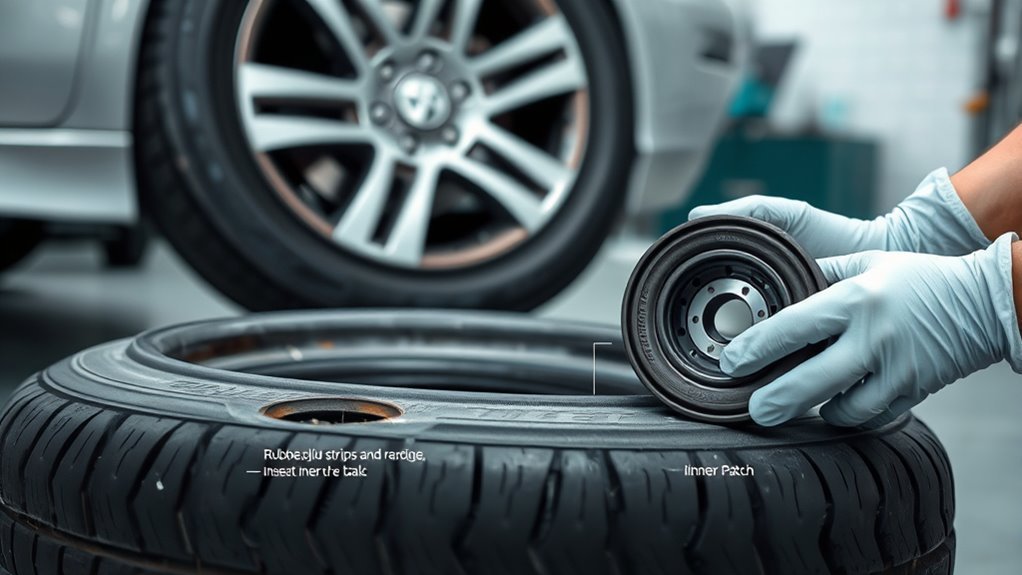
Finding a nail or screw in your Toyota Camry tire can leave you wondering whether a plug, a patch, or a full replacement is the right move. The safest answer depends on where the puncture is, how large it is, how long the tire was driven low, and whether the inside of the tire is damaged.
Quick Answer
For a Toyota Camry, a professional internal repair is usually better than a plug-only repair. A roadside plug can help with a small center-tread puncture in an emergency, but the safer long-term fix is usually a plug-patch style repair after the tire is removed and inspected.
Key Takeaways
- A plug is fast and useful for a small tread puncture, but it should be treated as a temporary roadside repair.
- A proper shop repair usually means removing the tire, inspecting the inside, filling the injury path, and sealing the inner liner.
- Do not repair sidewall damage, shoulder damage, large punctures, bulges, cracks, exposed cords, or a tire driven flat.
- After any repair, check pressure cold, confirm the TPMS light is off, and watch for slow leaks.
Warning: Tire repair is a safety issue, not just a cost choice. If the puncture is outside the repairable tread area, larger than 1/4 inch, near the shoulder, in the sidewall, or the tire was driven flat, replace the tire instead of plugging or patching it.
Tire Plug vs. Patch for a Toyota Camry
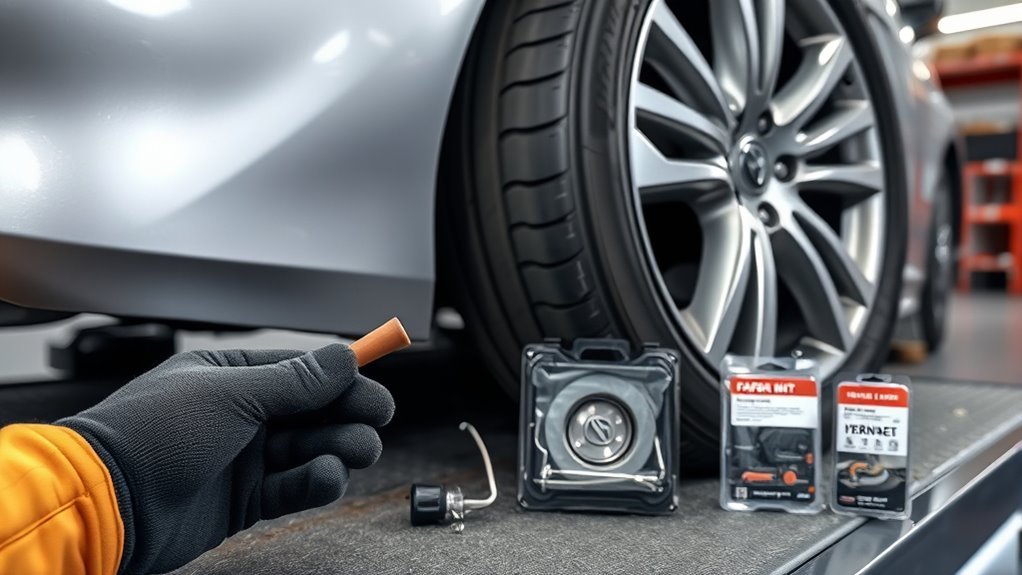
For a Toyota Camry, the best tire repair is not decided by the car model alone. It is decided by the tire injury. A small puncture in the center tread area may be repairable. Damage in the sidewall, shoulder, or outer edge of the tread is usually not safe to repair.
A plug is installed from the outside of the tire. It can slow or stop air loss quickly, which makes it useful when you need to get off the road or reach a tire shop. The downside is that a plug-only repair does not let you inspect the inside of the tire, and it may not fully seal the inner liner.
A patch seals the tire from the inside. A more complete professional repair often uses a plug-patch or similar repair unit that fills the puncture path and seals the inner liner. That is why a shop repair is usually the better long-term answer when the tire is otherwise safe to repair.
At a Glance
| Time Required | Plug-only roadside repair: about 10 to 20 minutes. Professional internal repair: about 30 to 60 minutes, depending on shop workload and tire condition. |
| Difficulty | Plug-only: moderate DIY emergency task. Proper internal repair: shop-level repair because the tire must be removed and inspected. |
| Tools Needed | For a plug: plug kit, reamer, insertion tool, pliers, air compressor, and pressure gauge. For a shop repair: tire machine, internal repair unit, sealant, inspection tools, and balancing equipment. |
| Cost | DIY plug kit: often about $10 to $25. Professional internal repair: commonly about $25 to $60+, depending on shop, tire size, balancing, and local labor rates. |
[Products Worth Considering]

This tire repair screw plug kit includes 60 pieces in two sizes to help you fix punctures quickly on the road. Choose the right screw by puncture size, then drive it in with a screwdriver for an effective seal without needing a flaring tool. The coated screws help prevent leaks and are designed for convenient emergency use across cars, trucks, ATVs, motorcycles, and bicycles.

AUTOWN’s 68-piece tire repair kit helps you fix punctures and plug flats quickly and effectively. It includes a T-handle and spiral probe tool for easy insertion, while the steel patch and plug materials are designed for strong adhesion and long-lasting airtight performance. The compact case makes it convenient for roadside repairs across a wide range of vehicles.
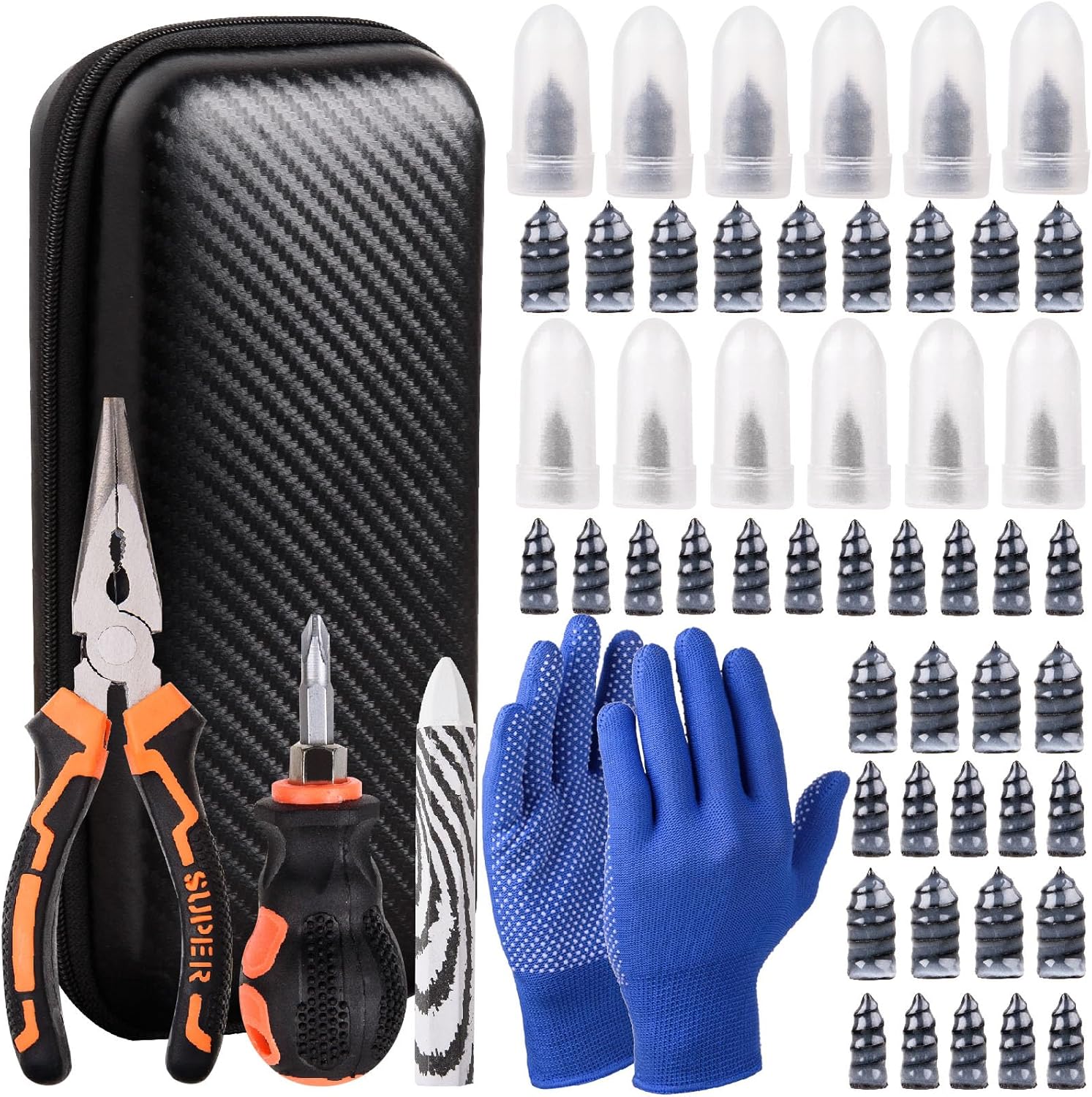
This tire sidewall puncture repair kit fixes flats fast without removing the tire, helping you get back on the road in minutes. It includes self-tapping repair nails, essential tools, gloves, and a portable storage bag for convenient roadside use. Designed for tubeless tires, it helps create a tight, leak-resistant seal for cars, motorcycles, trucks, SUVs, and ATVs.
When a Tire Plug Makes Sense
A tire plug makes sense when you need a quick emergency repair for a small puncture in the center tread area. It is most useful when the tire is still in decent condition, the puncture is straight and clean, and the hole is no larger than 1/4 inch.
Use a plug to regain mobility, not to skip a real inspection. Once the tire is holding air, drive carefully to a tire shop and have the inside checked. A tire can look fine outside but still have liner damage, sidewall heat damage, or broken cords inside.
Small Tread Punctures
A small nail or screw in the center tread is the most common repairable type of tire puncture. Before using a plug, check these points:
- The puncture is in the center tread area, not the shoulder or sidewall.
- The hole is no larger than 1/4 inch.
- The tire has not been driven flat or badly underinflated.
- The tread is not worn out, cracked, bulging, or showing cords.
- There are no nearby previous repairs that weaken the same area.
If any of those checks fail, do not plug the tire. Install the spare, call roadside assistance, or replace the tire.
Quick Roadside Fixes
A plug can help when you are away from home and need to get moving again. Remove the object, ream the hole, insert the plug, trim the excess, inflate the tire, and check for leaks. Then drive gently and avoid high speeds until a technician inspects the tire.
Pro Tip: Keep a small tire-pressure gauge and a 12-volt inflator in your Camry. A plug is not useful if you cannot reinflate the tire and confirm it is holding pressure.
Why a Professional Internal Repair Lasts Longer
A professional internal repair lasts longer because the technician can inspect the tire from the inside before sealing it. That matters because the inside liner holds air, the casing carries load, and the steel belts support the tread. If any of those parts are damaged, a simple plug cannot make the tire safe.
[Products Worth Considering]

Get back on the road fast with this compact tire plug repair kit for tubeless tires. It includes self-vulcanizing rubber plugs, T-handle rasp and insert tools, and a storage box that fits in your glove compartment for easy access. Also included are a 4-way valve steam tool set with valve cores and caps for added roadside convenience.

Use this tire repair rubber screw kit for fast, self-service flat fixes on the road. Choose the matching short or long nail size and twist it into the puncture without removing the tire from the rim. Compact storage keeps the emergency set organized for cars, motorcycles, electric bikes, and bicycles, helping you seal tubeless leaks quickly and reliably.
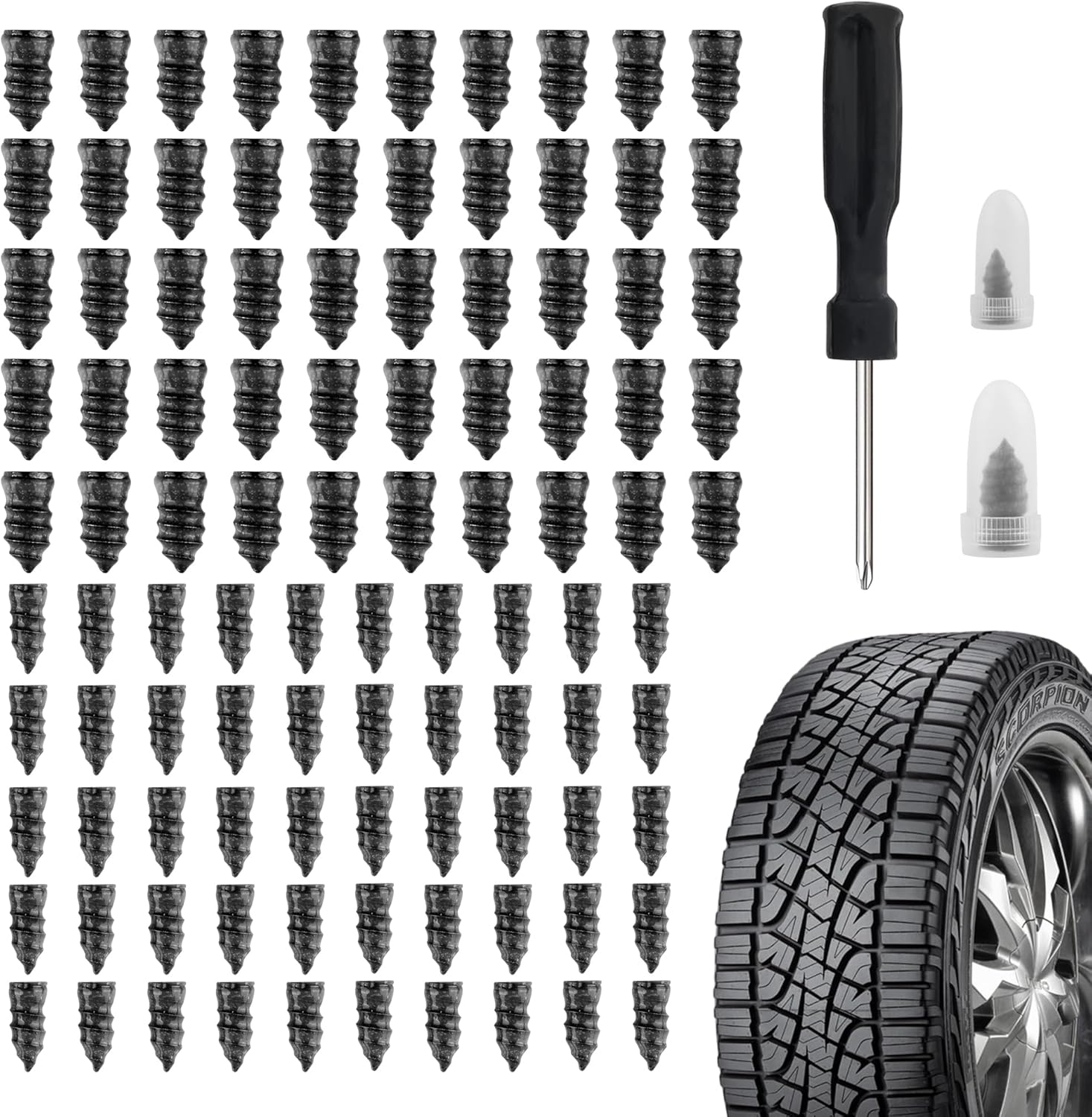
Salior’s tire plug kit provides a fast, reliable self-service fix for punctured or leaking tires without the need for flaring tools. Choose the correct plug size, then screw the nail into the puncture using the included screwdriver for an enhanced seal. The set is durable and convenient for on-the-go maintenance across multiple vehicle types.
Inside Inspection Matters
When a shop removes the tire from the wheel, the technician can look for hidden damage. They can check for rubber dust, liner separation, wrinkles, exposed cords, heat marks, or cuts caused by driving with low pressure. If those signs are present, the tire should be replaced.
Plug-Patch Repair Units
A patch seals the inner liner. A plug fills the puncture channel. A plug-patch repair unit does both in one repair, or a shop may use an equivalent two-piece method. This is more complete than a plug-only repair because it addresses the path where water and air can move through the tire.
The safest repairable puncture is one that is small, clean, in the center tread area, and inspected from inside the tire before the final repair is made.
Lower Risk of Slow Leaks
A plug-only repair can dry out, shift, or leak if the hole is irregular or the tire flexes around the injury. A proper internal repair has a better chance of staying sealed because it bonds to the inner liner and fills the injury path. Still, no repair should be treated as a guarantee. Recheck pressure after the repair and again over the next few days.
How Each Repair Works
A plug repair is done from the outside. The puncturing object is removed, the hole is cleaned with a reamer, and a sticky rubber plug is pushed into the puncture. The tire is then inflated and checked for leaks. This can be helpful in an emergency, but it does not show you what happened inside the tire.
A patch repair is done from the inside. The tire is removed from the wheel, the inside surface is cleaned and buffed, and a patch is bonded over the puncture. A plug-patch repair goes further by sealing the inner liner and filling the puncture path.
A careful shop repair usually follows this process:
- Remove the tire from the wheel.
- Inspect the inside and outside of the tire.
- Confirm the puncture is in the repairable tread area.
- Prepare the injury path and inner liner.
- Install the correct internal repair unit.
- Seal the repair area if required by the repair system.
- Reinflate the tire and check for leaks.
- Balance the wheel if needed.
- Set cold tire pressure to the placard value on the driver door jamb or the value listed in your owner information.
Tire Plug vs. Patch Costs on a Camry
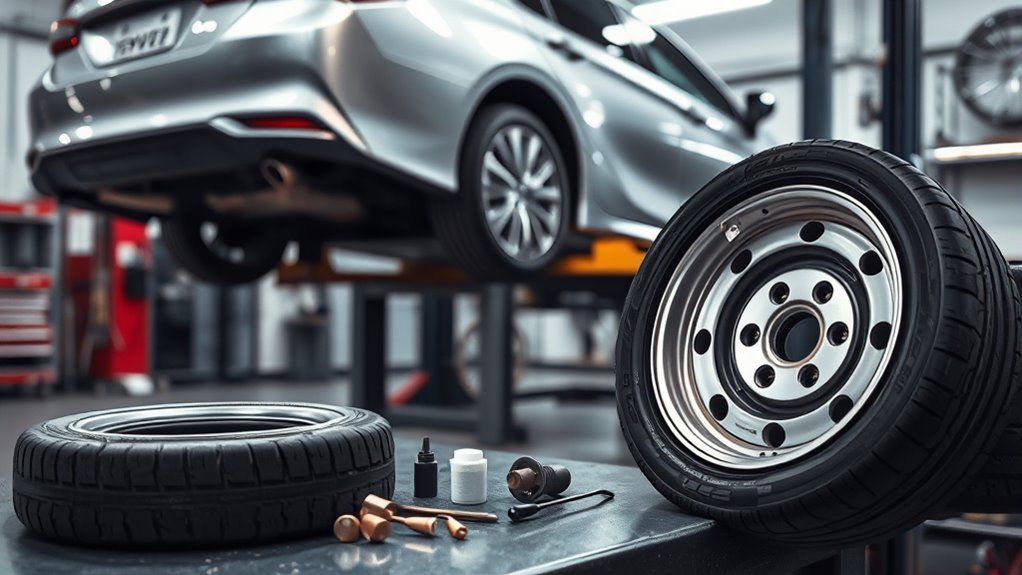
A plug-only repair is cheaper upfront because you can buy a small kit and do the work without removing the tire from the rim. Many plug kits cost about $10 to $25. That makes them appealing for roadside use, but the low price does not include a professional inspection.
A professional internal repair costs more because it takes more labor and equipment. Many shops charge about $25 to $60 or more, depending on the tire, wheel, local labor rate, and whether balancing is included. Some shops may repair a simple puncture for free if you bought the tire from them, while others may refuse the repair if it does not meet their safety policy.
| Repair Choice | Typical Use | Main Tradeoff |
|---|---|---|
| Plug-only | Emergency repair for a small center-tread puncture | Fast and cheap, but no internal inspection |
| Patch-only | Internal sealing in some repair situations | Seals the liner but may not fill the injury path |
| Plug-patch or equivalent internal repair | Best long-term option for a repairable puncture | Costs more and requires tire removal |
| Replacement | Sidewall, shoulder, large, worn, cracked, or heat-damaged tire | Highest cost, but safest when repair limits are exceeded |
[Products Worth Considering]

KEVWR self-service tire repair nails are made to firmly fix punctures with strong bite and reliable sealing, helping prevent water from entering the wound. The spiral rubber screws are easy to insert without removing the tire, providing a simple DIY repair for many vehicle and tire types. Suitable for cars, motorcycles, trucks, bikes, buses, and agricultural tires with two size options for different puncture nails.

This self-service tire repair nail kit includes 60 pieces (30 small + 30 large) to help seal punctures quickly without needing an auto shop visit. The nails are designed to fit different hole sizes and provide a tight connection with sealing glue to help prevent air and water intrusion. Suitable for cars, motorcycles, trucks, and other vehicles, it’s an easy, efficient way to patch roadside tire damage.

TP-M13W combination repair unit kit includes wrapped stems with matching patches for fast, reliable tire repairs. It’s suitable for both radial and bias ply tires and is designed for chemical or heat vulcanization. Gray vulcanizing gum with blue backing helps create a strong bond, with the stem portion wrapped for added effectiveness.
When You Shouldn’t Repair the Tire
Not every Camry tire should be repaired. Replace the tire if the damage creates a safety risk or if a technician cannot confirm that the tire casing is sound.
| Condition | Repair? | Why |
|---|---|---|
| Puncture larger than 1/4 inch | No | The injury is too large for a safe standard repair. |
| Sidewall or shoulder damage | No | These areas flex heavily and are not safe repair zones. |
| Bulges, blisters, cracks, or exposed cords | No | They can signal casing or structural damage. |
| Tire driven flat or very low | Usually no | Heat and sidewall flex can damage the tire internally. |
| Punctures too close together or near an old repair | Often no | Overlapping repairs can weaken the tire. |
| Tread is worn below safe/legal depth | No | A worn-out tire is not worth repairing. |
What to Do After a Tire Repair
After your Camry tire is repaired, check it like a safety item for the next few drives. Use the cold tire pressure listed on the driver-door placard or in your Toyota owner information. You can also review NHTSA tire safety guidance for general tire-pressure and inspection advice.
- Check tire pressure when the tire is cold.
- Look for bubbles or hissing around the repair area if you suspect a leak.
- Watch the TPMS light after driving for a few minutes.
- Do not ignore vibration, pulling, thumping, or a repeated pressure drop.
- Have the tire rechecked if it loses pressure again.
Note: If you install the compact spare, follow the speed and distance limits in your Camry owner information. A temporary spare is meant to get you to service, not replace normal driving on a full-size tire.
Which Is Better for a Camry?
For a repairable Toyota Camry tire puncture, the best long-term option is usually a professional internal repair that seals both the inner liner and the puncture path. A plug-only repair is best reserved for emergencies when the puncture is small, centered in the tread, and you need to reach a shop.
Choose replacement instead of repair when the puncture is large, the damage is near the sidewall, the tire was driven flat, or the tire shows wear or structural damage. Paying for a new tire is frustrating, but it is safer than trusting a repair that cannot support normal highway use.
Frequently Asked Questions
What is better to fix a tire, a plug or a patch?
A professional internal repair is better than a plug-only repair for long-term use. A plug can help in an emergency, but a shop should remove the tire, inspect the inside, and use a repair method that seals the inner liner and the puncture path.
Which tire repair method is best?
For a repairable puncture in the center tread area, a plug-patch or equivalent internal repair is usually the best method. It lets the technician inspect the tire and seal the damage more completely than an outside plug.
How long does a plug and patch last on a tire?
A plug-only repair should be treated as temporary until the tire is inspected. A properly installed internal repair can last a long time if the puncture is repairable, the tire is healthy, and the repair holds pressure without leaks.
Which is cheaper, a plug or a patch?
A plug is cheaper upfront because a DIY kit often costs about $10 to $25. A professional internal repair usually costs more because the tire must be removed, inspected, repaired, reinflated, and sometimes balanced.
Can I drive on a plugged Camry tire?
You can usually drive carefully on a properly holding plug long enough to reach a tire shop, but you should not treat it as a full repair. Avoid high speeds, long trips, and heavy loads until the tire is inspected from the inside.
Can a tire be repaired twice?
Sometimes, but only if the new puncture is in a safe repair area and is not too close to the old repair. A technician needs to inspect the tire and decide whether another repair would overlap, weaken the tire, or create an unsafe condition.
Conclusion
For your Toyota Camry, a plug is the quick emergency option, while a professional internal repair is the safer long-term choice for a repairable tread puncture. The tire should be removed, inspected, and repaired from the inside whenever you want a dependable fix.
If the puncture is in the sidewall, near the shoulder, larger than 1/4 inch, or the tire was driven flat, skip the repair and replace the tire. The goal is not just to stop the leak. It is to keep the tire safe at real road speeds.
Sources
- NHTSA Tire Safety — tire pressure, tire inspection, and general tire safety guidance.
- 49 CFR § 571.138, Tire Pressure Monitoring Systems — federal TPMS standard for light vehicles.
- Toyota Owner Manuals and Warranty Resources — owner information for tire pressure, spare tire use, and model-specific warnings.
- U.S. Tire Manufacturers Association — tire industry safety resources and tire manufacturer guidance.