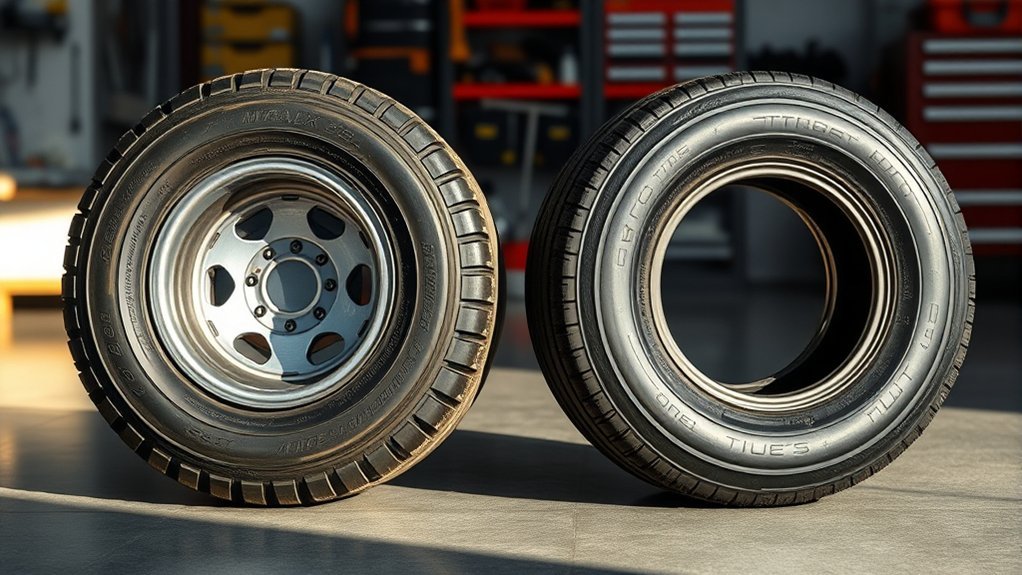
Your Toyota Camry spare tire size depends on the model year, trim, wheel package, market, and what a previous owner may have changed. Many 2012 to 2017 U.S. Camry and Camry Hybrid models use a T165/80D17 compact spare, but you should confirm the exact size on your spare tire sidewall, in your owner’s manual, or through a Toyota parts lookup by VIN before buying one.
Quick Answer
For many 2012 to 2017 Toyota Camry models, the compact spare size is T165/80D17. Some older Camrys may have a full-size spare, and newer or different-market cars can vary. Always verify by checking the spare sidewall, owner’s manual, trunk label, or Toyota VIN-based parts lookup before driving or buying.
Key Takeaways
- A Toyota Camry spare is not one-size-fits-all. Match the tire size, wheel fitment, load rating, and storage hardware.
- Many 2012 to 2017 Camry models use a T165/80D17 compact spare, but the safest answer is the size printed on your actual spare or listed for your VIN.
- A compact donut spare is temporary. Follow the sidewall and owner’s manual limit, commonly no more than 50 mph and short-distance use.
- A full-size spare is better for normal driving, but it must match your Camry’s road tires and wheel specs.
- Check spare pressure, age, tread, cracks, jack, lug wrench, wheel-lock key, and hold-down hardware before a road trip.
At a Glance
| Time Required | 5 to 10 minutes to confirm the spare size, pressure, age, and tools |
| Difficulty | Easy for inspection, moderate if you must test-fit the spare |
| Tools Needed | Tire pressure gauge, flashlight, owner’s manual, VIN, jack, lug wrench, and wheel-lock key if equipped |
| Cost | Inspection is free. Replacement cost varies by OEM kit, tire, wheel, and tools needed. |
Understanding Spare Tire Types: Full-Size vs. Donut
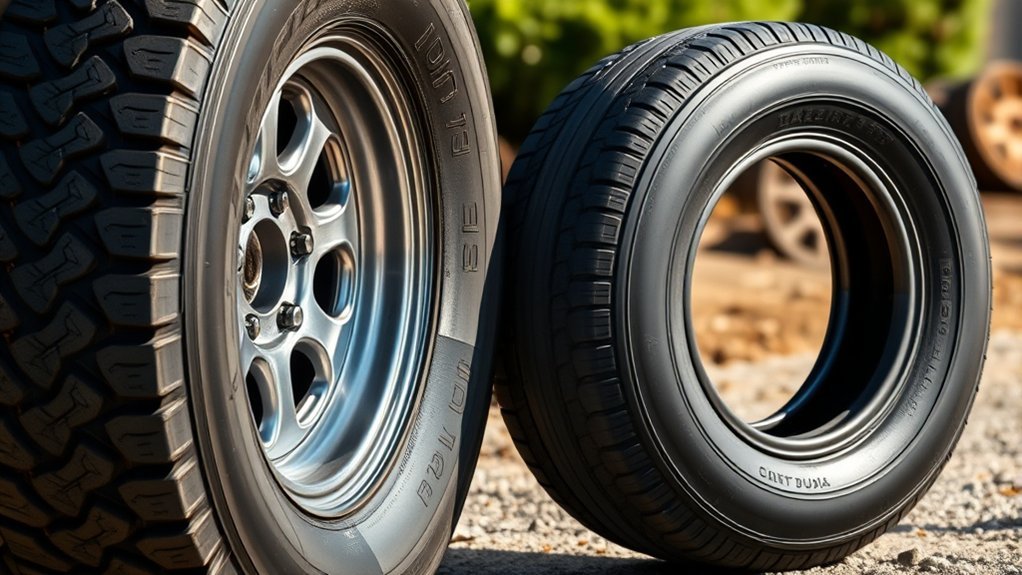
When you get a flat tire, the spare in your Camry may be either a full-size spare or a compact spare, often called a donut. The right way to use it depends on which type you have.
A full-size spare is meant to be close to the same size as the tires already on the car. If it truly matches your road tires and wheel specs, it offers better handling, braking, and ride comfort than a compact spare. It also gives you more flexibility if you are far from a tire shop.
A compact spare is smaller, lighter, and easier to store under the trunk floor. It is made for temporary emergency use only. Most compact spares carry strict speed and distance limits, so you should replace or repair the regular tire as soon as possible.
Warning: Do not treat a compact Camry spare like a normal tire. Follow the limit printed on the spare sidewall and in your owner’s manual. Many compact spares are limited to about 50 mph and short-distance emergency driving only.
| Spare Type | Best Use | Main Caution |
|---|---|---|
| Full-size spare | Longer emergency driving when it matches the road tire and wheel specs | Must match the Camry’s tire diameter, load rating, wheel fitment, and brake clearance |
| Compact donut spare | Short emergency drive to a safe repair location | Temporary use only, usually lower speed and distance limits |
What Spare Tire Size Fits My Toyota Camry?
The most reliable answer is the size printed on your existing spare tire. Look for a code such as T165/80D17. The first letter and numbers tell you it is a temporary spare, its width, sidewall ratio, and rim diameter.
For many 2012 to 2017 Toyota Camry and Camry Hybrid models sold in the U.S., the common compact spare size is T165/80D17. Still, do not buy a replacement based only on that range. Tire and wheel fitment can change by trim, wheel package, country, hybrid equipment, and previous repairs.
Some older Camrys may have a full-size spare instead of a compact spare. In that case, the spare should match the normal tire size listed on the driver-door tire placard and should be mounted on a wheel that fits your Camry correctly.
| Camry Example | Common Spare Setup | What to Verify |
|---|---|---|
| Many 2012 to 2017 U.S. Camry and Camry Hybrid models | T165/80D17 compact spare | Spare sidewall, owner’s manual, trunk label, and VIN-based Toyota parts lookup |
| Some older Camry models | Full-size spare may be present | Road tire size, wheel size, bolt pattern, load rating, and storage-well fit |
| Camrys with changed wheels or missing spare kits | May differ from factory setup | VIN, current wheel size, brake clearance, jack/tools, and hold-down hardware |
Note: Do not assume a Toyota Corolla spare fits a Toyota Camry. Even if the bolt pattern looks similar, the tire diameter, hub fit, load rating, brake clearance, and temporary-use limits may not be right for your car.
[Products Worth Considering]

This car D-wheel lock nut key provides an anti-theft solution for D-shaped wheel lock bolts, helping keep your wheels secure. It features a flower-shaped internal pattern that resists micro-adjustment theft while allowing removal and mounting of compatible locking nuts. Made for reliable performance under high torque, it’s easy to use with standard socket wrench turning for quick tire maintenance and emergency repairs.

The Dr.Roc spare tire tool kit helps you release, lower, or raise your spare tire with reliable extension tools and a lug nut wrench. It is made from rustproof automotive-grade steel and includes an organized carry case for convenient storage. Designed for compatibility with select GM models from the late 1990s through 2019, it uses upgraded extension components to install and remove spare tires with less hassle.

This spare tire tool kit is designed for the 2004 to 2018 Ford F-150 to help you loosen and tighten wheel lug nuts and manage the spare tire and provided jack functions from underneath the vehicle. It includes the lug nut wrench and extension pieces plus a convenient storage carrying case for organized transport. The jack itself is not included.
How to Confirm the Right Camry Spare Tire Size
Before buying a replacement spare, use more than one check. This prevents buying a wheel that bolts on but does not clear the brakes, support the load, or fit securely in the trunk.
- Read the spare sidewall. If your car already has a spare, the size is molded into the rubber. A compact spare may show a code such as T165/80D17.
- Check the owner’s manual. Use the tire-changing and specifications sections in the official manual for your model year. Toyota owner manuals are available through Toyota’s owner manual portal.
- Use your VIN for parts lookup. A Toyota dealer or Toyota Genuine Parts lookup can help match the spare wheel, tire, jack, tools, and retainers to your exact vehicle.
- Check the driver-door tire placard. This shows the original road tire size and pressure. It is especially helpful if you are considering a full-size spare.
- Inspect trunk storage. A full-size spare may not fit under the cargo floor the same way a compact spare does.
- Confirm tool compatibility. Make sure the jack, lug wrench, wheel lock key, and hold-down bolt are present and fit your Camry.
Pro Tip: Take a photo of the spare tire size, DOT date code, jack location, and lug wrench before a trip. If you need a replacement on the road, those photos make it easier to buy the correct part quickly.
[Products Worth Considering]

Upgrade your wheels with MIKKUPPA M12x1.5 mag seat lug nuts built for secure, corrosion-resistant performance. These closed-end chrome lug nuts are a direct replacement for select Toyota models, including Camry, Corolla, RAV4, Sienna, Avalon, Highlander, Matrix, Venza, and Prius. Triple-chromium plating and cold-forged, heat-treated steel help deliver strength for daily driving and replacement needs.

The Trivd Frol 1/2" air impact wrench delivers high performance torque up to 1500 ft-lbs with a twin hammer impact mechanism for strong, balanced blows. It features an ergonomic grip, compact lightweight design, and quick-stop control with 3 forward speeds up to 8000 RPM plus a reverse speed. Built for demanding automotive repair and tire shop work, the rear exhaust helps keep debris away from the surface.

These M14x1.5 closed-end chrome lug nuts are a one-piece replacement designed for secure fitment on compatible GM, Ford, and select Chrysler/Dodge models. Featuring a 60-degree conical seat and anti-rust chrome plating, they help resist corrosion and maintain a bright look for everyday driving. Built for long-term durability, they include OEM-style part references and are backed by 12 months of support.
Spare Tire Compatibility and Fitment Tips
Spare tire fitment is more than the tire size printed on the sidewall. The wheel must also match the car. A wrong wheel can rub the brakes, sit off-center, damage studs, trigger vibration, or fail to secure properly.
Use this checklist before you buy a spare wheel or tire:
- Tire size: Match the temporary spare size listed for your Camry or match the normal road tire if using a full-size spare.
- Wheel diameter and width: The tire must be mounted on a wheel made for that tire size.
- Bolt pattern: The wheel must match your Camry’s lug pattern exactly.
- Hub fit: The center bore must fit correctly so the wheel seats flat against the hub.
- Brake clearance: The wheel must clear the front and rear brake hardware.
- Load rating: The tire must support the vehicle load shown on the tire sidewall and vehicle placard.
- Storage fit: The spare must fit safely in the trunk well and be held down with the correct retainer.
- TPMS behavior: Some spare wheels do not have a tire pressure sensor, so the TPMS light may stay on while the spare is installed.
If you are not sure, test-fit the spare at home or ask a tire shop or Toyota dealer to confirm it. Do not wait until you are on the shoulder of the road to discover that the spare does not fit.
Pros and Cons of Full-Size Spares vs. Donuts

Choosing between a full-size spare and a donut spare depends on how you drive and how much trunk space you are willing to give up.
A full-size spare is the better choice if you drive long distances, travel in rural areas, or want the car to behave more normally after a flat. It can be safer and more convenient when it matches your road tires. The tradeoff is weight, cost, and space. A full-size wheel and tire may not fit neatly in the spare well of every Camry.
A compact donut spare saves trunk space and weight. It is usually easier to lift and store. The tradeoff is that it is only a temporary emergency tire. It can change braking, steering, ground clearance, traction control behavior, and ride comfort.
| Feature | Full-Size Spare | Compact Donut Spare |
|---|---|---|
| Driving feel | Closest to normal if it matches | Noticeably different |
| Speed and distance | Usually fewer restrictions if tire is matching and roadworthy | Temporary, often about 50 mph and short distance only |
| Storage | Takes more space | Fits compact trunk wells more easily |
| Cost | Usually higher | Usually lower |
| Best for | Frequent road trips and drivers who want more backup capability | Emergency use until the regular tire is repaired |
Safe Use Rules for a Compact Camry Spare
A compact spare is a get-you-to-help tire, not a normal replacement tire. After installing it, drive gently, avoid sudden braking, and get the regular tire repaired or replaced as soon as possible.
- Follow the sidewall limit. If the spare says 50 mph, do not exceed 50 mph.
- Keep the trip short. Use the spare only long enough to reach a safe repair location.
- Avoid heavy loads. Do not tow, overload the trunk, or take a long high-speed trip on a compact spare.
- Expect warning lights. TPMS, traction control, or stability systems may behave differently with a temporary spare installed.
- Repair the road tire promptly. A compact spare is not meant for repeated daily use.
Warning: If a front tire fails on a front-wheel-drive Camry, check your owner’s manual before installing the compact spare. Many front-wheel-drive vehicles recommend moving a rear wheel to the front and placing the compact spare on the rear to reduce steering and drivetrain stress.
How to Keep Your Spare Tire in Top Shape
Your spare can look unused and still be unsafe. Air pressure drops over time, rubber ages, and trunk moisture can rust tools or damage the wheel. Add the spare tire to your normal maintenance routine.
Regular Pressure Checks
Check the spare tire pressure at least twice a year and before long trips. Compact spares often require much higher pressure than normal road tires, commonly around 60 PSI, but the correct number is the pressure printed on the spare tire sidewall or listed in your owner’s manual.
Use a tire pressure gauge when the tire is cold. If the spare is low, inflate it before you need it. A flat spare during a roadside emergency can turn a simple tire change into a tow.
Routine Tread Inspections
Look for cracks, cuts, bulges, uneven wear, exposed cords, rust on the wheel, or damage around the valve stem. Check the tread depth too. A common minimum tread threshold is 2/32 inch, but any spare that is cracked, old, damaged, or unable to hold air should be replaced.
Also check the DOT date code on the sidewall. The last four digits show the week and year the tire was made. For example, 2519 means the tire was made in the 25th week of 2019. Spare tires can age out even if they have never touched the road, so inspect age and condition together. For broader tire safety guidance, see the NHTSA tire safety resource.
Check the Jack, Tools, and Hardware
A good spare does not help if the tools are missing. Confirm that your Camry has the jack, jack handle, lug wrench, wheel-lock key if equipped, and the hold-down hardware that secures the spare in the trunk. Make sure the jack is not bent or rusted and that the lug wrench fits your wheel nuts.
If you bought a used Camry, check this immediately. Used cars are often missing the jack, cargo-floor retainer, or wheel-lock key.
What to Do After Installing the Spare
Once the spare is on the car, your goal is to reach a safe repair location. Do not continue normal driving unless you installed a matching full-size spare in good condition.
- Drive slowly and smoothly. Avoid hard braking, fast turns, and potholes.
- Follow the spare’s speed limit. Use the lower of the sidewall limit and owner’s manual limit.
- Go directly to repair. A tire shop can inspect whether the flat tire can be repaired or must be replaced.
- Have lug nuts checked. After a wheel change, have the lug nut torque checked with a torque wrench.
- Return the spare to storage. Reinflate it, inspect it, and secure it properly before putting it back under the trunk floor.
The Importance of Having a Spare Tire for Emergencies
A properly fitted and inflated spare tire can keep a flat tire from becoming a long roadside delay. It gives you a way to move the Camry to a safer place, reach a tire shop, or avoid waiting hours for a tow.
That said, the spare is only useful if it is ready. A missing jack, flat compact spare, cracked old tire, or wrong wheel can leave you stranded. That is why the best time to inspect your spare is before you need it.
A spare tire is emergency equipment. Treat it like one: confirm the fit, check the pressure, inspect the age, and know the limits before a flat happens.
Where to Buy Spare Tires for Your Toyota Camry
The safest place to start is a Toyota dealer or Toyota parts lookup using your VIN. This helps match the spare wheel, tire, jack, tool kit, labels, and trunk hold-down parts to your exact Camry.
You can also buy compatible spare tires or wheels from reputable tire shops and online tire retailers. Before ordering, confirm the tire size, wheel diameter, bolt pattern, hub fit, brake clearance, load rating, and whether the wheel is meant only for temporary use.
Salvage yards can be cheaper, but inspect used spares carefully. Avoid a spare with sidewall cracks, impact damage, rusted wheel areas, missing labels, unknown age, or a DOT date that makes it too old for safe use.
- Best for exact fit: Toyota dealer or VIN-based OEM parts lookup.
- Best for price comparison: Tire shops and reputable online tire retailers.
- Best budget option: Salvage yard, only if the size, condition, and age check out.
- Best upgrade: Matching full-size spare, if it fits your Camry, your trunk, and your budget.
[Products Worth Considering]

Upgrade your wheels with MIKKUPPA closed-end lug nuts designed for reliable fit and corrosion resistance. The one-piece, cold-forged and heat-treated steel construction helps resist rust and stripping, while the integrated finish delivers a durable black appearance. Built to OEM standards with a conical 60-degree seat, these nuts provide a secure solution for compatible Ford, Honda, Jeep, and Chevrolet models.

Secure a full-size spare on your trailer with this powder-coated steel spare tire mount bracket. It fits most 4-, 5-, and 6-lug wheel bolt patterns and mounts to trailer tongues up to 4 in wide and 5 in tall. Built for reliable carry with a max 150 lb load rating and includes zinc-plated hardware for straightforward installation.
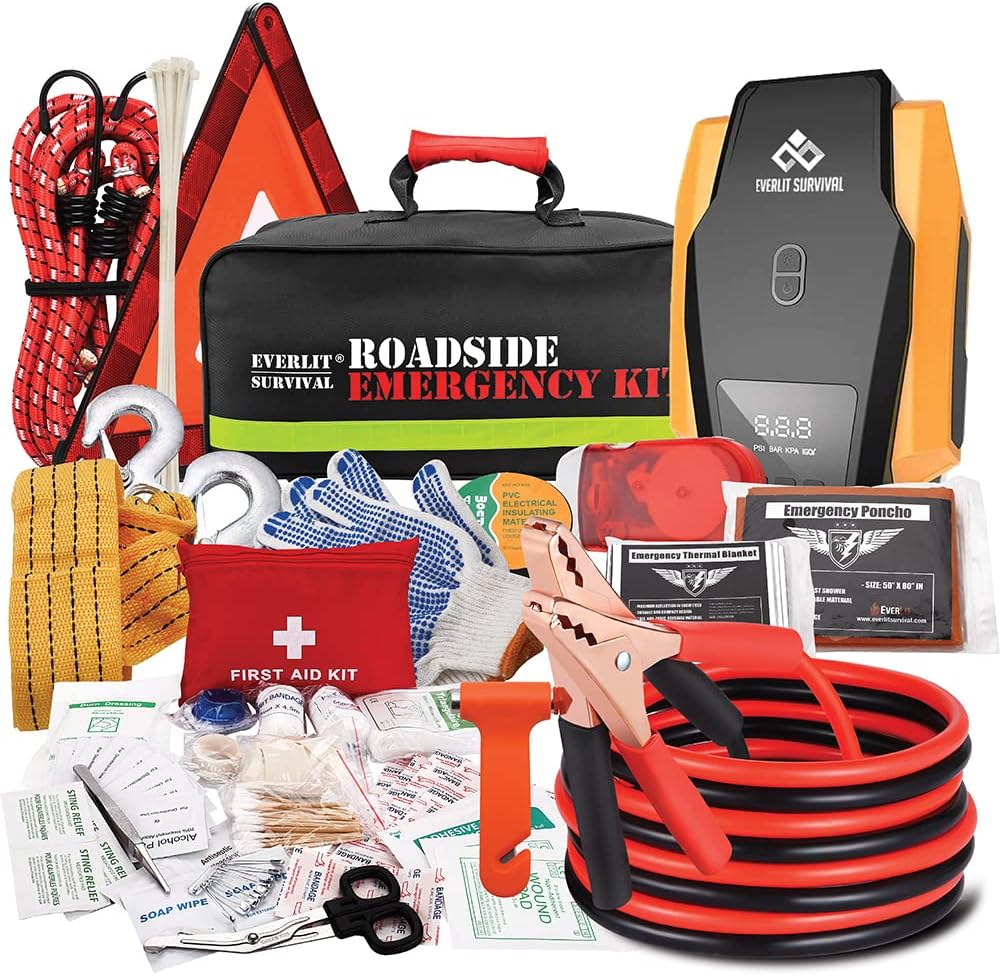
The Everlit Road Guardian emergency kit is designed for roadside breakdowns, combining essential safety gear and roadside tools in one compact bag. It includes a digital 12V auto tire inflator with preset and auto shutoff, plus 12-foot 8-gauge jumper cables to get you moving again. You also get a full 108-piece first aid kit, reflective warning tools, safety gloves, and emergency convenience items for safer travel.
Frequently Asked Questions
Can a spare donut in a 2017 Toyota Camry last 50 miles?
A compact spare in a 2017 Camry is usually intended only for short emergency driving. Many donut spares follow the common 50/50 rule: no more than about 50 miles and no more than about 50 mph. Always follow the lower limit printed on your spare sidewall or in your owner’s manual.
Is a full-size spare better than a donut?
Yes, a full-size spare is usually better for driving feel, braking, and longer emergency use, but only if it matches your Camry’s tire size, wheel fitment, load rating, and brake clearance. A mismatched full-size spare can still be unsafe.
What is the 50/50 rule for spare tires?
The 50/50 rule means driving no more than about 50 miles and no faster than about 50 mph on a compact spare. It is a simple safety guideline, not a replacement for the instructions printed on your specific spare tire or in your Toyota owner’s manual.
What spare tire size does a 2014 Toyota Camry use?
Many 2014 Toyota Camry and Camry Hybrid models use a T165/80D17 compact spare, but you should confirm your exact car by checking the spare sidewall, owner’s manual, trunk label, or Toyota parts lookup by VIN.
Can I use a Corolla spare tire on a Toyota Camry?
Do not assume a Corolla spare fits a Camry. Even if a wheel appears to bolt on, it may have the wrong tire diameter, hub fit, load rating, brake clearance, or temporary-use limit. Use the spare specified for your Camry.
How often should I check my Camry spare tire?
Check the spare at least twice a year and before long trips. Confirm pressure, tread, cracks, DOT age, valve condition, jack, lug wrench, and wheel-lock key. Compact spares often need higher pressure than normal road tires.
Conclusion
The right Toyota Camry spare tire depends on your exact car, not just the model name. Many 2012 to 2017 Camry models use a T165/80D17 compact spare, while some older cars may have full-size spares. Still, the safest move is to confirm the size and fit through the spare sidewall, owner’s manual, trunk label, or Toyota VIN-based parts lookup.
If you use a compact donut spare, drive carefully, follow the sidewall speed and distance limits, and repair the regular tire as soon as possible. If you want a full-size spare, make sure it matches the tire, wheel, load, brake-clearance, and storage requirements. A spare tire is peace of mind only when it fits, holds air, and is ready before the flat happens.
Sources
- Toyota Owner’s Manuals and Warranty Guides — model-year owner manual lookup and spare tire instructions.
- Toyota Genuine Parts — VIN-based OEM parts lookup for spare wheel, tire, jack, and tool components.
- NHTSA Tire Safety — tire pressure, tread, DOT date code, and general tire safety guidance.
- Tire Rack Tire Tech: Spare Tires — temporary spare tire use and limitations.
- AAA Newsroom: Spare Tires Continue to Disappear — context on spare tires, inflator kits, and modern vehicle equipment trends.