
When you drive a Toyota Camry on a donut spare tire, treat it as a short-term emergency tire, not a normal replacement. In most cases, stay at or below 50 mph and drive only far enough to reach a tire shop, repair facility, or another safe place to replace the damaged tire.
Quick Answer
A Toyota Camry donut spare tire should usually be driven no faster than 50 mph. Keep the trip short, commonly around 50 miles or less, and follow the lower limit printed on the spare tire or listed in your Camry owner’s manual.
Key Takeaways
- Do not treat a donut spare as a normal tire. It is for temporary emergency use only.
- Stay at or below 50 mph unless your spare tire label or owner’s manual gives a lower limit.
- Drive only far enough to repair or replace the damaged tire. Avoid long highway trips.
- Check the spare’s cold pressure before driving because compact spares often need higher pressure than regular tires.
- Tow the Camry instead if the spare is damaged, underinflated, very old, or if the car feels unstable.
At a Glance
| Time Required | About 5 minutes for the pre-drive check after the spare is installed |
| Difficulty | Easy safety check, but stop and call for help if anything looks damaged |
| Maximum Speed | Usually 50 mph, or the lower limit printed on the spare |
| Driving Distance | Keep it short, commonly around 50 miles or less |
| Tools Needed | Tire pressure gauge, jack, lug wrench, wheel lock key if equipped |
| Best Destination | Nearest safe tire repair shop, Toyota dealer, or home if very close |
What Is a Donut Spare Tire and Its Purpose?
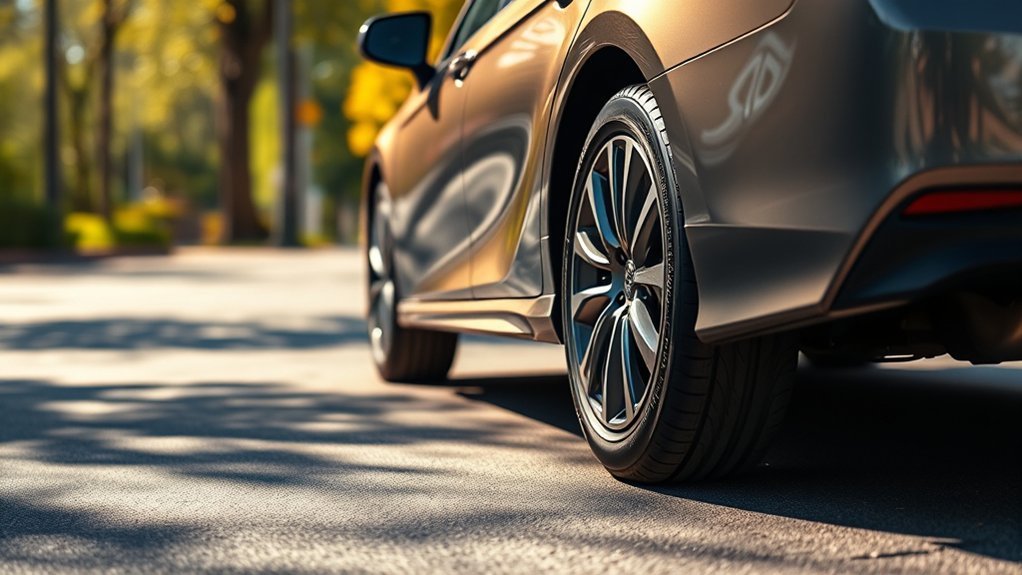
A donut spare tire, also called a compact spare or temporary spare, is a smaller tire and wheel assembly made to help you after a flat tire. It saves trunk space and weight, but it does not match the grip, braking feel, heat control, tread depth, or durability of a full-size road tire.
That smaller design is why you should not use it like a normal Camry tire. A donut spare has a smaller contact patch, a different tread design, and limited speed and distance ratings. Its job is simple: help you get off the roadside and reach a place where the original tire can be repaired or replaced.
Warning: Do not use a donut spare for daily driving, long trips, aggressive cornering, towing, or high-speed highway travel. If you cannot stay within the spare tire’s limits, call roadside assistance or tow the vehicle.
Toyota Camry Donut Spare Speed and Distance Limits
Most Toyota Camry compact spare tires follow the common temporary-spare limit of 50 mph. Some spares also use the common “50/50” rule: no more than about 50 mph and no more than about 50 miles. Your exact limit can vary by model year, spare tire label, and tire condition, so always follow the lowest listed limit.
A donut spare is meant to get you to help, not to finish a normal commute, road trip, or highway drive.
Before you drive, look at the sidewall of the spare tire. Many compact spares have wording such as “temporary use only” and a maximum speed printed directly on the tire. You can also check the Toyota owner’s manual for your Camry model year through Toyota Owner’s Manuals and Warranties.
Before You Drive, Check These Safety Items
A donut spare can only help if it is inflated and undamaged. The National Highway Traffic Safety Administration recommends checking the pressure of all tires, including the spare, at least once a month when the tires are cold. Cold means the car has not been driven for at least three hours.
- Check pressure first. Use the pressure listed for the compact spare in the owner’s manual, tire placard, or spare tire label. Do not use the regular tire pressure if the compact spare lists a different PSI.
- Inspect the sidewall. Do not drive on a spare with cracks, bubbles, cuts, exposed cords, or sidewall separation.
- Confirm the lug nuts are secure. If you changed the tire yourself, recheck for looseness after a short, slow drive if it is safe to stop. Use the torque specification in your Camry owner’s manual or have a tire shop check it.
- Look for a TPMS light. Your Camry may show a tire pressure warning after the spare is installed. Do not ignore it.
- Plan the shortest safe route. Choose lower-speed roads when possible and avoid rough shoulders, potholes, and standing water.
Note: Compact spares often require higher inflation pressure than regular tires. The correct pressure is the one listed by Toyota, the tire placard, the owner’s manual, or the spare tire label.
[Products Worth Considering]

This car D-wheel lock nut key provides an anti-theft solution for D-shaped wheel lock bolts, helping keep your wheels secure. It features a flower-shaped internal pattern that resists micro-adjustment theft while allowing removal and mounting of compatible locking nuts. Made for reliable performance under high torque, it’s easy to use with standard socket wrench turning for quick tire maintenance and emergency repairs.

This ecocstm ratchet wrench is designed to make emergency and routine tire changes faster with a 360° rotating head and quick forward/reverse switching. The extended handle provides extra leverage to reduce effort and hand fatigue, while the adapter helps fit many scissor jacks on cars, SUVs, trucks, and vans. Built for reliable performance with durable construction, it’s a practical travel essential for on-the-road preparedness.

The Dr.Roc spare tire tool kit helps you release, lower, or raise your spare tire with reliable extension tools and a lug nut wrench. It is made from rustproof automotive-grade steel and includes an organized carry case for convenient storage. Designed for compatibility with select GM models from the late 1990s through 2019, it uses upgraded extension components to install and remove spare tires with less hassle.
How Far Can You Drive on a Donut Spare Tire?
You should drive only as far as needed to reach a safe repair option. For many donut spares, that means about 50 miles or less. If the tire shop is farther away, the safer choice is to stop sooner, call roadside assistance, or arrange a tow.
Distance matters because heat builds up as the spare rolls. A compact spare has less rubber, less tread depth, and less cooling capacity than a regular tire. The longer you drive, the more stress you put on the spare, the wheel bearings, the suspension, and your ability to stop safely.
If you installed the spare at night, in heavy rain, on a freeway shoulder, or far from town, do not push the distance just because the car can still move. Drive to the nearest safe place and reassess the tire, pressure, and route.
How Fast Can You Drive on a Donut Spare Tire?
You should usually keep your Toyota Camry at or below 50 mph on a donut spare. If your spare tire sidewall or owner’s manual lists a lower speed, follow the lower limit. Do not assume the car is safe at higher speeds just because the steering feels normal at first.
At higher speeds, the compact spare can heat up faster, grip less effectively, and make the car harder to control during braking or quick lane changes. The spare may also affect traction control, stability control, and anti-lock braking behavior because it may not match the size and rolling characteristics of the other tires.
- Accelerate slowly and avoid sudden throttle changes.
- Leave more following distance than usual.
- Avoid sharp turns, hard braking, and fast lane changes.
- Stay out of the left lane on multi-lane roads.
- Turn on hazard lights only when local law and road conditions make it appropriate.
Where Should You Install a Camry Donut Spare?
Follow the instructions for your exact Camry model year. If the flat tire is on the front, some vehicle manuals advise moving a good rear tire to the front and putting the compact spare on the rear. This can reduce stress on the drive axle and improve steering and braking feel.
That extra tire swap is not always safe on the roadside. If you are on a narrow shoulder, in heavy traffic, in bad weather, or you do not have stable ground for the jack, do not attempt extra wheel changes. Install the spare only if you can do it safely, then drive slowly to professional help or call for a tow.
Pro Tip: Before a road trip, check that your Camry has a usable spare, jack, lug wrench, and wheel lock key if equipped. A flat spare can turn a simple tire problem into a tow.
Why Speed Limits Matter for Donut Tires

Speed limits matter because a donut spare does not have the same tread width, structure, or heat tolerance as a regular Camry tire. A higher speed can reduce control at the exact moment you need more control, such as merging, braking, or avoiding road debris.
| Risk Factor | What It Can Do |
|---|---|
| Heat buildup | Can weaken the temporary spare during longer or faster driving |
| Reduced traction | Can make braking and cornering less predictable |
| Smaller contact patch | Gives the tire less road grip than a full-size tire |
| Different tire diameter | May affect handling, drivetrain load, and stability systems |
| Longer stopping distance | Leaves less margin in traffic, rain, or emergency stops |
Essential Safety Tips for Driving on a Donut Spare
Once the donut spare is installed, your goal is to drive calmly and predictably. Avoid anything that asks the spare tire to handle heat, speed, or sudden load changes.
- Use lower-speed roads. Avoid freeways when a safe local route is available.
- Brake early. Give yourself more space than usual at intersections and traffic lights.
- Keep the car lightly loaded. Avoid carrying extra cargo or passengers if you can safely reduce weight.
- Avoid bad weather when possible. Rain, snow, ice, and standing water reduce the spare’s already limited grip.
- Do not use cruise control. You want full attention on speed, traffic, and road feel.
- Stop if the car feels unstable. Pull over safely if you feel vibration, pulling, noise, or wobbling.
When to Tow Instead of Driving on the Spare
Tow the Camry instead of driving if the spare is flat, cracked, badly aged, missing, or cannot be inflated to the correct pressure. You should also tow if the car shakes, pulls, scrapes, smells hot, or feels unstable after the spare is installed.
A tow is also the safer choice when the nearest repair option is far beyond the spare’s range, when you would need to drive faster than the spare allows, or when weather and traffic make a slow trip unsafe. The donut spare is only useful when it can keep you within its limits.
[Products Worth Considering]

This spare tire tool kit is designed for the 2004 to 2018 Ford F-150 to help you loosen and tighten wheel lug nuts and manage the spare tire and provided jack functions from underneath the vehicle. It includes the lug nut wrench and extension pieces plus a convenient storage carrying case for organized transport. The jack itself is not included.

Vigorder rubber cement glue delivers superior adhesion and cures quickly within about 30 seconds for seamless rubber bonding. Once cured, it helps provide a strong, durable, waterproof seal that holds up to vehicle weight, pressure, and heat. Suitable for cars, motorcycles, trucks, bicycles, and off-road tires, it’s designed for emergency patch and maintenance repairs.

The Trivd Frol 1/2" air impact wrench delivers high performance torque up to 1500 ft-lbs with a twin hammer impact mechanism for strong, balanced blows. It features an ergonomic grip, compact lightweight design, and quick-stop control with 3 forward speeds up to 8000 RPM plus a reverse speed. Built for demanding automotive repair and tire shop work, the rear exhaust helps keep debris away from the surface.
What Happens If You Drive Too Fast on a Donut Spare?
Driving too fast on a donut spare can make the tire overheat, reduce grip, and increase the chance of tire failure. It can also make your Camry feel nervous during braking or lane changes because the spare tire does not match the other three tires.
High-speed driving can also stress suspension and drivetrain components, especially if the compact spare has a different rolling diameter. If you have already driven faster or farther than the spare’s limit, do not keep using it as if nothing happened. Inspect it, reduce speed, and replace it with a proper tire as soon as possible.
If the spare shakes, smells hot, loses pressure, or shows visible damage, stop driving and call for help. A tow is cheaper and safer than losing control because a temporary spare failed.
Donut vs. Full-Size Spare Tires: Key Differences
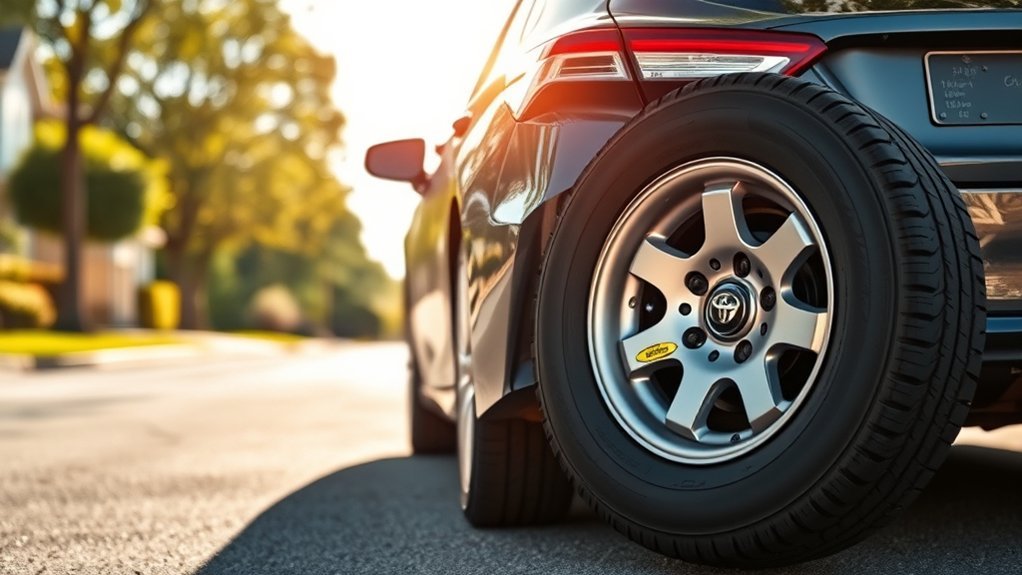
Donut spares and full-size spares both help after a flat, but they are not the same. A donut spare is smaller and temporary. A full-size matching spare is closer to a regular tire, but you still need to check its pressure, age, tread, and vehicle-specific instructions.
| Feature | Donut Spare | Full-Size Spare |
|---|---|---|
| Purpose | Temporary emergency use | Temporary or regular use only if it matches and is approved |
| Speed | Usually limited to 50 mph | Follow the tire rating and owner’s manual |
| Distance | Keep it short, commonly around 50 miles or less | Depends on whether it matches the installed tires |
| Handling | Reduced grip and stability | Closer to normal if size, type, and tread match |
| Storage check | Pressure, age, cracks, and label limits matter | Pressure, age, tread depth, and matching size matter |
If your Camry has a compact spare and the flat tire is on the front, check the owner’s manual for placement instructions. Some vehicles have specific guidance because tire size differences can affect the drive axle, braking, or stability systems.
[Products Worth Considering]

Upgrade your wheels with MIKKUPPA M12x1.5 mag seat lug nuts built for secure, corrosion-resistant performance. These closed-end chrome lug nuts are a direct replacement for select Toyota models, including Camry, Corolla, RAV4, Sienna, Avalon, Highlander, Matrix, Venza, and Prius. Triple-chromium plating and cold-forged, heat-treated steel help deliver strength for daily driving and replacement needs.

Measure tyre tread depth precisely with a digital gauge that reads in both MM and inches, helping you monitor safe driving conditions. The large LCD screen is easy to operate, and the compact tool fits for cars, trucks, and motorcycles. It provides high accuracy with a 0-25.4mm range and includes a 1-year warranty for added peace of mind.

This tire repair screw set includes self-tapping plugs and a screwdriver to help you quickly complete tubeless tire repairs for many vehicle types. The set provides two rubber screw diameters for different puncture needs and uses a sealant-coated screw tip to help prevent air leakage and water entry. It’s designed for secure fixing with wear-resistant metal-and-rubber construction.
How to Know When to Replace Your Spare Tire
Replace your spare tire if it is damaged, cannot hold pressure, has worn tread, or is too old for safe use. The NHTSA says tires are not safe when tread is worn to 2/32 inch, and some vehicle and tire manufacturers recommend replacing tires that are six to 10 years old regardless of treadwear.
To check age, look for the DOT Tire Identification Number on the tire sidewall. The last four digits show the week and year the tire was made. For example, “2521” means the tire was made in the 25th week of 2021. Check both sides of the tire because the full number may appear on only one side.
Do not rely on appearance alone. A spare can look unused but still be unsafe because rubber ages over time. Heat, storage conditions, low pressure, and moisture can all shorten tire life.
- Replace the spare if you see cracks, cuts, bubbles, or exposed cords.
- Replace it if it repeatedly loses air.
- Ask a tire professional to inspect it if it has been driven beyond its listed speed or distance limits.
- Replace it if a tire professional says age, damage, or pressure loss makes it unsafe.
Debunking Myths About Driving on Donut Tires
Many drivers get into trouble because a donut spare feels good enough at first. The car may roll normally at parking-lot speed, but that does not mean the spare is ready for highway use.
- Myth: A donut spare can finish the week. It should only get you to repair or replacement.
- Myth: 50 mph is just a suggestion. Treat the speed limit as a safety limit.
- Myth: A spare with full tread is always safe. Age, cracks, and pressure matter too.
- Myth: TPMS will always warn you. Some systems may not monitor the spare the same way they monitor regular tires.
- Myth: Full-size spares have no limits. They still need the correct size, pressure, tread, age, and vehicle approval.
When to Seek Professional Help for Tire Issues
Seek professional help if the damaged tire has a sidewall puncture, large cut, visible cords, repeated air loss, or a puncture outside the repairable tread area. You should also get help if the Camry pulls hard, vibrates, makes unusual noise, or feels unstable after the spare is installed.
Common Tire Problems
Common tire problems include uneven wear, low pressure, punctures, vibration, sidewall bubbles, and tread damage. Uneven wear may point to alignment, balance, suspension, or inflation problems. Do not ignore these signs just because the car still drives.
- Uneven shoulder wear can suggest low pressure or alignment issues.
- Center wear can suggest overinflation.
- Vibration can point to balance, wheel, or tire damage.
- A bulge or blister means the tire should not be driven on.
When to Replace Tires
Replace a tire when tread depth reaches 2/32 inch, when the tire has unsafe damage, or when a tire professional says it cannot be repaired safely. Also check tire age. Even a tire with plenty of tread can become risky as the rubber ages.
If you replaced the flat tire with a donut spare, do not delay the repair. The spare protects you for a short emergency drive, but the real fix is a safe full-size tire in the correct size and load rating for your Camry.
Signs of Damage
Inspect both the damaged tire and the spare tire. Stop driving and seek help if you notice any of these problems:
- Visible bubbles or blisters
- Sidewall cracks or cuts
- Exposed cords or steel belts
- Severe vibration or thumping
- Fast pressure loss
- Grinding, scraping, or wobbling after installation
Frequently Asked Questions
How fast can you go on a Toyota spare tire?
You should usually drive no faster than 50 mph on a Toyota compact spare tire. Always follow the lower limit printed on the spare tire or listed in your Camry owner’s manual.
Can I drive 400 miles on a spare tire?
No. You should not drive 400 miles on a donut spare tire. A compact spare is for short emergency use, commonly around 50 miles or less. If your destination is far away, arrange tire repair, replacement, or towing.
Can I drive 20 minutes on a spare tire?
You can usually drive 20 minutes on a donut spare if the tire is properly inflated, undamaged, and you stay within the speed limit. Choose a low-speed route and head directly to a safe repair option.
Can I drive on the highway with a Camry donut spare?
Avoid high-speed highways when possible. If you must use a highway briefly, stay at or below the spare’s speed limit, keep to the right, leave extra distance, and exit as soon as you can safely reach a lower-speed road.
What PSI should a Toyota Camry donut spare tire have?
Check the pressure listed for your specific spare in the owner’s manual, tire placard, or spare tire label. Compact spares often use higher pressure than regular tires, so do not guess based on your normal tire PSI.
Should I put the donut spare on the front or rear of a Camry?
Follow your Camry owner’s manual. If the flat is on the front, some vehicles may require moving a rear tire forward and installing the compact spare on the rear. Do not attempt extra wheel changes unless the location is safe.
When should I tow the car instead of driving on the spare?
Tow the car if the spare is flat, cracked, very old, damaged, missing, or cannot be inflated to the correct pressure. You should also tow it if the car shakes, pulls, or feels unsafe after the spare is installed.
Conclusion
A Toyota Camry donut spare tire is a short-term safety tool. Keep your speed at or below 50 mph, limit the distance, and drive straight to a repair or replacement option. Before you move, check the spare’s pressure, sidewall condition, and printed limits.
If the spare is damaged, old, underinflated, or the car feels unstable, do not gamble with it. Pull over safely and call for roadside assistance or a tow. A donut spare can get you out of a roadside problem, but only when you respect its limits.
Sources
- Toyota Owner’s Manuals and Warranties — Camry-specific owner’s manual lookup and vehicle guidance.
- NHTSA TireWise — tire pressure, tread depth, tire aging, TPMS, blowout response, and tire maintenance safety guidance.
- NHTSA Recalls — vehicle, tire, equipment, investigation, and safety recall lookup.