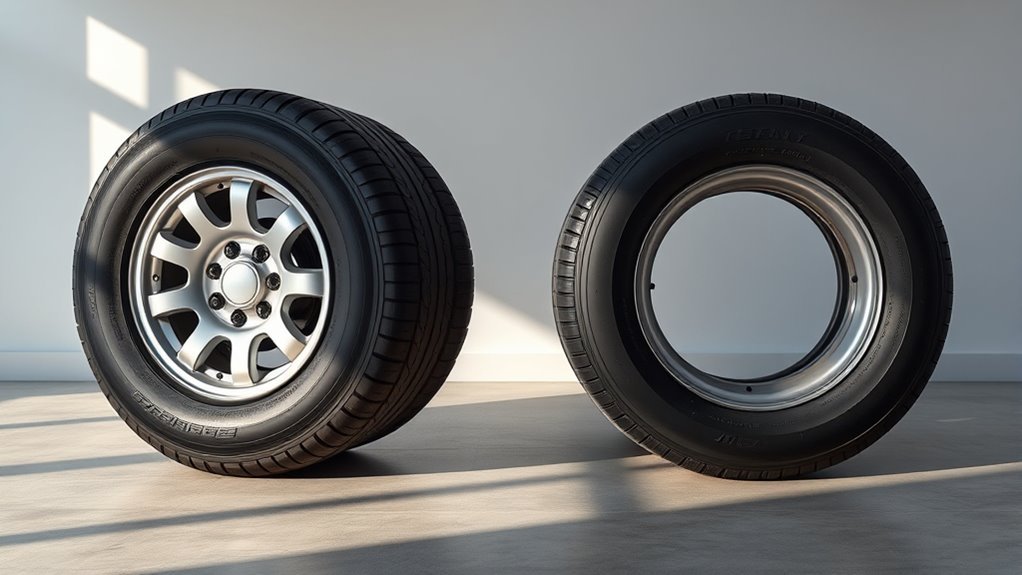
Choosing between a full-size spare tire and a compact spare tire comes down to one question: do you want maximum driving capability after a flat, or do you need to save trunk space and weight? A full-size spare is the safer, more capable choice for long trips, bad weather, remote roads, towing, and drivers who want the car to feel normal after a tire change. A compact spare, often called a donut, is lighter and easier to store, but it is only a short-distance emergency tire.
Quick Answer
Choose a full-size spare if you want normal handling, stronger load capacity, and fewer driving restrictions after a flat. Choose a compact spare if trunk space, lower weight, and emergency-only use matter more. Most donut spares should be driven no faster than about 50 mph and no farther than about 50 miles, unless the sidewall or owner’s manual says otherwise.
Key Takeaways
- A matching full-size spare gives the best handling, braking, traction, and load support.
- A compact spare saves space, but it is temporary and usually carries strict speed and distance limits.
- Always follow the spare tire sidewall, tire placard, and vehicle owner’s manual before relying on any spare.
- For AWD and 4WD vehicles, tire size and tread-depth matching matter more because mismatched tires can stress the drivetrain.
- Check the spare’s pressure, age, tread, and sidewalls monthly so it is ready before a roadside emergency.
Which Spare Tire Is Right for You: Full-Size or Compact?
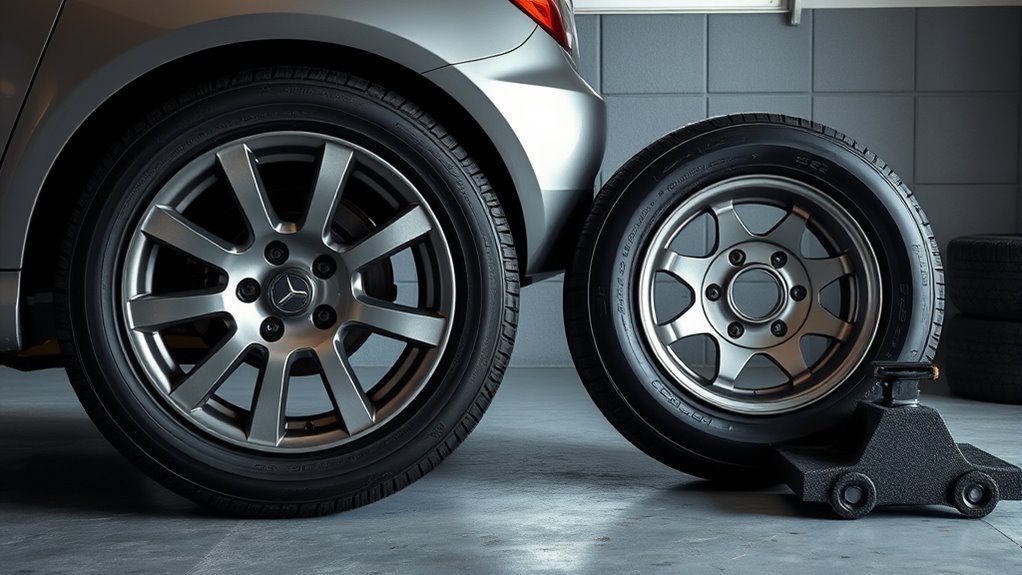
A full-size spare tire is best if you drive long distances, travel through rural areas, carry heavy loads, tow, or often drive in rain, snow, heat, or rough road conditions. When it matches the vehicle’s regular tires in size, load rating, speed rating, and overall diameter, it keeps the vehicle closer to its normal braking, steering, and traction behavior.
A compact spare tire is best if you mostly drive in town, have easy access to tire service, and need to preserve cargo space. It is a practical emergency bridge to a repair shop, not a normal tire replacement. AAA advises that donut-type spares should generally not be driven over 50 mph or more than 50 miles, and Michelin notes that spare-tire restrictions can vary, so the tire sidewall and owner’s manual should always come first.
In simple terms: full-size spares are about capability and confidence; compact spares are about storage and short emergency use.
Full-Size vs. Compact Spare Tire Comparison
| Feature | Full-Size Spare | Compact Spare |
|---|---|---|
| Best for | Long trips, bad weather, remote routes, towing, and heavy use | Short emergency drives to a repair shop |
| Handling | Closest to normal if it matches the regular tires | Reduced grip and different steering feel |
| Speed and distance | Usually fewer restrictions when fully matching and roadworthy | Often about 50 mph and 50 miles, but check the sidewall/manual |
| Load capacity | Stronger, if it meets the vehicle’s required load rating | Lower; avoid heavy loads and towing |
| Storage space | Takes more trunk or cargo space | Saves space and weight |
| Cost | Usually higher because it needs a full-size wheel and tire | Usually lower and often included with the vehicle |
Size & Construction: Full-Size vs. Compact Spare Tires
A full-size spare is built to be the same general size as the vehicle’s regular tire. The best version is a matching full-size spare: same wheel size, tire size, load rating, speed rating, and ideally the same tire model and tread depth as the other tires. That type gives the most predictable ride.
Some vehicles carry a non-matching full-size spare. It may have the correct outer diameter but a different wheel design, tire brand, tread pattern, or speed rating. It is still more capable than a donut in many cases, but it may not behave exactly like the other tires. Treat it as temporary until the damaged tire is repaired or replaced.
A compact spare is smaller, narrower, and lighter. It uses a reduced tread pattern and a lighter construction so it can fit under a trunk floor or in a small storage well. That design saves space, but it also reduces heat tolerance, load capacity, traction, and long-distance durability.
Note: Never assume a spare fits just because the bolt holes line up. Check tire size, wheel diameter, bolt pattern, offset, hub bore, load rating, and the vehicle owner’s manual before buying or using a spare.
Traction & Handling Differences Between the Two Spares
When a full-size spare matches your regular tires, the vehicle keeps more of its normal contact patch, sidewall support, and tread behavior. That matters during braking, lane changes, wet-road driving, and emergency maneuvers.
A compact spare changes how the vehicle feels. Because it is narrower and built for temporary use, it has less grip and can make the car pull, lean, or respond differently than usual. The effect can be more noticeable in rain, on rough pavement, during hard braking, or when the vehicle is loaded.
Traction in Wet Conditions
Wet traction depends on tread depth, tread design, tire pressure, rubber condition, and tire size. A matching full-size spare is more likely to preserve normal water evacuation and braking feel. A compact spare has less tread width and is not intended for aggressive cornering or sudden stops.
If you must drive on a donut spare in rain, reduce speed, leave extra following distance, avoid standing water, and drive directly to a tire shop. Do not treat the spare as a normal tire just because the vehicle feels drivable.
Handling and Stability
A full-size spare keeps steering response and stability closer to normal when it matches the vehicle’s other tires. It is also better for vehicles carrying passengers, luggage, tools, or outdoor gear.
A compact spare can create uneven grip from side to side. That can affect anti-lock braking, traction control, stability control, and steering feel. The safest approach is to slow down, avoid abrupt maneuvers, and keep the trip short.
Speed, Distance, and Durability Limits for Compact Spares
Most compact spares are designed only to get you to a safe place for service. A common rule is no faster than about 50 mph and no farther than about 50 miles. That is a general safety rule, not a universal promise. The exact limit printed on your spare tire sidewall or listed in your vehicle owner’s manual is the limit to follow.
Warning: Do not tow, overload the vehicle, drive aggressively, or keep using a compact spare after the emergency trip. Excess speed, distance, heat, or weight can increase the risk of tire failure and vehicle damage.
Speed and Distance Limits
Compact spares are smaller and lighter, so they build heat faster and wear faster than normal tires. Higher speeds and longer distances increase stress on the tire and can also affect steering, suspension, alignment, and driveline components.
- Keep speed low: Stay at or below the limit on the sidewall. For many donut spares, that is about 50 mph.
- Keep distance short: Drive only far enough to reach a repair shop or safer location.
- Avoid highway pressure when possible: If traffic is moving much faster than your spare’s limit, use slower roads when safe.
- Reduce load: Avoid towing, heavy cargo, and unnecessary passengers while using a compact spare.
Structural Durability Concerns
Compact spares use less material than normal tires. The tread is simpler, the sidewall is lighter, and the tire is not built for daily driving. If pushed too far, it can overheat, deform, wear quickly, or fail.
After you use a compact spare, inspect it before storing it again. If the tread is damaged, the sidewall is cracked, or the tire was driven beyond its limit, replace it instead of putting it back into emergency service.
Performance and Safety Impacts of a Full-Size Spare
A full-size spare gives the strongest safety margin when it truly matches the vehicle’s regular tires. It supports normal braking, steering, load capacity, and road feel better than a compact spare. It also gives you more flexibility if a flat happens at night, in bad weather, far from a repair shop, or on a long highway trip.
That said, a full-size spare is not automatically unlimited. It should be properly inflated, undamaged, not too old, and rated for the vehicle. If it is a different brand, tread pattern, tread depth, or speed rating, drive cautiously and repair or replace the damaged tire as soon as practical.
A full-size spare is the capability choice; a compact spare is the emergency-space-saving choice.
Special Caution for AWD and 4WD Vehicles
All-wheel-drive and four-wheel-drive vehicles can be more sensitive to tire differences. A spare with a different overall diameter, tread depth, or tire size can make the drivetrain work harder because one wheel may rotate at a different speed from the others.
If you drive an AWD or 4WD vehicle, check the owner’s manual before using a spare. Some vehicles require the temporary spare to be installed only in a specific position. Others may require matching tire circumference closely. When in doubt, call the dealer, roadside assistance, or a tire shop before driving far.
Practical Scenarios: When to Carry a Compact vs. a Full-Size Spare Tire
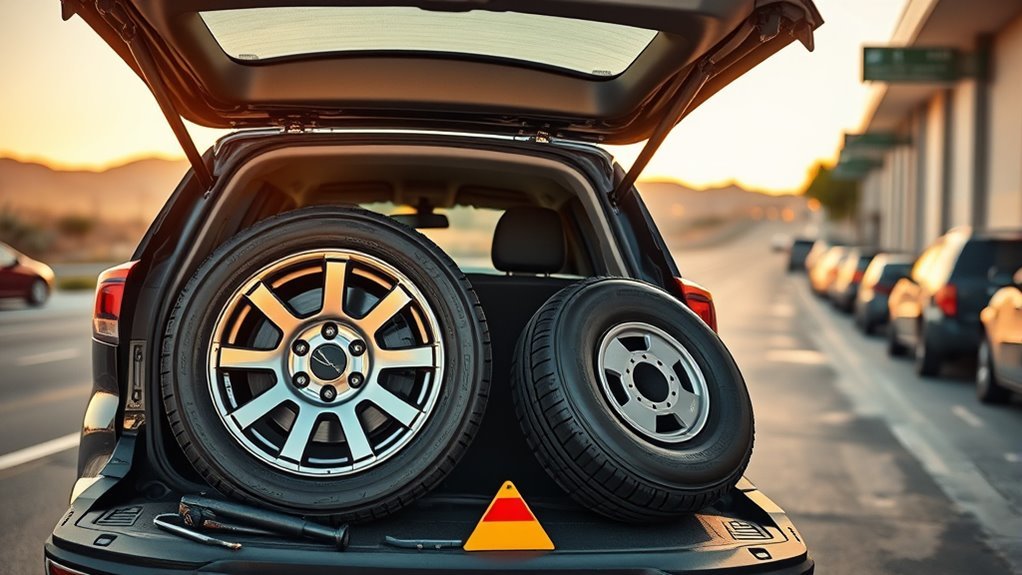
Choose a compact spare if you drive mostly in a city, rarely take long trips, and can reach a tire shop quickly. It is a good fit for small cars and drivers who value cargo space more than extended emergency driving capability.
Choose a full-size spare if you regularly drive on highways, take road trips, visit remote areas, travel with family, tow, carry heavy gear, or drive where weather changes quickly. A full-size spare gives you more control and more options after a flat.
For off-road driving, rural work routes, camping, overlanding, and long-distance travel, a full-size spare is usually worth the extra space and cost. A compact spare can get you out of a simple flat in town, but it is not the right tool for rough roads or long distances.
What If Your Car Does Not Have a Spare Tire?
Many newer vehicles no longer include a spare tire. AAA reports that approximately 30% of new cars come without a spare, often using tire inflator kits or run-flat tires instead. Those options can help with small tread punctures, but they may not solve a sidewall cut, blowout, bent wheel, or large puncture.
Note: Check what your vehicle actually has before your next trip. Look for a spare tire, jack, lug wrench, wheel lock key, inflator kit, sealant expiration date, and roadside-assistance coverage.
If your car came without a spare, you may be able to buy an OEM spare kit or an aftermarket spare kit. Confirm fitment carefully, because the wheel, tire, jack, hold-down hardware, and cargo-floor storage can vary by trim level and brake package.
Maintenance, Storage, and Inspection Tips for Spare Tires
A spare tire is easy to forget because it may sit unused for years. Treat it like an active safety item. The National Highway Traffic Safety Administration recommends checking tire pressure at least once a month, including the spare, when the tires are cold.
- Check pressure monthly: Use the pressure listed on the spare sidewall, tire placard, or owner’s manual. Many compact spares require much higher pressure than regular tires.
- Inspect tread and sidewalls: Look for cracks, bulges, cuts, dry rot, uneven wear, and embedded objects.
- Check age: Read the DOT date code on the sidewall and follow the tire maker’s and vehicle maker’s age guidance.
- Keep it clean and secure: Store the spare away from excess heat, moisture, petroleum products, and loose cargo.
- Inspect tools: Make sure the jack, lug wrench, wheel lock key, and spare hold-down hardware are present and usable.
Full-size spares should be rotated into service if your vehicle manufacturer recommends it. This helps keep tread depth more even. Compact spares should not be rotated into normal driving; they should stay reserved for emergencies.
Safe Installation Basics Before You Drive on Any Spare
Before installing a spare, get the vehicle as far from traffic as safely possible, turn on hazard lights, set the parking brake, and use the jack only at the approved lift point. Loosen lug nuts slightly before lifting the vehicle, raise the vehicle only as much as needed, install the spare, hand-tighten the lug nuts, lower the vehicle, and tighten the lug nuts in a star pattern.
After driving a short distance, recheck that the spare is secure if your owner’s manual recommends it. If you are not confident changing the tire safely, call roadside assistance instead. A spare tire is useful only when it can be installed without putting you in more danger.
Cost, Trunk-Space Trade-Offs, and Installation Considerations
A full-size spare usually costs more because you need a full-size wheel and a road-capable tire. It also takes up more space and adds weight. The benefit is better emergency performance and less pressure to stop immediately if you are far from service.
A compact spare is cheaper, lighter, and easier to store. It can also improve cargo flexibility, especially in small cars and hybrids. The trade-off is that you must drive slower, travel a shorter distance, avoid heavy loads, and replace or repair the regular tire quickly.
Installation is also different. A full-size spare usually feels more familiar once mounted. A compact spare may change ride height, steering feel, braking feel, and stability. Give yourself extra space and avoid sudden movements until the normal tire is repaired.
How to Choose & Buy the Right Spare: Specs to Check and Dealer Options
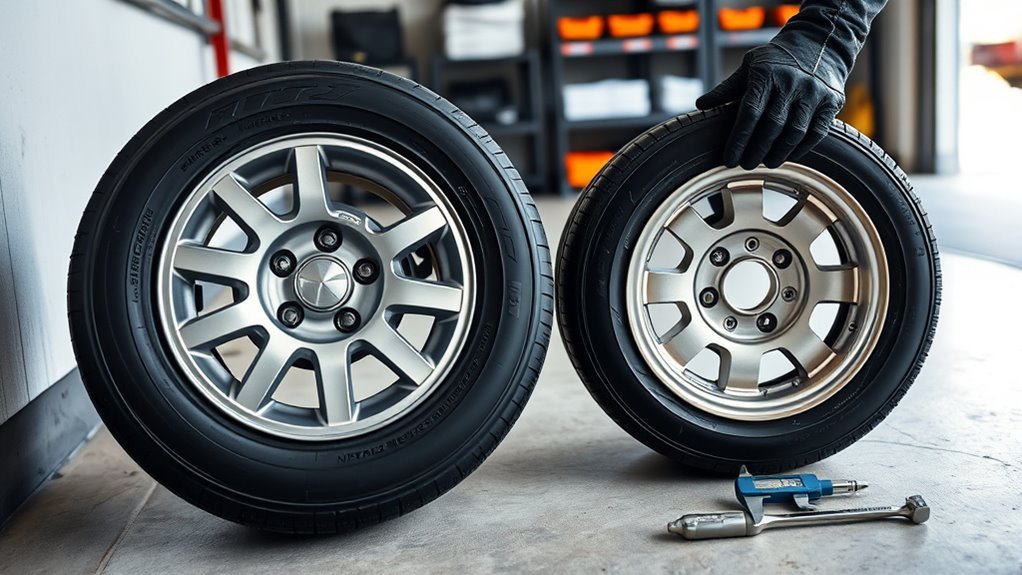
Buying the right spare is a fitment job, not a guess. Start with the vehicle owner’s manual and tire placard. NHTSA explains that the tire placard and owner’s manual are the correct places to confirm recommended tire pressure and vehicle load limits.
Pro Tip: Before ordering a spare kit, photograph your tire placard, current tire sidewall, wheel size, brake clearance, and trunk storage area. A tire shop or dealer can use those details to verify fitment faster.
- Tire size: Match the required diameter and overall rolling size for your vehicle.
- Wheel diameter and width: Confirm the wheel clears the brake calipers and suspension.
- Bolt pattern: The lug pattern must match exactly.
- Offset and hub bore: These affect how the wheel sits on the vehicle.
- Load rating: The tire must support the vehicle’s weight requirements.
- Speed rating: Check whether the spare is temporary-use only or road-speed capable.
- Inflation pressure: Confirm the correct cold pressure for the spare.
- Storage and tools: Make sure the spare, jack, lug wrench, and hold-down hardware fit in the vehicle.
If you are unsure, ask a dealer parts department or a reputable tire shop for an OEM-fitment option. This is especially important for vehicles with large brakes, AWD, staggered tire sizes, hybrids, EVs, or trims that did not originally include a spare.
Frequently Asked Questions
Can you drive on the highway with a full-size spare tire?
Yes, if the full-size spare matches the regular tires, is properly inflated, is in good condition, and meets the vehicle’s load and speed requirements. Still, treat it as temporary until the damaged tire is repaired or replaced, especially if the spare has different tread depth, age, brand, or rating.
Is a donut spare better than a full-size spare?
A donut spare is better for saving space, weight, and cost. A full-size spare is better for handling, traction, load support, and longer emergency driving. For safety and capability, the full-size spare wins. For compact storage, the donut spare wins.
How far can you drive on a compact spare tire?
Many compact spares are limited to about 50 miles, but the correct answer is the limit printed on the spare sidewall or listed in your owner’s manual. Use the spare only to reach a repair shop or safe service location.
How fast can you drive on a donut spare?
Many donut spares are limited to about 50 mph. Do not exceed the speed printed on the spare tire sidewall. If road traffic is moving faster than your spare allows, choose slower roads when safe.
Can you use a compact spare on an AWD vehicle?
Only if your owner’s manual allows it, and only in the position and distance specified by the manufacturer. AWD and 4WD vehicles can be sensitive to tire diameter and tread-depth differences, so follow the manual closely.
How often should you check your spare tire pressure?
Check the spare tire pressure at least once a month and before long trips. Check it cold, before the vehicle has been driven for several hours. Compact spares often require a higher pressure than regular tires.
Should you buy a full-size spare if your car came with no spare?
It can be a smart upgrade if you take long trips, drive in remote areas, or do not want to depend only on an inflator kit. Before buying, confirm that the wheel, tire, jack, tools, and storage hardware fit your exact vehicle.
Conclusion
Choose a full-size spare if you want the safest and most capable backup after a flat. It is the better choice for highway driving, long trips, remote areas, heavy loads, towing, and poor weather, as long as it matches the vehicle’s requirements and is properly maintained.
Choose a compact spare if you need to save trunk space and only want a short emergency solution. It is useful, but it comes with real limits. Keep speed low, keep distance short, avoid heavy loads, and repair or replace the damaged tire quickly.
No matter which spare you carry, inspect it before you need it. Check pressure monthly, confirm fitment, watch the tire’s age, and make sure the jack and lug wrench are in the vehicle. The best spare tire is the one that fits correctly, is safe to use, and is ready when a flat happens.
Sources
- NHTSA TireWise — tire maintenance, labeling, aging, and tire-safety guidance.
- NHTSA Tire Safety Month — monthly tire-pressure guidance, including spare tires.
- AAA: How Long Can You Drive on a Spare Tire? — temporary spare speed and distance limits.
- Michelin: Driving on a Spare Tire — full-size versus compact spare use and sidewall restriction guidance.
- AAA: The Amazing Disappearing Spare Tire — new vehicles without spare tires and alternatives such as inflator kits.