
Disclosure: As an Amazon Associate, we earn from qualifying purchases. If you click a link on this page and make a purchase, we may receive a small commission at no extra cost to you.
Changing tires at home can save shop trips, but basic pry bars often make the job slow and increase the chance of marking a wheel. The VEVOR Manual Tire Changer Duck Head Kit with Silver Cone adds a shaped mounting and demounting head to a compatible manual changer for 16-inch to 21-inch wheels. Its main strengths are a reinforced nylon contact head, a heavy-duty steel support structure, and a centering cone that helps stabilize the wheel. The main limitation is fit: the 1.97-inch mounting tube is intended for shafts no larger than 1.8 inches, and VEVOR identifies the kit for use with its manual tire changer.
Quick Verdict
Rating: 7.5/10, recommended with compatibility checks
Best For: DIY mechanics and small garages that already own a compatible VEVOR manual tire changer
Bottom Line: The nylon duck head and steel support can make manual mounting and demounting smoother while reducing direct metal contact with the rim. Buy it only after confirming your changer post diameter, wheel range, and base compatibility.
| Specification | Detail |
|---|---|
| Brand | VEVOR |
| Product | Manual Tire Changer Duck Head Kit with Silver Cone |
| Product type | Mounting and demounting adapter for a manual tire changer |
| Wheel range | 16 to 21 inches (406 to 533 mm) |
| Mounting tube inner diameter | 1.97 inches (50 mm) |
| Compatible shaft diameter | Up to 1.8 inches (48 mm) |
| Contact head | Grooved reinforced nylon with no sharp metal edge at the rim contact point |
| Support construction | Thickened heavy-duty steel mounting structure |
| Vehicle applications | Compatible wheel sizes used on many cars, SUVs, trucks, UTVs, and ATVs |
| Included components | Duck head, mounting tube, silver centering cone, and related accessories |
| Not included | Manual tire changer base and bead-breaking equipment |
| Best use | Occasional home-garage tire work or light shop use on confirmed compatible equipment |
Before You Buy: This is an adapter kit, not a complete tire changer or bead breaker. Measure the vertical post at its widest working point and confirm the base layout before ordering. The 1.97-inch tube is listed for shafts up to 1.8 inches, and fit on non-VEVOR changers is not guaranteed.
VEVOR Duck Head Kit
What Is the VEVOR Manual Tire Changer Duck Head Kit?
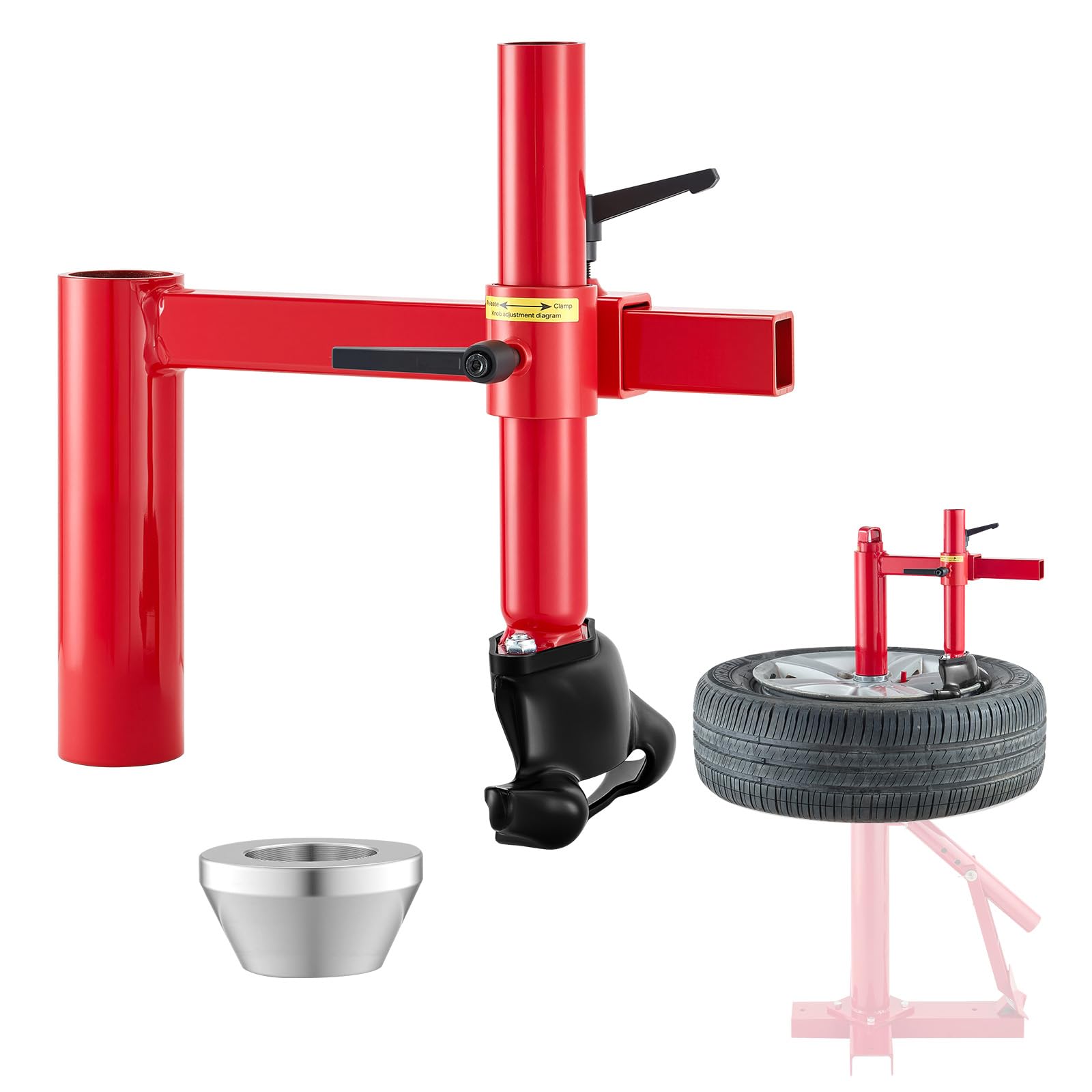
This VEVOR kit is an add-on for a compatible manual tire changer. Instead of dragging a bare metal bar around the rim, you guide the tire bead over or under a shaped reinforced nylon duck head. The grooved head is designed to reduce rotation resistance and limit direct metal contact with the wheel surface.
The kit also uses a steel mounting tube and a silver centering cone. The tube supports the duck head during leverage, while the cone helps hold the wheel hub more steadily and reduce wobble. You still need a securely anchored manual changer, a separate way to break the bead, suitable tire lubricant, and enough working room to rotate the tool safely.
Who Should Buy It?
Best For
- You already own a VEVOR manual tire changer with a shaft no larger than 1.8 inches.
- You service common 16-inch to 21-inch wheels in a home garage or small workshop.
- You want a nylon rim-contact surface instead of relying only on steel tire irons.
Skip If
- Your changer post is larger than 1.8 inches or has an incompatible base design.
- You need a complete machine, a bead breaker, or a solution for wheels outside the 16-inch to 21-inch range.
- You mainly handle run-flat, very low-profile, damaged, or expensive specialty wheels that are better left to a professional machine.
[Products Worth Considering]

The Calvana Ultra-Durable Angled Tire Lube Bucket Kit provides reliable lubrication for faster, smoother tire changes. It includes an angled universal lube bottle and premium cotton swabs to help lubricate tire beads during removal and mounting. Built for rugged use with a reinforced handle and durable fiber design, it’s a direct replacement for Coats 8106259 to reduce downtime and compatibility concerns.

This manual duck head tire changer kit makes tire installation and removal simpler by letting you embed the duck head into the tire with applied pressure. The integrated design and durable steel construction help reduce friction and improve efficiency and safety during use. Suitable for 16–21 inch wheels, it’s convenient for cars, trucks, SUVs, and ATV tires, with 24-hour after-sales support.

This VEVOR tire bead breaker uses a slide-hammer impact and wedge tip to separate tire beads from rims quickly and efficiently without damaging hub surfaces. The long handle and sturdy steel construction help reduce user strain while providing reliable, portable tire changing for cars, trucks, and more. Ideal for home mechanics and repair shops handling multiple vehicle tire sizes.
Fit and Compatibility
Compatibility is the deciding factor in this review. The mounting tube has a stated 1.97-inch inner diameter and is listed for shafts up to 1.8 inches. That small clearance allows the tube to slide over the post, but it leaves little room for inaccurate measurements, thick paint, burrs, welds, collars, or a post that is not perfectly round.
The 16-inch to 21-inch specification describes the intended wheel diameter range, not a promise that every tire in that range will be easy to service. Wheel width, tire sidewall stiffness, bead design, rim shape, and available clearance can all affect the job. Confirm both the post fit and the wheel dimensions before using force.
Pro Tip: Measure the changer post with calipers at several points, including over paint or seams. A single tape-measure reading can miss a high spot that prevents the 1.97-inch tube from sliding into place.
Materials and Build Quality
The original article described the entire adapter as metal, but the rim-contact duck head is reinforced nylon. That distinction matters. Nylon is less likely than an exposed steel edge to mark a finished wheel when the tool is aligned correctly, although no contact head can prevent damage caused by dirt, poor lubrication, excessive force, or incorrect positioning.
The load-bearing mounting structure is made from thickened steel. This gives the adapter the stiffness needed to guide the bead while you rotate the tool. Check the tube, welds, fasteners, and nylon head before each use. Stop if you see cracks, severe deformation, loose hardware, or a rough edge that could contact the rim or tire.
Installation and Setup
Start with the manual changer fixed to a stable surface according to its instructions. Test-fit the mounting tube on the post without a wheel. The tube should seat fully without hammering, binding, or excessive side-to-side movement. Install the centering cone and hardware in the correct order, then tighten all fasteners before applying leverage.
Deflate the tire completely and remove the valve core before working on the bead. Break both beads with a suitable bead-breaking tool, then clean the rim edge and apply an approved tire-mounting lubricant. The duck head guides a bead that has already been loosened. It is not designed to replace the bead-breaking step.
Mounting and Demounting Performance
When the adapter fits correctly, the shaped duck head provides a smoother path for the bead than a plain pry bar. The grooved nylon surface helps the bead slide while the steel tube transfers your turning force. This can reduce repeated repositioning, but it does not make every tire effortless. Stiff sidewalls and narrow clearance still require controlled technique.
For demounting, position the duck head so the bead can pass over the rim without the tool digging into the wheel. For mounting, keep the opposite side of the bead pushed into the rim’s drop center. That creates the slack needed to move the remaining bead over the rim. If the bead stops moving, reset the tire and add lubricant instead of increasing force.
Rim Protection and TPMS Awareness
The reinforced nylon head is a useful protection feature, but the rest of the setup can still contact the wheel. Remove grit from the rim and tool, use proper rim protectors where needed, and keep the wheel centered. Do not assume the nylon head makes the process scratch-proof.
Many modern wheels contain a tire-pressure monitoring system sensor near the valve stem. Identify its location before you begin and avoid levering or forcing the bead directly over the sensor. If you are unsure how the sensor is mounted, use a professional tire service rather than risking a broken sensor or valve.
How It Performs in Real Use
Seasonal Tire Changes
For a home mechanic who swaps tires on the same compatible wheels each season, the kit can shorten the learning curve after the setup is dialed in. You can record the post position and cone arrangement for repeat jobs, but each tire still needs full deflation, bead breaking, lubrication, and a final inspection.
Home Garage Projects
The kit makes the most sense in a garage where the changer can remain securely anchored. A stable base gives you better control than a portable or loosely mounted setup. Keep enough clearance around the changer to complete a full rotation without hitting a wall, vehicle, or stored tools.
Small Shop or Occasional Service
A small workshop may use the adapter for common, non-specialty wheels when a powered changer is not justified. Its usefulness depends on careful screening. Unusual rim profiles, damaged beads, corrosion, low-profile tires, and run-flat designs can require professional equipment and more controlled clamping.
ATV, UTV, SUV, and Truck Wheels
VEVOR lists the kit for wheel sizes used on cars, SUVs, trucks, UTVs, and ATVs. Vehicle category alone does not confirm fit. Check the actual wheel diameter, center opening, tire construction, and clearance around the duck head before proceeding.
What Buyers Say
Buyer feedback is mixed, with compatibility appearing to be the main dividing line. Users who can mount the tube securely tend to value the leverage, nylon contact head, and low equipment cost. Reports of poor fit usually involve a changer post or base that does not match the adapter dimensions.
Overall Sentiment: Neutral to positive when fit is confirmed

Pros and Cons
Pros
- Reinforced nylon duck head reduces direct metal contact at the rim.
- Thickened steel support structure provides leverage for manual operation.
- Adjustable design covers a stated 16-inch to 21-inch wheel range.
- Silver cone helps center and stabilize the wheel hub.
- Costs much less than buying a powered tire-changing machine.
Cons
- Fit is limited to shafts no larger than 1.8 inches and is not guaranteed on third-party changers.
- The manual changer base and bead-breaking equipment are not included.
- Correct lubrication, positioning, and physical effort are still required.
How to Use It Correctly
- Confirm compatibility. Measure the changer post and verify that the wheel is within the 16-inch to 21-inch range.
- Secure the changer. Bolt or mount the base as directed by the changer manufacturer. Do not work on a loose stand.
- Fully deflate the tire. Remove the valve core and verify that no pressure remains.
- Break both beads. Use a proper bead breaker before bringing the duck head into contact with the tire.
- Clean and lubricate. Remove grit and use tire-mounting lubricant on the bead and rim edge.
- Position the head. Keep the nylon surface aligned with the rim and maintain clearance from the TPMS sensor.
- Rotate with steady force. Keep the opposite bead in the drop center. Stop and reset if resistance rises sharply.
- Inspect after mounting. Check the bead, valve, sensor area, and rim before inflation. Have a professional handle inflation if you lack the proper restraint and equipment.
Compatibility and Safety
Wear eye protection, work gloves, and suitable footwear. Keep hands away from pinch points and do not place your face or body over a tool that is under leverage. Use only on a stable, undamaged changer and wheel. Never work on a pressurized tire, heat a wheel or tire to force removal, or use a cheater pipe beyond the tool maker’s instructions.
This adapter helps with mounting and demounting after the bead is loose. It does not make damaged tires, split rims, corroded wheels, multi-piece commercial wheels, or high-pressure assemblies safe for DIY service. Those jobs require trained technicians and specialized equipment.
Maintenance and Storage
Wipe tire lubricant, rubber residue, and dirt from the nylon head and steel tube after use. Check the fasteners and inspect the nylon for grooves, chips, or embedded debris that could scratch a wheel. Lightly protect exposed steel from corrosion, but keep oil away from any surface that must grip securely.
Store the adapter indoors in a dry location. Do not leave heavy objects on the nylon head or use it as a general-purpose pry tool. Replacing a worn contact head is safer than continuing with a rough or cracked surface.
Is It Worth the Price?
This kit sits in the budget tool category and can offer strong value when you already own the correct manual changer. The lower cost is attractive for occasional seasonal work, home projects, or light shop service, especially when the nylon head replaces repeated contact from steel bars.
The value drops quickly if you need to modify the tube, force it onto an oversized post, or buy a separate base just to use it. It is worth considering when the measurements match and you are comfortable with manual tire work. It is not the best fit when you need fast, frequent service across many wheel types.
[Products Worth Considering]
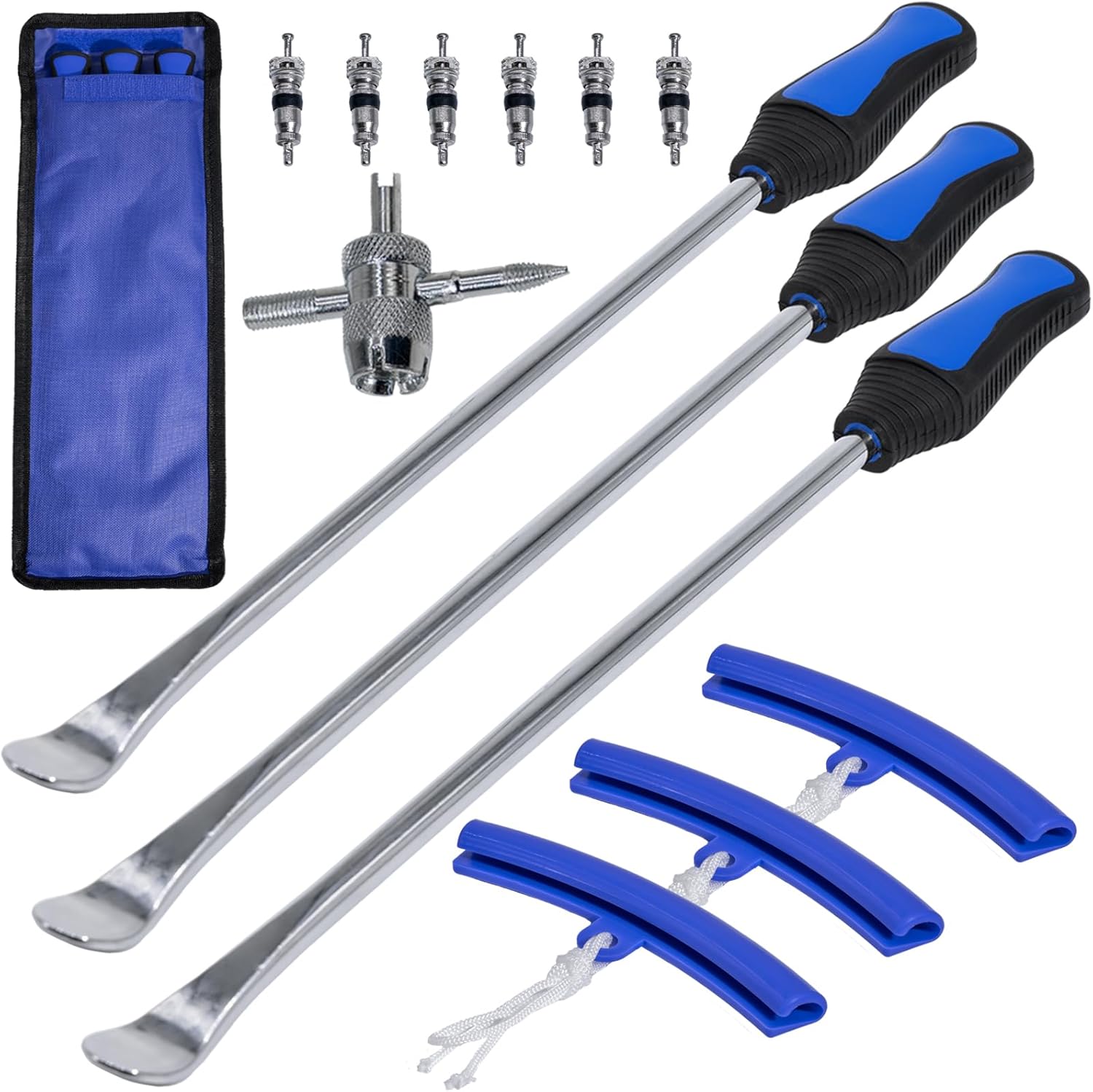
This tire spoon set helps you remove and install motorcycle, dirt bike, lawn tractor, and bicycle tires with extra leverage from a 14.5-inch spoon length. The kit includes tire removal tools, rim protectors, and a valve tool to simplify repairs and help protect rims during changing. Designed for quick, on-the-go service, it’s convenient for garage work, trails, and track-side fixes.

This 20-piece tire changer kit makes motorcycle and bike tire repairs easier with extended 14.5-inch spoons for leverage and access. Built from CrV steel with a corrosion-resistant chrome finish, it helps resist bending while protecting rims and tubes using smooth rounded spoons and included rim protectors. The all-in-one set includes valve removal and accessory tools for faster tire changes across motorcycles, bicycles, ATVs, and lawn equipment.

Protect tire valves from water, dust, and sand to help prevent leaks and support safe driving. These universal stem caps install quickly by hand and feature durable aluminum alloy construction with an inner sealing ring for better air retention. Compatible with cars, SUVs, trucks, motorcycles, and bicycles for everyday convenience.
How It Compares to Alternatives
EXODIOS, Bearing, and Atesilor sell similar manual duck-head adapter kits, but post diameter and base design vary between products. Compare the mounting-tube dimensions, included cone, replacement-head availability, and stated changer compatibility rather than assuming that all adapters fit the same stand.
A complete VEVOR manual tire changer is the more logical purchase when you do not already own a base. A powered changer is better for frequent shop work, stiff low-profile tires, and a wider range of wheel designs, but it costs more and needs more space, power, and training.
[Products Worth Considering]

This professional wheel and rim cleaning brush set lifts brake dust, grime, and dirt with soft, scratch-free microfiber and synthetic wool fibers. The rim brush bends up to 360 degrees for easy access to hard-to-reach areas around spokes, lips, and faces. Ideal for thorough cleaning of car, truck, motorcycle, bicycle, RV, and more wheel and tire surfaces.

Malco tire mounting and demounting lubricant is a ready-to-use tire lube formulated to reduce friction during tire installation for passenger cars, light trucks, farm tires, and heavy-duty equipment. It provides rust-inhibiting protection to help reduce corrosion on rims and wheels, and helps support proper tire bead seating during inflation to reduce air leakage. The silicone-free, soap-free formula is whitewall safe to help prevent discoloration on whitewall tires and sensitive sidewall markings.

This Dr.Roc tire valve stem puller tools set helps install or remove snap-in tubeless valve stems safely and efficiently. It includes ozone-resistant EPDM snap-in valve stems, a valve stem installer, and a valve core remover for quick core removal or installation during tire service. Designed for reliable tubeless tire repair on motorcycles, ATVs, lawn equipment, cars, and trucks.
Why Customers Choose
You may choose the VEVOR duck head kit because it combines a reinforced nylon rim-contact head, a steel support structure, a centering cone, and a 16-inch to 21-inch working range in a compact add-on. Its appeal is strongest when you already have the matching VEVOR changer and want more controlled bead guidance than basic tire irons provide. The same feature that keeps the price low also limits it: this is a manual adapter, so setup accuracy and technique still determine the result.
Frequently Asked Questions
Will this fit a Harbor Freight or other third-party tire changer?
Fit is not guaranteed. The mounting tube has a 1.97-inch inner diameter and is listed for shafts up to 1.8 inches, but post shape, welds, collars, base height, and hardware can still cause a mismatch. Measure the entire working area and compare it with the listing before ordering.
Does the kit include a complete manual tire changer?
No. This is a duck-head adapter kit with a mounting tube, nylon head, silver cone, and related hardware. You need a compatible manual tire changer base and a separate method for breaking the tire bead.
Can the duck head break the tire bead?
No. Break both beads and fully deflate the tire before using the duck head to mount or demount it. Trying to use the adapter as a bead breaker can damage the tool, tire, or wheel and may cause injury.
Will the nylon head prevent all rim scratches?
The nylon contact surface reduces exposed-metal contact, but it cannot guarantee a scratch-free job. Clean the rim and head, use proper lubricant, keep the tool aligned, and add rim protectors when the wheel finish needs extra care.
Can it be used on wheels smaller than 16 inches or larger than 21 inches?
VEVOR states a 16-inch to 21-inch wheel range. Do not assume it will position correctly outside that range. Use a tool designed for the actual wheel size and tire type.
Is it suitable for run-flat or very low-profile tires?
Those tires can require much more force and controlled bead support than a basic manual setup provides. A professional changer with assist arms is usually the safer option, especially for valuable alloy wheels or tires with very stiff sidewalls.
How do I avoid damaging a TPMS sensor?
Locate the valve stem and sensor before moving the bead. Keep the duck head and levering force away from the sensor area, and follow the vehicle or sensor maker’s service instructions. Use a tire professional when the sensor position or attachment method is unclear.
The Bottom Line
The VEVOR Manual Tire Changer Duck Head Kit is a practical budget add-on for DIY mechanics and small garages that already have a compatible VEVOR manual changer. Its reinforced nylon head and steel support can make mounting and demounting more controlled, but buyers with oversized posts, specialty tires, or no existing changer should skip it.
Ready to Buy?
Check the latest price, included components, and compatibility details before you decide.