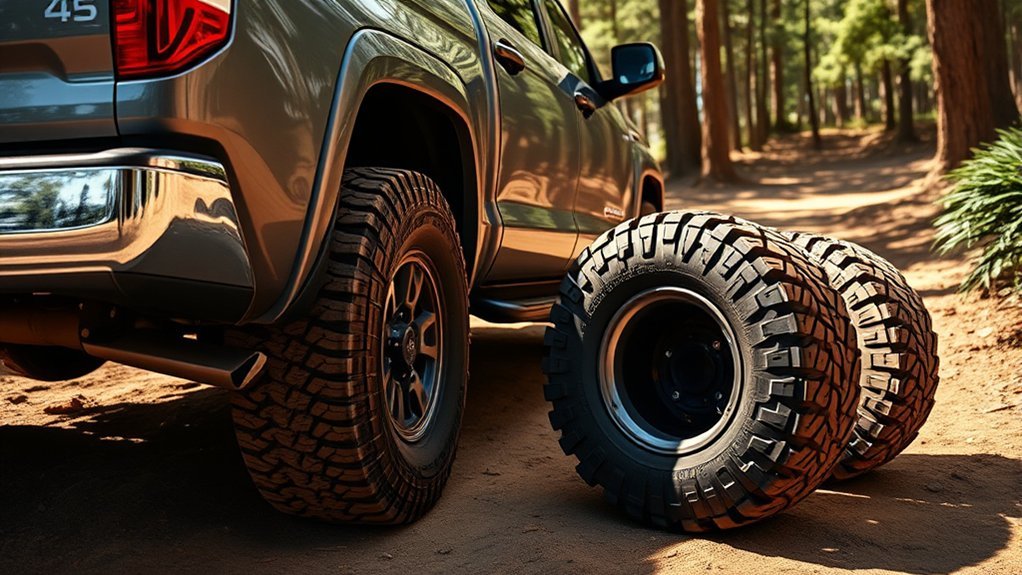
Choosing between 18-inch and 20-inch wheels for your Toyota Tundra is less about one size being universally better and more about matching the wheel-and-tire package to your model year, trim, load needs, roads, and driving style. An 18-inch wheel usually leaves room for more tire sidewall at a similar overall diameter, while a 20-inch wheel usually delivers a shorter sidewall and a more street-focused look.
Quick Answer
For most Tundra owners who prioritize comfort, pothole protection, and off-road flexibility, 18-inch wheels are the better all-around choice. Choose 20-inch wheels when you prefer sharper on-road response and styling. In either case, match the tire’s size, load capacity, speed rating, pressure, wheel width, and offset to your exact Tundra.
Key Takeaways
- 18-inch wheels usually provide more sidewall, which can soften sharp impacts and give you more flexibility on rough roads.
- 20-inch wheels usually feel more direct on pavement, but the shorter sidewall may transmit more pothole and expansion-joint harshness.
- Wheel diameter alone does not determine load rating, towing ability, tire pressure, fuel economy, or tire life.
- Your door-jamb Tire and Loading Information Label and owner’s manual are the starting points for safe tire size and pressure decisions.
- Any non-stock wheel or tire package must clear the brakes and suspension, support the truck’s axle loads, work with TPMS, and keep overall diameter within a suitable range.
Understanding the Differences Between 18-Inch and 20-Inch Tires
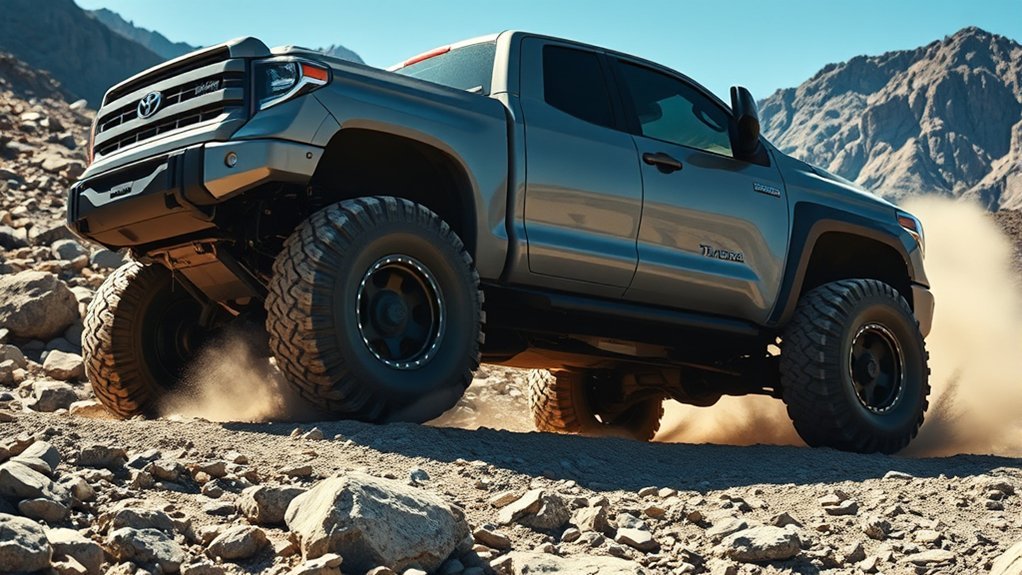
The number 18 or 20 describes the wheel’s bead-seat diameter, not the tire’s total height. If two packages have a similar overall diameter, the 18-inch package normally uses a taller sidewall and the 20-inch package uses a shorter sidewall. That difference can affect impact absorption, steering feel, wheel protection, and how much the tire can flex on uneven ground.
The tire itself matters just as much as the wheel. Tread design, tire weight, sidewall construction, load index, load range, speed rating, inflation pressure, and rubber compound can make one 18-inch setup ride firmer than a carefully chosen 20-inch setup. Compare complete wheel-and-tire packages rather than wheel diameter alone.
| Factor | 18-Inch Setup | 20-Inch Setup |
|---|---|---|
| Typical sidewall at similar overall diameter | Taller | Shorter |
| Ride over sharp bumps | Usually more compliant | Usually firmer |
| Steering response | Usually less immediate | Usually more direct |
| Off-road flexibility | Generally better | More limited by shorter sidewall |
| Wheel protection | More tire between the rim and impact | Greater exposure to pothole damage |
| Appearance | More rugged, tire-forward look | Larger-wheel, street-oriented look |
Note: Toyota has used different suspension designs, tire sizes, wheel widths, and offsets across Tundra generations. Advice for a 2007–2021 truck may not apply directly to a 2022-or-newer Tundra.
The Benefits of 18-Inch Tires for Ride Quality
At a similar overall tire diameter, an 18-inch wheel leaves more room for sidewall. That extra sidewall can absorb the first hit from broken pavement, gravel, washboard roads, and pothole edges before the suspension handles the remaining movement. Many drivers therefore perceive less sharp impact harshness and better wheel protection.
An 18-inch package also gives you more sidewall to work with when a tire professional recommends reducing pressure for a specific off-road surface. That can enlarge the contact patch and help the tire conform to rocks or sand. The benefit depends on tire construction, vehicle load, speed, terrain, and the pressure range approved for that tire and use.
Do not assume every 18-inch tire will ride softly. A heavy LT tire with a stiff casing may ride firmer than an original-equipment passenger-type or XL tire, even when the smaller wheel provides more sidewall.
The Impact of 20-Inch Tires on On-Road Performance
A 20-inch setup with a shorter sidewall can reduce sidewall flex during steering inputs. That may make turn-in feel quicker and lane changes feel more immediate on smooth pavement. Some owners also prefer the larger-wheel appearance offered on several Tundra trims.
The trade-off is that a shorter sidewall has less room to deform over sharp impacts. You may feel more of the road through the seat and steering wheel, especially with a stiff tire, high wheel-and-tire weight, aggressive tread, or excessive inflation pressure.
| 20-Inch Characteristic | Likely Effect |
|---|---|
| Shorter sidewall | More direct steering feel, less impact cushioning |
| Larger visible wheel | More street-focused appearance |
| Reduced rim-to-road rubber depth | Less protection from severe pothole or rock impacts |
Comparing Off-Road Capabilities of 18s and 20s
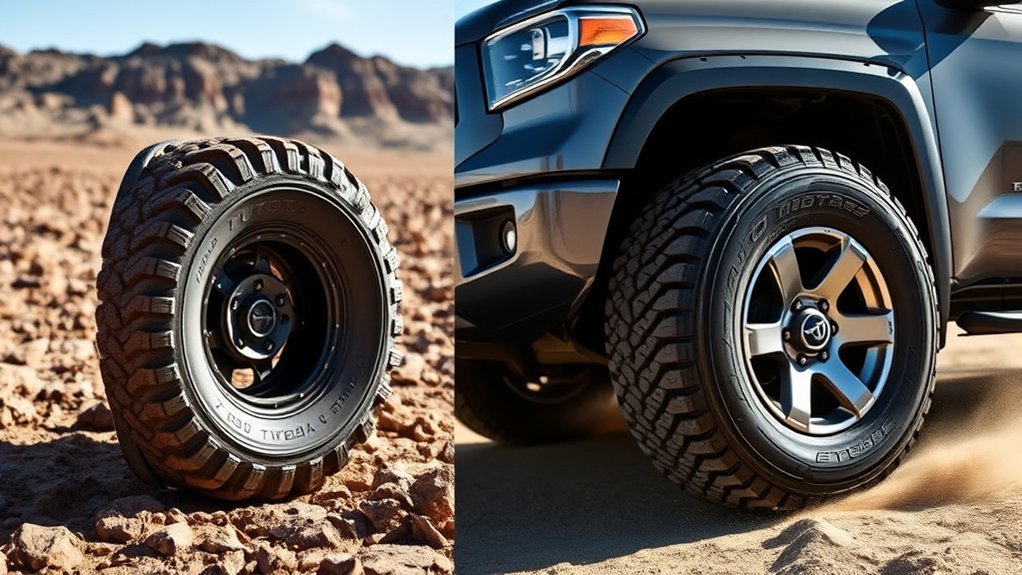
For trail use, the 18-inch package normally has the advantage because the taller sidewall can flex around uneven surfaces and better isolate the wheel from rocks and ruts. More sidewall also provides a larger safety margin between an impact and the rim, although it does not make the tire puncture-proof.
A 20-inch all-terrain tire can still handle maintained dirt roads and moderate trails. Its limitations become more noticeable when the terrain demands substantial sidewall flex, lower off-road pressure, or stronger rim protection. Tread pattern, casing strength, vehicle weight, driver technique, and ground clearance remain critical.
Warning: Never choose an off-road pressure by copying another driver. Pressure must account for your exact tire, load, speed, terrain, and risk of bead loss or sidewall damage. Reinflate to the vehicle or tire professional’s road-pressure recommendation before highway driving.
[Products Worth Considering]

Replace worn or missing TPMS sensors with a pre-programmed 4-pack designed for compatible GM vehicles. These 315MHz sensors provide real-time tire pressure monitoring and alert you if pressure is too high, too low, or if a rapid air leak occurs. Most installations are ready with minimal relearn effort after mounting, helping improve safety and driving confidence.

This 1/2-inch drive breaker bar delivers powerful leverage for loosening and tightening stubborn lug nuts and automotive fasteners. The 180-degree flex head helps you reach tight spaces at the angle you need, making tire and brake jobs easier. A spring-loaded ball detent design holds 1/2-inch sockets securely while the chrome-moly head provides durable strength for everyday use.

These aluminum alloy tire valve stem caps with an O-ring seal help protect valve stems from corrosion while adding a clean, stylish look to your vehicle. The universal fit works across cars, trucks, motorcycles, bicycles, and more, making them an easy upgrade for everyday driving and off-road use. Installation is quick, and the included four-pack keeps all your tires dressed and protected.
How Load Ratings Affect Your Ride Comfort
Load index and load range describe different parts of a tire’s carrying capability and construction. They are properties of the specific tire, not automatic features of an 18-inch or 20-inch wheel. You can find softer or firmer constructions in either diameter, depending on the exact size and product line.
An LT tire marked with Load Range D or E may use a more robust casing than a passenger-type tire, but load range alone does not tell you how comfortable the tire will feel. Tire weight, casing design, tread depth, pressure, and the truck’s payload all affect ride quality. The replacement tire must still provide enough load capacity for the axle loads and intended use.
Use the Tire and Loading Information Label and owner’s manual as your baseline. The pressure molded on a tire sidewall is not the normal pressure recommendation for your truck. If you change to a non-stock size or construction, have a qualified tire professional calculate an appropriate cold pressure that supports the load.
Wheel diameter alone does not determine comfort, load capacity, towing performance, fuel economy, or tire life. The complete tire specification and vehicle setup matter.
Tire Options: What’s Available for Each Size?
Both 18-inch and 20-inch Tundra tires are available in highway, all-season, all-terrain, and some mud-terrain patterns. Selection changes by model year, exact tire size, market, and load requirement. Compare tires in the size that actually fits your wheel and truck rather than assuming one diameter always offers more choices.
[Products Worth Considering]

These universal tire valve stem caps help protect valve cores from dust, debris, and moisture while helping maintain stable tire pressure. The corrosion-resistant metal construction and sealed design provide reliable protection in road grime, mud, and winter conditions. Twist-on installation makes them quick to fit on cars, SUVs, trucks, and motorcycles.

The Trivd Frol 1/2" air impact wrench delivers high performance torque up to 1500 ft-lbs with a twin hammer impact mechanism for strong, balanced blows. It features an ergonomic grip, compact lightweight design, and quick-stop control with 3 forward speeds up to 8000 RPM plus a reverse speed. Built for demanding automotive repair and tire shop work, the rear exhaust helps keep debris away from the surface.

This professional wheel and rim cleaning brush set lifts brake dust, grime, and dirt with soft, scratch-free microfiber and synthetic wool fibers. The rim brush bends up to 360 degrees for easy access to hard-to-reach areas around spokes, lips, and faces. Ideal for thorough cleaning of car, truck, motorcycle, bicycle, RV, and more wheel and tire surfaces.
Tire Variety for 18-Inch
Many Tundra owners choose 18-inch wheels because common truck sizes are offered in several tread styles and constructions. Depending on the size, you may find passenger-type, XL, and LT options with different load indexes and ride characteristics. This variety can help you prioritize quiet highway use, mixed driving, snow traction, or off-road durability.
More sidewall does not guarantee a quieter or softer tire. Aggressive tread blocks, deeper tread, heavier construction, and high inflation pressure can add noise and firmness. Compare the exact product specifications and independent test data whenever possible.
Limited Options for 20-Inch
Some 20-inch sizes may offer fewer choices in a specific load rating or tread category, while other popular sizes have broad availability. The market changes frequently, so avoid treating 20-inch tires as universally scarce or universally E-rated. Search by the exact size, load index, speed rating, and use case required for your Tundra.
Twenty-inch tires may cost more in some comparable product lines, but price depends on brand, construction, size, supply, and retailer. Compare installed cost, warranty terms, expected use, and replacement availability instead of relying on wheel diameter alone.
Popular Brands and Models
Common all-terrain families for Tundra applications have included BFGoodrich All-Terrain T/A KO2 or KO3 variants, Cooper Discoverer AT3 variants, and Goodyear UltraTerrain products. Availability and specifications vary by size, and a familiar model name does not guarantee the correct load index, speed rating, wheel width range, or fitment.
| What to Compare | Why It Matters |
|---|---|
| Exact tire size and approved rim-width range | Confirms the tire can be mounted correctly on the wheel |
| Load index and load-at-pressure data | Protects payload and towing capability |
| Tire weight and construction | Can influence ride, acceleration, braking, and efficiency |
| Tread type and severe-snow rating | Matches the tire to pavement, snow, mud, or mixed use |
| Noise and rolling-resistance priorities | Helps balance comfort, fuel use, and traction |
Check Your Tundra’s Model Year and Trim Before Changing Sizes
Tundra wheel and tire packages vary by generation and trim. For example, Toyota’s current 2026 Tundra lineup lists 18-inch wheels on SR and SR5, 20-inch wheels on Limited, Platinum, and 1794 Edition, 18-inch BBS wheels with all-terrain tires on TRD Pro, and 22-inch wheels on Capstone. Factory availability does not mean every factory wheel fits every Tundra without checking brakes, hubs, hardware, offset, and tire clearance.
Before moving from 20 inches to 18 inches, or from 18 inches to 20 inches, verify all of the following:
- Brake and suspension clearance: The wheel barrel, spokes, tire, and balancing weights must clear the calipers, control arms, knuckles, liners, and body.
- Wheel specifications: Confirm diameter, width, bolt pattern, center bore, offset, load rating, and correct lug-seat design.
- Overall tire diameter: A major change can affect speedometer accuracy, shift behavior, driver-assistance systems, gearing, and clearance.
- Load capacity: The tire and wheel must support the truck’s front and rear axle loads, payload, and towing use.
- TPMS compatibility: Sensors must be compatible, installed correctly, and registered or initialized when required.
- Spare-tire strategy: Confirm that the spare’s diameter and intended temporary-use limitations are suitable for your setup.
Pro Tip: Compare the new package with the exact factory package for your VIN, not with a random Tundra found online. A Toyota dealer or experienced wheel-and-tire shop can check brake clearance, axle load needs, offset, and TPMS compatibility before you buy.
How to Install 18-Inch and 20-Inch Tires: Key Considerations
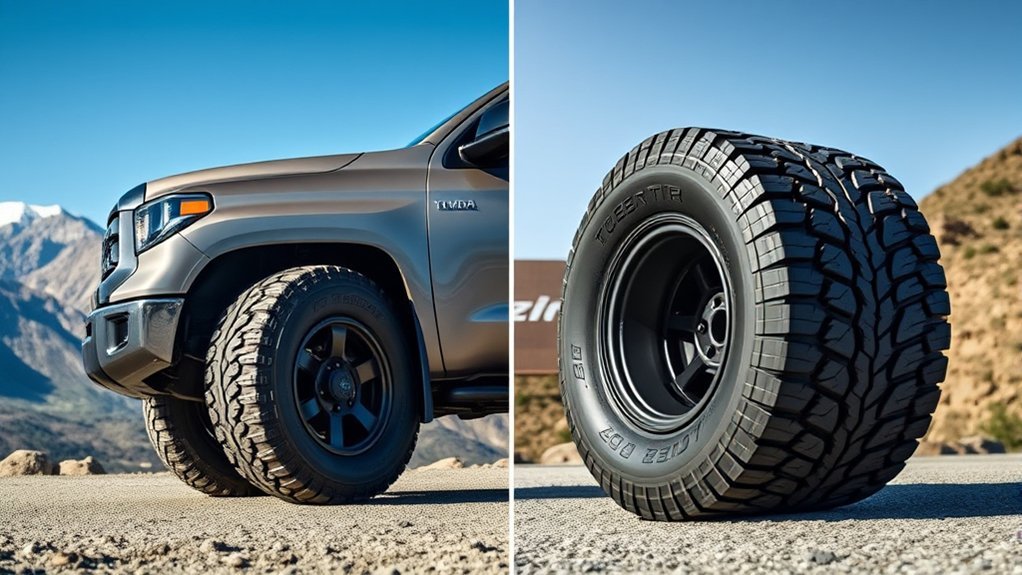
Mounting a tire onto a wheel requires a tire machine, balancing equipment, bead lubricant, and trained handling. That part should be completed by a qualified shop. An experienced owner may swap a complete mounted wheel-and-tire assembly, but only with the correct lifting points, support equipment, lug hardware, and torque procedure for the exact Tundra.
[Products Worth Considering]

This 3-piece wheel and tire brush set makes it easy to clean light, medium, and heavy dirt from wheels, rims, tires, and exterior surfaces. It includes both soft and stiff bristle options for gentle scrubbing and tough grime removal, helping lift brake dust and road buildup. The long-handle design supports comfortable cleaning across cars, trucks, SUVs, RVs, motorcycles, and more, with simple care instructions to restore brush shape.

Keep your tires properly inflated with this analog VONDIOR tire pressure gauge, designed for fast, easy readings without batteries. The swiveling, two-axis hose and large glow dial help you measure at any tire angle with instant visibility. Built with a protective rubber shield, it supports durable, low-maintenance use for cars and trucks.
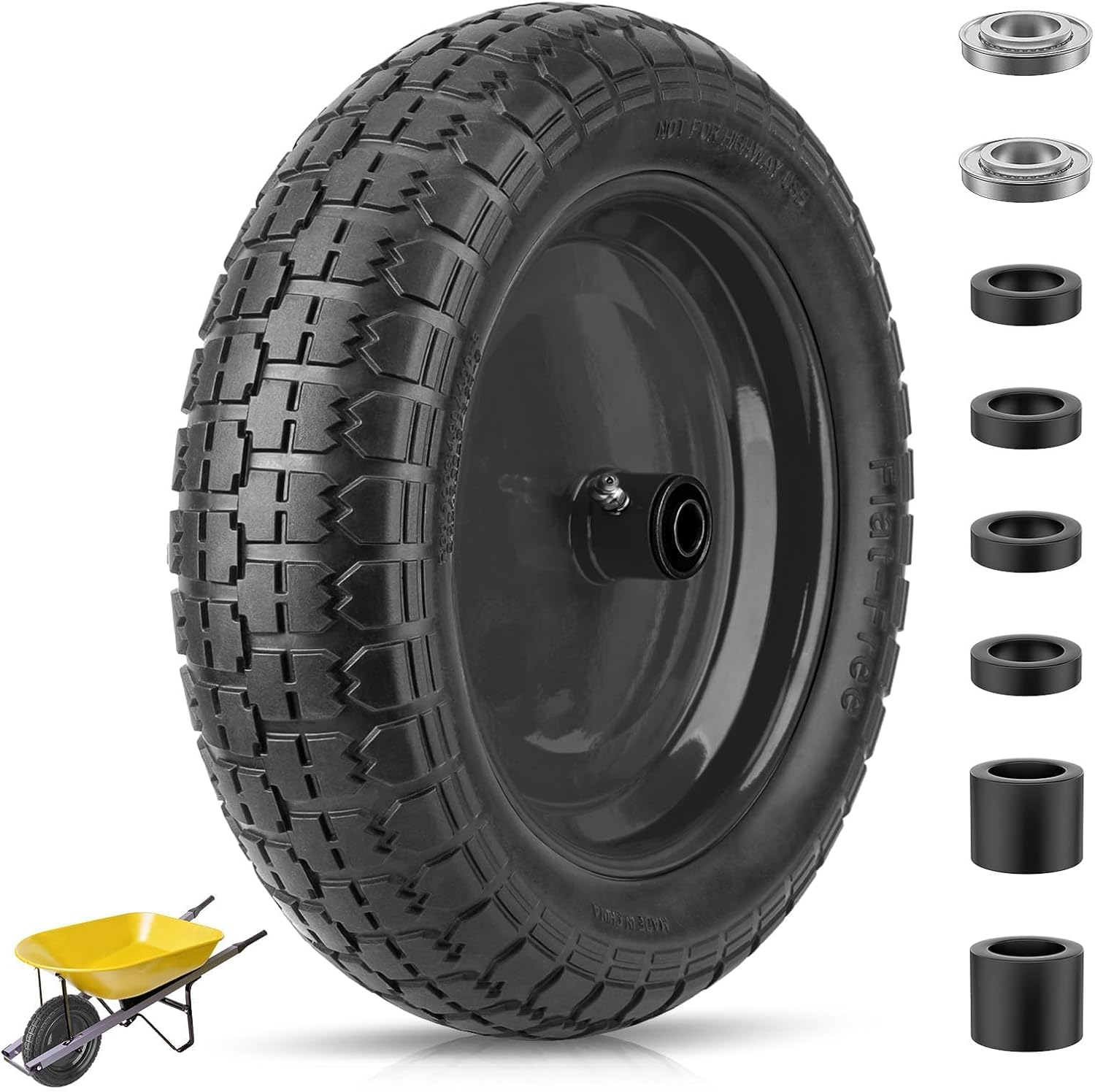
This flat-free TICONN wheelbarrow tire features durable polyurethane foam construction that never needs inflation, helping prevent punctures and reducing maintenance on rough outdoor terrain. With a 300 lb max load capacity and stable steel rim design, it supports safer transport for yard work and hauling tasks. An adapter kit with ball bearings and nylon spacers is included for easier fit and customization across common wheelbarrow and cart axle setups.
Tire Size Compatibility
Do not use a blanket maximum such as 285/70R18 or 285/60R20 for every Tundra. Fitment changes with model year, trim, four-wheel-drive hardware, suspension height, wheel width, offset, alignment, tire brand, and actual measured tire dimensions. A size that clears one truck may rub another during full steering lock or suspension compression.
- Start with factory data: Check the door-jamb label, owner’s manual, and the wheel-and-tire specifications assigned to your VIN.
- Verify the wheel: Confirm bolt pattern, center bore, offset, width, load rating, lug-seat type, and brake clearance.
- Verify the tire: Confirm approved rim width, load index, speed rating, overall diameter, section width, and load-at-pressure requirements.
- Check full movement: Inspect clearance at full steering lock and through suspension compression with the truck safely supported.
- Account for electronics: Confirm TPMS operation and consider how diameter changes may affect the speedometer and vehicle systems.
A leveling kit does not automatically make a tire safe or rub-free. It may create vertical clearance while leaving problems at the body mount, liner, control arm, or full steering lock. It can also alter alignment and suspension geometry.
Installation Tools Required
| Tool or Equipment | Purpose | Safety Note |
|---|---|---|
| Wheel chocks | Prevents vehicle movement | Use on a hard, level surface |
| Correctly rated jack | Raises the truck at approved points | Follow the owner’s manual |
| Correctly rated jack stands | Supports the vehicle | Never rely on a jack alone |
| Lug socket and breaker bar | Removes wheel nuts | Use the correct socket and lug-seat hardware |
| Calibrated torque wrench | Tightens wheel nuts to specification | Use the torque value and sequence in your manual |
| Accurate tire-pressure gauge | Checks cold pressure | Use the correct vehicle or professionally calculated pressure |
Wheel spacers are not an installation tool and should not be used as a default solution for poor fitment. A spacer changes offset and can affect stud engagement, bearing load, clearance, and hardware requirements. Use one only when a qualified professional confirms the complete engineered setup is appropriate.
After installation, have the assemblies balanced, verify TPMS operation, inspect for rubbing, and obtain an alignment when the size or suspension geometry changes. Toyota notes that alternate tires or wheels can affect TPMS operation, so follow the applicable Tundra owner’s manual for registration or initialization procedures.
Real User Experiences With 18-Inch vs. 20-Inch Tires
Owner reports commonly follow a predictable pattern: drivers moving to a taller-sidewall 18-inch package often notice softer impact response and greater confidence on rough surfaces, while drivers using 20-inch packages often describe more immediate steering and a firmer feel. These reports are useful, but they are not controlled tests.
A fair comparison requires similar overall diameter, comparable tire construction, correct pressure, similar tread type, and the same truck, suspension, payload, and road. Changing from a light highway tire to a heavy LT all-terrain tire can overwhelm the effect of changing wheel diameter.
- Comfort: More sidewall often reduces sharp impact harshness, but a stiff or overinflated tire can erase that advantage.
- Off-road behavior: An 18-inch package usually offers more useful sidewall flex and rim protection.
- Cost: Either size may be cheaper depending on the exact tire, availability, and installation needs.
- Noise: Tread pattern and tire construction usually matter more than wheel diameter.
Making the Right Choice: Key Factors to Consider
Choose the package that matches your highest-priority use, then verify that it safely fits your exact truck.
| Your Priority | Better Starting Point | Why |
|---|---|---|
| Comfort on rough pavement | 18-inch | More sidewall at a comparable overall diameter |
| Trail use and airing down | 18-inch | More sidewall flex and rim protection |
| Sharper street response | 20-inch | Shorter sidewall may reduce steering delay |
| Large-wheel appearance | 20-inch | More visible wheel and less sidewall |
| Towing or heavy payload | Either, when correctly rated | Load capacity and pressure matter more than diameter |
| Fuel economy | Compare complete packages | Weight, tread, pressure, and rolling resistance matter more than the wheel number |
Do not expect an automatic 1–2 mpg gain from choosing 18-inch wheels. NHTSA explains that a 10% reduction in tire rolling resistance is estimated to improve fuel economy by about 1–2%, which is different from a guaranteed 1–2 mpg change and cannot be assigned to wheel diameter alone. Tire weight, tread, pressure, aerodynamics, speed, temperature, and driving conditions all affect the result.
For most mixed-use Tundras, a properly matched 18-inch package is the practical choice. A properly matched 20-inch package makes sense when pavement response and appearance matter more than maximum sidewall and impact cushioning.
Frequently Asked Questions
What are the disadvantages of 20-inch rims on a Tundra?
At a similar overall tire diameter, 20-inch rims leave less sidewall. That can produce a firmer response over potholes, reduce rim protection, and limit off-road flexibility. Some comparable 20-inch tires may also cost more, although price and availability depend on the exact size and model.
Which Tundra has the smoothest ride?
No wheel size guarantees the smoothest Tundra. Suspension tuning, model year, trim, tire construction, tire pressure, payload, and road surface all matter. An 18-inch package with a comfort-oriented tire often softens sharp impacts, but compare complete trucks rather than wheel diameter alone.
How can I improve my Tundra’s ride quality?
Start by setting cold pressure to the correct recommendation, checking for uneven wear, balancing the wheels, and correcting alignment problems. Choose a tire designed for comfort and avoid unnecessarily heavy or stiff construction. Suspension changes should be matched to your load and completed by a qualified professional.
Can I replace factory 20-inch wheels with 18-inch wheels?
Often, but not automatically. The 18-inch wheel must have the correct bolt pattern, center bore, width, offset, load rating, lug-seat design, brake clearance, and TPMS compatibility. The tire must also provide suitable overall diameter and load capacity for your exact Tundra.
Do 18-inch tires reduce towing capacity?
Not simply because they are 18 inches. Towing suitability depends on the wheel rating, tire load capacity at the correct pressure, axle ratings, payload, hitch setup, and the truck’s published towing limits. Never exceed the vehicle or component rating with the lowest limit.
Will changing wheel size affect the speedometer or TPMS?
Wheel diameter alone does not determine speedometer change; the new tire’s overall diameter does. A meaningful diameter change can alter indicated speed and vehicle-system behavior. Replacement wheels also need compatible TPMS sensors, and the system may require registration or initialization.
Conclusion
For a Toyota Tundra, 18-inch wheels usually deliver the best balance of comfort, wheel protection, and off-road flexibility. Twenty-inch wheels suit drivers who prefer a larger-wheel appearance and more direct pavement response. The safe choice is not based on diameter alone: verify the exact tire, wheel, pressure, load capacity, clearance, hardware, TPMS setup, and overall diameter for your model year, trim, and intended use.
Sources
- Toyota: 2026 Tundra lineup — current factory wheel sizes and trim examples.
- Toyota Owners: 2026 Tundra manuals — vehicle-specific tire, wheel, jacking, torque, and TPMS guidance.
- NHTSA TireWise — tire-size selection, placard pressure, load safety, maintenance, and rolling resistance.
- Michelin tire-selection guide — matching tire construction and performance characteristics to driving needs.