Installing bigger tires on your Toyota Tacoma does not automatically erase the truck’s factory warranty. The real issue is whether the tire or wheel modification caused the component failure behind a specific claim. Safe fitment, proper installation, accurate records, and a clear understanding of your written warranty can significantly reduce the risk of a dispute.
Quick Answer
Bigger tires do not automatically void a Toyota Tacoma warranty. However, Toyota or a dealer may deny coverage for a suspension, drivetrain, steering, wheel-bearing, or related failure if evidence shows that the larger tires or their installation caused the damage. Unrelated defects should remain eligible under the written warranty.
Key Takeaways
- A tire modification does not automatically cancel your Tacoma’s complete factory warranty.
- Coverage may be denied for a specific failure when the manufacturer or dealer can demonstrate that the modification caused the damage.
- There is no universal maximum tire size that safely fits every Tacoma year, trim, wheel, and suspension setup.
- Check tire diameter, load rating, wheel width, offset, clearance, pressure, TPMS operation, and alignment before driving.
- Keep installation invoices, tire specifications, alignment records, photographs, maintenance records, and written dealer communications.
Note: This article provides general information for U.S. consumers and is not legal advice. Warranty terms, state laws, vehicle configurations, and the facts behind each claim can differ. Review the Warranty and Maintenance Guide for your exact Tacoma model year.
Do Bigger Tires Void a Toyota Tacoma Warranty?
No. Installing aftermarket wheels or bigger tires does not, by itself, void every part of your Toyota warranty. The more accurate question is whether the modification caused the failure for which you are requesting warranty coverage.
The Federal Trade Commission’s auto-warranty guidance states that an aftermarket part does not automatically cancel warranty coverage. However, a manufacturer or dealer may deny coverage for a damaged component if it can prove that a defective aftermarket part, an unsuitable part, or improper installation caused that damage.
The federal rule in 16 CFR 700.10 also prevents a warrantor from requiring only branded parts or authorized service for non-warranty maintenance unless an applicable exception exists. The same rule allows a warrantor to exclude damage caused by unauthorized parts or service.
An aftermarket tire can affect coverage for damage it causes, but it does not erase warranty protection for an unrelated manufacturing defect.
How Warranty Coverage Applies to Tire Modifications
The Entire Warranty Versus One Claim
A dealer should not treat bigger tires as a reason to cancel every remaining warranty benefit. Instead, the dealer should evaluate the failed component and determine whether the tire or wheel setup contributed to that particular failure.
For example, larger and heavier tires might become relevant to a claim involving wheel bearings, steering components, suspension damage, rubbing, or driveline stress. They would be much less relevant to an unrelated defect such as a faulty window switch, defective seat mechanism, or manufacturing problem inside an unrelated electrical component.
The Written Toyota Warranty Still Controls
You should read the Warranty and Maintenance Guide issued for your exact model year. Toyota provides current manuals and warranty information through its Tacoma manuals and warranties portal. Warranty exclusions commonly address damage caused by alteration, misuse, improper repair, improper maintenance, or non-approved parts, but the exact wording and coverage period can vary.
Do not rely only on a verbal statement that a modification “voids the warranty.” Ask which written warranty term applies, which component is being denied, and what evidence connects the modification to the failure.
265/70R17 Versus 285/70R17: The Actual Size Difference
The original article used a change from 265/70R17 to 285/70R17 as an example. Based on the nominal tire-size formula, a 265/70R17 tire is about 31.6 inches in diameter, while a 285/70R17 tire is about 32.7 inches.
| Measurement | 265/70R17 | 285/70R17 |
| Nominal diameter | About 31.6 inches | About 32.7 inches |
| Diameter increase | Baseline | About 1.10 inches or 3.5% |
| Approximate indicated-speed effect | Factory baseline | When the speedometer shows 60 mph, actual speed may be about 62 mph if the system is not recalibrated |
A 3.5% diameter increase is not insignificant. It can affect indicated speed, odometer readings, effective gearing, acceleration, braking feel, fuel use, clearance, and the load placed on related components. Actual manufactured tire dimensions can also vary slightly by brand and tread design.
Warning: Do not treat 285/70R17 as a universal maximum or guaranteed fit for every Tacoma. Fitment depends on the model year, trim, drivetrain, factory wheel, wheel offset, suspension height, alignment, fender and body-mount clearance, tire construction, and actual measured dimensions.
[Products Worth Considering]

The Tymate TM2 RV tire pressure monitoring system keeps you informed with a color LCD display, automatic backlight, and solar charging for dependable operation. It supports up to 10 tire positions with four pre-paired sensors, while offering multiple alarm modes for fast leak detection, pressure extremes, temperature alerts, and low-signal warnings. Built-in monitoring uses accurate readings and reliable 433.92MHz communication to help protect your RV, trailer, truck, or SUV.

Measure tire tread depth quickly and accurately with this LUMITECO dial gauge that reads in 1/32" increments up to 14/32". The color-coded green/yellow/red zones make it easy to judge tire wear and know when replacement is needed. A rugged, compact design with a protective pouch helps keep the gauge ready for use on cars, trucks, motorcycles, and more.

These aluminum alloy tire valve stem caps with an O-ring seal help protect valve stems from corrosion while adding a clean, stylish look to your vehicle. The universal fit works across cars, trucks, motorcycles, bicycles, and more, making them an easy upgrade for everyday driving and off-road use. Installation is quick, and the included four-pack keeps all your tires dressed and protected.
How Bigger Tires Can Affect Performance and Warranty Claims
Larger tires can change more than ground clearance. The following effects are the areas most likely to matter during a safety inspection or warranty assessment.
[Products Worth Considering]
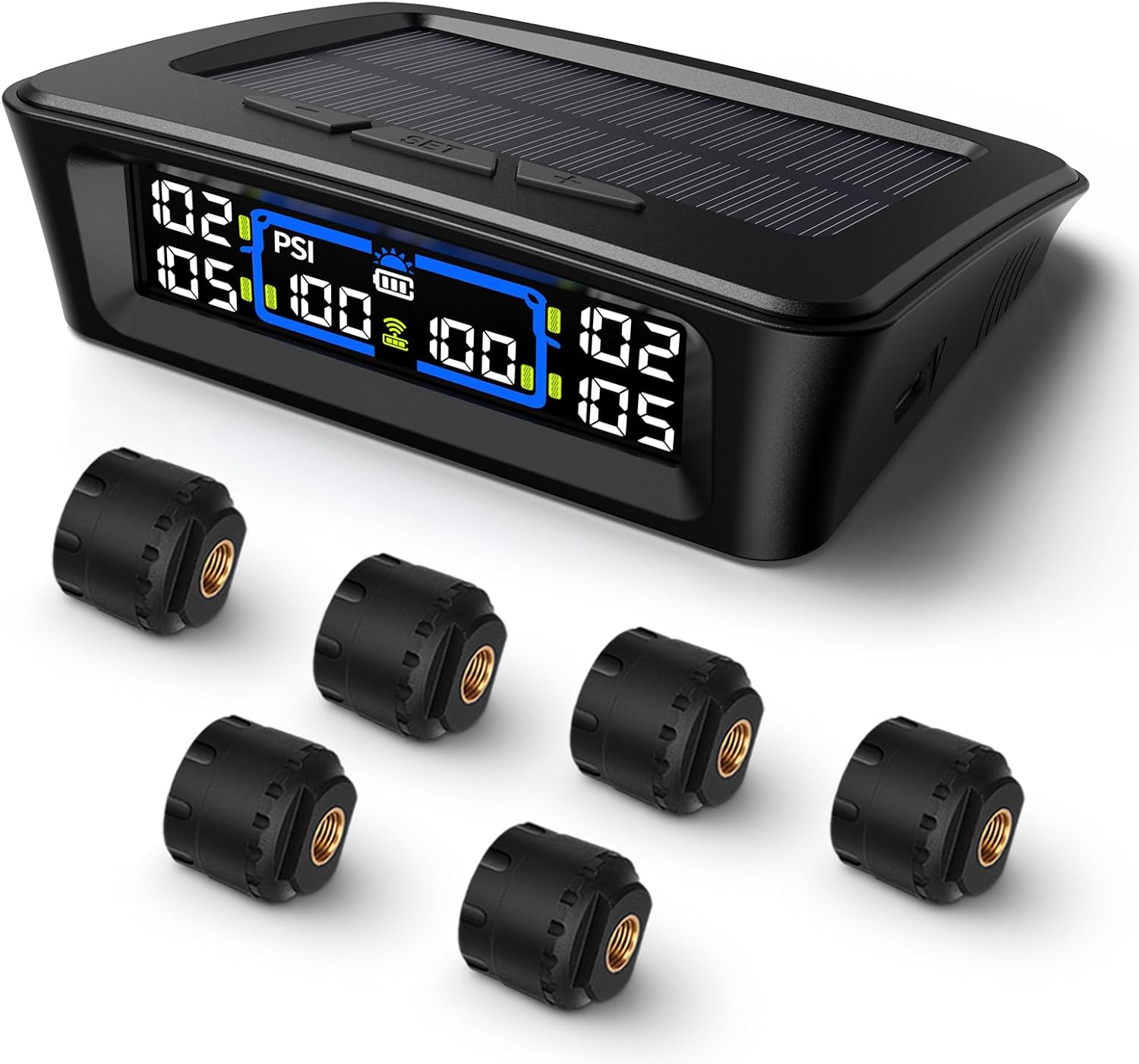
The Tymate TM12 RV TPMS delivers real-time tire pressure and temperature monitoring with a stable 433Hz display for safer long-distance driving. It supports simultaneous monitoring across vehicle and trailer zones, includes six alarm modes for pressure, temperature, leakage, battery, and signal loss, and features easy DIY installation with auto calibration. Power is supplied via USB-C charging or solar recharging, with a wide 0–144 PSI range and up to 50 ft signal coverage for RVs and towable trailers.

The Big Rig Defense Tire Thumper is a truck tire pressure checker that lets you quickly check multiple tires by giving them a firm whack. Listen for a reassuring thump and feel the stick bounce when a tire is fully inflated, helping you get back on the road safely. It features a comfortable, glove-friendly handle and a secure wrist strap for confident use on busy routes.

These universal tire valve stem caps help protect valve cores from dust, debris, and moisture while helping maintain stable tire pressure. The corrosion-resistant metal construction and sealed design provide reliable protection in road grime, mud, and winter conditions. Twist-on installation makes them quick to fit on cars, SUVs, trucks, and motorcycles.
Suspension, Steering, and Wheel Bearings
A larger or heavier tire can change leverage and unsprung weight. Incorrect wheel offset can also move the tire farther inward or outward. If the setup contributes to rubbing, premature bearing wear, damaged steering parts, or suspension contact, the dealer may investigate the modification as a possible cause.
Drivetrain and Effective Gearing
A taller tire travels farther with each rotation. This changes effective gearing and may make the engine and transmission work differently during acceleration, towing, climbing, or low-speed off-road driving. A major diameter difference between tires can also create driveline stress on four-wheel-drive systems.
Use four tires with compatible size, construction, and overall circumference. The existing guide about matching all four tires explains why large differences between tire positions can create problems. The related guide about whether you can mix tire brands also covers the importance of matching specifications rather than relying on the brand name alone.
Braking, Handling, and Clearance
Heavier tires can increase rotational mass, while taller sidewalls may alter steering response. Before approving a setup, a qualified installer should check clearance at full steering lock and through the suspension’s expected compression range. The tire must not contact the frame, control arms, body mount, fender liner, brake hose, wiring, or other components.
Load Rating, Wheel Compatibility, and Inflation
The replacement tire must be suitable for the truck’s axle loads and approved for the wheel’s width. Its load index, speed rating, construction, and inflation requirements must be appropriate for the vehicle and its use.
NHTSA recommends checking the owner’s manual and the Tire and Loading Information label on the driver-side door area. The pressure molded on a tire sidewall is a maximum tire rating, not automatically the correct operating pressure for your Tacoma.
Construction also matters. This overview of LT tires versus passenger tires provides additional context about load-oriented tire construction, ride firmness, and vehicle use.
TPMS, Speedometer, and Electronic Systems
Changing tire or wheel size may require tire-pressure sensor registration, TPMS initialization, or pressure-setting changes. Confirm that every sensor communicates correctly and that no TPMS malfunction warning remains after installation.
A significant diameter change can also affect speed and distance calculations. Ask whether your Tacoma can be recalibrated for the selected size. Depending on the truck and modification, you may also need to verify the operation of stability control, traction control, parking assistance, and other wheel-speed-dependent systems.
How to Choose Bigger Tires With Less Warranty Risk
- Identify the factory specification. Check your driver-door placard, exact-year owner’s manual, wheel size, factory tire size, load rating, and recommended cold pressure.
- Verify your exact configuration. Tacoma specifications vary by generation, model year, trim, cab, drivetrain, suspension package, and wheel option.
- Use a qualified tire or off-road shop. Ask the installer to confirm wheel-width compatibility, offset, load capacity, clearance, and proper lug-nut seating.
- Check full-range clearance. Inspect the tire at full left and right steering lock and through suspension compression. A parking-lot check alone may not reveal off-road or loaded rubbing.
- Confirm load and speed ratings. Do not reduce the vehicle’s required tire load capacity.
- Balance and align the truck. Keep the final alignment printout and address vibration, pulling, or uneven steering immediately.
- Verify TPMS operation. Register or initialize sensors as required and confirm that the warning system works normally.
- Recheck the installation. Follow the wheel or installer’s specified lug-nut recheck procedure after the initial driving period.
- Match the tire to your use. Choose a setup suited to your climate, payload, towing, highway, and off-road needs. The existing guide to matching tires to driving conditions explains the general selection principles.
If you drive in snow or persistent freezing conditions, tire type can matter more than adding width or diameter. The existing comparison of dedicated winter tires explains why a purpose-built winter tire can provide a greater safety benefit than an oversized all-season or all-terrain tire.
Pro Tip: Before buying anything, send the installer your VIN, model year, trim, current wheel specifications, proposed tire model, proposed tire size, wheel width, offset, and suspension modifications. Ask for written confirmation of the fitment checks they performed.
[Products Worth Considering]

The SAFELIFE dial tire tread depth gauge measures tread depth in 1/32 inch increments with clear, easy-to-read 2-inch dial face. Color zones using a traffic light system help you quickly judge whether tread is low, marginal, or ample for safer driving. Built with a durable zinc cast body and a metal detect probe for precise, comfortable use across cars, motorcycles, trucks, and buses.
This flat-free TICONN wheelbarrow tire features durable polyurethane foam construction that never needs inflation, helping prevent punctures and reducing maintenance on rough outdoor terrain. With a 300 lb max load capacity and stable steel rim design, it supports safer transport for yard work and hauling tasks. An adapter kit with ball bearings and nylon spacers is included for easier fit and customization across common wheelbarrow and cart axle setups.

ETENWOLF T300 is a calibrated digital tire pressure gauge for accurate readings from 3 to 200 PSI across light and heavy-duty vehicles. It includes thermal compensation for reliable performance in extreme cold or heat, with an auto shut-off to extend battery life and an LED for easier reading. The sturdy design supports rugged everyday use, making it ideal for pickups, RVs, and industrial applications.
How to Communicate With the Dealer
Clear, factual communication works better than asking whether bigger tires “void the warranty.” That question is too broad and may produce an equally broad answer.
Before Installing the Tires
- Ask for the Warranty and Maintenance Guide for your exact Tacoma year.
- Ask whether Toyota has issued any technical guidance relevant to your proposed tire and wheel change.
- Provide the exact tire size, tire model, load rating, wheel size, offset, lift height, and other suspension changes.
- Ask whether the dealer anticipates calibration, TPMS, rubbing, or service-access concerns.
- Request important answers in writing, while understanding that a dealer may not pre-authorize every future warranty claim.
During Warranty Service
Describe the symptom and allow the technician to diagnose it. Do not conceal the modification or make unsupported legal accusations. Ask the dealer to identify the failed component, the diagnosis, the applicable warranty provision, and the technical reason the modification allegedly caused the failure.
Keep copies of repair orders even when no repair is completed. The order should record the mileage, complaint, diagnosis, tire and wheel setup, dealer response, and any refusal of coverage.
Protecting Your Warranty When Modifying Tires
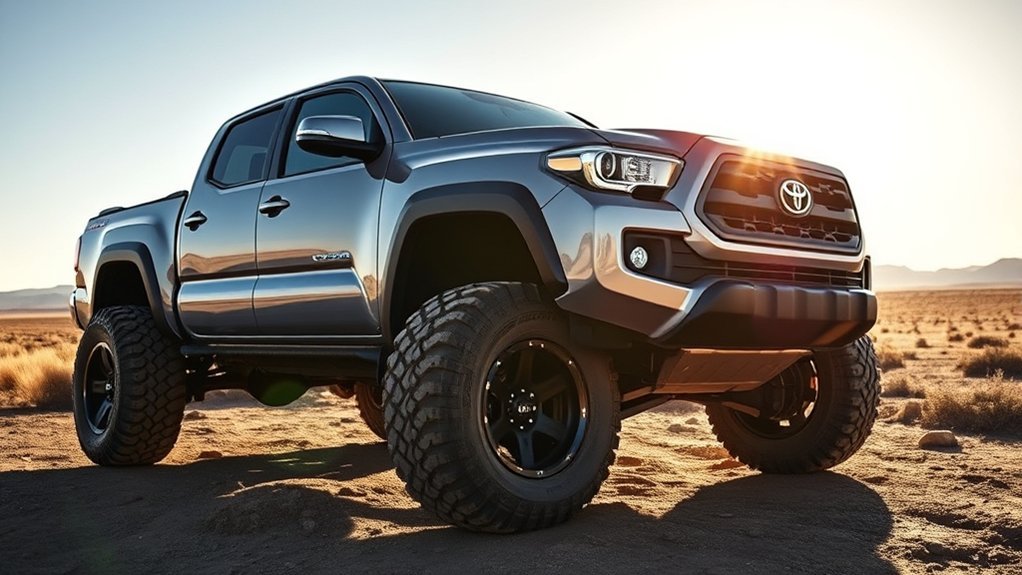
No document can guarantee that every future repair will receive warranty approval. However, strong records can show that you selected appropriate parts, used a qualified installer, maintained the vehicle, and corrected problems promptly.
Records to Keep
- Original sales receipt and installation invoice
- Tire brand, model, size, load index, speed rating, and DOT identification information
- Wheel brand, size, width, offset, load rating, and hardware specifications
- Lift-kit or suspension-component documentation
- Before-and-after photographs showing tire and wheel clearance
- Alignment and balancing reports
- TPMS registration or initialization records
- Maintenance and tire-rotation records
- Written dealer, installer, and manufacturer communications
- Receipts for inspections, corrections, and replacement parts
Watch for Early Warning Signs
Stop and inspect the setup if you notice rubbing, steering vibration, pulling, unusual bearing noise, repeated TPMS warnings, damaged fender liners, reduced braking confidence, contact marks, or abnormal tire wear. Continuing to drive after a visible problem appears can make a future causation dispute harder to challenge.
Handling a Denied Warranty Claim
If a dealer denies coverage because of your tires, wheels, or lift, stay calm and work through the following steps.
- Request the denial in writing. Ask the dealer to name the failed component, applicable warranty exclusion, diagnosis, and causal connection to the modification.
- Request supporting evidence. This may include measurements, photographs, diagnostic codes, inspection notes, damaged-part observations, and manufacturer guidance.
- Collect your records. Gather installation invoices, specifications, alignment results, maintenance history, prior repair orders, and communications.
- Ask the service manager to review the decision. Present your evidence and keep the discussion focused on the failed component.
- Obtain a second technical opinion. Another Toyota dealer or qualified independent specialist may identify an unrelated defect or a different cause.
- Escalate the case to Toyota. The official Toyota Brand Engagement Center accepts customer concerns. Keep the case or reference number.
- Follow the dispute procedure in your warranty guide. Some warranties require an informal dispute process before a lawsuit.
- Use consumer-protection resources when necessary. The FTC recommends contacting the seller and manufacturer first, then considering your state attorney general, a dispute-resolution organization, or appropriate legal advice if the problem remains unresolved.
Warning: Reinstalling factory tires before an appointment does not erase installation records, wear patterns, alignment changes, photographs, or prior damage. Do not misrepresent the vehicle’s modification history during a warranty investigation.
Frequently Asked Questions
Do bigger tires void the Toyota Tacoma warranty?
No. Bigger tires do not automatically void the entire Toyota warranty. Toyota or a dealer may deny coverage for a particular failure if evidence shows that the tire, wheel, lift, or installation caused the damage. Unrelated manufacturing defects should still be evaluated under the written warranty.
How big of a tire can you put on a Toyota Tacoma?
There is no single maximum tire size for every Tacoma. The answer depends on the model year, trim, drivetrain, wheel width, wheel offset, suspension, body clearance, tire construction, and intended use. Start with the factory placard and owner’s manual, then have the proposed setup checked by a qualified installer.
Will 285/70R17 tires fit every Tacoma?
No. A 285/70R17 tire may fit some Tacoma configurations, while others may experience rubbing or require different wheels, suspension changes, alignment work, or body-clearance modifications. Actual dimensions also vary by tire model. Fitment on one Tacoma does not prove safe fitment on another.
Will a two-inch lift void the Tacoma warranty?
A two-inch lift does not automatically cancel the entire warranty. Coverage may be denied for suspension, steering, driveline, alignment, or other damage caused by the lift, its components, or improper installation. Unrelated covered defects should still be considered separately.
Can a dealer deny an engine claim because the truck has bigger tires?
The dealer should identify how the tire modification caused or contributed to the specific engine failure. The presence of bigger tires alone does not establish that connection. Towing, overloading, altered gearing, severe use, or ignored symptoms could become relevant depending on the diagnosis and evidence.
Should you ask the dealer before installing bigger tires?
It is sensible to ask about known service, calibration, TPMS, and clearance concerns. However, a verbal conversation may not guarantee future coverage. Keep written responses and rely on the warranty guide, safe fitment evidence, and qualified installation rather than a broad verbal assurance.
Conclusion
Bigger tires do not automatically void your Toyota Tacoma warranty, but they can complicate coverage for a failure connected to the modification. Your lowest-risk approach is to confirm the factory specification, choose properly rated tires and compatible wheels, check clearance and electronic systems, use a qualified installer, and keep complete records.
If a claim is denied, ask for the decision and causal evidence in writing. Focus on whether the modification actually caused the failed component rather than debating the warranty in general. Safe fitment protects more than your warranty. It also protects your Tacoma’s handling, braking, driveline, tires, and occupants.
Sources
- Federal Trade Commission: Auto Warranties and Auto Service Contracts — aftermarket parts, maintenance records, and claim-denial responsibilities.
- Electronic Code of Federal Regulations: 16 CFR 700.10 — prohibited warranty tying and damage caused by unauthorized parts or service.
- National Highway Traffic Safety Administration: TireWise — tire-size selection, placard information, inflation, load, maintenance, and tire safety.
- Toyota Tacoma Manuals and Warranties — model-year-specific owner’s manuals and warranty materials.
- Toyota Contact Us — official escalation channel through the Toyota Brand Engagement Center.
- Federal Trade Commission: Warranties — written-warranty review and consumer dispute options.