
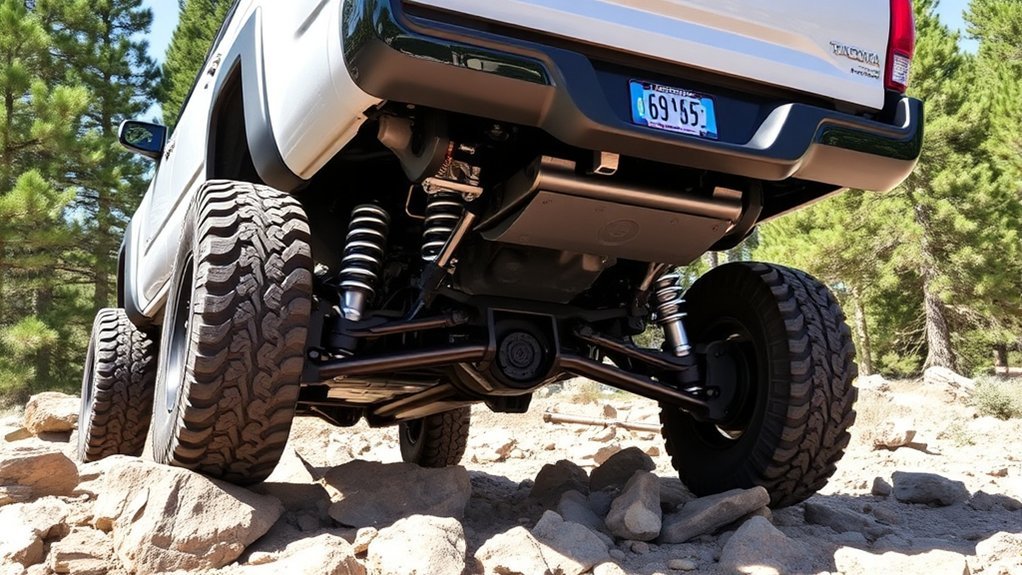
A lift kit can make your Toyota Tacoma look tougher, clear trail obstacles more easily, and fit larger tires, but the best setup depends on your Tacoma’s model year, how you drive, and how much comfort you want to keep on the street. The goal is not simply “more height.” The goal is the right height, the right components, and a safe installation.
Quick Answer
A Toyota Tacoma lift kit raises the truck’s ride height to improve ground clearance, tire clearance, stance, and off-road capability. For most Tacoma owners, a 2- to 3-inch suspension lift offers the best balance of daily comfort, trail performance, cost, and reliability.
Key Takeaways
- A leveling kit is best for a mild stance change; a suspension lift is better for off-road use and larger tires.
- A 2- to 3-inch lift is the sweet spot for many Tacoma owners because it improves clearance without creating as many geometry problems as taller lifts.
- Tire fitment depends on model year, wheel offset, tire width, lift height, and whether you are willing to trim plastic or body-mount areas.
- Always budget for alignment, possible upper control arms, tire changes, and follow-up maintenance—not just the lift kit itself.
- A lift kit does not automatically void your entire warranty, but a warranty claim can be affected if the lift causes the problem.
At a Glance
| Time Required | Research and parts selection: 1–3 hours. Installation: 2–8+ hours depending on kit complexity, plus a professional alignment. |
| Difficulty | Easy for basic leveling spacers; moderate to advanced for coilovers, upper control arms, leaf packs, and taller suspension lifts. |
| Tools Needed | Floor jack, jack stands, socket set, torque wrench, pry bar, penetrating oil, kit instructions, and access to a professional alignment rack. |
| Cost | Basic leveling kits can start around the low hundreds; premium suspension systems, tires, labor, and alignment can push the full project into several thousand dollars. |
What Is a Lift Kit for Your Toyota Tacoma?
A lift kit is an aftermarket or Toyota accessory suspension upgrade that raises your Tacoma’s ride height. The extra height can improve ground clearance, make room for larger tires, improve approach and breakover clearance off-road, and give the truck a more aggressive stance.
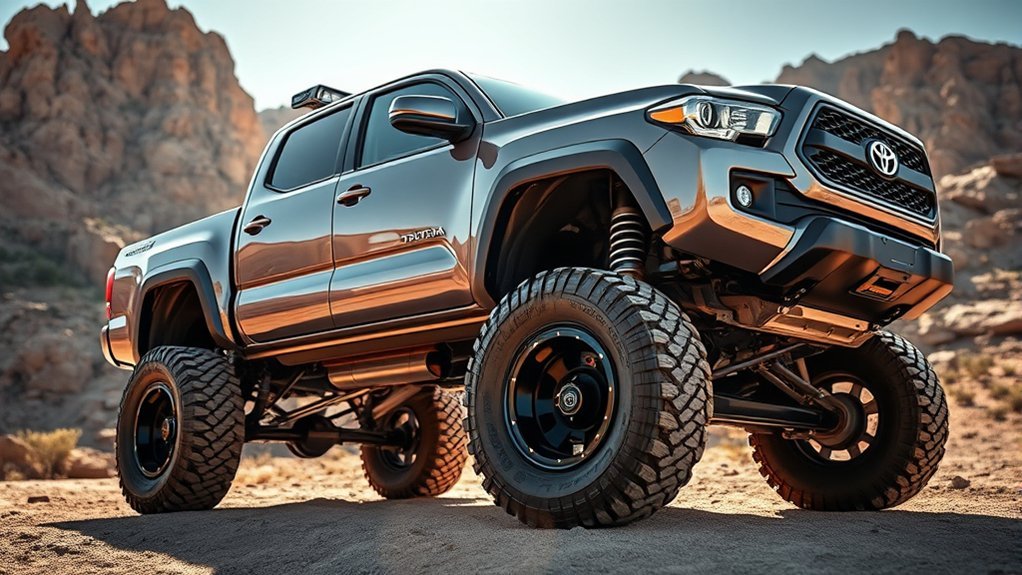
The exact result depends on the type of kit. A mild leveling kit may only raise the front of the truck 1–2.5 inches. A full suspension lift may include new coilovers, shocks, upper control arms, rear leaf springs, blocks, or add-a-leafs. Toyota’s own Tacoma TRD Lift Kit, for example, is listed as a 2-inch front and 1-inch rear lift with TRD-tuned Bilstein monotube shocks for specific Tacoma fitments.
The main benefit is capability, but the main challenge is geometry. When you raise the truck, suspension angles, steering feel, alignment, brake-line clearance, headlight aim, and tire fitment can all change. That is why quality parts and careful installation matter as much as lift height.
Why Consider a Lift Kit for Your Tacoma?
A Tacoma lift kit is worth considering if your stock setup limits the trails you drive, the tire size you want, or the look you prefer. The right kit can make the truck more useful without ruining its daily manners.
| Benefit | What It Means |
|---|---|
| Better trail clearance | More room under the body and suspension helps reduce scraping on rocks, ruts, and uneven terrain. |
| Larger tire options | A lift can help fit larger all-terrain or mud-terrain tires, but final fitment also depends on wheel offset, tire width, and trimming. |
| Improved stance | A leveling kit can reduce the factory nose-down rake and give the Tacoma a more balanced look. |
| More suspension control | Quality shocks and coilovers can improve damping, especially on washboard roads, gravel, and mild trails. |
| Better setup for added weight | Springs matched to bumpers, winches, bed racks, rooftop tents, or overlanding gear can help reduce sag. |
Note: A lift kit does not automatically increase payload or towing capacity. It may help the truck sit better with added accessories, but your Tacoma’s factory ratings still apply.
Types of Tacoma Lift Kits
Before choosing a brand or height, decide which type of lift fits your driving style.
[Products Worth Considering]

This 1/2-inch drive breaker bar delivers powerful leverage for loosening and tightening stubborn lug nuts and automotive fasteners. The 180-degree flex head helps you reach tight spaces at the angle you need, making tire and brake jobs easier. A spring-loaded ball detent design holds 1/2-inch sockets securely while the chrome-moly head provides durable strength for everyday use.

These aluminum alloy tire valve stem caps with an O-ring seal help protect valve stems from corrosion while adding a clean, stylish look to your vehicle. The universal fit works across cars, trucks, motorcycles, bicycles, and more, making them an easy upgrade for everyday driving and off-road use. Installation is quick, and the included four-pack keeps all your tires dressed and protected.

This professional wheel and rim brush kit makes it easy to lift brake dust, grime, and dirt from wheels and tires without scratching finishes. The brushes feature soft, metal-free wool heads and a flexible 360-degree rim brush design for reaching hard-to-clean areas. Includes multiple brush types plus accessories for thorough car, motorcycle, and general vehicle detailing.
Leveling Kits
A leveling kit raises the front of the Tacoma to reduce the factory rake. This is usually the least expensive option and is popular for appearance and mild tire clearance. It is best for drivers who mostly stay on pavement but want a better stance.
Spacer Lift Kits
A spacer kit adds height by placing a spacer above or within the front strut assembly. It can be cost-effective, but it usually does not improve shock performance. If you drive rough trails often, a spacer-only setup may feel limited.
Suspension Lift Kits
A suspension lift replaces or upgrades key suspension parts. Depending on the kit, it may include coilovers, rear shocks, leaf springs, add-a-leafs, blocks, upper control arms, differential-drop parts, and brake-line brackets. This is the better choice for regular off-road use.
Coilover Lift Kits
Adjustable coilovers let you fine-tune front ride height and damping quality. Brands such as ICON Vehicle Dynamics and FOX offer Tacoma-specific shock systems for owners who want better control than a spacer kit can provide.
Body Lift Kits
A body lift raises the body from the frame without increasing suspension travel. It may help with tire clearance and appearance, but it does not improve ground clearance under the frame or suspension. For most Tacoma owners, a suspension lift is the more useful upgrade.
Long-Travel Kits
Long-travel suspension is for serious off-road performance. It can improve wheel travel and high-speed desert capability, but it is expensive, complex, and often requires wider fenders, different wheels, and more maintenance.
How to Choose the Right Type of Lift Kit?
Start with how you actually use your Tacoma. A daily driver that sees light trails does not need the same setup as a truck carrying armor, camping gear, and 35-inch tires.
- Mostly street driving: choose a mild leveling kit or a quality 0–2 inch coilover setup.
- Weekend trails: choose a 2–3 inch suspension lift with good shocks and proper alignment support.
- Overlanding: choose springs matched to added weight, especially if you have a bumper, winch, bed rack, drawers, or rooftop tent.
- Heavy off-road use: look at higher-end coilovers, upper control arms, skid plates, and a full tire/wheel plan.
- Show stance only: be honest about ride quality, tire wear, and handling tradeoffs before going tall.
Pro Tip: Choose the tire size first, then build the lift around that tire. Buying the tallest lift first can create extra cost without solving rubbing, offset, or ride-quality problems.
[Products Worth Considering]

This professional wheel and rim cleaning brush set lifts brake dust, grime, and dirt with soft, scratch-free microfiber and synthetic wool fibers. The rim brush bends up to 360 degrees for easy access to hard-to-reach areas around spokes, lips, and faces. Ideal for thorough cleaning of car, truck, motorcycle, bicycle, RV, and more wheel and tire surfaces.

This 3-piece wheel brush set makes it easy to clean wheels and tires with soft, scratch-free brushes designed for lifting brake dust and grime. The flexible rim brush bends up to 360 degrees to reach hard-to-access areas for a thorough clean, while the comfortable grip helps control during detailing. A dedicated detailing brush supports gentle cleaning for sensitive surfaces, including interior use.
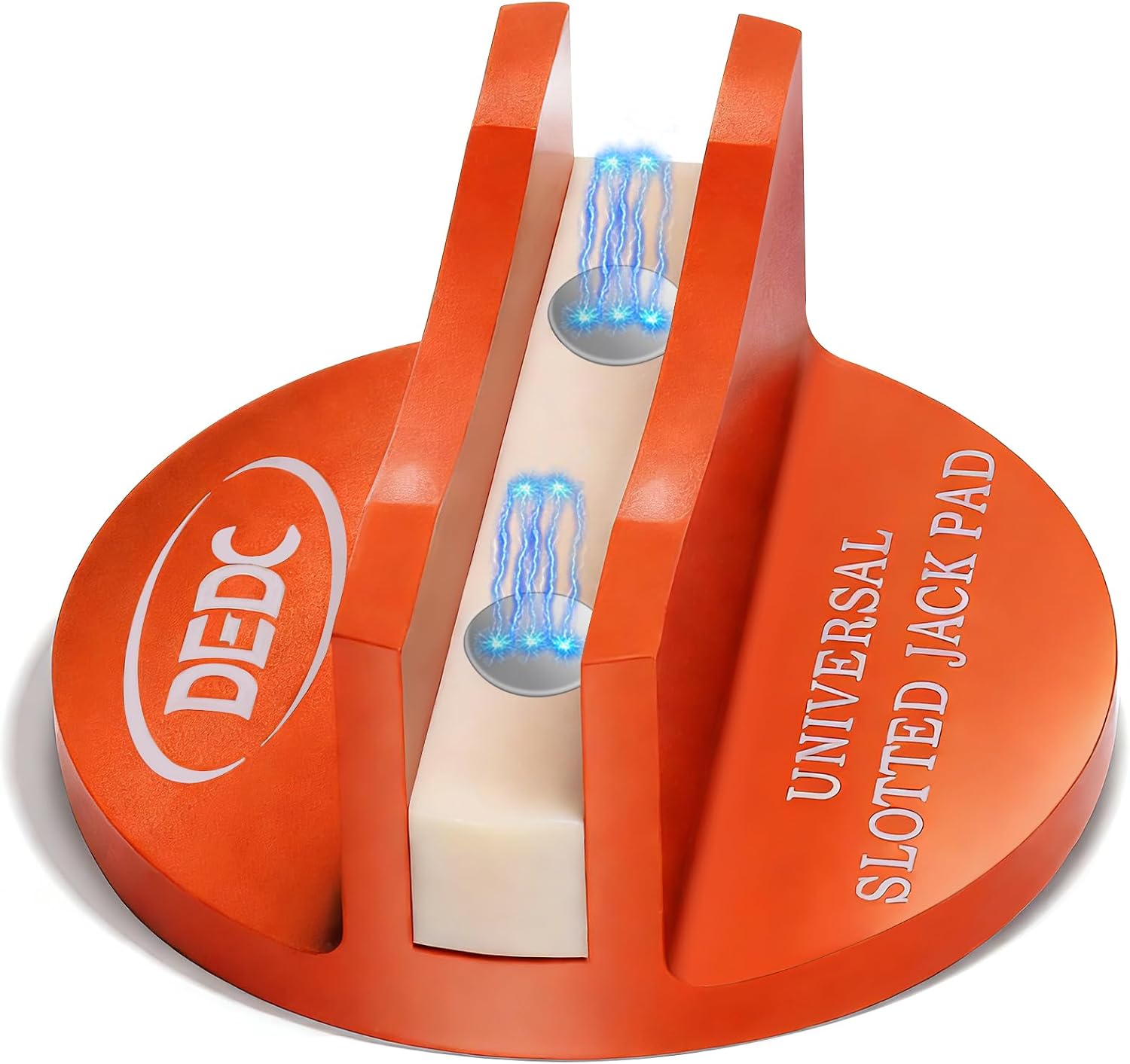
This universal magnetic jack pad is designed to protect pinch welds when lifting vehicles, helping prevent seam damage or warping. Crafted from solid aluminum with a nylon pad insert, it provides reinforced structural support and a secure fit for most single-vehicle pinch welds. Slotted for strong magnet holding, it supports safe jacking for cars, SUVs, trucks, and more.
How Lift Height Affects Performance and Style
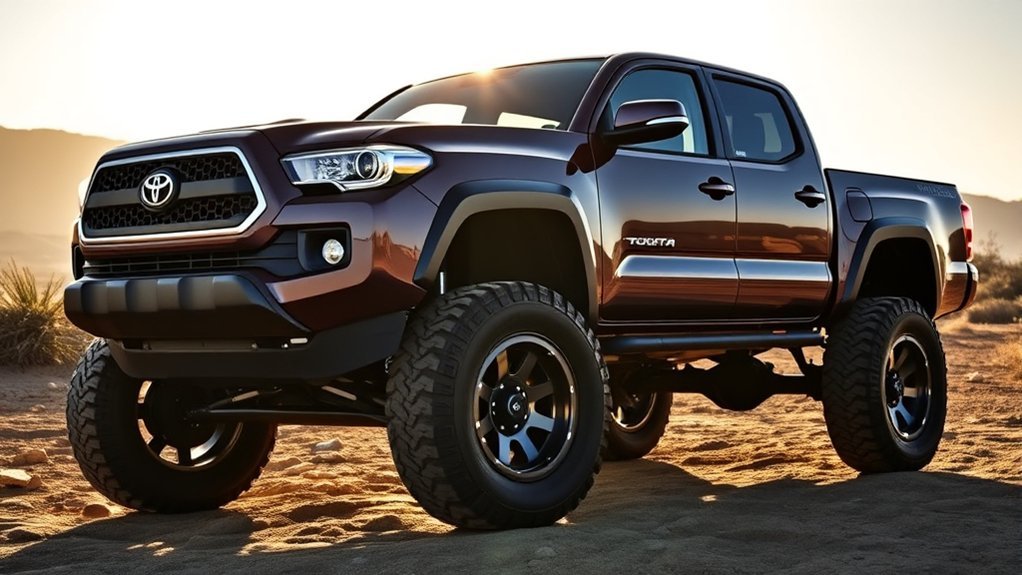
Lift height changes more than the way your Tacoma looks. It affects steering geometry, suspension travel, center of gravity, tire clearance, and the parts needed to keep the truck driving correctly.
| Lift Height | Best For | Watch For |
|---|---|---|
| 1–2 inches | Leveling, mild trails, improved stance | Limited tire clearance gains; spacer kits may not improve ride quality |
| 2–3 inches | Best all-around setup for many daily-driven Tacomas | May need upper control arms, trimming, and careful alignment |
| 4–6 inches | Big stance, more room for larger tires, more dramatic appearance | Higher cost, more geometry correction, more effect on handling and access height |
| Long-travel setups | High-speed off-road performance | Major cost, wider track width, more maintenance, more involved installation |
Warning: A taller truck has a higher center of gravity. The National Highway Traffic Safety Administration notes that rollover risk is greater when a vehicle has a high center of gravity relative to its track width. Drive more cautiously after lifting your Tacoma, especially during sudden lane changes, sharp turns, and emergency maneuvers.
Tire Fitment: What Size Tires Can a Lifted Tacoma Run?
Tire fitment is one of the biggest reasons Tacoma owners install a lift kit, but there is no single tire size that fits every Tacoma perfectly. A “33-inch tire” can vary by actual diameter and width, and fitment changes with wheel offset, backspacing, fender liner position, mud flaps, cab-mount clearance, and suspension compression.
For example, ICON’s 2005–2023 Tacoma Stage 1 EXP system is listed for 0–2 inches of front lift and mentions fitment up to a 33-inch tire with conditions such as trimming and wheel-offset considerations. That is useful guidance, but it should not be treated as a universal guarantee for every wheel and tire combination.
Common Tire-Fitment Rules
- Stock or mild level: often works best with conservative tire widths and factory-friendly wheel offsets.
- 2–3 inch lift: commonly chosen by owners who want about 33-inch tires, but trimming may still be needed.
- 35-inch tires: usually require more planning, more trimming, the right wheel offset, and sometimes additional modifications.
- Wider tires: can rub more than taller narrow tires because they contact fender liners, mud flaps, and body-mount areas sooner.
The safest approach is to check real fitment notes for your exact Tacoma generation, wheel size, tire size, and lift kit before ordering.
What You Need to Budget for Your Tacoma Lift Kit
Budgeting for a Tacoma lift kit means looking beyond the advertised kit price. The full project may include parts, labor, alignment, tires, wheels, trimming, control arms, and follow-up maintenance.
| Item | Typical Budget Impact | Why It Matters |
|---|---|---|
| Leveling kit | Lowest parts cost | Good for stance, but limited performance improvement |
| Suspension lift | Moderate to high | Better for trail use and ride control |
| Upper control arms | Often added with 2–3 inch lifts | Can help alignment range, caster, and clearance |
| Professional labor | Varies by shop and kit complexity | Complex lifts take more time and require proper torque and setup |
| Alignment | Required after installation | Protects tires and steering feel |
| Tires and wheels | Can exceed the lift cost | The lift and tire package must work together |
Installation Costs Consideration
Installation cost depends on the kit. A simple front leveling spacer is much easier than a full suspension system with coilovers, rear leaf work, upper control arms, differential-drop parts, and brake-line brackets. If you hire a shop, ask for a quote that includes installation, alignment, and any expected trimming or follow-up inspection.
Kit Quality Versus Price
The cheapest kit is not always the best value. A low-cost spacer may be fine for looks, but if you drive rough roads or trails, better shocks and matched springs can make the Tacoma more controlled and comfortable. Old Man Emu, for example, offers Tacoma suspension kits with load-matched components for trucks carrying different accessory weights.
Long-Term Maintenance Expenses
A lifted Tacoma can put extra stress on wear items such as ball joints, bushings, CV axles, tie rods, shocks, and tires. Plan for inspections after installation, after the first few hundred miles, after hard trail use, and during regular oil-change intervals.
DIY or Professional Help: Your Installation Options?
Some Tacoma owners can install a basic leveling kit at home. More complex suspension lifts are better handled by an experienced shop, especially if the kit involves spring compression, control arms, brake-line brackets, or rear leaf-spring work.
DIY May Make Sense If:
- You have safe lifting equipment and heavy-duty jack stands.
- You already own a torque wrench and the correct sockets.
- You understand suspension preload and spring safety.
- You can follow the manufacturer’s torque specs exactly.
- You will still schedule a professional alignment immediately afterward.
Professional Installation Is Smarter If:
- The kit includes coilovers, upper control arms, rear leaf packs, or differential-drop parts.
- You are not comfortable working under a lifted vehicle.
- Your truck has rusted or seized suspension hardware.
- You need trimming, tire fitting, or alignment troubleshooting.
- You want documentation for warranty, resale, or insurance records.
Warning: Never work under a Tacoma supported only by a jack. Use properly rated jack stands on a solid surface, follow the lift-kit instructions, and do not use a spring compressor unless you know how to handle stored spring energy safely.
Post-Install Checklist for a Lifted Tacoma
The job is not finished when the last bolt is tightened. Use this checklist before driving normally.
- Torque every fastener to the lift-kit manufacturer’s spec.
- Check brake lines and ABS wires at full steering lock and suspension droop.
- Get a professional alignment as soon as possible after installation.
- Check tire clearance while turning, braking, reversing, and compressing the suspension.
- Aim the headlights so the lifted front end does not blind other drivers.
- Road-test slowly and listen for clunks, rubbing, vibration, or pulling.
- Retorque after break-in according to the kit instructions, especially after the first trail trip.
- Keep receipts and install records for warranty, insurance, and resale documentation.
Top Brands for Tacoma Lift Kits: Who to Trust
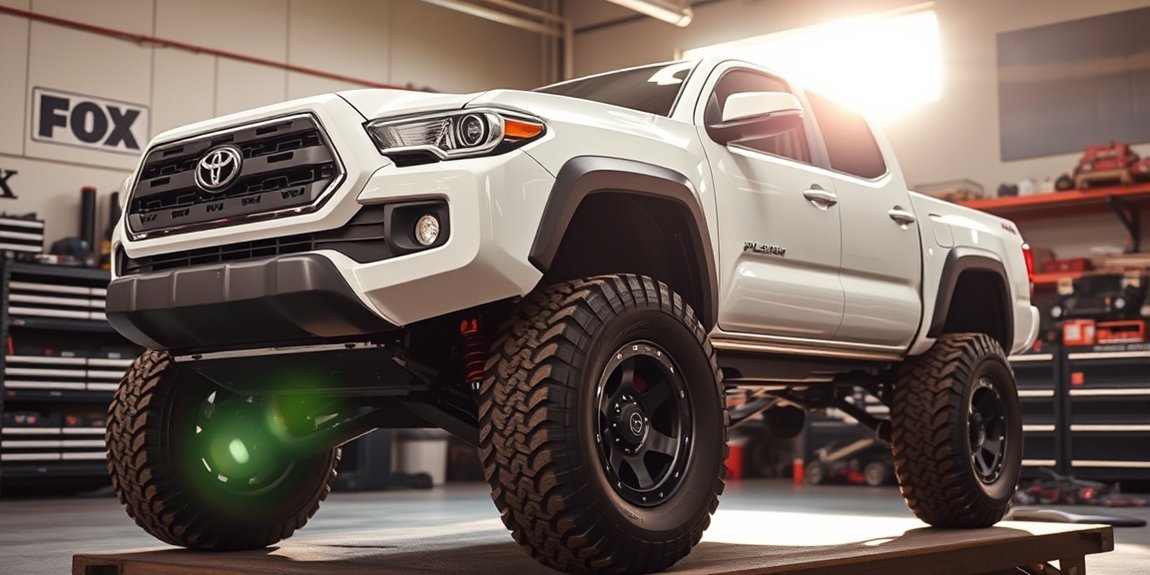
Several trusted brands make Tacoma lift kits and suspension components. The best choice depends on your budget, model year, ride-quality expectations, and off-road use.
| Brand | Best For | Why Owners Consider It |
|---|---|---|
| Toyota TRD | Owners who want a Toyota-validated accessory lift for specific Tacoma fitments | Toyota lists its TRD kit with Bilstein shocks and Toyota Safety Sense compatibility for the listed applications. |
| ICON Vehicle Dynamics | Daily drivers and weekend trail trucks wanting better damping | Tacoma-specific suspension systems with coilover and shock packages. |
| FOX | Owners who want proven shock performance for road and trail | Performance Series shocks use IFP monotube designs for controlled damping. |
| Old Man Emu | Overlanding and trucks carrying added weight | Offers tuned, matched kits with spring options for different vehicle loads. |
| BDS Suspension | Owners comparing budget leveling kits through taller suspension systems | Wide Tacoma catalog from leveling kits to taller lift systems. |
| King Shocks | Higher-performance off-road builds | Remote-reservoir coilovers are popular for demanding terrain and heat management. |
[Products Worth Considering]

The Trivd Frol 1/2" air impact wrench delivers high performance torque up to 1500 ft-lbs with a twin hammer impact mechanism for strong, balanced blows. It features an ergonomic grip, compact lightweight design, and quick-stop control with 3 forward speeds up to 8000 RPM plus a reverse speed. Built for demanding automotive repair and tire shop work, the rear exhaust helps keep debris away from the surface.

Upgrade your 2024-2026 Tesla Model 3 Highland with REEVAA all-weather mud flaps designed for seamless fit along the original body lines. The set of four delivers strong splash protection against mud, gravel, and road debris while using OEM-grade durable materials. Installation is non-destructive with original hole positions and snap-in clips, and the aerodynamic design helps minimize impact on efficiency.

This spare tire tool kit is designed for the 2004 to 2018 Ford F-150 to help you loosen and tighten wheel lug nuts and manage the spare tire and provided jack functions from underneath the vehicle. It includes the lug nut wrench and extension pieces plus a convenient storage carrying case for organized transport. The jack itself is not included.
Trusted Industry Leaders
ICON, FOX, King, Old Man Emu, Toyota TRD, and BDS all serve different Tacoma owners. The right brand is not always the most expensive one. A daily driver may be happiest with a mild, quiet, reliable setup, while an overlanding Tacoma may need springs designed for constant added weight.
Performance and Reliability Factors
When comparing brands, look for vehicle-specific fitment, rebuildable or serviceable shocks, corrosion-resistant materials, spring-rate options, clear instructions, warranty support, and real alignment guidance. Avoid choosing by height alone.
What to Look for in a Lift Kit?
A good Tacoma lift kit should match your truck, your tire plan, and your driving style. Before buying, check these details:
- Exact model-year fitment: A kit for a 2016–2023 Tacoma may not fit a 2024+ Tacoma.
- Drivetrain fitment: Confirm 2WD vs. 4WD compatibility.
- Trim exclusions: Some kits exclude TRD Pro, long-bed, four-cylinder, or specific cab configurations.
- Lift height: Choose the minimum height that clears your tires and trail needs.
- Shock quality: Better shocks can improve control more than a taller spacer.
- Spring rate: Match springs to added weight from bumpers, winches, racks, and camping gear.
- Alignment support: Upper control arms may be needed for proper caster and drivability.
- Warranty and documentation: Keep receipts, instructions, alignment printouts, and install records.
Warranty, Insurance, and Legal Considerations
A lift kit does not automatically cancel your entire Tacoma warranty. However, if a suspension, steering, drivetrain, safety-sensor, or tire issue is caused by the lift or its installation, that specific claim may be challenged. The Magnuson-Moss Warranty Act is the key federal warranty law, but real-world warranty outcomes still depend on the failure, the parts used, and the documentation.
Toyota’s own TRD accessory lift has specific accessory warranty terms. Toyota states that TRD accessories installed before or at the time of sale can be covered for 3 years/36,000 miles on parts, while accessories installed afterward can have 1 year/12,000 miles of parts coverage. Always confirm current terms with your Toyota dealer before buying.
You should also check insurance and local rules. Some states or inspection programs limit bumper height, headlight height, tire coverage, or suspension modifications. If you finance or lease your Tacoma, check those terms before modifying the truck.
How to Maintain Your Lifted Tacoma
Maintaining a lifted Tacoma is about catching small problems early. A lift changes operating angles and can make worn parts show up sooner.
- After installation: inspect all hardware, brake lines, ABS wires, and tire clearance.
- After the first few hundred miles: retorque suspension hardware if the kit instructions call for it.
- At every oil change: inspect shocks, bushings, ball joints, tie rods, CV boots, and tire wear.
- After off-road trips: check for bent brackets, leaking shocks, torn boots, loose skid plates, and fresh rubbing marks.
- When tires wear unevenly: check pressure, alignment, balance, and suspension components.
- When steering feels off: do not ignore pulling, wandering, clunks, or vibration.
Pro Tip: Take photos of your suspension, brake lines, CV angles, and tire clearance right after installation. Those photos make it easier to spot changes later.
Frequently Asked Questions
How much does it cost to install a lift kit on a Toyota Tacoma?
The total cost depends on the kit type, shop labor rate, alignment, and whether you add tires, wheels, upper control arms, or trimming. A basic leveling kit can be relatively inexpensive, while a premium suspension lift with tires and labor can cost several thousand dollars.
What are the downsides of putting a lift kit on your truck?
The downsides can include higher cost, more difficult entry and exit, reduced fuel economy from larger tires, more suspension wear, alignment challenges, extra road noise, changed handling, and a higher center of gravity. These risks are easier to manage with quality parts, proper installation, and routine inspections.
Will a 2-inch lift kit void the warranty?
A 2-inch lift does not automatically void the entire warranty. However, if the lift or installation causes a failure, the related warranty claim may be denied. Keep receipts, alignment records, and installation documentation, and ask your Toyota dealer how a specific kit may affect your coverage.
What is the best lift height for a daily-driven Tacoma?
For most daily-driven Tacomas, a 2- to 3-inch suspension lift is the best balance. It improves stance and trail clearance without creating as many ride, alignment, and driveline issues as taller lifts.
Can I fit 33-inch tires on a Tacoma with a lift kit?
Often, yes, but it depends on your Tacoma’s generation, wheel offset, tire width, and lift setup. Some 33-inch combinations may still rub and require trimming, especially during turning, reversing, or off-road suspension compression.
Conclusion
A Toyota Tacoma lift kit can be a smart upgrade when it matches your real use. For most owners, the best choice is not the tallest kit available. It is a well-matched 2- to 3-inch suspension setup, proper tires, careful alignment, and routine maintenance. Plan the whole system before buying parts, keep your warranty and safety documentation, and your lifted Tacoma will be more capable, better looking, and easier to live with every day.
Sources
- Toyota Genuine Tacoma TRD Lift Kit — official lift height, Bilstein shock details, Toyota Safety Sense compatibility, and fitment notes.
- Toyota USA Newsroom: Tacoma TRD Lift Kit — Toyota accessory warranty terms for the TRD lift kit.
- Federal Trade Commission: Magnuson-Moss Warranty Act — warranty-law context for aftermarket parts and consumer warranties.
- ICON Vehicle Dynamics Tacoma Stage 1 EXP Suspension System — example of Tacoma-specific lift range and 33-inch tire fitment notes.
- Old Man Emu MT64 Tacoma Lift Kit — example of load-matched Tacoma suspension components.
- NHTSA Rollover Mitigation Report — safety context for center of gravity and rollover risk.
