
Best 37 Inch Tires for Tundra Builds in 2026
If you are building a lifted Toyota Tundra and want the stance and clearance of 37 inch tires, start with fitment first. The best 37 inch tires for a Tundra are not just the most aggressive-looking options; they need to match your lift height, wheel diameter, offset, load needs, and daily-driving expectations.
This guide compares mud-terrain, rugged-terrain, and all-terrain-style 37-inch options for lifted Tundras. Use the quick picks below to narrow the list, then check each product section for the right buyer, trade-offs, and fitment notes.
Quick Verdict
Best overall off-road pick: Cooper Discoverer STT Pro 37X13.50R18LT because the 18-inch wheel fitment leaves more sidewall for trail use, rocks, and aired-down driving.
Best daily-driver leaning option: Predator New Mutant X-AT 37X12.50R20 if you want a 37-inch stance with a less extreme tread style than a full mud-terrain tire.
Best narrower fitment: Venom Power Trail Hunter R/T 37X11.50R20LT if you want 37-inch height but less width than many 12.50- and 13.50-inch options.
Fitment note: Before ordering any 37-inch tire, confirm your lift height, wheel width, offset, backspacing, control arm clearance, brake clearance, trimming needs, and load rating.
[Products Worth Considering]
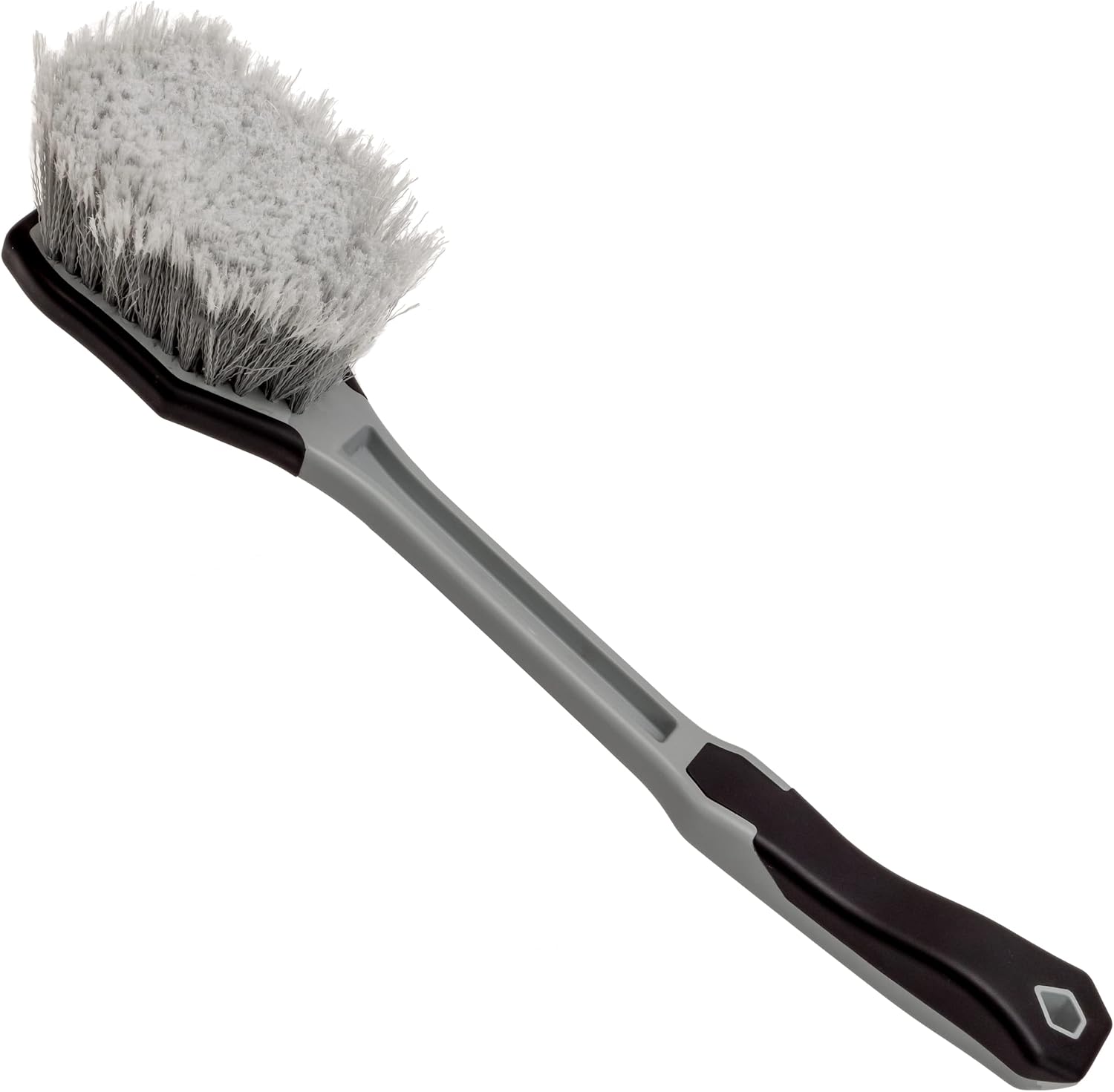
Clean grills, fenders, fender flares, bumpers, and wheel wells with a long-handled brush built for detailed car washing. The soft, triple-flagged bristles and dense scrub coverage help lift dirt gently while making coverage fast and easy. Use it with your favorite car wash soap for tires and exterior surfaces, and it also works for bike, motorcycle, boat, or RV cleaning.

These universal tire valve stem caps help protect valve cores from dust, debris, and moisture while helping maintain stable tire pressure. The corrosion-resistant metal construction and sealed design provide reliable protection in road grime, mud, and winter conditions. Twist-on installation makes them quick to fit on cars, SUVs, trucks, and motorcycles.

This professional wheel and rim brush kit makes it easy to lift brake dust, grime, and dirt from wheels and tires without scratching finishes. The brushes feature soft, metal-free wool heads and a flexible 360-degree rim brush design for reaching hard-to-clean areas. Includes multiple brush types plus accessories for thorough car, motorcycle, and general vehicle detailing.
Top Picks
|
Category |
Product |
Best For |
Check Price |
|---|---|---|---|
|
🏆 Best Overall Off-Road Pick |
Cooper Discoverer STT Pro 37X13.50R18LT |
Rock, mud, aired-down trail use, and serious off-road builds |
|
|
⭐ Best Daily-Driver Leaning Option |
Predator New Mutant X-AT 37X12.50R20 |
Daily driving with weekend dirt, gravel, mud, and snow use |
|
|
🎯 Best Narrower 37-Inch Fitment |
Venom Power Trail Hunter R/T 37X11.50R20LT |
Drivers who want 37-inch height with less width than 12.50 or 13.50 options |
|
|
💼 Best 20-Inch Rugged Terrain |
Evoluxx Rotator R/T 37X13.50R20LT |
Towing, commuting, and moderate trail use |
|
|
🌧️ Best Mud-To-Road Balance |
General Grabber X3 37X12.50R18 |
Drivers who want a reputable M/T with livable pavement manners |
|
|
🏔️ Best Aggressive 22-Inch M/T |
Evoluxx Rotator M/T 37X13.50R22LT |
Mud, loose dirt, aggressive lifted-truck builds |
|
|
🔧 Best Heavy-Duty 24-Inch R/T |
Evoluxx Rotator R/T 37X13.50R24LT |
Mixed road and trail use on lifted 24-inch wheel setups |
|
|
🎨 Best Oversized-Wheel M/T |
Evoluxx Rotator M/T 37X13.50R26LT |
Show-style lifted builds that still need mud-terrain bite |
|
|
💰 Best Budget-Focused Pick |
Pegasus RTX 37X13.50R20 |
Budget-minded lifted Tundra owners who still want a rugged 37-inch tire |
|
|
🔰 Best 20-Inch STT Pro Variant |
Cooper Discoverer STT Pro 37X13.50R20LT |
Tundra owners who want STT Pro traction on 20-inch wheels |
How We Picked These 37 Inch Tires for Tundra Builds
For a lifted Tundra, tire choice has to start with clearance and load needs before style. We prioritized true 37-inch tire options, wheel-diameter fitment, tread category, load-use suitability, and real-world trade-offs such as road noise, ride firmness, tire width, and rubbing risk.
We also separated mud-terrain, rugged-terrain, and all-terrain-style patterns so you can choose based on how the truck is actually used. A trail-heavy Tundra should lean toward M/T traction and sidewall protection, while a daily-driven truck usually makes more sense with an A/T or R/T pattern.
Before You Buy 37s for a Tundra
- Check clearance at full steering lock, not just while parked straight.
- Confirm wheel width, offset, and backspacing before choosing 11.50, 12.50, or 13.50 width.
- Match load range and load index to your truck, passengers, cargo, towing, and overlanding gear.
- Expect more weight, possible speedometer changes, alignment needs, and potential fuel economy loss compared with smaller tires.
- Ask your installer whether trimming, cab mount clearance, mud flap removal, or alignment correction may be needed.
1. Cooper Discoverer STT Pro 37X13.50R18LT
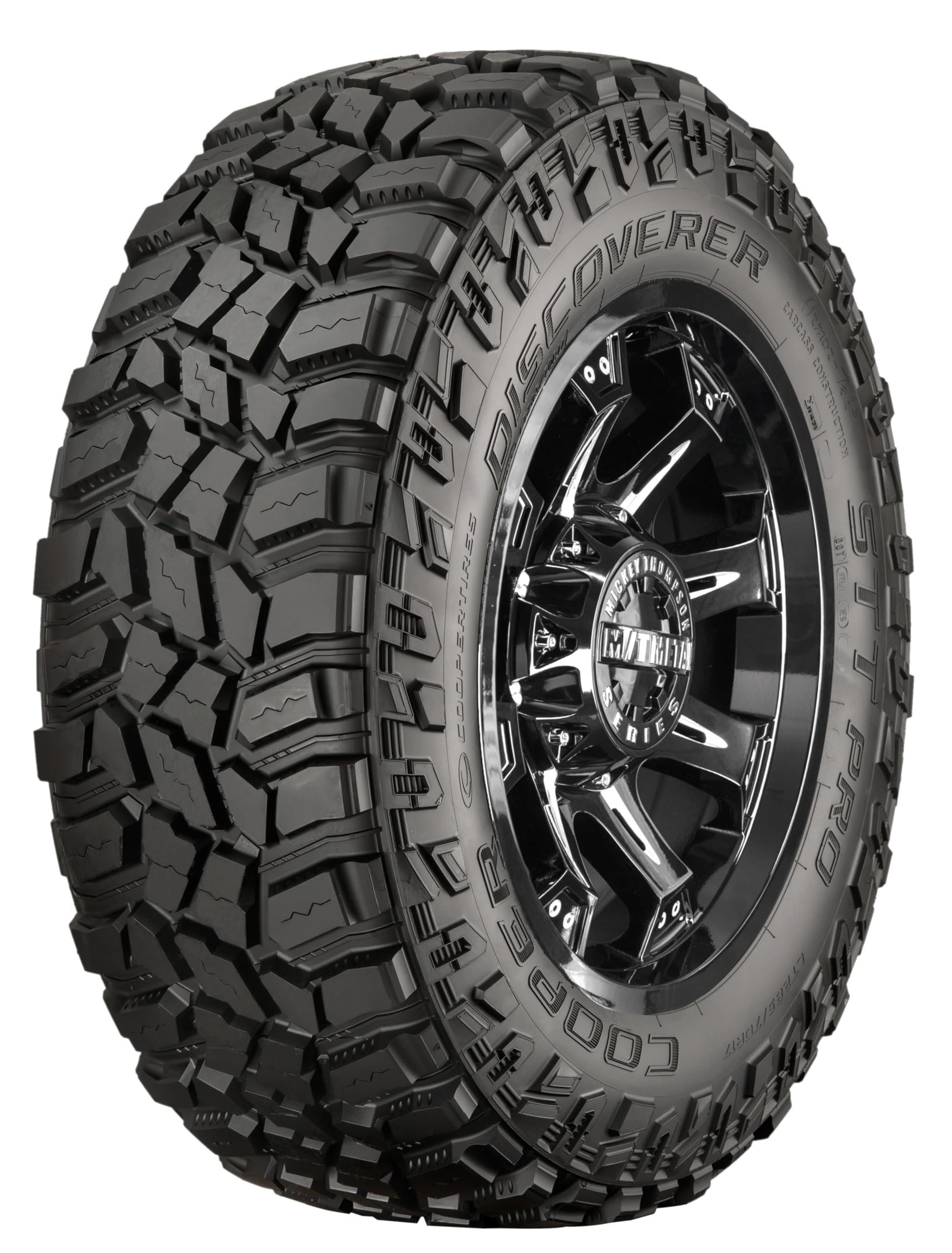
Best overall off-road pick. The Cooper Discoverer STT Pro is the strongest fit here for a lifted Tundra that sees rocks, mud, loose dirt, and aired-down trail use. The 18-inch wheel size leaves more sidewall than larger 20-, 22-, 24-, and 26-inch setups, which can help with trail compliance and ride comfort.
Check Current Amazon Availability ➜Best for: Rock, mud, aired-down trail use, and serious off-road builds.
What to check before buying: Confirm your lift height, wheel width, offset, backspacing, brake clearance, and steering clearance. A 37×13.50 tire is wide, so rubbing checks matter before you click buy.
Pros
- Strong mud- and rock-focused tread design
- 18-inch wheel fitment leaves more usable sidewall
- Well-suited to trail-heavy Tundra builds
Cons
- More road noise than most all-terrain tires
- May be overkill for trucks that rarely leave pavement
Buyer Notes
Buy it if off-road traction matters more than the calmest possible highway ride. Skip it if highway comfort, fuel economy, and low road noise matter more than trail bite.
Verdict
Choose the Cooper Discoverer STT Pro 37X13.50R18LT if you want an off-road-focused 37-inch tire for 18-inch wheels and your lifted Tundra can clear the tire safely.
2. Predator New Mutant X-AT 37X12.50R20
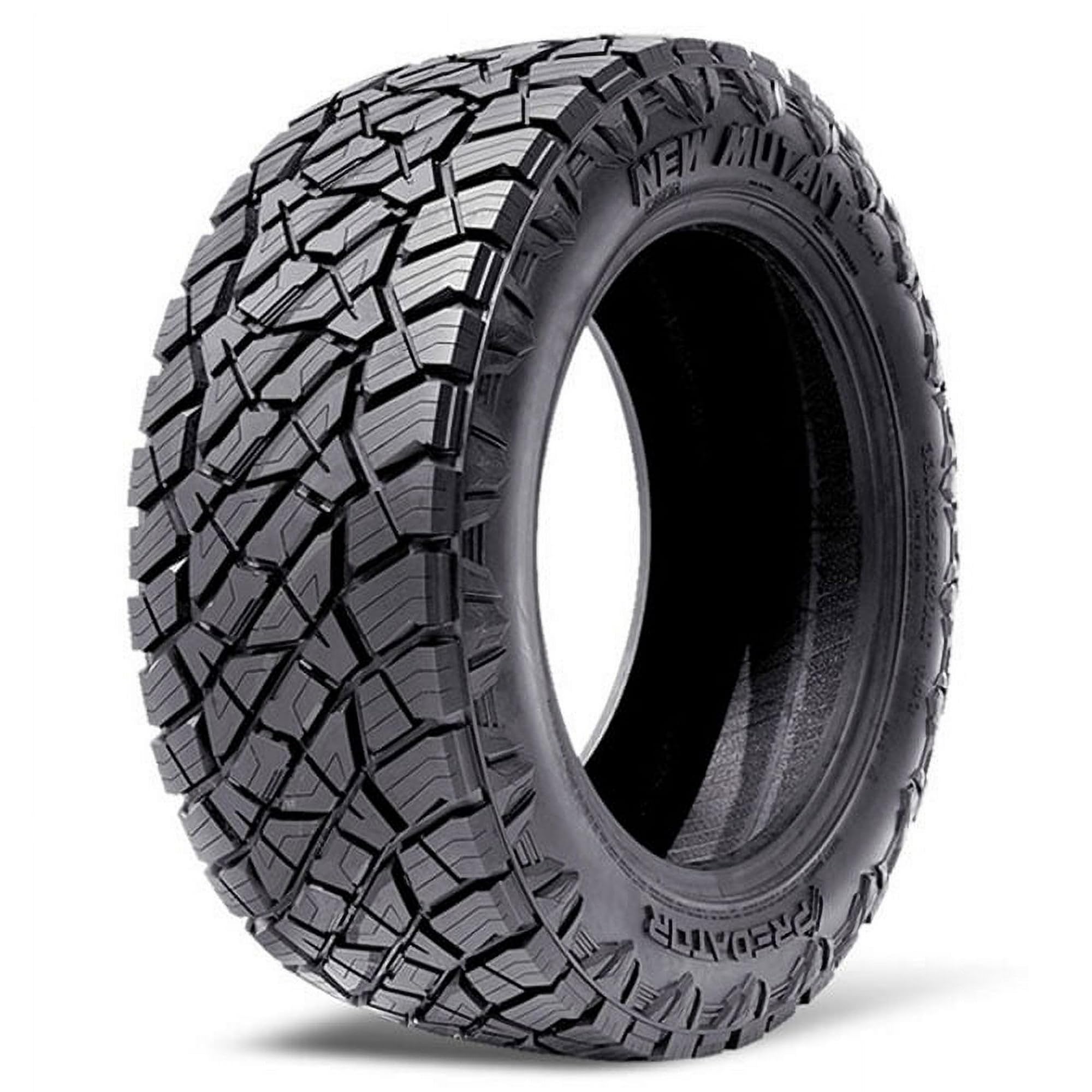
Best daily-driver leaning option. The Predator New Mutant X-AT is the most road-friendly style of tire in this lineup. Its all-terrain-style positioning makes it a better fit for Tundra owners who want 37-inch size and off-road confidence without choosing the most aggressive mud-terrain tread.
Check Price on Amazon ➜Best for: Daily driving with weekend dirt, gravel, mud, and snow use.
What to check before buying: Confirm rim diameter, wheel width, load rating, and clearance with your lift and wheel offset. Even a more road-friendly tread can still rub if the wheel setup is wrong.
Pros
- All-terrain-style pattern is easier to live with daily
- 37×12.50 width may be easier to fit than some 13.50-wide options
- Good match for mixed highway and trail use
Cons
- Less extreme mud bite than Cooper STT Pro or other M/T tires
- Still needs proper balancing and fitment checks at this size
Buyer Notes
Buy it if your Tundra spends most of its time on pavement but still needs a 37-inch tire that can handle unpaved weekends. Skip it if deep mud, sharp rocks, and maximum sidewall protection are your main priorities.

Verdict
Choose the Predator New Mutant X-AT 37X12.50R20 if you want a more daily-friendly 37-inch option for 20-inch wheels and your truck has the clearance to run it safely.
3. Venom Power Trail Hunter R/T 37X11.50R20LT
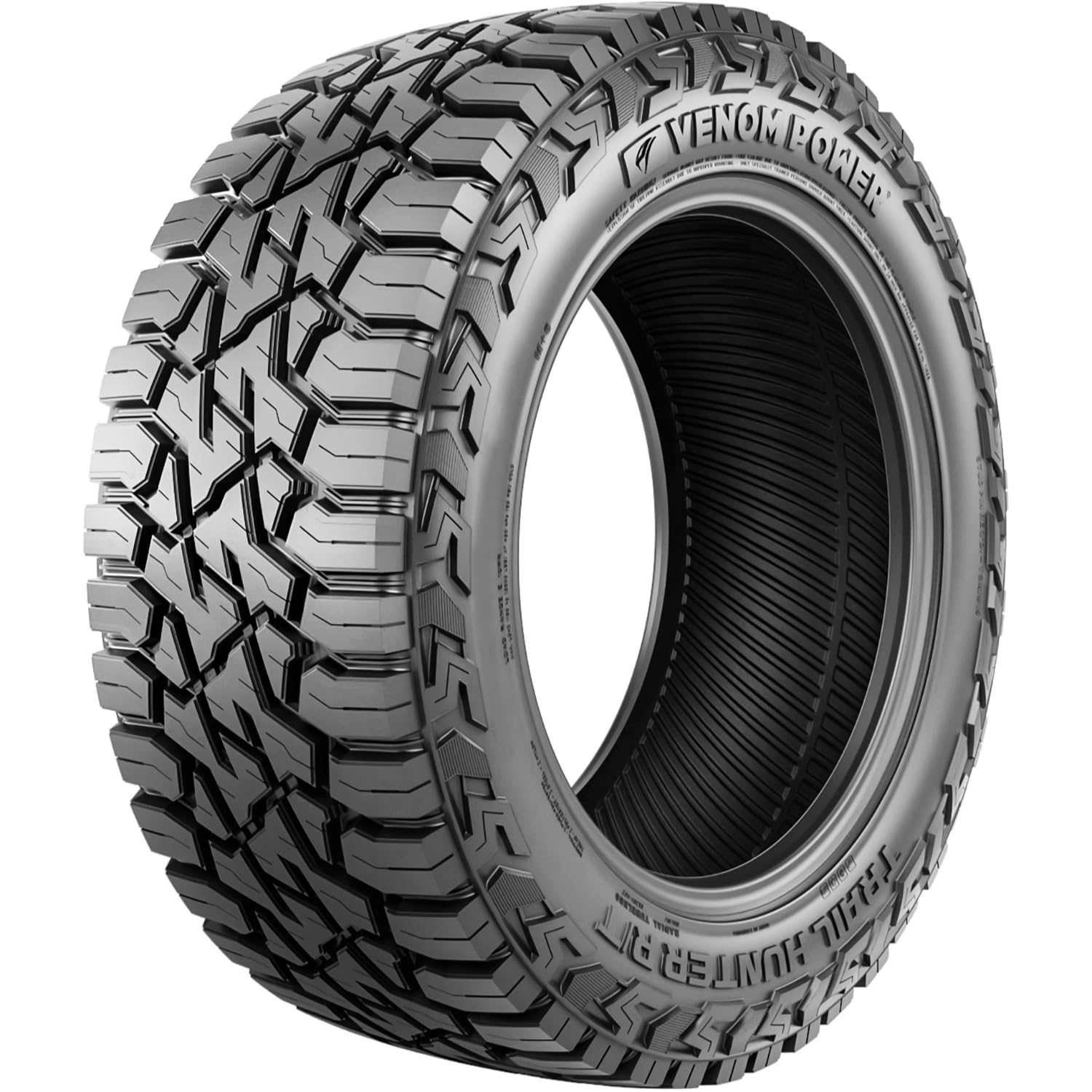
Best narrower 37-inch rugged-terrain option. The Trail Hunter R/T stands out because it uses a narrower 37×11.50R20 size. That can help some lifted Tundra owners manage clearance better than very wide 13.50-inch tires, while still getting a tall 37-inch stance and hybrid on/off-road tread.
Check Price on Amazon ➜Best for: Drivers who want 37-inch height with less width than 12.50 or 13.50 options.
What to check before buying: Confirm your wheel width range, load rating, and whether the narrower footprint works for your terrain. Narrower 37s can help with clearance, but they are not the right answer for every surface or stance goal.
Pros
- Narrower width can simplify fitment on some builds
- Rugged-terrain tread works for mixed driving
- Good option for road, work, and trail use
Cons
- Less flotation than wider 12.50 or 13.50 tires
- Not a dedicated mud-terrain tire
Buyer Notes
Buy it if your main challenge is clearing a tall tire without jumping to a very wide section width. Skip it if you specifically want the widest, most aggressive stance possible.
Verdict
Choose the Venom Power Trail Hunter R/T 37X11.50R20LT if you want 37-inch height with a narrower footprint for a lifted Tundra on 20-inch wheels.
4. Evoluxx Rotator R/T 37X13.50R20LT
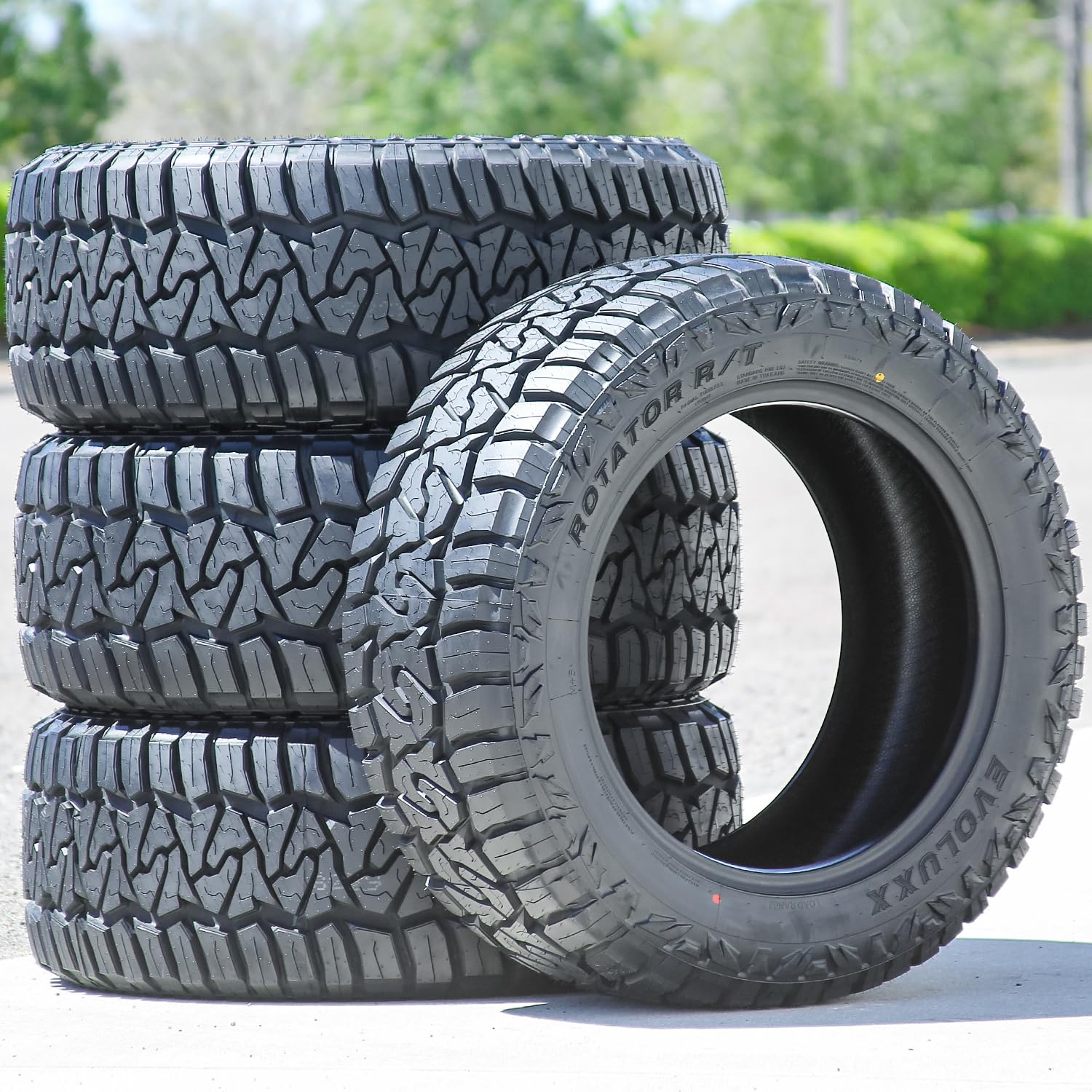
Best 20-inch rugged-terrain value. This 20-inch Rotator R/T is one of the more practical Evoluxx options for a lifted Tundra. It keeps the rugged-terrain tread and 37×13.50 stance while avoiding the more extreme ride trade-offs of 24- and 26-inch wheel setups.
Check Price on Amazon ➜Best for: Towing, commuting, and moderate trail use.
What to check before buying: The 37×13.50 width needs careful offset and fender clearance checks. Also confirm load rating and installer recommendations if your Tundra tows or carries heavy gear.
Pros
- Rugged-terrain design suits mixed driving
- 20-inch size is common on lifted truck builds
- Useful middle ground between A/T and M/T tires
Cons
- Not as quiet as a highway tire
- Wider 13.50 section can increase rubbing risk
Buyer Notes
Buy it if you want a rugged look and mixed-use tread on 20-inch wheels. Skip it if your truck is stock-height or if your wheel offset is not set up for a wide 37-inch tire.
Verdict
Choose the Evoluxx Rotator R/T 37X13.50R20LT if you want a rugged-terrain tire for 20-inch wheels and your Tundra has enough lift and clearance for a wide 37.
5. General Grabber X3 37X12.50R18

Best mud-to-road balance. The General Grabber X3 is a strong fit for Tundra owners who want mud-terrain capability but do not want to ignore highway behavior. The 18-inch wheel size also leaves useful sidewall for rough roads, rocks, and aired-down trail driving.
Check Price on Amazon ➜Best for: Drivers who want a reputable M/T with livable pavement manners.
What to check before buying: Confirm load rating, wheel width, and clearance with your lift. The 37×12.50 size is narrower than 13.50 options, but it still needs proper steering and suspension clearance.
Pros
- Strong mud-terrain category match
- 18-inch wheel fitment keeps more sidewall
- Good choice for rock, mud, and mixed trail use
Cons
- Still louder and firmer than an all-terrain tire
- Aggressive tread may be unnecessary for mostly pavement driving
Buyer Notes
Buy it if you want a serious M/T but still care about getting to and from the trail. Skip it if you rarely leave paved roads or want the calmest highway tire.
Verdict
Choose the General Grabber X3 37X12.50R18 if you want an 18-inch mud-terrain option with a slightly narrower footprint than 13.50-wide tires.
6. Evoluxx Rotator M/T 37X13.50R22LT
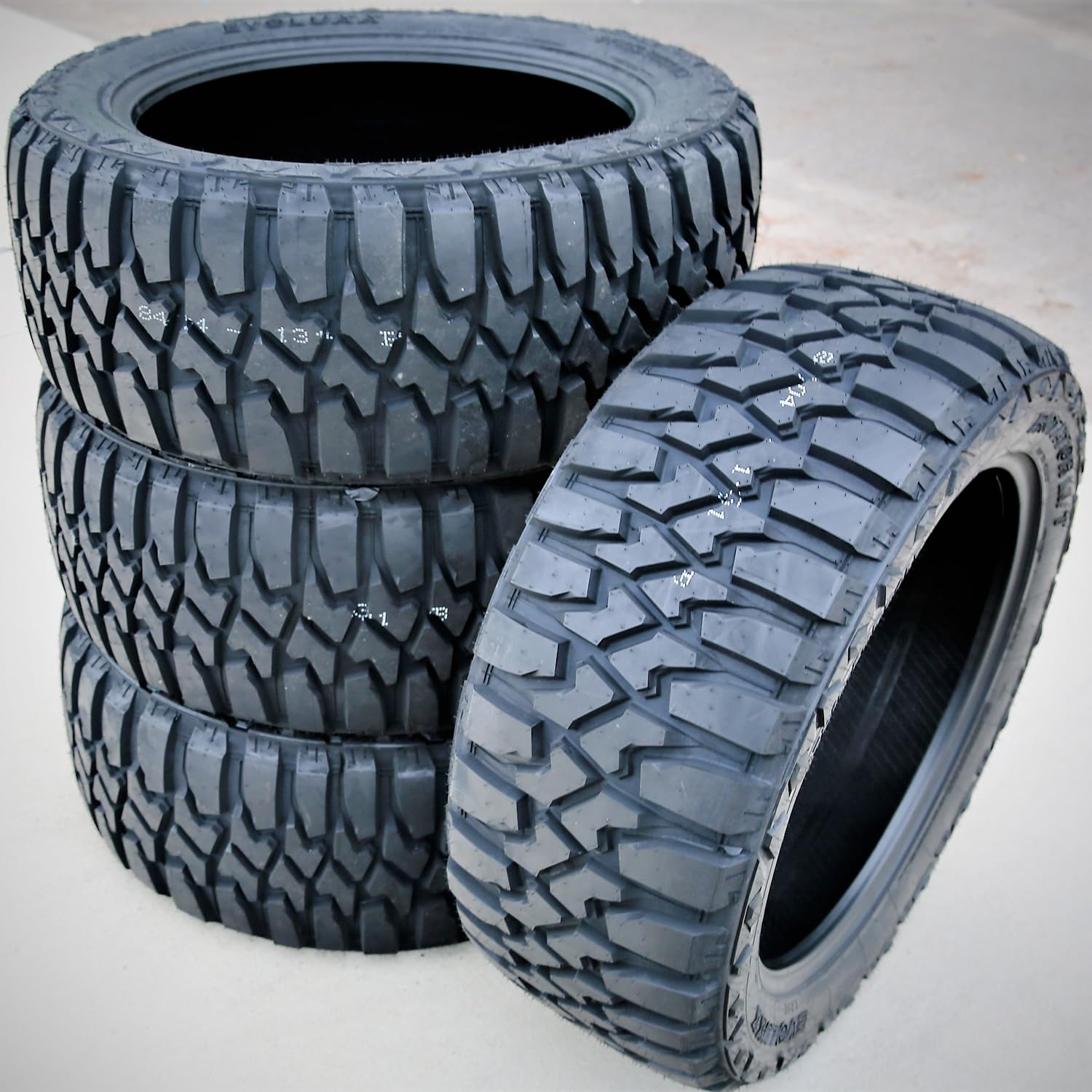
Best aggressive 22-inch mud-terrain fitment. This trail-first 37-inch tire is for lifted Tundras running 22-inch wheels. The open mud-terrain pattern is aimed at loose surfaces and self-cleaning traction, while the aggressive 37×13.50 profile gives a bold stance.
Check Price on Amazon ➜Best for: Mud, loose dirt, aggressive lifted-truck builds.
What to check before buying: Confirm lift height, wheel width, offset, backspacing, brake clearance, and steering clearance. A 37×13.50 tire on 22-inch wheels needs extra attention to rubbing and ride quality.
Pros
- Aggressive M/T tread for mud and soft terrain
- Large 37×13.50 profile gives a bold lifted stance
- Better suited to rough use than a highway tire
Cons
- Likely firmer and louder than all-terrain options
- Requires careful lift, wheel offset, and trimming checks
Buyer Notes
Buy it if your Tundra is built around 22-inch wheels and you want an aggressive M/T look and loose-surface bite. Skip it if your truck is mostly a highway commuter or if you are trying to keep tire noise low.
Verdict
Choose the Evoluxx Rotator M/T 37X13.50R22LT if you want a mud-terrain tire for 22-inch wheels and your build matches the size, width, and clearance requirements.
7. Evoluxx Rotator R/T 37X13.50R24LT
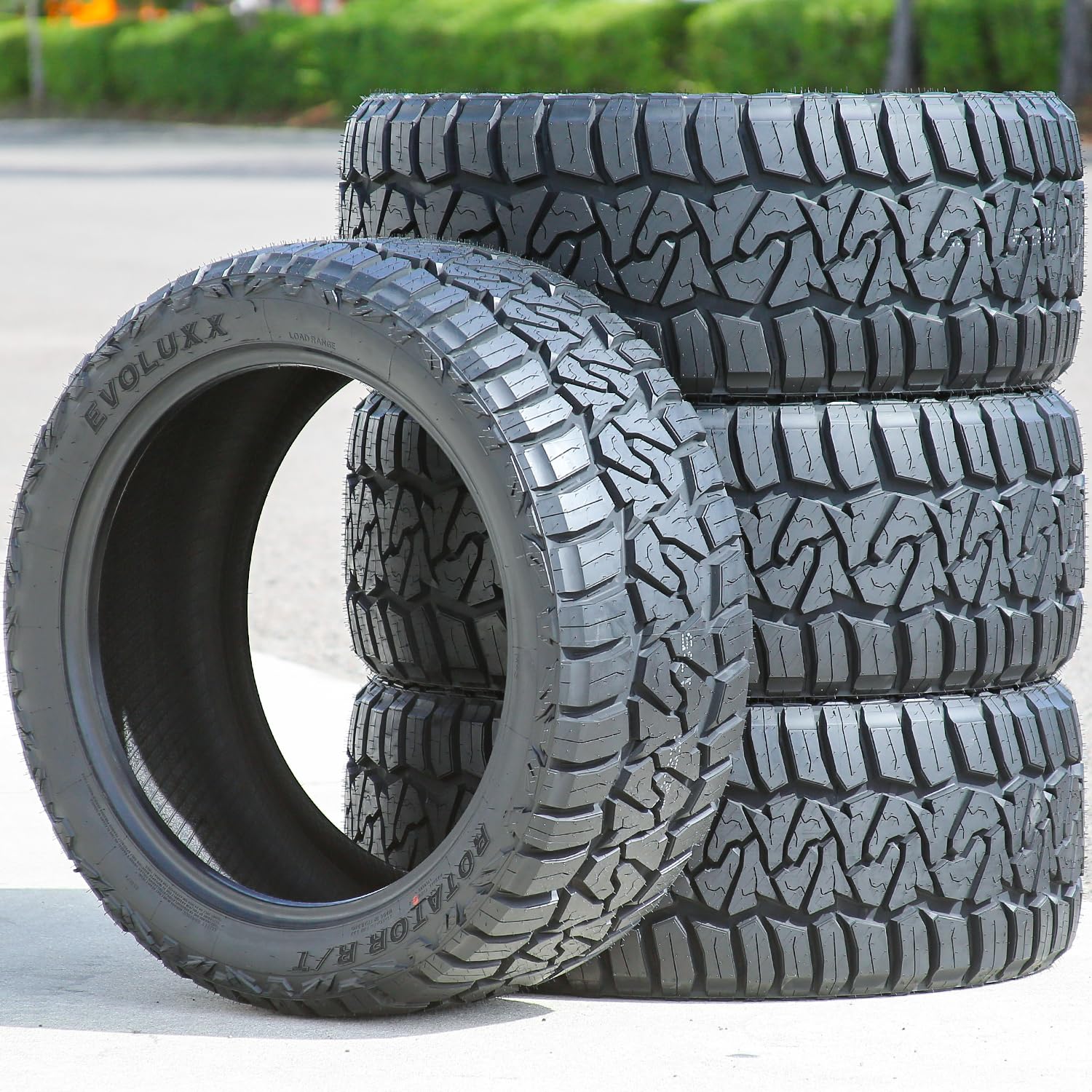
Best heavy-duty 24-inch rugged-terrain option. The Rotator R/T is a better middle ground if you want a rugged look without going full mud-terrain. It suits a Tundra that sees pavement, towing, work use, and occasional trail days, though 24-inch fitment still needs careful clearance planning.
Check Price on Amazon ➜Best for: Mixed road and trail use on lifted 24-inch wheel setups.
What to check before buying: Larger wheels leave less sidewall with a 37-inch tire, so confirm ride expectations, wheel width, offset, brake clearance, and suspension clearance before ordering.
Pros
- Rugged-terrain tread balances road and trail use
- More daily-friendly than a pure mud-terrain pattern
- Good choice for lifted trucks needing an aggressive look
Cons
- Not the best choice for deep mud compared with M/T tires
- Large-wheel setups can feel firmer on broken pavement
Buyer Notes
Buy it if you want a 24-inch wheel setup with a rugged-terrain tire instead of a full M/T. Skip it if you run mostly technical mud trails or want the softer ride of a smaller wheel and taller sidewall.
Verdict
Choose the Evoluxx Rotator R/T 37X13.50R24LT if you want a rugged-terrain tire for 24-inch wheels and your build matches the size, width, and clearance requirements.
8. Evoluxx Rotator M/T 37X13.50R26LT
Best oversized wheel option. This is the same off-road-leaning Rotator M/T concept sized for 26-inch wheels. It makes sense for a lifted Tundra build where stance and wheel size are part of the goal, but it demands extra attention to wheel width, offset, brake clearance, and rubbing.
Check Price on Amazon ➜Best for: Show-style lifted builds that still need mud-terrain bite.
What to check before buying: Confirm lift height, wheel width, offset, backspacing, brake clearance, and steering clearance. A 26-inch wheel setup is niche and can make ride comfort and clearance planning more important.
Pros
- Aggressive mud-terrain styling
- Useful for lifted builds on very large wheels
- Self-cleaning tread design suits loose terrain
Cons
- 26-inch fitment is niche and can reduce ride comfort
- Extra fitment checks are more important than with 18- or 20-inch wheels
Buyer Notes
Buy it if your Tundra build is already planned around 26-inch wheels and a show-style stance. Skip it if you want the most practical daily-driving setup or you have not confirmed clearance with your wheel specs.
Verdict
Choose the Evoluxx Rotator M/T 37X13.50R26LT if you want a mud-terrain tire for 26-inch wheels and your build matches the size, width, and clearance requirements.
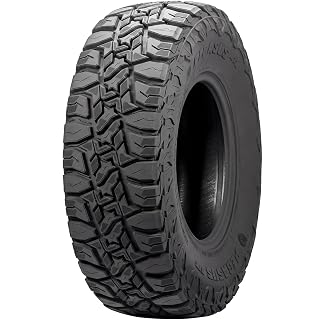
9. Pegasus RTX 37X13.50R20
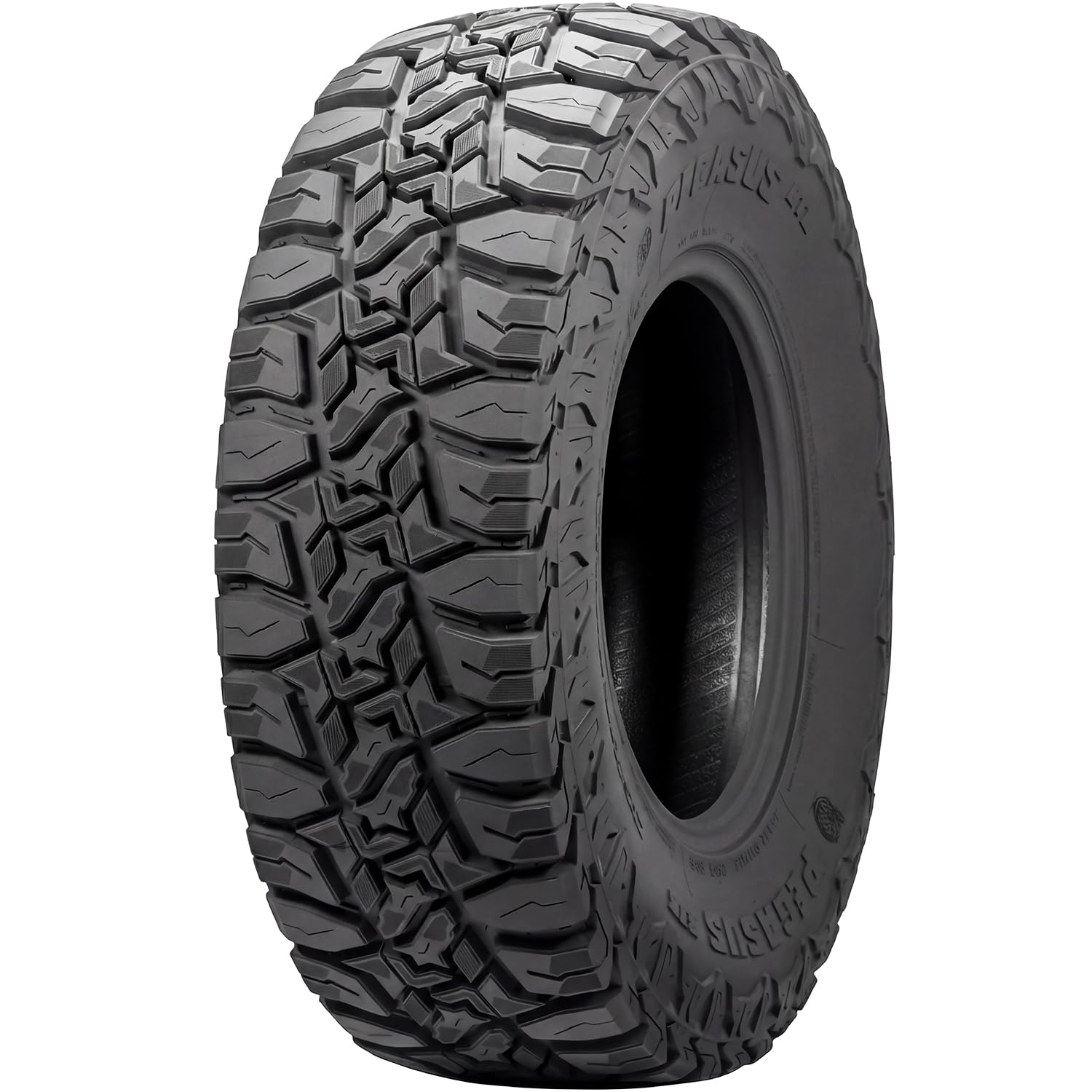
Best budget-focused rugged-terrain pick. The Pegasus RTX is a value-oriented rugged-terrain option for buyers who want 37-inch size and an aggressive tread without jumping straight to a premium mud-terrain tire. It is best treated as a mixed-use tire rather than a maximum-traction trail tire.
Check Price on Amazon ➜Best for: Budget-minded lifted Tundra owners who still want a rugged 37-inch tire.
What to check before buying: Confirm sizing, load rating, wheel width, and return policy. Budget-focused tire choices should be checked carefully for balancing, installer support, and the exact use case you need.
Pros
- Budget-friendly positioning for a 37-inch tire
- Rugged-terrain design covers pavement and trails
- 20-inch fitment suits many lifted truck builds
Cons
- Less established brand recognition than Cooper or General
- Fitment and balancing should be checked carefully
Buyer Notes
Buy it if price sensitivity matters and you still want a 37-inch rugged-terrain look. Skip it if you want a long-established premium brand or maximum mud-terrain performance.
Verdict
Choose the Pegasus RTX 37X13.50R20 if you want a budget-focused rugged-terrain tire for 20-inch wheels and your Tundra can clear the wide 37-inch size.
10. Cooper Discoverer STT Pro 37X13.50R20LT
Best 20-inch Cooper STT Pro variant. This 20-inch STT Pro variant is the better match if your Tundra build is already centered around 20-inch wheels. It keeps the STT Pro’s trail-first character while pairing it with a common modern truck wheel diameter.
Check Price on Amazon ➜Best for: Tundra owners who want STT Pro traction on 20-inch wheels.
What to check before buying: Compare this with the 18-inch version if your brakes and wheel setup allow it. The 20-inch version keeps the same general tire purpose but leaves less sidewall than an 18-inch wheel setup.
Pros
- Same aggressive STT Pro category fit in a 20-inch size
- Strong choice for rock, mud, and trail-focused builds
- Good match for lifted trucks that already run 20-inch wheels
Cons
- Less sidewall cushion than the 18-inch version
- Still louder and firmer than an all-terrain tire
Buyer Notes
Buy it if your truck already runs 20-inch wheels and you want the STT Pro’s off-road character. Skip it if you can run 18-inch wheels and want more sidewall for off-road comfort.
Verdict
Choose the Cooper Discoverer STT Pro 37X13.50R20LT if you want a mud-terrain tire for 20-inch wheels and your build matches the size, width, and clearance requirements.
37 Inch Tire Buying Guide for Toyota Tundra Owners
Start With Lift Height and Clearance
A 37-inch tire is a major fitment change. Before choosing a tread pattern, confirm your lift height, control arm clearance, wheel offset, backspacing, and whether trimming is acceptable. Check clearance at full lock and under suspension compression, not just while parked.
Choose the Right Tread Category
- All-terrain-style: best for mostly pavement, light trails, gravel, rain, and occasional snow.
- Rugged-terrain: best for mixed road and trail use with a more aggressive look than most A/T tires.
- Mud-terrain: best for mud, rocks, loose dirt, aired-down use, and trail-heavy trucks.
Watch Tire Width
Width matters as much as height. A 37×13.50 tire can rub sooner than a 37×12.50 or 37×11.50, especially with the wrong wheel offset. Wider tires also add weight and may follow road grooves more than narrower setups.
Compare Wheel Diameter Before Choosing
For off-road comfort and sidewall flex, 18-inch wheels usually make the most sense if your brake setup allows them. A 20-inch wheel is common on lifted trucks and still leaves usable sidewall. Larger 22-, 24-, and 26-inch wheels create a more dramatic look but may ride firmer and leave less sidewall for rough terrain.
Do Not Ignore Load Range
Lifted Tundras are often used for towing, hauling, overlanding gear, and larger wheels. Match the tire’s load rating to your truck and payload needs, then run the pressure appropriate for the load instead of guessing from the sidewall maximum.
Plan for Alignment, Speedometer, and Braking Changes
Moving to 37s can change steering feel, braking feel, gearing response, and speedometer accuracy. After installation, have the truck aligned, inspect for rubbing after real driving, and consider recalibration if your speedometer is noticeably off.
FAQ
Will 37-inch tires fit my Toyota Tundra?
A 37-inch tire can fit a lifted Tundra, but fitment depends on lift height, wheel width, offset, backspacing, suspension geometry, and how much trimming you are willing to do. Many builds need a substantial lift, alignment correction, and clearance checks at full steering lock and suspension compression.
Are 37s practical for daily driving?
They can be practical if the tire type matches your driving. All-terrain-style and rugged-terrain 37s are easier to live with on the highway, while mud-terrain tires usually trade more noise and firmness for better trail grip. Expect added weight, possible fuel-economy loss, and more attention to balancing, rotation, and alignment.
Should I choose 12.50, 13.50, or 11.50 width?
A 13.50-wide tire gives a wider stance and more flotation, but it can increase rubbing risk. A 12.50 is a common middle ground. A narrower 11.50 can help some lifted Tundra owners get the height of a 37 while managing clearance more easily.
Are 18-inch or 20-inch wheels better for 37-inch tires?
For off-road comfort and sidewall flex, 18-inch wheels usually make more sense when they clear your brakes. For a modern truck look and common aftermarket fitment, 20-inch wheels are popular. Larger 22-, 24-, and 26-inch wheels can look aggressive but leave less sidewall and may ride firmer.
What type of 37-inch tire is best for a lifted Tundra?
Choose mud-terrain if you regularly drive in mud, rocks, and difficult trails. Choose rugged-terrain if you split time between pavement, towing, work, and weekend trails. Choose all-terrain-style if highway comfort and mixed-weather driving matter more than maximum mud bite.
What should I verify before clicking buy?
Verify the exact tire size, load range, rim diameter, wheel width range, load index, speed rating, and return policy. You should also confirm that your lift, wheel offset, and suspension setup can clear the tire without unsafe rubbing.
Do 37-inch tires affect towing or hauling?
They can. Larger and heavier tires may affect acceleration, braking feel, gearing response, and fuel economy. If you tow or haul often, confirm load rating, tire pressure guidance, gearing, and braking performance with a qualified installer.
Wrapping Up
Choosing 37 inch tires for a lifted Tundra comes down to fitment, tread type, wheel diameter, width, and how much highway comfort you are willing to trade for off-road capability. The Cooper Discoverer STT Pro is the strongest off-road-focused pick, the Predator New Mutant X-AT is the most daily-driver-friendly option, and the Venom Power Trail Hunter R/T is useful if you want 37-inch height with a narrower footprint.
Before buying, confirm wheel diameter, wheel width, offset, backspacing, load range, and suspension clearance. A good 37-inch tire only works well when the rest of the truck is set up to clear it safely.
| Product | Tread | Rim Size | Best For | Price |
|---|---|---|---|---|
 Cooper Discoverer STT Pro 37X13.50R18LT Check Price on Amazon |
Mud-terrain | 18 in | Rock, mud, aired-down trail use, and serious off-road builds | Check Price |
 Predator New Mutant X-AT 37X12.50R20 Check Price on Amazon |
All-terrain-style | 20 in | Daily driving with weekend dirt, gravel, mud, and snow use | Check Price |
 Venom Power Trail Hunter R/T 37X11.50R20LT Check Price on Amazon |
Rugged-terrain | 20 in | Drivers who want 37-inch height with less width than 12.50 or 13.50 options | Check Price |
 Evoluxx Rotator R/T 37X13.50R20LT Check Price on Amazon |
Rugged-terrain | 20 in | Towing, commuting, and moderate trail use | Check Price |
 General Grabber X3 37X12.50R18 Check Price on Amazon |
Mud-terrain | 18 in | Drivers who want a reputable M/T with livable pavement manners | Check Price |
 Evoluxx Rotator M/T 37X13.50R22LT Check Price on Amazon |
Mud-terrain | 22 in | Mud, loose dirt, aggressive lifted-truck builds | Check Price |
 Evoluxx Rotator R/T 37X13.50R24LT Check Price on Amazon |
Rugged-terrain | 24 in | Mixed road and trail use on lifted 24-inch wheel setups | Check Price |
Evoluxx Rotator M/T 37X13.50R26LT Check Price on Amazon |
Mud-terrain | 26 in | Show-style lifted builds that still need mud-terrain bite | Check Price |
 Pegasus RTX 37X13.50R20 Check Price on Amazon |
Rugged-terrain | 20 in | Budget-minded lifted Tundra owners who still want a rugged 37-inch tire | Check Price |
Cooper Discoverer STT Pro 37X13.50R20LT Check Price on Amazon |
Mud-terrain | 20 in | Tundra owners who want STT Pro traction on 20-inch wheels | Check Price |
This Roundup is reader-supported. When you click through links we may earn a referral commission on qualifying purchases.
[Products Worth Considering]

Keep your tires properly inflated with this analog VONDIOR tire pressure gauge, designed for fast, easy readings without batteries. The swiveling, two-axis hose and large glow dial help you measure at any tire angle with instant visibility. Built with a protective rubber shield, it supports durable, low-maintenance use for cars and trucks.

Upgrade your ride with a 2-pack set of 26x1.95 folding mountain bike tires built for dependable traction on mud, rocks, and trail surfaces. A reinforced puncture-resistant layer helps protect against sharp debris, while included butyl inner tubes provide strong sealing and shock absorption. Ready for fast swaps with included tire levers and universal sizing for most bikes.

Secure your trailer or RV tires with a scissor-style wheel chock stabilizer that applies opposing force to help prevent wheel shift. It fits tight wheel gaps from 3.5 inches up to 12 inches and works for travel trailers, campers, fifth wheels, toy haulers, and heavy-duty trucks. The surface uses new electrophoretic technology to help prevent rust for reliable travel use.

Related Articles
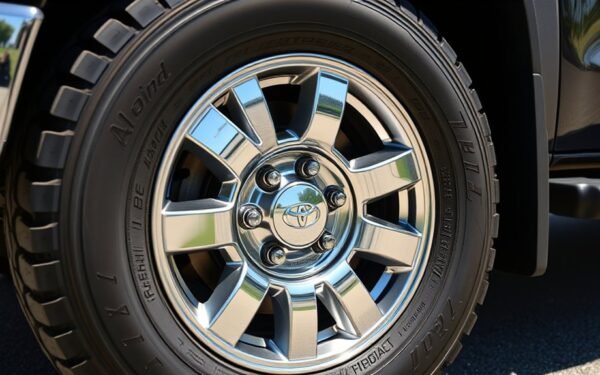
Toyota Tundra Tire and Wheel Package: What to Consider Before Buying
Unlock the secrets to choosing the perfect tire and wheel package for your Toyota Tundra—essential tips await to enhance your ride.
Read More
Do Bigger Tires Void a Toyota Tundra Warranty? Magnuson-Moss Act Explained
Bigger tires might not void your Toyota Tundra warranty, but understanding the Magnuson-Moss Act is crucial—discover how to protect your investment effectively.
Read More
Toyota Tundra Tire Rack Setup: Garage Storage Ideas for Seasonal Sets
Better tire storage for your Toyota Tundra awaits—discover essential tips to maximize space and protect your seasonal sets in the garage!
Read More